

Synopsis
Covers the whole plot, including the ending.
- Difficulty
- Medium
- Pacing
- Moderate
- Mood
- Tragic, somber, dramatic, reflective
- Read it if
- you are interested in classical Greek tragedy, stories of moral dilemmas and sacrifice, or the origins of the Trojan War saga. It's also a good choice if you appreciate poetic language and powerful character monologues.
- Skip it if
- you prefer fast-paced modern narratives, are sensitive to themes of child sacrifice, or dislike theatrical dialogue from ancient plays.
Iphigenia in Aulis Plot Summary
Covers the whole plot, including the ending.
The Dawn of Doubt
The play opens in the Greek camp at Aulis. The fleet is stuck, unable to sail for Troy. King Agamemnon, leader of the expedition, is in distress. He tells his Old Man, a loyal servant, about the oracle's prophecy: the goddess Artemis demands his oldest daughter, Iphigenia, be sacrificed to ensure good winds. Agamemnon had first sent a letter to his wife, Clytemnestra, telling her to bring Iphigenia to Aulis for a marriage to Achilles. But, overcome by fatherly love and the horror of the act, he now tries to send a second, secret letter to cancel the order and tell them not to come. This act starts his deep inner conflict and the coming tragedy.
Menelaus's Interception
As Agamemnon's Old Man gets ready to deliver the second letter, Menelaus, Agamemnon's brother, stops him. Menelaus, wanting to get Helen back and start the Trojan War, is angry when he reads the letter. He confronts Agamemnon, calling him a coward and a betrayer for putting his family before Greece's honor and the expedition. A heated argument follows, showing the brothers' different values and the political pressures. Menelaus reminds Agamemnon of the oath they all took to support him and the shame if the fleet disbanded. Agamemnon, in turn, defends his fatherly feelings and the cruelty of the sacrifice, but the fight leaves him deeply shaken and conflicted.
The Arrival of the Family
While Agamemnon and Menelaus are still arguing, a messenger arrives. He announces the imminent arrival of Clytemnestra, Iphigenia, and the infant Orestes. This news makes Agamemnon even more upset, as his attempt to prevent the sacrifice has failed. Menelaus, seeing Agamemnon's pain, feels a moment of pity and suggests Iphigenia might be spared. However, the political reality quickly returns. Agamemnon, fearing the Greek army's anger if he refuses the sacrifice, explains that the army already knows about the prophecy and demands the ritual. He feels trapped, knowing that any refusal would lead to his own death and his family's destruction, and decides he must go ahead.
Clytemnestra's Joy and Iphigenia's Innocence
Clytemnestra arrives, full of pride and excitement for her daughter's supposed marriage to Achilles. Iphigenia, innocent and happy, is delighted to marry such a famous hero. She meets Achilles, who is confused by the talk of marriage, as he knows nothing about it. Agamemnon tries to keep up the deception, but his evasiveness and sad mood make Clytemnestra suspicious. The scene has dramatic irony, as the audience knows the horrible truth hidden beneath the happy appearance. Clytemnestra, eager to prepare her daughter, makes wedding arrangements, unaware of the coming doom.
Achilles's Confusion and Clytemnestra's Discovery
Achilles meets the Old Man, who tells him the truth about Iphigenia's sacrifice and the false marriage. Outraged at being used in Agamemnon's plan, Achilles vows to protect Iphigenia. At the same time, Clytemnestra, growing more suspicious of Agamemnon's behavior, confronts the Old Man, who then tells her the horrible truth. Clytemnestra's joy turns to horror and despair. Her motherly instincts take over, and she vows to fight for her daughter's life, confronting Agamemnon with bitter accusations and pleas. The revelation shatters the family's peace and leads to a direct confrontation.
Clytemnestra's Plea to Agamemnon
Clytemnestra confronts Agamemnon, pleading for Iphigenia's life. She reminds him of their past, their love, and their family bond. She argues against the injustice of sacrificing their daughter for a war over Helen, a woman who shamed their house. She appeals to his fatherly love, honor, and conscience, warning him of terrible consequences if he proceeds. Agamemnon, though moved by her words, remains firm in his decision. He explains the immense pressure from the army and the perceived need for the sacrifice to ensure the Greek expedition's success and his own survival.
Iphigenia's Initial Plea
Iphigenia, now aware of her fate, joins her mother in pleading with Agamemnon. Her plea shows youthful innocence and a strong desire to live. She reminds him of their tender moments, her love for him, and the joy she brings to his life. She describes life's beauty and death's horror, trying to stir his fatherly affection. Her words are moving, showing the tragedy of a young life about to end for a cause she barely understands. She hopes her father's love will triumph over his duty, but Agamemnon, though visibly tormented, remains firm in his decision.
Achilles's Failed Intervention
Achilles, true to his word, tries to intervene and save Iphigenia. He confronts Agamemnon, expressing his outrage at the deception and his commitment to protecting the innocent girl. He then tries to gather the Greek soldiers, appealing to their sense of justice and honor, but finds them mostly in favor of the sacrifice. The army, eager for war and swayed by the prophecy, is hostile to any attempt to prevent the ritual. Achilles realizes his efforts are useless against the army's collective will and their strong belief in the divine command. He feels helpless and frustrated by his inability to protect Iphigenia.
Iphigenia's Change of Heart
Seeing that resistance is futile and the Greek army strongly desires her sacrifice, Iphigenia changes. She realizes her death is seen as necessary for Greece's glory and the expedition's success. Instead of being dragged to the altar, she chooses to accept her fate with dignity and courage, offering herself as a willing sacrifice for her homeland. She declares that she prefers a glorious death to a life of shame and resistance, becoming a symbol of patriotic devotion. This decision, while heroic, shows the immense pressure and tragic circumstances that force a young woman to such a choice.
The Sacrifice and the Miracle
Iphigenia, now calm and determined, says goodbye to her mother and brother. She is led to the altar, with a sad procession. Agamemnon, deeply distraught, turns away. A messenger later reports the sacrifice. He describes Iphigenia's dignified manner and how, just as the priest was about to strike, Artemis miraculously replaced her with a deer. Iphigenia herself vanished, presumably taken by the goddess to a divine realm. The messenger conveys the army's awe and relief, and the immediate change in weather, with good winds now blowing. Clytemnestra, however, remains unconvinced and deeply grieved, her motherly pain overriding any miraculous claims.
Iphigenia in Aulis Characters
Agamemnon
Protagonist
The conflicted King and Commander of the Greek forces.
Agamemnon is the King of Mycenae and the supreme commander of the united Greek forces at Aulis. He is a complex figure, torn between his duty as a leader to his army and his profound love for his daughter, Iphigenia. Initially, he attempts to evade the oracle's demand for her sacrifice, demonstrating his paternal affection. However, he is ultimately swayed by political pressure, fear of the army's wrath, and the perceived necessity of the sacrifice for the success of the Trojan War. His internal struggle and ultimate decision highlight the tragic burdens of leadership.
Relationships: Clytemnestra (Wife, later estranged by his actions); Iphigenia (Daughter, sacrificed by him); Menelaus (Brother, initially antagonistic, later sympathetic); Old Man (Loyal servant); Achilles (Potential son-in-law, later an ally against the sacrifice)
Clytemnestra
Supporting
Agamemnon's wife and Iphigenia's distraught mother.
Clytemnestra is Agamemnon's wife and the mother of Iphigenia. She arrives at Aulis full of joy, believing her daughter is to be married to Achilles. Upon discovering the truth of the sacrifice, she transforms into a fierce and desperate protector of her child. Her pleas to Agamemnon are passionate and articulate, appealing to his humanity and their shared history. Her character embodies the anguish of maternal love and foreshadows her later vengeful actions in the Oresteia. Even after the miraculous substitution, she remains profoundly affected and unconvinced.
Relationships: Agamemnon (Husband, later her betrayer); Iphigenia (Daughter, whom she fiercely defends); Achilles (Potential son-in-law, an unexpected ally)
Iphigenia
Protagonist
The innocent daughter destined for sacrifice.
Iphigenia is the eldest daughter of Agamemnon and Clytemnestra, a young and innocent maiden. She arrives at Aulis full of excitement for her supposed marriage to Achilles. Upon learning of her true fate, she initially pleads for her life with great pathos and vulnerability. However, she undergoes a remarkable transformation, choosing to embrace her sacrifice willingly for the sake of Greece. Her decision elevates her from a victim to a heroic figure, embodying a profound sense of patriotism and self-sacrifice, although her agency is born from tragic circumstances.
Relationships: Agamemnon (Father, who condemns her); Clytemnestra (Mother, who passionately defends her); Achilles (Supposed groom, who tries to save her)
Menelaus
Supporting
Agamemnon's brother, desperate for war.
Menelaus is Agamemnon's brother and the wronged husband of Helen, for whose sake the Trojan War is being fought. He is initially portrayed as self-serving and aggressive, fiercely advocating for Iphigenia's sacrifice to ensure the fleet sails and he can reclaim his wife. He intercepts Agamemnon's second letter, leading to a heated argument. However, he shows a moment of compassion when he witnesses Agamemnon's deep distress, suggesting a flicker of humanity beneath his warrior's exterior. Ultimately, his desire for war and Helen's return overrides his brief empathy.
Relationships: Agamemnon (Brother, whom he pressures); Helen (Wife, whose abduction is the cause of the war)
Achilles
Supporting
The legendary warrior, unknowingly entangled in the deception.
Achilles is the greatest of the Greek warriors, renowned for his courage and honor. He is initially unaware of the deception involving his name, as he was never truly engaged to Iphigenia. When he learns of the plot and the intended sacrifice, he is outraged at being used and feels a strong sense of injustice. He attempts to protect Iphigenia, not out of love, but out of a commitment to honor and a refusal to be a party to such a cruel deception. Despite his heroic stature, he is ultimately powerless against the collective will of the army.
Relationships: Iphigenia (Supposed fiancée, whom he tries to save); Clytemnestra (Potential mother-in-law, an ally in trying to save Iphigenia); Agamemnon (Commander, whose deception he opposes)
Old Man
Supporting
Agamemnon's loyal and well-meaning servant.
The Old Man is Agamemnon's most trusted and loyal servant, privy to his master's deepest anxieties. He is dispatched by Agamemnon to deliver the second letter, countermanding the order for Iphigenia's arrival. His interception by Menelaus and subsequent revelation of the truth to Clytemnestra are pivotal plot points. He acts out of loyalty and a sense of duty, inadvertently triggering the full dramatic conflict by exposing Agamemnon's deception. He embodies the voice of reason and concern for the family amidst the political machinations.
Relationships: Agamemnon (Master, whom he serves loyally); Clytemnestra (Mistress, to whom he reveals the truth)
Chorus of Women of Chalcis
Supporting
Sympathetic observers and commentators on the unfolding tragedy.
The Chorus consists of women from Chalcis, a town near Aulis, who have come to witness the Greek fleet. They serve as sympathetic observers and commentators, reflecting on the events, the fate of Iphigenia, the nature of war, and the will of the gods. Their odes provide background information, express emotions of pity and fear, and offer moral reflections. They represent the voice of the common people, caught in the grand designs of kings and gods, and highlight the human cost of the impending war.
Iphigenia in Aulis Themes
Duty vs. Family
This is the play's main conflict, mostly seen in Agamemnon. He is torn between his duty as the Greek commander, which requires his daughter's sacrifice for good winds and the Trojan War's success, and his fatherly love and family duties. The play explores the difficult choices leaders face when personal morality conflicts with public need, and the deep tragedy when duty wins over family bonds. It questions the true cost of 'glory' and 'honor' when compared to human life and happiness.
“For my country, for the whole land of Hellas, I offer you, Iphigenia, a sacrifice to Artemis, so that the fleet may sail.”
The Brutality of War
The play clearly shows the human cost of war, even before the first battle. Iphigenia's sacrifice is a grim sign of the many lives that will be lost in the Trojan War. The play shows how individuals, especially innocent ones, become tools in larger political and military plans. It criticizes the praise of war by showing the personal pain, moral compromises, and lasting damage it does to families and societies. The desperation to sail for Troy makes many characters overlook the atrocity being committed.
“O Hellenes, for what cause do you lead me to my death? For a woman, Helen, and her husband's quarrel?”
The Role of Fate and Divine Will
Artemis's demand from the oracle starts the whole tragic sequence of events. This suggests that human actions are often set by or strongly influenced by divine forces. The characters struggle with the seemingly unyielding will of the gods, questioning if they have true control or are just tools of a larger, often cruel, cosmic plan. Agamemnon feels trapped by this divine order, and even Iphigenia's eventual acceptance is framed as giving in to a greater, unavoidable force. The play explores the terror and resignation that can come with believing in an unchangeable fate.
“Necessity holds me fast, my daughter, a terrible necessity.”
Deception and Betrayal
Deception drives much of the plot. Agamemnon's initial lie about Iphigenia's marriage to Achilles causes her arrival and the later uncovering of the truth. This betrayal devastates Clytemnestra and Iphigenia, breaking their trust in Agamemnon and exposing the moral emptiness in his desperate situation. The play examines how deception harms family relationships and the deep sense of betrayal felt by those who are manipulated. This ultimately leads to deep resentment and future acts of revenge.
“O, you have betrayed me! You, my husband, have planned my death under the guise of marriage!”
Plot Devices & Literary Techniques
Dramatic Irony
Audience knows the truth while characters remain ignorant.
Dramatic irony is heavily employed throughout the play, particularly in the early scenes. The audience is aware of the true purpose of Iphigenia's journey to Aulis (her sacrifice) while Clytemnestra and Iphigenia believe she is coming for a glorious marriage. This creates a profound sense of tension and pathos, as the audience watches the innocent joy and excitement of the mother and daughter, knowing the horrific fate that awaits them. This device amplifies the tragedy, making their initial happiness all the more poignant and their eventual discovery of the truth more devastating.
The Oracle/Prophecy
Divine decree dictating the plot's central conflict.
The oracle from Artemis, demanding Iphigenia's sacrifice for favorable winds, is the inciting incident and the central driving force of the entire tragedy. It presents Agamemnon with his impossible choice and establishes the framework of divine will against which human characters struggle. The prophecy functions as an unchallengeable divine decree, removing any easy alternatives for Agamemnon and forcing the horrific decision. It highlights the belief in fate and the power of the gods in ancient Greek society, making the characters' actions seem both compelled and tragic.
Messenger Speech
Off-stage events vividly recounted by a messenger.
As is common in Greek tragedy, the climactic event of Iphigenia's sacrifice occurs off-stage and is recounted by a messenger. This device allows for a highly descriptive and often emotional narration of the events, building suspense and allowing the playwright to focus on the reactions of the remaining characters. In 'Iphigenia in Aulis', the messenger's report of the sacrifice, including the miraculous substitution of the deer, provides a vivid and dramatic conclusion to the central conflict, while also introducing an element of divine intervention that offers a glimmer of hope or a final ambiguity regarding Iphigenia's true fate.
The Chorus
Commentary and emotional resonance from a group of observers.
The Chorus of Women of Chalcis serves multiple functions. They provide exposition, reflecting on the historical context of the Trojan War and the beauty of the Greek fleet. More importantly, they offer a collective emotional response to the unfolding tragedy, expressing pity, fear, and moral commentary. Their odes punctuate the dramatic action, providing lyrical interludes that reflect on themes of fate, war, and the human condition. They act as a moral compass and a voice for the common people, highlighting the impact of the leaders' decisions on the innocent.
Iphigenia in Aulis Quotes
“It is not for me to say whether the gods are wise or not. I only know that they are implacable.”
“The best and wisest of men, when they are in the hands of fortune, are often made to suffer the most.”
“For it is a fearful thing to be a woman, and to be subject to the will of men.”
“We must all die, but let us die bravely.”
“There is no greater evil than the loss of one's country.”
“The gods are deaf to the prayers of the wicked.”
“It is better to be ignorant than to know too much.”
“The love of parents for their children is a sacred thing.”
“A clear conscience is the best.'''”
“What is a city but its people?”
“To be enslaved is to be a living corpse.”
“The gods are not to be trifled with.”
“A reputation once lost is not easily regained.”
“The greatest good is to live in peace.”
Quiz
10 questions on the plot and the characters. Each answer comes with a short explanation.
Question 1
Who is the central figure whose sacrifice is discussed in "Iphigenia in Aulis"?
- Clytemnestra
- Agamemnon
- Iphigenia
- Menelaus
Show answer
C. Iphigenia Iphigenia is the daughter Agamemnon is forced to sacrifice.
Question 2
What major conflict is Agamemnon's forces preparing for in "Iphigenia in Aulis"?
- The Peloponnesian War
- The Trojan War
- The Battle of Marathon
- The Persian Wars
Show answer
B. The Trojan War The play is set before the Trojan War, and Agamemnon's forces are gathered to sail for Troy.
Question 3
What genre is "Iphigenia in Aulis" primarily described as, despite its heroic background?
- Epic Poem
- Comedy
- Domestic Tragedy
- Historical Drama
Show answer
C. Domestic Tragedy The text explicitly states that the play is, in many respects, a domestic tragedy.
Question 4
What quality does Mr. Rudall's new translation aim to retain from Euripides' original work?
- Its historical accuracy
- Its philosophical depth
- Its poetic beauty
- Its political commentary
Show answer
C. Its poetic beauty The provided text mentions that the translation 'retains Euripides' poetic beauty'.
Question 5
Besides retaining poetic beauty, what other characteristic does Rudall's translation aim to achieve for the play?
- A more scholarly version
- A playable dialogue
- A modernized plot
- A simplified narrative
Show answer
B. A playable dialogue The text states the translation is 'fashioning a playable dialogue'.
Question 6
What was the primary motivation for Agamemnon's decision to sacrifice his daughter?
- To appease the gods' wrath for a past offense
- To ensure the good fortune of his forces
- To prevent a mutiny among his soldiers
- To secure a favorable omen for his own reign
Show answer
B. To ensure the good fortune of his forces The text states the sacrifice was 'in order to ensure the good fortune of his forces'.
Question 7
The description of the sacrifice as a 'domestic tragedy' suggests that the play focuses on:
- The grand scale of warfare and its heroes
- The personal and familial suffering caused by the decision
- The political maneuvering behind the war
- The religious rituals of ancient Greece
Show answer
B. The personal and familial suffering caused by the decision A 'domestic tragedy' typically emphasizes the personal, familial, and emotional consequences of events, rather than large-scale political or military aspects.
Question 8
What is the significance of the term 'heroic background' in relation to Agamemnon's sacrifice?
- It implies the sacrifice was universally celebrated as a heroic act.
- It refers to the epic context of the Trojan War and the perceived necessity of the act for a greater cause.
- It highlights Agamemnon's personal bravery in carrying out the deed.
- It suggests the sacrifice was a common practice among ancient heroes.
Show answer
B. It refers to the epic context of the Trojan War and the perceived necessity of the act for a greater cause. The 'heroic background' refers to the epic setting of the Trojan War and the idea that such a sacrifice might be deemed necessary for the success of a grand, heroic endeavor.
Question 9
The phrase 'fashioning a playable dialogue' implies that the translation aims to make the play:
- Easier to read for academic study
- More accessible to a modern audience in terms of language and rhythm
- Closer to the original Greek in structure
- More suitable for a choral performance
Show answer
B. More accessible to a modern audience in terms of language and rhythm A 'playable dialogue' suggests that the language and structure are adapted for performance, making it understandable and engaging for an audience watching a play.
Question 10
Considering the play is described as a 'domestic tragedy' despite its 'heroic background,' what tension is Euripides likely exploring?
- The conflict between divine will and human desire
- The clash between public duty and private morality/family ties
- The inevitability of fate versus the possibility of free will
- The struggle for power between different Greek city-states
Show answer
B. The clash between public duty and private morality/family ties The tension between the 'heroic' necessity of sacrificing Iphigenia for the war effort (public duty) and the profound personal tragedy it inflicts on her family (private morality/family ties) is the core conflict.
Iphigenia in Aulis FAQ
What is the main story of Iphigenia in Aulis?
The play tells the story of Agamemnon, the leader of the Greek forces, who must sacrifice his daughter Iphigenia to appease the goddess Artemis and gain favorable winds for the Trojan War. It explores the tragic consequences of this decision on the family and the moral dilemmas involved.
Who wrote Iphigenia in Aulis?
Iphigenia in Aulis was written by the ancient Greek playwright Euripides. It is considered one of his later works.
What is the historical context of Iphigenia in Aulis?
The play is set during the prelude to the Trojan War, a legendary conflict in Greek mythology. It draws upon the epic narrative of the war to explore themes of duty, fate, and human sacrifice.
Is Iphigenia in Aulis a tragedy?
Yes, Iphigenia in Aulis is a tragedy. It deals with themes of suffering, loss, and the downfall of characters due to unavoidable circumstances and difficult choices.
What are the main themes in Iphigenia in Aulis?
Key themes include the conflict between divine will and human agency, the nature of leadership and sacrifice, the destructive power of war, and the devastating impact of such events on families.
What makes Iphigenia in Aulis a domestic tragedy?
Despite its epic background of war, the play is considered a domestic tragedy because its core conflict revolves around Agamemnon's personal decision and its profound impact on his family, particularly his wife Clytemnestra and daughter Iphigenia.
What is significant about Mr. Rudall's translation?
Mr. Rudall's translation is noted for preserving the poetic beauty of Euripides' original text while also making the dialogue suitable for performance, rendering it a 'playable dialogue'.
What is the role of the goddess Artemis in the play?
Artemis is a central figure as she demands the sacrifice of Iphigenia. Her wrath is the catalyst for Agamemnon's terrible decision, highlighting the power of the gods in the lives of mortals.
How does the play portray Agamemnon's dilemma?
Agamemnon is presented as being caught between his duty as a leader, his desire to achieve victory in the Trojan War, and his love for his daughter. This creates a profound moral and emotional conflict for him.
What is the outcome for Iphigenia?
The play depicts the tragic events leading up to Iphigenia's sacrifice. While the exact circumstances of her fate are presented with some ambiguity, it is clear that she is ultimately offered to the goddess Artemis.
About the author
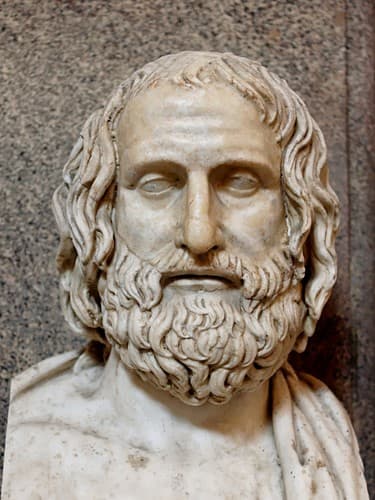
Euripides was a tragedian of classical Athens. Along with Aeschylus and Sophocles, he is one of the three ancient Greek tragedians for whom any plays have survived in full. Some ancient scholars attributed ninety-five plays to him, but the Suda says it was ninety-two at most. Of these, eighteen or nineteen have survived more or less complete. There are many fragments of most of his other plays. More of his plays have survived intact than those of Aeschylus and Sophocles together, partly because his popularity grew as theirs declined—he became, in the Hellenistic Age, a cornerstone of ancient literary education, along with Homer, Demosthenes, and Menander.
Similar books
- Medea
Euripides
4.1 (3k) average on GoodreadsPhilosophyExplores intense family tragedy and moral conflict within classical Greek drama.
- Antigone
Sophocles
3.8 (17k) average on GoodreadsFictionFeatures a strong female protagonist making a difficult choice against a powerful authority figure.
- Agamemnon
Aeschylus
3.9 (15k) average on GoodreadsFictionAeschylus' "Agamemnon," the first play in the Oresteia trilogy, also deals with Agamemnon's return and subsequent murder, which is presented as a direct consequence of his sacrifice of Iphigenia. However, Aeschylus treats the sacrifice itself more as a fated, almost ritualistic necessity to appease the gods and initiate the war, focusing more on the themes of inherited curse, justice, and the cycle of violence. Euripides, writing later, provides a far more detailed, psychological, and politically charged account of the events leading up to the sacrifice in Aulis. He meticulously dissects Agamemnon's agonizing decision-making process and the manipulative tactics employed by others, thereby shifting the focus from cosmic fate to human agency, political pressure, and the personal tragedy of the individuals involved. Euripides' version feels more 'modern' in its human-centered critique of power and ethics.
- The Diary of a Young Girl
Anne Frank
4.2 (2.7M) average on GoodreadsBiographyDuring the Nazi occupation, a teenage girl's diary, written from a secret annex, shares observations on humanity, hope, and the wait for freedom.
- Night
Elie Wiesel
4.3 (970k) average on GoodreadsBiographyIn the darkness of Auschwitz and Buchenwald, a teenage Elie Wiesel faces the extermination of his family, the loss of his faith, and the lasting scars of humanity's deepest cruelty.
- Steve Jobs
Walter Isaacson
4.1 (957k) average on GoodreadsBusinessSteve Jobs was a visionary who fused creativity and technology to revolutionize six industries and shape our digital world.





Enjoyed the summary?
A summary gives you the shape of the book. The book itself has the detail, the examples and the voice.
Find Iphigenia in Aulis on AmazonAs an Amazon Associate, BookBrief earns from qualifying purchases. How we're funded