
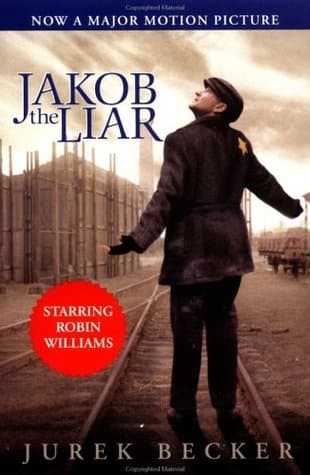
Synopsis
Covers the whole plot, including the ending.
- Difficulty
- Medium
- Pacing
- Moderate
- Mood
- Poignant, Tragicomic, Hopeful, Thought-provoking, Melancholy
- Read it if
- You want a poignant, darkly humorous, and thought-provoking story about hope and resilience in the face of unimaginable adversity, with a unique narrative voice.
- Skip it if
- You prefer straightforward historical accounts without allegorical elements or are sensitive to stories set during the Holocaust that employ elements of tragicomedy.
Jakob the Liar Plot Summary
Covers the whole plot, including the ending.
The Accidental Secret
Jakob Heym, a Jewish man in a German-occupied ghetto, is called to Gestapo headquarters after breaking curfew. While waiting, he accidentally overhears a German radio broadcast saying Soviet forces are three hundred miles from Bezanika. This news, a spark of hope in the bleak ghetto, is a secret, as radios are forbidden. Jakob is released but now has this extraordinary information. He first struggles with what to do, knowing sharing it could mean death, but also seeing its power to lift spirits.
The First Lie
Jakob tells his friend, Mischa, who is losing hope. When Mischa asks how Jakob knows the Russians are advancing, Jakob, fearing the consequences of saying he heard it from a German radio, quickly invents a lie: he claims to own a hidden radio. This fabricated radio becomes the source of all 'news' Jakob shares. The news about the Russian advance quickly spreads, boosting community morale. People begin to look at Jakob with new interest and hope, unaware of his secret's shaky nature.
The Orphan Girl, Lina
Jakob meets Lina, a young orphan girl whose parents were taken away. He takes her in, giving her food and a makeshift home. Lina is initially quiet and traumatized, but soon forms a strong bond with Jakob. Her presence adds another layer to Jakob's life, as he feels responsible for protecting her and maintaining her fragile hope. He often invents small, comforting lies for her, similar to the larger deception he maintains for the ghetto.
Demands for More News
As the first excitement about the Russian advance fades, ghetto residents rely more on Jakob for new information. They press him for daily updates, eager for any sign of liberation. Jakob finds himself in a difficult spot, having to constantly invent new details about the war's progress, army movements, and the outside world. He struggles to keep his stories consistent and believable, often spending sleepless nights creating plausible scenarios to meet the growing demand for hope.
The Burden of Hope
The responsibility of being the only one to provide good news weighs heavily on Jakob. He sees the change his 'radio' brings to the ghetto – people work with new energy, share food, and even laugh. This positive effect makes it impossible for him to confess the truth. He understands that the hope he provides is the only thing keeping many alive. However, the constant need to invent news, along with the fear of being discovered by the Germans, causes him great stress and loneliness. He feels isolated by his secret, unable to share the burden.
The Doctor's Request
Dr. Kirschbaum asks Jakob for help. His friend, Professor Frankfurter, was recently deported, and Kirschbaum asks Jakob to use his 'radio' to find out where Frankfurter was sent and if he is still alive. This request puts Jakob in an impossible situation. He cannot provide this specific information, but he also does not want to crush Dr. Kirschbaum's hope or expose his lie. He delays, fabricating vague details about the difficulty of tuning into specific locations, further entangling himself in his deception.
Roman's Suspicion
Roman, a cynical resident of the ghetto, starts to question Jakob's stories. He notices inconsistencies and finds it unlikely that Jakob could keep a hidden radio without being caught. Roman's skepticism threatens Jakob's illusion. Jakob tries to deflect Roman's questions and stay calm, but Roman's probing makes him increasingly nervous. Roman represents the constant danger of someone exposing the truth, which would lead to Jakob's death and crush the ghetto's collective hope.
The Watchtower Incident
A German watchtower on the ghetto's edge is mysteriously destroyed, leading to increased German patrols and fear. People immediately ask Jakob for an explanation, assuming his 'radio' would have news of a battle. Jakob, having no real information, is forced to invent a detailed story about a daring Russian commando raid that specifically targeted the watchtower. This elaborate lie, though entirely made up, temporarily calms fears and reinforces their belief in Jakob's connection to the outside world.
Lina's Illness and the Train
Lina becomes gravely ill with a fever, causing Jakob great distress. To distract her and keep her spirits up, he invents stories about a beautiful world outside the ghetto, fueled by his 'radio.' He describes a train full of wonderful things, like chocolate and toys, coming to take them to freedom. Tragically, a real train arrives, but it is not one of liberation. The Germans use it to deport the ghetto's inhabitants, including Jakob and Lina, to an extermination camp. The narrator describes Jakob trying to reassure Lina with his stories until the very end.
The Narrator's Interventions
Throughout the story, the anonymous narrator often interrupts, offering reflections, musings, and even alternative, more hopeful, endings. These interventions highlight the artificiality of storytelling and narrative's power to shape perception. The narrator's presence emphasizes that the truth of Jakob's story is less important than its impact on the lives of those in the ghetto. He struggles with recounting such a tragic history, often wishing he could provide a happier outcome, but ultimately sticks to the stark reality.
The Final Deportation
The Germans begin the final liquidation of the ghetto. Despite Jakob's efforts and the hope he fostered, the inevitable happens. Jakob, Lina, and the other residents are rounded up and forced onto trains. In the chaotic moments of deportation, Jakob continues to whisper comforting lies to Lina, telling her about their beautiful destination. The scene shows the powerlessness of individuals against the systematic brutality of the Holocaust, even with extraordinary personal courage. The narrator presents two versions of Jakob's death, emphasizing the ambiguity and loss in the historical record.
The Legacy of the Lie
Even after the deportation, the memory of Jakob's 'radio' and the hope it provided remains. The lie, though fabricated, served a purpose: it gave people a reason to endure, to believe liberation was possible, and to maintain their humanity. The narrator reflects on the impact of Jakob's actions, suggesting that even a lie, born of compassion and aimed at preserving hope, can be a form of truth. Jakob's story shows the human spirit's resilience and storytelling's power, even in the darkest times.
Principal Figures
Jakob Heym
Protagonist
A Jewish man in the ghetto who invents a radio to give his community hope.
Jakob is a humble, unassuming man, prone to introspection and burdened by a deep sense of responsibility. He is not a natural leader but is thrust into that role by circumstance. His accidental overhearing of war news compels him to lie, not out of malice, but out of compassion for his suffering community. He is an ordinary man who performs an extraordinary act of heroism, driven by the desire to alleviate despair. He struggles with the moral implications and immense pressure of his deception, often feeling isolated by his secret.
Relationships: Lina (Adoptive father figure, protector); Mischa (Friend, initial recipient of the lie); The Narrator (Subject of the narrator's story and empathy)
Lina
Supporting
A young orphan girl taken in by Jakob, representing innocence and the future.
Lina is a traumatized young girl, orphaned by the Holocaust, who finds a fragile sense of security with Jakob. She is initially quiet and withdrawn, her innocence contrasting sharply with the harsh reality of the ghetto. She becomes a powerful symbol of the people Jakob is trying to protect, and her well-being is a primary motivator for his continued deception. Her belief in Jakob's stories, particularly about a train to a better place, highlights the heartbreaking vulnerability of children in such circumstances.
Relationships: Jakob Heym (Adoptive daughter, recipient of his protective lies)
Mischa
Supporting
Jakob's friend, who first hears the 'radio' news and spreads it.
Mischa is a strong, somewhat impetuous young man, known for his physical prowess and his willingness to take risks. He is initially on the brink of despair when Jakob shares the news of the Russian advance, which reinvigorates him. He becomes an enthusiastic, though unwitting, accomplice in spreading Jakob's 'news' throughout the ghetto. Mischa represents the immediate, tangible impact of hope on the community, embodying the desire for resistance and survival that Jakob's lies awaken.
Relationships: Jakob Heym (Friend, initial confidant of the 'radio' secret)
Roman
Supporting
A skeptical ghetto resident who suspects Jakob's deception.
Roman is a pragmatic and cynical resident of the ghetto. He is highly intelligent and observant, and his skepticism serves as a constant threat to Jakob's carefully constructed illusion. Roman represents the rational mind that questions the improbable, forcing Jakob to be increasingly inventive and careful with his stories. His presence highlights the constant danger of exposure and the fragility of the hope Jakob tries to maintain. He is not malicious but simply cannot reconcile Jakob's claims with the grim reality.
Relationships: Jakob Heym (Acquaintance, suspicious of Jakob's claims)
Dr. Kirschbaum
Supporting
A compassionate doctor who seeks news of a deported friend from Jakob.
Dr. Kirschbaum is a kind and elderly doctor in the ghetto, respected by the community. He represents the intellectual and humane elements of the ghetto population. His request for Jakob to use his 'radio' to find news of a deported friend highlights the personal desperation and yearning for specific information that Jakob's general news cannot provide. His character underscores the profound impact of the deportations and the human need for closure or at least knowledge in the face of unimaginable loss.
Relationships: Jakob Heym (Patient/acquaintance, asks for help using the 'radio')
Herschel Schtamm
Mentioned
A former actor who commits suicide, symbolizing the depth of despair.
Herschel Schtamm is a character mentioned early in the novel. He is a former actor who, unable to bear the conditions of the ghetto and the loss of hope, commits suicide by throwing himself onto the electrified fence. His death is a stark reminder of the pervasive despair that Jakob's lies are designed to combat. Herschel's fate serves as a catalyst for Jakob's decision to maintain his deception, showing him the devastating consequences of a complete absence of hope.
Relationships: Jakob Heym (Fellow ghetto resident, his death influences Jakob)
The Narrator
Supporting
The omniscient storyteller who frequently interjects, offering commentary and alternative scenarios.
The Narrator is an unnamed, omniscient voice who tells Jakob's story. He is deeply empathetic, often expressing his own anguish and frustration with the tragic events. He frequently breaks the fourth wall, offering philosophical reflections on storytelling, truth, and the nature of hope. He admits to inventing details or considering alternative, happier endings, highlighting the author's struggle with recounting such a bleak history. The Narrator's presence emphasizes the constructed nature of the narrative and the power of human imagination even in the face of horror.
Relationships: Jakob Heym (Chronicler of Jakob's story, empathetic observer)
Themes & Insights
The Power of Hope and Illusion
The main theme is how hope, even if based on a lie, can sustain life in overwhelming despair. Jakob's fabricated radio news brings new life to the ghetto, allowing people to endure suffering. This is clear in how community morale improves, people share food, and laughter returns after Jakob begins spreading his 'news.' The illusion acts as a vital psychological defense, proving that belief in a better future can be as important as food and water for survival. The narrator often questions if such a lie is right, ultimately concluding that its positive impact validates Jakob's actions.
“And there was the radio. And there was hope. And there was Jakob.”
The Burden of Truth vs. The Necessity of Lies
This theme explores the moral question of whether a comforting lie or a harsh truth is better. Jakob's initial lie about the radio quickly grows, forcing him to continually invent news. He knows that revealing the truth would crush the ghetto's fragile hope, possibly leading to despair and suicide, as shown by Herschel Schtamm. His lies are acts of compassion, but they isolate him and burden him with immense pressure. The story suggests that in extreme circumstances, a lie can be an act of love and a necessary survival tool, even if it cannot change the tragic outcome.
“What would be the point of the truth if it merely meant death?”
Humanity in Dehumanizing Circumstances
The novel highlights kindness, courage, and resilience that persist amid the Holocaust's systematic dehumanization. Jakob's selfless act of providing hope, his care for Lina, and the community's willingness to share scarce resources all show the enduring human spirit. Even under constant threat, characters like Dr. Kirschbaum maintain their intellectual curiosity and concern for others. These moments of humanity contrast with the brutal regime, emphasizing that the spirit can remain unbroken even when the body is imprisoned. Jakob's efforts to keep Lina's spirits up with stories of a beautiful world are a poignant example.
“They had learned to live with hunger, with dirt, with lice, but not with despair.”
The Role of Storytelling
The narrative itself often comments on storytelling's nature and purpose. The narrator's interventions, his admitted inventions, and his struggles to find a 'better' ending for Jakob's story show narrative's power to shape understanding and provide meaning. Jakob's lies are, in essence, stories he tells to his community. The book suggests that stories, whether true or made up, are essential for human existence, offering comfort, meaning, and a way to process reality. It explores the storyteller's responsibility, both Jakob within the ghetto and the narrator recounting the history.
“A good story, you see, has to have a beginning, a middle, and an end. Even if the end is sad.”
Plot Devices & Literary Techniques
The Unnamed Ghetto
A generic setting that universalizes the experience of the Holocaust.
By keeping the ghetto unnamed and the specific year ambiguous, the novel universalizes the experience of persecution and suffering during the Holocaust. It allows the story to resonate beyond a specific historical event, making it applicable to any situation where people are oppressed and dehumanized. This lack of specific detail emphasizes the psychological and emotional impact of the events rather than focusing on historical accuracy, making Jakob's story a timeless fable about hope and resilience in the face of tyranny.
The Narrator's Interventions
Breaks in the narrative where the storyteller comments on the plot and offers alternative scenarios.
The frequent interruptions by the anonymous narrator serve as a meta-fictional device. They highlight the artificiality of storytelling and the choices made by an author in crafting a narrative. By openly discussing his own struggles with the tragic ending, and even offering alternative, happier versions of events, the narrator emphasizes the human desire for hope and the ethical responsibility of telling such a story. This device makes the reader aware of the story's construction and its deeper philosophical implications about truth and fiction.
The 'Radio'
A fabricated object that symbolizes hope and provides a mechanism for Jakob's lies.
Jakob's invented radio is the central plot device. It is a tangible symbol of hope for the ghetto residents, representing their connection to the outside world and the possibility of liberation. For Jakob, it is the mechanism through which he dispenses his life-sustaining lies. The radio's non-existence underscores the theme of illusion, while its function highlights the power of belief. It is a source of both immense power and immense burden for Jakob, making him the sole conduit for information and hope.
Kafkaesque Comedy
The use of absurd, ironic, and darkly humorous elements within a tragic setting.
The novel employs elements of Kafkaesque comedy, characterized by absurd situations, dark humor, and a sense of alienation, even within its tragic context. Examples include Jakob's initial accidental overhearing of the news while waiting for punishment, or the elaborate, almost farcical, nature of his invented stories. This comedic layer doesn't diminish the horror but rather highlights the absurdity of the ghetto's existence and the characters' resilience. It allows for moments of levity that make the ultimate tragedy even more poignant, creating a unique tone that balances despair with human ingenuity.
Jakob the Liar Quotes
“Perhaps the only way to endure such times is to make up your own.”
“A man without hope is like a tree without roots.”
“Lies are only good for those who tell them. For those who believe them, they are poison.”
“It's not good to think too much. Thinking makes you sad.”
“Even a small lie can be bigger than the truth, if it gives hope.”
“People need stories, especially when the real story is too hard to bear.”
“The truth is a luxury we cannot always afford.”
“A secret is not a secret if everyone knows it.”
“Hope is a dangerous thing. It can make you do foolish things.”
“Sometimes it's better not to know everything.”
“To invent a future is a dangerous occupation.”
“The greatest freedom is the freedom to imagine.”
“Even in the darkest times, a small spark can light the way.”
“A lie that brings comfort is sometimes better than a truth that brings despair.”
Quiz
10 questions on the plot and the characters. Each answer comes with a short explanation.
Question 1
What crucial piece of information does Jakob Heym accidentally overhear that sparks the central conflict of the novel?
- That the ghetto will be liberated by the Americans next week.
- That the Russians are advancing on a city three hundred miles away.
- That a secret tunnel out of the ghetto has been discovered.
- That the German occupiers are planning to surrender.
Show answer
B. That the Russians are advancing on a city three hundred miles away. Jakob Heym overhears a radio broadcast stating that the Russians are advancing on a city, which he then uses to spread hope.
Question 2
Why does Jakob initially go to the German headquarters, where he overhears the news?
- He was summoned for a routine inspection.
- He was caught breaking curfew and had to report.
- He was trying to smuggle food and was apprehended.
- He was seeking medical attention for a friend.
Show answer
B. He was caught breaking curfew and had to report. Jakob was caught out after curfew and was called to the German headquarters, where he then overheard the radio broadcast.
Question 3
What is the primary reason Jakob begins to elaborate on his initial news, creating 'optimistic lies'?
- He enjoys the attention and power it gives him over others.
- He genuinely believes the war will end quickly and wants to prepare people.
- He sees the positive effect it has on the morale of the ghetto inhabitants.
- He is forced by other ghetto residents to provide more information.
Show answer
C. He sees the positive effect it has on the morale of the ghetto inhabitants. Jakob sees the hope and improved morale his initial news brings and continues to elaborate to sustain that hope among the desperate ghetto residents.
Question 4
Which character forms a protective bond with Jakob, often asking him for more 'news'?
- Kowalski, the baker.
- Hershel, the tailor.
- Lina, the young orphan girl.
- Frankfurter, the former professor.
Show answer
C. Lina, the young orphan girl. Jakob forms a close, protective bond with Lina, a young orphan girl, who is particularly eager for his news.
Question 5
What recurring internal struggle does Jakob face regarding his lies?
- He constantly worries about running out of new stories to tell.
- He struggles with the moral implications of giving false hope.
- He fears that his lies will be exposed by the German authorities.
- He is concerned that his stories are not entertaining enough.
Show answer
B. He struggles with the moral implications of giving false hope. Jakob frequently grapples with the ethical dilemma of providing false hope, even if it brings temporary relief, and the potential consequences if the truth is revealed.
Question 6
What specific item does Jakob claim to possess to justify his access to news, even though he doesn't actually have it?
- A hidden shortwave radio.
- A secret newspaper delivered by an underground network.
- A spy who works inside the German headquarters.
- A map showing the advance of the Russian army.
Show answer
A. A hidden shortwave radio. To make his news seem plausible, Jakob invents the existence of a hidden radio, which he pretends to listen to.
Question 7
How does the author, Jurek Becker, present the ending of Jakob's story, particularly concerning the ultimate fate of the ghetto?
- The ghetto is dramatically liberated by the advancing Russian army.
- Jakob's lies are exposed, leading to his public humiliation and punishment.
- The ghetto is ultimately liquidated, and its inhabitants are transported.
- Jakob escapes the ghetto with Lina, and they find freedom.
Show answer
C. The ghetto is ultimately liquidated, and its inhabitants are transported. Despite the hope Jakob instilled, the novel ends with the tragic liquidation of the ghetto and the transportation of its residents, including Jakob.
Question 8
What is the significance of the 'Kafkaesque comedy' mentioned in the book's description?
- It refers to the humorous interactions between Jakob and the German soldiers.
- It highlights the absurd and often darkly humorous situations arising from bureaucratic oppression and existential struggles.
- It describes the novel's use of slapstick humor to lighten the mood.
- It indicates that the story has a mysterious and detective-like plot.
Show answer
B. It highlights the absurd and often darkly humorous situations arising from bureaucratic oppression and existential struggles. Kafkaesque comedy often involves characters caught in irrational, oppressive systems, facing absurd situations with a blend of humor and despair, which aligns with Jakob's predicament in the ghetto.
Question 9
How do the other residents of the ghetto react to Jakob's news, particularly in the initial stages?
- They are immediately skeptical and accuse him of lying.
- They are filled with renewed hope and a sense of purpose.
- They become fearful and believe the news will lead to worse conditions.
- They largely ignore him, accustomed to false rumors.
Show answer
B. They are filled with renewed hope and a sense of purpose. Jakob's news, even the initial tidbit, provides a much-needed spark of hope and improved morale among the desperate ghetto residents.
Question 10
What is the primary theme explored through Jakob's 'optimistic lies' in the context of the Holocaust?
- The dangers of misinformation and propaganda in wartime.
- The power of illusion and hope as a means of survival and resistance against despair.
- The moral imperative to always tell the truth, regardless of circumstances.
- The individual's responsibility to actively fight against oppression.
Show answer
B. The power of illusion and hope as a means of survival and resistance against despair. The novel highlights how Jakob's lies, though untrue, serve as a vital source of hope and psychological survival for the ghetto inhabitants, demonstrating the extraordinary power of illusion in dire circumstances.
Jakob the Liar FAQ
What is the central premise of 'Jakob the Liar'?
The novel is set in a Jewish ghetto under German occupation where Jakob Heym accidentally overhears a radio broadcast indicating the Russians are advancing. To prevent a friend from committing suicide, Jakob invents a story about having a secret radio, which evolves into a series of optimistic lies to give the ghetto inhabitants hope.
Who is Jakob Heym and what is his primary motivation?
Jakob Heym is the protagonist, an ordinary man who, after overhearing news of the war's progression, begins to fabricate stories about a radio to instill hope in his fellow ghetto residents. His primary motivation is initially to save his friend Kowalski from despair, but it quickly shifts to sustaining the collective morale of the entire ghetto.
How does the 'radio' become a symbol within the ghetto?
The 'radio' becomes a powerful symbol of hope and resistance against the oppressive reality of the ghetto. It represents a connection to the outside world, the possibility of liberation, and the idea that their suffering might soon end, even though it doesn't physically exist in Jakob's possession.
What role does Lina, the orphan girl, play in the story?
Lina is a young orphan girl whom Jakob takes under his care after her parents are deported. Her innocent curiosity about the 'radio' and her unwavering belief in Jakob's stories provide him with both a reason to continue his deception and a source of emotional connection amidst the bleakness.
What is the ultimate fate of Jakob and the ghetto inhabitants?
In one version of the story, Jakob is killed while trying to retrieve a potato for Lina, and the ghetto is subsequently liquidated with all its inhabitants deported. In the narrator's preferred ending, Jakob survives the war and later recounts his story, though the fate of the ghetto remains tragic.
Is there a specific historical ghetto that inspired the setting?
While the novel does not name a specific ghetto, its details are drawn from the experiences of Jewish ghettos established by the Nazis during World War II, particularly those in Eastern Europe. Jurek Becker himself was a survivor of the Lodz Ghetto and Ravensbrück concentration camp, influencing the realistic yet unnamed setting.
How does the narrator's presence influence the reader's perception of events?
The narrator frequently interjects, offering alternative endings, questioning his own narrative choices, and directly addressing the reader. This metafictional approach highlights the constructed nature of storytelling, especially when dealing with such traumatic historical events, and emphasizes the power of hope and narrative in survival.
What is the significance of the potato Jakob tries to get for Lina?
The potato symbolizes a small, tangible act of love and a desperate attempt to provide comfort and normalcy in an abnormal world. In the version where Jakob dies, it tragically underscores the ever-present danger and the harsh reality that even the smallest acts of kindness could lead to fatal consequences in the ghetto.
How does Jakob's character evolve throughout the novel?
Jakob begins as an ordinary, somewhat timid man who accidentally stumbles into heroism. As he continues his deception, he grows more confident and resolute in his role as a purveyor of hope, even as the burden of his lies weighs heavily on him. He transforms from a simple individual into a symbol of collective will.
What psychological impact do Jakob's lies have on the ghetto residents?
Jakob's lies provide a crucial psychological lifeline to the ghetto residents. They alleviate despair, foster a sense of community, and give people a reason to endure another day. The hope, even if false, offers a powerful coping mechanism against the constant threat of starvation, disease, and deportation, allowing them to maintain their sanity.
How does the novel explore the concept of 'necessary lies'?
The novel deeply explores 'necessary lies' by portraying Jakob's deception as a moral act, not a selfish one. His lies, though untrue, serve a higher purpose: preserving human dignity and hope in an inhumane environment. Becker suggests that in extreme circumstances, truth can be less valuable than a comforting illusion.
What is the psychological burden on Jakob for maintaining his deception?
Jakob carries a significant psychological burden, constantly fearing exposure and the devastating impact his lies' unraveling would have on the ghetto. He struggles with the moral implications of his actions, experiences moments of self-doubt, and the pressure of inventing plausible updates from his 'radio' is immense.
How does the novel balance its tragic subject matter with elements of 'Kafkaesque comedy'?
The novel balances tragedy and comedy through its absurd situations, the ironic detachment of the narrator, and the inherent human folly even in dire circumstances. The 'Kafkaesque' elements arise from the bureaucratic absurdity and the characters' powerlessness, but humor emerges from Jakob's ingenious deceptions and the very human desire for hope.
Is Jakob a hero or a tragic figure, or both?
Jakob is undeniably both a hero and a tragic figure. He is heroic for his selfless act of providing hope and fighting despair, but tragic because his heroism is born from immense suffering and his efforts are ultimately unable to change the ghetto's grim fate. His story is a testament to the human spirit's resilience in the face of overwhelming odds.
What is the significance of the two different endings presented by the narrator?
The two endings highlight the power of narrative and the human need for different kinds of closure. The tragic ending underscores the brutal reality of the Holocaust, while the more hopeful, albeit still somber, ending allows for a degree of survival and the perpetuation of Jakob's story, suggesting that hope can endure even beyond physical death.
How does the novel challenge conventional notions of truth and falsehood?
The novel profoundly challenges the notion that truth is always preferable. In the context of the ghetto, objective truth (the bleak reality) leads to despair and death, while Jakob's falsehoods, imbued with hope, sustain life and spirit. It argues that the value of information is determined by its impact on human well-being, not just its factual accuracy.
What is the overarching message about hope in 'Jakob the Liar'?
The overarching message is that hope, even if based on illusion, is a fundamental human necessity and a powerful force for survival. The novel suggests that in extreme conditions, the belief in a better future, however distant or fabricated, can be as vital as food and water, allowing people to endure unimaginable suffering.
How does the novel comment on the nature of storytelling itself?
Through its metafictional narrator, 'Jakob the Liar' directly comments on the nature of storytelling, its power, and its ethical dilemmas. It shows how stories can shape reality, provide solace, and even become a form of resistance. The narrator's choices emphasize that narratives are constructed and that the storyteller bears responsibility for the impact of their tales.
About the author
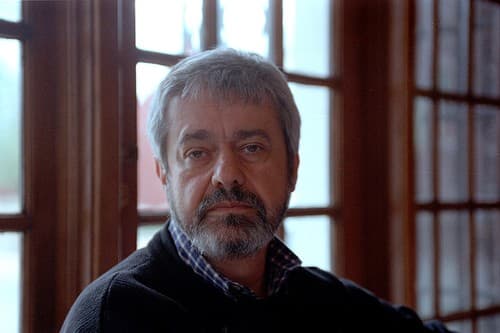
Jurek Becker was a Polish-born German writer, screenwriter and East German dissident. His most famous novel is Jacob the Liar, which has been made into two films. He lived in Łódź during World War II for about two years and survived the Holocaust.
Similar books
- The Book Thief
Markus Zusak
4.4 (1.8M) average on GoodreadsHistorical FictionFeatures a unique narrative perspective and explores the power of words and storytelling amidst the backdrop of WWII and the Holocaust.
- Night
Elie Wiesel
4.3 (970k) average on GoodreadsBiographyWhile much more direct and less comedic, it provides a foundational understanding of the historical context and the profound impact of the Holocaust on individuals.
- The Diary of a Young Girl
Anne Frank
4.2 (2.7M) average on GoodreadsBiographyCompared to Anne Frank's The Diary of a Young Girl, Jakob the Liar offers a broader, communal perspective rather than an intimate, personal one. Frank's diary details the day-to-day life of hiding, focusing on personal growth and observation amidst confinement. Becker's work, however, examines the societal implications of collective hope and deliberate deception as a survival mechanism for an entire ghetto, contrasting with Frank's portrayal of innocence and individual resilience.
- To Kill a Mockingbird
Harper Lee
4.3 (4.5M) average on GoodreadsHistorical FictionIn the 1930s Jim Crow South, Harper Lee writes about racial injustice, moral growth, and the quiet courage of a lawyer father, Atticus Finch, as seen through his young daughter's eyes.
- The Great Gatsby
F. Scott Fitzgerald
3.9 (3.8M) average on GoodreadsHistorical FictionIn the opulent Roaring Twenties, a mysterious millionaire's lavish parties hide his desperate, tragic pursuit of a lost love, exposing the emptiness within the American Dream.
- Pride and Prejudice
Jane Austen
4.3 (3M) average on GoodreadsHistorical FictionIn a society focused on status and money, Elizabeth Bennet navigates love and pride, challenging Mr. Darcy and social expectations to find true affection.





Enjoyed the summary?
A summary gives you the shape of the book. The book itself has the detail, the examples and the voice.
Find Jakob the Liar on AmazonAs an Amazon Associate, BookBrief earns from qualifying purchases. How we're funded