
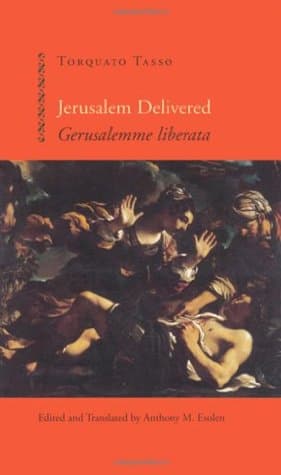
Synopsis
Covers the whole plot, including the ending.
- Difficulty
- Hard
- Pacing
- Variable
- Mood
- Epic, Heroic, Tragic, Spiritual, Romantic
- Read it if
- You enjoy epic poems of grand scale, blending historical warfare with mythological and magical elements, similar to classical epics, and are interested in the First Crusade.
- Skip it if
- You prefer modern prose, dislike poetry, or are not interested in lengthy historical narratives with significant religious and fantastical undertones.
Jerusalem Delivered Plot Summary
Covers the whole plot, including the ending.
The Call to Action and the Christian Assembly
The story begins with God looking at the Christian armies, who have won many battles but are stopped before Jerusalem. He sends the Archangel Gabriel to Godfrey of Bouillon, telling him to unite the crusader leaders and take command. Godfrey, a religious and brave knight, accepts this divine order. He gathers a council of the many Christian princes and generals at the camp near Tortosa. Despite initial disagreements, Godfrey's wisdom and divine authority convince them to choose him as their supreme commander. This sets the stage for the final push towards the Holy City. This scene establishes Godfrey's leadership and the Crusade's divine purpose.
Armida's Deception and the Ensnared Knights
The Saracen sorceress Armida, niece of the King of Damascus, comes to the Christian camp. She pretends to be a distressed princess seeking help against a usurper uncle. Her beauty and cleverness immediately charm many Christian knights, who believe her sad story. Her real mission, planned by hellish powers, is to cause trouble and reduce Christian forces by luring away their best warriors. She promises them glory and love, leading many, including Eustace (Godfrey's brother), into her magical prison. This weakens the crusader army and delays their advance on Jerusalem.
Rinaldo's Disappearance and the Quest for Him
Rinaldo, a young, impulsive, and powerful Christian knight, fights with Gernando, another crusader who insults him. In anger, Rinaldo kills Gernando. To avoid more conflict and punishment, Godfrey banishes Rinaldo from the camp. This absence is a severe blow to the Christian army, as Rinaldo is their strongest warrior. Soon after, Armida captures Rinaldo and takes him to her enchanted island. She uses magic to make him fall deeply in love with her, holding him captive in a life of pleasure, far from his crusading duties. Two knights, Carlo and Ubaldo, are sent on a dangerous quest to find and retrieve him.
Tancred and Clorinda's Ill-Fated Love
The noble Christian knight Tancred falls deeply in love with the fierce pagan warrior princess Clorinda after meeting her in battle. Clorinda, known for her bravery and white armor, is a strong opponent and a respected leader among the Saracen forces. Their love is complicated by their opposing loyalties, creating deep inner conflict for Tancred. This tragic romance is a main part of the story, showing the personal costs of war and the blurred lines between enemy and beloved. Their meetings on the battlefield are full of both fighting skill and unrequited passion, hinting at a sad future.
The Siege of Jerusalem Begins
After many delays from internal disagreements, magic, and missing warriors, the Christian army, under Godfrey's steady leadership, finally arrives at Jerusalem's walls. The sight of the Holy City renews the crusaders' passion as they prepare for the hard siege. The Saracen defenders, led by King Aladine and the brave Argillan, are equally determined to protect their city. This moment marks the end of their long journey and the start of the final fight for the sacred site. It sets the stage for epic battles and divine help.
The Forest of Enchantment and the Magic Wood
The Christian army needs wood to build siege engines to break Jerusalem's strong walls. The only suitable forest near the city is enchanted by the sorcerer Ismen, who has called on evil spirits to protect it. Knights sent to cut trees are scared by monstrous illusions and flee in panic, unable to cut a single log. This magical barrier creates a big problem, showing how hellish forces directly interfere in the earthly conflict. It forces the crusaders to find a hero pure and brave enough to overcome the dark magic.
Rinaldo's Return and the Breaking of the Enchantment
Carlo and Ubaldo, guided by a hermit and with a magic shield that shows Rinaldo's weakened state, reach Armida's enchanted island. They break the spell holding Rinaldo, who, filled with shame and renewed purpose, leaves Armida and returns to the Christian camp. His return energizes the crusaders. He then bravely enters the enchanted forest, facing the terrifying illusions and demonic guardians. His strong faith and purity allow him to overcome the evil magic, letting the crusaders finally gather the wood needed for their siege engines and continue their attack on Jerusalem.
Clorinda's Death and Tancred's Grief
In a key night battle, Clorinda, in black armor, sets fire to a Christian siege tower. Tancred, not recognizing her, fights her fiercely. After a long and brutal fight, Tancred lands a fatal blow. As Clorinda dies, she asks for baptism. Tancred, horrified, removes her helmet and realizes he has killed the woman he loves. He baptizes her as she dies, finding a bitter comfort in her conversion, but is overcome with deep grief. This scene is one of the most moving and tragic in the epic, showing the cruel irony of war and love.
The Final Assault and the Fall of Jerusalem
With their siege engines ready and Rinaldo leading the charge, the Christian forces launch their final, overwhelming attack on Jerusalem. Godfrey, inspired by divine visions, fights with great courage. Rinaldo breaches the walls, creating an opening for the crusaders. Despite strong resistance from the Saracens, led by Aladine and Solyman, the Christian army, driven by religious fervor and divine aid, eventually defeats the defenders. The city falls in a bloody struggle, achieving the crusade's long-held goal and marking a triumphant, though violent, victory for the Christians.
Godfrey's Entry and the Vow Fulfilled
After Jerusalem's capture, Godfrey of Bouillon, with his victorious but tired army, enters the city. He goes directly to the Church of the Holy Sepulchre, the Crusade's ultimate goal. There, he lays down his armor and offers prayers of thanks to God, fulfilling his sacred vow. This act symbolizes the Crusade's spiritual triumph and the Holy City's purification. The scene concludes the epic's main story, highlighting the Christian effort's religious devotion and final success, despite the great sacrifices and moral complexities faced.
Jerusalem Delivered Characters
Godfrey of Bouillon
Protagonist
The pious and divinely appointed leader of the First Crusade.
Godfrey is depicted as the ideal Christian leader: courageous, wise, humble, and devout. He is chosen by God to lead the crusader forces to liberate Jerusalem and consistently prioritizes the divine mission above personal glory. He is a strategic commander, capable of uniting fractious princes and inspiring his troops, though he sometimes struggles with the internal divisions and external enchantments that plague his army. His character embodies the virtues of faith and leadership central to the epic's themes.
Relationships: Eustace (Younger brother, initially swayed by Armida); Christian Army (Their divinely appointed commander and spiritual guide)
Rinaldo
Protagonist
The strongest and most valorous Christian knight, prone to impetuousness.
Rinaldo is the epic's most formidable warrior, possessing immense strength, courage, and a youthful, sometimes reckless, spirit. He is a descendant of the legendary Rinaldo of the Carolingian cycle. His journey is one of temptation and redemption; he is initially seduced by the sorceress Armida, but ultimately returns to his duty and proves instrumental in the Crusade's success. His character represents the struggle between earthly pleasures and spiritual duty, and the power of repentance.
Relationships: Armida (Lover and captor, later abandoned); Godfrey of Bouillon (His commander, who seeks his return); Carlo and Ubaldo (Knights who rescue him)
Tancred
Protagonist
A noble and melancholic Christian prince, deeply in love with Clorinda.
Tancred is a valiant Christian knight, known for his skill in battle and his profound, often sorrowful, romantic nature. He is deeply in love with the pagan warrior Clorinda, a love that brings him immense joy and equally immense suffering. His character embodies the tragic intertwining of love and war, and the personal cost of conflict. He is often consumed by his emotions, leading to moments of distraction and despair, but his loyalty to the Crusade remains strong.
Relationships: Clorinda (His beloved enemy, whom he unknowingly kills); Erminia (A Saracen princess who unrequitedly loves him)
Clorinda
Antagonist/Supporting
A fierce and honorable pagan warrior princess, loved by Tancred.
Clorinda is a powerful and respected warrior among the Saracens, known for her exceptional skill, courage, and distinctive white armor. Despite being a pagan, she possesses a noble and honorable spirit, often demonstrating virtues admired by the Christians. Her tragic love story with Tancred is a central element, culminating in her death and conversion. She represents the potential for virtue and grace even among the 'enemies' and challenges simplistic notions of good and evil.
Relationships: Tancred (Her Christian lover and eventual killer); Argantes (Her loyal companion in battle)
Armida
Antagonist
A beautiful and powerful Saracen sorceress who tempts Christian knights.
Armida is a captivating and cunning sorceress, niece of the King of Damascus, whose primary role is to sow discord and weaken the Christian forces through seduction and enchantment. She uses her beauty and magic to lure away numerous knights, most notably Rinaldo, to her enchanted island, where they are held captive by pleasure. While initially a figure of pure malice, she develops genuine feelings for Rinaldo, adding a layer of complexity to her character, especially after his departure.
Relationships: Rinaldo (Her lover and captive, whom she genuinely comes to love); Infernal Powers (Her allies and source of magic)
Argantes
Antagonist
A proud, fierce, and unyielding Circassian warrior for the Saracens.
Argantes is one of the most formidable Saracen champions, characterized by his immense strength, reckless courage, and disdain for all Christians. He is fiercely proud and often arrogant, preferring death to surrender. He is a primary antagonist on the battlefield, engaging in numerous duels and inspiring the Saracen defense. His character embodies pagan valor and defiance, providing a powerful martial challenge to the Christian heroes.
Relationships: Clorinda (His loyal companion and fellow warrior); Tancred (His primary Christian antagonist in battle)
Ismen
Antagonist
A powerful Saracen sorcerer and necromancer.
Ismen is a dark sorcerer allied with the Saracen forces, who uses his infernal magic to hinder the Christian advance. He is responsible for enchanting the forest, making it impossible for the crusaders to gather wood for their siege engines. His powers are derived from hellish forces, and he represents the direct spiritual opposition the Christians face. He is a key figure in the magical elements of the epic, demonstrating the supernatural forces at play.
Relationships: Aladine (Advisor and magical ally to the King of Jerusalem); Infernal Powers (His masters and source of power)
Aladine
Antagonist
The King of Jerusalem, a determined and cruel defender of the city.
Aladine is the Saracen King of Jerusalem, a fierce and determined ruler committed to defending his city against the Christian invaders. He is portrayed as cruel and superstitious, particularly in his persecution of Christians within Jerusalem's walls. He relies on the counsel of his sorcerer Ismen and commands a diverse army of Saracen and Egyptian forces. His resistance provides a formidable political and military challenge to Godfrey's leadership.
Relationships: Ismen (His primary magical advisor); Saracen Army (Their king and commander)
Jerusalem Delivered Themes
Faith and Divine Providence
The epic constantly shows how divine will helps the Crusade succeed. God chooses Godfrey, and heavenly beings intervene in battles, inspiring Christian warriors and guiding them. The main goal—freeing Jerusalem—is presented as a holy mission, ordered by God. Even with internal conflicts or evil magic, the strong faith of characters like Godfrey and Rinaldo's return to duty show how spiritual purpose triumphs. This theme is clear when Godfrey prays at the Holy Sepulchre after the city falls, acknowledging divine help.
“From heaven the Lord of Hosts with pitying eye / Upon the Christians cast a gracious look.”
Love and War
Tasso skillfully blends romantic love into the war, often with sad results. The main example is the doomed love between the Christian Tancred and the pagan Clorinda, ending with his killing her. Similarly, Armida's magical seduction of Rinaldo shows how earthly love and pleasure can distract, drawing warriors from their holy duty. These relationships highlight the personal costs of conflict, the blurring of enemy lines, and the deep emotional turmoil individuals experience within the larger struggle.
“Love, that in gentle hearts makes his abode, / Is oft the cause of cruel, bloody fray.”
Temptation and Redemption
The theme of temptation is strongly explored through Armida's enchantments. These lure many Christian knights, especially Rinaldo, away from their holy vows. Her magical island offers a life of pleasure, symbolizing the appeal of worldly desires over spiritual duty. Rinaldo's rescue and return to battle represent redemption, showing that it is possible to overcome sin and return to a righteous path. This arc emphasizes the moral struggles crusaders face and the importance of faith.
“He who in pleasure's soft embrace is bound, / Forgets the path to virtue and renown.”
Heroism and Loyalty
The epic celebrates different kinds of heroism: Godfrey's steady leadership, Rinaldo's unmatched fighting skill, and Tancred's noble courage. Loyalty to one's faith, commander, and fellow warriors is a top virtue. Conversely, disloyalty and internal divisions weaken the Christian cause. Saracen warriors, such as Argantes and Clorinda, also show deep heroism and loyalty to their people. This challenges the simple idea of good and evil, showing that bravery exists on both sides of a conflict. Their strong commitment to their causes drives much of the story's drama.
“No greater glory can a warrior gain / Than to defend his country and his faith.”
Plot Devices & Literary Techniques
Divine Intervention
God and angels actively guide and influence the Christian forces.
Divine intervention is a pervasive plot device, establishing the Crusade as a divinely sanctioned mission. God sends Gabriel to appoint Godfrey, angelic hosts inspire crusaders in battle, and miracles occur to aid the Christian cause. This device not only provides a moral framework but also directly influences the plot by resolving seemingly insurmountable obstacles, such as inspiring a wavering army or giving Godfrey visions. It underscores the epic's theological underpinnings and the belief that God's will ultimately prevails.
Magic and Enchantment
Sorcerers and demons use supernatural powers to hinder or aid the warring factions.
Magic and enchantment are central to the conflicts in 'Jerusalem Delivered'. Saracen sorcerers like Armida and Ismen wield powerful spells, creating illusions, enchanting forests, and seducing knights to weaken the Christian army. These magical elements introduce fantastic obstacles that require heroic purity or divine aid to overcome, such as Rinaldo breaking the forest's enchantment. This device adds a layer of supernatural struggle, reflecting the spiritual battle between good and evil, and provides opportunities for grand, imaginative set pieces.
The Epic Journey/Quest
Characters undertake perilous journeys to achieve a specific goal.
While the main plot is the siege, several sub-plots involve classic epic quests. The most notable is the journey undertaken by Carlo and Ubaldo to find and rescue Rinaldo from Armida's enchanted island. This quest involves navigating treacherous lands, overcoming magical guardians, and resisting temptations. These smaller journeys mirror the larger Crusade, highlighting themes of perseverance, loyalty, and the struggle against distracting worldly pleasures, ultimately serving to restore the strength of the Christian army for the final assault.
The Tragic Irony
Events unfold in a way that is contrary to what is expected, often with sorrowful results.
Tragic irony is most poignantly demonstrated in the story of Tancred and Clorinda. Despite their profound love, they are on opposing sides of a war. The ultimate tragic irony occurs when Tancred unknowingly kills Clorinda in battle, only to discover her identity as she dies in his arms, requesting baptism from her slayer. This device amplifies the emotional impact of the narrative, underscoring the cruel and arbitrary nature of war, and the profound personal suffering it inflicts, even on those who fight with honor.
Jerusalem Delivered Quotes
“O, what a glory, what a fame, what praise, / In after ages, shall thy name attend!”
“The world is full of snares, and dangers too, / And he that thinks he stands, had best take heed.”
“But when the mind, with too much pleasure fed, / Grows soft and tender, and the spirit dead, / Then vice creeps in, and virtue flies away.”
“For love, when it is pure and truly just, / Is stronger far than any human trust.”
“So little needs, so little can suffice, / To make us happy, and to make us wise.”
“But cruel fortune, with a jealous eye, / Doth often cross us, when we soar too high.”
“He that will reap the fruit, must sow the seed.”
“The greatest minds, when most they are opprest, / Burst forth with vigor, and disdain to rest.”
“For what is life, but a perpetual fight, / Against the darkness, and for truth and light?”
“And oft, where least we fear, the danger lies.”
“No greater torment can a soul endure, / Than to remember joys that are no more.”
“Thus, in the bosom of a tender maid, / A hero's heart, and warrior's soul, displayed.”
“The path to glory, through the grave must run.”
“For who can 'scape the dart of destiny?”
Quiz
10 questions on the plot and the characters. Each answer comes with a short explanation.
Question 1
Which historical event forms the backdrop for Torquato Tasso's 'Jerusalem Delivered'?
- The Peloponnesian War
- The First Crusade
- The Trojan War
- The Hundred Years' War
Show answer
B. The First Crusade 'Jerusalem Delivered' is set in the 11th century and tells the story of the First Crusade and the siege which gave Christian armies control over Jerusalem.
Question 2
Which character is described as the leader of the Christian armies in 'Jerusalem Delivered'?
- Rinaldo
- Tancred
- Godfrey
- Clorinda
Show answer
C. Godfrey Godfrey is explicitly named as the leader of the Christian armies in the poem.
Question 3
What significant event occurs between the Italian prince Tancred and the pagan warrioress Clorinda?
- They form an alliance against the Saracens.
- Tancred converts Clorinda, and then simultaneously kills her.
- Clorinda betrays Tancred to the Saracen forces.
- They elope and leave the conflict behind.
Show answer
B. Tancred converts Clorinda, and then simultaneously kills her. Tancred, the Italian prince, falls in love with Clorinda, whom he eventually (and simultaneously) converts and kills.
Question 4
Beyond human adversaries, what other forces do Tasso's heroes confront in 'Jerusalem Delivered'?
- Natural disasters and extreme weather.
- Internal political strife within the Christian armies.
- A host of fearsome and manipulative devils, demons, and sorcerers.
- Rebellions among the local populace.
Show answer
C. A host of fearsome and manipulative devils, demons, and sorcerers. The heroes must face not only the Saracens and their allies, but also a host of fearsome and manipulative devils, demons, and sorcerers.
Question 5
Which English poet borrowed scenes and episodes from 'Jerusalem Delivered' for 'The Faerie Queene'?
- John Milton
- Edward Fairfax
- Edmund Spenser
- William Shakespeare
Show answer
C. Edmund Spenser Spenser borrowed scenes and episodes from this poem in writing the 'Faerie Queen'.
Question 6
What was a primary concern for Tasso, writing at a time when Christianity was bitterly divided?
- The rise of new scientific discoveries.
- The nature of leadership and loyalty, and the importance of sacrifice.
- The expansion of global trade routes.
- The influence of classical Greek philosophy.
Show answer
B. The nature of leadership and loyalty, and the importance of sacrifice. Writing at a time when Christianity was bitterly divided, Tasso was naturally concerned with the nature of leadership and loyalty, with the importance of sacrifice, with the evils of corruption, and with the existence of truth.
Question 7
How did Edward Fairfax's 1600 verse translation of 'Jerusalem Delivered' differ from the original?
- Fairfax translated it into prose, not verse.
- Fairfax altered the original poem considerably to fit Tasso's stanzas into Spenserian verse.
- Fairfax added entirely new characters and plotlines.
- Fairfax only translated selected cantos, not the entire poem.
Show answer
B. Fairfax altered the original poem considerably to fit Tasso's stanzas into Spenserian verse. In order to fit Tasso's stanzas into the then popular Spenserian verse form, Fairfax had to alter the original poem considerably.
Question 8
Which major English poet was greatly influenced by Tasso when writing his own Christian epic, 'Paradise Lost'?
- Geoffrey Chaucer
- John Milton
- Lord Byron
- William Wordsworth
Show answer
B. John Milton Milton was greatly influenced by Tasso when writing his own Christian epic, 'Paradise Lost'.
Question 9
What is Anthony Esolen's new translation of 'Jerusalem Delivered' praised for, compared to Fairfax's?
- Its radical reinterpretation of Tasso's themes.
- Its brevity and conciseness, significantly shortening the original.
- Being both more true to its original source and more fluid.
- Its use of modern slang and contemporary language.
Show answer
C. Being both more true to its original source and more fluid. Esolen's version is both more true to its original source and more fluid than that of his Elizabethan predecessor.
Question 10
What aspect of Tasso's 'Jerusalem Delivered' is highlighted as a parallel to classical predecessors like the 'Iliad' and 'Odyssey'?
- Its exclusive focus on historical accuracy without mythical elements.
- Its strict adherence to a single genre, avoiding mixing elements.
- Its deft mixing of history and myth.
- Its satirical tone and comedic elements.
Show answer
C. Its deft mixing of history and myth. As in other epic poems, 'Jerusalem Delivered' deftly mixes history and myth, a characteristic shared with classical epics.
Jerusalem Delivered FAQ
What is the central historical event depicted in 'Jerusalem Delivered'?
'Jerusalem Delivered' by Torquato Tasso primarily focuses on the First Crusade, specifically detailing the siege of Jerusalem in the 11th century. This siege ultimately led to Christian armies gaining control over Jerusalem and the Holy Lands for a period.
Who are the main Christian heroes leading the charge against the Saracens?
The primary Christian heroes include Godfrey, who serves as the overall leader of the Christian armies; Rinaldo, renowned as the bravest of the Christian warriors; and Tancred, an Italian prince whose romantic entanglements become a significant subplot.
What supernatural elements do the Christian heroes face in addition to human adversaries?
Beyond the Saracen and allied forces, the Christian heroes must contend with a powerful array of supernatural foes. These include fearsome and manipulative devils, demons, and sorcerers, who actively interfere with the Crusade's progress and the heroes' fates.
What is the tragic love story involving Tancred?
Tancred, a Christian prince, falls deeply in love with Clorinda, a pagan warrioress who fights for the Saracens. In a tragic and climactic encounter, Tancred unknowingly engages Clorinda in battle, mortally wounds her, and, as she dies, converts her to Christianity.
What broader themes does Tasso explore in 'Jerusalem Delivered' given his historical context?
Writing during a period of intense Christian division, Tasso explores profound themes such as the nature of effective leadership, the essence of loyalty, the critical importance of sacrifice, the corrupting influence of evil, and the pursuit of truth. These themes resonated deeply in his time and continue to be relevant.
How does the character of Armida contribute to the 'hidden details' of the narrative?
Armida, a powerful sorceress working for the Saracens, uses her enchantments to distract and weaken the Christian forces. Her seduction of Rinaldo, luring him away from his duties on a magical island, represents a significant hidden detail of temptation and spiritual struggle within the broader conflict.
What is the significance of the enchanted forest that the Crusaders must overcome?
The enchanted forest, guarded by powerful demons and illusions, serves as a crucial obstacle for the Crusaders, preventing them from obtaining wood for their siege engines. Its conquest, requiring a hero pure of heart and strong in faith like Rinaldo, highlights the spiritual battle underlying the physical war.
Are there any parallels between Tasso's personal struggles and the psychological states of his characters?
Some scholars suggest that Tasso's own struggles with mental illness and his confinement might be reflected in the psychological torments and inner conflicts experienced by characters like Tancred, Rinaldo, and even Godfrey, as they grapple with love, duty, and spiritual doubt amid external pressures.
How does Rinaldo's journey from being enchanted by Armida to returning to the Crusade reflect psychological themes?
Rinaldo's period of enchantment with Armida symbolizes a psychological struggle between carnal pleasure and spiritual duty. His eventual rescue and return to the Crusade represent a triumph of discipline and divine purpose over temptation, embodying themes of repentance and redemption.
What psychological impact does the constant presence of demonic manipulation have on the Christian characters?
The pervasive demonic manipulation, often manifesting as illusions, dreams, and whispers, creates a psychological atmosphere of paranoia and self-doubt among the Christian characters. It tests their faith, resolve, and ability to discern truth from deception, highlighting the fragility of the human mind under duress.
How does the poem interpret the concept of 'holy war' through the actions of its characters?
The poem presents a complex interpretation of 'holy war,' depicting the Crusaders' mission as divinely ordained but also showing the human cost, moral ambiguities, and personal suffering involved. While Godfrey is portrayed as a pious leader, characters like Tancred and Rinaldo experience more nuanced struggles with violence and love, complicating a purely triumphalist view.
To what extent is 'Jerusalem Delivered' a celebration of Christian piety versus a critique of human fallibility?
While it undeniably celebrates Christian piety and the ultimate success of the Crusade, the poem also offers a subtle critique of human fallibility. The numerous distractions, internal dissensions, and personal weaknesses of the Christian heroes, often exploited by demonic forces, demonstrate that even a divinely sanctioned mission is fraught with human imperfections.
How does the portrayal of Saracen characters, like Clorinda and Argante, challenge simple good-versus-evil interpretations?
Characters like Clorinda, who is noble and brave, and Argante, who embodies fierce martial honor, challenge simplistic good-versus-evil interpretations. Their heroic qualities and complex motivations lend depth to the 'enemy' side, suggesting that valor and virtue are not exclusive to one faith or people, prompting readers to consider universal human traits.
What is the significance of the new translation by Anthony Esolen compared to earlier versions like Fairfax's?
Anthony Esolen's new translation is significant because it is the first major verse translation into English since Fairfax's 1600 version. Esolen's work is praised for being more faithful to Tasso's original Italian structure and meaning, as well as being more fluid and powerful in its English rendition, unlike Fairfax's which altered the original to fit Spenserian verse.
How did 'Jerusalem Delivered' influence later epic poets like Spenser and Milton?
'Jerusalem Delivered' had a profound influence on later epic poets. Edmund Spenser borrowed specific scenes and episodes for his own work, 'The Faerie Queene,' while John Milton was greatly influenced by Tasso's Christian epic when composing 'Paradise Lost,' particularly in its blend of classical epic conventions with Christian theology and supernatural elements.
About the author
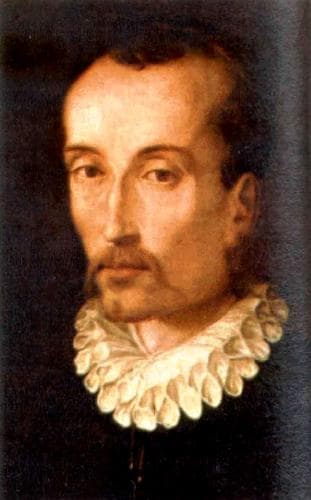
Torquato Tasso was an Italian poet of the late Renaissance, best known for his epic poem "Jerusalem Delivered," which explores themes of faith and heroism during the First Crusade. His work is notable for its rich imagery and complex characters, reflecting the cultural and religious tensions of his time. Tasso's influence extends beyond literature, impacting the arts and philosophy in subsequent centuries.
Similar books
- The Aeneid
Virgil
3.8 (107k) average on GoodreadsFantasyA classical epic poem blending myth and history, with a focus on national destiny and divine intervention.
- Paradise Lost
John Milton
4.1 (6k) average on GoodreadsMysteryA Christian epic poem dealing with grand theological themes, influenced by Tasso's work.
- The Faerie Queene
Edmund Spenser
3.6 (15k) average on GoodreadsHistoryAn allegorical epic poem with knights, quests, and enchantments, borrowing scenes and episodes from Tasso.
- To Kill a Mockingbird
Harper Lee
4.3 (4.5M) average on GoodreadsHistorical FictionIn the 1930s Jim Crow South, Harper Lee writes about racial injustice, moral growth, and the quiet courage of a lawyer father, Atticus Finch, as seen through his young daughter's eyes.
- The Great Gatsby
F. Scott Fitzgerald
3.9 (3.8M) average on GoodreadsHistorical FictionIn the opulent Roaring Twenties, a mysterious millionaire's lavish parties hide his desperate, tragic pursuit of a lost love, exposing the emptiness within the American Dream.
- Pride and Prejudice
Jane Austen
4.3 (3M) average on GoodreadsHistorical FictionIn a society focused on status and money, Elizabeth Bennet navigates love and pride, challenging Mr. Darcy and social expectations to find true affection.





Enjoyed the summary?
A summary gives you the shape of the book. The book itself has the detail, the examples and the voice.
Find Jerusalem Delivered on AmazonAs an Amazon Associate, BookBrief earns from qualifying purchases. How we're funded