

Synopsis
Covers the whole plot, including the ending.
- Difficulty
- Medium
- Pacing
- Moderate
- Mood
- Introspective, Quirky, Melancholy, Romantic, Suspenseful
- Read it if
- You enjoy introspective YA novels about identity, fate, and the complexities of first love, with a touch of magical realism.
- Skip it if
- You prefer straightforward narratives without philosophical musings or a sense of impending, ambiguous doom.
Just in Case Plot Summary
Covers the whole plot, including the ending.
The Balcony Incident
Fifteen-year-old David Case has a profound realization when he sees his younger brother, Adam, dangerously balanced on their apartment balcony railing. The near-tragedy shatters David's sense of security and shows him the terrifying randomness of fate. Convinced that his own life is now under some cosmic threat, David decides he must escape his current identity and surroundings to outwit this perceived destiny. This moment sparks his urgent desire for change and sets him on a path to reinvent himself, believing it's the only way to survive the dangers he now senses everywhere.
The Birth of Justin Case
After the balcony incident, David Case makes a radical decision to leave his old life. He changes his name to Justin Case, a play on words reflecting his new philosophy of preparedness. He dyes his hair blonde, buys new clothes, and moves to a different part of the city, cutting ties with his past. This change is not just superficial; Justin tries to adopt a new personality, shed his old fears, and embrace a more adventurous, yet careful, persona. He even invents an imaginary dog named Boy to accompany him, symbolizing his need for companionship and protection in this new, uncertain world.
Encountering Agnes Day
In his new life as Justin Case, he meets Agnes Day, a striking and somewhat mysterious girl who immediately captivates him. Agnes is a free spirit, seemingly without the worries that now consume Justin. Their meeting marks a significant turn in Justin's journey, as he is drawn to her adventurous nature and her ability to live in the moment. Despite his newfound caution and his belief in impending doom, Justin is irresistibly attracted to Agnes, and their budding romance becomes a central part of his reinvented life, challenging his resolve to remain detached and safe.
The Imaginary Companion
Justin's imaginary dog, Boy, becomes a real presence in his new life. Boy is more than just a figment of his imagination; he is Justin's confidant, protector, and a sign of his inner anxieties and desires. Boy accompanies Justin everywhere, offering silent support and a sense of normalcy in a world Justin now sees as dangerous. The interactions with Boy allow Justin to process his thoughts and feelings, serving as a way to cope with his deep sense of isolation and his constant watch against fate. Boy is a key element in Justin's psychological makeup.
Navigating New Friendships
As Justin, he tries to build a new social circle, befriending people like the eccentric Stella and the more grounded Marcus. These new friendships are complicated by Justin's need to maintain his made-up identity and his constant fear of revealing his past. He struggles to connect genuinely, always on guard, fearing that any deep connection might expose him to the dangers he's trying to avoid. His interactions often have a sense of detachment, as he observes others through the lens of his 'just in case' philosophy, constantly assessing potential threats and weaknesses.
The Growing Relationship with Agnes
Justin's relationship with Agnes Day grows, bringing both joy and deep challenges to his new identity. Agnes represents everything Justin fears and desires: spontaneity, vulnerability, and a potential for deep connection that could expose him. He finds himself falling deeply in love, an emotion that goes against his need for detachment and safety. Their shared experiences, from exploring the city to intimate conversations, chip away at Justin's resolve to remain guarded. Agnes's influence forces him to confront the limits of his 'just in case' philosophy and the true cost of living a life without genuine human connection.
Whispers of the Past
Despite his best efforts to erase David Case, parts of his past begin to enter Justin's carefully built new life. Subtle reminders, chance encounters, or even just his own memories start to reappear, creating internal conflict and external tension. He becomes increasingly paranoid, constantly looking for any sign that his old life might catch up to him. This return of the past shows how difficult it is, if not impossible, to truly escape one's identity and history, emphasizing the psychological strain of maintaining such an elaborate deception.
A Confrontation with Reality
A moment arrives when Justin's carefully kept illusion of safety and his imaginary companion, Boy, are tested against reality. Without revealing specific plot points, this scene forces Justin to confront the limits of his coping methods and the true nature of his fears. It is a moment of reckoning where the line between his internal world and the external world blurs, pushing him to acknowledge how fragile his self-deception is. This confrontation is a painful but necessary step in his journey toward understanding the real sources of his anxiety.
The Nature of Fate
Throughout his journey, Justin constantly struggles with the philosophical question of fate versus free will. He believes he is 'just in case' against an inevitable doom, yet his actions, particularly his pursuit of Agnes and new friendships, suggest a desire to actively shape his destiny. He reflects on whether his efforts to outsmart fate are pointless or if his choices genuinely have the power to change his path. This internal struggle is a main idea, driving much of his story and influencing his decisions as he tries to reconcile his belief in a predetermined future with his yearning for control over his life.
A Final Reckoning
The story builds to a climax where Justin Case must make a choice that will define his future. This moment represents the end of his journey, bringing together his fears, his love for Agnes, and his struggle with identity. He must decide whether to continue living in fear and evasion, or to fully embrace life, with all its inherent risks and uncertainties. This final moment tests his courage and his ability to grow, determining whether he can truly move beyond his past and the idea of fate.
Principal Figures
David Case / Justin Case
Protagonist
A fearful teenager who reinvents himself to escape perceived fate.
David Case is a sensitive and introspective fifteen-year-old whose life is upended by a near-fatal accident involving his brother. This event triggers an intense fear of impending doom, prompting him to shed his identity and become Justin Case. Justin is cautious, paranoid, and constantly on guard, believing he can outsmart fate by being prepared for any eventuality. Despite his anxieties, he possesses a deep capacity for love and connection, particularly with Agnes, which frequently challenges his self-imposed detachment. His intelligence is often overshadowed by his overwhelming need for control and safety.
Relationships: Agnes Day (Love interest, challenges his detachment); Boy (imaginary dog) (Confidant, manifestation of his inner self); Adam Case (Younger brother, catalyst for his transformation); Stella (New friend, quirky and supportive); Marcus (New friend, more grounded and observant)
Agnes Day
Love Interest / Supporting
A free-spirited and enigmatic girl who draws Justin out of his shell.
Agnes Day is a captivating and unconventional girl who enters Justin's new life. She embodies spontaneity, fearlessness, and a zest for life that stands in stark contrast to Justin's cautious nature. Agnes is independent, artistic, and possesses a unique perspective on the world. She sees through some of Justin's defenses, challenging him to be more open and present. Her influence is crucial in Justin's journey, as she represents the very life and connection he is both drawn to and afraid of. She is not easily defined, adding to her allure and mystery.
Relationships: Justin Case (Love interest, deep emotional connection)
Boy
Supporting / Symbolic
Justin's imaginary dog, his loyal companion and alter ego.
Boy is Justin's imaginary dog, a constant presence and a physical manifestation of Justin's anxieties, desires, and need for companionship. Boy is loyal, protective, and serves as Justin's silent confidant, allowing him to process his thoughts and fears without directly engaging with others. He is a coping mechanism, a symbol of Justin's isolation, and a representation of the innocence and vulnerability Justin tries to suppress. Boy's 'existence' highlights Justin's psychological state and his struggle to differentiate between reality and his internal world.
Relationships: Justin Case (Primary companion, an extension of Justin's psyche)
Adam Case
Mentioned / Catalyst
Justin's younger brother, whose near-accident triggers Justin's transformation.
Adam is David Case's younger brother, though he appears briefly in the narrative's inciting incident. His near-fall from a balcony is the traumatic event that shatters David's perception of safety and sets him on the path to becoming Justin. Adam represents the fragility of life and the randomness of fate, serving as a stark reminder of the dangers Justin believes he must protect himself from. While not a developed character, his close call is the foundational trauma that drives the entire plot.
Relationships: David Case / Justin Case (Brother, his well-being is a source of intense fear for Justin)
Stella
Supporting
One of Justin's new friends, known for her quirky personality.
Stella is one of the new friends Justin makes in his reinvented life. She is portrayed as somewhat eccentric and free-spirited, fitting into the bohemian subculture Justin gravitates towards. Stella provides a glimpse into a world less constrained by fear and convention, offering Justin a different perspective on life. Her friendship helps Justin feel a sense of belonging in his new environment, even as he struggles to fully open up to her due to his secretive nature and pervasive anxieties. She represents a potential for genuine connection outside of Agnes.
Relationships: Justin Case (Friend, part of his new social circle)
Marcus
Supporting
Another new friend of Justin's, often more grounded and observant.
Marcus is another new acquaintance Justin makes in his transformed life. He often appears as more grounded and observant than some of their other friends. Marcus offers a contrasting perspective to Justin's anxieties and Agnes's spontaneity, providing a sense of normalcy. His interactions with Justin, though not deeply explored, help to flesh out Justin's new social world and provide opportunities for Justin to practice navigating social situations while maintaining his carefully constructed facade. He is a quieter, more reflective presence in their group.
Relationships: Justin Case (Friend, part of his new social circle)
Themes & Insights
The Fragility of Life and the Fear of Fate
This theme is central to the novel, introduced by Adam's near-fatal fall from the balcony. Justin becomes aware of life's precariousness and develops a fear of impending doom, believing fate is 'out to get him.' His transformation into 'Justin Case' is a direct response to this fear, an attempt to control the uncontrollable. The story explores whether one can truly escape or outwit destiny, or if such attempts only lead to isolation and anxiety. It shows in Justin's constant watchfulness, his 'just in case' preparations, and his thoughts about the random nature of tragedy, as when he plans escape routes or avoids certain streets.
“What if you were just in case, just in case everything went wrong? Just in case the world decided you were next?”
Identity and Reinvention
The novel explores identity through David's decision to shed his old self and become 'Justin Case.' He believes that by changing his name, appearance, and surroundings, he can escape his perceived fate. This theme questions whether identity is inherent or created, and if one can truly outrun their past or fundamental self. Justin's struggle to maintain his new persona, his invented dog Boy, and his reluctance to reveal his true history to Agnes all show the difficulties and psychological cost of living a fabricated life. His journey is about bringing together his past self with his desired new self.
“I was David Case. And now I wasn't. Now I was Justin. Justin Case.”
Love and Vulnerability
Despite his fear and need for control, Justin finds himself falling in love with Agnes Day. This theme examines how love forces vulnerability and challenges the main character's carefully built emotional defenses. For Justin, love is dangerous because it means opening himself up to potential loss and pain, which goes against his 'just in case' philosophy. Agnes's free-spirited nature and her ability to live in the moment contrast with Justin's caution, forcing him to confront the idea that true connection requires risk. Their relationship becomes a test for Justin's growth, pushing him to choose between safety and genuine human experience.
“To love her was to give fate another target, another chink in my armor.”
The Power of Imagination and Illusion
Justin's imaginary dog, Boy, is a strong sign of this theme. Boy represents Justin's way of coping, his need for companionship, and the blurring lines between his internal world and external reality. The novel looks at how imagination can be both a refuge and a prison. While Boy offers comfort and a way for Justin to process his fears, he also shows Justin's isolation and his reliance on self-deception. The theme questions how much we create our own realities and how these internal stories can shape our experiences and perceptions of danger.
“Boy was real. To me. And that was all that mattered.”
Plot Devices & Literary Techniques
The Imaginary Companion (Boy)
A figment of Justin's imagination that serves as his confidant and a symbol of his psychological state.
Boy, Justin's imaginary dog, functions as a crucial plot device by externalizing Justin's internal monologue and emotional state. He allows Justin to vocalize his fears and anxieties without directly interacting with others, showcasing Justin's isolation and his struggle to connect authentically. Boy also acts as a barometer for Justin's mental health; his presence and 'interactions' with Justin highlight the protagonist's detachment from reality. As Justin grows and confronts his fears, Boy's role subtly shifts or diminishes, symbolizing Justin's progress towards self-acceptance and genuine human connection.
The Name Change (David to Justin Case)
A literal and symbolic transformation of identity, driving the central conflict.
The name change from David Case to Justin Case is not merely a plot point but a central plot device. It immediately establishes the protagonist's core motivation: to escape fate by being 'just in case.' This device creates immediate conflict, as Justin must constantly maintain his new identity and hide his past, leading to tension in his relationships and internal struggles. It also allows for exploration of themes like identity, reinvention, and the psychological burden of living a lie. The chosen name itself is a constant reminder of his fear and his coping strategy.
The Inciting Incident (Balcony Fall)
A near-tragedy that irrevocably alters the protagonist's perception of life and triggers his transformation.
Adam's near-fatal fall from the balcony serves as the inciting incident, a powerful plot device that sets the entire narrative in motion. This single event shatters David's worldview, introducing the profound fear of fragility and fate that drives his subsequent actions. It provides the initial motivation for his identity change and his 'just in case' philosophy. Without this traumatic catalyst, Justin's journey would not exist, making it the foundational event that underpins all subsequent character development and thematic exploration.
Just in Case Quotes
“Before I was born, my father was a tree. And my mother was a bird.”
“I was born on a Tuesday. I remember the day vividly. It was a Tuesday.”
“It was just in case. Just in case I needed to be someone else.”
“The thing about being a chameleon is you never quite know who you are underneath.”
“Love is a dangerous thing. It makes you do stupid things. And brave things.”
“Sometimes you have to break things to make them better.”
“The world is full of people trying to be someone they're not. I just happen to be good at it.”
“There's a fine line between destiny and just plain bad luck.”
“You can run from who you are, but you can't run from what you are.”
“Every time I changed my name, I felt a little bit more like me.”
“The truth is, I was just trying to find somewhere to belong.”
“Happiness is a slippery fish. You think you've got it, and then it's gone.”
“Sometimes the biggest adventures are the ones you don't plan.”
“It's hard to be a hero when you're not sure which story you're in.”
Quiz
10 questions on the plot and the characters. Each answer comes with a short explanation.
Question 1
What event immediately precedes David Case's decision to change his identity?
- He witnesses a car accident.
- His younger brother nearly falls from a balcony.
- He has a vivid dream about an impending disaster.
- He reads an article about a tragic accident.
Show answer
B. His younger brother nearly falls from a balcony. David's epiphany about the fragility of life and his subsequent identity change is triggered by his younger brother's near-fall from a balcony.
Question 2
What new name does David Case adopt after deciding to change his identity?
- Julian Chance
- John Carter
- Justin Case
- Jonathan Clay
Show answer
C. Justin Case David changes his name to Justin Case as part of his complete reinvention to escape his perceived fate.
Question 3
Who is Agnes Day in Justin's new life?
- His new therapist
- A new teacher at his school
- The girl he falls in love with
- His new best friend
Show answer
C. The girl he falls in love with Agnes Day is the 'seductive' girl with whom Justin dares to fall in love, a key part of his new identity and emotional journey.
Question 4
What is the primary motivation behind David's decision to change his name and identity?
- To escape a boring family life.
- To become popular at a new school.
- A sense of impending doom and the fragility of life.
- To impress a girl he likes.
Show answer
C. A sense of impending doom and the fragility of life. The core motivation is his realization of life's fragility and his belief that fate 'has in for him,' leading him to create a new identity 'just in case' of tragedy.
Question 5
Who is 'Boy' in Justin's new life?
- His actual pet dog.
- His imaginary dog.
- His younger brother's nickname.
- A new friend he makes.
Show answer
B. His imaginary dog. Boy is Justin's imaginary dog, who accompanies him and represents a part of his internal world and coping mechanisms.
Question 6
What genre elements are explicitly mentioned in the description of 'Just in Case'?
- Historical Fiction and Mystery
- Science Fiction and Thriller
- Psychology, Fantasy, Young Adult, Romance
- Literary Fiction and Satire
Show answer
C. Psychology, Fantasy, Young Adult, Romance The provided description explicitly lists 'Psychology, Fantasy, Young Adult, Romance' as the genres for the book.
Question 7
How does Justin primarily attempt to 'survive' in a world where he believes tragedy is around every corner?
- By isolating himself completely from others.
- By meticulously planning every detail of his day.
- By adopting a new identity and preparing 'just in case'.
- By seeking professional psychological help.
Show answer
C. By adopting a new identity and preparing 'just in case'. Justin's main strategy for survival is to shed his old identity and be constantly prepared for potential dangers, hence the title 'Just in Case'.
Question 8
The book description states Justin 'struggles to fit into his new role'. What does this suggest about his new identity?
- He finds it incredibly easy and natural to be Justin.
- The new identity is a perfect fit and resolves all his anxieties.
- Adopting a new persona comes with its own challenges and internal conflicts.
- His new friends immediately reject his changed personality.
Show answer
C. Adopting a new persona comes with its own challenges and internal conflicts. The phrase 'struggles to fit into his new role' indicates that despite changing his identity, Justin still faces difficulties and internal conflict in embodying this new persona.
Question 9
What is the significance of the phrase 'Justin Case is convinced fate has in for him. And he's right' from the description?
- It implies Justin's paranoia is entirely unfounded.
- It establishes a clear external antagonist in the story.
- It confirms that Justin's fears are indeed valid and he faces genuine threats.
- It suggests the story is a comedy of errors.
Show answer
C. It confirms that Justin's fears are indeed valid and he faces genuine threats. The statement 'And he's right' validates Justin's perception of impending doom, indicating that his anxieties are not merely internal but reflect actual dangers he will encounter.
Question 10
The book description mentions 'Psychology' as a genre. How does Justin's character arc primarily demonstrate this psychological aspect?
- Through his detailed study of psychological textbooks.
- Through his internal struggle with anxiety, identity, and the perception of control over fate.
- By becoming a psychologist himself.
- By observing and analyzing the psychological states of others.
Show answer
B. Through his internal struggle with anxiety, identity, and the perception of control over fate. The psychological aspect is evident in Justin's internal battle with his fears, his attempt to control his fate by changing identity, and his overall mental state regarding life's fragility and impending doom.
Just in Case FAQ
What prompts David Case to abandon his old life and adopt the identity of Justin Case?
David's transformation is triggered by a traumatic incident where he finds his younger brother, Bobby, precariously balanced on the edge of a balcony. This near-fatal event shatters his perception of safety and instills a profound fear of impending doom, convincing him that he must escape his 'fated' identity.
Who is Agnes Day and what role does she play in Justin's new life?
Agnes Day is a captivating and somewhat mysterious girl whom Justin meets and falls in love with after reinventing himself. She represents the possibility of romance and a 'normal' life, but her presence also complicates Justin's attempts to outrun his perceived destiny, adding both joy and vulnerability to his new existence.
Describe the significance of the imaginary dog, Boy, to Justin.
Boy is Justin's constant companion and confidant, an imaginary dog that symbolizes his innocence, loneliness, and perhaps a need for unconditional loyalty in a world he perceives as hostile. Boy also acts as an externalization of Justin's anxieties and his internal dialogue, providing a sense of comfort and stability.
What is the central conflict Justin faces throughout the book?
Justin's primary conflict is his desperate struggle against what he believes to be an inescapable fate or predestination. He constantly tries to outsmart or avoid tragic events, believing that by changing his identity and surroundings, he can trick destiny and ensure his survival, particularly after his brother's accident.
How does the book explore the theme of identity?
The book deeply explores identity through Justin's radical transformation from David Case. It questions whether one can truly escape their past or inherent self by changing external factors like name, clothes, and friends, highlighting the internal struggle between who he was and who he desperately tries to be to avoid perceived doom.
Are there any subtle clues that suggest Justin's 'fate' is more psychological than supernatural?
The narrative often blurs the line, but subtle clues like Justin's heightened anxiety, his selective perception of events, and the fact that many 'tragedies' are near-misses or misinterpretations, suggest his 'fate' might be a manifestation of his own deep-seated fears and a self-fulfilling prophecy rather than an external force.
What is the significance of the recurring motif of falling or heights in the story?
The motif of falling, initiated by Bobby's incident on the balcony, represents vulnerability, loss of control, and the precariousness of life. It underscores Justin's core fear of an impending, unavoidable fall from safety or grace, symbolizing the ever-present threat of disaster he perceives.
Does the book ever confirm whether Justin's premonitions are real or a product of his imagination?
The book intentionally leaves this ambiguous, allowing readers to interpret whether Justin is genuinely fated or if his heightened anxiety and paranoia create a self-fulfilling prophecy. While he experiences many close calls, a definitive supernatural confirmation is withheld, reinforcing the psychological aspect.
How does Justin's relationship with Agnes reflect his psychological state?
Justin's intense, almost obsessive love for Agnes reflects his desperate desire for connection and normalcy amidst his internal chaos. However, his fear of losing her, or of her becoming a victim of his 'fate,' also exacerbates his anxiety, making their romance a source of both solace and profound stress.
What psychological defense mechanisms does Justin employ to cope with his fears?
Justin primarily employs denial and avoidance by changing his identity and running from his past. He also uses projection, attributing his internal anxieties to an external 'fate.' His creation of Boy is a form of fantasy and companionship that helps him manage his profound sense of isolation and fear.
How does the author use Justin's internal monologue to convey his psychological struggle?
The author extensively uses Justin's internal monologue to immerse the reader in his anxious, paranoid, and often obsessive thought processes. This unfiltered access reveals the depth of his fear, his constant strategizing to avoid disaster, and the pervasive sense of dread that colors his every interaction and decision.
Is Justin's 'fate' a metaphor for adolescent anxiety and the unpredictability of life?
Yes, many interpret Justin's struggle against 'fate' as a powerful metaphor for the overwhelming anxiety and sense of vulnerability often experienced during adolescence. The book captures the feeling that life's challenges and uncertainties can feel like an inescapable, preordained doom to a young mind.
What is the significance of the book's ending? Does Justin ultimately escape his fate?
The ending is open to interpretation, reflecting the ambiguity of Justin's entire journey. While he might not definitively 'escape' fate in a supernatural sense, the resolution suggests a potential shift in his perception or a form of acceptance, implying that the true escape might be from his own paralyzing fear.
How does the concept of 'luck' or 'chance' play into the narrative?
The narrative constantly plays with the concepts of luck and chance versus predestination. Justin believes he has 'bad luck' or is 'fated' for misfortune, but the frequent near-misses and coincidences can also be seen as random occurrences, forcing the reader to question the true nature of the events.
Could Justin Case be seen as an unreliable narrator?
Absolutely. Justin's intense paranoia and anxiety strongly suggest he is an unreliable narrator. His subjective interpretation of events, his tendency to see danger where others don't, and his conviction about his 'fate' mean that the reader experiences the world primarily through his distorted and fearful lens.
How does the book challenge traditional notions of heroism in Young Adult fiction?
Instead of a hero who confronts external evil, Justin is a hero struggling against an internal, existential threat. His 'heroism' lies in his sheer will to survive and his desperate attempts to protect himself and those he loves, even if his methods are driven by fear and paranoia, subverting typical YA adventure tropes.
About the author

Meg Rosoff is a British author known for her fiction, particularly young adult novels. Her notable works include "How I Live Now," a story of survival and love set against a backdrop of war, and "Just in Case," which explores themes of fate and identity. Rosoff's writing often delves into complex emotional landscapes and the challenges of adolescence.
Similar books
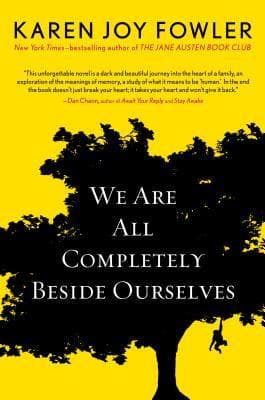
- We Are All Completely Beside Ourselves
Karen Joy Fowler
3.7 (103k) average on GoodreadsLiterary FictionExplores identity, memory, and unconventional family dynamics with a touch of the unexpected.
- Looking for Alaska
John Green
4.0 (1.1M) average on GoodreadsMysteryA coming-of-age story about a protagonist seeking new experiences and grappling with profound life events.
- Paper Towns
John Green
3.8 (919k) average on GoodreadsMysteryWhile both novels explore the construction of idealized identities and the search for self, Paper Towns is more grounded in conventional coming-of-age narratives and detective fiction, operating within a more recognizably 'real' world. Just in Case delves deeper into psychological splintering and uses a more experimental, internally focused narrative.
- Eleanor & Park
Rainbow Rowell
4.0 (860k) average on GoodreadsYoung AdultBoth are powerful Young Adult romances with complex characters, but Eleanor & Park primarily focuses on external relationship dynamics, social ostracization, and the development of a romantic connection. Just in Case prioritizes the profound internal psychological transformation and the protagonist's struggle with his own constructed identity, with romance serving as a secondary, albeit significant, element.
- The Perks of Being a Wallflower
Stephen Chbosky
4.2 (1.3M) average on GoodreadsPsychologyThrough letters, a shy high school freshman learns to navigate first love, trauma, and self-discovery, stepping off the sidelines and into life.
- Eleanor Oliphant Is Completely Fine
Gail Honeyman
4.3 (708k) average on GoodreadsLiterary FictionA lonely woman's structured life changes when an IT guy and an elderly man help her learn to open her heart.





Enjoyed the summary?
A summary gives you the shape of the book. The book itself has the detail, the examples and the voice.
Find Just in Case on AmazonAs an Amazon Associate, BookBrief earns from qualifying purchases. How we're funded