
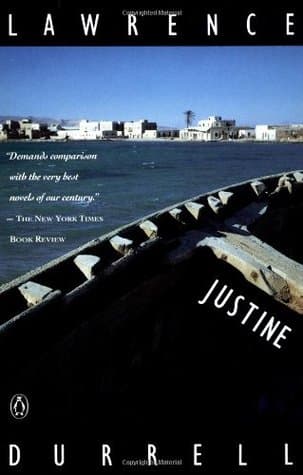
Synopsis
Covers the whole plot, including the ending.
- Difficulty
- Hard
- Pacing
- Slow
- Mood
- Atmospheric, Melancholy, Sensual, Philosophical, Obsessive
- Read it if
- You enjoy richly descriptive prose, complex psychological portraits, and a deep dive into the intoxicating atmosphere of a bygone era. Ideal for readers who appreciate ambiguous narratives and philosophical explorations of love and identity.
- Skip it if
- You prefer straightforward plots, clear character motivations, or a fast-paced narrative. The novel's dense style and introspective nature might not appeal to those seeking light reading.
Justine Plot Summary
Covers the whole plot, including the ending.
The Narrator's Exile and Recollections of Alexandria
The novel opens with the narrator, a poor English schoolteacher and writer, living alone on a remote Greek island with his daughter, Clea. He is trying to write a memoir of his time in Alexandria, Egypt, before World War II. His main focus is his intense, complicated, and destructive love affair with Justine Hosnani, a wealthy, puzzling, and beautiful Jewish woman. He thinks about the city itself, describing it as a character, a mix of cultures, religions, and sexualities. The narrator introduces other key figures from his past, including Justine's husband, Nessim, and his own lover, Melissa, setting the stage for the relationships he will examine.
Introduction to Justine and the Alexandrian Society
The narrator recounts how he first met Justine through her husband, Nessim Hosnani, a Coptic Christian millionaire and financier. Justine is immediately presented as a captivating and elusive figure, known for her beauty, intelligence, and a certain sad intensity. The narrator describes the active, often decadent social scene of Alexandria, full of artists, intellectuals, diplomats, and a range of unusual characters. He details the long process of falling in love with Justine, at first resisting her charm but gradually becoming consumed by it. He also introduces Melissa, a poor, sick Greek dancer he lives with, showing the contrast between the two women and his conflicted feelings.
The Affair Begins and Intensifies
The affair between the narrator and Justine begins, marked by its secrecy, passion, and a sense of doom. Their meetings are secret, often happening in hidden apartments or during long drives through the desert. The narrator becomes more obsessed with Justine, trying to understand her complex past and reasons. He learns of her previous lovers, her difficult childhood, and the death of her child, which shaped her deeply. Their relationship is not just physical; it is a psychological entanglement, with Justine often appearing distant and troubled, leading the narrator to question her true feelings and the nature of their bond. He notes her interest in cabalistic mysticism and psychoanalysis.
Melissa's Presence and the Narrator's Guilt
Despite his overwhelming obsession with Justine, the narrator continues his relationship with Melissa. Melissa, a kind and gentle person, knows about his divided feelings but stays devoted to him. The narrator feels guilt about how he treats Melissa, recognizing her genuine love and vulnerability, especially given her declining health. He often returns to her after his encounters with Justine, seeking comfort and a sense of normalcy. This triangle shows the narrator's emotional complexity and his inability to fully commit to one woman, reflecting a broader theme of fragmented identity and desire within the novel. Melissa's quiet suffering provides a moral contrast to the passionate, often destructive, affair with Justine.
Unveiling Justine's Past and Secrets
As the affair continues, the narrator explores Justine's past, putting together parts of her life through conversations, observations, and what others say. He learns about her difficult childhood, her early marriage, and the trauma of her infant daughter's death, which she believes was caused by syphilis inherited from a previous partner. More shockingly, he discovers her past involvement in prostitution, not for money, but seemingly as a form of self-punishment or a search for extreme experience. These revelations make his understanding of Justine more complex, making her both more vulnerable and more mysterious, feeding his obsession instead of lessening it.
Nessim's Enigmatic Role and Political Undercurrents
Nessim Hosnani, Justine's husband, at first appears to be a passive, almost harmless figure, seemingly unaware or unconcerned by his wife's infidelity. However, the narrator begins to see a deeper, more calculating side to Nessim. He observes Nessim's great wealth and influence, and slowly uncovers hints of his involvement in complex political plans, possibly related to Egyptian nationalism or Zionist movements. Nessim's mystery and his quiet power become a source of fascination and unease for the narrator, suggesting that the personal dramas are tied to larger, more dangerous geopolitical currents beneath Alexandria's surface. His relationship with Justine is also shown to be more complex than a simple marriage of convenience.
The Role of Darley and the Narrative's Subjectivity
The narrator, sometimes called Darley, often stops his own story to comment on writing and the subjectivity of memory. He acknowledges that his portrayal of Justine and the events in Alexandria is filtered through his own intense emotions, biases, and limited understanding. He questions whether he is truly capturing Justine or just projecting his own desires and interpretations onto her. This self-awareness is a plot device, reminding the reader that the 'truth' of Alexandria and its people is elusive and multifaceted, depending on the observer's perspective. He wonders if he is writing a novel or a memoir, blurring the lines of reality.
The Climax of the Affair and Justine's Departure
The narrator's affair with Justine reaches its most intense point, marked by both ecstatic moments and deep despair. Their love becomes a consuming force, but also one that seems self-destructive. Justine's erratic behavior grows, and she appears more troubled. Eventually, without much explanation, Justine leaves Alexandria, leaving the narrator heartbroken and confused. Her sudden absence leaves a void in his life and in the city itself. He is left to deal with the aftermath, putting together the parts of their relationship and trying to understand why she left and what their love meant.
Melissa's Decline and Death
After Justine leaves, the narrator's life continues its decline. Melissa's already fragile health quickly worsens, made worse by her emotional distress and poverty. The narrator stays by her side, watching her decline, and feels a renewed sense of guilt and tenderness towards her. Her death, though expected, is a blow to him. It marks the end of a chapter in his life and shows the destructive nature of his pursuit of Justine. Melissa's death leaves him with his young daughter, Clea, and a deeper sense of isolation and sorrow, leading to his eventual retreat to the Greek island.
Reflections on the Past and the Unknowable
From his isolated position on the Greek island, the narrator continues to write, trying to understand the past. He thinks about how impossible it is to truly know another person, especially someone as complex and contradictory as Justine. He recognizes that his memoir is as much about himself and his own projections as it is about her. The city of Alexandria itself becomes a symbol for this unknowability, a place of shifting realities and hidden depths. He ends the novel with a sense of lingering mystery, accepting that some truths about Justine, and about life itself, will remain out of reach, but that seeking is what matters.
Principal Figures
The Narrator (Darley)
Protagonist
An impoverished English schoolteacher and writer, obsessed with Justine.
The unnamed narrator, often implicitly referred to as Darley, is an English schoolteacher living in Alexandria before World War II. He is an aspiring writer, introspective and highly sensitive, prone to obsessive love and philosophical musings. His primary drive is to understand Justine and to articulate his experiences in Alexandria through writing. He is deeply conflicted, torn between his passionate affair with Justine and his tender, guilt-ridden relationship with Melissa. He is an unreliable narrator, constantly questioning his own perceptions and the truth of his memories, making him a complex and self-aware character.
Relationships: Justine Hosnani (Obsessive, passionate, and destructive lover); Melissa (Caring, long-suffering, and neglected lover); Nessim Hosnani (Justine's wealthy and enigmatic husband, friend, and rival); Clea (His young daughter)
Justine Hosnani
Antagonist/Love Interest
A beautiful, enigmatic, and tormented Jewish woman, the object of the narrator's obsession.
Justine is a central figure, a wealthy, beautiful, and deeply enigmatic Jewish woman married to Nessim. She is portrayed as intelligent, sophisticated, and alluring, but also profoundly melancholic and self-destructive. Her past is marked by trauma, including the death of her child and a history of unconventional sexual experiences. She is driven by a complex mix of guilt, a search for meaning, and perhaps a desire for punishment or extreme sensation. Her motivations are often obscure to the narrator, making her an elusive and captivating figure whose true self remains largely unknowable.
Relationships: The Narrator (Darley) (Passionate and tumultuous lover); Nessim Hosnani (Her wealthy, politically involved husband); Pursewarden (Former lover and close friend); Arnauti (Her first husband, a writer)
Nessim Hosnani
Supporting
Justine's wealthy Coptic Christian husband, a financier with hidden political motives.
Nessim is Justine's husband, a Coptic Christian millionaire and successful financier. He initially appears as a placid, almost oblivious figure, seemingly tolerant of his wife's affairs. However, as the novel progresses, his character is revealed to be far more complex and calculating. He is deeply involved in political intrigues, possibly related to Egyptian nationalism or Zionist causes, using his wealth and influence to further his aims. His quiet power and enigmatic nature make him a compelling figure, whose true loyalties and motivations are slowly unveiled, suggesting a hidden depth beneath his calm exterior.
Relationships: Justine Hosnani (His wife, whom he deeply loves despite her infidelities); The Narrator (Darley) (Friend and unwitting rival); Leila (His sister)
Melissa
Supporting
A poor, consumptive Greek dancer and the narrator's loyal lover.
Melissa is a Greek dancer, poor and suffering from consumption. She is the narrator's initial lover and the mother of his child, Clea. Melissa is portrayed as kind, gentle, and deeply loving, providing a stark contrast to the tumultuous passion of Justine. She is aware of the narrator's obsession with Justine but remains devoted to him, enduring his divided affections with quiet suffering. Her vulnerability and eventual decline serve as a poignant counterpoint to the more intellectual and psychological dramas, embodying a more direct, emotional form of love and tragedy.
Relationships: The Narrator (Darley) (Lover and father of her child); Clea (Her daughter)
Pursewarden
Supporting
A cynical, brilliant English writer and diplomat, former lover of Justine, and friend to the narrator.
Pursewarden is a brilliant, cynical, and highly influential English writer and diplomat, whose philosophical insights and sharp wit permeate the novel. He is a former lover of Justine and remains a close friend to her and Nessim. His letters and pronouncements often challenge the narrator's perceptions, offering alternative, often more cynical, interpretations of events and characters. He is a key intellectual voice, representing a detached, ironic perspective on the human condition and the complexities of Alexandria. His presence adds another layer of intellectual depth and self-awareness to the narrative.
Relationships: Justine Hosnani (Former lover and close friend); The Narrator (Darley) (Intellectual sparring partner and friend); Liza (His blind sister)
Clea
Supporting
A young, talented painter and sculptor, who later becomes a central figure in the Quartet.
Clea is a young, talented painter and sculptor, known for her striking beauty and independent spirit. She is initially a peripheral figure in 'Justine,' but her presence is noted for her artistic sensibilities and her connection to the bohemian circles of Alexandria. She is observant and perceptive, often seeing through the facades of others. Though not directly involved in the main love triangle of 'Justine,' she represents a more authentic and artistic response to life in Alexandria. She will become a more central character in later volumes of the Quartet.
Relationships: The Narrator (Darley) (Friend and fellow artist); Justine Hosnani (Acquaintance in the social circle)
Scobie
Supporting
An aging, eccentric, cross-dressing British former sailor.
Scobie is an aging, eccentric British former sailor who lives a life of poverty and bohemianism in Alexandria. He is known for his cross-dressing and his humorous, often bawdy, observations on life. Scobie serves as a comic relief character, but also as a symbol of Alexandria's diverse and tolerant underbelly. He navigates the city's various social strata with ease, embodying a certain freedom and disregard for conventional morality. His presence highlights the city's unique blend of cultures and sexualities, adding a touch of the grotesque and the absurd.
Relationships: The Narrator (Darley) (Acquaintance and occasional confidant)
Leila Hosnani
Supporting
Nessim's sister, a beautiful woman with a disfigured face, living a sheltered life.
Leila is Nessim's sister, a beautiful woman whose face is disfigured by a congenital condition. She lives a relatively sheltered life within the Hosnani household, often appearing as a symbol of hidden beauty and suffering. Her disfigurement and her quiet demeanor make her a poignant figure, hinting at the deeper complexities and hidden sorrows within the wealthy Alexandrian families. She represents a different kind of Alexandrian woman, one who is less overtly rebellious than Justine but equally marked by fate.
Relationships: Nessim Hosnani (Her protective brother); Justine Hosnani (Her sister-in-law)
Themes & Insights
Identity and Self-Discovery
The novel explores the elusive nature of identity, both individual and collective. The narrator's search to understand Justine is a journey into his own mind, revealing his desires, biases, and limits. Alexandria itself is presented as a city of shifting identities, a place where individuals constantly redefine themselves. Characters like Justine, with her many personas and hidden pasts, show that identity is fluid and often unknowable, even to oneself. The narrator's writing is an attempt to build an identity for himself and for those he remembers, acknowledging its subjectivity.
“We are the children of our landscape; it has moulded us in its own image.”
Love, Obsession, and Desire
At its heart, 'Justine' is an exploration of love in its most obsessive and destructive forms. The narrator's consuming passion for Justine is less about mutual affection and more about a psychological entanglement, a relentless pursuit of an elusive ideal. Desire is shown as a powerful, often irrational force that can lead to both ecstasy and deep suffering. The various relationships—the narrator's with Justine, his with Melissa, and Justine's with others—show the many-sided and often contradictory nature of human affection, showing how love can blind, torment, and destroy.
“I was possessed by her, not as a lover but as a patient is possessed by a disease.”
The Unreliability of Memory and Narrative
A core theme is the subjectivity and unreliability of memory and storytelling. The narrator constantly questions his own perceptions, acknowledging that his account of Alexandria and its people is a personal construction, filtered through his emotions and biases. He thinks about how different perspectives can change the 'truth' of an event or a person. This metafictional aspect challenges the reader to engage with the narrative, emphasizing that there is no single, objective truth, only many interpretations. Writing becomes an attempt to impose order on a chaotic past, even if that order is artificial.
“We live our lives as if they were novels, until that moment when the author of the novel dies, and we are left to write our own endings.”
The City of Alexandria as a Character
Alexandria is not just a setting but a living character, influencing the lives and fates of its people. Durrell gives the city a unique personality – a mix of ancient history, diverse cultures, sensual decadence, and underlying political intrigue. Its streets, hidden courtyards, and active atmosphere reflect the complex and often contradictory nature of the human mind. The city's 'spirit' seems to shape the characters' obsessions and their destinies, making it an active participant in the story. Its decaying beauty mirrors the moral decay and psychological torment of the characters.
“Five races, five languages, a dozen creeds: five sexes, counting the hermaphrodites, for all I know...”
Sexuality and Decadence
The novel explores sexuality in its many forms, often with a sense of decadence and moral ambiguity. Infidelity, prostitution, and various unconventional relationships are shown directly, reflecting the liberal and often hedonistic atmosphere of pre-war Alexandria. Sexuality is tied to power, identity, and psychological torment. Justine's past involvement in prostitution, for example, is presented not just as a moral failing but as a complex manifestation of her trauma and search for meaning. The city itself is a center of sensual experience, where desires are openly pursued, often leading to tragic consequences.
“The sexual act is a form of inquiry, a way of knowing another.”
Plot Devices & Literary Techniques
Unreliable Narrator
The narrator's subjective and self-aware recounting of events.
The unnamed narrator, often referred to as Darley, frequently comments on the limitations of his own memory and perspective. He acknowledges that his portrayal of Justine and Alexandria is filtered through his personal biases, emotions, and desires, making his account inherently subjective. This device forces the reader to question the 'truth' of the narrative and to consider the multiple, often conflicting, interpretations of events and characters. It emphasizes the theme of unknowability and the impossibility of capturing objective reality, blurring the lines between memoir and fiction.
The City as a Character
Alexandria is personified as a complex and influential entity.
Alexandria is presented not merely as a setting but as a living, breathing entity that exerts a profound influence on its inhabitants. The city's unique atmosphere, its blend of cultures, its ancient history, and its sensual decadence are intricately woven into the fabric of the characters' lives and their psychological states. Its labyrinthine streets and hidden corners mirror the complex inner lives of the characters, and its vibrant, often morally ambiguous, spirit seems to shape their destinies. The city's 'genius loci' is a constant presence, a silent observer and participant in the unfolding drama.
Multiple Perspectives (Implied)
The narrator's awareness of other viewpoints, foreshadowing the Quartet's structure.
While 'Justine' is told from a single first-person perspective, the narrator's constant questioning of his own truth and his references to other characters' interpretations (such as Pursewarden's letters or Arnauti's novel) subtly introduce the idea of multiple perspectives. This device foreshadows the overarching structure of 'The Alexandria Quartet,' where the same events are re-examined through different characters' eyes in subsequent novels. In 'Justine,' it serves to highlight the subjective nature of truth and the impossibility of a definitive account, suggesting that reality is fragmented and multifaceted.
The Memoir/Novel Framework
The narrative is presented as the narrator's attempt to write a book about his past.
The entire novel is framed as the narrator's attempt to write a memoir or novel about his experiences in Alexandria. This meta-narrative device allows for introspection on the act of writing itself, the process of memory, and the challenges of capturing truth in words. The narrator frequently steps outside the story to comment on his writing process, his choices, and his doubts, blurring the lines between the author and the character. This framework enhances the theme of the unreliability of narrative and provides a self-reflexive quality to the text.
Symbolism of the Mirror/Reflection
Mirrors and reflections symbolize identity, perception, and illusion.
Mirrors, reflections, and the idea of seeing oneself or others reflected are recurring symbolic motifs. These symbols underscore the themes of identity, self-perception, and the often illusory nature of understanding. Characters frequently gaze into mirrors, both literally and metaphorically, attempting to grasp their own fragmented selves or to understand the elusive nature of others. This device reinforces the idea that what we see is often a reflection of our own desires and projections, rather than an objective reality, especially in the context of the narrator's obsessive love for Justine.
Justine Quotes
“We are the children of our landscape; it dictates behavior and even thought in the measure to which we are responsive to it.”
“Love is a form of metaphysical inquiry, the only one available to natures which have refused the religious point of view.”
“The city, half-imagined (yet wholly real), begins and ends in us, and is forever incomplete.”
“We live lives based upon selected fictions. Our view of reality is conditioned by our position in space and time.”
“The writer, like the lover, must establish a system of values in which the woman can be worshiped without absurdity.”
“In the midst of death we are in life.”
“The ego is a fiction, a collection of sensations and memories, and yet it is the only reality we know.”
“To know oneself is to disintegrate; the true self is multiple, contradictory, and elusive.”
“The city's beauty is inseparable from its cruelty; they are two sides of the same coin.”
“Memory is a form of storytelling, and like all stories, it is both true and false.”
“We are all exiles, even in our own country, because we carry within us the landscapes we have lost.”
“To love is to be vulnerable to the point of annihilation; it is the ultimate risk.”
“The past is not dead; it is not even past. It lives in us, shaping every present moment.”
“Art is the lie that tells the truth, and in Alexandria, truth is always multiple.”
Quiz
10 questions on the plot and the characters. Each answer comes with a short explanation.
Question 1
Who is the narrator of 'Justine'?
- Justine Hosnani
- Darley
- Nessim Hosnani
- Pursewarden
Show answer
B. Darley The novel is narrated by Darley, an Irish schoolteacher who reflects on his time in Alexandria and his obsessive love affair with Justine.
Question 2
What is the primary setting of 'Justine'?
- Cairo during World War I
- Alexandria on the eve of World War II
- Paris in the 1920s
- London during the Blitz
Show answer
B. Alexandria on the eve of World War II The story is set in Alexandria, Egypt, in the late 1930s, just before the outbreak of World War II, capturing the city's decadent and mysterious atmosphere.
Question 3
What is Justine's husband's name?
- Mountolive
- Pursewarden
- Nessim Hosnani
- Balthazar
Show answer
C. Nessim Hosnani Justine is married to Nessim Hosnani, a wealthy Coptic Egyptian businessman, though she engages in multiple affairs, including with the narrator Darley.
Question 4
Which character is a British diplomat and a key figure in the political subplot?
- Pursewarden
- Mountolive
- Clea
- Scobie
Show answer
B. Mountolive Mountolive is a British diplomat whose involvement highlights the political tensions and espionage in Alexandria, intertwining with the personal dramas of the main characters.
Question 5
What literary device is prominently used in 'Justine' to explore memory and perception?
- First-person omniscient narration
- Non-linear narrative and fragmented recollections
- Epistolary format through letters
- Stream of consciousness without plot
Show answer
B. Non-linear narrative and fragmented recollections The novel employs a non-linear, fragmented narrative as Darley reconstructs his memories of Alexandria, reflecting the elusive nature of truth and personal experience.
Question 6
What is a central theme in 'Justine' related to the characters' pursuits?
- The triumph of love over political conflict
- The quest for knowledge leading to obsession and possession
- The simplicity of rural life versus urban chaos
- The inevitability of war and destruction
Show answer
B. The quest for knowledge leading to obsession and possession The characters are driven by obsessive desires to know and possess each other, mirroring Alexandria's historical dedication to knowledge but resulting in personal turmoil.
Question 7
Which character is an artist and Darley's lover later in 'The Alexandria Quartet'?
- Justine Hosnani
- Clea
- Melissa
- Liza Pursewarden
Show answer
B. Clea Clea is a painter who becomes involved with Darley in later novels of 'The Alexandria Quartet', representing a more redemptive form of love compared to his affair with Justine.
Question 8
What historical element of Alexandria is symbolically referenced in the novel?
- The Great Pyramid of Giza
- The Lighthouse of Alexandria
- The ancient Library of Alexandria
- The Suez Canal
Show answer
C. The ancient Library of Alexandria The ancient Library of Alexandria, a symbol of lost knowledge and intellectual pursuit, is evoked to parallel the characters' obsessive and often futile quests for understanding.
Question 9
How does Darley primarily learn about the complexities of his relationships in Alexandria?
- Through direct confrontations with Justine
- By reading Pursewarden's notebooks and other characters' accounts
- Via prophetic dreams and visions
- Through official police investigations
Show answer
B. By reading Pursewarden's notebooks and other characters' accounts Darley pieces together the truth about his affair and other events by reading documents like Pursewarden's notebooks, highlighting the novel's theme of subjective reality.
Question 10
What role does the city of Alexandria play in the novel beyond being a setting?
- It serves as a neutral backdrop with no symbolic meaning
- It acts as a character that influences and mirrors the characters' inner lives
- It is primarily a site of historical battles and political intrigue
- It represents a utopian escape from European conflicts
Show answer
B. It acts as a character that influences and mirrors the characters' inner lives Alexandria is depicted as a sensual, decaying city that actively shapes the characters' desires and confusions, functioning almost as a character itself in the narrative.
Justine FAQ
What is 'Justine' by Lawrence Durrell about?
'Justine' follows an unnamed Irish schoolteacher and aspiring writer who becomes entangled in a passionate, destructive love affair with Justine Hosnani, a wealthy and enigmatic Jewish woman in 1930s Alexandria. Through his relationships with Justine, her husband Nessim, and other members of their cosmopolitan circle, the narrator explores themes of obsession, identity, and the elusive nature of truth in a city on the brink of World War II.
Why should I read 'Justine'?
You should read 'Justine' for its lush, poetic prose that vividly evokes the sensual and decaying atmosphere of pre-war Alexandria, its complex exploration of love and obsession through multiple unreliable perspectives, and its innovative narrative structure that challenges linear storytelling. Durrell's novel is a landmark of modernist literature that delves deeply into the psychology of desire and the relativity of truth.
What is the background/setting of 'Justine'?
The novel is set in Alexandria, Egypt, in the late 1930s, on the eve of World War II. This multicultural city—home to Greeks, Jews, Copts, and Europeans—serves as a decaying, sensual backdrop where characters pursue knowledge and passion. The historical context includes rising political tensions, with characters like Nessim involved in covert Zionist activities, mirroring the era's instability.
What are the most memorable quotes from 'Justine'?
Memorable quotes include: 'We are the children of our landscape; it dictates behavior and even thought,' reflecting the novel's theme of environment shaping identity. Another is Justine's line, 'Love is a form of metaphysical inquiry,' highlighting the characters' obsessive quest for understanding through relationships. The narrator's musing, 'Memory is a great betrayer,' underscores the unreliability of perception throughout the story.
What writing style does Lawrence Durrell use in 'Justine'?
Durrell employs a rich, lyrical, and highly descriptive prose style, blending modernist techniques with poetic imagery. The narrative is non-linear, presented through the fragmented memories and journals of the unreliable narrator, creating a layered, subjective exploration of events. This style mirrors the novel's themes of elusive truth and the complexity of human experience.
What minor details add significant meaning to 'Justine'?
Minor details like the recurring motif of mirrors and reflections symbolize the characters' self-obsession and fractured identities. The decaying architecture of Alexandria mirrors the moral and emotional decay of the characters. Small acts, such as Justine's habit of annotating books, hint at her intellectual depth and manipulative nature, adding layers to her enigmatic personality.
What are some subtle foreshadowing moments in 'Justine'?
Early references to political unrest and Nessim's secretive behavior foreshadow his involvement in Zionist plots, which later erupt into violence. Justine's cryptic remarks about 'playing roles' and the narrator's initial idealization of her hint at the betrayals and disillusionments to come. The pervasive sense of decay in Alexandria subtly foreshadows the impending chaos of World War II.
What unexpected character connections exist in 'Justine'?
Unexpected connections include the revelation that Melissa, the narrator's former lover, once had a brief affair with Nessim, linking the main characters in a web of past entanglements. Justine's friendship with Pursewarden, a cynical writer, influences her philosophical outlook and adds another layer to the novel's exploration of art and reality, deepening the interpersonal dynamics.
What are unspoken character motivations in 'Justine'?
Justine's unspoken motivation is her search for transcendence through extreme emotional and sexual experiences, driven by a traumatic past hinted at in her diaries. Nessim is motivated by a deep-seated need for power and political agency, masked by his calm exterior. The narrator's obsession with Justine stems from his desire to escape his own mediocrity and find meaning through her.
What psychological complexities do characters exhibit in 'Justine'?
Justine exhibits a complex mix of intellectual brilliance, emotional manipulation, and vulnerability, often using sexuality as a tool for control and self-discovery. The narrator grapples with unreliable memory and self-deception, constantly reconstructing his past to fit his desires. Nessim's stoic facade hides intense political fervor and jealousy, revealing the tension between his public and private selves.
What are the major emotional turning points in 'Justine'?
Major emotional turning points include the narrator's initial infatuation with Justine, which shifts from idealization to painful obsession. The discovery of Justine's infidelities and her cryptic diaries shatters the narrator's illusions. Melissa's death forces the narrator to confront his own emotional neglect, and the final revelations about the characters' intertwined pasts lead to a profound sense of loss and ambiguity.
How do relationship dynamics evolve in 'Justine'?
Relationship dynamics evolve from initial passion to manipulation and disillusionment. The narrator's affair with Justine starts as a romantic escape but becomes a power struggle, revealing her control and his dependency. Nessim's marriage to Justine shifts from a partnership of convenience to one fraught with political intrigue and mutual betrayal. Friendships, like that with Pursewarden, deepen into philosophical alliances that challenge the narrator's perceptions.
Which parts of 'Justine' remain ambiguous or open-ended?
Ambiguities include the true nature of Justine's feelings and motivations, left unclear by her contradictory actions and the narrator's biased perspective. The extent of Nessim's political activities and their consequences is never fully resolved. The novel's ending, with the narrator leaving Alexandria, leaves open whether he has achieved any self-understanding or remains trapped in his illusions.
What are controversial scenes or decisions in 'Justine'?
Controversial scenes include the explicit and often manipulative sexual encounters, which some readers find exploitative in their portrayal of power dynamics. Justine's decision to use the narrator for her own emotional and intellectual experiments raises ethical questions about consent and manipulation. The characters' general apathy toward the looming war and focus on personal dramas can be seen as morally ambiguous or reflective of their decadence.
'Justine' ending explained: how it ends & what it means
The novel ends with the narrator leaving Alexandria after Melissa's death and the unraveling of his relationships, reflecting on the elusive nature of truth and memory. This conclusion suggests that his quest for understanding through love and obsession has ultimately led to disillusionment, with Alexandria itself symbolizing a lost world of passion and decay. The open-endedness implies that meaning is subjective and constantly reconstructed.
About the author

Lawrence George Durrell was an expatriate British novelist, poet, dramatist, and travel writer. He was the eldest brother of naturalist and writer Gerald Durrell.
Similar books
- A Passage to India
E.M. Forster
3.7 (70k) average on GoodreadsHistorical FictionExplores colonial society, cultural clashes, and enigmatic relationships in an exotic, historically rich setting.
- The Stranger
Albert Camus
4.1 (3k) average on GoodreadsFantasyBoth novels feature alienated protagonists and explore existential themes. However, Justine is characterized by its lush, sensory details, complex psychological exploration, and fragmented narrative, while The Stranger employs a starker, more minimalist prose style and a linear narrative to convey its themes of absurdity and indifference. Durrell's work is more about the subjective construction of reality, while Camus's focuses on the individual's confrontation with an objective, meaningless world.
- The Old Man and the Sea
Ernest Hemingway
3.8 (831k) average on GoodreadsLiterary FictionA Cuban fisherman's long struggle with a giant marlin becomes a story of endurance and dignity, now retold for young adults with illustrations, phonetic guides, and writing prompts in Traditional Chinese.
- One Hundred Years of Solitude
Gabriel García Márquez
4.1 (753k) average on GoodreadsLiterary FictionThrough the multi-generational story of the Buendía family, a mythical town deals with the repeating patterns of time, love, and solitude, as the extraordinary mixes with the ordinary.
- The Goldfinch
Donna Tartt
3.9 (720k) average on GoodreadsLiterary FictionHaunted by a tragic explosion and clutching a stolen Dutch masterpiece, a young orphan navigates the opulent drawing rooms of New York and the gritty underbelly of the art world, desperately seeking connection and redemption amidst a life spiraling into crime and obsession.
- Little Fires Everywhere
Celeste Ng
4.1 (713k) average on GoodreadsLiterary FictionIn Shaker Heights, an artist and her daughter move in, and their free-spirited lives clash with a rule-bound matriarch, revealing hidden conflicts beneath a perfect surface.





Enjoyed the summary?
A summary gives you the shape of the book. The book itself has the detail, the examples and the voice.
Find Justine on AmazonAs an Amazon Associate, BookBrief earns from qualifying purchases. How we're funded