
Core Idea
- Difficulty
- Medium
- Read it if
- You are interested in classic French tragedy, the conflict between love and honor, or the role of the state in resolving personal feuds.
- Skip it if
- You prefer modern prose, fast-paced plots without extensive soliloquies, or stories with clear-cut heroes and villains.
Key Takeaways from Le Cid
Honor's Iron Cage
The relentless grip of societal honor dictates impossible choices and tragic outcomes.
Corneille's 'Le Cid' shows the power of honor in 17th-century Spanish society. Characters are not free; they are bound by personal and family reputation. Don Rodrigue and Chimène, in love, face a conflict when Rodrigue must avenge his father by killing Chimène's father. This act upholds his family's standing but also demands Chimène's vengeance. This creates a paradox where love and duty destroy each other. The play argues that this rigid code, meant to keep order, sacrifices individual happiness and moral integrity for public image, trapping characters in a no-win situation where every decision, no matter how honorable, causes great suffering.
“My arm, to maintain my honor, has shed the blood of your father; it has offered you a sacrifice, and I offer myself to you.”
In the book: The initial duel between Don Rodrigue and Don Gomès (Chimène's father) is not a personal squabble but a direct consequence of Don Gomès striking Don Diègue (Rodrigue's father) and thereby dishonoring his lineage. Rodrigue, though young and in love with Chimène, is compelled by his father's plea to restore family honor, even if it means killing his beloved's father.
Try this: Reflect on modern societal pressures that, while not as overtly violent, still compel individuals to act against their personal desires for the sake of reputation, career, or family expectations. Identify where these 'honor codes' still operate in your life and evaluate their true cost.
Related ideas: honor-code, societal-pressure, duty-vs-love, tragic-dilemma
The Absurdity of Vengeance
The pursuit of revenge, mandated by honor, perpetuates a cycle of violence and sorrow.
'Le Cid' reveals the destructive nature of a society built on constant vengeance. After Don Rodrigue kills Don Gomès, Chimène, despite loving Rodrigue, must seek his death by the same honor code. This is not a personal vendetta from hatred, but a societal demand for her to honor her deceased father. The play shows how this system, instead of bringing justice or resolution, only increases suffering and creates an unbreakable chain of retribution. Corneille questions the idea that violence can truly 'balance' justice when it only leads to more loss and emotional pain for everyone.
“My father is dead, and the first duty, the most sacred, is to avenge him.”
In the book: Chimène's repeated pleas to the King for Rodrigue's execution, even after he has proven himself a hero in battle, are driven purely by the societal expectation of vengeance for her father's death. Her internal conflict is profound, but her external actions are dictated by this unyielding code, making her a tragic figure caught between love and duty.
Try this: Consider how cycles of blame or retaliation, even in minor conflicts, can escalate and prevent resolution. Practice 'breaking the chain' by choosing empathy or forgiveness over the immediate satisfaction of 'getting even' in personal or professional disagreements.
Related ideas: vengeance-cycle, retribution, moral-dilemma, justice-critique
Love's Tragic Impasse
Deep affection is powerless against the crushing weight of public duty and familial honor.
The main tragedy of 'Le Cid' is the deep, unresolved conflict between Don Rodrigue and Chimène's love and their duties to honor. Their love is real and strong, but outside societal demands constantly block it. Rodrigue must kill Chimène's father, and Chimène must seek Rodrigue's death. Even when Rodrigue becomes a national hero, their personal tragedy remains. Corneille suggests that in a society ruled by such strict codes, individual happiness, especially romantic love, is secondary and often sacrificed. The play makes us face the painful reality that some loves, no matter how strong, cannot overcome an unforgiving world, leaving characters in constant emotional pain.
“Go, I do not hate you; how could I hate the hand that gave me victory?”
In the book: Despite Rodrigue saving the kingdom from the Moorish invasion, earning him the title 'Le Cid,' Chimène's obligation to avenge her father persists. Her internal struggle is palpable when she must simultaneously acknowledge his heroism and demand his execution, showing how duty overpowers even profound gratitude and lingering affection.
Try this: Reflect on situations where personal desires or relationships have been compromised by external expectations (career, family, social standing). Consider the cost of prioritizing external validation over personal fulfillment and how to navigate such conflicts more authentically.
Related ideas: forbidden-love, love-vs-duty, romantic-tragedy, societal-constraints
The King's Strategic Hand
Political pragmatism and the need for stability ultimately override strict adherence to honor.
While individual characters are trapped by honor, the King in 'Le Cid' represents a higher, more practical authority. He is not above the code, but his main concern is the stability of his kingdom. He sees the absurdity of endless vengeance and seeks a resolution that serves the greater good, even if it means bending traditional honor. His decision to delay Chimène's marriage to Rodrigue, rather than deny her vengeance, is a strategic move. It allows time and circumstances (Rodrigue's heroism, the Moorish threat) to soften her resolve and make a politically useful union acceptable. Corneille shows that while personal honor can be rigid, statecraft requires flexibility and a long-term view, often using situations to its advantage.
“Time will accomplish what your love and your honor could not.”
In the book: The King orchestrates the duel between Rodrigue and Don Sanche, not necessarily to determine guilt, but to provide a formal, public resolution to the conflict. His ultimate decree that Chimène marry Rodrigue after a year, after Rodrigue has further proven his worth and the kingdom has healed, highlights his strategic manipulation of time and public perception.
Try this: Analyze situations where personal justice or strict adherence to rules might conflict with a broader, more pragmatic goal. Practice identifying moments where a 'cooling-off period' or a strategic delay can lead to a more favorable long-term outcome in conflicts.
Related ideas: political-pragmatism, statecraft, royal-authority, strategic-thinking
Heroism's Double-Edged Sword
Great deeds can save a nation but cannot erase personal guilt or resolve internal conflict.
Don Rodrigue's change into 'Le Cid,' the national hero who defeats the Moorish invasion, is an important moment. This heroism raises his status and makes him essential to the kingdom. However, Corneille shows that this public glory does not erase his personal 'crime' in Chimène's eyes, nor does it lessen his own suffering. He remains the killer of her father, and his bravery, though celebrated by the state, constantly reminds him of the conflict between him and his beloved. The play suggests that while society might forgive past wrongs for usefulness, deep personal wounds and moral duties remain, making heroism a complex and often lonely burden, not a simple win.
“My arm, which has saved the state, is stained with the blood of your father.”
In the book: Despite Rodrigue's victory over the Moors, which brings immense relief and admiration from the King and the populace, Chimène still insists on his punishment. Her line, 'Though he has saved the state, he has killed my father,' encapsulates the disconnect between public heroism and private tragedy.
Try this: Consider how public achievements or accolades might mask unresolved personal conflicts or internal struggles. Reflect on the importance of addressing personal issues directly, rather than hoping external success will magically resolve them.
Related ideas: heroism-burden, public-vs-private, moral-ambiguity, personal-guilt
The Power of Appearance
Societal perception and adherence to established norms often outweigh true feelings or intent.
'Le Cid' shows how powerful appearance and reputation are. Characters constantly think about how society will see their actions, and this external judgment often guides their choices more than their inner desires. Chimène, for example, must publicly demand vengeance for her father, even if she secretly loves Rodrigue, because not doing so would brand her as dishonorable. Similarly, Rodrigue must fight, not just for his father's honor, but to keep his own standing and avoid public shame. Corneille criticizes a society where one's public image is most important, often forcing individuals into roles that go against their true emotions and lead to great personal sacrifice.
“It is not the deed that matters, but the honor that one loses.”
In the book: Chimène's internal monologue reveals her anguish and enduring love for Rodrigue, yet her public actions are entirely focused on prosecuting him. Her insistence on seeking justice, even when it causes her immense pain, is a testament to the societal pressure to maintain appearances of honor and duty.
Try this: Examine situations where you or others have prioritized 'what others will think' over genuine feelings or needs. Practice making choices based on your authentic self, even when it means challenging societal expectations or risking disapproval.
Related ideas: reputation-management, social-perception, performative-roles, honor-culture
Women as Pawns
Female characters are often instruments of male honor, their agency severely restricted.
Chimène, though strong-willed, is a pawn in a male-dominated world of honor and war. Her worth is tied to her family line and her role in upholding her family's honor or providing a strategic marriage. She cannot follow her heart, as her love for Rodrigue is secondary to her duty to avenge her father. Even her final 'resolution' – marrying Rodrigue after mourning – is dictated by the King for political stability, not her personal choice. Corneille quietly highlights the limits placed on women in this era, where their emotional lives are constantly controlled by patriarchal codes and state needs. Her tragedy is made worse by her inability to escape the roles placed on her.
“I will pursue him even to the tomb, and if I do not find him there, I will go beyond.”
In the book: Chimène's only means of 'action' is to appeal to the King for justice against Rodrigue, an action mandated by her father's death. She cannot directly fight, nor can she simply forgive, as both would be seen as dishonorable for a woman of her standing. Her choices are severely circumscribed by her gender and societal role.
Try this: Consider how gendered expectations or historical power imbalances still influence roles and choices in modern society. Challenge assumptions about who should act in certain ways and advocate for greater agency and self-determination for all individuals.
Related ideas: gender-roles, patriarchy, female-agency, societal-limitation
The Weight of Inheritance
Characters are burdened by the legacy of their ancestors, shaping their identities and destinies.
The idea of inherited honor and reputation is key to 'Le Cid.' Characters are not just individuals but representatives of their families. Don Diègue's insult to Don Gomès is not just a personal offense but a stain on his entire family's honor, which Rodrigue must then clean. Similarly, Chimène's duty to avenge her father is a direct inheritance of his honor. This burden of ancestry means personal choices are rarely truly personal; they are extensions of a family's history and future standing. Corneille shows how this inherited weight can be both a source of pride and a great restriction, guiding actions and closing off individual paths, forcing characters to live up to or atone for the deeds of those before them.
“My noble birth, your great name, your high courage, I must avenge you.”
In the book: Don Diègue, despite his age and inability to fight, immediately demands that his son, Rodrigue, take up the sword to defend the family honor. This demonstrates the intergenerational transfer of duty and the expectation that the younger generation will uphold the legacy of the elder.
Try this: Reflect on the 'inherited' expectations or values from your family or cultural background. Identify which of these are empowering and which might be limiting, and consciously decide which legacies you want to uphold or redefine for yourself.
Related ideas: inherited-honor, ancestral-legacy, familial-duty, generational-burden
Moral Ambiguity of Victory
Success in battle does not equate to moral rectitude or personal happiness.
Rodrigue's military wins, first in the duel and then against the Moors, are clear triumphs that save the kingdom. Yet, 'Le Cid' does not present these victories as entirely good. Each win is mixed with tragedy and moral uncertainty. His victory over Don Gomès creates the central conflict with Chimène. His victory against the Moors, though celebrated, does not remove the blood on his hands or Chimène's grief. Corneille challenges the simple idea that military success always leads to a just or happy outcome. Instead, he shows that even heroic deeds can come from tragic necessity and leave personal devastation, making us question the real cost of 'winning' when it means losing love, peace, and individual conscience.
“Victory, however glorious, cannot give me back what I have lost.”
In the book: After Rodrigue's triumphant return from battling the Moors, Chimène, rather than rejoicing, is further compelled by her honor to seek his death. The kingdom celebrates him, but her personal anguish remains, highlighting the disconnect between public success and private sorrow.
Try this: Consider situations where a 'win' in one area (career, competition) has come at a significant personal or ethical cost. Reflect on what true success means to you, beyond external achievements, and prioritize outcomes that align with your values.
Related ideas: moral-cost, hollow-victory, ethical-dilemma, personal-sacrifice
The Imposition of Resolution
True reconciliation is often sacrificed for an imposed, politically expedient ending.
The play ends with the King imposing a resolution: Chimène must marry Rodrigue after a year, allowing time to heal wounds and for Rodrigue to prove his worth. This ending provides closure but is not a true reconciliation from the protagonists' free will or emotional healing. Instead, it's a practical, political decision to unite two powerful families and secure the kingdom's future, using Rodrigue's heroism. Corneille leaves the audience with a sense of unease; is this 'happiness' truly possible when forced? The ending emphasizes that individual desires and emotional truths are often secondary to state and society demands, suggesting that some wounds are too deep for even a royal decree to truly mend, leaving the protagonists in forced compliance rather than real peace.
“Take heart, Chimène: you see a King who loves you, and who will force you to be happy.”
In the book: The King explicitly states that Chimène will be 'forced to be happy,' highlighting the coercive nature of the resolution. Her final lines are not of joyful acceptance but of resignation, acknowledging her duty to the King's command rather than expressing renewed love or forgiveness for Rodrigue.
Try this: Identify situations where a conflict has been 'resolved' by an external authority or through compromise that doesn't fully address underlying issues. Practice seeking genuine understanding and mutually agreeable solutions rather than simply accepting imposed peace.
Related ideas: forced-resolution, political-marriage, unresolved-conflict, pragmatic-ending
Le Cid Quotes
“Ô rage ! ô désespoir ! ô vieillesse ennemie ! N'ai-je donc tant vécu que pour cette infamie ?”
“À vaincre sans péril, on triomphe sans gloire.”
“Je suis jeune, il est vrai ; mais aux âmes bien nées, La valeur n'attend point le nombre des années.”
“Va, cours, vole et nous venge.”
“Percé de mille coups, il est tombé sans vie.”
“Cet hymen m'est fatal, je le crains, je l'appréhende.”
“Mon unique espérance est mon désespoir même.”
“Qui m'aime bien, me bat bien.”
“Un père est offensé, ma gloire est attaquée.”
“L'honneur est une vertu qui n'a point de mesure.”
“Plût à Dieu qu'avec lui je perdisse la vie !”
“Rodrigue a combattu, Rodrigue a vaincu.”
“Ce que le Ciel voudra, le temps le pourra faire.”
Quiz
10 questions on the main ideas. Each answer comes with a short explanation.
Question 1
Which historical figure's legend primarily inspired the character of Rodrigue in 'Le Cid'?
- Roland
- El Cid Campeador
- King Arthur
- Charlemagne
Show answer
B. El Cid Campeador The character of Rodrigue is based on the legendary Spanish knight Rodrigo Díaz de Vivar, known as El Cid Campeador.
Question 2
What is the primary conflict that initiates the tragic events between Don Rodrigue and Chimène?
- A dispute over land ownership
- A duel between their fathers over a perceived insult
- Their families' differing political allegiances
- A misunderstanding at a royal ball
Show answer
B. A duel between their fathers over a perceived insult The conflict begins when Don Diègue (Rodrigue's father) is chosen over Don Gomès (Chimène's father) to tutor the Prince, leading to an insult and a duel where Don Gomès is killed.
Question 3
Which of the following best describes the central moral dilemma faced by both Rodrigue and Chimène?
- Love versus religious duty
- Personal happiness versus loyalty to the King
- Love versus honor and duty to family
- Ambition versus humility
Show answer
C. Love versus honor and duty to family Both Rodrigue and Chimène are torn between their deep love for each other and their absolute duty to avenge their family's honor, even if it means destroying their beloved.
Question 4
What is the specific insult that Don Diègue suffers from Don Gomès, leading to their duel?
- Don Gomès publicly questions Don Diègue's military bravery.
- Don Gomès strikes Don Diègue across the face with his glove.
- Don Gomès slanders Don Diègue's lineage to the King.
- Don Gomès attempts to steal Don Diègue's position as tutor to the Prince.
Show answer
B. Don Gomès strikes Don Diègue across the face with his glove. Don Gomès, enraged by the King's decision, slaps Don Diègue, an extreme insult to his honor.
Question 5
After killing Chimène's father, what action does Rodrigue take that ultimately begins to restore his public standing and earn him the title 'Le Cid'?
- He goes into self-imposed exile to avoid further conflict.
- He leads a successful defense against a Moorish invasion.
- He publicly apologizes to Chimène and her family.
- He asks the King to mediate a truce between the families.
Show answer
B. He leads a successful defense against a Moorish invasion. To redeem his honor and serve his country, Rodrigue bravely leads the Spanish forces against the invading Moors, achieving a decisive victory that earns him the title 'Le Cid' from the grateful enemy.
Question 6
Which character serves as a voice of reason and attempts to guide the main characters towards reconciliation, often appealing to the greater good of the kingdom?
- The Infanta (L'Infante)
- Don Sanche
- The King (Don Fernand)
- Elvire (Chimène's governess)
Show answer
C. The King (Don Fernand) The King consistently tries to find a solution that upholds justice, maintains order, and benefits the kingdom, often pushing Rodrigue and Chimène towards a resolution that serves the state.
Question 7
What is the specific outcome of the duel between Rodrigue and Don Sanche, which Chimène demands as a means of 'justice'?
- Rodrigue is killed, and Don Sanche claims victory.
- Don Sanche is defeated but not killed, and Rodrigue is declared the victor.
- Both combatants are gravely wounded, leading to a draw.
- The King intervenes and stops the duel before a victor is decided.
Show answer
B. Don Sanche is defeated but not killed, and Rodrigue is declared the victor. Rodrigue defeats Don Sanche in the duel, but spares his life. Don Sanche returns to Chimène, giving her Rodrigue's sword, which she misinterprets as a sign of Rodrigue's death.
Question 8
Corneille's 'Le Cid' sparked a famous literary controversy known as 'La Querelle du Cid.' What was the primary criticism leveled against the play by the Académie Française?
- Its excessive use of supernatural elements.
- Its violation of the classical unities of time, place, and action.
- Its promotion of anti-monarchical sentiments.
- Its lack of poetic language and weak versification.
Show answer
B. Its violation of the classical unities of time, place, and action. The Académie Française, under Richelieu's influence, criticized 'Le Cid' for not strictly adhering to Aristotle's unities, particularly the unity of time (the play's events arguably spanning more than 24 hours) and the unity of verisimilitude (the improbability of Chimène still loving Rodrigue after he killed her father).
Question 9
Why does the Infanta (L'Infante) ultimately decide to renounce her love for Rodrigue and encourage his union with Chimène?
- She realizes Rodrigue's love for Chimène is unwavering and true.
- She recognizes the importance of state stability and the need to resolve the feud.
- Her royal duty and social hierarchy dictate that she cannot marry a subject, even a heroic one.
- She discovers Rodrigue has committed another grave offense.
Show answer
C. Her royal duty and social hierarchy dictate that she cannot marry a subject, even a heroic one. The Infanta, despite her deep affection for Rodrigue, understands that her royal status makes a marriage with a non-royal impossible. Her decision is driven by a sense of duty and the rigid social conventions of the time.
Question 10
What is the King's final proposed resolution for Rodrigue and Chimène at the end of the play?
- He exiles Rodrigue and offers Chimène to Don Sanche.
- He forces them to marry immediately to end the feud.
- He decrees a year's delay before their marriage, allowing time for Chimène's grief to subside and for Rodrigue to further serve the state.
- He leaves the final decision entirely to Chimène's discretion.
Show answer
C. He decrees a year's delay before their marriage, allowing time for Chimène's grief to subside and for Rodrigue to further serve the state. The King, acknowledging Rodrigue's heroism and the necessity of resolving the conflict, proposes that Chimène marry Rodrigue after a year, allowing her mourning period to pass and giving Rodrigue more time to prove his worth to the kingdom.
Le Cid FAQ
What is 'Le Cid' about?
'Le Cid' is a tragicomedy by Pierre Corneille, set in medieval Spain, that explores the conflict between love and duty. It tells the story of Rodrigue and Chimène, whose families are embroiled in a deadly feud, forcing them to choose between their personal feelings and their honor.
Who are the main characters in 'Le Cid'?
The central characters are Rodrigue (Le Cid), a valiant knight, and Chimène, his beloved. Other key figures include Don Diègue and Don Gormas, their fathers whose quarrel ignites the main conflict, and the Infanta, who secretly loves Rodrigue.
Does 'Le Cid' have a happy ending?
While 'Le Cid' ends with the promise of future happiness and reconciliation, it is not a straightforward happy ending. The immediate resolution sees Rodrigue and Chimène still grappling with their profound losses and the King's decree for their eventual marriage, rather than an immediate joyful union.
What is the significance of 'honor' in 'Le Cid'?
Honor is the foundational concept in 'Le Cid', driving most of the characters' actions and decisions. It represents personal reputation, family legacy, and societal standing, often clashing directly with love and individual desires, leading to tragic choices.
How does 'Le Cid' differ from typical Greek tragedies?
'Le Cid' differs from typical Greek tragedies by its focus on internal moral dilemmas and the eventual, albeit strained, resolution, rather than inescapable fate and ultimate destruction. While it features tragic elements and a chorus-like role for the King, its 'tragicomedy' classification highlights its departure from pure tragedy.
What is the 'Quarrel of Le Cid'?
The 'Quarrel of Le Cid' was a famous literary and academic dispute in 17th-century France concerning the play's adherence to classical dramatic rules, particularly the unities of time, place, and action, and its moral propriety. It involved Corneille, the French Academy, and critics like Jean Chapelain.
Is 'Le Cid' a true story?
'Le Cid' is a fictionalized dramatic work based on the legendary Spanish hero El Cid, Rodrigo Díaz de Vivar, who was a historical figure from the 11th century. While it draws inspiration from his exploits, Corneille's play takes significant liberties with historical accuracy for dramatic effect.
Why is 'Le Cid' considered a classic of French literature?
'Le Cid' is considered a classic due to its masterful exploration of universal themes like love, duty, honor, and sacrifice, presented through powerful verse and compelling characters. It significantly influenced the development of French classical tragedy and remains a cornerstone of the theatrical repertoire.
How does 'Le Cid' explore the theme of love versus duty?
'Le Cid' profoundly explores love versus duty by placing its protagonists, Rodrigue and Chimène, in an impossible situation where their love is directly opposed by their familial duty to avenge their fathers' honor. Their internal struggles and the difficult choices they make form the emotional core of the play.
About the author
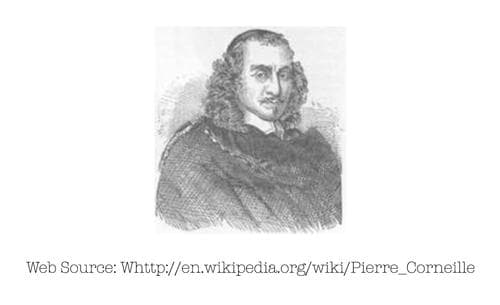
Pierre Corneille was a French tragedian. He is generally considered one of the three great seventeenth-century French dramatists, along with Molière and Racine.
Similar books
- Antigone
Sophocles
3.8 (17k) average on GoodreadsFictionDeals with the clash between individual conscience/family duty and state law, leading to tragic consequences.
- Hamlet
William Shakespeare
4.0 (501) average on GoodreadsYoung AdultA tragedy driven by themes of vengeance, honor, and the moral dilemmas faced by a protagonist caught between duty and personal feelings.
- Romeo and Juliet
William Shakespeare
3.8 (2.1M) average on GoodreadsRomanceBoth plays explore the tragic consequences of familial feuds on young lovers. However, Romeo and Juliet emphasizes the passionate, often impulsive nature of love and the ultimate destruction caused by blind hatred, with less emphasis on the role of a monarch in resolution. Le Cid, while equally tragic, introduces a more formal and politically driven resolution through 'The King's Strategic Hand,' reflecting a different cultural and political context where state authority is paramount in restoring order, even if it defers emotional closure. Shakespeare's lovers are more victims of fate and their families' intransigence, while Corneille's are more actively, albeit painfully, making choices dictated by honor.
- The Diary of a Young Girl
Anne Frank
4.2 (2.7M) average on GoodreadsBiographyDuring the Nazi occupation, a teenage girl's diary, written from a secret annex, shares observations on humanity, hope, and the wait for freedom.
- Twisted 1. Twisted love
Ana Huang
3.7 (1.7M) average on GoodreadsA quiet billionaire with a difficult past finds his guarded heart opening to the woman he must protect, but their growing passion uncovers dangerous secrets and a shared, traumatic history.
- Eat, Pray, Love
Elizabeth Gilbert
3.6 (1.5M) average on GoodreadsLifestyleA heartbroken writer leaves her conventional life for a year-long global search for pleasure in Italy, spiritual devotion in India, and unexpected love and balance in Bali.





Enjoyed the summary?
A summary gives you the shape of the book. The book itself has the detail, the examples and the voice.
Find Le Cid on AmazonAs an Amazon Associate, BookBrief earns from qualifying purchases. How we're funded