Estimated read time: 10 min read
One Sentence Summary
Dashing and resourceful Psmith takes on a series of comic misadventures involving stolen jewelry, mistaken identities, and romantic entanglements at Blandings Castle.
Table of Contents
Introduction
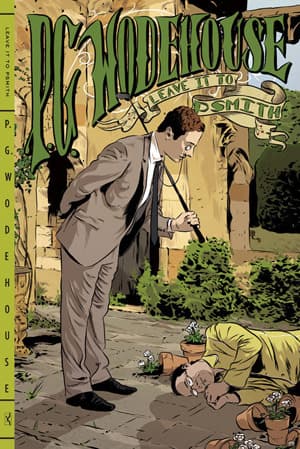
Imagine a world where chaos is charming, fortunes teeter on the edge of disaster, and one man’s unshakeable optimism turns every calamity into comedy gold. Welcome to Leave It to Psmith by P.G. Wodehouse—a sparkling classic that has delighted generations of readers with its clever wit, eccentric characters, and utterly absurd situations. Set in the stately halls of Blandings Castle, this 1923 novel is a masterclass in comic fiction, blending social satire, romance, and farce in a way only Wodehouse can.
But don't worry: you don’t need a monocle or a pedigree to enjoy this book. Whether you’re a college student seeking a study break, or a lecturer needing a laugh between papers, Leave It to Psmith is a literary pick-me-up that proves laughter is the best inheritance.
Historical Context
To truly savor the flavor of Leave It to Psmith, it helps to understand its time and place. The novel was published in 1923, a period known as the Roaring Twenties in Britain. The country was still reeling from the aftermath of World War I, and society was in flux. The British upper class clung to its traditions, but the world around them was changing fast.
Wodehouse, ever the keen observer and gentle satirist, lampooned the manners and mishaps of the aristocracy. His fictional Blandings Castle is a comic microcosm of the English country house, populated by absent-minded peers, scheming relatives, and eccentric guests. The character Psmith (the “P” is silent, of course), first introduced in earlier Wodehouse works, embodies the era’s spirit of reinvention and cheerful disregard for convention.
Notable Inspirations
- British Aristocracy: The idle rich and their peculiarities were a favorite Wodehouse target.
- Wodehouse’s Own Life: His experiences at Dulwich College and in Edwardian England color the novel’s humor and setting.
- Comedy Traditions: Wodehouse’s debt to Oscar Wilde, Gilbert and Sullivan, and the screwball stage comedies of the day is clear.
Brief Synopsis
Plot Overview
Some books are rollercoasters—Leave It to Psmith is a merry-go-round, whirling its cast through mistaken identities, sly thefts, and romantic entanglements. The plot is set in motion when Lord Emsworth, the amiably muddled master of Blandings Castle, faces a crisis: his beloved wife’s necklace has been threatened by a thief.
Enter Psmith—an unflappable, monocle-wearing problem-solver for hire. With the simple motto "Leave it to Psmith," he offers his services for any task short of assassination. Soon, Psmith is embroiled in a web of impostors, poets, and plotters, all converging on Blandings for a weekend of intrigue, romance, and hilarity.
Setting
Time
- Early 1920s, post-World War I Britain.
Place
- Blandings Castle: A grand country estate in Shropshire, England.
- London: The bustling city from which many characters hail, a contrast to the rural serenity (and madness) of Blandings.
Atmosphere
- A world of stately homes, lavish gardens, and genteel chaos.
- The tone is light, whimsical, and gently mocking—a place where even disasters are met with a stiff upper lip and a witty quip.
Main Characters
Let’s meet the cast of this delightful farce. Here’s a handy table for reference:
| Name | Role | Key Traits | Importance to Plot |
|---|---|---|---|
| Psmith | Hero, problem-solver | Witty, resourceful, unflappable | Central protagonist, drives the action |
| Lord Emsworth | Earl of Blandings | Absent-minded, garden-obsessed | Owner of the castle, comic foil |
| Lady Constance | Lord Emsworth’s sister | Domineering, status-conscious | Instigator of the necklace plot |
| Freddie Threepwood | Lord Emsworth’s son | Hapless, well-meaning, lovesick | Seeks Psmith’s help to win his love |
| Eve Halliday | Romantic interest | Intelligent, independent, charming | Object of Psmith’s affection |
| Rupert Baxter | Lord Emsworth’s secretary | Efficient, wary, highly strung | Antagonist, attempts to expose Psmith |
| The Efficient Baxter | See above | Same as Rupert Baxter | See above |
| Aileen Peavey | Guest, poet | Dramatic, affected, secretly a thief | Plot catalyst |
| Eddie Cootes | Impostor, thief | Scheming, opportunistic | Antagonist, after the necklace |
| Miss Peavey | See Aileen Peavey | See above | See above |
Plot Summary
Let’s break down the plot into digestible, spoiler-free sections.
The Job Offer
Freddie Threepwood is in a jam. He’s in love with Phyllis Jackson, but her mother will only approve if Freddie can secure a lucrative deal for his father’s estate. Desperate, Freddie seeks help in London and stumbles upon Psmith’s eccentric advertisement: “Leave it to Psmith. Poet, lover, philosopher, and practical joker. Will do anything, go anywhere, but not steal your grandmother’s necklace.”
Freddie, seeing hope, enlists Psmith to help with the necklace dilemma at Blandings. Psmith, ever resourceful, agrees, promising to handle everything with his signature style.
Arrival at Blandings
Posing as a poet named Ralston McTodd, Psmith infiltrates the castle. Blandings is in disarray: Lord Emsworth is distracted by his prize pumpkins, Lady Constance frets over social standing, and a parade of impostors and guests descend upon the estate.
Psmith’s arrival sets off a chain reaction. Rupert Baxter, Lord Emsworth’s obsessive secretary, grows suspicious, while Eve Halliday, hired to catalogue the castle’s library, catches Psmith’s eye.
The Necklace Caper
The real trouble begins when it’s revealed that a criminal gang, including the faux-poet Aileen Peavey and the slippery Eddie Cootes, is also after Lady Constance’s necklace. Psmith, undaunted, decides to “liberate” the necklace himself—for safe keeping, of course.
What follows is a comic ballet of mistaken identities, midnight escapades, and close shaves. Psmith juggles the affections of Eve, the suspicions of Baxter, and the schemes of the would-be thieves—all while maintaining his cool wit.
The Unmasking
As the weekend unravels, hidden motives surface. Psmith’s true identity is nearly exposed several times, but his quick thinking and charm keep him one step ahead. Eventually, he orchestrates a series of revelations and reconciliations that resolve the chaos, reunite lovers, and restore order to Blandings.
And, in true Wodehouse fashion, all ends well—though perhaps not as anyone expected.
Themes and Motifs
Beneath the slapstick and silliness, Leave It to Psmith offers sly commentary on society, identity, and the art of improvisation.
Major Themes
| Theme | Description | Social/Historical Context |
|---|---|---|
| Comedy of Manners | Satirizes upper-class foibles and rituals | Reflects postwar uncertainty and social change |
| Identity and Reinvention | Characters adopt new names and roles to escape or solve problems | Mirrors 1920s spirit of reinvention |
| Class and Status | Jokes about the absurdities of the British class system | Critiques (gently) the rigidity of class |
| Romance and Courtship | Love is complicated, often absurd, but ultimately triumphant | Parodies traditional romantic tropes |
| Crime and Innocence | Theft is played for laughs, not menace | Subverts genre expectations |
Recurring Motifs
- Disguises and Imposture: Virtually every character pretends to be someone else at some point.
- Gardens and Nature: Lord Emsworth’s obsession with his pumpkin symbolizes upper-class eccentricity.
- Letters and Messages: Misdelivered and intercepted letters drive the plot's misunderstandings.
Literary Techniques and Style
Wodehouse’s signature style is a blend of linguistic playfulness, razor-sharp dialogue, and perfectly timed comic set-pieces.
Notable Techniques
- Wordplay and Puns: Wodehouse’s prose sparkles with clever language and double meanings.
- Irony and Satire: He gently mocks his characters’ pretensions and the absurdities of their world.
- Rapid Dialogue: Exchanges are brisk, witty, and reveal character through tone as much as content.
- Farce: Complicated plots, mistaken identities, and physical comedy abound.
- Omniscient Narration: The narrator often steps back to comment, adding another layer of humor.
Distinctive Writing Style
Wodehouse’s sentences are famously intricate, yet never confusing. He combines the formal diction of Edwardian England with a modern, breezy sensibility. His humor is never cruel; even villains are faintly lovable.
Author's Background
About P.G. Wodehouse
Pelham Grenville Wodehouse (1881-1975) was one of Britain’s greatest comic writers, with over 90 books to his name. Educated at Dulwich College, he began as a journalist and lyricist before turning to fiction. His most famous creations include Jeeves and Wooster, Blandings Castle, and the irrepressible Psmith.
Influences
- Edwardian and Georgian Comedy: Inspired by the witty banter of Oscar Wilde and the farces of his era.
- American Vaudeville: Wodehouse lived in the US for much of his life, and his comic timing reflects the rhythms of the stage.
Impact and Legacy
Wodehouse’s influence is vast. He set the standard for English comic prose and inspired writers from Douglas Adams to Evelyn Waugh. His books remain beloved for their escapism, optimism, and laugh-out-loud humor.
Key Takeaways
- Wit and Wordplay: Wodehouse’s language is a joy in itself, offering endless quotable lines.
- Comedy of Errors: The plot is a masterclass in comic construction, where every mishap leads to another.
- Satire with Heart: Wodehouse gently mocks his characters but always with affection.
- Escapism: The world of Blandings is a bubble of joy, free from the cares of real life.
- Timelessness: Despite its vintage setting, the humor and humanity feel evergreen.
Reader's Takeaway
Reading Leave It to Psmith is like stepping into a sunlit English garden after a rainy week. The book offers:
- Intellectual Delight: For those who love language, Wodehouse’s prose is a playground.
- Emotional Lift: The optimism of Psmith, who believes every problem can be solved with wit and good humor, is contagious.
- Relief from Stress: The novel’s absurdities remind us not to take life too seriously.
- Insight into British Society: Even as it pokes fun, the book paints a vivid picture of a vanished era.
- A Lesson in Adaptability: Psmith’s ability to reinvent himself and navigate chaos is a model for resilience.
Conclusion
Leave It to Psmith is more than just a funny book—it’s a masterwork of comic fiction, a window into the quirks of British society, and a celebration of human ingenuity. P.G. Wodehouse’s genius lies in his ability to find comedy in confusion and grace in disaster. Whether you’re new to his world or a lifelong fan, this novel is a perfect introduction to the joys of English humor.
So, if you’re looking for a literary tonic—something to restore your faith in laughter and the possibility of happy endings—then by all means, leave it to Psmith. And don’t forget: the “P” is silent, as in “psuperb.”
Leave It to Psmith FAQ
What is 'Leave It to Psmith' about?
'Leave It to Psmith' is a comedic novel by P.G. Wodehouse featuring the charming and resourceful Psmith, who offers his services for any task (except for anything involving fish). The story revolves around Psmith's involvement in a scheme at Blandings Castle, which leads to a series of humorous misunderstandings, mistaken identities, and romantic entanglements.
Who is Psmith?
Psmith (pronounced 'Smith') is a witty, unflappable, and eccentric character created by P.G. Wodehouse. Known for his resourcefulness and unique outlook on life, Psmith is the protagonist who offers to solve problems for others, no matter how bizarre.
Where does the story take place?
'Leave It to Psmith' is set mainly at Blandings Castle, the country estate of Lord Emsworth. The castle is a recurring setting in many of Wodehouse's novels.
Is 'Leave It to Psmith' part of a series?
Yes, 'Leave It to Psmith' is both the fourth and final Psmith novel and forms part of the Blandings Castle series by P.G. Wodehouse. It uniquely brings together characters from both series.
What genre is the book?
'Leave It to Psmith' is a classic comedy, featuring elements of farce, romance, and lighthearted crime.
Do I need to read other Psmith or Blandings books first?
No, 'Leave It to Psmith' can be enjoyed on its own. While knowledge of other books adds depth, Wodehouse provides enough background for new readers.
Who are the main characters in the novel?
The main characters include Psmith, Lord Emsworth, Lady Constance, Freddie Threepwood, Eve Halliday, and the Efficient Baxter. Each brings their own quirks to the story.
What are some major themes in 'Leave It to Psmith'?
Major themes include mistaken identity, the absurdity of upper-class society, romance, and the cleverness of the main character in resolving chaotic situations.
Is the book suitable for all ages?
Yes, 'Leave It to Psmith' is suitable for readers of all ages. Its humor is gentle, and there is no offensive content.
Why is 'Leave It to Psmith' considered a classic?
The novel is praised for Wodehouse's sharp wit, memorable characters, and masterful use of language, making it a beloved example of British comic literature.