
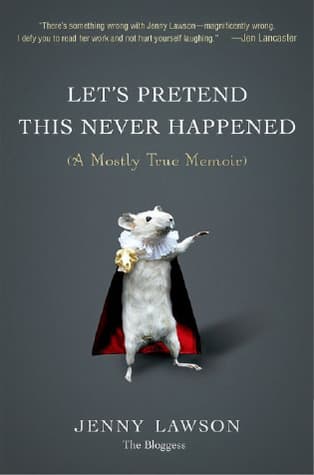
Core Idea
- Difficulty
- Easy
Key Takeaways from Let's Pretend This Never Happened
Embrace Your Inner Weirdo
Authenticity, no matter how bizarre, is the surest path to connection and self-acceptance.
Lawson's memoir is a guide to accepting your quirks. Her life, from taxidermied raccoons named Stanley to impromptu alligator smuggling, is full of the absurd. The book suggests that the things we might try to hide—our anxieties, strange hobbies, and awkward moments—are exactly what make us unique and relatable. Instead of fitting in, Lawson embraces her peculiarities. This shows that real confidence is not about conforming, but about celebrating what makes you stand out. This self-acceptance is key to her humor and broad appeal, proving that vulnerability, even with a dead Cuban alligator, can be powerful.
“Sometimes I wonder if my life is a book, and if it is, I'm pretty sure I'm not the main character.”
In the book: The entire narrative, particularly stories like 'Stanley the Magical, Talking Squirrel' and 'And Then I Snuck a Dead Cuban Alligator on an Airplane,' which detail her comfort with highly unconventional situations and objects.
Try this: Identify one 'weird' habit or interest you possess and instead of downplaying it, find a way to share it authentically with a trusted friend or group. Observe how embracing it might foster deeper connections.
Humor as a Coping Mechanism
Laughter is not just a reaction, but a deliberate strategy for navigating anxiety, depression, and trauma.
Lawson talks openly about her severe anxiety, depression, and trichotillomania. But she does not present these challenges just for pity. Instead, she filters them through dark humor and self-deprecation. This is the book's best idea: humor is not just a result of joy, but a way to cope. By finding the ridiculous in the terrifying, or the absurd in the agonizing, she takes back control of her experiences. This approach helps readers who also deal with mental health issues. It offers not a cure, but a strong example of resilience through laughter. It shows that sometimes, the only way to get through something awful is to laugh at it.
“I have a lot of anxiety, and I deal with it by making jokes. It's how I cope.”
In the book: Her frank discussions of her mental health struggles, interwoven with hilarious anecdotes, such as her therapy sessions or her coping mechanisms for panic attacks.
Try this: When facing a stressful or uncomfortable situation, consciously try to identify one genuinely funny or absurd element within it. Practice reframing challenges with a humorous perspective.
The Power of the Unfiltered Narrative
Sharing raw, unpolished experiences fosters deep reader connection and validates shared human awkwardness.
Lawson's writing style holds nothing back. She shares deeply personal, often embarrassing, and sometimes gross details of her life without apology. This includes everything from gynecological exams to odd family stories and marital arguments. This unfiltered style is important to the book's success because it creates an immediate, close connection with the reader. It is like a friend sharing their wildest secrets, making the reader feel understood in their own private oddities. This willingness to overshare breaks the idea of perfect lives, reminding us that everyone, even bestselling authors, has mortifying moments, and that is normal.
“My vagina is fine. Thanks for asking.”
In the book: Chapters like 'My Vagina Is Fine. Thanks for Asking' and 'A Series of Angry Post-It Notes to My Husband' which exemplify her candid and often TMI approach to storytelling.
Try this: Consider a personal anecdote you usually shy away from sharing due to embarrassment. Practice telling it to a trusted friend or journaling about it, focusing on the raw, unpolished details.
The Absurdity of Childhood
Rural upbringing and eccentric parents can forge a unique, often hilarious, perspective on the world.
Lawson's early years in rural Texas, influenced by her taxidermist father and a mother with her own unconventional wisdom, provide much of the book's humor. Her childhood experiences—from strange animal specimens to unusual family dynamics—gave her a unique way of seeing the world. This upbringing shows how surroundings and parents, no matter how odd, deeply shape a person's outlook and coping skills. The book suggests that what might seem 'abnormal' in one setting can be foundational and even helpful in developing a distinct voice and resilience, proving that unusual beginnings can lead to interesting lives.
“My dad was a taxidermist, which explains a lot.”
In the book: Numerous anecdotes detailing her father's taxidermy work, her family's unique traditions, and her experiences growing up in a small, isolated town.
Try this: Reflect on a peculiar aspect of your own childhood or upbringing. How has that seemingly odd experience contributed to your unique perspective or a particular skill you possess today?
Marriage as a Shared Absurdity
Long-term relationships thrive on mutual understanding, patience, and a shared appreciation for life's ridiculousness.
Lawson's portrayal of her marriage to Victor is a main part of the book. It shows that love often means navigating shared quirks, anxieties, and chaos. Victor's patience and dry wit balance Jenny's energetic personality. Their relationship shows that successful long-term relationships are not about two perfectly matched people, but about two people who truly accept and even enjoy each other's flaws. The 'Angry Post-It Notes' chapter, especially, shows their unique communication style, suggesting that unconventional methods can work best for unconventional people. This idea has limits, as not all relationships can handle such high levels of absurdity, but it strongly supports finding a partner who truly 'gets' you.
“My husband, Victor, is a saint. He has to be.”
In the book: The recurring interactions with Victor, particularly the 'A Series of Angry Post-It Notes to My Husband' chapter and his reactions to her various escapades.
Try this: Discuss with your partner (or reflect on past relationships) a shared 'inside joke' or a peculiar habit you both understand. How does this unique dynamic contribute to the strength or humor of your bond?
The Unpredictability of Life
Expect the unexpected, as life's most memorable moments often arise from unforeseen circumstances.
A repeated idea in the memoir is life's unpredictability. Lawson's stories show how often plans go wrong, leading to situations more interesting (and funnier) than anything planned. From a spontaneous trip to a taxidermist's convention to the alligator incident, her narrative suggests that some of life's best experiences come from embracing detours and the unexpected. This encourages readers to let go of strict expectations and be open to whatever comes their way, even if it involves a dead Cuban alligator or a giant metal chicken. It is a reminder that sometimes, the best stories are the ones you never planned to tell.
“Life is what happens when you're busy making other plans.”
In the book: The spontaneous nature of many of her adventures, such as acquiring the alligator or the various unplanned interactions and events she recounts.
Try this: For one day, try to consciously go with the flow, accepting minor changes to your plans with an open mind. Observe what unexpected (and potentially interesting) outcomes arise.
The Therapeutic Power of Writing
Documenting personal experiences, no matter how embarrassing, can be a profound act of self-discovery and healing.
Lawson's journey from a popular blog to a bestselling memoir shows how writing can be therapeutic. By putting her most mortifying and vulnerable moments on paper, she not only processes her own experiences but also turns them into shared humor and connection. For Lawson, writing helps externalize anxiety, reframe trauma, and find meaning in the absurd. This is especially helpful for anyone dealing with personal challenges, suggesting that telling your story, even if it feels messy or shameful, can be a vital step toward understanding and healing. The book itself shows how private struggles can become public art and empathy.
“It’s like when you’re a kid and you have a nightmare, and you wake up and tell your parents about it, and then it doesn’t seem so scary anymore.”
In the book: The entire existence of the book, which originated from her blog where she documented her life and struggles, and her explicit discussions about how sharing helps her cope.
Try this: Start a 'mortifying moments' journal. Write down one embarrassing or anxious experience from your past. Focus on describing it honestly and then try to find a humorous or insightful angle.
Finding Your Tribe
Connecting with others who understand and appreciate your unique brand of weirdness is essential for belonging.
Lawson's success, first as 'The Bloggess' and then as an author, comes from her ability to build a community of readers who connect with her voice and experiences. Her stories, no matter how strange, resonate because they tap into universal feelings of awkwardness, anxiety, and the desire for connection. This book suggests that while embracing your individuality is important, finding others who celebrate that individuality is equally important. It is about realizing that your 'weird' is not a flaw, but a signal that attracts your people. This sense of belonging, created through shared laughter and understanding, helps fight loneliness and isolation, a key message for anyone feeling like an outsider.
“I’m not alone. And neither are you.”
In the book: The widespread appeal of her blog and book, which garnered a massive following of people who identify with her struggles and humor.
Try this: Seek out online communities, local groups, or even just one new friend who shares a niche interest or a quirky sense of humor that you often feel is unique to you.
The Everyday is Extraordinary
Even the most mundane or embarrassing moments can be transformed into compelling stories with the right perspective.
Lawson can turn ordinary or even mortifying daily events into memorable, funny stories. A trip to the gynecologist, an argument with her husband over Post-it notes, or an encounter with a giant metal chicken are all treated with the same narrative energy as a cross-country adventure. This view challenges the idea that life needs big, dramatic events to be interesting. Instead, it suggests that with a sharp eye for detail, some self-deprecating humor, and a bit of exaggeration, everyday life is full of storytelling potential. This is a good lesson for aspiring writers and anyone looking for more joy and meaning in their own lives.
“It’s not a good story unless there’s a little bit of blood, a little bit of poop, and a little bit of crying.”
In the book: The very premise of the book: taking 'mortifying moments' and making them into a bestseller. Specific examples include her gynecologist visit, the Post-it note saga, and the giant metal chicken.
Try this: Choose a seemingly 'boring' or embarrassing event from your past week. Try to write a short, humorous narrative about it, focusing on vivid details and your internal monologue.
Permission to Be Imperfect
Releasing the pressure to be perfect allows for genuine self-expression and deeper connection.
Throughout 'Let's Pretend This Never Happened,' Lawson constantly rejects any claim to perfection. She does not hide her flaws, anxieties, social awkwardness, or sometimes questionable decisions. By doing so, she gives the reader unspoken permission to be imperfect themselves. This is important in a world often dominated by curated online images. Lawson's honesty about her mental health struggles, quirky habits, and sometimes messy life offers a refreshing counter-narrative, confirming that it is okay not to have everything together. This freedom from the pressure of perfection is empowering and builds a foundation for authentic self-expression and more honest relationships.
“I’m not perfect. I’m not even close. And that’s okay.”
In the book: Her open discussions of her mental health, her struggles with social situations, and her willingness to share embarrassing stories without trying to make herself look better.
Try this: Identify one area where you feel pressure to be perfect. Consciously allow yourself to be 'good enough' in that area for a day and observe the impact on your stress levels and self-perception.
Quiz
10 questions on the main ideas. Each answer comes with a short explanation.
Question 1
What is the full title of the book by Jenny Lawson?
- Let's Pretend This Never Happened
- A Mostly True Memoir
- The Bloggess's Tales
- My Vagina Is Fine
Show answer
A. Let's Pretend This Never Happened The full title of the book is 'Let's Pretend This Never Happened: A Mostly True Memoir'.
Question 2
Who is Jenny Lawson also known as online?
- Tina Fey
- David Sedaris
- The Bloggess
- Victor
Show answer
C. The Bloggess Jenny Lawson is also known online as 'The Bloggess'.
Question 3
What is the primary genre of the book?
- Science Fiction
- Mystery
- Biography/Memoir
- Self-Help
Show answer
C. Biography/Memoir The book is described as a 'Memoir' and 'Biography'.
Question 4
Where did Jenny Lawson have a bizarre upbringing?
- New York City
- Rural Texas
- California
- Chicago
Show answer
B. Rural Texas The book mentions her 'bizarre upbringing in rural Texas'.
Question 5
Which of the following is NOT listed as a chapter title or topic in the provided text?
- Stanley the Magical, Talking Squirrel
- A Series of Angry Post-It Notes to My Husband
- My Car Broke Down Again
- My Vagina Is Fine. Thanks for Asking
Show answer
C. My Car Broke Down Again The options 'Stanley the Magical, Talking Squirrel', 'A Series of Angry Post-It Notes to My Husband', and 'My Vagina Is Fine. Thanks for Asking' are all mentioned. 'My Car Broke Down Again' is not.
Question 6
What does Jenny Lawson realize about mortifying moments?
- They should be completely forgotten.
- They are the ones that define us.
- They are best shared only with close friends.
- They are a sign of personal failure.
Show answer
B. They are the ones that define us. Lawson realized that 'the most mortifying moments of our lives—the ones we’d like to pretend never happened—are in fact the ones that define us.'
Question 7
What unusual item did Jenny Lawson sneak onto an airplane?
- A live squirrel
- A taxidermied alligator
- A large bag of unusual snacks
- A pet snake
Show answer
B. A taxidermied alligator One of the chapter titles mentioned is 'And Then I Snuck a Dead Cuban Alligator on an Airplane.'
Question 8
Why does the book include pictures with captions?
- To make the book look more visually appealing.
- To provide evidence for the unbelievable stories.
- To illustrate the main characters.
- To fill up empty space in the book.
Show answer
B. To provide evidence for the unbelievable stories. The text states, 'Pictures with captions (no one would believe these things without proof) accompany the text.'
Question 9
What is implied about Jenny Lawson's husband, Victor, in the description?
- He is an avid traveler.
- He is very patient and understanding.
- He is a famous writer himself.
- He often gets into trouble with Jenny.
Show answer
B. He is very patient and understanding. The description mentions her 'relationship with her long-suffering husband, Victor.' The term 'long-suffering' implies patience and endurance through difficult or unusual circumstances.
Question 10
The book's tone is best described as:
- Solemn and reflective.
- Angry and accusatory.
- Humorous and self-deprecating.
- Informative and academic.
Show answer
C. Humorous and self-deprecating. The description uses words like 'hilarious journey' and mentions the author's online persona as 'The Bloggess,' which typically implies a humorous and often self-deprecating style. The chapter titles also suggest a comedic approach to difficult topics.
Let's Pretend This Never Happened FAQ
What is "Let's Pretend This Never Happened" about?
It's a humorous memoir by Jenny Lawson, also known as The Bloggess. The book recounts her bizarre childhood in rural Texas, awkward teenage years, and her life with her husband, Victor, filled with hilariously mortifying and defining moments.
Who is Jenny Lawson?
Jenny Lawson is a popular internet humorist, known for her blog 'The Bloggess.' She's also a taxidermist and author.
What kind of humor can I expect in the book?
Expect a very quirky, often self-deprecating, and absurd sense of humor. Lawson doesn't shy away from the embarrassing or strange aspects of life, making them incredibly funny.
Is this book a true story?
The subtitle 'A Mostly True Memoir' suggests that while based on real events and experiences, some embellishments or creative license might be present for comedic effect. Lawson herself acknowledges this playful approach to storytelling.
What are some of the memorable stories or chapters mentioned?
Some of the famously bizarre chapters include 'Stanley the Magical, Talking Squirrel,' 'My Vagina Is Fine. Thanks for Asking,' and 'And Then I Snuck a Dead Cuban Alligator on an Airplane.'
What makes this memoir different from others?
Lawson's unique perspective, her willingness to share deeply personal and often awkward experiences, and her ability to find humor in the darkest or strangest situations set this memoir apart.
Who would enjoy reading "Let's Pretend This Never Happened"?
Fans of authors like Tina Fey and David Sedaris, people who appreciate unconventional humor, and readers who enjoy memoirs that are both hilarious and surprisingly poignant will likely love this book.
Does the book contain any illustrations?
Yes, the book includes pictures with captions that accompany the text. Lawson uses these visuals to provide proof for some of her unbelievable stories.
Is this book suitable for all readers?
Given the frank and often crude humor, as well as discussions of potentially sensitive topics, it's best suited for mature readers who enjoy adult-oriented comedy.
How does the book handle difficult or embarrassing moments?
Lawson's approach is to confront these moments head-on with humor, often using them as a way to connect with the reader and show how these experiences shape us, rather than letting them define us negatively.
About the author

Jenny Lawson is an author known for her humorous and candid explorations of mental health and personal experiences. Her notable works include "Let's Pretend This Never Happened: A Mostly True Memoir" and "Furiously Happy: A Funny Book About Horrible Things," both of which blend humor with serious themes. Lawson's writing often reflects her own struggles and offers insights into navigating life's challenges.
Similar books
- Furiously Happy: A Funny Book About Horrible Things
Jenny Lawson
3.9 (125k) average on GoodreadsPsychologyLawson's own follow-up, 'Furiously Happy,' serves as a direct comparison. While 'Let's Pretend' lays the groundwork for her struggles and upbringing, 'Furiously Happy' focuses more intently on her active choice to pursue joy despite her mental illnesses, embracing the absurdities of life with even greater zeal. 'Let's Pretend' delves deeper into the origins and impact of her past, including childhood trauma and family dynamics, whereas 'Furiously Happy' is more about her ongoing, active battle and coping mechanisms in the present. Both share her signature humor and honesty, but 'Let's Pretend' feels more like an origin story, while 'Furiously Happy' is a declaration of war against sadness.
- Brain on Fire: My Month of Madness
Susannah Cahalan
4.1 (168k) average on GoodreadsPsychologyWhile both are memoirs dealing with severe mental and neurological health crises, the tone and approach are vastly different. Cahalan's 'Brain on Fire' is a gripping, investigative account of a rare autoimmune disease that mimicked severe psychiatric illness, told with a sense of urgent medical mystery and journalistic precision. Lawson's book, conversely, is deeply personal, subjective, and characterized by its comedic and often chaotic narrative style. Cahalan's work seeks to understand a specific, diagnosable physical illness, while Lawson explores the lived, subjective experience of chronic mental health conditions from a first-person, humor-infused perspective. Both are powerful, but their emotional impact and narrative strategies diverge significantly.
- The Perks of Being a Wallflower
Stephen Chbosky
4.2 (1.3M) average on GoodreadsPsychologyThrough letters, a shy high school freshman learns to navigate first love, trauma, and self-discovery, stepping off the sidelines and into life.
- Eleanor Oliphant Is Completely Fine
Gail Honeyman
4.3 (708k) average on GoodreadsLiterary FictionA lonely woman's structured life changes when an IT guy and an elderly man help her learn to open her heart.
- One Flew Over the Cuckoo's Nest
Ken Kesey
4.2 (631k) average on GoodreadsPsychologyIn a mind-bending asylum, the boisterous Randle McMurphy wages a defiant war against the tyrannical Nurse Ratched, inspiring his fellow inmates, including the seemingly catatonic Chief Bromden, to reclaim their lost humanity.
- The Bell Jar
Sylvia Plath
4.0 (591k) average on GoodreadsPsychologyIn the suffocating grip of 1950s expectations, a brilliant young woman's descent into mental illness is painted with such vivid, internal clarity that her 'insanity' feels terrifyingly rational and inevitable.





Enjoyed the summary?
A summary gives you the shape of the book. The book itself has the detail, the examples and the voice.
Find Let's Pretend This Never Happened on AmazonAs an Amazon Associate, BookBrief earns from qualifying purchases. How we're funded