
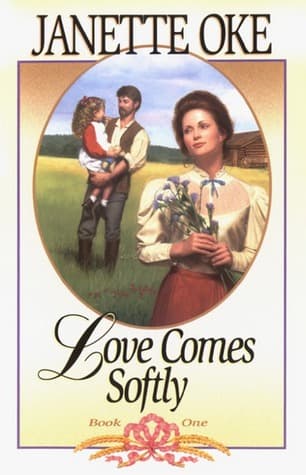
Synopsis
Covers the whole plot, including the ending.
- Difficulty
- Easy
- Pacing
- Slow
- Mood
- Heartwarming, Hopeful, Gentle, Faithful
- Read it if
- You enjoy heartwarming historical romances about faith, family, and finding love in unexpected circumstances, particularly stories set in the American frontier.
- Skip it if
- You prefer fast-paced plots, explicit romance, or stories without strong religious undertones.
Love Comes Softly Plot Summary
Covers the whole plot, including the ending.
A Tragic Loss on the Prairie
Marty Claridge and her husband, Clem, arrive in the American West, hoping to build a new life and home on the frontier. They claim land and begin to build a small cabin. However, their hopes end when Clem dies in a fall from a horse while hunting. Marty is left a widow. Devastated and pregnant, Marty is alone in the harsh wilderness with no money, no shelter, and no family nearby. She is unprepared for frontier life and faces an uncertain future, grieving her husband and their dreams.
An Unexpected Marriage Proposal
On the day of Clem's funeral, Clark Davis, a kind but quiet frontiersman, approaches Marty with an unusual offer. Clark, a widower with a young daughter named Missie, offers to marry Marty. He says he needs a mother for Missie and a housekeeper for his home. In return, Marty and her unborn child would have shelter and security. He promises to pay for her train ticket back East in the spring if she is still unhappy. Though initially angered by the proposal, Marty, seeing her desperate situation, reluctantly accepts. It is her only option for survival and her child's well-being.
A New Home and a Wary Child
Marty moves into Clark's cabin. It is a sharp contrast to the small, cozy home she had imagined with Clem. The house is simple and organized, showing Clark's practical nature. She immediately faces the challenge of adapting to a new environment and responsibilities. Missie, Clark's young daughter, is at first wary and distant towards Marty. She is still grieving her own mother and suspicious of this new woman. Marty, who has never kept house before, struggles with chores and the unfamiliar ways of frontier living. She feels overwhelmed and out of place.
Learning the Ropes of Frontier Life
Clark sees Marty's struggles and patiently begins to teach her the skills for frontier homemaking. He shows her how to cook on an open hearth, churn butter, sew, and manage a garden. Despite her initial clumsiness and frustration, Marty works hard, driven by her desire not to be a burden and to earn her keep. At the same time, she tries to connect with Missie, reading to her and trying to bridge the emotional distance between them. Missie slowly starts to respond to Marty's quiet efforts, finding comfort in her presence, though their bond is still fragile.
The Birth of a New Life
As winter deepens, Marty's pregnancy progresses. Clark is a supportive and attentive husband, making sure she is comfortable and cared for. When the time comes, Marty gives birth to a healthy baby girl, whom she names Clare. Her daughter's arrival brings both joy and renewed sorrow as she remembers Clem. The baby also deepens Marty's connection to the home and to Clark, making her think about her plan to return East. She begins to feel a maternal instinct for Missie as well, recognizing her role as a mother to both children.
Growing Bonds and Shifting Hearts
With two children to care for, Marty's days are full. She finds great joy in caring for Clare and feels a deepening love for Missie, who now openly accepts Marty as her mother. The children thrive under her care, and the house begins to feel more like a home. Marty observes Clark's quiet strength, his faith, and his gentle kindness. Her initial resentment and indifference turn into respect and growing affection. She starts to see him not just as a provider, but as a good and honorable man. The idea of leaving him becomes increasingly difficult.
A Test of Faith and Family
As spring nears, the time for Marty's decision approaches. Clark reminds her of their agreement, offering her the train fare back East as promised. Marty is now conflicted. Her heart is with Clark, Missie, and little Clare, and the thought of leaving them is painful. She has found a sense of purpose and belonging she never expected. She prays and reflects, seeking guidance on what truly is her home and her future. This internal struggle shows her growth from a grieving, lost woman to one who has found love and family in an unexpected place.
Love Comes Softly
After much thought and prayer, Marty makes her decision. She tells Clark she will not be taking the train back East. She acknowledges the love she has come to feel for him and for Missie and Clare, and says she wants to stay and build a life with them. Clark, who has silently hoped for this, is relieved and expresses his own love for her. Their marriage of convenience becomes a true partnership built on respect, affection, and shared faith, solidifying their family on the prairie. Marty has found not just a home, but a loving family and a purpose.
Love Comes Softly Characters
Marty Claridge Davis
Protagonist
A young widow who finds unexpected love and purpose on the frontier.
Marty begins the story as a naive, pampered young woman from the East, ill-prepared for the harsh realities of frontier life. Grieving the sudden death of her first husband, Clem, she is initially resentful and heartbroken, agreeing to marry Clark Davis out of desperation. Over the course of the book, Marty undergoes significant personal growth, learning to cook, clean, and care for a home and children. She transforms from a self-pitying individual into a capable, loving, and resilient woman who embraces her new life and family. Her journey is one of emotional and spiritual awakening.
Relationships: Clem (First husband, tragically deceased); Clark Davis (Second husband, initially a marriage of convenience, later true love); Missie Davis (Stepdaughter, initially wary but later deeply loved); Clare Davis (Daughter with Clark)
Clark Davis
Protagonist/Supporting
A kind and patient widower who offers Marty a home and a new beginning.
Clark is a quiet, strong, and deeply religious frontiersman. A widower himself, he proposes a marriage of convenience to Marty out of a practical need for a mother for his daughter, Missie, and a housekeeper. He is incredibly patient and understanding, gently teaching Marty the ways of frontier life without judgment. Clark embodies steadfastness, integrity, and unwavering faith. He loves Missie deeply and treats Marty with respect and kindness, allowing her the space and time to heal and grow. His quiet strength and moral compass are central to Marty's transformation.
Relationships: Marty Claridge Davis (Wife, initially a marriage of convenience, later true love); Missie Davis (Daughter, deeply loved); Clare Davis (Daughter with Marty)
Missie Davis
Supporting
Clark's young daughter, initially wary of Marty but eventually accepting her as a mother.
Missie is a young girl, Clark's daughter, who has recently lost her own mother. She is initially reserved and somewhat suspicious of Marty, wary of a new woman entering her father's life and taking her mother's place. Her behavior reflects a child's natural grief and attachment to her lost parent. As Marty dedicates herself to caring for her, reading to her, and showing her kindness, Missie slowly opens up, eventually embracing Marty as her beloved new mother. Her acceptance is a key indicator of Marty's growing success and integration into the family.
Relationships: Clark Davis (Father); Marty Claridge Davis (Stepmother, later beloved mother figure); Clare Davis (Half-sister)
Clem
Mentioned
Marty's first husband, whose sudden death leaves her widowed and pregnant.
Clem is Marty's first husband, a young man full of optimism and dreams of a new life in the West with Marty. He is depicted as loving and adventurous, but his life is tragically cut short in an accident early in the story. His death is the catalyst for Marty's entire journey, forcing her into a desperate situation that leads to her marriage with Clark. Though he is only present for a short time, his memory and Marty's grief over his loss are significant factors in her initial reluctance and emotional state.
Relationships: Marty Claridge Davis (Wife)
Clare Davis
Supporting
Marty and Clark's infant daughter, whose birth solidifies Marty's maternal bond and place in the family.
Clare is Marty's baby, born several months into her marriage with Clark. Her arrival represents new life and hope. The experience of giving birth and caring for Clare deepens Marty's maternal instincts and her connection to her new home. Clare's presence completes the family unit and becomes another strong reason for Marty to choose to stay with Clark, demonstrating the tangible results of the love that has grown in the household. Her birth marks a turning point in Marty's emotional commitment to her new life.
Relationships: Marty Claridge Davis (Mother); Clark Davis (Father); Missie Davis (Half-sister)
Love Comes Softly Themes
Love and Family in Unexpected Circumstances
The main theme is how love and family can grow from unexpected and practical beginnings. Marty and Clark marry out of necessity, not romance. However, through shared duties, respect, and Clark's quiet devotion, Marty slowly opens her heart. The bond with Missie, and later with her own baby, Clare, makes the house a real home. This theme shows that love is not always a sudden passion but can be a 'softly' growing affection built on kindness, shared purpose, and commitment, as the title suggests.
“And it was then that she realized that love had not come with a rush and a roar, but had grown slowly, like a seedling planted in the heart, nurtured by kindness and care.”
Faith and Providence
Faith is central to the characters' lives, especially for Clark and eventually for Marty. Clark's trust in God's plan gives him strength and patience, allowing him to offer Marty a stable home and guidance. Marty, at first lost in grief, slowly finds comfort and direction through prayer and watching Clark's quiet faith. Her choice to stay is deeply rooted in a sense of divine purpose, recognizing that her new life, though unexpected, is where she is meant to be. The book quietly shows faith as a guide through life's difficulties.
“He always asked God for guidance, and he always gave Him thanks. It was a simple faith, but it was strong.”
Resilience and Adaptation
Marty's journey shows human strength and the ability to adapt. Forced into the harsh realities of frontier life after a sheltered upbringing, she faces big challenges: grief, loneliness, pregnancy, and the difficult task of managing a household she knows nothing about. Despite her initial struggles and longing for her past, Marty diligently learns new skills, adapts to her environment, and ultimately thrives. Her ability to overcome hardship and embrace a completely different way of life shows the strength of the human spirit when faced with necessity and purpose.
“She had thought she could not bear it, but she was bearing it. And she was learning, slowly, painfully, to live again.”
Motherhood and Nurturing
Motherhood is a main theme, explored through Marty's change into a mother figure. At first, she is a reluctant stepmother to Missie, feeling inadequate and distant. But as she consistently cares for Missie, reads to her, and provides a stable presence, a deep maternal bond forms. The birth of her own child, Clare, further solidifies her identity as a mother, extending her love and nurturing instincts to both girls. This theme emphasizes that motherhood is not only biological but also a conscious act of love, care, and commitment, shaping one's identity and purpose.
“She had never thought of herself as a mother, not truly, but as she held the tiny form close, she knew, with a certainty that reached into her very soul, that she was.”
Plot Devices & Literary Techniques
Marriage of Convenience
A contractual marriage driven by necessity rather than romantic love.
This is the primary plot device that sets the entire story in motion. Marty and Clark enter into a marriage not out of affection, but because of their desperate circumstances: Marty needs shelter and security for herself and her unborn child, and Clark needs a mother for Missie and a housekeeper. This arrangement provides the framework for their relationship to develop, allowing them to slowly build a foundation of respect, friendship, and eventually, love, challenging the conventional notions of how relationships begin.
The Frontier Setting
The harsh and demanding environment of the American West as a crucible for character development.
The untamed American frontier serves as more than just a backdrop; it is a powerful force that shapes the characters and their decisions. Its isolation, self-reliance, and unforgiving nature strip Marty of her previous comforts and force her to develop resilience and practical skills. The demands of frontier life—building a home, farming, surviving winter—act as a catalyst for her transformation, pushing her beyond her perceived limits and fostering a deep appreciation for community and family.
Symbolism of the Seasons
The passing of seasons mirroring Marty's emotional and spiritual journey.
The progression of the seasons, from the harsh winter when Marty first arrives and gives birth, to the hopeful spring when she makes her decision, symbolizes her internal journey. Winter represents her period of grief, isolation, and learning, a time of quiet endurance and internal growth. Spring, with its promise of new life and renewal, directly correlates with Marty's emotional blossoming and her decision to embrace her new life and found love, signifying an end to her emotional 'winter' and the beginning of a new, hopeful chapter.
Internal Monologue/Marty's Perspective
The narrative largely filtered through Marty's thoughts and feelings, highlighting her emotional transformation.
The story is predominantly told from Marty's point of view, allowing the reader deep insight into her initial grief, resentment, struggles, and gradual shift towards acceptance and love. Her internal monologues reveal her vulnerability, her determination to 'earn her keep,' and her evolving feelings for Clark and Missie. This narrative technique effectively showcases her emotional arc, making her transformation relatable and authentic as readers witness her thoughts and feelings change over time.
Love Comes Softly Quotes
“Suddenly, her world was empty, yet not empty. It was filled with a new, terrifying aloneness.”
“God doesn't give us more than we can handle, but sometimes He lets us choose to handle more than we think we can.”
“Love isn't something you fall into; it's something you grow into.”
“The prairie had a way of stripping away the unnecessary, leaving only the essential.”
“It was amazing how much peace a person could find in simply accepting what was.”
“A man's worth isn't in what he has, but in what he gives.”
“Sometimes the greatest blessings come disguised as burdens.”
“There was a quiet strength in him that she hadn't recognized at first, a strength born of humility and faith.”
“The warmth wasn't just from the fire; it was from the presence of another human being who cared.”
“The prairie taught patience, whether you wanted to learn it or not.”
“It was a strange thing, this feeling of being tethered to a life she hadn't chosen, yet finding glimpses of beauty within it.”
“Love was not a sudden burst of flame, but a steady, glowing ember.”
“He didn't just offer her a home; he offered her a future.”
“Sometimes the greatest comfort came from simply sharing the silence with someone you trusted.”
Quiz
10 questions on the plot and the characters. Each answer comes with a short explanation.
Question 1
What tragic event befalls Marty shortly after arriving in the West with Clem?
- Their wagon is stolen, leaving them stranded.
- Clem dies in an accident, leaving Marty alone and pregnant.
- Marty discovers Clem has been unfaithful.
- Their claim is jumped by another pioneer family.
Show answer
B. Clem dies in an accident, leaving Marty alone and pregnant. The book explicitly states that just after they arrived and Clem had chosen the perfect setting, an accident took his life, leaving Marty alone and pregnant.
Question 2
Who proposes marriage to Marty on the day of Clem's funeral?
- A traveling preacher
- A kind neighbor offering assistance
- Clark Davis
- A relative from back East
Show answer
C. Clark Davis The narrative states, 'Then, on the day of his funeral, Clark Davis came along...and asked Marty to marry him!'
Question 3
What is Clark Davis's primary stated reason for wanting to marry Marty?
- He fell in love with her at first sight.
- He needed someone to be a mother to his baby girl, Missie.
- He needed a housekeeper and cook for his farm.
- He felt pity for her desperate situation.
Show answer
B. He needed someone to be a mother to his baby girl, Missie. Clark explicitly tells Marty he only wanted her to be a 'mama to his baby girl, Missie,' offering her a way out of her dire circumstances.
Question 4
What is the condition Clark offers Marty regarding their marriage if she is unhappy?
- He would help her find another husband.
- He would pay for her ticket back East in the spring.
- He would give her half of his property.
- He would find her a job in the nearest town.
Show answer
B. He would pay for her ticket back East in the spring. Clark promised that 'If Marty was still unhappy come spring, he would pay for her ticket back East,' giving her an escape clause.
Question 5
What is Marty's initial attitude towards her new role as a wife and mother to Missie?
- She immediately embraces it with joy and enthusiasm.
- She is determined to earn her keep and eventually return East.
- She is resentful and refuses to interact with Missie.
- She tries to escape as soon as possible.
Show answer
B. She is determined to earn her keep and eventually return East. Marty's primary motivation is 'Determined not to be a burden to Clark, and intending only to earn her keep,' with the goal of earning her train fare back home.
Question 6
What challenges does Marty face in her new domestic role?
- She struggles with the harsh pioneer weather.
- She doesn't know how to keep a house or be a mother.
- Clark's daughter, Missie, is openly hostile towards her.
- She is constantly undermined by Clark's former housekeeper.
Show answer
B. She doesn't know how to keep a house or be a mother. The text highlights her struggle: 'But she had never been anyone's mama before, and she didn't even know how to keep a house!'
Question 7
What is the overarching theme Marty must learn through her experiences?
- The importance of financial independence.
- The necessity of self-reliance in the wilderness.
- Wholeness and love through patience and faith.
- How to survive harsh winters on the frontier.
Show answer
C. Wholeness and love through patience and faith. The synopsis explicitly states, 'Now, Marty must learn wholeness and love through patience and faith,' indicating the central theme of her character development.
Question 8
Why was Marty initially infuriated by Clark's marriage proposal?
- She was still deeply grieving Clem and felt it was disrespectful.
- She believed he was only interested in her inheritance.
- She had already promised to marry someone else.
- She found Clark to be unattractive and crude.
Show answer
A. She was still deeply grieving Clem and felt it was disrespectful. Considering it was 'on the day of his funeral,' Marty's fury likely stemmed from the perceived disrespect and insensitivity of such a proposal so soon after Clem's death, while she was still deep in grief.
Question 9
What is Marty's initial financial and living situation that compels her to accept Clark's proposal?
- She has some savings but no place to stay.
- She is completely destitute, with no money, no shelter, and pregnant.
- She has land but no means to work it alone.
- She is waiting for a remittance from her family back East.
Show answer
B. She is completely destitute, with no money, no shelter, and pregnant. The text clearly states her desperate situation: 'but with no money, no shelter, and a baby on the way, what choice did she have?' This highlights her lack of options.
Question 10
How does Marty's initial goal of earning her train fare back home relate to the overarching theme of the story?
- It demonstrates her strong will and independence, which she maintains throughout.
- It sets up a conflict where she must choose between her past and the potential for a new future.
- It is a practical goal that she achieves quickly, allowing her to focus on other matters.
- It highlights her inability to adapt to the pioneer lifestyle.
Show answer
B. It sets up a conflict where she must choose between her past and the potential for a new future. Marty's initial intention to return home directly contrasts with the ultimate theme of finding 'wholeness and love' in her new life. Her journey is about letting go of that past desire and embracing her present circumstances, which leads to her personal growth and finding love with Clark and Missie.
Love Comes Softly FAQ
What is "Love Comes Softly" about?
"Love Comes Softly" tells the story of Marty Claridge, a young pregnant widow in the pioneer West who, after her husband Clem's sudden death, enters a marriage of convenience with Clark Davis, a widower with a young daughter named Missie. The book follows Marty's journey of adapting to frontier life, learning to be a mother and homemaker, and ultimately finding unexpected love and faith within her new, unconventional family.
Why should I read "Love Comes Softly"?
You should read "Love Comes Softly" for its heartwarming portrayal of resilience, faith, and the transformative power of love in the face of hardship. It offers a gentle, inspiring narrative about a woman's journey from grief and desperation to finding purpose and affection in an arranged marriage, set against the authentic backdrop of the American frontier.
What is the background/setting of "Love Comes Softly"?
The story is set in the American pioneer West during a time of westward expansion, likely in the mid-to-late 19th century. It vividly depicts the challenges of frontier life, including building homes from scratch, farming, dealing with harsh weather, and the close-knit, self-reliant communities that formed in isolated settlements.
What are the most memorable quotes?
While specific quotes aren't provided in the summary, memorable lines often revolve around themes of faith, perseverance, and the quiet blossoming of love. For instance, Clark's gentle wisdom or Marty's internal reflections on her changing heart would likely yield profound and comforting statements about God's plan and finding joy in unexpected places.
What writing style does the author use?
Janette Oke employs a gentle, straightforward, and emotionally resonant writing style characteristic of inspirational historical fiction. Her prose is accessible and focuses on character development, internal monologues, and conveying a sense of warmth and faith, often with descriptive details of pioneer life.
What minor details add significant meaning?
Marty's initial determination to save money for her train ticket back East, even as she performs her duties, subtly highlights her internal conflict and the gradual shift in her heart. Also, Missie's innocent need for a mother figure provides the initial, tangible purpose that slowly chips away at Marty's resolve to leave, anchoring her to the new family.
What are some subtle foreshadowing moments?
Clark's quiet patience and understanding from the very beginning, despite Marty's initial anger and coldness, subtly foreshadows the depth of his character and his capacity to eventually win Marty's heart. His initial proposal, though shocking, is rooted in a practical kindness that hints at a deeper goodness.
What unexpected character connections exist?
The most unexpected connection is the immediate, yet temporary, bond Marty forms with Missie, Clark's daughter. Despite Marty's reluctance to stay, Missie's need for a mother creates an early, strong emotional pull that begins to soften Marty's heart, even before she fully connects with Clark.
What are unspoken character motivations?
Clark's unspoken motivation for marrying Marty, beyond needing a mother for Missie, is likely a profound loneliness and a desire for a complete family, even if he must settle for a practical arrangement. Marty's unspoken motivation, initially, is sheer survival and the protection of her unborn child, overriding her personal grief and anger.
What psychological complexities do characters exhibit?
Marty exhibits the complex psychology of grief mixed with resentment and pragmatism. She struggles with guilt over her feelings for Clark while still mourning Clem, and her pride battles with her growing affection and dependence. Clark, though seemingly simple, showcases profound emotional maturity and patience in allowing Marty the space to heal and grow into her role.
What are the major emotional turning points?
A major emotional turning point is when Marty successfully delivers her baby and experiences the overwhelming love of motherhood, which deepens her bond with Missie and Clark. Another is when she consciously chooses to stay with Clark and Missie, letting go of her plan to return East, signifying her acceptance and burgeoning love for her new family.
How do relationship dynamics evolve?
The relationship dynamics evolve from a purely transactional, almost adversarial arrangement between Marty and Clark, to one of mutual respect, then deep affection, and finally, profound love and partnership. Marty's relationship with Missie also transforms from hesitant stepmother to loving mother, mirroring her emotional growth.
Which parts remain ambiguous or open-ended?
The precise details of Marty's life before Clem, or the specific circumstances of Clark's first wife's death, are often kept somewhat ambiguous, focusing instead on their present struggles and future together. The exact depth of Clark's initial feelings for Marty, beyond practicality, is also subtly hinted at rather than explicitly stated, leaving room for interpretation of his quiet hope.
What are controversial scenes or decisions?
The most 'controversial' decision, within the context of the story, is Clark's proposal to Marty on the day of her husband's funeral. While born of necessity and kindness in the harsh frontier, it's a stark and initially infuriating proposition that forces Marty into an impossible choice, highlighting the harsh realities of survival.
"Love Comes Softly" ending explained: how it ends & what it means
The book ends with Marty having fully embraced her new life with Clark and Missie, deeply in love with both her new husband and stepdaughter, and having found her place and purpose on the frontier. She has shed her grief for Clem and her desire to return East, finding wholeness and faith through her experiences. The ending signifies the triumph of love, resilience, and spiritual growth, demonstrating that true happiness can be found in unexpected circumstances and through acts of faith and patience.
About the author
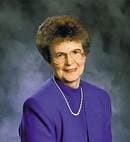
Janette Oke is a Canadian author known for her contributions to Christian fiction. Her notable works include "Love Comes Softly," "When Calls the Heart," "Love Takes Wing," and "When Breaks the Dawn," which often explore themes of faith, love, and resilience in historical settings. Oke's storytelling has resonated with readers, particularly in the genre of inspirational literature.
Similar books
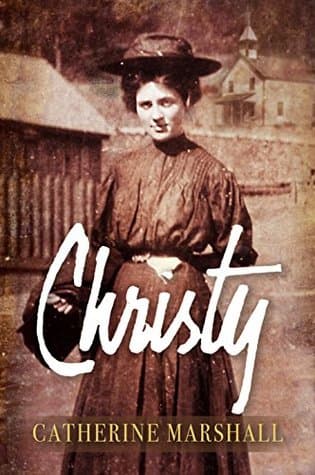
- Christy
Catherine Marshall
4.2 (49k) average on GoodreadsHistorical FictionExplores themes of faith, education, and finding purpose in a challenging historical setting.
- When Calls the Heart
Janette Oke
4.2 (21k) average on GoodreadsHistorical FictionAnother Janette Oke novel with similar themes of pioneer life, faith, and romance.
- The Blue Castle
L.M. Montgomery
4.3 (30k) average on GoodreadsHistorical FictionFeatures a strong female protagonist finding unexpected love and independence against societal expectations.
- The Flame and the Flower
Kathleen E. Woodiwiss
4.1 (17k) average on GoodreadsHistorical FictionWoodiwiss's novel, a foundational text in the secular historical romance genre, offers a passionate, often tumultuous, and more physically explicit portrayal of love and relationships. In stark contrast, Oke's "Love Comes Softly" cultivates a gentle, chaste, and faith-driven love story, appealing to a different readership seeking moral uplift and spiritual connection over sensual drama and intense emotional conflict.
- To Kill a Mockingbird
Harper Lee
4.3 (4.5M) average on GoodreadsHistorical FictionIn the 1930s Jim Crow South, Harper Lee writes about racial injustice, moral growth, and the quiet courage of a lawyer father, Atticus Finch, as seen through his young daughter's eyes.
- The Great Gatsby
F. Scott Fitzgerald
3.9 (3.8M) average on GoodreadsHistorical FictionIn the opulent Roaring Twenties, a mysterious millionaire's lavish parties hide his desperate, tragic pursuit of a lost love, exposing the emptiness within the American Dream.





Enjoyed the summary?
A summary gives you the shape of the book. The book itself has the detail, the examples and the voice.
Find Love Comes Softly on AmazonAs an Amazon Associate, BookBrief earns from qualifying purchases. How we're funded