
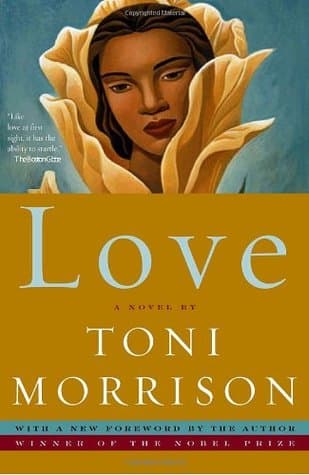
Synopsis
Covers the whole plot, including the ending.
- Difficulty
- Medium
- Pacing
- Moderate
- Mood
- Atmospheric, Intense, Reflective, Melancholy
- Read it if
- You enjoy rich, character-driven literary fiction with complex family dynamics, exploring themes of race, class, and memory. Perfect for fans of Toni Morrison's distinctive prose and intricate storytelling.
- Skip it if
- You prefer fast-paced plots with clear-cut resolutions or shy away from emotionally intense and sometimes dark explorations of human relationships.
Love Plot Summary
Covers the whole plot, including the ending.
The Arrival of Junior and the House of Cosey
The novel opens with Junior Viviane, a young, troubled woman, arriving at the Cosey house. Christine, one of the Cosey women, sent her to work as a housekeeper. The house is a decaying mansion, once a grand hotel and resort owned by Bill Cosey. Now it holds his widow, Heed, and his granddaughter, Christine. The two women, once childhood friends, are now bitter enemies, sharing the house in a tense, silent war. Junior's presence immediately changes their already volatile relationship, as she becomes an unwitting pawn in their long-standing feud. The house itself is a character, holding memories of Bill Cosey and the complex relationships he created.
The Ghost of Bill Cosey and the Battle for Memory
The narrative shifts between the present and various past timelines, revealing Bill Cosey's history and his influence on the women around him. Cosey, a charming and powerful Black businessman, owned the Cosey Hotel, a popular resort that was a center for Black leisure and community. After his death, his will, which leaves the property to 'his wife,' becomes a point of contention. Heed, his legal widow, and Christine, his granddaughter and the daughter of his first wife, have been fighting over the inheritance and his memory for decades. Their animosity comes from a complex history of love, betrayal, and perceived wrongs, all centered around Bill Cosey.
Heed and Christine's Childhood: A Friendship Forged and Broken
Flashbacks show that Heed and Christine were once close childhood friends, growing up together at the Cosey Hotel. Christine was Bill Cosey's beloved granddaughter, and Heed was a poor girl he took in. Their bond was deep and full of mutual affection and protection. This friendship broke when Bill Cosey, in a controversial move, married the pre-pubescent Heed. This act, seen by many as scandalous and exploitative, changed the girls' relationship. It turned Christine's love into bitter resentment and Heed's innocence into a complex mix of guilt and entitlement, ending their childhood and their friendship.
May and the Cosey Hotel's Golden Age
The narrative looks at the life of May, Bill Cosey's long-time mistress and the hotel's cook. May represents the sensual, independent spirit that thrived during the Cosey Hotel's best years. She was a skilled chef and a woman of strong character, devoted to Cosey despite his marriage to Heed. Her story shows the various forms of 'love' that Cosey inspired and received, and the communal life of the resort. May also observes the dramas within the Cosey family, offering an outside perspective on the dynamics between Cosey, Christine, and Heed, and the broader social context of the time.
The Enigmatic Figure of Bill Cosey
Bill Cosey is a magnetic and complex figure, a man who commanded immense loyalty and affection, but also caused deep pain and confusion. He was a successful entrepreneur, a generous benefactor, and a sensual man who affected every woman he met. His reasons for marrying Heed remain somewhat unclear. The reader must consider if it was an act of love, control, or a misguided attempt at protection. His presence, even after death, controls the lives of the women in the house, shaping their identities, their relationships, and their understanding of love itself. The novel carefully builds his character through the fragmented memories and perspectives of those who loved and hated him.
Ragan and the Next Generation's Perspective
Ragan, Christine's daughter, is a younger generation somewhat removed from the intense emotional drama of the Cosey house. She lives away from the family and sees their quarrels with a mix of exasperation and detached curiosity. Her perspective helps frame the historical context of the family's struggles, showing how the past continues to affect later generations. Ragan's character also highlights societal changes since the Cosey Hotel's prime, contrasting the past Black community with the more fragmented present. She often hears Christine's complaints and tries to understand the deep-seated animosity.
Junior's Role and the Unveiling of Secrets
As Junior continues her work in the Cosey house, she becomes more involved in the lives of Heed and Christine. She observes their routines, overhears their arguments, and begins to piece together the family's fragmented history. Junior, with her own troubled past, is drawn to the drama and seeks a sense of belonging. Her presence acts as a catalyst, prompting the women to confront parts of their past they have long suppressed. Through her interactions, the reader gains more insight into the complex relationships and the secrets that have been guarded for decades, especially concerning Cosey's intentions.
Celestial and the Broader Community
Celestial, a woman who knew Bill Cosey and the hotel well, offers another outside perspective on the Cosey family story. She represents the wider community affected by Cosey's presence and the decline of his resort. Her memories and insights add to the mosaic of perspectives, deepening the understanding of Cosey's character and the societal context in which he operated. Celestial's observations often show the differing interpretations of Cosey's actions and the lasting effects of his choices on the lives of those around him, especially the women who loved him.
The Truth Behind Cosey's Will
A key revelation in the novel concerns the actual wording and intent of Bill Cosey's will. It is discovered that Cosey did not explicitly leave the property to 'his wife' in a way that would solely benefit Heed. Instead, the will's language is more ambiguous, suggesting a desire to protect and provide for all the women he cared for, or perhaps to simply leave a lasting, if complicated, legacy. This discovery redefines the decades-long feud between Heed and Christine. It shows their animosity was fueled by misinterpretation and deeply ingrained emotional wounds rather than a clear legal directive. The will's ambiguity reflects the ambiguity of Cosey's 'love.'
Reconciliation and the Lingering Scars
Towards the end of the novel, spurred by Junior's actions and the slow unraveling of truths, Heed and Christine begin a tentative reconciliation. They slowly start to communicate, recalling shared memories of their childhood friendship and Bill Cosey. This difficult process involves confronting past hurts, misunderstandings, and the ways Cosey's actions shaped their lives. While a full healing of their deep wounds is not easy, there is a glimmer of understanding and a partial restoration of their bond. This suggests that even after decades of hatred, love and shared history can still connect them, though with lasting scars.
Principal Figures
Bill Cosey
Central Figure
Charismatic and influential hotel owner, whose memory dominates the lives of the women.
Bill Cosey is the deceased patriarch whose legacy and memory are the central axis around which the novel's conflicts revolve. He was a successful Black businessman who owned the thriving Cosey Hotel, a beacon of Black leisure. Cosey was charismatic, sensual, and complex, inspiring intense love, loyalty, and sometimes profound pain in the women around him. His controversial marriage to the young Heed shattered the friendship between Heed and Christine, setting in motion decades of animosity. Even in death, his presence dictates the lives and relationships of the women in his family, as they grapple with his will and the multifaceted nature of his 'love.'
Relationships: Heed Cosey (wife, child bride); Christine Cosey (granddaughter, once beloved); May (long-time mistress, confidante); Junior Viviane (distant relative, employee in his former home)
Heed Cosey
Protagonist/Antagonist
Bill Cosey's widow, once a child bride, locked in a bitter feud with Christine.
Heed Cosey is Bill Cosey's legal widow, married to him as a pre-pubescent girl. She is a survivor, carrying the weight of her unusual marriage and the subsequent ostracization and resentment from Christine. Heed is proud, stubborn, and deeply wounded, yet she clings fiercely to her identity as 'Mrs. Cosey.' Her relationship with Christine is one of deep-seated hatred, fueled by decades of perceived slights and misunderstandings. Despite her hard exterior, she secretly yearns for the friendship she once shared with Christine, and for a clearer understanding of Bill Cosey's true intentions.
Relationships: Bill Cosey (husband, protector, complex figure); Christine Cosey (childhood best friend, later bitter enemy); Junior Viviane (employer, a catalyst for change)
Christine Cosey
Protagonist/Antagonist
Bill Cosey's granddaughter, consumed by resentment and a sense of betrayal.
Christine Cosey is Bill Cosey's granddaughter, the daughter of his first marriage. She was once her grandfather's favorite, enjoying a close bond with him and a deep friendship with Heed. However, her world was shattered by Cosey's marriage to Heed, which she perceived as a profound betrayal and an act of perversion. Christine is sharp-tongued, intelligent, and fiercely independent, but her life has been largely defined by her animosity towards Heed and her unresolved feelings about Cosey. She carries the burden of the past, constantly reliving the injustices she believes were inflicted upon her and her family.
Relationships: Bill Cosey (grandfather, once beloved, later source of betrayal); Heed Cosey (childhood best friend, later bitter enemy); Ragan (daughter); Junior Viviane (employer, a pawn in her feud)
Junior Viviane
Supporting
A troubled young woman who becomes a housekeeper and catalyst in the Cosey household.
Junior Viviane is a young woman with a difficult past and a history of instability, sent to the Cosey house as a housekeeper by Christine. She is an outsider who becomes an integral part of the narrative, acting as an observer and, eventually, a catalyst for change. Junior is perceptive, manipulative, and seeking a place to belong. Her presence forces Heed and Christine to confront their long-standing feud and the secrets of their past. She is drawn into the family's drama, sometimes for her own gain, but also out of a genuine curiosity and a desire for connection.
Relationships: Heed Cosey (employer); Christine Cosey (employer, distant relative); Bill Cosey (figure of fascination)
May
Supporting
Bill Cosey's long-time mistress and the Cosey Hotel's cook, a vibrant and independent woman.
May was Bill Cosey's mistress for many years and the talented cook at the Cosey Hotel. She represents a different facet of 'love' and loyalty in Cosey's life. May is depicted as a strong, independent, and sensual woman who navigated her unconventional relationship with Cosey with dignity and self-possession. She was deeply connected to the vibrant life of the Cosey Hotel and served as a witness to much of the family's history, offering a perspective unburdened by the legal and familial claims of Heed and Christine. Her memories provide insight into Cosey's character and the social world of the resort.
Relationships: Bill Cosey (lover, employer); L (friend, confidante)
L
Supporting
The wise, observant narrator who connects the fragmented stories.
L is the omniscient narrator of the story, serving as a connecting thread between the various timelines and perspectives. She is a wise, observant, and somewhat detached figure who knew Bill Cosey and many of the women intimately. L's voice provides context, historical detail, and often poignant reflections on the nature of love, memory, and community. She is privy to the secrets and inner thoughts of the characters, allowing her to present a comprehensive, albeit fragmented, picture of the Cosey family saga. L represents the collective memory of the community and the enduring impact of the past.
Relationships: Bill Cosey (friend, acquaintance); May (friend, confidante); Heed Cosey (acquaintance); Christine Cosey (acquaintance)
Ragan
Supporting
Christine's daughter, offering a modern, somewhat detached perspective on the family.
Ragan is Christine's daughter, representing a younger generation removed from the immediate drama of the Cosey house. She lives away from her mother and visits infrequently, often exasperated by the persistent feud between Heed and Christine. Ragan serves as a sounding board for Christine's grievances and provides a more modern, pragmatic perspective on the family's entangled history. Her role highlights the enduring impact of the past on subsequent generations, even as she attempts to maintain a degree of distance from the emotional intensity of her elders' lives. She embodies the struggle to move beyond inherited trauma.
Relationships: Christine Cosey (mother); Heed Cosey (great-aunt by marriage, object of her mother's feud)
Celestial
Supporting
A community member who offers an external perspective on the Cosey family.
Celestial is another voice from the community who knew Bill Cosey and the hotel during its prime. She offers an external, often less emotionally charged, perspective on the Cosey family and the events that shaped their lives. Her memories and observations contribute to the rich tapestry of viewpoints, helping to fill in gaps and provide a broader social context for the narrative. Celestial's character underscores the pervasive influence of Bill Cosey on the entire community, not just his immediate family, and how his actions were interpreted and remembered by those outside his direct orbit.
Relationships: Bill Cosey (acquaintance, community figure); May (acquaintance)
Sara
Mentioned
Bill Cosey's first wife and Christine's grandmother, whose memory influences Christine.
Sara was Bill Cosey's first wife and Christine's grandmother. Although she is deceased before the main events of the novel, her memory and the perceived injustice done to her by Cosey's marriage to Heed deeply influence Christine's resentment. Sara represents the traditional, respected wife whose position was usurped, in Christine's eyes, by Heed. Her spectral presence is a driving force behind Christine's lifelong animosity, as Christine often acts to defend Sara's honor and legacy.
Relationships: Bill Cosey (first wife); Christine Cosey (granddaughter)
Themes & Insights
The Multifaceted Nature of Love
Morrison explores 'love' in many forms: romantic, familial, platonic, possessive, destructive, and redemptive. Bill Cosey embodies a complex, almost predatory, kind of love that binds and breaks the women around him. Heed and Christine's relationship, once a pure childhood love, becomes bitter hatred, yet threads of their original affection remain. May's love for Cosey is independent and sensual, while L's love is a watchful, communal affection. The novel questions whether Cosey's actions came from genuine care or a desire for control, leaving the reader to consider the title's true meaning.
“What is 'love'? A thing that never dies, but changes shape and color. A thing that can be pure venom or pure balm.”
Memory, History, and Storytelling
The novel is built from fragmented memories, shifting timelines, and multiple subjective perspectives. Each character offers their version of events, especially about Bill Cosey and his hotel's decline. The narrative itself is a process of assembling a collective history, showing how individual memories can differ, contradict, and yet together form a more complete, though still ambiguous, truth. Storytelling, particularly through L's narration, is central to understanding the past and its lasting impact on the present. Memory's unreliable nature is a key element.
“Memory, whether it's a blessing or a curse, is the only thing that proves we've lived.”
Betrayal and Resentment
Betrayal is a central theme, especially from Bill Cosey's marriage to Heed. Christine feels deeply betrayed by her grandfather and by Heed, leading to decades of simmering resentment. This resentment poisons not only their relationship but also their individual lives, trapping them in a cycle of bitterness. The novel explores the lasting psychological and emotional damage from perceived betrayals and how difficult it is to move past such wounds, even when initial circumstances might be misunderstood. The feud between Heed and Christine shows this theme.
“A betrayal of childhood is a wound that never truly heals, only scars over.”
Race, Class, and Social Status
Set in a Black community, the novel explores issues of race and class within that community. Bill Cosey's success as a Black entrepreneur and the Cosey Hotel as a place for Black leisure show a specific historical context. The differences between Cosey's family (Christine) and the poorer Heed highlight class differences, even within the same racial group. The changing fortunes of the hotel reflect broader societal shifts for African Americans. Morrison subtly weaves in the complexities of identity and status within a segregated society, and how these factors shape relationships and opportunities.
“In that town, Cosey's name was currency, and his hotel, a kingdom where colored folk could be kings and queens.”
The Power of the Past on the Present
The past in 'Love' is not just background; it is a living entity that dictates the characters' present lives. The entire narrative is driven by Bill Cosey's life and choices. The feud between Heed and Christine, the decay of the Cosey house, and the women's emotional states are all direct results of events that happened decades ago. The novel shows how unresolved conflicts, unspoken truths, and deeply ingrained memories continue to shape identities, relationships, and the very structure of a family and community. It is impossible to truly escape one's history.
“The past is not dead. It's not even past. It lives in the breath of us, in the walls of our homes.”
Plot Devices & Literary Techniques
Non-Linear Narrative / Fragmented Storytelling
The story is told through shifting timelines and multiple character perspectives.
Morrison employs a highly non-linear narrative, constantly shifting between the present-day feud in the Cosey house and various points in the past, from the hotel's heyday to the childhood of Heed and Christine. This fragmentation mirrors the fractured memories and perspectives of the characters, requiring the reader to piece together the full story. It also emphasizes how the past is never truly over, but continually informs and complicates the present, creating a sense of timelessness and the enduring power of history on individual lives. The reader experiences the story as a mosaic rather than a straight line.
Multiple Perspectives / Unreliable Narrators
Events are recounted through the subjective viewpoints of different characters, often contradicting each other.
The novel is told through the eyes and memories of several characters—Heed, Christine, May, Junior, and particularly the omniscient yet personally involved 'L.' Each character offers a subjective, often biased, account of Bill Cosey and the events surrounding his life and death. This device highlights the subjective nature of truth and memory, and how personal emotions and experiences shape one's understanding of history. The contradictions between accounts force the reader to critically evaluate each perspective and construct their own understanding of the 'truth,' underscoring the novel's theme of the elusive nature of 'love' and intent.
The Omniscient Narrator 'L'
A wise, knowing voice that guides the reader through the complex narrative.
The character of 'L' functions as an omniscient, yet distinctly voiced, narrator. L knew Bill Cosey and many of the women personally, giving her a unique vantage point to weave together the disparate threads of the story. Her voice is imbued with wisdom, a deep understanding of human nature, and a lyrical quality that is characteristic of Morrison's prose. L not only recounts events but also offers philosophical insights and emotional commentary, helping to contextualize the characters' actions and feelings, and providing a cohesive, if sometimes subtly biased, framework for the fragmented narrative.
Symbolism of the Cosey Hotel/House
The decaying mansion symbolizes the fading legacy and unresolved conflicts of the family.
The Cosey Hotel, once a vibrant hub of Black life and Bill Cosey's empire, slowly decays into the Cosey house, a dilapidated mansion inhabited by feuding women. This physical decay mirrors the decline of Cosey's legacy, the erosion of the community it once served, and the psychological deterioration of the characters trapped within its walls. The house becomes a symbol of the unresolved past, the lingering resentments, and the way in which characters are haunted by memory. Its former grandeur contrasts sharply with its present state, emphasizing loss and the destructive power of unaddressed conflict.
The Ambiguous Will
Bill Cosey's will serves as a central plot device, fueling conflict and revealing character.
Bill Cosey's will, which leaves his property to 'his wife,' is a key plot device that drives the central conflict between Heed and Christine. Its ambiguous wording is initially interpreted by each woman in a way that fuels their individual claims and decades of animosity. The eventual revelation of its true, more nuanced intent serves as a turning point, not only in the plot but also in the characters' understanding of Cosey and their own relationship. The will symbolizes the lasting power of Cosey's influence and the way his actions, even seemingly simple ones, had profound and complex repercussions.
Love Quotes
“Love is divine only and difficult always.”
“Loving small or in moderation was not in her.”
“She is a friend of my mind. She gather me, man. The pieces I am, she gather them and give them back to me in all the right order.”
“You can't own a human being. You can't lose what you don't own. Suppose you did own him. Could you really love somebody you owned?”
“Love is never any better than the lover.”
“I don't think he ever knew what he had in me. I don't think he knew I was a person.”
“She taught me the real meaning of love. The kind you have to earn, the kind that is a decision.”
“Hate does that. Burns off everything but itself, so whatever your grievance is, your face looks just like your enemy's.”
“We were girls together. That counts for something.”
“You don't have to love me, but you damn well have to respect me.”
“Love is or it ain't. Thin love ain't love at all.”
“The past is an old armchair in the attic, the present an ominous tick, and the future is anybody's guess.”
“She is a liar, and she knows too much to lie.”
“What's the world for if you can't make it up the way you want it?”
Quiz
10 questions on the plot and the characters. Each answer comes with a short explanation.
Question 1
What is the primary setting of Toni Morrison's novel 'Love'?
- A bustling city in the North
- A rural farm in the South
- A fading beach town
- A suburban neighborhood
Show answer
C. A fading beach town The novel is set in a fading beach town, which serves as the backdrop for the conflicts among the women in Bill Cosey's life, reflecting themes of decay and memory.
Question 2
Who is the central male figure whose influence persists after his death in 'Love'?
- Heed Cosey
- Bill Cosey
- Christine Cosey
- L
Show answer
B. Bill Cosey Bill Cosey is the wealthy hotel owner whose affections and legacy dominate the lives of the women in the novel, even after his death, driving the plot's conflicts.
Question 3
Which of the following best describes the narrative structure of 'Love'?
- A linear chronological story
- A series of unrelated short stories
- A Faulknerian symphony with shifting perspectives
- A first-person memoir
Show answer
C. A Faulknerian symphony with shifting perspectives Morrison uses a Faulknerian style with non-linear, shifting perspectives among characters, creating a complex symphony of voices that explore memory and passion.
Question 4
What is the primary conflict among the women in 'Love' after Bill Cosey's death?
- Fighting over his financial inheritance
- Staking claim on his memory and estate
- Disputing his will in court
- Competing to publish his biography
Show answer
B. Staking claim on his memory and estate The women, including wife, daughter, granddaughter, and others, engage in intrigue and violence to control Cosey's memory and estate, highlighting themes of power and possession.
Question 5
Which theme is NOT explicitly highlighted in the description of 'Love'?
- Color and class
- Passion and hatred
- Technology and progress
- Power and perversity
Show answer
C. Technology and progress The description mentions passion, hatred, power, perversity, color, and class, but not technology and progress, which are not central to this novel's exploration of human relationships.
Question 6
How does Morrison describe the emotional tone of 'Love' in the provided summary?
- Solely tragic and somber
- Shrewd, funny, erotic, and heartwrenching
- Optimistic and uplifting
- Mysterious and suspenseful
Show answer
B. Shrewd, funny, erotic, and heartwrenching The summary notes that Morrison creates a work that is shrewd, funny, erotic, and heartwrenching, reflecting the complex mix of emotions in the characters' struggles.
Question 7
What spans three generations in 'Love', according to the book description?
- The history of the beach town
- The ownership of Cosey's hotel
- Black women in the community
- Bill Cosey's business ventures
Show answer
C. Black women in the community The novel spans three generations of black women in the fading beach town, focusing on their interconnected lives and conflicts related to Bill Cosey.
Question 8
In what way does Bill Cosey's hold on the women change after his death?
- It weakens as they move on with their lives
- It becomes even stronger
- It shifts to his male heirs
- It is forgotten over time
Show answer
B. It becomes even stronger The summary states that in death, Cosey's hold on the women may be even stronger, as they fiercely compete over his legacy and memory, intensifying their conflicts.
Question 9
Which literary technique is implied by the term 'Faulknerian symphony' in the description of 'Love'?
- Use of simple, direct prose
- A focus on external action over internal thought
- Complex, multi-voiced narratives exploring deep themes
- Reliance on supernatural elements
Show answer
C. Complex, multi-voiced narratives exploring deep themes Referring to William Faulkner, 'Faulknerian symphony' suggests a complex, layered narrative with multiple perspectives and a deep exploration of themes like memory and passion, similar to Faulkner's style.
Question 10
What do the women use in their struggle over Cosey's legacy, as mentioned in the summary?
- Only legal means
- Everything from intrigue to outright violence
- Peaceful negotiation
- Public protests
Show answer
B. Everything from intrigue to outright violence The summary specifies that the women use everything from intrigue to outright violence in their furious claim on Cosey's memory and estate, highlighting the extreme measures driven by passion and power.
Love FAQ
What is 'Love' by Toni Morrison about?
'Love' centers on the legacy of Bill Cosey, a charismatic hotel owner in the fading beach town of Silk, and the three generations of Black women whose lives he dominated. After his death, these women—including his widow Heed, granddaughter Christine, and former employee L—engage in fierce battles over his memory, estate, and the truth about their relationships, revealing decades of passion, betrayal, and trauma.
Why should I read 'Love'?
You should read 'Love' for Morrison's masterful exploration of how love can morph into possession and violence, told through the complex lives of Black women across generations. The novel blends sharp social commentary on class and colorism within Black communities with poetic prose and psychological depth, offering a haunting examination of memory and desire.
What is the background/setting of 'Love'?
The novel is set primarily in the mid-20th century in Silk, a once-thriving, segregated beach resort for Black vacationers on the East Coast, which has declined into a ghost town by the time of the narrative. The setting reflects themes of faded glory, racial segregation, and the economic shifts that impact the characters' lives.
What are the most memorable quotes from 'Love'?
Memorable quotes include L's reflection: 'Love is divine only and difficult always. If you think it is easy you are a fool. If you think it is natural you are blind.' and Heed's bitter observation: 'She is my friend from childhood. We are like sisters. Only she is the one who is still a child.' These lines capture the novel's themes of love's complexity and fractured relationships.
What writing style does Toni Morrison use in 'Love'?
Morrison employs a nonlinear, Faulknerian narrative style, weaving together multiple perspectives and time periods to slowly reveal the truth about Bill Cosey and the women in his life. Her prose is lyrical and dense, rich with symbolism and shifting points of view, particularly from the enigmatic narrator L, who provides cryptic insights.
What minor details add significant meaning in 'Love'?
Minor details like the 'Cosey's Hotel and Resort' sign, which decays over time, symbolize the erosion of Bill's legacy and the community's vitality. The repeated imagery of the ocean and beach—where pivotal events occur—represents both freedom and danger, mirroring the characters' turbulent emotions and hidden secrets.
What are some subtle foreshadowing moments in 'Love'?
Early mentions of Bill Cosey's 'generosity' toward young girls foreshadow the revelation of his predatory behavior, including his marriage to 11-year-old Heed. L's cryptic comments about 'things buried in the sand' hint at the eventual uncovering of past traumas, such as the truth behind May's mental breakdown and Christine's exile.
What unexpected character connections exist in 'Love'?
Unexpected connections include the revelation that L, the seemingly peripheral hotel cook, is actually Bill Cosey's first wife and a ghostly narrator who observes everything. Additionally, Heed and Christine, who are locked in bitter conflict as adults, were once childhood friends torn apart by Bill's manipulation and marriage to Heed.
What are unspoken character motivations in 'Love'?
Heed's fierce claim to Cosey's estate is driven not just by greed but by a desperate need to validate her worth after a lifetime of being treated as a commodity. Christine's return to Silk is motivated by unresolved trauma from her exile and a deep-seated jealousy over Bill's preference for Heed, masking her longing for belonging.
What psychological complexities do characters exhibit in 'Love'?
Bill Cosey exhibits a complex mix of charm and predation, using his power to control women while presenting himself as a benefactor. Heed and Christine both display trauma-induced behaviors: Heed's obsessive clinging to the past and Christine's hardened resentment stem from childhood wounds inflicted by Bill and societal pressures.
What are the major emotional turning points in 'Love'?
Key emotional turning points include the moment Heed and Christine, as elderly women, accidentally reunite in the dilapidated hotel and begin to confront their shared past, leading to a tentative reconciliation. Another is L's revelation of Bill's true nature and her own role in the family's dynamics, which shifts the narrative's moral perspective.
How do relationship dynamics evolve in 'Love'?
Relationships evolve from idealized bonds to toxic entanglements: Heed and Christine's childhood friendship is destroyed by Bill's marriage to Heed, turning into decades of hatred, but in old age, they move toward a fragile understanding. Bill's relationships with all the women shift posthumously, as they reinterpret his love as manipulation and abuse.
Which parts of 'Love' remain ambiguous or open-ended?
The novel leaves ambiguous whether Bill Cosey's feelings for Heed and other women contained any genuine love or were purely exploitative. The exact nature of L's supernatural presence as a narrator—whether she is a ghost, memory, or symbolic voice—is never fully explained, inviting interpretation.
What are controversial scenes or decisions in 'Love'?
Controversial elements include Bill Cosey's marriage to 11-year-old Heed, which is portrayed as a form of pedophilia and sparking debate about complicity and trauma. The women's use of violence and manipulation to claim his estate, such as Heed and Christine's physical fights, raises questions about morality in the face of oppression.
'Love' ending explained: how it ends & what it means
The novel ends with Heed dying in Christine's arms after they reconcile, symbolizing the possibility of healing from shared trauma, though it comes too late. L's final monologue suggests that love, in all its flawed forms, endures beyond death, but the legacy of Bill Cosey's abuse leaves a permanent scar on the women and the community of Silk.
About the author
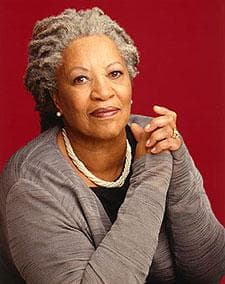
Chloe Anthony Wofford Morrison, known as Toni Morrison, was an American novelist. Her first novel, The Bluest Eye, was published in 1970. The critically acclaimed Song of Solomon (1977) brought her national attention and won the National Book Critics Circle Award. In 1988, Morrison won the Pulitzer Prize for Beloved (1987); she was awarded the Nobel Prize in Literature in 1993.
Similar books
- Beloved
Toni Morrison
3.9 (325k) average on GoodreadsLiterary FictionShares Morrison's signature prose, exploration of memory, and deep psychological character studies within a historical context.
- The Sound and the Fury
William Faulkner
3.9 (158k) average on GoodreadsLiterary FictionFeatures a multi-generational family saga, fragmented narrative, and Southern gothic elements, often cited as a direct influence on 'Love'.
- The Color Purple
Alice Walker
4.2 (521k) average on GoodreadsHistorical FictionBoth novels explore the resilience and suffering of Black women, but Morrison's Love is more introspective, delving into internal psychological landscapes and inherited wounds, while Walker's novel more explicitly addresses systemic oppression and liberation through a didactic epistolary format.
- Their Eyes Were Watching God
Zora Neale Hurston
3.9 (266k) average on GoodreadsReferenceBoth novels depict a woman's journey through relationships and self-discovery. However, Hurston's Janie finds a clearer path to self-actualization, whereas Morrison's characters in Love remain deeply entangled in past grievances and patriarchal influence, offering a more cynical view of female relationships and the enduring power of the past.
- The Old Man and the Sea
Ernest Hemingway
3.8 (831k) average on GoodreadsLiterary FictionA Cuban fisherman's long struggle with a giant marlin becomes a story of endurance and dignity, now retold for young adults with illustrations, phonetic guides, and writing prompts in Traditional Chinese.
- One Hundred Years of Solitude
Gabriel García Márquez
4.1 (753k) average on GoodreadsLiterary FictionThrough the multi-generational story of the Buendía family, a mythical town deals with the repeating patterns of time, love, and solitude, as the extraordinary mixes with the ordinary.






Enjoyed the summary?
A summary gives you the shape of the book. The book itself has the detail, the examples and the voice.
Find Love on AmazonAs an Amazon Associate, BookBrief earns from qualifying purchases. How we're funded