

Synopsis
Covers the whole plot, including the ending.
- Difficulty
- Easy
- Pacing
- Slow
- Mood
- Reflective, Observational, Humorous, Culturally Rich, Gentle
- Read it if
- You enjoy character-driven literary fiction with a focus on everyday life and cultural insights, or if you're looking for short, reflective stories with a touch of humor and irony.
- Skip it if
- You prefer fast-paced plots, complex overarching narratives, or high-stakes drama.
Malgudi Days Plot Summary
Covers the whole plot, including the ending.
An Astrologer's Day
The story begins with an astrologer, who uses his quick mind and knowledge of people to give convincing readings, even though he has no real astrological skills. He sits daily under a tamarind tree in Malgudi, attracting customers with his look and vague statements. One evening, as he is about to pack up, a stranger named Guru Nayak approaches him. The astrologer feels an odd discomfort and tries to send him away, but Nayak insists on a reading. During their talk, the astrologer recognizes Nayak as a man he once tried to murder in his youth, having run from his village believing him dead. He carefully reveals details about Nayak's past, including the attack, advising him never to travel south again to avoid danger, and promising a long life if he stays put. Nayak, convinced by the astrologer's accuracy, pays him well.
The Vendor of Sweets
Jagan, a strict sweet vendor in Malgudi, lives a life of plainness, carefully counting his income and following traditional values. His son, Mali, returns from America with a Korean-American woman, Grace, whom he introduces as his wife, and suggests a modern business idea: a novel-writing machine. Jagan is at first happy about Mali's return but becomes increasingly confused and upset by his son's Western ways, his casual view of marriage, and his dislike for Jagan's traditional life. Mali and Grace live lavishly, eating meat and drinking alcohol, which Jagan finds wrong. Jagan's attempts to guide Mali are met with indifference or clear rebellion, leading to a growing distance between father and son.
A Horse and Two Goats
Muni, an old, poor man living in the small village of Kritam, spends his days looking after his two thin goats and remembering his past. His wife often scolds him for being lazy and not providing. One day, while Muni is resting beside a clay statue of a horse and a warrior, a rich American tourist stops his car, having run out of gas. The American, unable to speak Tamil, tries to buy the statue from Muni, thinking it is a valuable antique. Muni, unable to understand English, thinks the American wants to buy his goats. They have a funny, confusing conversation, each understanding the other's actions and words through their own culture. The American eventually pays Muni for the 'horse,' and Muni, confused but happy, returns home with the money, surprising his wife.
The Missing Mail
Thanappa, a careful and kind postman, is involved in the lives of the people on his route. He is proud to deliver important news, especially marriage proposals. He becomes particularly interested in the coming marriage of Ramanujam's daughter, Kamakshi, to a suitable young man. When a key letter confirming the groom's acceptance goes missing, Thanappa, fearing the marriage will be called off and knowing Ramanujam's sadness, decides to hide the news of the groom's death, which he learns from a later letter. He believes he is protecting Kamakshi's future and Ramanujam's reputation. The marriage happens, and Thanappa carries the secret burden of his lie, showing his complex role as a bringer of both joy and sorrow.
The Doctor's Word
Dr. Raman, a well-known and ethical doctor, prides himself on his honesty and refusal to give false hope to his patients. He believes in telling the truth, no matter how hard. His closest friend, Gopal, becomes very ill. Despite Dr. Raman's efforts, Gopal's condition worsens, and Dr. Raman believes there is no hope. However, Gopal, afraid of death, begs Dr. Raman for comfort. In a moment of deep care, Dr. Raman, against his professional rules, tells Gopal that he will get better. This single lie, spoken out of friendship, has a powerful effect: Gopal's desire to live is renewed, and he makes a surprising recovery, challenging Dr. Raman's strict belief in truth and showing the power of hope and human connection in healing.
Lawley Road
The narrator, a new chairman of the Malgudi municipal council, inherits the job of renaming streets to reflect post-independence India. He finds it hard with 'Lawley Road,' named after a British official. The council decides to remove the statue of Sir Frederick Lawley that stands on the road. The narrator struggles to find someone willing to buy or remove the statue because of its size and weight. After many failed attempts and funny talks, he finally sells the statue to an antique dealer for a very small amount. The dealer, however, secretly plans to put it back in a prominent place, leading to a humorous cycle of colonial symbols staying despite official attempts to remove them, showing the lasting presence of the past.
Seventh House
Krishnan is a devoted husband whose wife, sick for a year, is given a bad prognosis by doctors. Desperate, he goes to an astrologer, hoping for a different outcome. The astrologer checks various texts and makes calculations, eventually saying that Krishnan's wife is under a bad planetary influence and needs an expensive ritual to calm it. Krishnan, a man with little money, is torn between his doubts and his love for his wife. He struggles to get the money and perform the rituals, facing many difficulties. The story explores the conflict between modern medicine and old beliefs, and how far love and desperation can push someone, even when facing very hard problems and doubtful solutions.
Naga
A young boy, interested in a snake charmer who visits Malgudi, becomes obsessed with the man's cobra. He secretly follows the snake charmer, watching his shows and learning about snakes. One day, the snake charmer gets sick, and the boy, driven by his interest, takes on the job of caring for the cobra. He tries to charm the snake himself, believing he has a special bond with it. However, his lack of experience leads to a dangerous moment where the cobra bites him. The story explores themes of childhood curiosity, the appeal of the exotic, and the fine line between interest and danger, showing the unpredictable nature of both animals and human ambition. The incident teaches the boy a hard lesson, calming his naive excitement.
Iswaran
Ramu, a young schoolboy, is a typical mischievous child, often not studying. One day, he meets Iswaran, a wandering holy man, who captures his attention with his stories, wisdom, and calm manner. Iswaran teaches Ramu about the importance of discipline, self-control, and learning, but in a way that connects with the boy, unlike his strict teachers. Ramu becomes very dedicated to Iswaran, following his teachings and trying to copy his spiritual practices. His grades get better, and his behavior changes, surprising and pleasing his parents and teachers. The story shows how much a mentor can affect a young mind and how unusual education can inspire real change and growth.
The Roman Image
A retired Sanskrit scholar, an odd and dedicated academic, becomes obsessed with a small, mysterious clay head he believes is a rare Roman artifact, possibly connecting ancient Rome and India. He spends years of his life studying, researching, and trying to prove this one object, ignoring his personal life and money. He talks with scholars worldwide, writes many papers, and even travels to distant libraries in his search for proof. The story explores the single passion of an academic, the pursuit of knowledge for its own sake, and the thin line between scholarly dedication and obsessive belief. In the end, the true origin of the artifact remains unclear, leaving the scholar's life's work open to different understandings.
Mother and Son
The story focuses on a widow and her adult son, who has recently started a promising career. The mother, very protective and attached, continues to treat her son as a child, worrying about his food, clothes, and daily routine. The son, while loving his mother, feels increasingly smothered by her constant attention and wants independence and privacy. He tries subtly to show his autonomy, but his mother sees his attempts as neglect or being ungrateful. The story explores the common tension between parental love and a child's need for personal space and freedom, showing the challenges of letting go and adapting to changing family dynamics, especially in a traditional Indian setting where respect for parents is very important. Their relationship is a delicate balance of affection and unspoken conflict.
The Gold Belt
Ranga, a man who values his respectable appearance and social standing, faces financial ruin. He desperately needs money to keep his family's honor and avoid public shame. He decides to pawn his wife's valuable gold belt, a treasured family item. He tries to do this quietly, ashamed of his situation. However, the pawnbroker, a smart and cynical man, sees Ranga's desperation and offers him a small amount, taking advantage of his weakness. Ranga, torn between his pride and his urgent need, reluctantly accepts. The story explores themes of dignity, poverty, and the compromises people make to keep their social image, showing the harsh realities of economic struggle and the loss of self-respect that can come with it.
Malgudi Days Characters
The Astrologer (An Astrologer's Day)
Protagonist
A quick-witted charlatan who uses psychology to give readings.
The astrologer is a cunning, observant man who, despite having no genuine astrological knowledge, has mastered the art of psychological manipulation to convince his clients. He relies on his appearance, vague pronouncements, and keen observation of human nature to earn a living. He is haunted by a dark past, having fled his village after attempting murder, and carries the secret of his crime. His actions are driven by self-preservation and the need to maintain his deceptive livelihood, but also by a desire for peace of mind.
Relationships: Guru Nayak (Victim of his past crime; client who unknowingly brings about his confession.)
Jagan (The Vendor of Sweets)
Protagonist
A traditional sweet vendor struggling with modernity.
Jagan is a devout, conservative sweet vendor who adheres strictly to Gandhian principles of austerity, self-sufficiency, and traditional Indian values. He believes in simple living, healthy eating, and spiritual discipline. He is a loving but somewhat bewildered father, deeply attached to his son, Mali. His life is governed by routine and principle, and he finds it difficult to adapt to change or understand modern aspirations. His actions are driven by a desire to preserve tradition and guide his son, but also by a growing sense of helplessness and alienation.
Relationships: Mali (His son, with whom he has a strained and often incomprehensible relationship due to cultural and generational differences.)
Mali (The Vendor of Sweets)
Antagonist/Supporting
Jagan's Westernized son who embraces modern ideas.
Mali is Jagan's son, who returns from America with grand, modern ideas and a disdain for his father's traditional ways. He is ambitious, materialistic, and represents the younger generation's embrace of Western culture and technology. He is dismissive of Jagan's values and attempts to assert his independence, often disrespectfully. His motivations are driven by a desire for wealth, innovation, and a rejection of what he perceives as antiquated traditions, leading to conflict with his father. He is somewhat arrogant and lacks empathy for Jagan's emotional struggles.
Relationships: Jagan (His father, whose traditional values he rejects and with whom he has a strained relationship.)
Muni (A Horse and Two Goats)
Protagonist
An impoverished old man whose life is transformed by a misunderstanding.
Muni is an elderly, poverty-stricken man from the village of Kritam, whose only possessions are two scrawny goats. He lives a simple, largely forgotten existence, often scolded by his wife for his inability to provide. He is a man of tradition, deeply connected to his village and its stories, and possesses a quiet dignity despite his circumstances. He is uneducated and speaks only Tamil, making communication with outsiders difficult. His actions are driven by the basic human need for survival and a desire for peace, leading him to accept an unexpected windfall.
Relationships: Wife (His long-suffering wife, who often criticizes his idleness but remains his constant companion.)
Thanappa (The Missing Mail)
Protagonist
A well-meaning postman who meddles in his patrons' lives.
Thanappa is a dedicated and empathetic postman who goes beyond his official duties, becoming deeply involved in the lives of the people on his route. He sees himself as a bearer of both good and bad news, and takes a personal interest in the well-being of the families he serves. He is a kind, if somewhat intrusive, man whose actions are driven by a desire to help and to ensure happiness, even if it means bending the rules or withholding information. He embodies the interconnectedness of the Malgudi community.
Relationships: Ramanujam (A family man on his route whose daughter's marriage he tries to protect.)
Dr. Raman (The Doctor's Word)
Protagonist
A principled doctor who values truth above all else.
Dr. Raman is a highly respected and ethical physician known for his unwavering honesty. He believes in telling his patients the unvarnished truth about their condition, no matter how grim, refusing to offer false hope. He is a man of science and logic, adhering strictly to professional principles. His actions are typically driven by a commitment to medical integrity and a belief that truth is paramount. However, he is also capable of deep compassion and friendship, which ultimately challenges his rigid principles.
Relationships: Gopal (His closest friend, whose critical illness forces him to reconsider his strict ethical code.)
Krishnan (Seventh House)
Protagonist
A devoted husband desperate to save his wife through any means.
Krishnan is a loving and dedicated husband whose wife's illness drives him to desperation. He is initially skeptical of astrological remedies but his profound love and fear for his wife compel him to seek out and follow the advice of an astrologer, even if it means great personal sacrifice. He is a man of limited means, making his efforts to fund the expensive rituals even more poignant. His actions are driven solely by his devotion and a desperate hope for his wife's recovery, highlighting the power of love and the struggle between rationality and faith.
Relationships: Wife (His ailing wife, for whom he undertakes great personal sacrifice.)
Ranga (The Gold Belt)
Protagonist
A proud man facing financial ruin and forced to compromise his dignity.
Ranga is a man who values his social standing and appearance of respectability above all else. He takes pride in his family's honor and struggles to maintain a facade of prosperity even when facing severe financial hardship. He is deeply ashamed of his predicament and tries to hide it from others. His actions are driven by a desperate need to preserve his dignity and avoid public humiliation, leading him to make difficult and painful decisions. He represents the societal pressures and the personal toll of maintaining appearances in a community-oriented society.
Relationships: Wife (Whose gold belt he reluctantly pawns, a symbol of their shared family honor.)
Malgudi Days Themes
Tradition vs. Modernity
This theme is key to many stories, exploring the conflict between old customs and new ideas, especially from the West. Characters like Jagan in 'The Vendor of Sweets' represent traditional values, struggling to understand his son Mali's Western lifestyle and business plans. Mali's rejection of traditional marriage and his new, though impractical, 'novel-writing machine' show the clash between generations and cultures. Similarly, 'Lawley Road' humorously illustrates how hard it is to remove colonial symbols in post-independence India, suggesting that the past, even if unwanted, often remains. Narayan often shows this conflict with a balanced view, showing both the good and bad sides of tradition, and the appeal and problems of change.
“He looked on the novel-writing machine as a symbol of the new age, and its arrival made him feel that he was being superseded.”
Fate and Free Will
Narayan often explores how fate and human choice interact. Many characters find themselves in situations seemingly controlled by fate, yet their choices and reactions shape their outcomes. In 'An Astrologer's Day,' the astrologer believes he is just reading destiny, but his past actions and present choices (like recognizing Guru Nayak and giving him specific advice) directly affect both their lives. 'Seventh House' shows Krishnan's desperate fight against his wife's perceived astrological fate, highlighting the human wish to challenge destiny through ritual and belief. The stories often suggest that while outside forces may be at work, individual decisions and human connection hold significant power in dealing with life's challenges.
“He had a working analysis of mankind’s troubles: marriage, money, and the entanglements of human ties.”
The Human Condition and Everyday Life
Narayan is good at showing the universal parts of human experience through ordinary people in Malgudi. His stories capture the humor, sadness, struggles, and simple joys of daily life. 'A Horse and Two Goats' clearly shows miscommunication and cultural barriers through the everyday interaction between Muni and the American tourist. 'The Doctor's Word' explores the ethical problems faced by professionals and the deep effect of understanding and hope on human well-being. The stories often focus on small, seemingly unimportant moments that reveal deeper truths about human nature, relationships, and the search for meaning in routine. The characters, despite their different situations, share common worries, hopes, and flaws.
“The postman, Thanappa, was a familiar figure in the town, and no letter from the outside world ever reached Malgudi without passing through his hands.”
Deception and Self-Deception
Many characters in Malgudi Days use different kinds of deception, both towards others and themselves. The astrologer in 'An Astrologer's Day' is skilled at deceiving his clients, but also lives a life of self-deception, believing his past crime is hidden. Thanappa in 'The Missing Mail' deceives Ramanujam to ensure a marriage, believing his actions are for the greater good, yet carrying the moral weight. Dr. Raman in 'The Doctor's Word' famously breaks his own rule of honesty to offer false hope, which surprisingly leads to a good outcome. These acts of deception, whether harmful or well-intended, show the complexities of human morality and the sometimes-unpredictable results of bending the truth.
“He knew no more of what was going to happen next than his innocent clients. He was as much a stranger to the stars as were his innocent customers.”
Plot Devices & Literary Techniques
Malgudi as a Microcosm
The fictional town serves as a stand-in for universal human experiences.
Malgudi is not just a setting; it functions as a character itself and a powerful plot device. It is a fictional South Indian town that, despite its specific cultural context, becomes a universal stage for human drama. Narayan uses Malgudi to create a sense of familiarity and continuity across disparate stories, allowing readers to recognize common human traits and societal dynamics. The town's unchanging nature often contrasts with the individual struggles and transformations of its inhabitants, highlighting the timelessness of the human condition. It allows Narayan to explore broad themes like tradition vs. modernity, fate, and community, within a contained and relatable environment.
Irony and Humour
Situational and dramatic irony are used to highlight life's absurdities.
Narayan frequently employs irony and gentle humor to underscore the quirks and contradictions of human nature. This is evident in stories like 'A Horse and Two Goats,' where the mutual misunderstanding between Muni and the American tourist creates comical situations rooted in cultural and linguistic barriers. In 'Lawley Road,' the chairman's futile efforts to remove a colonial statue are laden with situational irony. This device allows Narayan to critique societal norms and human foibles without being overly critical, fostering empathy and amusement in the reader. The humor often arises from the gap between characters' intentions and outcomes, or their perceptions and reality.
The Everyday as the Extraordinary
Elevating ordinary events to reveal profound insights.
Narayan's writing often takes seemingly mundane events and imbues them with profound significance. A simple transaction ('A Horse and Two Goats'), a doctor's ethical dilemma ('The Doctor's Word'), or a postman's delivery route ('The Missing Mail') become vehicles for exploring deeper philosophical questions about human nature, morality, and destiny. This device allows the reader to connect with the characters on a personal level, recognizing universal truths within their ordinary struggles. By focusing on the 'everyday,' Narayan demonstrates that extraordinary insights can be found in the most common aspects of life, making his stories relatable and impactful.
Symbolism
Objects and characters represent larger ideas or societal forces.
Narayan uses symbolism subtly but effectively. The statue of Sir Frederick Lawley in 'Lawley Road' symbolizes the lingering presence of colonial influence and the challenge of establishing a post-colonial identity. Muni's two goats in 'A Horse and Two Goats' symbolize his meager existence and his connection to the simple, rural life. The gold belt in 'The Gold Belt' represents family honor and the fragility of social standing. These symbols enrich the narratives, providing layers of meaning beyond the literal plot, and helping to convey the broader themes and cultural contexts within the stories.
Malgudi Days Quotes
“The purpose of life is to live it, to taste experience to the utmost, to reach out eagerly and without fear for newer and richer experience.”
“When you are young, you are not afraid of anything. You feel immortal. You are not scared of death or failure.”
“It is not the great things that matter, but the small things that make life beautiful.”
“A man's worth is not measured by the clothes he wears or the money he has, but by the character he possesses.”
“The greatest joy in life is to be loved for who you are, not for what you have.”
“Time is a great healer, but a poor barber.”
“There are no ordinary moments. Every moment is a gift.”
“The world is full of magic things, patiently waiting for our senses to grow sharper.”
“Change is the only constant in life.”
“It is better to light a candle than curse the darkness.”
“The true measure of a man is how he treats someone who can do him absolutely no good.”
“Happiness is not something ready-made. It comes from your own actions.”
“Life is what happens when you're busy making other plans.”
“The mind is its own place, and in itself can make a heaven of hell, a hell of heaven.”
Quiz
10 questions on the plot and the characters. Each answer comes with a short explanation.
Question 1
In the story 'A Horse and Two Goats,' what is Muni trying to sell to the American tourist?
- His two goats
- His house
- A ancient idol of a god
- His wife's cooking pots
Show answer
A. His two goats Muni, a poor old man, attempts to sell his two goats to the American, who mistakenly believes Muni is selling the large clay statue of the horse.
Question 2
What is the primary profession of the protagonist, Raju, in the story 'The Guide'?
- A shopkeeper
- A tour guide
- A temple priest
- A school teacher
Show answer
B. A tour guide Raju starts his career as a railway station vendor and then evolves into a popular and charismatic tour guide, earning him the moniker 'Railway Raju'.
Question 3
In 'The Missing Mail,' what causes Raman to delay delivering the telegram to the bride's father, Thanappa?
- He gets lost on the way
- He believes the news will disrupt the ongoing wedding preparations
- He forgets about it completely
- The telegram contains a curse
Show answer
B. He believes the news will disrupt the ongoing wedding preparations Raman, the postman, delays delivering the telegram announcing the death of the groom's uncle because he fears it will call off the wedding, which Thanappa has invested heavily in.
Question 4
What animal plays a significant role in the story 'A Snake in the Grass'?
- A dog
- A cat
- A snake
- A monkey
Show answer
C. A snake The story revolves around a family's frantic search for a cobra that is believed to have entered their compound, causing panic and disruption.
Question 5
What is the central conflict in 'The Doctor's Word' concerning Dr. Raman and his friend Gopal?
- A disagreement over a business venture
- Gopal's desperate illness and Dr. Raman's struggle to provide hope
- A misunderstanding involving their wives
- A legal dispute over property
Show answer
B. Gopal's desperate illness and Dr. Raman's struggle to provide hope Dr. Raman, a strict realist, faces a moral dilemma when his dying friend Gopal asks for assurance of recovery, forcing him to choose between medical truth and the power of a comforting lie.
Question 6
In 'The Gold Belt,' what does the husband, Sampath, initially plan to do with the gold belt he buys for his wife?
- Sell it for a profit
- Give it to his mistress
- Present it to her as a grand gesture of love
- Use it as collateral for a loan
Show answer
C. Present it to her as a grand gesture of love Sampath, driven by a desire to impress his wife and perhaps alleviate his own guilt, buys the expensive gold belt as a lavish gift.
Question 7
Which of the following themes is most prevalent in 'Malgudi Days' as a whole?
- The struggle for political independence
- The clash between tradition and modernity in everyday life
- Epic tales of ancient Indian mythology
- Detective stories and criminal investigations
Show answer
B. The clash between tradition and modernity in everyday life Many stories in 'Malgudi Days' explore how ordinary people in a small Indian town navigate the changes brought by modern influences while often clinging to traditional values and customs.
Question 8
In 'Lawley Road,' what is the primary reason the Municipality decides to rename the street and remove the statue of Sir Frederick Lawley?
- To honor a local hero
- To erase symbols of colonial rule
- The road was in disrepair
- Sir Frederick Lawley was discovered to be a criminal
Show answer
B. To erase symbols of colonial rule The story satirizes the post-independence fervor to remove colonial vestiges, leading to the decision to rename streets and remove statues associated with British rule.
Question 9
The story 'Vendor of Sweets' centers on Jagan, who is a traditional sweet vendor. What is his biggest point of contention with his son, Mali?
- Mali's choice of career
- Mali's modern, Westernized lifestyle and his disregard for tradition
- Mali's financial irresponsibility
- Mali's desire to marry a foreign woman
Show answer
B. Mali's modern, Westernized lifestyle and his disregard for tradition Jagan is deeply troubled by Mali's Americanized habits, his lack of respect for Indian customs, and his unconventional ideas about starting a business, highlighting a generational and cultural divide.
Question 10
What philosophical concept is subtly explored in several stories, particularly 'An Astrologer's Day' and 'The Doctor's Word', concerning fate and free will?
- The inevitability of death
- The power of self-determination versus predetermined destiny
- The importance of social hierarchy
- The cyclical nature of time
Show answer
B. The power of self-determination versus predetermined destiny Narayan often presents characters whose lives are shaped by seemingly random events or predictions, yet they also make choices that influence their outcomes, creating a subtle interplay between destiny and individual agency.
Malgudi Days FAQ
What is the overarching premise of R.K. Narayan's 'Malgudi Days'?
'Malgudi Days' is a collection of short stories set in the fictional South Indian town of Malgudi. The stories offer vignettes into the lives of ordinary people, exploring their daily struggles, aspirations, and the unique cultural fabric of India through a blend of humor, irony, and gentle observation.
Who are some of the recurring character types or archetypes found in the collection?
Narayan frequently features characters like the innocent child, the struggling businessman, the eccentric old man, the devoted wife, and the village trickster. These archetypes, such as Raman from 'A Willing Slave' or Swami from 'Swami and Friends' (though the latter is a novel, similar child characters appear), serve to illustrate universal human experiences within a distinctly Indian context.
What role does the fictional town of Malgudi play in the stories?
Malgudi is more than just a setting; it's almost a character in itself. It provides a consistent backdrop that unifies the diverse stories, embodying the essence of small-town India with its blend of tradition, emerging modernity, and a unique rhythm of life that shapes the characters' destinies.
What kind of tone and narrative style does Narayan employ in 'Malgudi Days'?
Narayan's tone is typically gentle, humorous, and subtly ironic, often delivered through a detached, omniscient narrator. His prose is simple and lucid, focusing on straightforward storytelling that allows the reader to connect deeply with the characters' predicaments without overt authorial judgment.
How do the stories in 'Malgudi Days' often conclude?
Many stories in 'Malgudi Days' conclude not with dramatic resolutions, but with a sense of gentle irony, a return to the status quo, or a subtle shift in perspective for the characters. For instance, 'A Horse and Two Goats' ends with Muni's misunderstanding persisting, highlighting the communication gap rather than a grand finale.
Are there any subtle connections or recurring motifs between different stories in the collection?
While each story stands alone, recurring motifs include the clash between tradition and modernity, the impact of fate, and the resilience of the human spirit. The presence of the Sarayu River, Market Road, and the Lawley Extension subtly grounds the diverse narratives within the same imagined geography, even if characters don't directly interact across stories.
In 'The Doctor's Word,' what is the unspoken psychological effect of Dr. Raman's lie on himself, beyond saving his friend?
Dr. Raman's decision to lie, telling his friend Gopal that he will live, despite knowing otherwise, creates a profound internal conflict. It forces him to betray his professional ethics for the sake of human compassion, leaving him grappling with the weight of his words and the unexpected outcome, questioning the boundaries of truth and hope.
How does the story 'A Horse and Two Goats' subtly critique cultural misunderstandings and post-colonial interactions?
The story subtly critiques these themes through the complete communication breakdown between the impoverished Indian villager Muni and the wealthy American tourist. Their inability to understand each other's language and cultural context leads to a comical yet poignant exchange where the American buys Muni's statue believing it's his, while Muni believes he's sold his goats, highlighting the vast chasm between their worlds.
What is the hidden significance of the astrologer's past in 'An Astrologer's Day'?
The astrologer's hidden past as a murderer adds a layer of karmic irony and psychological weight to his present profession. His daily pronouncements are not just tricks but are subconsciously influenced by his own guilt and desire for redemption, making his encounter with his past victim, Guru Nayak, a moment of profound, unacknowledged reckoning.
How does the character of Raju from 'The Guide' (though a novel, similar character arcs appear) often embody the psychological complexities of self-deception and opportunism?
Raju, in his various roles as a guide, lover, and then reluctant holy man, consistently deceives others and often himself. His opportunism stems from a desire for comfort and status, leading him to adapt to circumstances rather than confront his true self, revealing a deep-seated psychological need for external validation and avoidance of responsibility.
In 'The Vendor of Sweets,' what psychological insights does Jagan's internal conflict reveal about his relationship with his son, Mali?
Jagan's internal conflict reveals a deep parental love intertwined with disappointment and a struggle for control. He clings to traditional values while Mali embraces Western modernity, leading Jagan to oscillate between wanting to understand Mali and feeling alienated, highlighting the psychological pain of generational disconnect and the unfulfilled desire for filial conformity.
What psychological journey does the protagonist undergo in 'Lawley Road' when trying to remove the statue of Sir Frederick Lawley?
The protagonist undergoes a journey from civic-mindedness to exasperation and ultimately, a kind of resigned acceptance. His initial zeal to modernize and remove a colonial symbol is thwarted by bureaucratic absurdity and public indifference, leading to a psychological shift from determined reformer to a man burdened by an intractable problem, highlighting the futility of individual effort against systemic inertia.
How does Narayan use subtle psychological detail to portray the inner lives of women characters, even in a patriarchal setting?
Narayan often portrays women's inner lives through their resilience, quiet strength, and strategic adaptability within their societal roles. For example, in 'Mother and Son,' the mother's manipulations and emotional appeals subtly reveal her agency and deep-seated fears for her son's future, showcasing her psychological depth despite limited overt power.
Is 'Malgudi Days' primarily a critique of Indian society, or a celebration of it?
It's more accurate to say 'Malgudi Days' is an affectionate observation rather than a direct critique or outright celebration. Narayan presents the quirks, flaws, and strengths of Indian society with a nuanced perspective, often using humor and irony to highlight both its absurdities and its enduring charm, without passing harsh judgment.
How does Narayan's portrayal of fate versus free will manifest in the lives of his characters?
Narayan often depicts characters whose lives seem to be guided by an unseen force, where their choices lead to unexpected outcomes, suggesting a strong element of fate. However, characters also exhibit agency, making decisions that, while sometimes leading to ironic twists, ultimately shape their immediate circumstances, creating a delicate balance between destiny and individual action.
Could the repeated theme of miscommunication, as seen in 'A Horse and Two Goats' or 'The Missing Mail,' be interpreted as a commentary on broader human existence?
Yes, the pervasive theme of miscommunication can be interpreted as a commentary on the inherent difficulties of human interaction beyond just cultural barriers. It highlights how assumptions, unspoken expectations, and different frames of reference can lead to perpetual misunderstandings, underscoring the isolation and irony often present in human relationships.
What is Narayan's stance on modernity versus tradition as depicted in Malgudi?
Narayan generally portrays modernity as an inevitable, sometimes disruptive, force that impinges on traditional life. He doesn't necessarily condemn it but highlights the humor and challenges that arise from their clash. Characters often struggle to reconcile new ideas with old customs, leading to both comical situations and poignant reflections on cultural change.
How does the author use humor in 'Malgudi Days' to convey deeper truths about human nature?
Narayan uses gentle, often ironic humor to expose human follies, self-deception, and the absurdities of life without being cynical. His humor allows readers to laugh at the predicaments of his characters while simultaneously recognizing universal truths about human vanity, ambition, and resilience, making the observations relatable and insightful.
About the author

R.K. Narayan was an Indian author known for his works set in the fictional town of Malgudi. His notable books include "Malgudi Days," "Swami and Friends," "The Guide," "The English Teacher," "The Bachelor of Arts," and "A Tiger for Malgudi," which explore themes of everyday life and human relationships. Narayan's writing is characterized by its simplicity and humor, reflecting Indian culture and society.
Similar books
- A House for Mr Biswas
V. S. Naipaul
3.8 (18k) average on GoodreadsLiterary FictionExplores the struggles and everyday life of an ordinary man in a post-colonial setting with a blend of humor and pathos.
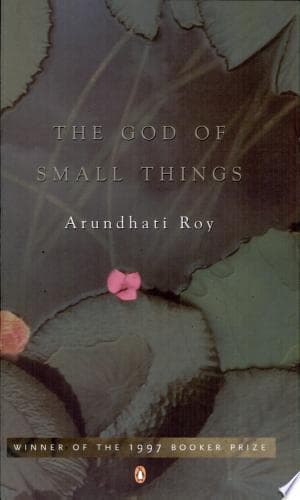
- The God of Small Things
Arundhati Roy
3.9 (244k) average on GoodreadsLiterary FictionOffers a rich, atmospheric portrayal of Indian life and culture, though with a more intense and tragic narrative.
- Interpreter of Maladies
Jhumpa Lahiri
4.2 (160k) average on GoodreadsLiterary FictionA collection of short stories focusing on Indian characters and their experiences, both in India and abroad, with a similar reflective tone.
- Train to Pakistan
Khushwant Singh
3.9 (23k) average on GoodreadsHistorical FictionNarayan's Malgudi Days largely steers clear of overt political turmoil, presenting a relatively stable, almost timeless, village life. Its conflicts are primarily internal, moral, or interpersonal. Khushwant Singh's Train to Pakistan, however, plunges directly into the harrowing realities of the 1947 Partition of India. While both authors depict Indian villages, Singh's narrative is stark, brutal, and unflinchingly realistic in its portrayal of communal violence, displacement, and the breakdown of social order. Train to Pakistan is a powerful historical commentary, directly engaging with a pivotal and traumatic national event, whereas Malgudi Days maintains a focus on the enduring human spirit and the rhythms of everyday life, intentionally avoiding such large-scale political catastrophes.
- The Old Man and the Sea
Ernest Hemingway
3.8 (831k) average on GoodreadsLiterary FictionA Cuban fisherman's long struggle with a giant marlin becomes a story of endurance and dignity, now retold for young adults with illustrations, phonetic guides, and writing prompts in Traditional Chinese.
- One Hundred Years of Solitude
Gabriel García Márquez
4.1 (753k) average on GoodreadsLiterary FictionThrough the multi-generational story of the Buendía family, a mythical town deals with the repeating patterns of time, love, and solitude, as the extraordinary mixes with the ordinary.



Enjoyed the summary?
A summary gives you the shape of the book. The book itself has the detail, the examples and the voice.
Find Malgudi Days on AmazonAs an Amazon Associate, BookBrief earns from qualifying purchases. How we're funded