

Synopsis
Covers the whole plot, including the ending.
- Difficulty
- Hard
- Read it if
- You are a philosophy student, a literary theorist, or someone deeply interested in existentialism, absurdism, and the limits of language, and you enjoy challenging, dense, and stream-of-consciousness narratives that offer no easy answers.
- Skip it if
- You prefer straightforward plots, clear character development, optimistic themes, or easy-to-digest prose, or if you are looking for a light read with a conventional narrative structure.
The Unnamable Quotes
“I can't go on, I'll go on.”
“Where now? Who now? When now?”
“All these words, all these words, what are they for?”
“The essential is never to arrive, never to be anywhere, but to be always on the way.”
“I am obliged to speak. I shall never be silent. Never.”
“It's a poor trick to be a man, I've had enough of it.”
“I don't know who I am, I don't know where I am, I don't know if I am.”
“You must go on. I can't go on. You must go on. I'll go on.”
“The thing to do is to be silent, but I can't.”
“Perhaps I am not I.”
“To be nothing, that is what I am trying to be.”
“There are no questions but those of which I know nothing.”
“I am in the world, that is to say, I am in the shit.”
“It's not me, it's not I, it's not a person, it's not a thing, it's not a being, it's not a nothing.”
Quiz
10 questions on the plot and the characters. Each answer comes with a short explanation.
Question 1
What is the primary motivation for the Unnamable's continuous monologue, despite his expressed desire to stop?
- He believes speaking will ultimately reveal his true identity.
- He is compelled by an inherent need to 'go on,' even in the face of not knowing.
- He is trying to entertain an unseen audience.
- He is waiting for an external entity to command him to stop.
Show answer
B. He is compelled by an inherent need to 'go on,' even in the face of not knowing. The excerpt explicitly states, 'you must go on, I can't go on, I'll go on,' encapsulating the Unnamable's paradoxical compulsion to continue speaking despite his desire for silence and lack of direction.
Question 2
The Unnamable refers to 'all these Murphys, Molloys, and Malones.' What does he consider these previous 'selves' to be?
- Evidence of his past literary achievements.
- Previous incarnations of his true self.
- Diversions from the essential need to cease speaking.
- Imaginary friends that offer him comfort.
Show answer
C. Diversions from the essential need to cease speaking. The provided text states these previous selves are 'diversions from the need to stop speaking altogether,' indicating they are obstacles or distractions from his ultimate goal of silence.
Question 3
What is the Unnamable's understanding of his own identity and location?
- He has a clear sense of who he is and where he resides.
- He is named 'The Unnamable' because he knows not who he may be and is from a nameless place.
- He believes his identity is constantly shifting, depending on his environment.
- He is certain he will discover his name and location in the silence.
Show answer
B. He is named 'The Unnamable' because he knows not who he may be and is from a nameless place. The introduction explicitly states, 'The Unnamable - so named because he knows not who he may be - is from a nameless place,' directly answering the question.
Question 4
How does the prose of 'The Unnamable' relate to the narrator's stated desire for silence?
- The prose is sparse and fragmented, reflecting his struggle to speak.
- The prose is full of 'marvellous precisions' and provides its own reasons for continuing, creating a tension with his desire for silence.
- The prose is chaotic and nonsensical, mirroring his unnamable state.
- The prose is irrelevant to his internal struggle, serving only as a narrative device.
Show answer
B. The prose is full of 'marvellous precisions' and provides its own reasons for continuing, creating a tension with his desire for silence. The text highlights this paradox: 'But, as with the other novels in the trilogy, the prose is full of marvellous precisions, full of its own reasons for keeping going,' directly contrasting with his wish to stop speaking.
Question 5
The Unnamable's statement, 'I'll never know, in the silence you don't know, you must go on, I can't go on, I'll go on,' exemplifies which philosophical concept prevalent in Beckett's work?
- Existential affirmation and the pursuit of knowledge.
- The absurd paradox of human existence and the compulsion to endure despite meaninglessness.
- The triumph of rational thought over emotional despair.
- The importance of finding a definitive purpose in life.
Show answer
B. The absurd paradox of human existence and the compulsion to endure despite meaninglessness. This quote perfectly encapsulates the absurd: the protagonist acknowledges the futility ('I'll never know') and the unknowingness of silence, yet is compelled to 'go on,' embodying the struggle for existence without inherent meaning.
Question 6
What does the Unnamable anticipate will happen if 'the door that opens on my story' actually opens?
- He will finally meet the author of his story.
- He will be surprised, and it will signify his own silence.
- He will regain his memory and identity.
- He will be able to stop speaking immediately.
Show answer
B. He will be surprised, and it will signify his own silence. The text states, 'that would surprise me, if it opens, it will be I, will be the silence,' directly linking the opening of his story to his own silence and surprise.
Question 7
The Unnamable's struggle between speaking and desiring silence can be interpreted as a meta-commentary on what aspect of literary creation?
- The author's duty to provide clear answers to the reader.
- The inherent tension between the necessity of language to create narrative and the ultimate inadequacy of language to convey ultimate truth or meaning.
- The importance of character development in a novel.
- The struggle to find a unique voice in a crowded literary landscape.
Show answer
B. The inherent tension between the necessity of language to create narrative and the ultimate inadequacy of language to convey ultimate truth or meaning. The Unnamable's dilemma reflects Beckett's own exploration of language's limits. The text mentions 'the prose is full of marvellous precisions, full of its own reasons for keeping going,' suggesting that even as the narrator yearns for silence, the act of writing itself ('the words have carried me') compels continuation, highlighting the paradox of using words to express the desire for their cessation.
Question 8
Considering the philosophical implications of 'The Unnamable,' what is the significance of the narrator's inability to know 'who he may be' or 'where I am'?
- It implies a temporary amnesia that will eventually be resolved.
- It underscores a fundamental existential condition of unknowing and the absence of a fixed, inherent self.
- It is a literary device to create suspense for the reader.
- It suggests a psychological disorder that requires diagnosis.
Show answer
B. It underscores a fundamental existential condition of unknowing and the absence of a fixed, inherent self. Beckett's work often delves into existentialism. The Unnamable's lack of self-knowledge and location points to a deeper philosophical inquiry into the nature of identity and being, suggesting that a fixed self might be an illusion, and existence is characterized by fundamental unknowing.
Question 9
The phrase 'perhaps the words have carried me to the threshold of my story' suggests that language itself has agency in the narrative. How does this challenge traditional authorial control?
- It implies the author is merely transcribing pre-existing thoughts.
- It posits that the narrative is not solely dictated by a conscious will, but is partly generated by the inherent momentum and nature of language itself.
- It indicates the author is struggling to find the right words to express their ideas.
- It suggests that the story is being told by an external, omniscient narrator.
Show answer
B. It posits that the narrative is not solely dictated by a conscious will, but is partly generated by the inherent momentum and nature of language itself. The phrasing 'the words have carried me' attributes an active role to language, implying that the narrative's progression is not entirely within the speaker's conscious control but is partly driven by the linguistic process itself, challenging the notion of a fully sovereign authorial voice.
Question 10
Based on the excerpt, what is the central paradox that defines the Unnamable's existence?
- He desires to be named but insists on remaining anonymous.
- He yearns for silence and an end to his monologue, yet is compelled by an internal force to continuously speak.
- He wants to escape his past selves but actively recalls them.
- He seeks knowledge but simultaneously embraces ignorance.
Show answer
B. He yearns for silence and an end to his monologue, yet is compelled by an internal force to continuously speak. The core of the Unnamable's struggle is the tension between his expressed 'need to stop speaking altogether' and the persistent, almost involuntary 'you must go on, I can't go on, I'll go on,' which forces him to continue his monologue.
The Unnamable FAQ
What is the main premise of Samuel Beckett's 'The Unnamable'?
'The Unnamable' delves into the consciousness of an unnamed narrator, who grapples with his identity and the incessant compulsion to speak, even as he yearns for silence. He dismisses previous literary personas as mere distractions from his fundamental, ungraspable self.
Does 'The Unnamable' have a traditional plot or characters?
No, 'The Unnamable' largely eschews traditional plot and character development. It is primarily a monologue, an internal exploration of existence, language, and the nature of self, rather than a narrative driven by external events or distinct characters.
What is the significance of the narrator's references to 'Murphys, Molloys, and Malones'?
The narrator references 'Murphys, Molloys, and Malones' as previous, discarded selves or literary constructs. He views them as failed attempts to define himself, ultimately finding them inadequate and distracting from his true, unnamable essence.
How does 'The Unnamable' relate to the other books in Beckett's trilogy?
'The Unnamable' is the third book in Beckett's trilogy, following 'Molloy' and 'Malone Dies'. It deepens the themes of existentialism, identity crisis, and the limitations of language explored in the preceding novels, pushing them to a more extreme, abstract conclusion.
What is the meaning behind the phrase 'I can't go on, I'll go on'?
The phrase 'I can't go on, I'll go on' encapsulates the central paradox of the narrator's existence: a profound exhaustion and desire for cessation, coupled with an inescapable, almost mechanical drive to continue speaking and existing. It highlights the struggle between will and compulsion.
Does 'The Unnamable' offer any clear answers or resolutions to its philosophical questions?
Beckett's 'The Unnamable' deliberately avoids offering clear answers or resolutions. Instead, it immerses the reader in the narrator's unresolved struggle, highlighting the inherent ambiguity and elusiveness of identity, meaning, and the human condition itself.
How is 'The Unnamable' different from more conventional philosophical texts?
Unlike conventional philosophical texts that often present arguments or theories systematically, 'The Unnamable' conveys its philosophical inquiries through an immersive, stream-of-consciousness monologue. It explores existential themes through lived experience and linguistic struggle rather than formal argumentation.
What kind of reader would appreciate 'The Unnamable'?
'The Unnamable' would appeal to readers interested in experimental literature, existential philosophy, and the exploration of language's limits. Those who enjoy challenging, introspective, and unconventional narratives will find it particularly rewarding.
Is 'The Unnamable' difficult to read?
'The Unnamable' can be challenging due to its lack of traditional plot, repetitive nature, and dense philosophical introspection. However, its unique prose and profound themes offer a deeply rewarding experience for those willing to engage with its complexities.
About the author

Samuel Barclay Beckett was an Irish novelist, dramatist, short story writer, theatre director, poet, and literary translator. His literary and theatrical work features bleak, impersonal and tragicomic experiences of life, often coupled with black comedy and nonsense. His work became increasingly minimalist as his career progressed, involving more aesthetic and linguistic experimentation, with techniques of repetition and self-reference. He is considered one of the last modernist writers, and one of the key figures in what Martin Esslin called the Theatre of the Absurd.
Similar books
- Waiting for Godot
Samuel Beckett
3.8 (160k) average on GoodreadsPhilosophyExplores similar themes of existential waiting, futility, and the absurdity of existence, with a focus on dialogue and repetition.
- Malone Dies
Samuel Beckett
3.9 (4k) average on GoodreadsLiterary FictionPart of the same trilogy as 'The Unnamable,' it delves into the fragmented self and the act of storytelling from a dying narrator's perspective.
- Nausea
Jean-Paul Sartre
3.9 (86k) average on GoodreadsPhilosophyA seminal work of existentialism, it explores the protagonist's profound alienation, the contingency of existence, and the burden of freedom, through a diary format.
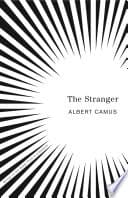
- The Stranger
Albert Camus
4.1 (3k) average on GoodreadsFantasyWhile both explore existential alienation, The Stranger uses a relatively conventional narrative and a discernible protagonist (Mersault) interacting with a recognizable world, making its philosophical themes more accessible. The Unnamable strips away these conventions, presenting a consciousness in pure linguistic flux, directly embodying the crisis rather than describing it.
- Brave New World
Aldous Huxley
4.0 (1.4M) average on GoodreadsFantasyIn a future where happiness comes from chemicals and individuality is gone, one man's desire for real experience threatens the calm, controlled society.
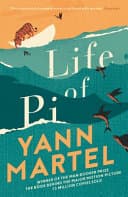
- Life of Pi
Yann Martel
3.9 (1.3M) average on GoodreadsFantasyStranded in the vast Pacific, a young Indian boy forms an unlikely bond with a Bengal tiger, questioning belief and survival.



Enjoyed the summary?
A summary gives you the shape of the book. The book itself has the detail, the examples and the voice.
Find The Unnamable on AmazonAs an Amazon Associate, BookBrief earns from qualifying purchases. How we're funded