

Synopsis
Covers the whole plot, including the ending.
- Difficulty
- Hard
- Pacing
- Slow
- Mood
- Bleak, Absurdist, Philosophical, Disorienting, Darkly Humorous
- Read it if
- You are fascinated by experimental narratives, stream-of-consciousness, and explorations of existential despair and human deterioration.
- Skip it if
- You prefer clear, linear plots, strong character development, and a definitive resolution to a story.
Molloy Plot Summary
Covers the whole plot, including the ending.
Molloy's Opening Monologue: The Room and the Task
Molloy begins his story in a room, maybe his mother's, or one given by an unknown 'they.' He is old, crippled, and has trouble moving and remembering. He says he is writing a report, but its topic and goal are unclear. He often gets sidetracked by philosophical thoughts and descriptions of his physical decay. He tells of being brought to this room, unable to stand or walk without crutches, and describes his basic living conditions. His mother, whom he claims to have killed, is a vague, returning presence. He struggles with writing itself, questioning its meaning and his ability to finish. He often repeats phrases and contradicts himself, showing his broken mental state.
The Search for His Mother and the Bicycle
Molloy describes his past life, specifically his attempt to reach his mother's room. He tells of his journey on an old bicycle, constantly falling and struggling with it. He meets a woman, called Ruth or Edith, with whom he claims to have had sex, though the details are vague. This suggests a confused memory or a dream. His search for his mother is tied to his physical decline and his meetings with the outside world, which he sees as hostile and meaningless. The bicycle becomes a sign of his useless efforts and his reliance on things that eventually fail him.
The Incident with the Dog and the Policeman
Molloy describes accidentally running over and killing a dog while cycling. This leads to a meeting with the dog's owner, Mrs. Lousse, who is upset. A policeman steps in, arresting Molloy for vagrancy and the dog incident. He is taken to a police station and held for a short time. During this time, he thinks about the absurdity of the legal system and his own calm reaction to the events. His release is as strange as his arrest, showing the random nature of his world. This event further shows his distance from social rules and consequences.
Life in the Ditch and the Crutches
After his release, Molloy leaves his bicycle, finding it too hard to use. He starts to rely only on his crutches, which become extensions of his failing body. He describes a time living in a ditch, a state of complete poverty and loneliness. He carefully details how he moves with his crutches, the pain, and the effort. His thoughts turn more inward, focusing on his physical limits and the pointlessness of movement. He watches the natural world with calm curiosity, but his main concern is his own failing body and mind.
The Stones and the Retreat into the Forest
Molloy creates a complex, but useless, system for rotating stones among his pockets to make sure he sucks them all in turn. This pointless activity shows his need for order and meaning in a chaotic life. He then finds himself in a forest, a place of growing loneliness and darkness. As his body worsens, he loses his crutches and then his ability to crawl or move. He lies in the forest, thinking about his coming end. His story becomes more broken and dreamlike. His journey ends in complete stillness, reflecting his initial state in the room.
Moran's Introduction and the Order
The story suddenly shifts to Jacques Moran, a neat and self-important private detective. He is at home, looking at his well-kept garden, when Gaber arrives with an order from Youdi (a mysterious, unseen boss) to find Molloy. Moran is a man of routine and order, deeply invested in his habits and Catholic faith. He resents the interruption and the vague task, but he must obey Youdi's commands. This introduction shows Moran as a sharp contrast to Molloy, but hints at a similar hidden sense of existential fear. He gets ready for his journey, arranging for his son, also named Jacques, to go with him.
The Journey Begins with Jacques
Moran, with his son Jacques, starts his search. He is not ready for the difficulties of the journey, complaining about the food, the weather, and his son's supposed flaws. Moran's careful nature is constantly challenged by the unpredictable reality of travel. He struggles with his bicycle and the unknown land, similar to Molloy's earlier struggles. His mental state begins to worsen; he becomes more annoyed, questioning his faith and his mission's purpose. The journey is marked by small problems and Moran's growing anger, showing cracks in his carefully built persona.
The Murder of the Man in the Forest
While resting in a forest, Moran meets a seemingly harmless man, perhaps a charcoal burner. Without a clear reason, Moran shoots and kills the man. This act is a turning point in Moran's story, marking a clear slide into moral confusion and violence. He explains the killing calmly, but the event clearly bothers him, though he struggles to say how. The murder shows his unraveling, a breakdown of the social and religious rules that once defined him, bringing him closer to Molloy's amoral existence.
Jacques' Disappearance and Moran's Solitude
After the murder, Moran's son Jacques mysteriously disappears. Moran does not actively look for him, nor does he show much sadness or worry. His focus remains on his mission, though it becomes more unclear and aimless. His loneliness increases his internal struggles, and he starts to have physical problems similar to Molloy's, including a stiff leg and trouble walking. Losing his son isolates him further, removing another layer of his old life and forcing him to face his own worsening state alone. He continues his journey, but the purpose has become deeply personal and internal.
The Return Home and the Encounter with Lousse
After his long, hard, and ultimately unsuccessful search for Molloy, Moran finds himself back at his own house. He is a changed man, physically weaker and mentally confused. His leg is stiff, and he now uses crutches, like Molloy. His garden, once a source of pride, is overgrown. He meets Mrs. Lousse, the woman whose dog Molloy ran over. She asks him about the dog, but Moran pretends not to know, further showing his moral decay and distance from truth. This meeting subtly links the two stories, suggesting a deeper, connected reality.
The Transformation and the Voice
Moran is now completely changed, physically and mentally like Molloy. He thinks about the changes he has gone through, admitting his loss of identity and purpose. He hears a mysterious voice, possibly Youdi's, or an inner voice from his own mind, telling him what to do. This voice tells him to write his report, like Molloy's first task. He begins to write, but his story is broken, full of contradictions and philosophical thoughts, much like Molloy's. The two stories come together, suggesting that Moran's journey was not a search for Molloy, but a journey into becoming Molloy, or perhaps a journey into himself.
The End of Moran's Report and the Final Ambiguity
Moran ends his report, much like Molloy, with a strong sense of doubt and uncertainty. He questions his own account, admitting to making things up and being confused. He says he has returned home and that it is raining, but immediately contradicts himself, like Molloy's beginning. The ending leaves the reader with more questions than answers: Did Moran find Molloy? Was Molloy real or just in Moran's mind? Was Moran's journey real or an internal descent into a similar state? The novel ends with a strong sense of cycles and the ultimate pointlessness of clear answers.
Principal Figures
Molloy
Protagonist
An old, crippled, and mentally deteriorating man, the subject of the first part of the novel.
Molloy is an aged, physically decrepit man suffering from severe memory loss, lameness, and general infirmity. He is a vagrant, living on the fringes of society, driven by vague impulses and an inability to connect meaningfully with others. His narrative is characterized by rambling, philosophical digressions, contradictions, and a deep introspection into his physical decay and mental state. He often questions the purpose of his actions and the reliability of his own memories, reflecting a profound existential angst.
Relationships: His Mother (Vague, possibly murdered, a source of his initial quest.); Ruth/Edith (A woman he claims to have had a sexual encounter with, details are hazy.); Mrs. Lousse (Owner of the dog he ran over, a brief, antagonistic encounter.)
Jacques Moran
Protagonist
A fastidious, Catholic private detective tasked with finding Molloy, whose own journey mirrors Molloy's decline.
Moran is a seemingly orderly and religious man, a private detective who prides himself on his routines, his garden, and his faith. He initially presents as the antithesis of Molloy, but his forced quest to find Molloy gradually strips away his civility, his certainties, and his identity. He becomes increasingly irritable, violent, and physically debilitated, mirroring Molloy's condition. His narrative is also filled with philosophical musings, though initially more structured, eventually dissolving into a similar state of ambiguity and self-contradiction.
Relationships: Jacques (son) (His son and companion on the quest, whom he often criticizes and who eventually disappears.); Gaber (The messenger from Youdi, delivering his orders.); Youdi (The unseen, authoritative figure who gives Moran his mission.); Molloy (The subject of his search, and ultimately, his mirror image.)
Jacques (Moran's son)
Supporting
Moran's son, who accompanies him on his quest and eventually disappears.
Jacques is Moran's young son, who accompanies him on the journey to find Molloy. He is mostly a passive figure, often the recipient of Moran's criticisms and frustrations. He is dutiful but seems to lack agency or strong personality traits. His eventual disappearance is abrupt and unexplained, serving primarily to further isolate Moran and accelerate his psychological unraveling. He represents the last vestige of Moran's conventional family life and responsibility, which he sheds during his transformation.
Relationships: Jacques Moran (His father, with whom he has a strained and critical relationship.)
Gaber
Supporting
The messenger who delivers Youdi's orders to Moran.
Gaber is the intermediary between the mysterious Youdi and Moran. He appears briefly to deliver the order to find Molloy, and later to check on Moran's progress. He is a pragmatic and uncommunicative figure, representing the bureaucratic and arbitrary nature of Youdi's authority. He doesn't engage in philosophical discourse but simply conveys messages, highlighting the mechanical aspect of Moran's mission.
Relationships: Youdi (His employer.); Jacques Moran (The recipient of his messages.)
Youdi
Mentioned
The unseen, mysterious authority figure who orders Moran to find Molloy.
Youdi is never seen or directly heard, but his presence looms large over Moran's narrative. He is the ultimate authority figure, the source of the order to find Molloy, and represents the arbitrary, inexplicable forces that govern the characters' lives. He is a symbol of external compulsion and the lack of agency experienced by the protagonists. His motivations and nature remain entirely unknown, adding to the novel's pervasive sense of uncertainty.
Relationships: Jacques Moran (His subordinate and target of his orders.); Gaber (His messenger.)
Mrs. Lousse
Supporting
The owner of the dog Molloy runs over, who later briefly encounters Moran.
Mrs. Lousse is a minor character, but significant in connecting the two narratives. She is the distraught owner of the dog Molloy runs over and kills. Her brief appearance in Molloy's section leads to his arrest. She reappears at the end of Moran's section, questioning Moran about her dog, creating a subtle, almost dreamlike link between the two seemingly disparate parts of the novel. She represents a fleeting point of contact with the 'normal' world, which both Molloy and Moran ultimately abandon.
Relationships: Molloy (The man who killed her dog.); Jacques Moran (Whom she questions about her dog at the end.)
The Man in the Forest (Charcoal Burner)
Mentioned
An anonymous man whom Moran murders in the forest.
This unnamed man is a solitary figure encountered by Moran in the forest. His murder by Moran is a pivotal moment in Moran's moral and psychological decline. He represents an innocent victim, highlighting Moran's increasing capacity for arbitrary violence and his detachment from human empathy. His anonymity underscores the existential pointlessness of the act and the broader meaninglessness that pervades the novel.
Relationships: Jacques Moran (His murderer.)
Themes & Insights
The Search for Identity and Self
Both Molloy and Moran go on journeys that seem external (Molloy for his mother, Moran for Molloy) but become internal searches for the self. Molloy deals with broken memories and a failing body, asking who he is and what makes him. Moran, initially sure of himself, slowly loses his old self, taking on Molloy's physical and mental traits. The novel suggests that identity changes, is hard to grasp, and may be unknown, fading under life's pressures and the pointlessness of human effort. The merging of the two characters implies that the self is not fixed but a constantly changing story.
“And if I have always been Molloy, or if I have always been Moran, it is not I who will ever know it.”
The Absurdity of Existence
Molloy is filled with a strong sense of the absurd, where human actions and quests are ultimately pointless. Molloy's complex system for sucking stones, his useless search for his mother, and his struggles with basic body functions all show the meaninglessness of his life. Moran's mission to find Molloy is equally absurd, leading him only to a state like Molloy's. The characters' philosophical thoughts often return to life's lack of inherent meaning, suffering's random nature, and the pointlessness of seeking answers or purpose in a chaotic world. The strange orders from Youdi further highlight this idea.
“To be born was the great mistake. You are born, then you are a Molloy, or a Moran. Or a Gaber. Or a Youdi. And you die. Perhaps.”
Physical and Mental Deterioration
The novel carefully tracks the steady decay of the human body and mind. Molloy's story is mostly about his physical problems—his stiff leg, crutches, trouble moving, and failing memory. Moran's change reflects this, as he develops similar physical issues and his mind becomes less clear. This idea is not just about old age but about human life's inherent weakness and the body's unavoidable betrayal. The characters' struggles with basic tasks, like walking or writing, become metaphors for the wider human experience of decay and decline, stripping away everything but the raw experience of being.
“I was not made for the great things, and I have lasted, I have lasted. And I shall last, till I am no more.”
The Nature of Narrative and Truth
Both Molloy and Moran are told to write reports, but their stories are unreliable, full of contradictions, admitted lies, and forgotten details. The novel constantly questions whether objective truth is possible and if language itself can be trusted. The narrators' struggles to accurately tell events, their philosophical thoughts, and their tendency to contradict themselves show how subjective and made-up storytelling is. The blending of their voices and the unclear ending further blur the line between reality and fiction, suggesting that truth is not fixed but a constantly changing, personal creation.
“It is not a question of truth, but of method.”
Isolation and Solitude
Both main characters are very isolated. Molloy lives as a wanderer, separate from society, with only brief, often hostile, interactions. His eventual retreat into the forest and later inability to move represent complete physical and social isolation. Moran, though initially having a family, slowly loses these connections—his son disappears, and his home becomes a place of solitary decay. The characters' internal thoughts emphasize their deep loneliness, as they deal with their thoughts and suffering alone. The novel suggests that human life is fundamentally a solitary experience, with meaningful connection being rare, if not impossible.
“I was in my room, in my mother's room, it's all the same, I don't know. I'm alone.”
Plot Devices & Literary Techniques
Unreliable Narrators
Both Molloy and Moran frequently contradict themselves, admit to fabrication, and suffer from memory lapses.
The novel is narrated by two highly unreliable narrators, Molloy and Moran. They often contradict their previous statements, admit to making things up, and struggle with memory. This device serves to underscore the subjective nature of truth, the fallibility of human perception, and the difficulty of constructing a coherent narrative. It challenges the reader to question everything, creating a sense of ambiguity and leaving the 'true' events of the story perpetually out of reach, forcing engagement with the characters' internal states rather than external plot points.
Mirroring/Doubling
Moran's journey and transformation increasingly reflect Molloy's physical and psychological state.
The two halves of the novel are structured as a mirror image. Moran's quest to find Molloy ultimately leads him to become a version of Molloy himself, adopting similar physical ailments (lameness, crutches) and mental states (fragmented memory, philosophical musings, existential despair). This doubling suggests that the two characters might be aspects of the same person, or that one is a projection of the other, or that the human condition inevitably leads to a similar state of decay and meaninglessness. It blurs the line between the pursuer and the pursued, the objective and the subjective.
Circular Structure
The novel begins and ends with characters in a room, writing, and the ending of Moran's narrative echoes the beginning of Molloy's.
The novel employs a circular structure. Both Molloy and Moran begin their narratives in a room, tasked with writing, and both end their accounts with a similar sense of ambiguity and contradiction (e.g., the rain outside). Moran's physical and mental state at the end of his section closely resembles Molloy's at the beginning of his. This cyclical nature suggests the futility of progress, the repetitive nature of human suffering, and the idea that the journey itself, rather than any destination, is the core experience. It reinforces the themes of absurdity and the lack of ultimate resolution.
The Quest/Journey
Both characters embark on physical journeys that are ultimately internal and philosophical.
Both Molloy's search for his mother and Moran's hunt for Molloy are presented as physical journeys. However, these quests quickly devolve into internal explorations of the self, memory, and existence. The external landscape becomes a backdrop for the characters' deteriorating mental states and philosophical ponderings. The physical challenges they face (broken bicycles, crutches, difficult terrain) serve as metaphors for their internal struggles and the arduousness of confronting their own mortality and the meaninglessness of their endeavors. The destination becomes irrelevant; the process of searching is the true subject.
Molloy Quotes
“I am in my mother's room. It's I who live there now. I don't know how I got there. Perhaps I was carried there, when I wasn't looking. I'm such a weight. I'm a kind of cylinder, a kind of pot.”
“Yes, I once took a woman, I forget where, and made her mine. She was sly, more than I. I took her without a word, and she said nothing. She was mine, she was mine.”
“And the problem was not to lose myself, but to find myself, and I had no idea where I was.”
“To be dead, to be a thing, to be a nothing, to be a no-one, that is the dream.”
“I could not stir, and yet I could not rest.”
“For to know nothing is nothing, to imagine one knows something is something, but to imagine one knows nothing is the devil.”
“All I know is what the words know, and the dead things, and that makes a handsome little sum, with a beginning and a middle and an end, as in the great classical literature.”
“I was on my way to see my mother. I don't know what I wanted to say to her. Perhaps I wanted to ask her if I was her son.”
“The fact is I have always been that, how shall I say, that, I don't know, that kind of, I don't know, that kind of, I don't know, that kind of, I don't know, that kind of, I don't know...”
“The end is in the beginning and yet you continue.”
“But a man is not a bird, and cannot fly, and if he tries, he falls.”
“I had left my bicycle at the foot of the hill. I was tired, I was tired of everything, of the earth, of the sky, of myself.”
“For what is the use of a good deed, if it is not to be admired?”
“I must have been a man, to judge by my penis. But I had no other proof.”
“And the silence was not a silence, but a kind of murmur, of voices, of things, of the living and the dead.”
Quiz
10 questions on the plot and the characters. Each answer comes with a short explanation.
Question 1
Which of the following best describes Molloy's physical condition at the beginning of his narrative?
- He is robust and healthy, planning a journey.
- He is old, ill, and in a state of physical deterioration.
- He is a young man, full of vigor but mentally confused.
- He is paralyzed but otherwise in good health.
Show answer
B. He is old, ill, and in a state of physical deterioration. The provided text explicitly states that Molloy is 'old and ill, remembering and forgetting, scarcely human,' indicating his poor physical state.
Question 2
Who is Moran in relation to Molloy?
- Molloy's son, searching for his father.
- A doctor assigned to care for Molloy.
- A private detective sent to find Molloy.
- Molloy's former lover, attempting to reconcile.
Show answer
C. A private detective sent to find Molloy. The text describes Moran as 'a private detective sent in search of him,' referring to Molloy.
Question 3
What happens to Moran during his quest to find Molloy?
- He successfully completes his mission without incident.
- He undergoes a similar process of deterioration as Molloy.
- He finds a new purpose in life and abandons his search.
- He is injured in an accident and cannot continue.
Show answer
B. He undergoes a similar process of deterioration as Molloy. The description states that Moran's 'own deterioration during the quest joins in with the catalogue of Molloy's woes,' indicating a parallel decline.
Question 4
In what language was 'Molloy' first written, marking a significant shift for Beckett?
- English
- German
- French
- Latin
Show answer
C. French The introductory text states that 'Molloy' was Beckett's 'first published work to be written in French.'
Question 5
The narrative structure of 'Molloy' is characterized by which of the following?
- A clear, linear progression of events from start to finish.
- Two parallel tales, one of Molloy and one of Moran, linked by a shared theme of deterioration.
- A series of disconnected, dreamlike sequences without a central plot.
- A single, unreliable narrator who only recounts events from the past.
Show answer
B. Two parallel tales, one of Molloy and one of Moran, linked by a shared theme of deterioration. The text describes 'Molloy's narrative... begets a parallel tale of the spinsterish Moran,' highlighting the dual narrative structure.
Question 6
What is a key thematic element highlighted by the parallel deterioration of Molloy and Moran?
- The triumph of the human spirit over adversity.
- The inevitability of physical and mental decline in the human condition.
- The importance of companionship in overcoming solitude.
- The success of detective work in solving mysteries.
Show answer
B. The inevitability of physical and mental decline in the human condition. Both Molloy's 'old and ill' state and Moran's 'own deterioration' emphasize a central theme of decline and decay in the novel.
Question 7
The phrase 'trades larger uncertainties with the reader' suggests what about the novel's style?
- The book aims to provide clear and definitive answers to all questions.
- The narrative frequently leaves questions unanswered and engages the reader in interpreting ambiguities.
- The story is primarily a mystery novel with a clear resolution.
- The author is uncertain about the plot direction.
Show answer
B. The narrative frequently leaves questions unanswered and engages the reader in interpreting ambiguities. The phrase directly implies that while there are 'finicking certainties,' the novel also 'trades larger uncertainties with the reader,' indicating ambiguity and reader involvement in interpretation.
Question 8
The provided excerpt ends with Molloy writing, 'It is midnight. The rain is beating on the windows. It was not midnight. It was not raining.' What literary device is most clearly demonstrated here?
- Foreshadowing
- Irony
- Unreliable narration
- Symbolism
Show answer
C. Unreliable narration Molloy explicitly states something (midnight, rain) and then immediately contradicts it, a hallmark of an unreliable narrator who cannot be trusted to report facts accurately.
Question 9
How does the phrase 'Molloy brings a world into existence with finicking certainties, at the tip of whoever is holding the pencil' relate to the novel's style and themes?
- It suggests the novel is a straightforward, factual account of events.
- It implies a meticulous, perhaps obsessive, focus on minor details, even within a larger context of uncertainty and subjective reality.
- It indicates that the author is directly addressing the reader about the writing process.
- It refers to the physical act of writing as a form of meditation.
Show answer
B. It implies a meticulous, perhaps obsessive, focus on minor details, even within a larger context of uncertainty and subjective reality. The term 'finicking certainties' implies a painstaking attention to minute details, often in contrast to the larger 'uncertainties' of the narrative, highlighting a focus on the subjective and constructed nature of reality within the text.
Question 10
Considering the description of Molloy as 'scarcely human' and the parallel deterioration of Moran, what psychological aspect is the novel likely exploring?
- The development of a strong sense of identity through adversity.
- The erosion of self and identity under the weight of physical and mental decline.
- The formation of new relationships and social bonds.
- The process of psychological healing and recovery.
Show answer
B. The erosion of self and identity under the weight of physical and mental decline. The descriptions of Molloy being 'scarcely human' and Moran's 'deterioration' strongly suggest an exploration of the breakdown of the individual, both physically and psychologically, leading to an erosion of identity.
Molloy FAQ
What is the basic premise of 'Molloy'?
'Molloy' is divided into two parts, each narrated by a different character. The first part is Molloy's rambling, often contradictory, account of his journey to his mother's room, while the second part features Moran, a private detective, who is tasked with finding Molloy and whose own journey mirrors Molloy's deterioration.
Who are the primary narrators of the two parts of the novel?
The first part is narrated by Molloy, an aging, physically decaying man who is often bedridden and struggles with memory. The second part is narrated by Jacques Moran, a private detective who lives a more structured, bourgeois life at the outset but experiences his own profound physical and mental decline during his quest.
What is Molloy's stated goal in the first part of the novel?
Molloy's stated goal is to reach his mother's room, though his journey is fraught with detours, physical ailments, and philosophical digressions. The actual arrival at his mother's room is ambiguous and possibly imagined, highlighting the unreliability of his narrative.
How does Moran's quest for Molloy unfold?
Moran is dispatched by a mysterious figure named Youdi to find Molloy. He embarks on this journey with his son, Jacques, but soon experiences a rapid physical and mental breakdown, including the loss of his crutches, the death of his dog, and a growing existential crisis that parallels Molloy's own state.
What happens to Moran's son, Jacques, during the search for Molloy?
Moran's son, Jacques, initially accompanies him on the quest. However, Moran eventually sends him away, possibly even assaults him, as Moran's own sanity and humanity degrade. The exact circumstances of their separation and Jacques's fate are left ambiguous, reflecting Moran's unreliable state.
Is there any direct interaction between Molloy and Moran in the novel?
No, Molloy and Moran never directly interact in the narrative. Moran is tasked with finding Molloy, and his journey leads him to Molloy's former dwelling, but they do not meet face-to-face. Their connection is more thematic and structural, suggesting a shared identity or a cyclical nature of existence.
What is the significance of Molloy's crutches and his bicycle?
Molloy's crutches represent his physical decay and dependence, while his bicycle, which he struggles to use effectively, symbolizes a futile attempt at mobility and independence. Both objects highlight his deteriorating body and the absurdity of his efforts to navigate the world.
How does the 'pencil' mentioned in the book description relate to the narrative?
The 'pencil' alludes to the act of writing and the author's control over the narrative, but also implies the characters' potential as authors of their own stories, or perhaps the ultimate futility of such an endeavor. The famous line 'It is midnight. The rain is beating on the windows. It was not midnight. It was not raining' directly questions the veracity of the written word and the narrator's reliability.
What is the role of the 'messenger' or 'Youdi' in Moran's part of the story?
Youdi is the mysterious, unseen figure who gives Moran his mission to find Molloy. He represents an external authority or perhaps a higher power, but his commands are often vague and his existence is as questionable as the reality Moran experiences, adding to the novel's sense of existential uncertainty.
How do Molloy's physical ailments contribute to his psychological state?
Molloy's severe physical decay, including his lameness, blindness, and general decrepitude, directly impacts his psychological state, leading to fragmented thoughts, memory loss, and a deep sense of despair and indifference. His body is a prison, forcing his mind into a state of solipsistic rumination.
What psychological themes are explored through Moran's transformation?
Moran's transformation explores themes of identity loss, the breakdown of order, and the fragility of the self. His descent into a state resembling Molloy's suggests a psychological unmasking, where his initial bourgeois facade crumbles, revealing a more fundamental, suffering human condition.
How does the novel portray the unreliability of memory and perception?
Both Molloy and Moran demonstrate profound unreliability in their narratives, frequently contradicting themselves, forgetting events, or fabricating details. This highlights how memory is not a factual record but a constructed, often flawed, narrative, and how perception is deeply subjective and prone to distortion.
What is the significance of the shift in narrative voice and perspective between the two parts?
The shift from Molloy's stream-of-consciousness to Moran's initially more structured, then increasingly chaotic, narration emphasizes the subjective nature of reality and identity. It suggests that despite their different starting points, both characters converge towards a similar state of existential despair and physical decay, blurring the lines between them.
Is Molloy and Moran meant to be the same person, or two distinct individuals?
This is a central interpretive debate. Many readers view Molloy and Moran as two facets of the same individual, or as a cyclical representation of human existence, where Moran's journey to find Molloy ultimately leads him to become Molloy. Their parallel deteriorations and the eventual blending of their narrative styles support this interpretation.
How does 'Molloy' reflect Beckett's broader philosophical concerns with existence and language?
'Molloy' embodies Beckett's concern with the absurdity of existence, the futility of human endeavor, and the inadequacy of language to convey meaning or truth. The characters' struggles with articulation and their contradictory narratives underscore the limitations of communication and the inherent meaninglessness of much of human experience.
What is the role of humor in 'Molloy', despite its bleak themes?
Despite its bleak themes of decay and despair, 'Molloy' is infused with a dark, often absurd humor. This humor arises from the characters' illogical reasoning, their mundane struggles, and their philosophical digressions, offering moments of comic relief that highlight the inherent absurdity of their suffering.
How does the novel challenge traditional narrative structures?
'Molloy' radically challenges traditional narrative structures by eschewing linear plot, reliable narration, and clear character development. Instead, it presents a fragmented, recursive, and often contradictory narrative that foregrounds the process of writing and the unreliability of storytelling itself, reflecting the chaos of existence.
What is the significance of the ending of the novel, particularly Moran's final statements?
The ending, with Moran's declaration 'It is midnight. The rain is beating on the windows. It was not midnight. It was not raining,' profoundly questions the truthfulness of the narrative and the very act of writing. It suggests that language and storytelling are ultimately arbitrary constructs, and that the 'truth' is elusive or non-existent, leaving the reader in a state of profound uncertainty.
About the author

Samuel Barclay Beckett was an Irish novelist, dramatist, short story writer, theatre director, poet, and literary translator. His literary and theatrical work features bleak, impersonal and tragicomic experiences of life, often coupled with black comedy and nonsense. His work became increasingly minimalist as his career progressed, involving more aesthetic and linguistic experimentation, with techniques of repetition and self-reference. He is considered one of the last modernist writers, and one of the key figures in what Martin Esslin called the Theatre of the Absurd.
Similar books
- Malone Dies
Samuel Beckett
3.9 (4k) average on GoodreadsLiterary FictionExplores similar themes of decay, memory, and the act of storytelling from an isolated perspective.
- The Unnamable
Samuel Beckett
4.0 (2k) average on GoodreadsPhilosophyContinues Beckett's exploration of identity, language, and existence in a highly abstract and challenging narrative.
- Waiting for Godot
Samuel Beckett
3.8 (160k) average on GoodreadsPhilosophyShares the same absurdist humor, existential themes, and a sense of futility with minimal plot.
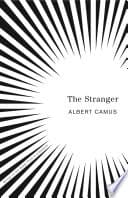
- The Stranger
Albert Camus
4.1 (3k) average on GoodreadsFantasyBoth Molloy and Camus's The Stranger (1942) are seminal works of absurdist literature that explore alienation and the indifference of the universe. Meursault, like Molloy and Moran, experiences a detachment from societal norms and personal emotions. However, Camus's prose is remarkably clear and direct, presenting Meursault's observations with a stark, journalistic objectivity. Beckett, in contrast, plunges the reader into the chaotic, decaying interiority of his characters, employing a much more complex and challenging linguistic style. While both authors convey the absurdity of existence, Camus often does so through external events and Meursault's reaction to them, whereas Beckett primarily achieves it through the internal monologue and the very act of failing to articulate meaning.
- The Old Man and the Sea
Ernest Hemingway
3.8 (831k) average on GoodreadsLiterary FictionA Cuban fisherman's long struggle with a giant marlin becomes a story of endurance and dignity, now retold for young adults with illustrations, phonetic guides, and writing prompts in Traditional Chinese.
- One Hundred Years of Solitude
Gabriel García Márquez
4.1 (753k) average on GoodreadsLiterary FictionThrough the multi-generational story of the Buendía family, a mythical town deals with the repeating patterns of time, love, and solitude, as the extraordinary mixes with the ordinary.




Enjoyed the summary?
A summary gives you the shape of the book. The book itself has the detail, the examples and the voice.
Find Molloy on AmazonAs an Amazon Associate, BookBrief earns from qualifying purchases. How we're funded