
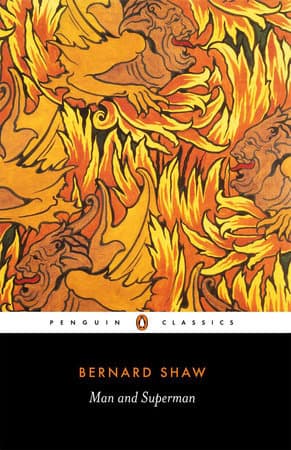
Synopsis
Covers the whole plot, including the ending.
- Difficulty
- Hard
- Pacing
- Moderate
- Mood
- Intellectual, Witty, Satirical, Thought-provoking
- Read it if
- you enjoy philosophical debates, witty dialogue, and a satirical look at societal norms and the battle of the sexes. Ideal for those interested in early 20th-century intellectual thought and Shaw's concept of Creative Evolution.
- Skip it if
- you prefer plot-driven narratives over lengthy philosophical discussions, or if you dislike plays with extensive prefaces and a 'dream sequence' that can feel like a separate philosophical essay.
Man and Superman Plot Summary
Covers the whole plot, including the ending.
The Mendips' Predicament
The play begins at the London home of Mr. Roebuck Ramsden, an elderly, traditional man. Octavius Robinson, a young poet, and his sister, Ann Whitefield, visit him. Ann's recently deceased father, Mr. Whitefield, named Ramsden and the unconventional, intellectual John Tanner as her joint guardians. This arrangement immediately creates conflict, as Tanner is a radical thinker, author of 'The Revolutionist's Handbook,' and holds views that clash sharply with Ramsden's traditionalism. Ann, seemingly innocent and modest, subtly asserts her will, especially regarding her affection for Octavius, which she pretends, while her true interest is Tanner. This sets the stage for a comedic look at societal expectations and individual desires, with Ann's subtle manipulation already clear.
Tanner's Outrage and Ann's Pursuit
John Tanner arrives, angry about being made Ann's guardian. He sees it as a trap, fearing that Ann, as the embodiment of the Life Force, will inevitably pursue him for procreation, despite his intellectual resistance to marriage. Tanner's 'Revolutionist's Handbook,' with its unconventional views on society, marriage, and morality, further distances Ramsden. Ann, however, shows a remarkable ability to charm and manage everyone, including Tanner, who finds himself increasingly involved despite his protests. She subtly encourages Octavius's affections while also drawing Tanner closer. Tanner, aware of Ann's hidden motives, tries to escape her influence, but finds himself increasingly caught by her seemingly innocent demands.
The Motor Car and the Pursuit of Freedom
Frustrated by Ann's constant pursuit and society's expectations, Tanner decides to escape to France in his car, with his chauffeur, Henry Straker. Straker represents the rising working class; he is intelligent and practical, often providing a grounded contrast to Tanner's intellectual talk. Ann, however, is not easily deterred. She follows Tanner to the continent, bringing Octavius and her sister, Violet Robinson. This pursuit shows Ann's strong determination to secure Tanner as her mate, demonstrating the power of the Life Force through her actions. Tanner's attempts to be independent are consistently thwarted by Ann's cleverness and societal pressure.
The Robbers and the Dream in Hell
During their journey, brigands capture Tanner and Straker in the Sierra Nevada mountains. This dramatic event sets the scene for the 'Don Juan in Hell' dream sequence. While captive, Tanner dreams he is Don Juan, debating philosophy with the Devil, Donna Ana (Ann), and the Commander (Ramsden). This long discussion explores Shaw's theory of Creative Evolution, the nature of man and woman, the Life Force, and the purpose of existence. Don Juan, as Tanner's alter ego, expresses the intellectual's desire to go beyond mere procreation and strive for a higher, more evolved form of humanity. The dream is a central part of the play's philosophy, offering a detailed look at Shaw's ideas.
The Debate on Creative Evolution
In the 'Don Juan in Hell' dream, the main debate is about the purpose of life. Don Juan argues for the importance of the Life Force, which moves humanity towards intellectual and spiritual evolution, seeking to create the Superman. He supports the philosopher, the artist, and the scientist as agents of this evolution. The Devil, in contrast, represents the conventional, pleasure-seeking aspects of human nature, arguing that humanity prefers comfort and stagnation over the difficult path of progress. Donna Ana, representing the feminine principle, eventually agrees with Don Juan, recognizing the need for the Life Force to fulfill its purpose through procreation. This philosophical debate is the core of Shaw's exploration of Creative Evolution.
The Commander's Perspective and Ana's Choice
The Commander, representing society's conventional morality, struggles to understand Don Juan's radical ideas in the dream. He embodies the rigid, outdated values Shaw critiques throughout the play. Donna Ana, initially confused, gradually understands and accepts Don Juan's vision of the Life Force. She recognizes her role in continuing humanity and creating the Superman, even if it means sacrificing personal desires. Her ultimate decision to join Don Juan in the pursuit of higher evolution signifies the acceptance of the Life Force's command. This part highlights the conflict between traditional thought and Shaw's new ideas about human purpose.
Awakening and the Return to Reality
Tanner awakens from his dream in Hell, still a captive of the brigands. The philosophical insights from the dream weigh heavily on him, yet he is thrown back into the immediate, comedic reality of his situation. Soon after, Ann, Octavius, Ramsden, and Violet arrive, having found Tanner. The brigands, who first intended to ransom Tanner, are more interested in his car, showing the clash between intellectual concerns and practical desires. Tanner's philosophical understanding of Ann's role as the Life Force makes him even more determined to resist her, yet also more aware that his struggle is useless.
Violet's Secret and Octavius's Despair
During their reunion, it is revealed that Violet Robinson, Octavius's sister, has secretly married Hector Malone, an American. This news initially causes scandal among the conservative characters, especially Ramsden, but Violet strongly defends her decision and her husband's honor. Meanwhile, Octavius, still in love with Ann, begins to understand her manipulation and her true intentions towards Tanner. His romantic illusions are shattered, leading to a moment of despair and resignation. This subplot contrasts with the main romantic chase, showing different aspects of love and societal expectations.
The Inevitable Surrender
The play's climax is Ann relentlessly cornering Tanner. Despite his eloquent and passionate arguments against marriage, his intellectual disdain for convention, and his understanding of Ann's role as the Life Force seeking to propagate and evolve, Tanner is powerless against her will. Ann, using charm, persistence, and subtle emotional blackmail, ultimately breaks down Tanner's resistance. He recognizes that fighting against the primal urge Ann embodies is futile. His surrender is not one of love in the usual sense, but a recognition of a higher, biological command.
Tanner's Acceptance and Ann's Triumph
In a climactic moment, Tanner finally gives in, acknowledging that Ann has won. He expresses his understanding that he is simply a vessel for the Life Force, destined to be the father of the Superman. His acceptance has a tragicomic resignation, as he laments the loss of his intellectual freedom and the victory of biological imperative. Ann, having achieved her goal, remains outwardly modest but inwardly triumphant. The play ends with the impending marriage of Ann and Tanner, showing the irresistible power of the Life Force and Shaw's new interpretation of the battle of the sexes, where the woman, driven by evolutionary purpose, is the true hunter.
Principal Figures
John Tanner
Protagonist
The intellectual rebel and reluctant guardian.
John Tanner is a brilliant, radical intellectual and author of 'The Revolutionist's Handbook.' He is an ardent socialist, a self-proclaimed 'revolutionary,' and a fierce critic of conventional morality, particularly regarding marriage and societal expectations. Tanner is deeply philosophical, often prone to long, eloquent speeches, and sees himself as an agent of intellectual progress. He is acutely aware of Ann Whitefield's true intentions, viewing her as the embodiment of the Life Force seeking to ensnare him for procreation, and he desperately tries to resist this biological imperative.
Relationships: Ann Whitefield (Ward, eventual wife, object of pursuit); Roebuck Ramsden (Co-guardian, intellectual adversary); Octavius Robinson (Friend, rival for Ann's affections); Henry Straker (Chauffeur, intellectual foil)
Ann Whitefield
Antagonist
The demure but determined embodiment of the Life Force.
Ann Whitefield appears as a charming, innocent, and outwardly demure young woman, but she is, in fact, a cunning and relentless pursuer. Shaw portrays her as the embodiment of the Life Force, driven by a primal, evolutionary instinct to find the most suitable mate for the propagation and improvement of the human race. She skillfully manipulates those around her, especially Octavius, to achieve her ultimate goal of marrying John Tanner, whom she recognizes as the ideal father for the Superman. Her seemingly sweet disposition masks an iron will and an unwavering focus on her biological imperative.
Relationships: John Tanner (Guardian, eventual husband, object of pursuit); Octavius Robinson (Suitor, manipulated admirer); Roebuck Ramsden (Guardian, easily swayed)
Roebuck Ramsden
Supporting
The conventional, elderly guardian.
Roebuck Ramsden is an elderly, highly conventional gentleman who represents the outdated Victorian morality and conservative social values that Shaw critiques. He is proud of his 'advanced' views from fifty years prior but is utterly bewildered and appalled by Tanner's radical ideas. Ramsden serves as a foil to Tanner's intellectualism, providing a comedic contrast with his predictable reactions and inability to grasp the deeper philosophical currents at play. He is easily manipulated by Ann's charm and struggles to maintain control over his wards.
Relationships: John Tanner (Co-guardian, intellectual adversary); Ann Whitefield (Ward, easily swayed by her)
Octavius Robinson
Supporting
The romantic poet and disillusioned suitor.
Octavius, affectionately called 'Tavy,' is a young, idealistic poet deeply in love with Ann Whitefield. He embodies the romantic, sentimental view of love and marriage that Tanner so vehemently criticizes. Octavius is gentle, sensitive, and somewhat naive, completely blind to Ann's manipulative nature and her true intentions. His unrequited love for Ann and his eventual disillusionment serve to highlight the contrast between romantic ideals and the harsh realities of the Life Force. He represents the tragicomic figure of the traditional lover.
Relationships: Ann Whitefield (Object of unrequited love); John Tanner (Friend, rival for Ann's affections); Violet Robinson (Sister)
Violet Robinson
Supporting
The independent woman who defies convention.
Violet Robinson is Octavius's sister and a surprisingly strong-willed and independent young woman. She secretly marries Hector Malone, an American, before revealing it to her family, demonstrating a modern approach to love and marriage that contrasts with the societal expectations of the time. Violet is pragmatic and unafraid to stand up for herself and her choices, even when faced with disapproval. Her character provides a counterpoint to Ann, showing another facet of female agency that is less driven by the primal Life Force and more by personal autonomy.
Relationships: Octavius Robinson (Brother); Hector Malone (Husband); Ann Whitefield (Friend)
Henry Straker
Supporting
The practical, modern chauffeur.
Henry Straker is Tanner's chauffeur and a representative of the emerging working class. He is intelligent, practical, and highly competent, often providing a grounded, common-sense perspective that contrasts with Tanner's elaborate philosophical pronouncements. Straker is educated and proud of his technical skills, reflecting Shaw's belief in the potential of the working class. He is not easily impressed by social status or intellectual grandstanding, and his dry wit often punctures Tanner's more bombastic moments. He embodies modern efficiency and a new kind of social intelligence.
Relationships: John Tanner (Employer, companion)
The Devil
Supporting
The eloquent advocate for conventional pleasure in Hell.
The Devil appears in Tanner's 'Don Juan in Hell' dream sequence. He is a charming, eloquent, and highly intelligent debater who argues for the traditional view of human nature: that people prefer pleasure, comfort, and stagnation over the arduous path of intellectual and spiritual evolution. The Devil represents the allure of the status quo and the resistance to change, contrasting sharply with Don Juan's (Tanner's) call for the pursuit of the Superman. He sees Hell as a place of eternal pleasure, where souls can indulge their desires without the burdens of progress.
Relationships: Don Juan (Tanner) (Philosophical adversary); Donna Ana (Ann) (Debate participant)
Don Juan
Supporting
Tanner's philosophical alter ego in Hell.
Don Juan is John Tanner's alter ego in the dream sequence, representing the intellectual and philosophical core of the play. He is a passionate advocate for Creative Evolution and the pursuit of the Superman. Don Juan argues that humanity's true purpose is to transcend its base instincts and strive for higher intelligence and spiritual development. He champions the philosopher, the artist, and the scientist as the true heroes of humanity. His debates with the Devil, Donna Ana, and the Commander articulate Shaw's most profound philosophical ideas.
Relationships: The Devil (Philosophical adversary); Donna Ana (Ann) (Debate participant); The Commander (Ramsden) (Debate participant)
Donna Ana
Supporting
Ann's alter ego in Hell, who embraces the Life Force.
Donna Ana is Ann Whitefield's alter ego in the 'Don Juan in Hell' dream. Initially, she represents the conventional, virtuous woman, struggling to understand the philosophical arguments of Don Juan and the Devil. However, through the debate, she comes to recognize and embrace her role as an agent of the Life Force, understanding the imperative to procreate and contribute to the evolution of humanity. Her decision to join Don Juan in Heaven, which he describes as a place for those who desire to achieve, signifies her acceptance of this higher purpose.
Relationships: Don Juan (Tanner) (Philosophical interlocutor); The Devil (Debate participant)
Hector Malone
Supporting
Violet's American husband.
Hector Malone is an American who secretly marries Violet Robinson. He is portrayed as a wealthy and somewhat naive but ultimately honorable man. His American background provides a cultural contrast within the play, and his marriage to Violet highlights themes of independence and defiance of traditional English social norms. He is loyal to Violet and willing to stand up for their unconventional union, despite the initial disapproval of her family.
Relationships: Violet Robinson (Husband)
Themes & Insights
The Life Force and Creative Evolution
This is the play's central philosophical theme, most clearly stated in the 'Don Juan in Hell' dream. Shaw proposes that humanity is driven by a 'Life Force' – a primal, unconscious urge towards greater knowledge, power, and the creation of the 'Superman.' This is an evolving, creative force. Women, especially Ann Whitefield, are seen as the conscious agents of this force, instinctively seeking the most suitable male to father the next evolutionary step. Men like Tanner, while intellectually resistant, are ultimately compelled to serve this biological imperative, even if it means sacrificing personal freedom for the sake of species improvement.
“I tell you, Man, that as long as I can conceive something better than myself I cannot be easy unless I am striving to bring it into existence or clearing the way for it. That is the law of my life.”
The Battle of the Sexes
Shaw overturns traditional ideas of romance and gender roles, showing the relationship between men and women as a fundamental struggle for evolutionary dominance. Ann Whitefield is the relentless hunter, driven by the Life Force to secure John Tanner as her mate, while Tanner, despite his intellectual resistance, is the hunted. Shaw argues that women are the more practical and focused sex, centered on the continuation and improvement of the species, while men often indulge in romantic illusions or intellectual escape. The play comically yet clearly shows the inevitable triumph of the feminine will when it aligns with the Life Force's evolutionary plan.
“The only man who has ever been able to resist Ann is the man who is dead.”
Critique of Conventional Morality and Society
The play satirizes Victorian social conventions, especially those about marriage, class, and morality. Roebuck Ramsden embodies society's outdated, hypocritical standards, while John Tanner's 'Revolutionist's Handbook' directly challenges these norms. Shaw exposes the superficiality of polite society and its resistance to real intellectual and social progress. Marriage, often romanticized, is shown as a biological and social institution, rather than purely an expression of love. The play advocates for a more honest and rational approach to human relationships and societal structures, free from sentimental illusions.
“Marriage is a ghastly ordeal.”
The Role of the Artist and the Philosopher
Shaw examines the purpose of the intellectual and the artist in society. John Tanner, as a philosopher and author, represents the individual who tries to understand and articulate the deeper truths of existence, even if those truths are uncomfortable. The 'Don Juan in Hell' sequence is a deep reflection on the philosopher's role in guiding humanity towards Creative Evolution. However, the play also suggests the limits of pure intellect when faced with the primal power of the Life Force. While the philosopher can articulate the ideal, the biological imperative often dictates the reality of human action.
“I am a moralist. I am a critic of morals. I am a reviler of morals. I am a prophet of morals. I am a revolutionist.”
Plot Devices & Literary Techniques
The 'Don Juan in Hell' Dream Sequence
A philosophical interlude that provides the play's intellectual core.
This extended, self-contained act (Act III) is a dream experienced by John Tanner while he is held captive by brigands. It takes the form of a philosophical debate between Don Juan (Tanner's alter ego), the Devil, Donna Ana (Ann's alter ego), and the Commander (Ramsden's alter ego). This device allows Shaw to directly present his complex theories of Creative Evolution, the Life Force, and the roles of men and women without being constrained by the naturalistic demands of the main plot. It serves as the intellectual heart of the play, providing the explicit philosophical framework for the preceding and subsequent actions.
The Revolutionist's Handbook
An accompanying philosophical treatise that expands on Tanner's ideas.
This is a philosophical appendix to the play, purportedly written by John Tanner. It is a collection of aphorisms and essays that explicitly articulate Tanner's (and by extension, Shaw's) radical views on society, politics, marriage, and human nature. As a literary device, it allows Shaw to present his ideas in a more direct, essayistic form than is possible within the dialogue of the play itself. It reinforces Tanner's character as an intellectual rebel and provides further context for the play's themes, serving as a direct extension of Shaw's philosophical arguments.
Dramatic Irony
The audience's awareness of Ann's true motives, unknown to most characters.
Shaw frequently employs dramatic irony, particularly concerning Ann Whitefield's character. The audience is made aware, through Tanner's pronouncements and Ann's subtle actions, that she is not the innocent, demure girl she appears to be, but a cunning and determined agent of the Life Force. Most other characters, especially Octavius and Ramsden, remain oblivious to her manipulative nature. This creates a comedic tension and allows Shaw to highlight the difference between superficial appearances and underlying biological or psychological realities, reinforcing his theme of the 'battle of the sexes' and the power of the Life Force.
Satire and Farce
Humor used to critique societal norms and human folly.
Shaw uses satire and elements of farce throughout the play to critique conventional morality and human behavior. The exaggerated characters (like Ramsden's outdated views, Octavius's romantic idealism, and Tanner's intellectual extremism), the comedic situations (Tanner's frantic attempts to escape Ann, the brigand episode), and the witty, often paradoxical dialogue serve to expose the absurdities of society. This humorous approach makes Shaw's profound philosophical arguments more palatable and engaging, allowing him to challenge deeply ingrained beliefs while entertaining the audience.
Man and Superman Quotes
“The danger of the pursuit of pleasure is that it is a never-ending pursuit. One can never have enough pleasure.”
“Life isn't about finding yourself. Life is about creating yourself.”
“The man who is born a philosopher is never a great philosopher.”
“The truth is the most valuable thing we have. Let us economize it.”
“The only way to get rid of temptation is to yield to it.”
“There is no duty we so much underrate as the duty of being happy.”
“Progress is impossible without change, and those who cannot change their minds cannot change anything.”
“We do not live in a world of good and evil, but in a world of good and bad.”
“The man who is accustomed to the life of the world is the man who is accustomed to making the best of it.”
“The greatest of faults is to be conscious of none.”
“We are all of us more or less of the same stuff, and it is only by the grace of God that we are not all of us more or less of the same fools.”
“The stage is not a place for preaching. It is a place for showing.”
“It is the passion for happiness that makes us do good.”
“The future belongs to those who believe in the beauty of their dreams.”
Quiz
10 questions on the plot and the characters. Each answer comes with a short explanation.
Question 1
When did George Bernard Shaw begin writing "Man and Superman"?
- 1900
- 1901
- 1902
- 1903
Show answer
B. 1901 The text states, "Shaw began writing Man and Superman in 1901".
Question 2
What was Shaw's aim in writing "Man and Superman"?
- To write a historical drama
- To create a romantic comedy
- To encapsulate the new century's intellectual inheritance
- To critique Victorian society
Show answer
C. To encapsulate the new century's intellectual inheritance The text mentions Shaw "determined to write a play that would encapsulate the new century's intellectual inheritance."
Question 3
Which of the following literary works did Shaw NOT draw inspiration from for "Man and Superman"?
- Byron's verse satire
- Shakespeare
- Victorian comedy
- Jane Austen novels
Show answer
D. Jane Austen novels The text lists Byron's verse satire, Shakespeare, and Victorian comedy as influences. Jane Austen novels are not mentioned.
Question 4
According to the text, what is one of the main themes explored in "Man and Superman"?
- The industrial revolution
- The role of the artist
- The impact of World War I
- The rise of capitalism
Show answer
B. The role of the artist The text states, "Shaw explores the role of the artist, the function of women in society, and his theory of Creative Evolution."
Question 5
Shaw's theory of "Creative Evolution" is mentioned as a theme in the play. What might this theory broadly relate to?
- The development of new technologies
- The process of biological and societal advancement
- The evolution of artistic styles
- The geological formation of the Earth
Show answer
B. The process of biological and societal advancement While not explicitly defined, "Creative Evolution" in Shaw's philosophy generally refers to a purposeful, ongoing process of development in life and society, aiming towards a higher state.
Question 6
Stanley Weintraub describes "Man and Superman" as the "first great twentieth-century English play." What does this suggest about the play's significance?
- It was the first play written in the 20th century
- It marked a new era of English drama
- It was the most commercially successful play of the century
- It was the first play to be performed in London
Show answer
B. It marked a new era of English drama Calling it the "first great twentieth-century English play" implies it was a groundbreaking and important work that set a standard for subsequent dramas of that era.
Question 7
The text refers to the play as an "exposé of the eternal struggle between the sexes." What does "exposé" imply in this context?
- A hidden truth or situation being revealed
- A formal declaration of war
- A public celebration
- A romantic reconciliation
Show answer
A. A hidden truth or situation being revealed An "exposé" typically means revealing something, often something negative or controversial, which fits the idea of revealing the underlying dynamics of the struggle between men and women.
Question 8
Considering the influences mentioned (Byron, Shakespeare, Victorian comedy), what kind of tone or style might one expect in "Man and Superman"?
- Purely didactic and serious
- Whimsical and lighthearted
- A blend of satire, drama, and perhaps wit
- Strictly realistic and naturalistic
Show answer
C. A blend of satire, drama, and perhaps wit Byron's satire, Shakespeare's dramatic depth, and Victorian comedy (often witty) suggest a play that is not confined to a single tone but likely combines intellectual commentary with dramatic and comedic elements.
Question 9
The phrase "intellectual inheritance" suggests that Shaw was aiming to grapple with:
- The financial legacy of the previous century
- The philosophical and scientific ideas passed down from earlier times
- The artistic traditions that were no longer relevant
- The political systems in place at the turn of the century
Show answer
B. The philosophical and scientific ideas passed down from earlier times An "intellectual inheritance" refers to the body of knowledge, ideas, and philosophies that are passed from one generation to the next.
Question 10
Based on the description, what is the central conflict or tension that the play seems to address?
- The clash between tradition and modernity
- The conflict between individual desire and societal expectation
- The dynamic relationship and differing perspectives between men and women
- The struggle between artistic integrity and commercial success
Show answer
C. The dynamic relationship and differing perspectives between men and women The text explicitly mentions the "eternal struggle between the sexes" and explores the "function of women in society," pointing to this as a central theme.
Man and Superman FAQ
What is Man and Superman by George Bernard Shaw about?
Man and Superman is a philosophical drama that explores the intellectual currents of the early 20th century. It delves into themes such as the role of the artist, the societal function of women, and Shaw's theory of Creative Evolution, all presented through a compelling struggle between the sexes.
When was Man and Superman written?
George Bernard Shaw began writing Man and Superman in 1901. It is considered the first great twentieth-century English play.
What are the main philosophical ideas in Man and Superman?
The play prominently features Shaw's theory of Creative Evolution, which suggests a purposeful drive in the universe towards a higher form of life. It also examines the nature of love, marriage, and the 'Life Force'.
How does Man and Superman explore the role of women?
Shaw presents women as active agents in the pursuit of their desires and the continuation of the Life Force, challenging traditional Victorian notions of female passivity. They are depicted as driving the narrative and seeking partners who can contribute to the evolution of humanity.
What literary influences can be seen in Man and Superman?
Shaw drew inspiration from a variety of sources, including Byron's verse satire, Shakespearean drama, Victorian comedy, and the works of authors like Conan Doyle and Kipling, blending these influences into his unique dramatic style.
Is Man and Superman a comedy or a drama?
While it contains elements of wit and satire characteristic of comedy, Man and Superman is primarily a philosophical drama of ideas. It uses dramatic conflict to explore profound questions about life, evolution, and society.
What is the 'Life Force' in Man and Superman?
The Life Force, as presented by Shaw, is an inherent, striving energy in the universe that propels life towards self-improvement and higher forms of existence. In the play, characters often embody or respond to this force in their pursuit of love and procreation.
How does Man and Superman differ from typical plays of its time?
Man and Superman stands out for its intellectual depth, its direct engagement with philosophical theories, and its unconventional portrayal of gender roles. It moved beyond mere entertainment to provoke thought and debate on significant societal issues.
What is the significance of the title 'Man and Superman'?
The title reflects Shaw's interest in Nietzsche's concept of the Übermensch (Superman), suggesting a potential future evolution of humanity beyond current limitations. The play explores the qualities needed for this advancement, particularly in the context of the 'Life Force'.
Where can I find practical advice or interpretations of Man and Superman?
While the play is primarily philosophical, discussions and analyses of its themes, characters, and historical context can be found in literary criticism, academic essays, and study guides. These resources offer deeper insights into Shaw's intentions and the play's enduring relevance.
About the author
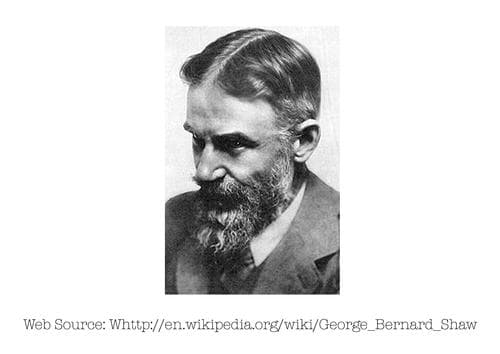
George Bernard Shaw, known at his insistence as Bernard Shaw, was an Irish playwright, critic, polemicist and political activist. His influence on Western theatre, culture and politics extended from the 1880s to his death and beyond. He wrote more than sixty plays, including major works such as Man and Superman (1902), Pygmalion (1913) and Saint Joan (1923). With a range incorporating both contemporary satire and historical allegory, Shaw became the leading dramatist of his generation, and in 1925 was awarded the Nobel Prize in Literature.
Similar books
- The Importance of Being Earnest
Oscar Wilde
4.2 (302k) average on GoodreadsHistoryFeatures brilliant, witty dialogue and a satirical take on Victorian society and romance.
- Thus Spoke Zarathustra
Friedrich Nietzsche
4.0 (111k) average on GoodreadsPsychologyA philosophical work that uses a narrative framework to explore profound ideas about humanity and evolution, echoing the 'Life Force' concept.
- Brave New World
Aldous Huxley
4.0 (1.4M) average on GoodreadsFantasyIn a future where happiness comes from chemicals and individuality is gone, one man's desire for real experience threatens the calm, controlled society.
- Life of Pi
Yann Martel
3.9 (1.3M) average on GoodreadsFantasyStranded in the vast Pacific, a young Indian boy forms an unlikely bond with a Bengal tiger, questioning belief and survival.
- The Picture of Dorian Gray
Oscar Wilde
4.1 (966k) average on GoodreadsFantasyA beautiful young man's soul decays within a cursed portrait, mirroring the grotesque cost of his hedonistic pursuit of eternal youth and illicit pleasure.
- Tuesdays with Morrie
Mitch Albom
4.1 (782k) average on GoodreadsBiographyA dying professor's weekly lessons from his bedside change a former student, giving him ideas on life, love, and letting go.



Enjoyed the summary?
A summary gives you the shape of the book. The book itself has the detail, the examples and the voice.
Find Man and Superman on AmazonAs an Amazon Associate, BookBrief earns from qualifying purchases. How we're funded