

Synopsis
Covers the whole plot, including the ending.
- Difficulty
- Medium
- Pacing
- Moderate
- Mood
- Somber, Tragic, Resilient, Hopeful (despite tragedy), Historically Accurate
- Read it if
- You are looking for a powerful, heart-wrenching historical fiction about the Holocaust, focusing on the experiences of twins, with a strong emphasis on survival and the human spirit.
- Skip it if
- You prefer lighthearted reads or find graphic depictions of wartime atrocities and medical experimentation too disturbing.
Mapping the Bones Plot Summary
Covers the whole plot, including the ending.
Lodz Ghetto: A Precarious Existence
In 1942 Poland, thirteen-year-old twins Chaim and Gittel, along with their parents, are relocated from their comfortable home to the overcrowded, impoverished Lodz Ghetto. Chaim, a quiet poet, and Gittel, more pragmatic and protective, rely on their unique twin bond, communicating through glances and a secret sign language. Life in the ghetto is harsh, with constant hunger, disease, and the fear of 'selections' and deportations. Their parents, seeing the escalating horrors, begin to consider desperate measures to save their children from the inevitable fate awaiting those trapped within the ghetto walls, hoping for a chance at freedom.
Escape to the Forest and a Shattered Promise
Desperate to save their children, Chaim and Gittel's parents make the agonizing decision to send them away with a group of partisan fighters heading to the Lagiewniki Forest, promising to follow shortly. The twins, along with two other children, Jacob and Rivka, begin their perilous journey. The partisans, led by the stoic Anya, attempt to guide them towards an escape route to Russia. Chaim and Gittel cling to the hope of reuniting with their parents, but as days turn into weeks, the grim reality of their separation begins to sink in. Their parents never arrive, leaving the children alone and vulnerable in the dangerous wilderness, relying on the partisans for survival.
Betrayal and Capture
While traversing the Lagiewniki Forest, the small band of partisans and children is ambushed by German soldiers. The fight is brutal and swift, resulting in the massacre of the adult partisans, including Anya, who sacrifices herself to protect the children. Chaim, Gittel, Jacob, and Rivka witness the violence firsthand. They are spared immediate death, but their brief taste of freedom is extinguished. The German soldiers round up the four children. Their hopes of reaching Russia or reuniting with family are crushed. They are now prisoners, their destination unknown, but the fear of what awaits them is palpable.
Arrival at Sobanek
The captured children, Chaim, Gittel, Jacob, and Rivka, are transported in overcrowded, suffocating cattle cars to Sobanek concentration camp. Upon arrival, they are immediately confronted with the camp's reality: skeletal prisoners, rampant disease, constant fear, and the omnipresent, sickly sweet smell from a chimney. They are stripped, shaved, and tattooed with numbers, losing their names and identities. Chaim and Gittel, still together, notice the camp's focus on twins, a chilling detail that fills them with dread. Whispers circulate about a doctor who performs 'experiments,' particularly on twins, adding specific terror to their already desperate situation.
The Doctor's Gaze
At Sobanek, Chaim and Gittel's twin bond, once a source of comfort and strength, becomes a perilous liability. Dr. Mengele, the notorious 'Angel of Death,' quickly identifies them as subjects for his genetic experiments. The twins are subjected to invasive examinations, measurements, and blood tests, their bodies meticulously cataloged. They witness other twins being taken away, never to return, or returning as broken shells. The doctor's cold gaze follows them, and they live in constant fear of being called to Block 10, the experimental barrack. Their unique connection, which has always defined them, now threatens to be their undoing.
Separation and Survival
Despite their attempts to stay together, Chaim and Gittel are eventually separated by the camp guards, a common tactic to break the spirits of prisoners. Chaim, with his poetic nature, struggles with the physical labor and the constant dehumanization, often retreating into his mind to compose verses. Gittel, more resourceful and pragmatic, uses her intelligence and quick thinking to navigate the camp's dangers, forming small alliances and finding ways to acquire extra rations or avoid the harshest punishments. Their separation is a profound blow, but their shared memories and silent understanding continue to sustain them, even as they face individual trials.
Jacob and Rivka's Fates
Chaim and Gittel see the fates of their friends from the forest. Jacob, weakened by hunger and disease, eventually dies from the camp's conditions, his death a reminder of their own precarious existence. Rivka, initially resilient, is chosen for an unknown 'experiment' and never returns, her absence a chilling reminder of the doctor's ruthlessness. These losses further harden the twins, yet also reinforce their determination to survive for each other and for their lost loved ones. The continuous stream of death and suffering surrounds them, making every day a battle for physical and emotional endurance.
The Final Experiment
The day Chaim and Gittel have dreaded arrives: Chaim is selected for a final, gruesome experiment by Dr. Mengele. Gittel, seeing her brother being taken away, is consumed by a desperate urgency to save him. She recalls whispers and rumors among the prisoners about the doctor's methods and the specific focus on twins. Driven by her unwavering love and the primal instinct to protect her twin, Gittel begins to formulate a desperate plan, knowing that time is running out. She understands that this might be her last chance to prevent Chaim from becoming another statistic in Mengele's collection.
A Desperate Act of Love
Gittel, fueled by courage and desperate hope, manages to convince a sympathetic, albeit reluctant, guard to help her. Using her quick wit and the guard's momentary lapse in vigilance, she orchestrates a dangerous infiltration of the experimental block where Chaim is held. The air is thick with the smell of chemicals and fear. She finds Chaim, barely conscious and visibly suffering from the initial stages of Mengele's experiment. With the guard's assistance, Gittel manages to extract Chaim from the block, narrowly avoiding detection by other SS officers. This act is a monumental risk, and their escape from the block is only the beginning of another perilous journey.
Liberation and Lingering Scars
As the war draws to a close, the camp is liberated by Allied forces. Chaim and Gittel, weak but alive, emerge from Sobanek. The joy of freedom is tempered by the immense loss they have endured and the trauma that will forever mark them. They search for any surviving family, but their parents are nowhere to be found. The twins, now orphans, face the daunting task of rebuilding their lives in a world irrevocably changed. Chaim's poetry, once a private solace, becomes a way to remember, while Gittel's resilience guides them as they navigate the post-war world, forever bound by their shared past and the silent language of their survival.
Principal Figures
Chaim
Protagonist
Gittel's twin brother, a sensitive and observant poet who finds solace in words.
Chaim is the more introspective and sensitive of the twins. He possesses a deep love for poetry and often retreats into his mind to compose verses, even amidst the horrors of the ghetto and the camp. His quiet nature and observant eyes allow him to process the world around him, often internalizing the suffering he witnesses. While physically less robust than Gittel, his inner strength lies in his ability to find beauty and meaning, even in the darkest circumstances. He relies heavily on his connection with Gittel for emotional support and understanding, especially when words fail him.
Relationships: Gittel (twin sister, deep emotional and telepathic bond); Moishe and Rivka (parents) (loving parents, source of initial security); Dr. Mengele (persecutor, tormentor)
Gittel
Protagonist
Chaim's twin sister, pragmatic, resourceful, and fiercely protective of her brother.
Gittel is the more practical and resilient twin, often taking on a protective role towards Chaim. She is quick-witted, resourceful, and possesses a strong will to survive. While deeply affected by the atrocities, Gittel focuses on immediate survival, finding ways to navigate the dangers of the ghetto and the camp. Her love for Chaim is her primary motivator, driving her to take risks and make difficult decisions. She is observant and intelligent, often understanding unspoken cues and anticipating threats, making her a vital force in their struggle for survival.
Relationships: Chaim (twin brother, deep emotional and telepathic bond); Moishe and Rivka (parents) (loving parents, source of initial security); Dr. Mengele (persecutor, tormentor)
Dr. Mengele
Antagonist
The infamous 'Angel of Death' at Sobanek, who conducts horrific experiments on twins.
Dr. Josef Mengele, known as the 'Angel of Death' in Sobanek (Auschwitz), is the embodiment of evil and scientific perversion. He is cold, calculating, and utterly devoid of empathy, viewing his victims, particularly twins, as mere subjects for his grotesque genetic experiments. His presence instills profound fear throughout the camp, and his 'selections' for the experimental block are a death sentence. He is driven by a twisted scientific curiosity and a chilling detachment, making him a terrifying and relentless force against Chaim and Gittel.
Relationships: Chaim and Gittel (experimental subjects, victims); Other prisoners (victims of his cruelty)
Jacob
Supporting
A young boy who escapes the ghetto with the twins, representing the vulnerability of children.
Jacob is one of the children who escapes the Lodz Ghetto with Chaim and Gittel, under the care of the partisans. He is a younger boy, full of a fragile hope for freedom, but ultimately succumbs to the brutal realities of the concentration camp. His character highlights the widespread suffering and the indiscriminate nature of the Holocaust, particularly its impact on children. His death serves as a poignant reminder of the constant threat of starvation, disease, and violence faced by every prisoner.
Relationships: Chaim and Gittel (fellow escapees, friends); Rivka (fellow escapee, friend)
Rivka
Supporting
A young girl who escapes with the twins, showcasing resilience but ultimately falling victim to the camp.
Rivka is another child who flees the ghetto with Chaim and Gittel, forming a small bond of shared experience. She displays moments of resilience and determination, trying to cope with the escalating horrors. Like Jacob, she becomes a prisoner at Sobanek. Her ultimate fate, being taken for an unspecified 'experiment' and never returning, underscores the arbitrary and cruel nature of Mengele's selections and the camp's machinery of death. She represents the many children whose lives were cut short by the Holocaust's atrocities.
Relationships: Chaim and Gittel (fellow escapees, friends); Jacob (fellow escapee, friend)
Anya
Supporting
A partisan fighter who guides the children, embodying courage and sacrifice.
Anya is a brave and stoic partisan fighter who is entrusted with guiding Chaim, Gittel, Jacob, and Rivka through the Lagiewniki Forest. She is a figure of quiet strength and determination, committed to fighting the Nazis and protecting the innocent. Despite the immense danger, she shows compassion towards the children, offering them a glimmer of hope. Her ultimate sacrifice during the ambush, where she gives her life to shield the children, underscores the bravery and selflessness of those who resisted the Nazi regime.
Relationships: Chaim and Gittel (protector, guide); Jacob and Rivka (protector, guide)
Moishe (Father)
Supporting
Chaim and Gittel's father, who makes the agonizing decision to send his children away for their safety.
Moishe is Chaim and Gittel's father, a loving parent who, along with his wife, makes the heart-wrenching decision to send their children with the partisans. He represents the impossible choices parents faced during the Holocaust, prioritizing his children's survival above his own. His character embodies the deep paternal love and the desperation to protect family from an unimaginable evil, even if it means separation and uncertainty. His absence after the twins leave underscores the widespread loss and destruction of families.
Relationships: Chaim and Gittel (father); Rivka (mother) (wife)
Rivka (Mother)
Supporting
Chaim and Gittel's mother, who shares the painful decision to send her children away.
Rivka is Chaim and Gittel's mother, who, alongside Moishe, makes the agonizing choice to send their children into the unknown with the partisans. She embodies maternal love and the profound grief of separation, knowing that this decision might be their only chance for the children's survival. Her character highlights the emotional toll of the Holocaust on families, forcing them to abandon their deepest instincts to protect their children directly. Her fate, like her husband's, remains unknown, symbolizing the countless families torn apart.
Relationships: Chaim and Gittel (mother); Moishe (father) (husband)
Sympathetic Guard
Mentioned
A minor character who aids Gittel in her desperate attempt to save Chaim.
This unnamed guard, though a minor character, plays a crucial role in Gittel's desperate attempt to save Chaim from Dr. Mengele's block. His brief act of compassion or momentary lapse in vigilance provides the opportunity for Gittel to act. He represents the rare instances of humanity found even within the brutal machinery of the camps, suggesting that not all individuals were entirely consumed by the ideology of their oppressors, or perhaps simply had a moment of weakness that Gittel exploited.
Relationships: Gittel (unwilling accomplice in a rescue)
Themes & Insights
The Power of Twinship and Identity
The unique, almost telepathic bond between Chaim and Gittel is central to the narrative. Their shared identity, initially a source of comfort and strength in the ghetto, becomes a dangerous liability in Sobanek due to Dr. Mengele's experiments on twins. The story explores how this bond both sustains them and puts them at extreme risk, forcing them to navigate individual survival while still being linked. Their secret sign language and unspoken understandings are symbols of this unique connection, which defies the dehumanization of the camps.
“They were two halves of one soul, bound by blood and breath, and a secret language only they understood.”
Loss of Innocence and Childhood
The twins' journey from their comfortable home to the Lodz Ghetto and then to Sobanek concentration camp strips away their childhood and innocence. They witness horrors, experience starvation, disease, and the constant threat of death. Their games and dreams are replaced by the realities of survival. The loss of their parents, friends like Jacob and Rivka, and their own physical and emotional scars show how the Holocaust stole the future from an entire generation of children, forcing them to mature far beyond their years.
“Childhood had been a fragile butterfly, and the war had crushed its wings.”
Resistance and Survival
Resistance appears in various forms, from the armed partisans fighting in the forest to individual acts of defiance and resilience within the camp. Gittel's resourcefulness and Chaim's internal world of poetry are forms of spiritual and intellectual resistance against total dehumanization. Their ultimate fight for survival against Dr. Mengele's experiments is the most direct form of resistance. The story emphasizes that survival itself, maintaining one's humanity and hope in the face of annihilation, is a profound act of resistance.
“To stay alive, to remember, that was its own kind of weapon.”
Memory and Bearing Witness
Chaim's poetic nature and his internal cataloging of events show the importance of memory and remembering the atrocities of the Holocaust. Even when language fails, the twins' shared experiences and the lingering scars serve as reminders. The narrative implicitly argues for the necessity of remembering these events to prevent their recurrence. Chaim's continued desire to write poetry, even after liberation, signifies the enduring human need to document, understand, and share traumatic histories.
“He would write it all down, even if no one ever read it. Because if he didn't, who would remember?”
Dehumanization and Humanity
The book portrays the Nazi regime's systematic dehumanization of Jewish people, stripping them of their names, dignity, and basic rights. Prisoners are reduced to numbers, objects for experimentation, and disposable labor. However, amid this dehumanization, sparks of humanity persist: the parents' sacrifice, Anya's protection, Gittel's unwavering love for Chaim, and even the brief compassion of a guard. These moments show the enduring human spirit and the refusal to be utterly broken, even in the most inhumane conditions.
“They tried to make us less than human, but they could never take away what was inside.”
Plot Devices & Literary Techniques
Twin Telepathy/Shared Consciousness
A unique bond between Chaim and Gittel allowing for unspoken communication and deep understanding.
The nearly telepathic connection between Chaim and Gittel is a central plot device. It allows them to communicate wordlessly, understand each other's unspoken thoughts and fears, and draw strength from their shared existence. This bond is initially a source of comfort and security in the frightening world of the ghetto but becomes a perilous liability in Sobanek, where Dr. Mengele specifically targets twins for his experiments. The device amplifies the stakes of their separation and the emotional impact of their shared ordeal, making their survival inextricably linked.
The Belching Chimney
A symbolic and literal representation of the camp's horrific purpose.
The constantly belching chimney at Sobanek concentration camp serves as a powerful and chilling symbol throughout the narrative. Literally, it signifies the crematoria and the mass murder occurring within the camp. Symbolically, it represents the pervasive evil, the stench of death, and the complete dehumanization of the prisoners. Its omnipresence instills fear and despair, acting as a constant reminder of the camp's true, horrific function and the fate awaiting most who enter its gates. It's a tangible manifestation of the 'Angel of Death's' work.
Chaim's Poetry/Internal Monologue
A narrative technique providing insight into Chaim's inner world and a means of coping.
Chaim's internal creation of poetry and his rich inner monologue serve as a crucial narrative device. It allows the reader access to his sensitive and observant perspective, contrasting with the brutal external reality. His verses, often unwritten but composed in his mind, are a form of spiritual resistance and a way for him to process and make sense of the incomprehensible horrors. This device highlights the power of art and imagination as a coping mechanism and a means of preserving one's humanity and individuality in the face of systematic dehumanization.
The Lagiewniki Forest
A liminal space representing a brief hope for freedom and a place of betrayal.
The Lagiewniki Forest functions as a significant liminal space in the narrative. Initially, it represents a fleeting hope for freedom and escape from the ghetto, a natural world contrasting with the man-made horrors. It is a place of temporary sanctuary with the partisans. However, it quickly transforms into a site of betrayal and capture, where the children's hopes are crushed and their protectors massacred. This duality underscores the fragility of hope during wartime and the constant danger lurking even in seemingly 'safe' havens, marking the transition from a precarious freedom to absolute captivity.
Mapping the Bones Quotes
“I am not Jewish, but I am learning what it means to be hated for something you cannot change.”
“The woods were a silent witness, holding their breath, waiting for the storm to pass.”
“Sometimes the only way to survive is to pretend you are someone else.”
“Fear is a cold hand on your heart, but hope is a tiny spark that refuses to die.”
“We were just children, but we had to become adults overnight.”
“The world had turned upside down, and we were clinging to the edges of it.”
“A story can be a shield, or it can be a weapon.”
“Even in the darkest places, there can be beauty, if you know where to look.”
“The past is a map, but it doesn't always show you the way forward.”
“Sometimes silence is the loudest sound.”
“We carried our memories like stones in our pockets.”
“To forget is to betray those who suffered.”
“Hope is a dangerous thing, but it's also the only thing that keeps you going.”
“The world had stopped making sense, but we had to keep making our own.”
“Every step was a prayer, every breath a defiance.”
Quiz
10 questions on the plot and the characters. Each answer comes with a short explanation.
Question 1
In what year are Chaim and Gittel first forced from their home into the Lodz Ghetto?
- 1939
- 1941
- 1942
- 1944
Show answer
C. 1942 The book explicitly states that the year is 1942 when Chaim and Gittel are forced from their home into the Lodz Ghetto.
Question 2
What is the primary reason Chaim and Gittel's parents decide to leave the Lodz Ghetto?
- They heard rumors of better food supplies in the forest.
- The ghetto's dire circumstances became too dangerous, prompting them to seek partisan help.
- They were ordered to relocate by the German authorities.
- They wanted to join a different resistance group in a neighboring town.
Show answer
B. The ghetto's dire circumstances became too dangerous, prompting them to seek partisan help. Their parents decided to leave the ghetto because the conditions became too dangerous, hoping to find freedom with partisan fighters in the Lagiewniki Forest.
Question 3
What is Chaim's quiet passion or talent mentioned in the description?
- He is a musician.
- He is a skilled painter.
- He is a poet.
- He is a talented storyteller.
Show answer
C. He is a poet. The description states that Chaim is quiet and a poet, often communicating with Gittel through non-verbal cues.
Question 4
To which location are Chaim, Gittel, and their two friends sent after their partisan band is caught and killed?
- A different section of the Lodz Ghetto
- Russia, as originally planned
- Sobanek concentration camp
- Another forest hideout
Show answer
C. Sobanek concentration camp After the partisan fighters are killed, Chaim, Gittel, and their two friends are sent to Sobanek concentration camp.
Question 5
What unique form of communication do Chaim and Gittel often use?
- Secret notes written in code
- Whispered messages in Yiddish
- Wordless exchanges of shared looks and an invented sign language
- Singing specific songs with hidden meanings
Show answer
C. Wordless exchanges of shared looks and an invented sign language The twins communicate through 'wordless exchanges of shared looks and their own invented sign language,' highlighting their deep bond.
Question 6
Why does the bond between Chaim and Gittel become a 'burden' at Sobanek concentration camp?
- They frequently argue, making their situation worse.
- They are separated and miss each other terribly.
- A doctor at the camp is looking to experiment specifically on twins.
- Their shared language makes them stand out and causes suspicion.
Show answer
C. A doctor at the camp is looking to experiment specifically on twins. The bond becomes a burden because a doctor at Sobanek is specifically looking to experiment on twins, making their identical status a target for horrific medical procedures.
Question 7
What specific feature of Sobanek concentration camp particularly frightens the prisoners?
- The watchtowers with armed guards.
- A building with a belching chimney.
- The sound of barking dogs at night.
- The constant roll calls in the freezing cold.
Show answer
B. A building with a belching chimney. The description mentions 'a building with a belching chimney that everyone is scared to so much as look at,' hinting at the crematoria and the fate of many prisoners.
Question 8
What promise do the partisans make to Chaim and Gittel regarding their parents, which is later broken?
- That their parents will meet them in Russia.
- That their parents will catch up with them in the forest.
- That their parents will send them letters.
- That their parents have already reached safety.
Show answer
B. That their parents will catch up with them in the forest. The partisans promise that their parents will catch up, but this promise is shattered when the partisan band is caught and killed, leaving the children alone.
Question 9
The setting of the story shifts from the Lodz Ghetto to the Lagiewniki Forest, and then to Sobanek concentration camp. What does this progression primarily highlight about the twins' experience?
- Their journey through various forms of resistance.
- A continuous descent into increasing danger and dehumanization.
- Their search for different family members across Poland.
- The varying landscapes of wartime Poland.
Show answer
B. A continuous descent into increasing danger and dehumanization. The progression from the ghetto to the forest (a brief hope of freedom) and then to a concentration camp represents a continuous and escalating descent into extreme danger, suffering, and dehumanization.
Question 10
What is the implied danger that the doctor at Sobanek concentration camp poses to Chaim and Gittel?
- He might separate them permanently.
- He intends to perform horrific medical experiments on them due to their twin status.
- He will force them to work in the camp's infirmary.
- He will prevent them from communicating with each other.
Show answer
B. He intends to perform horrific medical experiments on them due to their twin status. The description states that the doctor is 'looking to experiment on twins, and what he has in store for them is a horror they dare not imagine,' directly implying he will subject them to cruel medical experiments.
Mapping the Bones FAQ
What is "Mapping the Bones" about?
"Mapping the Bones" follows Polish Jewish twins, Chaim and Gittel, in 1942 as they navigate the horrors of the Holocaust. After being forced into the Lodz Ghetto and then attempting to escape with partisans, they are captured and sent to Sobanek concentration camp, where their unique twin bond becomes a perilous target for a Josef Mengele-like doctor conducting horrific experiments.
Why should I read "Mapping the Bones"?
You should read "Mapping the Bones" for its poignant portrayal of resilience, the unbreakable bond between siblings, and its unflinching yet sensitive depiction of the Holocaust through the eyes of young protagonists. It offers a unique perspective by weaving in elements of a twisted fairytale, making the unimaginable horrors more accessible for young adult readers while retaining historical accuracy.
What is the background/setting of "Mapping the Bones"?
The story is set in Poland during World War II, primarily in 1942. It begins in the Lodz Ghetto, a densely populated and squalid Jewish ghetto, before moving to the dangerous Lagiewniki Forest with partisan fighters. The majority of the narrative takes place within the confines of Sobanek concentration camp, a fictionalized representation of Auschwitz, complete with its infamous doctor and crematoria.
What are the most memorable quotes?
While specific quotes aren't provided in the summary, memorable lines often revolve around Chaim's poetry, Gittel's observations, or their silent communications. The title itself, "Mapping the Bones," suggests a recurring theme of reduction to bare existence and the internal mapping of trauma and survival.
What writing style does the author use?
Jane Yolen employs a lyrical and evocative writing style, often incorporating elements of folklore and fairytale to frame the grim realities of the Holocaust. Her prose is direct yet poetic, allowing for deep emotional resonance while maintaining an accessible tone for young adult readers, balancing beauty with horror.
What minor details add significant meaning?
The twins' invented sign language is a crucial detail, symbolizing their unique, unspoken bond and providing a secret means of communication in a world where words can be dangerous. Chaim's quiet nature and passion for poetry, contrasted with Gittel's more pragmatic outlook, highlight their individual coping mechanisms and the different ways trauma manifests.
What are some subtle foreshadowing moments?
The initial mention of the 'belching chimney' at Sobanek camp, before its true purpose is revealed, subtly foreshadows the horrific fate awaiting many prisoners. The early emphasis on Chaim and Gittel's identical appearance and their strong twin connection also foreshadows their vulnerability and the doctor's interest in them.
What unexpected character connections exist?
Beyond their initial family and two friends, unexpected connections might arise within the camp, such as a benevolent kapo or a fellow prisoner who offers small acts of kindness or resistance. The summary suggests that the twins and their two friends remain together, implying a deepening of that bond under duress.
What are unspoken character motivations?
Chaim's unspoken motivation is likely to protect Gittel at all costs, often through silence or his internal world of poetry, as he grapples with the injustice. Gittel's unspoken drive is survival, fueled by her bond with Chaim, even when that bond becomes a perceived weakness. Their parents' motivation to send them with partisans was a desperate hope for their children's survival.
What psychological complexities do characters exhibit?
Chaim exhibits the psychological complexity of an artist grappling with unimaginable horror, using poetry as an internal refuge and a way to process trauma. Gittel demonstrates resilience and pragmatism, but her increasing fear and the burden of her twinship reveal the psychological toll of constant threat and the erosion of trust in the world.
What are the major emotional turning points?
A major emotional turning point is the separation from their parents, signifying the loss of their childhood and safety. Another is their capture and arrival at Sobanek, where the full terror of their situation becomes clear. The most significant turning point is when their twin bond, once a comfort, becomes a terrifying liability, forcing them to confront the doctor's experiments.
How do relationship dynamics evolve?
The relationship between Chaim and Gittel evolves from a typical, close twin bond into one burdened by extreme danger. Their reliance on each other intensifies, yet the doctor's interest in them creates a new, terrifying dynamic where their closeness becomes a source of vulnerability, potentially forcing them to make impossible choices regarding their shared fate.
Which parts remain ambiguous or open-ended?
The summary leaves the ultimate fate of Chaim and Gittel ambiguous regarding the doctor's experiments. While they are targeted, whether they fully endure the experiments, escape them, or make a sacrifice remains an open question, allowing for suspense and a focus on their struggle rather than just the outcome.
What are controversial scenes or decisions?
A controversial decision might be the parents' choice to send Chaim and Gittel ahead with the partisans, knowing they might not catch up, though this was a common, desperate tactic. Within the camp, any choices the twins make to survive, especially if they involve compromising their morals or their bond, could be controversial.
"Mapping the Bones" ending explained: how it ends & what it means
The summary does not provide the ending of "Mapping the Bones." However, based on the themes and historical context, the ending likely involves a profound reflection on survival, memory, and the enduring impact of trauma. It would probably highlight the resilience of the human spirit, even if it's a bittersweet or open-ended conclusion about Chaim and Gittel's ultimate fate and their ability to reclaim their lives after the horrors of Sobanek.
About the author

Jane Yolen is an American author known for her contributions to children's literature and fantasy fiction. Her notable works include "Owl Moon," a picture book that explores the beauty of nature, "Sword of the Rightful King," a retelling of the Arthurian legend, "Mapping the Bones," a novel inspired by the Holocaust, and "Briar Rose," a modern take on the Sleeping Beauty tale.
Similar books
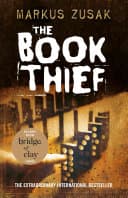
- The Book Thief
Markus Zusak
4.4 (1.8M) average on GoodreadsHistorical FictionExplores the Holocaust through a unique young protagonist's perspective, focusing on resilience and humanity amidst war.
- The Boy in the Striped Pajamas
John Boyne
4.2 (518k) average on GoodreadsChildren'sA poignant and tragic story set during the Holocaust, dealing with innocence and the horrors of concentration camps.
- The Diary of a Young Girl
Anne Frank
4.2 (2.7M) average on GoodreadsBiographyAnne Frank's diary is a primary source, an authentic, first-person account of hiding from the Nazis. Mapping the Bones is historical fiction, meticulously researched to portray the experiences of Jewish children in the Holocaust. While Frank's work offers an unparalleled intimate glimpse, Yolen's novel provides a fictionalized narrative that extends to the concentration camps, offering a broader, yet still deeply personal, perspective on the Holocaust's impact and the fight for survival that complements primary sources by making history accessible through storytelling.
- To Kill a Mockingbird
Harper Lee
4.3 (4.5M) average on GoodreadsHistorical FictionIn the 1930s Jim Crow South, Harper Lee writes about racial injustice, moral growth, and the quiet courage of a lawyer father, Atticus Finch, as seen through his young daughter's eyes.
- The Great Gatsby
F. Scott Fitzgerald
3.9 (3.8M) average on GoodreadsHistorical FictionIn the opulent Roaring Twenties, a mysterious millionaire's lavish parties hide his desperate, tragic pursuit of a lost love, exposing the emptiness within the American Dream.
- Pride and Prejudice
Jane Austen
4.3 (3M) average on GoodreadsHistorical FictionIn a society focused on status and money, Elizabeth Bennet navigates love and pride, challenging Mr. Darcy and social expectations to find true affection.





Enjoyed the summary?
A summary gives you the shape of the book. The book itself has the detail, the examples and the voice.
Find Mapping the Bones on AmazonAs an Amazon Associate, BookBrief earns from qualifying purchases. How we're funded