
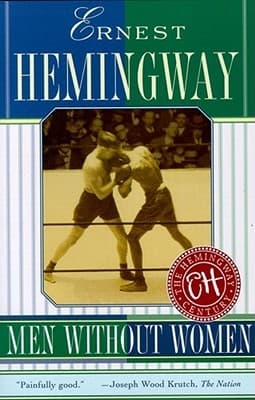
Synopsis
Covers the whole plot, including the ending.
- Difficulty
- Medium
- Pacing
- Moderate
- Mood
- Somber, Reflective, Gritty, Understated
- Read it if
- You appreciate sparse, impactful prose, explorations of masculinity and post-war disillusionment, and stories with deep emotional resonance beneath a calm surface.
- Skip it if
- You prefer intricate plots, overt emotional expression, or a strong sense of hope and resolution in your fiction.
Men Without Women Plot Summary
Covers the whole plot, including the ending.
The Undefeated: Maera's Final Stand
Manuel Garcia, known as Maera, is an aging bullfighter trying to make a comeback after being gored many times. He gets a fight in Madrid, which worries his manager, Retana, and makes younger matadors doubt him. Maera insists on fighting the most dangerous bulls, refusing easier ones. During the fight, he is gored again but continues to fight with great courage and skill, eventually killing the bull. Severely wounded, he is carried to the infirmary where the doctor treats his injuries. Despite his physical defeat, Maera keeps his dignity and feels an internal victory. He shows 'grace under pressure' even as his career is clearly over.
In Another Country: The Futility of Machines
An unnamed American narrator, a wounded soldier in Milan during World War I, undergoes daily physical therapy with other officers using experimental machines. He becomes friends with a group of Italian officers, including a major who was once Italy's greatest fencer. The major is at first doubtful about the machines' effectiveness, having lost the use of his hand. The narrator and another young officer receive medals for bravery, but the major criticizes the narrator for his perceived lack of true courage. Later, the major says his young wife, whom he married only a few months before, has died unexpectedly of pneumonia. Despite his stoicism, his deep grief is clear. This shows the random nature of loss and how the machines cannot heal emotional wounds.
Hills Like White Elephants: A Difficult Choice
An American man and a girl named Jig are waiting for a train to Madrid at a station in rural Spain. They order beers and discuss the surrounding area. Jig says the hills look like white elephants, a comparison the man dismisses. The conversation soon turns subtly but clearly to an abortion. The man calls it a 'simple operation' and says it is 'perfectly natural.' He pressures Jig, telling her he will love her again if she does it. But she expresses deep uncertainty and feels she will lose something important. The tension between them is clear. It is a quiet struggle over a life-altering decision that leaves their future uncertain and their relationship broken.
The Killers: Waiting for Death
Two professional hitmen, Al and Max, enter Henry's lunchroom in Summit, Illinois, just before dinner. They terrorize the staff and customers, tying up George and Nick Adams, the counterman and a regular. The hitmen say they are there to kill a boxer named Ole Andreson, who eats dinner at the lunchroom every night at six o'clock. When Andreson does not show up, they leave. Nick, disturbed by the event, goes to warn Andreson. He finds him lying in bed, resigned to his fate. Andreson refuses to flee, saying there is nothing he can do. Nick returns to the lunchroom, telling George he is leaving town because he 'can't stand to think about it.'
Che Ti Dice La Patria?: A Road Trip Through Post-War Italy
Two American men, one of whom is the narrator, are driving through Italy. They pick up two Italian women who offer sexual favors for money, which the men decline. Later, they pick up a friendly Italian priest who shares his food and drink with them. The priest says he wants to return to America. The narrator and his companion observe the poverty and moral decline in post-war Italy. They see prostitution, corruption, and a general sense of disillusionment. The journey has a constant feeling of unease and a lack of clear moral compass. This shows the disillusionment and moral ambiguity of the era, as the men remain detached observers.
Fifty Grand: The Fixed Fight
Jack Brennan, an aging but still strong boxer, is training for a fight against a younger opponent, Walcott. Jack is under pressure from gamblers, including his manager and a man named Jerry, to lose the fight. He feels unwell and struggles with the decision. During the fight, he intentionally fouls Walcott, hoping to be disqualified, but the referee does not see it. In a desperate move, Jack head-butts Walcott, which results in Walcott hitting him below the belt. Jack claims the foul, winning by disqualification. This ensures the gamblers' payoff and his own moral compromise. The story explores corruption in boxing and the protagonist's internal conflict.
A Simple Enquiry: A Commander's Unspoken Desire
An Italian major, Major Paravicini, calls his orderly, Pinin, to his quarters. The major asks Pinin a series of strange and probing questions about his appearance, specifically his hair, and whether he has ever been 'fondled.' Pinin, a young and innocent-looking man, is confused and uncomfortable by the questions. The major's inquiries suggest a homosexual interest, which he struggles to say or act upon directly. The interaction is tense and unspoken. This shows the major's repressed desires and the orderly's bewilderment, creating an atmosphere of unspoken tension and suppressed longing within the strict military environment.
Ten Indians: Nick's First Heartbreak
Young Nick Adams is returning home with the Garner family after a Fourth of July celebration. On the way, they meet a group of ten Indians, some of whom are drunk. Nick's father makes a disrespectful remark about the Indians. Later that night, back at home, Nick's father casually tells him that he saw Prudence, Nick's Indian girlfriend, with another boy, an 'Indian boy.' Nick at first pretends not to care, but the news deeply affects him. He goes to bed, trying to suppress the pain and disillusionment of his first heartbreak. He feels a deep sense of loss and betrayal that marks a significant step in his emotional development.
A Canary for One: The End of a Marriage
An American couple is traveling on a train through France. In their compartment, they share space with an older American woman obsessed with her canary. She is taking it to her daughter in Nice as a gift. The woman recounts her daughter's romantic misfortunes, saying 'American men make the best husbands.' The narrator and his wife listen, but their own conversation is strained and shows a deep emotional distance between them. As the train passes through the French countryside, the narrator thinks about the impending end of his marriage. This is subtly conveyed through their lack of intimacy and the wife's comment that they 'aren't going to America.'
An Alpine Idyll: The Peasant's Strange Grief
Nick Adams and another man named John are on a skiing trip in the Alps. They stop at a village inn where they hear a strange story from the innkeeper. A peasant named Franz, whose wife died in the winter, kept her body in the woodshed until spring. When asked why, Franz explained that he had put a lantern in her mouth so he could see to hang up his hayrake. The innkeeper recounts the incident with disgust and bewilderment. The story shows the grim realities of peasant life, the unusual ways grief can appear, and the clash between different cultural understandings of death and respect. Nick and John are disturbed by the tale.
A Pursuit Race: The Addled Stage Manager
A man named Bill is trying to find his friend, a stage manager named William Campbell, who has left their traveling show in Spokane. Bill eventually finds Campbell in a hotel room, disheveled and clearly under the influence of drugs, likely opium. Campbell is delusional and speaks erratically, obsessed with a girl named Louise. Bill tries to reason with him and bring him back to the show. But Campbell is resistant and lost in his own world of drug-induced fantasy and despair. The story shows the destructive power of addiction and the difficulty of helping someone who has lost their grip on reality. It portrays a man in a state of deep mental and physical decline.
Today Is Friday: A Reenactment of the Crucifixion
Three Roman soldiers are drinking wine in a bar after the crucifixion of Jesus. They discuss the event with a detached, almost casual air. One soldier says Jesus was 'pretty good' and 'tough,' enduring the pain without complaint. Another soldier expresses sympathy for Jesus, while the third is more cynical, focused on practicalities and the relief that the day's work is done. The conversation is brief and stark. It shows the soldiers' professional indifference to the suffering they witnessed, yet also hints at a lasting impression left by Jesus's stoicism. The story offers a minimalist, secular perspective on a religious event.
Banal Story: A Literary Critique
This story begins as a commentary on literary magazines and the state of modern writing, especially the trend of publishing 'banal stories' and sentimental poetry. The narrator expresses dislike for the superficiality and lack of substance in contemporary literature. The narrative then shifts to a heartfelt tribute to the bullfighter Maera (from 'The Undefeated'). It praises his courage, skill, and integrity in the arena. It contrasts the authenticity and raw emotion of Maera's life and death with the artificiality of the literary world. It suggests that true art is in confronting reality directly, even if it is brutal or tragic, rather than escaping into sentimentality.
Now I Lay Me: Insomnia and War Trauma
The narrator, a soldier named Nick, suffers from severe insomnia after experiencing trauma during the war. To cope, he develops an elaborate ritual: he lies awake in bed, recounting every detail of his childhood, from fishing trips to encounters with animals, to avoid thinking about the war and the fear of death. He also listens intently to the sounds of the silkworms eating mulberry leaves in the room, finding a strange comfort in their continuous, rhythmic chewing. His orderly, an Italian named Paravicini, stays with him, also unable to sleep. The story captures the deep psychological impact of war and the desperate measures individuals take to maintain their sanity when facing trauma.
Men Without Women Characters
Nick Adams
Protagonist
A recurring semi-autobiographical character grappling with youth, nature, and trauma.
Nick Adams serves as a recurring protagonist across several stories ('Ten Indians,' 'The Killers,' 'An Alpine Idyll,' 'Now I Lay Me'). He is often depicted at different stages of his life, from a young boy experiencing his first heartbreak to a traumatized war veteran battling insomnia. Nick is sensitive, observant, and frequently struggles with the harsh realities of the world, whether it's the casual racism of adults, the threat of violence, or the psychological scars of war. He represents Hemingway's exploration of masculinity, stoicism, and the impact of experience on the developing self. His journey reflects themes of loss of innocence and the search for meaning.
Relationships: Prudence (Indian girlfriend, first heartbreak); His Father (Source of casual wisdom and disillusionment); George (The Killers) (Colleague, witness to violence); John (An Alpine Idyll) (Skiing companion); Paravicini (Now I Lay Me) (Orderly and fellow insomniac)
Manuel Garcia (Maera)
Protagonist
An aging, courageous bullfighter facing his final, inevitable defeat with dignity.
Maera is the central figure in 'The Undefeated' and is paid tribute in 'Banal Story.' He is an aging bullfighter past his prime, riddled with injuries from previous gorings. Despite his physical decline and the skepticism of others, Maera possesses an unyielding courage and a deep commitment to his art. He insists on fighting the most dangerous bulls and performs with a profound sense of honor and grace, even as he is severely wounded. He embodies the Hemingway code hero: facing insurmountable odds with stoicism, dignity, and a profound understanding of his craft, ultimately achieving an internal victory even in physical defeat. He represents the struggle against mortality and the pursuit of excellence.
Relationships: Retana (Manager, concerned for Maera's safety); Zurito (Picador, loyal friend and colleague)
The American (Hills Like White Elephants)
Protagonist
A man pressuring his girlfriend to have an abortion, focused on convenience over emotional depth.
The American is one half of the couple in 'Hills Like White Elephants.' He is depicted as pragmatic, somewhat insensitive, and manipulative, consistently trying to persuade Jig to have an abortion, which he refers to as a 'simple operation.' He frames the procedure as a means to restore their carefree lifestyle, failing to fully grasp the emotional weight it carries for Jig. His dialogue is often dismissive of her feelings, and he prioritizes his own comfort and desire for their relationship to return to its previous, uncomplicated state. He represents a certain type of masculine detachment and a failure to connect emotionally.
Relationships: Jig (Girlfriend, recipient of his pressure regarding abortion)
Jig
Protagonist
A young woman grappling with a life-altering decision and the prospect of losing her identity.
Jig is the female protagonist in 'Hills Like White Elephants.' She is sensitive, observant, and deeply conflicted about the prospect of having an abortion. Her comments about the 'white elephants' and her reflections on the landscape reveal a poetic sensibility and a desire for meaning, which clashes with the American's pragmatic view. She feels the pressure from her partner but also struggles with the potential loss of self and the irreversible nature of the decision. Her quiet defiance and emotional vulnerability make her a poignant figure, representing the nuanced emotional landscape of women facing difficult choices and the often-unspoken power dynamics in relationships.
Relationships: The American (Boyfriend, pressuring her to have an abortion)
Major (In Another Country)
Supporting
A stoic Italian officer, once a fencing champion, who suffers a profound personal loss.
The Major is a dignified and initially cynical Italian officer recovering from a war wound to his hand in 'In Another Country.' He was once Italy's greatest fencer and takes pride in his past achievements. He is initially skeptical of the effectiveness of the rehabilitation machines. Despite his outwardly stoic demeanor, he harbors a deep capacity for love, which is revealed when he shares the devastating news of his young wife's sudden death. His grief is profound and shattering, highlighting the arbitrary cruelty of life and the war, demonstrating that even the most disciplined men are vulnerable to emotional devastation. He embodies 'grace under pressure' in the face of emotional, rather than physical, combat.
Relationships: Unnamed American Narrator (Fellow wounded soldier, confidante); His Wife (Recently deceased, the source of his profound grief)
Ole Andreson
Supporting
A former boxer resigned to his impending death at the hands of hitmen.
Ole Andreson is the target of the hitmen in 'The Killers.' He is a former Swedish boxer who, for reasons hinted at but never fully explained (likely related to a double-cross in boxing), is marked for death. When Nick Adams warns him, Ole is found lying in bed, fully dressed, with a pillow under his head, utterly resigned to his fate. He refuses to flee, stating there's nothing he can do, embodying a profound sense of fatalism and exhaustion. His passive acceptance of death makes him a powerful, tragic figure, symbolizing the ultimate vulnerability of individuals against forces beyond their control.
Relationships: Al & Max (Hitmen sent to kill him); Nick Adams (Young man who tries to warn him)
Jack Brennan
Protagonist
An aging boxer forced to compromise his integrity by throwing a fixed fight.
Jack Brennan is the protagonist of 'Fifty Grand,' an older, experienced boxer who is still physically capable but is entangled in a fixed fight. He is under pressure from gamblers to lose the fight, but his pride and professional integrity make it difficult for him to simply throw it. He is a man of routine and discipline, yet he is forced into a morally ambiguous situation. His internal struggle culminates in a clever manipulation of the rules—getting himself disqualified in a way that allows the gamblers to win their bets but preserves a semblance of his own pride. He represents the corrupting influence of money and the compromises made in a harsh world.
Relationships: Walcott (Opponent in the fixed fight); Jerry (Gambler, putting pressure on Jack)
Al & Max
Antagonist
Two professional hitmen, cold and efficient, representing arbitrary violence.
Al and Max are the two hitmen in 'The Killers.' They are depicted as cold, professional, and almost caricatured in their dialogue and mannerisms (e.g., their identical outfits, their insistence on being called 'the killers'). They exude a chilling sense of menace and an arbitrary application of violence. They are not driven by personal vendetta but by a job, making them symbols of the impersonal, brutal forces that can invade ordinary life. Their presence in the quiet lunchroom shatters the peace and exposes Nick Adams to the dark underbelly of the world, serving as a stark reminder of mortality and the casual cruelty that exists.
Relationships: Ole Andreson (Their target); George & Nick Adams (Their temporary captives)
William Campbell
Protagonist
A stage manager lost to drug addiction and delusion.
William Campbell is the subject of 'A Pursuit Race,' a stage manager who has abandoned his traveling show and is found in a state of drug-induced delusion. He is disheveled, speaks erratically, and is obsessed with a girl named Louise. Campbell embodies the destructive power of addiction and mental unraveling. His inability to distinguish reality from fantasy, and his self-destructive behavior, make him a tragic figure. He represents a man who has lost his grip on life and is incapable of being helped, highlighting the bleak consequences of self-indulgence and escape from responsibility. His character serves as a stark warning about the perils of excess.
Relationships: Bill (Friend trying to help him); Louise (Subject of his delusions)
Men Without Women Themes
Masculinity and the 'Code Hero'
Hemingway explores masculinity, often through his 'code hero' — a man who faces life's challenges with courage, stoicism, and grace under pressure. Maera in 'The Undefeated' is an example. He endures severe injuries with dignity and commitment to his craft. The Major in 'In Another Country' shows stoicism even in deep grief. Jack Brennan in 'Fifty Grand' navigates a corrupt world with a practical yet honorable approach. This theme examines how men confront physical pain, emotional loss, and moral compromise while trying to maintain self-respect and integrity in a harsh, often indifferent world.
“It was a good bull. If I had not been hurt it would have been a great bull.”
Loss and Disillusionment
Many stories in 'Men Without Women' deal with various forms of loss. These include the physical and emotional casualties of war and the disillusionment of love and ideals. The Major's sudden loss of his wife in 'In Another Country' shatters his stoic facade. Nick Adams experiences the pain of first heartbreak in 'Ten Indians' and the trauma of war in 'Now I Lay Me.' The couple in 'A Canary for One' faces the quiet death of their marriage. This theme shows how fragile happiness is and how hope is often met with tragedy. Characters are left to cope with deep emptiness and broken expectations.
“I am afraid to think about it.”
Communication and Misunderstanding
A repeated theme is the breakdown or difficulty of communication, especially between men and women. This leads to misunderstanding and emotional distance. In 'Hills Like White Elephants,' the couple's conversation about abortion is full of unspoken tension and misaligned desires. This shows their inability to truly connect. The American's dismissive attitude towards Jig's feelings shows a basic lack of empathy. In 'A Canary for One,' the American couple's strained dialogue and internal thoughts show the gap in their relationship. This theme shows how silence, subtext, and unaddressed desires can create barriers between individuals.
“Would you please please please please please please please stop talking?”
The Brutality of Life and Death
Hemingway directly portrays the harsh realities of existence, including violence, death, and human suffering. 'The Killers' presents a random and chilling encounter with professional murderers, emphasizing how casual impending death can be. 'The Undefeated' graphically depicts the physical brutality of bullfighting and Maera's struggle against death. 'An Alpine Idyll' shows the morbid and disturbing way a peasant copes with his wife's death, showing the grimness of rural life. This theme confronts readers with the constant presence of pain, violence, and mortality, often presented without sentimentality. It forces characters and readers alike to face life's starkest truths.
“There's nothing to do.”
War and Its Aftermath
The collection often explores the deep and lasting effects of World War I. 'In Another Country' shows wounded soldiers undergoing physical therapy, but unable to heal emotional scars or prevent further tragedy. 'Now I Lay Me' depicts Nick Adams's severe insomnia and psychological trauma, forcing him into elaborate mental rituals to avoid thinking about the war. The entire atmosphere of 'Che Ti Dice La Patria?' shows a morally ambiguous and disillusioned post-war Italy. This theme shows how war not only causes physical wounds but also leaves deep psychological scars, changing individuals and societies long after the fighting has ended.
“I did not think about the war at night.”
Plot Devices & Literary Techniques
The Iceberg Theory (Theory of Omission)
A literary style where much of the story's meaning is left unstated, implied through subtext.
Hemingway's signature style, the Iceberg Theory, is prominent throughout 'Men Without Women.' This device dictates that the true meaning of a story lies beneath the surface, with only a small portion of information explicitly stated. For example, in 'Hills Like White Elephants,' the word 'abortion' is never explicitly used, yet the entire conversation revolves around it, forcing the reader to infer the underlying tension and conflict. In 'The Killers,' the reasons for Ole Andreson being targeted are vague, adding to the sense of arbitrary, unexplained violence. This technique encourages active reader participation and lends a powerful sense of realism and emotional depth to the narratives.
Recurring Character (Nick Adams)
The use of a consistent character across multiple stories to explore themes of growth and trauma.
Nick Adams appears in several stories, serving as a semi-autobiographical proxy for Hemingway himself. This device allows the collection to explore a character's development and experiences across different stages of life, from childhood innocence ('Ten Indians') to the disillusionment of war ('Now I Lay Me'). Nick's recurring presence provides a thread of continuity, allowing readers to witness the cumulative effects of life's challenges, such as first love, violence, and psychological trauma. His journey provides a deeper, more nuanced exploration of themes like loss of innocence, the search for meaning, and the impact of experience on the self than a single story could achieve.
Dialogue as Character and Plot Driver
Minimalist, realistic dialogue that reveals character, advances plot, and creates atmosphere.
Hemingway's dialogue is characterized by its realism, brevity, and directness. In 'Hills Like White Elephants,' the sparse, repetitive dialogue between Jig and the American subtly conveys their strained relationship and the unspoken gravity of their decision. In 'The Killers,' the hitmen's stylized, almost theatrical dialogue creates an immediate sense of menace and their professional detachment. The dialogue often serves to reveal character's inner states, power dynamics, and underlying conflicts without explicit narration. This device makes the conversations feel authentic and forces the reader to pay close attention to the subtext and implications within each exchange.
Symbolism (White Elephants, Machines, Canary)
Objects or phrases that carry deeper, often unspoken, meaning.
Symbolism is subtly woven throughout the stories. The 'white elephants' in 'Hills Like White Elephants' symbolize something unwanted, costly, and difficult to get rid of – the unborn child and the burden it represents for the couple's current lifestyle. The experimental 'machines' in 'In Another Country' symbolize the futile hope for miraculous healing in the face of profound physical and emotional wounds from war. The 'canary' in 'A Canary for One' represents a misplaced hope for happiness, a gift meant to bring joy but which ironically highlights the profound unhappiness and impending divorce of the American couple. These symbols enrich the narrative by adding layers of implied meaning.
The Code Hero
A character archetype embodying stoicism, integrity, and grace under pressure.
A defining literary device in Hemingway's work, the 'code hero' is a character who faces life's challenges, especially death or profound loss, with dignity, courage, and a commitment to a personal code of conduct. Maera in 'The Undefeated' is a prime example, enduring severe injuries in the bullring with unwavering professionalism and honor. The Major in 'In Another Country' maintains his composure and stoicism even after learning of his wife's sudden death. These characters demonstrate an inner strength and adherence to principles in the face of an indifferent or hostile world, embodying a particular ideal of masculinity and resilience.
Men Without Women Quotes
“The world breaks everyone, and afterward, some are strong at the broken places.”
“It was a pleasant café, warm and clean and friendly.”
“It was a good morning, and the sun was coming up over the mountains.”
“He was an old man, and he was alone.”
“He went on, thinking of nothing, going nowhere.”
“What did he fear? It was not fear or dread. It was a nothing that he knew too well.”
“You're an expatriate. You've lost touch with the soil. You get precious. Fake European.”
“He had never seen a man that could take it like that.”
“It was a good café, and he liked to sit there.”
“The snow was falling, and it was cold.”
“He just wanted to be a good man, and he was.”
“No, I don't want to go anywhere. I just want to stay here.”
“He was a man who knew how to live.”
“It was not a pleasant business.”
Quiz
10 questions on the plot and the characters. Each answer comes with a short explanation.
Question 1
Which story in 'Men Without Women' features Nick Adams and his Indian girlfriend, Prudence?
- The Killers
- Ten Indians
- In Another Country
- Hills Like White Elephants
Show answer
B. Ten Indians 'Ten Indians' is the story where Nick Adams appears and experiences a presumed betrayal by his Indian girlfriend, Prudence.
Question 2
What is the central theme subtly discussed by the young couple in 'Hills Like White Elephants'?
- Marriage proposals
- Travel plans
- Abortion
- Financial difficulties
Show answer
C. Abortion 'Hills Like White Elephants' is known for its subtle and heartwrenching discussion between a young couple about abortion.
Question 3
Which of the following themes is NOT explicitly mentioned as being examined by Hemingway in 'Men Without Women'?
- The casualties of war
- The often uneasy relationship between men and women
- The joy of fatherhood
- Sport and sportsmanship
Show answer
C. The joy of fatherhood The introduction states that Hemingway examines 'the casualties of war, the often uneasy relationship between men and women, sport and sportsmanship.' The joy of fatherhood is not listed among the themes explored in this collection.
Question 4
In 'In Another Country,' what is the Italian major recovering from, and what personal tragedy does he mourn?
- A hunting accident; the loss of his brother
- War wounds; the untimely death of his wife
- A severe illness; the end of his career
- A business failure; the betrayal of a friend
Show answer
B. War wounds; the untimely death of his wife 'In Another Country' features an Italian major recovering from war wounds while simultaneously mourning the untimely death of his wife.
Question 5
Who are the central figures in the 'hard-edged story' titled 'The Killers'?
- Two detectives and a witness
- A boxer and his manager
- Two Chicago gunmen and their potential victim
- A doctor and his patient
Show answer
C. Two Chicago gunmen and their potential victim 'The Killers' is described as a hard-edged story about two Chicago gunmen and their potential victim, highlighting a specific type of criminal narrative.
Question 6
What profession is the famed individual, Maera, for whom Hemingway offers a lasting tribute in 'Banal Story'?
- A renowned writer
- A bullfighter (matador)
- A war hero
- A jazz musician
Show answer
B. A bullfighter (matador) 'Banal Story' is noted for Hemingway's lasting tribute to the famed matador, Maera, linking the collection to themes of sport and heroism.
Question 7
What characteristic style is attributed to the stories in 'Men Without Women', showcasing the young Hemingway's emerging talent?
- Flowery, expansive, and highly metaphorical
- Verbose, intellectual, and philosophical
- Pared down, gritty, and subtly expressive
- Humorous, lighthearted, and satirical
Show answer
C. Pared down, gritty, and subtly expressive The stories are described as 'pared down, gritty, and subtly expressive,' reflecting Hemingway's distinctive minimalist style that would define his career.
Question 8
Considering the title 'Men Without Women' and the recurring themes, what is a likely overarching implication about the male characters' emotional states or relationships in the collection?
- They consistently find fulfilling romantic partnerships.
- They are often isolated, struggling with loss, or experiencing strained relationships with women.
- They are predominantly focused on communal male bonding activities, excluding women entirely.
- Their lives are largely unaffected by the presence or absence of women.
Show answer
B. They are often isolated, struggling with loss, or experiencing strained relationships with women. The title itself, combined with themes like 'uneasy relationship between men and women,' 'mourns the untimely death of his wife,' and 'betrayed by his Indian girlfriend,' strongly implies that male characters are frequently isolated or struggling in their relationships with women.
Question 9
How does Hemingway's choice to publish 'Men Without Women' in 1927, early in his career, contribute to its significance?
- It established him as a master of experimental poetry.
- It showcased his fully developed stylistic maturity, leaving little room for growth.
- It represents his important early writing, where he begins to examine themes that would become central to his later, more famous works.
- It marked a significant departure from his previous works, which were primarily non-fiction.
Show answer
C. It represents his important early writing, where he begins to examine themes that would become central to his later, more famous works. Published in 1927, 'Men Without Women' is described as 'some of Hemingway's most important and compelling early writing,' where he 'begins to examine the themes that would occupy his later works,' indicating its foundational role in his literary development.
Question 10
The description states Hemingway's stories are 'pared down, gritty, and subtly expressive.' Which of the following literary techniques is most characteristic of such a style?
- Extensive use of adverbs and adjectives to describe every detail.
- Long, complex sentences with multiple subordinate clauses.
- Minimalist prose, reliance on dialogue, and implied meaning (iceberg theory).
- Frequent authorial intrusions and direct commentary on characters' thoughts.
Show answer
C. Minimalist prose, reliance on dialogue, and implied meaning (iceberg theory). A 'pared down, gritty, and subtly expressive' style is a hallmark of Hemingway's 'iceberg theory,' where much of the meaning is submerged and implied through minimalist prose and realistic dialogue, rather than explicit authorial statements.
Men Without Women FAQ
What is 'Men Without Women' about?
'Men Without Women' is a collection of fourteen short stories by Ernest Hemingway, first published in 1927. It explores themes such as the aftermath and casualties of war, the complex and often fraught relationships between men and women, the pursuit of sport, and the concept of sportsmanship, often featuring characters grappling with loss, disillusionment, and stoicism.
Why should I read 'Men Without Women'?
You should read 'Men Without Women' to experience Hemingway's early mastery of the short story form, showcasing his iconic 'iceberg theory' writing style. It offers a raw, unflinching look at human experiences through diverse narratives like the poignant 'Hills Like White Elephants' and the tense 'The Killers,' providing insight into themes that would define his later, longer works.
What is the background/setting of 'Men Without Women'?
The stories in 'Men Without Women' are set in various locations, often post-World War I Europe (Italy, Spain) and rural America. These settings frequently reflect the characters' internal states, from the somber hospital in 'In Another Country' to the desolate train station in 'Hills Like White Elephants,' emphasizing themes of displacement and emotional barrenness.
What are the most memorable quotes?
Memorable quotes include the understated tension in 'Hills Like White Elephants' with lines like 'It’s perfectly simple,' and the stark realism of 'The Killers,' where characters often speak in clipped, direct dialogue reflecting their grim circumstances. Hemingway's dialogue is often sparse but loaded with unspoken meaning.
What writing style does the author use?
Hemingway employs his signature 'iceberg theory' writing style, characterized by terse, declarative sentences, minimal adjectives, and an emphasis on dialogue and external action. Much of the story's meaning and emotional depth are left unstated, requiring the reader to infer from what is omitted, creating a sense of raw realism and emotional intensity.
What minor details add significant meaning?
In 'Hills Like White Elephants,' the description of the 'long white line of hills' that look like white elephants is a key detail, symbolizing the unwanted pregnancy and the couple's inability to directly confront it. The beads on the bamboo curtain also subtly mark the passage of time and the accumulating tension during the conversation.
What are some subtle foreshadowing moments?
In 'The Killers,' the repeated mention of Ole Andreson's passivity and his refusal to run foreshadows his acceptance of his impending fate. His calm demeanor, despite knowing two hitmen are after him, subtly suggests a weariness with life or a prior understanding of the danger he's in.
What unexpected character connections exist?
While not 'unexpected' in a plot twist sense, the collection itself connects various characters through shared themes, such as Nick Adams appearing in 'Ten Indians' and other stories, providing a recurring, often autobiographical lens through which Hemingway explores youth, loss, and disillusionment across different scenarios.
What are unspoken character motivations?
In 'Hills Like White Elephants,' the American man's unspoken motivation to convince the girl, Jig, to have the abortion stems from a desire to maintain their carefree, unburdened lifestyle, avoiding the responsibilities and changes a child would bring, rather than a malicious intent towards Jig.
What psychological complexities do characters exhibit?
Characters often exhibit a complex blend of stoicism and deep internal suffering. The Italian major in 'In Another Country,' despite his physical therapy, is emotionally crippled by the death of his wife, displaying a detached resolve that masks immense grief, a common psychological trait among Hemingway's 'men without women.'
What are the major emotional turning points?
In 'In Another Country,' the major emotional turning point for the narrator is the revelation of the Italian major's wife's sudden death, which shatters the major's carefully constructed stoicism and reveals the profound, personal cost of war and loss beyond physical wounds. In 'Hills Like White Elephants,' the emotional turning point is Jig's resigned 'I don't care about me' which signifies her potential surrender to the man's wishes.
How do relationship dynamics evolve?
Relationship dynamics often evolve from strained to broken, or from hopeful to resigned. In 'Hills Like White Elephants,' the relationship between Jig and the American man devolves from a facade of casual banter into a tense, emotionally manipulative negotiation, highlighting the unspoken power imbalances and the dissolution of intimacy.
Which parts remain ambiguous or open-ended?
The ending of 'Hills Like White Elephants' is famously ambiguous; it's never explicitly stated whether Jig decides to have the abortion or if their relationship will survive. The story concludes with her looking at the hills, leaving the reader to ponder the couple's future based on their strained conversation.
What are controversial scenes or decisions?
The central discussion of abortion in 'Hills Like White Elephants' was controversial for its time and remains a point of debate due to its sensitive subject matter and the ambiguous outcome. The American man's subtle pressure on Jig, and her quiet resignation, also spark discussion about emotional manipulation and gender dynamics.
'Men Without Women' ending explained: how it ends & what it means
As a collection of short stories, 'Men Without Women' does not have a single overarching ending. Each story concludes differently, often on a note of ambiguity, quiet resignation, or stark realism. For example, 'The Killers' ends with Nick Adams grappling with the grim reality of violence, while 'Hills Like White Elephants' leaves the couple's future unresolved, reflecting Hemingway's belief that life's complexities often lack tidy resolutions.
About the author
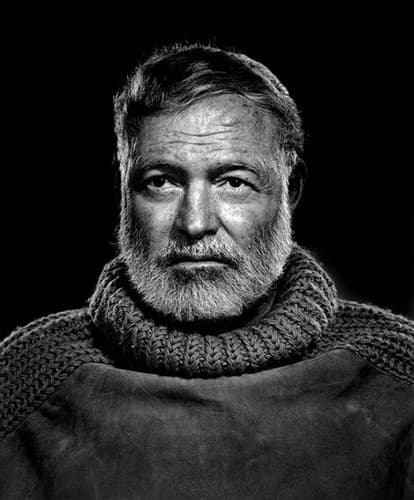
Ernest Miller Hemingway was an American novelist, short-story writer, and journalist. His economical and understated style—which included his iceberg theory—had a strong influence on 20th-century fiction, while his adventurous lifestyle and public image brought him admiration from later generations. Hemingway produced most of his work between the mid-1920s and the mid-1950s, and he was awarded the 1954 Nobel Prize in Literature. He published seven novels, six short-story collections, and two nonfiction works. Three of his novels, four short-story collections, and three nonfiction works were published posthumously. Many of his works are considered classics of American literature.
Similar books
- Dubliners
James Joyce
3.9 (123k) average on GoodreadsLiterary FictionExplores moments of epiphany and paralysis in everyday lives with a focus on character and atmosphere.
- Pastoralia
George Saunders
4.1 (18k) average on GoodreadsLiterary FictionA collection of short stories that often depict characters in absurd or challenging situations, highlighting societal pressures and human foibles.
- The Old Man and the Sea
Ernest Hemingway
3.8 (831k) average on GoodreadsLiterary FictionA Cuban fisherman's long struggle with a giant marlin becomes a story of endurance and dignity, now retold for young adults with illustrations, phonetic guides, and writing prompts in Traditional Chinese.
- One Hundred Years of Solitude
Gabriel García Márquez
4.1 (753k) average on GoodreadsLiterary FictionThrough the multi-generational story of the Buendía family, a mythical town deals with the repeating patterns of time, love, and solitude, as the extraordinary mixes with the ordinary.
- The Goldfinch
Donna Tartt
3.9 (720k) average on GoodreadsLiterary FictionHaunted by a tragic explosion and clutching a stolen Dutch masterpiece, a young orphan navigates the opulent drawing rooms of New York and the gritty underbelly of the art world, desperately seeking connection and redemption amidst a life spiraling into crime and obsession.
- Little Fires Everywhere
Celeste Ng
4.1 (713k) average on GoodreadsLiterary FictionIn Shaker Heights, an artist and her daughter move in, and their free-spirited lives clash with a rule-bound matriarch, revealing hidden conflicts beneath a perfect surface.




Enjoyed the summary?
A summary gives you the shape of the book. The book itself has the detail, the examples and the voice.
Find Men Without Women on AmazonAs an Amazon Associate, BookBrief earns from qualifying purchases. How we're funded