

Synopsis
Covers the whole plot, including the ending.
- Difficulty
- Medium
- Pacing
- Moderate
- Mood
- Atmospheric, Melancholy, Realistic, Observational
- Read it if
- You enjoy character-driven historical fiction with a strong sense of place, exploring social commentary and the human condition in a vibrant, complex setting.
- Skip it if
- You prefer fast-paced plot-driven narratives or are uncomfortable with themes of prostitution, social decay, and moral ambiguity.
Midaq Alley Plot Summary
Covers the whole plot, including the ending.
Life in Midaq Alley and Hamida's Discontent
The novel begins by introducing Midaq Alley in 1940s Cairo. We meet its residents: Kirsha, the cafe owner with secret homosexual desires; his nagging wife; Abbas, the barber, in love with Hamida; Zaita, the cripple-maker; Uncle Kamil, the sweet-seller; and Radwan Hussainy, the pious elder. Hamida, the adopted daughter of Umm Hamida, wants to escape the alley's poverty. She rejects Abbas, seeing him as too simple and poor for her dreams of wealth, despite his affection.
Abbas's Hopes and Departure
Abbas, encouraged by Husniya, the bakery owner, takes a job with the British army in El Alamein, hoping to earn enough to marry Hamida. He talks to Radwan Hussainy, who advises patience, but Abbas is set on making money. His departure leaves Hamida without her main suitor, allowing other men to enter her life. Kirsha's secret life becomes more obvious as he visits male brothels, upsetting his wife and causing rumors, though residents mostly ignore it.
Hamida Meets Salim Alwan
Hamida gets the attention of Salim Alwan, a rich shop owner from a nearby street. He is taken by her beauty and begins to court her, giving her gifts and promising a luxurious life. Hamida sees him as her way out of the alley. Residents gossip, some envious, some disapproving. However, just as they are about to get engaged, Salim Alwan has a heart attack, leaving him unable to keep his promises to Hamida and ending her hopes for a rich marriage.
The Arrival of Ibrahim Farhat and Hamida's Downfall
Disappointed and desperate after Salim Alwan's illness, Hamida is approached by Ibrahim Farhat, a charming but dangerous pimp. He plays on her vanity and ambition, promising her a grander life than Salim Alwan could offer, with fine clothes, jewels, and rich admirers. Hamida, eager to escape, believes him. She secretly leaves the alley with Farhat, thinking she will become a wealthy man's mistress, but soon realizes she has been tricked into prostitution in a high-class brothel. She quickly adjusts, becoming a sophisticated courtesan.
Zaita's Schemes and Dr. Booshy's Corruption
Zaita, the cripple-maker, continues his business, faking injuries for beggars to increase their earnings. He is cynical and opportunistic. Dr. Booshy, the alley's dentist, is also unethical. He practices without qualifications, uses unsanitary methods, and overcharges poor clients. He also fences stolen goods, showing more moral decay in the alley, and how many residents use illegal ways to survive or profit.
Kirsha's Exposure and Family Turmoil
Kirsha's wife, suspicious of his late nights, confronts him. She doesn't fully understand his homosexual affairs but knows he is doing something wrong. Their arguments grow, creating tension in the cafe and affecting their son, Hussain, who is ashamed of his father. Hussain, who also works for the British, wants a different life and dislikes his father's actions and the alley's unchanging nature, showing a generational shift.
Abbas's Return and Devastation
Abbas returns to Midaq Alley with money saved from his British army job. He wants to marry Hamida, sure his wealth will win her over. He buys her a necklace and dreams of their future. But alley residents are silent about Hamida. Eventually, through questions and rumors, he learns the truth about her life as a prostitute. His dreams are broken, replaced by grief and a desire for revenge against those he believes corrupted her.
Abbas's Encounter with Hamida
Driven by pain, Abbas finds Hamida in the brothel. She is changed, dressed in expensive clothes and makeup, hardened by her job. He confronts her, asking her to return to the alley and offering forgiveness. Hamida has accepted her new identity and cruelly rejects him, mocking his innocence and the alley's poverty. Her coldness breaks Abbas, pushing him to the edge and strengthening his resolve to get revenge on Ibrahim Farhat.
The Climax: Abbas's Revenge and Death
Overwhelmed by pain, Abbas confronts Ibrahim Farhat at a cafe the pimp frequents. In a rage, Abbas attacks Farhat. The fight quickly escalates, drawing in other patrons. Hamida is there and sees the scene. In the chaos, Farhat's associates kill Abbas. His death is a sad end to his dreams and shows the alley's inability to protect its own from outside corruption, leaving residents shocked.
Aftermath and Lingering Shadows
After Abbas's death, a quiet sadness fills Midaq Alley. Residents mourn Abbas, and Umm Hamida is especially devastated. Hamida, though initially shaken, quickly returns to her hardened self, her morals seemingly lost. Life in the alley slowly goes back to normal, but the events leave a lasting mark. The alley remains a small part of Cairo, facing new ways and moral challenges. Some characters, like Radwan Hussainy, find comfort in faith, while others stay caught in their vices and struggles.
Midaq Alley Characters
Hamida
Protagonist
A beautiful young woman yearning for wealth and escape from Midaq Alley.
Hamida is the adopted daughter of Umm Hamida, known for her striking beauty and fierce ambition. She despises the poverty and social stagnation of Midaq Alley, dreaming of a life of luxury and glamour. Her vanity and desire for material wealth drive her decisions, leading her to reject the genuine affection of Abbas for the promise of riches. She is initially naive but quickly adapts to her new circumstances, becoming hardened and cynical after being drawn into prostitution by Ibrahim Farhat. Her transformation highlights the corrupting influence of desperation and external forces on individual morality.
Relationships: Umm Hamida (Adopted daughter); Abbas (Suitor, whom she rejects); Salim Alwan (Briefly engaged suitor); Ibrahim Farhat (Pimp and manipulator)
Abbas
Protagonist
A naive barber deeply in love with Hamida, who seeks his fortune to win her hand.
Abbas is the kind-hearted and somewhat naive barber of Midaq Alley. He is deeply, almost obsessively, in love with Hamida and believes that by earning enough money, he can win her affection and secure a happy future. His journey to El Alamein to work for the British army is driven solely by this goal. He represents innocence and traditional values, which are ultimately crushed by the harsh realities of the changing world and Hamida's betrayal. His tragic end underscores the destructive power of unrequited love and the loss of innocence.
Relationships: Hamida (Object of his unrequited love); Husniya (Confidante and employer); Radwan Hussainy (Respected elder and advisor)
Kirsha
Supporting
The ambivalent and secretly homosexual owner of the Midaq Alley café.
Kirsha is the owner of the main café in Midaq Alley, a central gathering place. He is a complex character, outwardly a respectable businessman but secretly engaging in homosexual relationships, a taboo in conservative Egyptian society. His internal conflict and his wife's constant nagging highlight the hypocrisy and hidden lives within the alley. His character explores themes of repression, desire, and the secret lives people lead behind closed doors. He represents a form of moral ambiguity, existing within the alley's fabric without fully conforming to its expectations.
Relationships: Kirsha's Wife (Troubled marriage); Hussain (Son)
Zaita
Supporting
The cynical and opportunistic 'cripple-maker' and beggar-master.
Zaita is one of the most morally ambiguous characters in the alley. He makes his living by fabricating injuries and disabilities for beggars, effectively running a small criminal enterprise. He is shrewd, amoral, and deeply cynical about human nature, seeing everyone as driven by self-interest. His profession highlights the desperation and exploitation present in society, as well as the dark side of survival in poverty. He operates outside conventional morality, yet is an accepted, if unsettling, part of the alley's ecosystem.
Radwan Hussainy
Supporting
A respected, pious elder who finds solace and wisdom in his faith.
Radwan Hussainy is a devout and respected figure in Midaq Alley, known for his wisdom, piety, and calm demeanor. Despite suffering personal tragedies, he maintains a strong faith in God, offering spiritual guidance and a moral anchor to some of the alley's residents, particularly Abbas. He represents the traditional religious values and spiritual resilience within the community, often serving as a counterpoint to the moral decay and materialism prevalent among others. His presence provides a sense of continuity and a quiet strength.
Relationships: Abbas (Advisor and mentor); Uncle Kamil (Friend)
Salim Alwan
Supporting
A wealthy shop owner who briefly offers Hamida a chance at a luxurious life.
Salim Alwan is a prosperous and influential shop owner from outside Midaq Alley. He is attracted to Hamida's beauty and offers her a life of wealth and status, which she eagerly embraces. His sudden illness and incapacitation abruptly end Hamida's hopes for a respectable, luxurious marriage, directly contributing to her subsequent downfall. He represents the allure of the outside world and the fleeting nature of opportunity, acting as a catalyst for Hamida's tragic choices.
Relationships: Hamida (Suitor)
Ibrahim Farhat
Antagonist
A cunning and manipulative pimp who exploits Hamida's ambitions.
Ibrahim Farhat is the charming but predatory pimp who lures Hamida into prostitution. He is a smooth talker, adept at identifying and exploiting the desires and vulnerabilities of young women. He represents the corrupting forces of the outside world and the moral decay that can infiltrate even close-knit communities. His manipulation of Hamida is central to her tragic transformation, and he ultimately becomes the instrument of Abbas's death, embodying the destructive consequences of greed and deceit.
Relationships: Hamida (Her pimp and exploiter); Abbas (His killer)
Umm Hamida
Supporting
Hamida's adoptive mother, a matchmaker and landlady.
Umm Hamida is the adoptive mother of Hamida and a prominent figure in the alley, known for her role as a matchmaker and landlady. She is well-meaning but often gossipy and somewhat materialistic, pushing Hamida towards advantageous marriages. She cares for Hamida in her own way but struggles to understand her daughter's intense ambition and dissatisfaction with the alley. Her grief over Hamida's choices and Abbas's death underscores the human cost of the tragic events.
Relationships: Hamida (Adoptive mother)
Husniya
Supporting
The boisterous and hardworking owner of the alley's bakery.
Husniya owns and operates the alley's popular bakery, known for her strong personality and sharp tongue. She is a pragmatic and hardworking woman, often engaging in lively banter and arguments with her husband, Jaada. She is fond of Abbas and encourages him to seek his fortune, inadvertently setting in motion the chain of events that leads to his demise. Her character adds vibrancy and a grounded sense of daily life to the alley, representing the resilient working-class women of the community.
Relationships: Abbas (Employer and friend); Jaada (Husband)
Midaq Alley Themes
Tradition vs. Modernity
The novel shows the conflict between Midaq Alley's old ways and new influences, like the British presence in Cairo and the appeal of outside wealth. Hamida's wish to leave the alley for a better life, Abbas's attempt to earn money with the British, and Hussain's dislike for his father's old ways all show this tension. The alley, while resisting change, cannot fully protect its people from the moral compromises and societal shifts that come with the modern world.
“The alley was a world apart, a closed circle, an island in the midst of a restless sea.”
Desire and Disillusionment
Many characters in Midaq Alley are driven by strong desires: Hamida wants wealth, Abbas wants Hamida's love, Kirsha wants forbidden pleasure. But these desires often lead to disappointment and sad results. Hamida's pursuit of luxury leads her to prostitution, and Abbas's love for her results in his death. The novel suggests that uncontrolled desire, especially for money or escape, can lead to moral compromises and despair. It highlights the gap between what people hope for and what happens.
“She had sold herself, and she knew it, but she had bought a life that was better than any she had known.”
Moral Decay and Corruption
Midaq Alley, despite being a close community, has much moral corruption. Characters like Zaita, who profits from suffering, Dr. Booshy, who practices unethical dentistry and deals in stolen goods, and Ibrahim Farhat, the pimp, all show parts of this decay. Kirsha's secret life also points to hypocrisy. The novel explores how poverty and the promise of a better life can push people to questionable actions, and how the community often tolerates these wrongs, weakening its honesty.
“The alley had its good and bad, its light and shadow, like any other place, but its shadows were often deep and dark.”
The Search for Identity and Belonging
Characters like Hamida and Hussain struggle with their place in Midaq Alley. Hamida wants to leave her alley identity for a more glamorous one, believing her true self is elsewhere. Hussain, Kirsha's son, also feels separate from his father's life and the alley's lack of change, wanting a different future. Abbas, in contrast, feels his identity is tied to the alley and his love for Hamida. The novel explores how people define themselves in relation to their community and the wider world, and the often difficult process of finding where one belongs.
“She hated the alley, hated its smell, its noise, its poverty, and most of all, she hated herself for being part of it.”
Plot Devices & Literary Techniques
Microcosm
Midaq Alley as a small-scale representation of wider Egyptian society.
The alley itself serves as a microcosm, a self-contained world that reflects the larger societal issues and changes happening in Cairo and Egypt during the 1940s. Its diverse inhabitants, from the pious Radwan Hussainy to the opportunistic Zaita and the ambitious Hamida, embody different social classes, moral stances, and responses to the impending modernity. The alley's internal dynamics, conflicts, and tragic events mirror the broader struggles of a nation on the brink of significant transformation, making a small street a stage for universal human experiences.
Character Vignettes
A series of brief, interconnected character studies to build a composite picture.
Mahfouz uses a narrative structure that frequently shifts focus between the various residents of Midaq Alley, offering detailed vignettes of their lives, thoughts, and daily routines. This technique builds a rich, multi-faceted portrait of the community rather than focusing solely on one protagonist. While Hamida and Abbas eventually become central, the initial chapters are dedicated to introducing a wide array of characters like Kirsha, Zaita, Uncle Kamil, and Radwan Hussainy, allowing the reader to understand the complex web of relationships and the collective psyche of the alley.
Foil Characters
Contrasting characters to highlight specific traits or themes.
The novel frequently employs foil characters to emphasize particular traits or thematic elements. For example, the innocent and traditional Abbas serves as a foil to the ambitious and morally flexible Hamida, highlighting the destructive nature of their opposing desires. Similarly, the pious and accepting Radwan Hussainy contrasts sharply with the cynical Zaita, underscoring the different moral paths available within the same community. These contrasts deepen the reader's understanding of the characters' motivations and the novel's central themes.
Symbolism of the Alley
The physical space of Midaq Alley representing tradition, stagnation, and a contained world.
Midaq Alley is more than just a setting; it functions as a powerful symbol. It represents a closed, traditional world, resistant to change but ultimately vulnerable to external forces. Its narrow confines symbolize the limited opportunities and social constraints faced by its inhabitants. For characters like Hamida, it symbolizes stagnation and poverty, a place from which she desperately seeks escape. For others like Abbas, it represents home and community. The alley's eventual inability to protect its own from the outside world's corrupting influences underscores its symbolic role as a fading relic of tradition.
Midaq Alley Quotes
“Time in Midaq Alley was a different kind of time, heavy and slow, like the molasses sold in the shops.”
“The alley was a mother who nourished her children with her own blood, and they, in turn, were her children, bound to her by an invisible umbilical cord.”
“Every man is a king in his own house, even if his house is a single room in Midaq Alley.”
“Life, in Midaq Alley, was a succession of small joys and endless sorrows, like beads on a rosary.”
“The past is a phantom that haunts the present, and the future is a dream that may never come true.”
“Love is a strange thing; it can make a man forget his hunger and his thirst, and even his own name.”
“Money is a cruel master, but a necessary one.”
“Hope is the last thing that dies in the heart of man.”
“The world outside Midaq Alley was a vast, terrifying place, full of temptations and dangers.”
“Beauty is a double-edged sword; it can bring joy and sorrow, love and hatred.”
“Every man has his own hell, and his own heaven, within him.”
“Silence in Midaq Alley was never truly silent; it was filled with the whispers of secrets and the echoes of dreams.”
“The heart of Cairo beat in its alleys, not in its grand boulevards.”
“Fate is a weaver, and we are but threads in its loom.”
Quiz
10 questions on the plot and the characters. Each answer comes with a short explanation.
Question 1
Which character in Midaq Alley is known for their profession of 'cripple-making'?
- Abbas the barber
- Zaita
- Kirsha the cafe owner
- Husniya the baker
Show answer
B. Zaita Zaita is the character who manufactures disabilities for beggars, a dark but integral part of the alley's economy.
Question 2
What is Hamida's primary motivation for seeking to escape Midaq Alley?
- To pursue a career in politics
- To marry Abbas and live a simple life
- To achieve wealth and a more luxurious life
- To become a famous poet
Show answer
C. To achieve wealth and a more luxurious life Hamida is driven by a strong desire for a better, more opulent life, which ultimately leads her to make morally compromising choices.
Question 3
What business does Kirsha own in Midaq Alley?
- A barber shop
- A bakery
- A cafe
- A fabric shop
Show answer
C. A cafe Kirsha is described as the hedonistic cafe owner, and his cafe serves as a central gathering place in the alley.
Question 4
What significant event causes Abbas the barber to leave Midaq Alley and eventually return with money?
- He wins the lottery.
- He inherits money from a distant relative.
- He joins the British army.
- He finds a hidden treasure.
Show answer
C. He joins the British army. Abbas leaves to join the British army in hopes of earning enough money to impress and marry Hamida, only to find her changed upon his return.
Question 5
How does Hamida ultimately make her living after leaving the alley, much to the dismay of those who knew her?
- She becomes a successful merchant.
- She works as a seamstress for wealthy families.
- She becomes a prostitute.
- She marries a rich foreign businessman.
Show answer
C. She becomes a prostitute. Hamida's pursuit of luxury leads her down a path of prostitution, a stark contrast to the expectations of her former life in the alley.
Question 6
Which of the following best describes the role of the British presence in Cairo during the 1940s, as reflected in the novel?
- A benevolent force bringing modernization and stability.
- A source of economic opportunity and corruption, drawing some away from traditional life.
- A distant, irrelevant power with no impact on the alley's daily life.
- An oppressive regime actively suppressing local businesses.
Show answer
B. A source of economic opportunity and corruption, drawing some away from traditional life. The British presence, particularly the soldiers, creates new economic avenues (like those Abbas pursues and the clients Hamida finds) and contributes to the social changes and moral ambiguities explored in the novel.
Question 7
What is the primary commodity sold by the character Mrs. Saniya Afify, the widow?
- Antiques
- Sweets and pastries
- Her house for rent
- Fava beans
Show answer
D. Fava beans Mrs. Saniya Afify is the fava bean seller, a respected but lonely figure in the alley, who eventually seeks companionship through marriage.
Question 8
The novel is set in Cairo during the 1940s. What broader historical context does this setting highlight for Egypt?
- The height of ancient Egyptian civilization.
- A period of complete isolation from global affairs.
- A time of significant social and political transition, on the brink of modernity.
- The immediate aftermath of World War II's end.
Show answer
C. A time of significant social and political transition, on the brink of modernity. The book explicitly states it evokes Egypt's largest city 'as it teeters on the brink of change' and as a 'microcosm of the world on the threshold of modernity,' reflecting the impact of WWII and colonial influences on Egyptian society.
Question 9
Which character represents the intellectual or artistic voice in Midaq Alley, often commenting on its inhabitants and the changing world?
- The barber, Abbas
- The cafe owner, Kirsha
- The poet, Sheikh Darwish
- The cripple-maker, Zaita
Show answer
C. The poet, Sheikh Darwish Sheikh Darwish is the poet figure in the alley, often found in Kirsha's cafe, providing a philosophical or reflective commentary on the lives and changes around him.
Question 10
The novel explores the theme of illusion versus reality. Which character most starkly exemplifies mistaking 'greed for love' in their pursuit of Hamida?
- Zaita
- Kirsha
- Abbas
- Husniya
Show answer
C. Abbas Abbas the barber is explicitly mentioned in the book description as the one 'who mistakes greed for love,' believing that by acquiring wealth he can win Hamida's affection, only to be tragically disillusioned.
Midaq Alley FAQ
What is Midaq Alley about?
Midaq Alley is a historical fiction novel by Naguib Mahfouz that vividly portrays the lives of diverse inhabitants in a bustling Cairo alleyway during the 1940s. It explores their struggles, aspirations, and moral compromises as Egypt stands on the cusp of modernity, focusing on characters like Hamida, Abbas, and Kirsha.
Why should I read Midaq Alley?
You should read Midaq Alley for its rich character development, intricate social tapestry, and Mahfouz's masterful storytelling. It offers a profound look into human nature, societal change, and the universal themes of love, greed, and survival, all set against the unique backdrop of 1940s Cairo.
What is the background/setting of Midaq Alley?
The novel is set in a specific, teeming alley in Cairo, Egypt, during the 1940s, a period when the city and the wider country were experiencing significant social and political shifts due to World War II and the growing desire for independence. The alley serves as a microcosm, reflecting the larger societal changes and the clash between tradition and modernity.
What are the most memorable quotes?
While specific memorable quotes are often subjective, Mahfouz's prose is known for its evocative descriptions and philosophical insights. For instance, reflections on fate, the nature of desire, and the harsh realities of poverty often resonate deeply, such as observations on how 'greed for love' can blind characters like Abbas.
What writing style does the author use?
Naguib Mahfouz employs a realistic and descriptive writing style, often characterized by its rich detail and psychological depth. He uses an omniscient narrator to delve into the inner lives of multiple characters, creating a panoramic view of the alley's society while maintaining a compassionate yet unflinching gaze on their flaws and virtues.
What minor details add significant meaning?
The recurring motif of tea and coffee in Kirsha's cafe highlights the alley as a central gathering place for gossip, dreams, and schemes, underscoring its role as the community's heart. Also, the presence of British soldiers subtly reminds readers of the colonial context and the external pressures influencing Cairo at the time.
What are some subtle foreshadowing moments?
Hamida's early restlessness and disdain for the alley's simplicity, coupled with her attraction to flashier things, subtly foreshadow her eventual descent into prostitution. Abbas's naive belief in easy wealth and his intense focus on accumulating money for Hamida's dowry also hints at his ultimate disillusionment and tragic fate.
What unexpected character connections exist?
The most unexpected connection is perhaps between Zaita, the cripple-maker who exploits the poor, and the broader community that, despite knowing his morally dubious profession, still tolerates or even utilizes his services, revealing the desperate pragmatism born of poverty within the alley.
What are unspoken character motivations?
Hamida's deepest unspoken motivation is a profound desire for social mobility and material comfort, driving her decisions far more than genuine affection. Similarly, Kirsha's relentless pursuit of hedonistic pleasures is an unspoken escape from the mundane reality of his life and perhaps a deeper dissatisfaction.
What psychological complexities do characters exhibit?
Abbas the barber exhibits a complex mix of naive idealism and stubborn possessiveness, believing money can buy love and happiness, which ultimately leads to his downfall. Hamida, on the other hand, displays a fierce independence and a cynical pragmatism that allows her to adapt to morally compromising situations for survival and gain.
What are the major emotional turning points?
A major emotional turning point is Hamida's decision to leave the alley and embrace a life of prostitution, marking her definitive break from traditional expectations and shattering Abbas's hopes. Another is Abbas's return from the war with money and his subsequent discovery of Hamida's true profession, leading to his desperate confrontation.
How do relationship dynamics evolve?
The relationship between Abbas and Hamida dramatically evolves from a hopeful, if somewhat transactional, courtship to one of bitter betrayal and tragic confrontation. The dynamic between Zaita and his 'clients' highlights a parasitic yet symbiotic relationship, while the general camaraderie in Kirsha's cafe gradually frays under the pressure of individual ambitions and external influences.
Which parts remain ambiguous or open-ended?
The ultimate fate of several minor characters after the climactic events, such as the full extent of their recovery or their future in the changing alley, remains somewhat ambiguous. Mahfouz often leaves the long-term consequences of individual choices to the reader's interpretation, reflecting life's inherent uncertainties.
What are controversial scenes or decisions?
Hamida's decision to become a prostitute is arguably the most controversial, challenging societal norms and moral expectations. Her unapologetic embrace of this path, driven by ambition rather than pure desperation, sparks debate about agency, morality, and the corrupting influence of desire and modernity.
Midaq Alley ending explained: how it ends & what it means
The novel culminates in a violent confrontation at a nightclub where Abbas, seeking revenge for Hamida's betrayal, attacks her pimp, resulting in his own tragic death. Hamida, seemingly unfazed, continues her life of prostitution. The ending signifies the destruction of innocence and traditional values in the face of modern temptations and the harsh realities of survival, leaving the alley itself forever changed but resilient.
About the author

Naguib Mahfouz Abdelaziz Ibrahim Ahmed Al-Basha was an Egyptian writer who won the 1988 Nobel Prize in Literature. Mahfouz is regarded as one of the first contemporary writers in Arabic literature, along with Taha Hussein, to explore themes of existentialism. He is the only Egyptian to win the Nobel Prize in Literature. He published 35 novels, over 350 short stories, 26 screenplays, hundreds of op-ed columns for Egyptian newspapers, and seven plays over a 70-year career, from the 1930s until 2004. All of his novels take place in Egypt, and always mentions the lane, which equals the world. His most famous works include The Cairo Trilogy and Children of Gebelawi. Many of Mahfouz's works have been made into Egyptian and foreign films; no Arab writer exceeds Mahfouz in number of works that have been adapted for cinema and television. While Mahfouz's literature is classified as realist literature, existential themes appear in it.
Similar books
- Palace Walk
Naguib Mahfouz
4.2 (15k) average on GoodreadsHistorical FictionFirst book in The Cairo Trilogy, offering a similar deep dive into Egyptian family and social dynamics.
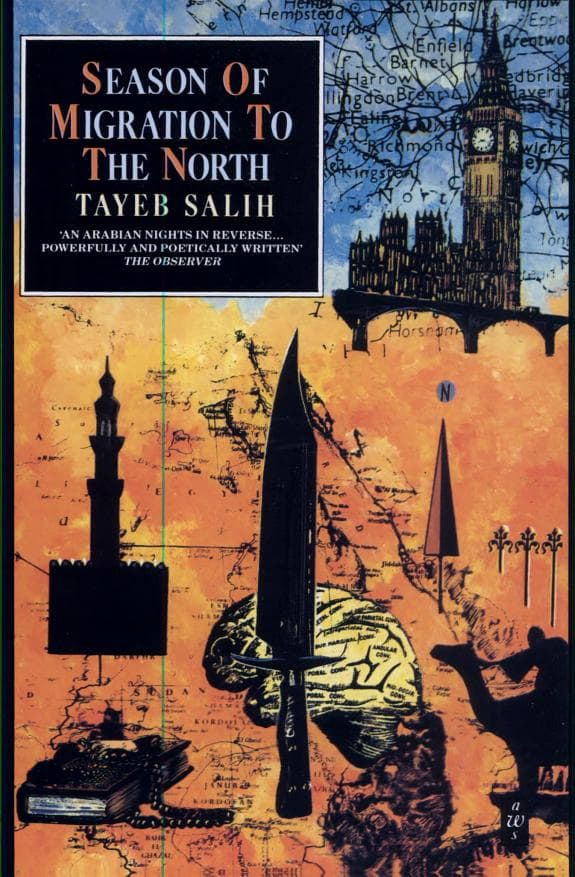
- Season of Migration to the North
Tayeb Salih
3.7 (20k) average on GoodreadsHistorical FictionWhile Salih's novel directly grapples with the postcolonial clash of East and West and employs a more experimental structure, Mahfouz primarily grounds his critique within the internal moral and economic transformations of Egyptian society, rather than focusing on direct colonial encounters and their psychological aftermath.
- To Kill a Mockingbird
Harper Lee
4.3 (4.5M) average on GoodreadsHistorical FictionIn the 1930s Jim Crow South, Harper Lee writes about racial injustice, moral growth, and the quiet courage of a lawyer father, Atticus Finch, as seen through his young daughter's eyes.
- The Great Gatsby
F. Scott Fitzgerald
3.9 (3.8M) average on GoodreadsHistorical FictionIn the opulent Roaring Twenties, a mysterious millionaire's lavish parties hide his desperate, tragic pursuit of a lost love, exposing the emptiness within the American Dream.
- Pride and Prejudice
Jane Austen
4.3 (3M) average on GoodreadsHistorical FictionIn a society focused on status and money, Elizabeth Bennet navigates love and pride, challenging Mr. Darcy and social expectations to find true affection.
- Angels & Demons
Dan Brown
3.9 (2.7M) average on GoodreadsThrillerA Harvard symbologist races through Rome's ancient sites, deciphering cryptic clues to unmask the Illuminati and stop a vengeful plot to destroy the Vatican with a stolen antimatter weapon.





Enjoyed the summary?
A summary gives you the shape of the book. The book itself has the detail, the examples and the voice.
Find Midaq Alley on AmazonAs an Amazon Associate, BookBrief earns from qualifying purchases. How we're funded