

Synopsis
Covers the whole plot, including the ending.
- Difficulty
- Medium
- Pacing
- Moderate
- Mood
- Historical, Empowering, Suspenseful, Thought-provoking
- Read it if
- You enjoy historical fiction with strong female protagonists, exploring social issues and the lives of 'notorious' figures.
- Skip it if
- You prefer lighthearted reads or are uncomfortable with themes of reproductive rights and medical practices of the 19th century.
My Notorious Life Plot Summary
Covers the whole plot, including the ending.
A Childhood Forged in Poverty
Axie Muldoon, born Annunciata, recounts her early childhood in the squalid Five Points neighborhood of New York City in the 1860s. The youngest of three children to Irish immigrant parents, she lives in poverty. Her father, a laborer, struggles to find work, and her mother often takes desperate measures to feed the family. A key moment occurs when authorities separate the family. Axie and her older brother, Charlie, are sent to the Children's Aid Society and then 'sent West' on an orphan train. Her older sister, Bridget, is placed in a different home, and her parents' fate remains unknown to her for many years. This leaves Axie with a strong sense of abandonment and a fierce drive for self-preservation.
Apprenticeship and Awakening
After a brief, harsh experience on a Michigan farm, Axie escapes and eventually returns to New York City. Through luck and determination, she is taken in by Dr. Evans, a kind but mysterious woman who runs a discreet practice helping women with their reproductive health. Axie becomes her apprentice, learning midwifery, herbal remedies, and the art of 'female complaints,' including contraception and abortion methods. Dr. Evans teaches Axie the importance of helping women, often those in desperate situations, even if it means working outside the law. This period shapes Axie's understanding of women's struggles and her own future.
Marriage and Business Ventures
Axie meets Walter, a charming and ambitious young man, and they fall in love and marry. Walter sees Axie's skills and knowledge from her time with Dr. Evans and suggests they start their own business selling 'Lunar Tablets for Female Complaints.' These tablets, marketed as regulating menstrual cycles, are a way for women to end unwanted pregnancies. Their business quickly grows, moving from a small storefront to a larger operation. Axie becomes a 'female physician,' offering consultations and services, while Walter handles advertising and finances. Their success, however, brings them into contact with the legal and moral issues of their trade, setting the stage for future conflicts.
The Growth of the Muldoon Clinic
The Muldoons' practice expands significantly, becoming a well-known establishment in New York. Axie, now known as Dr. Axie Muldoon, gains a reputation for her skill, compassion, and discretion. She attends to women from all social classes, providing abortions, birthing services, contraception advice, and general women's health. The clinic becomes a refuge for women seeking control over their bodies and lives. As their wealth and prominence grow, they move into a grand mansion on Fifth Avenue, a sign of their success. However, their growing business also draws the attention of moral crusaders and law enforcement, especially as laws on contraception and abortion become stricter.
Reunion and Revelation
Through a series of unexpected encounters, Axie begins to reunite with her long-lost family members. She first finds her brother, Charlie, who has also made a life for himself, though a more conventional one. Later, she locates her sister, Bridget, who has endured a difficult life marked by poverty and abuse. These reunions are bittersweet, bringing both joy and the painful realization of her family's suffering after their separation. Axie learns more about her parents' fate and the reasons their children were sent away. These discoveries deepen her understanding of her own motivations and her commitment to protecting women, particularly those vulnerable to societal injustices.
The Seeds of Conflict with Comstock
As Axie's practice continues to grow, her activities increasingly fall under the scrutiny of Anthony Comstock, a zealous moral crusader and special agent of the U.S. Post Office. Comstock, founder of the New York Society for the Suppression of Vice, dedicates his life to eradicating what he deems obscene and immoral, including information about contraception and abortion. He sees Axie's clinic as a direct challenge to public decency and Christian morality. His agents begin to investigate her, setting traps and gathering evidence. This marks the beginning of a prolonged and dangerous conflict between Axie and Comstock's forces, threatening her business, her freedom, and her family.
Personal Losses and Betrayals
Amidst her professional success and growing legal troubles, Axie experiences personal losses and betrayals. Her relationship with Walter becomes strained, revealing weaknesses in their foundation built on ambition and shared risk. The pressures of their business and Walter's own flaws lead to devastating consequences. Axie also grapples with motherhood, raising her children while balancing her demanding and dangerous profession. These personal trials, including the loss of loved ones and disillusionment with those she trusted, harden Axie, reinforcing her belief that she must rely on her own strength and cunning to survive.
The Legal Battles Begin
Anthony Comstock's campaign intensifies, leading to Axie's repeated arrests and highly publicized trials. She is accused of obscenity, illegal abortion, and distributing immoral literature. Each arrest is traumatic, bringing public shame and legal danger. Axie, however, is not easily deterred. She uses her wealth to hire the best lawyers, and her sharp intellect and defiant spirit make her a strong opponent in court. These legal battles are not just about her freedom; they become a public forum for the debate over women's rights, reproductive autonomy, and the role of morality in law. Axie becomes a symbol of resistance against societal oppression.
The Legacy of Dr. Muldoon
In her later years, Axie reflects on her long and tumultuous life. Despite constant legal harassment, public condemnation, and personal sacrifices, she remains unrepentant about her work. She recognizes the impact she had on countless women's lives, giving them choices and dignity in an era when they had few. Her 'notorious life' shows her resilience, courage, and belief in women's autonomy. The novel ends with Axie, still defiant and wise, understanding that while the fight for reproductive freedom continues, she played a key role in paving the way for future generations, leaving behind a complex and lasting legacy.
Principal Figures
Axie Muldoon (Annunciata)
Protagonist
A fiercely independent midwife who defies convention to provide women with reproductive care.
Born Annunciata, Axie Muldoon is the youngest child of Irish immigrants, separated from her family in childhood and forced to navigate a harsh world. Intelligent, resourceful, and deeply empathetic, she learns the art of midwifery and 'female complaints' from Dr. Evans. Driven by a desire for self-preservation and a profound understanding of women's desperate plights, she builds a successful, yet controversial, practice. She is strong-willed, pragmatic, and unyielding in her commitment to women's autonomy, even in the face of legal persecution and public condemnation.
Relationships: Walter (Husband and business partner, initially supportive but later strained.); Dr. Evans (Mentor and surrogate mother, who teaches Axie midwifery.); Charlie (Older brother, with whom she reconnects.); Bridget (Older sister, with whom she reconnects after many years.); Anthony Comstock (Antagonist and relentless persecutor.)
Walter
Supporting
Axie's ambitious husband and business partner, who helps build their empire.
Walter is charming, intelligent, and ambitious, possessing a keen business sense and a talent for advertising. He recognizes the potential in Axie's knowledge and skill, becoming her partner in establishing their 'female complaints' practice. Initially, he is a supportive and loving husband, sharing Axie's drive for success and defying societal norms. However, as their business becomes more notorious and legal pressures mount, Walter's resolve is tested, and his character reveals weaknesses, leading to strains in their marriage and ultimately, personal failures.
Relationships: Axie Muldoon (Husband and business partner.)
Dr. Evans
Supporting
Axie's mentor and the kind midwife who teaches her about women's health.
Dr. Evans is an enigmatic, compassionate, and highly skilled midwife and 'female physician' who takes a young Axie under her wing. She operates a discreet practice, providing women with a range of reproductive services, including abortions, in a time when such practices were becoming increasingly illegal. Dr. Evans instills in Axie not only medical knowledge but also a strong sense of ethics, discretion, and the profound importance of empowering women, especially those in vulnerable situations. She acts as a surrogate mother figure, shaping Axie's future and moral compass.
Relationships: Axie Muldoon (Mentor and surrogate mother.)
Anthony Comstock
Antagonist
A zealous moral crusader determined to suppress 'vice' and prosecute Axie Muldoon.
Anthony Comstock is the relentless and self-righteous special agent of the U.S. Post Office and founder of the New York Society for the Suppression of Vice. He is a formidable antagonist driven by a rigid moral code, believing it his divine duty to eradicate anything he deems obscene or immoral, including contraception, abortion, and explicit literature. Comstock views Axie Muldoon and her practice as a direct threat to public morality and tirelessly dedicates himself to her persecution, using legal and extra-legal means to achieve his goals. He represents the oppressive societal forces Axie fights against.
Relationships: Axie Muldoon (Arch-nemesis and legal persecutor.)
Charlie
Supporting
Axie's older brother, separated from her in childhood.
Charlie is Axie's older brother, who, like her, is sent West on an orphan train after their family's separation. He is more conventional than Axie, seeking stability and respectability in his life. Their reunion is a significant moment for Axie, providing a link to her lost past and family. Charlie represents a different path, one of assimilation and adherence to societal norms, contrasting with Axie's rebellious nature. He offers Axie a glimpse into a life she might have had, and their relationship brings both comfort and a reminder of their shared trauma.
Relationships: Axie Muldoon (Brother.)
Bridget
Supporting
Axie's older sister, who endures a difficult life after family separation.
Bridget is Axie's older sister, separated from the family and placed in a different home than Axie and Charlie. Her life after separation is marked by hardship, poverty, and vulnerability, illustrating the harsh realities faced by many women in the 19th century. Her story underscores the very reasons Axie dedicates her life to helping women. Axie's reunion with Bridget is poignant, highlighting the lasting scars of their childhood trauma and the different paths their lives took, yet also reaffirming the enduring bond of family.
Relationships: Axie Muldoon (Sister.)
Maeve
Supporting
Axie's loyal and long-serving housekeeper and confidante.
Maeve is Axie's devoted housekeeper and a steadfast presence in the Muldoon household. She is a practical, no-nonsense woman who provides a grounding influence amidst the chaos and notoriety of Axie's life. Maeve is privy to many of Axie's secrets and becomes a trusted confidante, offering quiet support and unwavering loyalty. Her presence underscores Axie's ability to inspire loyalty and create a strong, albeit unconventional, family unit within her home.
Relationships: Axie Muldoon (Loyal housekeeper and confidante.)
Themes & Insights
Women's Reproductive Autonomy
The novel's main theme explores women's right to control their own bodies and make decisions about reproduction, even when faced with legal and societal disapproval. Axie Muldoon's life's work is dedicated to giving women choices, whether through contraception, abortion, or safe childbirth, often at great personal risk. The desperation of women seeking her services, from all social classes, shows the strong need for such care and the severe consequences when it is denied, as seen in the sad stories of many of Axie's clients. Axie's unwavering defiance against Anthony Comstock and the Comstock Laws, which aimed to strip women of these rights, embodies this theme.
“A woman's body is her own, and no man, nor law, has the right to tell her what she may or may not do with it.”
Social Class and Poverty
The novel clearly shows the harsh realities of social class and poverty in 19th-century New York. Axie's own childhood in the Five Points, marked by poverty and forced family separation, shapes her worldview and her empathy for the less fortunate. The struggles of immigrant families, the lack of social support, and the desperation that drives women to seek Axie's services are constant reminders of how poverty affects everything. Axie's rise to wealth from these humble beginnings highlights both the opportunities and the huge challenges of social mobility during this era, while also showing how wealth can offer a shield, though an imperfect one, against systemic oppression.
“Poverty is a sickness worse than any fever, and it takes more lives than all the plagues combined.”
Hypocrisy and Moral Crusades
The novel examines the hypocrisy in moral crusades, especially those led by figures like Anthony Comstock. While Comstock champions 'morality' and 'decency,' his actions often cause greater suffering for women and limit access to vital information and healthcare. The contrast between the public disapproval of Axie's work and the private desperation of women from all social classes seeking her help reveals society's double standards. The book suggests that such crusades are often driven by a desire for control and judgment rather than genuine compassion or understanding, leading to a system that punishes the vulnerable while maintaining a facade of virtue.
“They call it vice, but I call it a woman's right to choose her own path, free of the judgment of men who know nothing of her burdens.”
The Price of Independence and Defiance
Axie's journey shows the high cost of independence and defiance, especially for a woman in the 19th century. Her decision to operate outside societal norms and laws brings her great wealth and influence but also constant legal persecution, public criticism, and personal sacrifices. She endures arrests, trials, betrayals, and strain on her family relationships. The theme explores the tension between personal freedom and societal expectations, showing that forging one's own path, particularly when challenging established power structures, often comes with significant costs. Yet for Axie, the reward of helping women outweighs these burdens.
“Freedom ain't free, child. It costs you everything you hold dear, and then some.”
Plot Devices & Literary Techniques
First-Person Narration (Memoir Style)
Axie Muldoon recounts her life story directly to the reader.
The novel is told entirely from Axie Muldoon's perspective, presented as her memoir. This device allows for an intimate and unfiltered account of her experiences, thoughts, and motivations. It provides direct access to her strong, often defiant, voice, shaping the reader's understanding of her controversial actions and the societal context. The memoir style creates a sense of authenticity and personal connection, making Axie a relatable, if sometimes flawed, character, and emphasizing her agency in narrating her own history against the prevailing narratives of her time.
Historical Allusions and Figures
The story incorporates real historical events and figures to ground the narrative.
The novel is inspired by the true story of Madame Restell and features real historical figures like Anthony Comstock and references to events like the orphan trains and the Comstock Laws. This device lends historical authenticity and depth to the fictional narrative, immersing the reader in 19th-century America. By weaving Axie's fictional journey through a tapestry of actual historical context, the novel highlights the real social issues and moral debates of the era, making Axie's struggles and triumphs resonate with the challenges faced by women and reformers of that time.
Symbolism of 'Lunar Tablets'
The 'Lunar Tablets' represent both a medical solution and a symbol of female autonomy.
The 'Lunar Tablets for Female Complaints' serve as a powerful symbol throughout the novel. Initially, they are a discreet product marketed to assist women with their menstrual cycles, but they are understood by Axie and her clients to be a means of abortion or contraception. This dual meaning highlights the need for coded language and secrecy in an era where women's reproductive health was demonized. The tablets symbolize not just a medical intervention but also the clandestine network of support among women, their quiet rebellion against patriarchal control, and the hidden power they sought to reclaim over their bodies.
The Orphan Train
A historical program that serves as a catalyst for Axie's independence and resilience.
The orphan train program, a real historical initiative, serves as a crucial plot device in Axie's early life. Being 'sent West' forcibly separates Axie from her remaining family and thrusts her into harsh, unfamiliar environments. This experience, though traumatic, fosters her fierce independence, resourcefulness, and resilience. It forces her to rely on her own wits for survival and instills in her a deep-seated fear of abandonment, driving her ambition and her commitment to creating a life where she is never again powerless. The orphan train is the crucible that forges the strong-willed woman she becomes.
My Notorious Life Quotes
“It was not right, she thought, to make a woman ashamed of the body she inhabited. It was not right to make a woman believe that her own nature was a source of evil, or even just a source of unending trouble for men.”
“A woman's mind, when it was permitted to think, was as sharp as any man's, and sometimes sharper, for it had to work harder to be heard.”
“The world was full of men who thought they knew what was best for women, and few of them ever asked the women themselves.”
“Freedom, she was learning, was not a gift given, but a thing taken, fought for, and held onto with both hands.”
“There were many ways to be a woman, and none of them were wrong, so long as they were chosen by the woman herself.”
“Love was a dangerous thing, she thought, when it made you forget who you were without it.”
“The greatest sin, perhaps, was not to live fully, to deny oneself the experience of the world because of fear or convention.”
“A good story, she knew, could change minds, even if it couldn't always change laws.”
“It was not enough to be good; one had to be clever, too, especially if one was a woman trying to make her way in the world.”
“The past, like a persistent ghost, always found a way to follow you, no matter how far you ran.”
“There was a kind of power in being underestimated, a secret strength in being dismissed.”
“Justice, she suspected, was a luxury often afforded only to those who could pay for it.”
“Silence was a weapon, sometimes, more potent than any shout.”
“One could not truly understand a person until one walked a mile in their corset.”
Quiz
10 questions on the plot and the characters. Each answer comes with a short explanation.
Question 1
What is Axie Muldoon's ethnic background, as described at the beginning of her story?
- German immigrant
- Irish immigrant
- Italian immigrant
- Native New Yorker of English descent
Show answer
B. Irish immigrant The synopsis states Axie is 'the impoverished child of Irish immigrants,' setting the stage for her early life in 1860s New York.
Question 2
What is the initial product Axie and her husband sell that leads to their midwifery business?
- Herbal teas for general ailments
- Lunar Tablets for Female Complaint
- Pain relief tinctures
- Childbirth guides
Show answer
B. Lunar Tablets for Female Complaint The book description explicitly mentions they 'parlay the sale of a few bottles of 'Lunar Tablets for Female Complaint' into a thriving midwifery business.'
Question 3
Who is the crusading official Axie finds herself on a collision course with?
- William 'Boss' Tweed
- Anthony Comstock
- Jacob Riis
- Theodore Roosevelt
Show answer
B. Anthony Comstock The synopsis clearly states, 'Axie finds herself on a collision course with a crusading official, Anthony Comstock, founder of the Society for the Suppression of Vice.'
Question 4
What significant personal event happens to Axie early in her life that drives much of her character's development?
- She runs away from home to join a traveling circus.
- She is forcibly separated from her mother and siblings.
- She witnesses a murder in the tenements.
- She inherits a small fortune from a distant relative.
Show answer
B. She is forcibly separated from her mother and siblings. Axie 'recounts how she is forcibly separated from her mother and siblings,' which is a foundational trauma in her story.
Question 5
Axie's business primarily serves women's reproductive rights. What historical context does this reflect for 19th-century America?
- A period of widespread government support for contraception and abortion.
- A time when women had extensive legal control over their reproductive choices.
- A period of increasing legal restrictions and social condemnation of reproductive services.
- An era where such services were exclusively provided by male doctors in hospitals.
Show answer
C. A period of increasing legal restrictions and social condemnation of reproductive services. Axie's actions are described as 'Flouting convention and defying the law in the name of women's reproductive rights,' indicating that these rights were under attack or severely restricted in 19th-century America.
Question 6
What is the primary lesson Axie Muldoon learns repeatedly throughout her life, as stated in the synopsis?
- The importance of formal education.
- Never to trust a man who says 'trust me.'
- That wealth brings true happiness.
- The value of remaining in one's social class.
Show answer
B. Never to trust a man who says 'trust me.' The synopsis explicitly states Axie 'learning over and over never to trust a man who says 'trust me.''
Question 7
From what social standing does Axie Muldoon rise to achieve her eventual wealth and mansion on Fifth Avenue?
- Lower middle-class shopkeeper
- Impoverished child of Irish immigrants on the streets of 1860s New York
- Orphan from a respectable asylum
- Rural farm girl who moves to the city
Show answer
B. Impoverished child of Irish immigrants on the streets of 1860s New York The synopsis details her beginning 'on the streets of 1860s New York. The impoverished child of Irish immigrants,' and her rise 'from grim tenement rooms to the splendor of a mansion on Fifth Avenue.'
Question 8
The novel is inspired by a true historical figure. What was this figure once called?
- The Queen of Fifth Avenue
- The Angel of Mercy
- The Wickedest Woman in New York
- The Midwife of Manhattan
Show answer
C. The Wickedest Woman in New York The description states the novel is 'Inspired by the true history of an infamous female physician who was once called 'the Wickedest Woman in New York.''
Question 9
Axie's profession and services often attract 'outraged headlines.' What does this suggest about societal views towards women's reproductive autonomy in her time?
- Her services were seen as a progressive step for women's health.
- There was widespread public debate and general acceptance of her practices.
- Her work was controversial and largely condemned by conservative moralists.
- The headlines were primarily concerned with the safety of her medical practices.
Show answer
C. Her work was controversial and largely condemned by conservative moralists. The phrase 'outraged headlines' combined with her 'flouting convention and defying the law' and confrontation with Anthony Comstock (Society for the Suppression of Vice) indicates strong societal disapproval and condemnation of her work related to reproductive rights.
Question 10
Beyond being a historical novel, what other genre elements does 'My Notorious Life' incorporate?
- Science fiction and fantasy
- Western and espionage
- Mystery, family saga, and love story
- Legal thriller and political satire
Show answer
C. Mystery, family saga, and love story The synopsis describes the novel as 'a mystery, a family saga, a love story, and an exquisitely detailed portrait of nineteenth-century America,' indicating its multi-genre nature.
My Notorious Life FAQ
What is the central premise of 'My Notorious Life' and who is Axie Muldoon?
'My Notorious Life' follows Axie Muldoon, an impoverished Irish immigrant child in 1860s New York, as she rises to become a wealthy and controversial figure. Her story centers on her journey from being forcibly separated from her family to building a successful midwifery business, defying societal norms and legal constraints to provide reproductive services for women.
How does Axie Muldoon's early life in New York contribute to her later ambition and resilience?
Axie's early experiences of poverty, forced separation from her family, and apprenticeship to a doctor on the harsh streets of 1860s New York instill in her a profound understanding of vulnerability and a fierce determination. These formative years directly fuel her ambition to achieve financial independence and her resilience in the face of adversity, shaping her desire to help women in similar desperate circumstances.
What is the significance of the 'Lunar Tablets for Female Complaint' in Axie's business development?
The 'Lunar Tablets for Female Complaint' represent the initial, albeit modest, product that Axie and her husband sell, marking the genesis of their midwifery business. This seemingly simple product is a euphemism for abortifacients, allowing them to circumvent legal scrutiny initially and lay the foundation for their much larger, and increasingly illicit, practice focused on women's reproductive health.
Who is Anthony Comstock and what is his role in Axie's story?
Anthony Comstock is a crusading official and the founder of the Society for the Suppression of Vice. He becomes Axie's primary antagonist, representing the moralistic forces of 19th-century America determined to shut down her midwifery practice and prosecute her for obscenity and illegal medical services. Their conflict forms a major plotline, testing Axie's cunning and power.
How does Axie Muldoon's personal experience with men influence her mantra 'never to trust a man who says "trust me"'?
Axie's repeated disappointments and betrayals by men, including those she loved and relied upon, forge her cynical mantra. These experiences range from her forced separation from family, which often involved male authority figures, to the complexities and deceptions within her romantic and business relationships, teaching her the painful lesson that professed trust can often mask self-interest or manipulation.
Are there specific historical figures or events that inspired Axie Muldoon's character and story?
Yes, Axie Muldoon's character is inspired by the true history of an infamous female physician, likely Madame Restell (Ann Trow Lohman), who was once called 'the Wickedest Woman in New York.' The novel draws heavily from the real-life controversies surrounding abortion providers and the moral crusades led by figures like Anthony Comstock in 19th-century America, grounding the fiction in historical reality.
What is the implied fate of Axie's forcibly separated siblings and mother? Are there any clues about their lives?
The novel offers subtle clues and Axie's enduring hope, but the ultimate fate of her forcibly separated siblings and mother remains largely ambiguous, contributing to Axie's profound sense of loss and unresolved longing. While she searches for them throughout her life, specific details about their individual trajectories are often left to the reader's inference, emphasizing the devastating impact of such separations in that era.
How does the author use the shifting settings, from grim tenements to a Fifth Avenue mansion, to reflect Axie's internal journey?
The dramatic shift in settings mirrors Axie's external rise in wealth and status, but also subtly reflects her internal journey from desperation to a complex understanding of power. The grim tenements represent her origins and the harsh realities she seeks to escape and alleviate for others, while the Fifth Avenue mansion symbolizes her hard-won success, yet also the isolation and scrutiny that come with it, showing that wealth doesn't erase past traumas or present dangers.
What is the significance of the recurring motif of 'secrecy' throughout Axie's life and business?
Secrecy is a pervasive and essential motif for Axie, directly linked to the illegal nature of her work and the societal taboos surrounding women's reproductive health. It represents both a necessary shield for her business and clients, protecting them from legal and social condemnation, but also a personal burden, forcing her to live a life of guardedness and often isolation, even from those closest to her.
How does Axie Muldoon reconcile her illegal activities with her self-perception as a helper of women?
Axie reconciles her illegal activities by prioritizing the desperate needs and well-being of women over the restrictive laws of the time. She views herself as providing essential, often life-saving, services that society denies, driven by empathy and a pragmatic understanding of women's limited choices. Her moral compass is guided by alleviating suffering, making her actions justifiable in her own eyes despite their legal ramifications.
Discuss the psychological impact of repeated betrayal on Axie's ability to form lasting, trusting relationships.
The repeated betrayals Axie experiences deeply scar her psyche, leading to a profound guardedness and an impaired capacity for unconditional trust, particularly with men. This psychological impact manifests as a constant vigilance and a tendency to keep emotional distance, even from those she loves, making true intimacy a challenge and often reinforcing her self-reliance to an isolating degree.
In what ways does Axie's ambition serve as both a strength and a potential vulnerability?
Axie's ambition is undeniably her greatest strength, fueling her rise from poverty and her relentless pursuit of a better life and agency for women. However, it also becomes a vulnerability, making her a prominent target for figures like Anthony Comstock and exposing her to greater risks as her business expands, ultimately putting everything she has built in jeopardy due to its very success and visibility.
How does Axie's journey reflect the broader struggle for female autonomy and reproductive rights in the 19th century?
Axie's journey is a microcosm of the broader struggle for female autonomy and reproductive rights in the 19th century, highlighting the severe limitations placed on women's bodies and choices. Her defiance of the law and societal norms directly challenges the patriarchal control over women's lives, illustrating the desperate need for and the fierce opposition to services that empowered women to control their own destinies.
Is Axie Muldoon a purely heroic figure, or does the novel present a more morally ambiguous portrait?
The novel presents a morally ambiguous portrait of Axie Muldoon, rather than a purely heroic one. While her dedication to helping women and her resilience are admirable, her methods sometimes involve cutting corners, operating outside the law, and making difficult ethical compromises. This complexity allows for a more realistic and nuanced character, reflecting the grey areas of survival and activism in a restrictive era.
How does the historical context of the Comstock Act and the Society for the Suppression of Vice shape the novel's themes?
The historical context of the Comstock Act and the Society for the Suppression of Vice is foundational to the novel's themes, particularly those of censorship, moral policing, and the control of information regarding reproductive health. It directly fuels the conflict between Axie and Comstock, highlighting the profound societal battle over what constituted 'obscenity' and the severe legal consequences for those who defied these moral crusades, underscoring the dangers inherent in Axie's work.
What is the novel's stance on the nature of 'notoriety' as applied to women in history?
The novel suggests that 'notoriety' for women in history, particularly those who defied convention, was often a label imposed by a patriarchal society to demonize and control them. It reclaims the term for Axie, showing her 'notorious life' not as inherently wicked, but as a courageous and necessary path forged by a woman who dared to challenge the status quo and provide essential services despite condemnation, thus reframing historical judgment.
How does Axie's relationship with her husband evolve, and what does it reveal about partnerships in her line of work?
Axie's relationship with her husband evolves from a partnership of necessity and ambition into a complex bond marked by both shared goals and underlying tensions, ultimately revealing the inherent challenges of trust and power dynamics in their illicit line of work. While initially a strong team, the pressures of their business, legal threats, and personal ambitions test their loyalty and commitment, illustrating that even within a shared enterprise, individual desires and vulnerabilities can lead to strain and betrayal.
Similar books
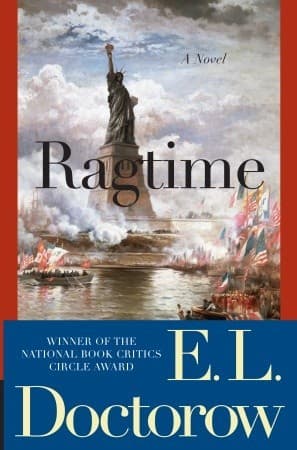
- Ragtime
E.L. Doctorow
3.9 (38k) average on GoodreadsLiterary Fiction"My Notorious Life" offers a more focused and specific exploration of women's reproductive rights and entrepreneurship in 19th-century New York, whereas Doctorow's Ragtime provides a broader social panorama of the era, encompassing various historical figures and societal changes.
- The Other Boleyn Girl
Philippa Gregory
4.1 (456k) average on GoodreadsHistorical FictionWhile both novels feature strong female protagonists navigating challenging patriarchal societies, Gregory's The Other Boleyn Girl is set in an earlier historical period and focuses on courtly intrigue and dynastic power. Manning's novel is grounded in the grittier realities of 19th-century urban life, medical ethics, and social justice, offering a more direct engagement with issues of female autonomy and healthcare.
- To Kill a Mockingbird
Harper Lee
4.3 (4.5M) average on GoodreadsHistorical FictionIn the 1930s Jim Crow South, Harper Lee writes about racial injustice, moral growth, and the quiet courage of a lawyer father, Atticus Finch, as seen through his young daughter's eyes.
- The Great Gatsby
F. Scott Fitzgerald
3.9 (3.8M) average on GoodreadsHistorical FictionIn the opulent Roaring Twenties, a mysterious millionaire's lavish parties hide his desperate, tragic pursuit of a lost love, exposing the emptiness within the American Dream.
- Pride and Prejudice
Jane Austen
4.3 (3M) average on GoodreadsHistorical FictionIn a society focused on status and money, Elizabeth Bennet navigates love and pride, challenging Mr. Darcy and social expectations to find true affection.
- Angels & Demons
Dan Brown
3.9 (2.7M) average on GoodreadsThrillerA Harvard symbologist races through Rome's ancient sites, deciphering cryptic clues to unmask the Illuminati and stop a vengeful plot to destroy the Vatican with a stolen antimatter weapon.





Enjoyed the summary?
A summary gives you the shape of the book. The book itself has the detail, the examples and the voice.
Find My Notorious Life on AmazonAs an Amazon Associate, BookBrief earns from qualifying purchases. How we're funded