
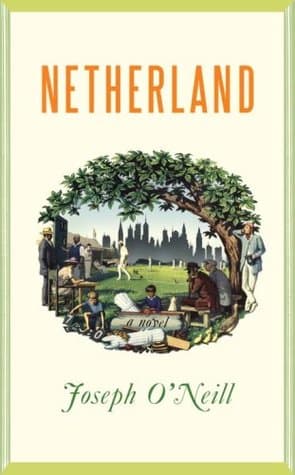
Synopsis
Covers the whole plot, including the ending.
- Difficulty
- Medium
- Pacing
- Slow
- Mood
- Reflective, melancholic, observant, subtly hopeful
Netherland Plot Summary
Covers the whole plot, including the ending.
The Chelsea Hotel and the Aftermath
Hans van den Broek, a Dutch financial analyst, tells about his life in New York City after the September 11th attacks. His English wife, Rachel, and their son, Jake, have gone back to London, leaving Hans alone in their apartment. He soon leaves it for a room at the Chelsea Hotel. He describes the strange, dreamlike feel of the city and his own sense of sadness and distance. The city feels both familiar and strange. Hans, dealing with the trauma of 9/11 and problems in his marriage, finds himself drifting, watching the lives of his fellow hotel residents, and thinking about his displacement and the fragility of his adopted home.
Discovery of Cricket
One weekend, looking for a break from his loneliness, Hans goes to a cricket pitch on Staten Island. He is drawn by the unfamiliar sounds and sights of the game, a sport he barely remembers from his childhood in the Netherlands. He watches a diverse group of immigrants playing with enthusiasm, a stark contrast to the city's somber mood. He feels an immediate connection to the game and its players, a sense of belonging he hadn't felt since his family left. This accidental discovery offers a new way to connect and find meaning in his isolated life.
Meeting Chuck Ramkissoon
At the cricket grounds, Hans meets Chuck Ramkissoon, a Trinidadian immigrant and entrepreneur with big plans for cricket in America. Chuck is a lively, larger-than-life character, full of charm, optimism, and drive. He immediately likes Hans, seeing a similar spirit in their shared love for cricket. Their first talks show Chuck's lively personality and Hans's quiet interest. Chuck's energy and vision for cricket, and for life in America, begin to reawaken something in Hans, offering a look into an unseen New York.
The Cricket World
Hans quickly joins Chuck's world, which centers on the Commonwealth Cricket League and a network of West Indian immigrants. He starts playing cricket again, finding joy and friendship on the pitch. Chuck introduces Hans to his diverse group of friends and associates, including family members, business partners, and other cricket fans. Through Chuck, Hans experiences a different side of New York – one of immigrant dreams, tireless work, and a strong sense of community, all around their shared love for cricket. This immersion helps his previous isolation.
Chuck's Business Ventures
Chuck's business drive goes far beyond cricket. He is involved in many ventures, from real estate and construction to funeral homes and a chain of roti shops. Hans watches Chuck's ambitious, sometimes reckless, pursuit of the American Dream. While some of Chuck's plans seem legitimate, others operate in a legal grey area, hinting at a more complex, possibly illicit side to his operations. Hans, a banker, is both fascinated and slightly uneasy by Chuck's methods, yet he remains drawn to Chuck's strong personality and his belief in possibility.
Rachel's Return
After some time, Rachel and Jake return to New York. Their reunion is tentative at first, with lingering tension from their separation. However, Hans's new involvement with cricket and his friendship with Chuck have subtly changed him. Rachel observes Hans's involvement in this unexpected world with curiosity and bemusement. The re-establishment of his family life creates a new dynamic, as Hans tries to balance his old life with his new passion and friendship. This sometimes leads to misunderstandings or a sense of distance between him and Rachel regarding his new interests.
The Cricket Ground Project
Chuck's ultimate dream is to build a professional-grade cricket stadium in New York. He works tirelessly toward this goal, seeking investors, navigating bureaucracy, and pouring his energy into the project. Hans becomes a confidant and an observer of this grand endeavor. The stadium project symbolizes Chuck's lasting optimism and his faith in the American Dream, even as it becomes clear that such an undertaking has immense challenges and potential problems, reflecting the often-elusive nature of ambition.
The Growing Friendship
Hans and Chuck's friendship grows into a deep, if sometimes unusual, bond. They share long conversations about life, America, dreams, and disappointments. Hans, a reserved intellectual, is captivated by Chuck's raw energy and street smarts, while Chuck values Hans's quiet presence and thoughtful insights. Their friendship goes beyond their different backgrounds, offering each man something the other lacks. It becomes a central part of Hans's life in New York, giving him a sense of connection and purpose that helps him navigate his personal and marital struggles.
Signs of Trouble
Despite Chuck's outward confidence, Hans starts to notice signs of trouble. Some of Chuck's business dealings appear increasingly risky, and his financial situation seems more complex than he lets on. There are hints of unpaid debts, disgruntled associates, and a growing sense of desperation beneath his usual bravado. Hans, with his financial background, instinctively recognizes the risks involved in Chuck's ambitious, often undercapitalized, ventures. These observations cast a shadow over their friendship, making Hans question the true nature of Chuck's success and the sustainability of his dreams.
Chuck's Disappearance
Chuck Ramkissoon suddenly disappears. His absence causes shockwaves through the cricket community and his various business operations. Hans, along with Chuck's other friends and family, is left to deal with the mystery of his whereabouts and the implications of his sudden departure. The grand cricket ground project stalls, and his other businesses face uncertainty. This abrupt vanishing act shows the precariousness of Chuck's life and the risks of his ambitious, often shadowy, pursuits. It leaves Hans with a sense of loss and unresolved questions about his friend's true fate and character.
The Aftermath and Revelation
Eventually, Hans learns the tragic truth: Chuck Ramkissoon has been murdered. The news confirms Hans's underlying fears about the darker side of Chuck's world. The details of Chuck's death, tied to his illicit dealings, paint a clearer, more complex picture of his life as an operator on the fringes of society. Hans is deeply affected by the loss, realizing Chuck's impact on his life. The revelation brings a somber end to the dreams Chuck had so passionately pursued, and it forces Hans to confront the realities of ambition, risk, and the immigrant experience in America.
Reflection and Reconciliation
After Chuck's death, Hans thinks extensively about their friendship, Chuck's unfulfilled dreams, and the broader themes of identity, belonging, and the American Dream. He recognizes Chuck's flaws but also his immense capacity for hope and connection. The experience, though tragic, has helped Hans to re-evaluate his own life, his marriage to Rachel, and his place in the world. He finds a renewed appreciation for his family and a deeper understanding of the complexities of his adopted country. The novel ends with Hans contemplating the lasting impact of his friendship with Chuck and how it reshaped his perspective on life and loss.
Principal Figures
Hans van den Broek
Protagonist
A Dutch financial analyst grappling with displacement and a failing marriage.
Hans is a reserved and introspective Dutchman, working as a financial analyst in New York City. He possesses a keen observational intellect and a dry wit, often reflecting on his surroundings with a detached melancholy. After 9/11, his wife and son return to London, leaving him feeling marooned and untethered. He is a man searching for meaning and connection, which he unexpectedly finds in the world of cricket and his friendship with Chuck Ramkissoon. He is an 'outsider looking in,' offering a unique perspective on American society and the immigrant experience.
Relationships: Rachel van den Broek (Wife); Jake van den Broek (Son); Chuck Ramkissoon (Close friend and mentor figure)
Chuck Ramkissoon
Supporting
A charismatic Trinidadian immigrant and ambitious entrepreneur.
Chuck is a larger-than-life figure, a Trinidadian immigrant with an infectious optimism and an unyielding belief in the American Dream. He is an entrepreneur involved in various, often dubious, business ventures, driven by a grand vision to establish cricket as a major sport in the U.S. Chuck is a charismatic, persuasive, and somewhat enigmatic character, embodying both the boundless energy and the potential pitfalls of immigrant ambition. He acts as a catalyst for Hans, drawing him out of his isolation and into a vibrant, diverse community.
Relationships: Hans van den Broek (Close friend and mentee); Prakash (Business associate/friend); Various cricket players (Associates/friends)
Rachel van den Broek
Supporting
Hans's English wife, struggling with their marriage and life in New York.
Rachel is Hans's intelligent and somewhat reserved English wife. Initially, she leaves New York with their son after 9/11, straining her marriage with Hans. She represents the anchor to Hans's conventional life and family responsibilities. When she returns, she observes Hans's new engagement with cricket and Chuck with a mixture of curiosity, skepticism, and occasional resentment. She is a pragmatic character, often questioning Hans's seemingly aimless drifting and his unusual new friendships, yet she ultimately seeks to understand and reconnect with her husband.
Relationships: Hans van den Broek (Husband); Jake van den Broek (Son)
Jake van den Broek
Supporting
Hans and Rachel's young son.
Jake is Hans and Rachel's young son, whose presence often serves as a reminder of Hans's family responsibilities and the domestic life he temporarily abandoned. He is a typical child, providing moments of innocence and normalcy amidst the adult complexities. His return with Rachel signifies the potential for their family's reunification, and his observations, though brief, sometimes offer a simple, unvarnished perspective on the adult world around him.
Relationships: Hans van den Broek (Father); Rachel van den Broek (Mother)
Prakash
Supporting
Chuck's loyal but often exasperated business associate.
Prakash is one of Chuck Ramkissoon's closest associates and friends, often involved in his various business ventures and the cricket league. He is more grounded and pragmatic than Chuck, frequently expressing concern or frustration over Chuck's more outlandish schemes and financial recklessness. Despite his reservations, Prakash remains loyal to Chuck, serving as a foil to Chuck's boundless optimism and providing a more realistic perspective on the challenges of their immigrant lives and entrepreneurial pursuits.
Relationships: Chuck Ramkissoon (Business associate and friend); Hans van den Broek (Acquaintance through Chuck)
The Chelsea Hotel Residents
Supporting
A colorful cast of characters residing in the iconic hotel.
While not individual characters with distinct arcs, the residents of the Chelsea Hotel collectively serve as a 'chorus' or backdrop to Hans's initial isolation. They are a motley collection of artists, eccentrics, and lost souls, each with their own peculiar habits and stories. Hans observes them from a distance, finding a strange comfort in their shared displacement and their varied ways of coping with life. They symbolize the 'other' New York, a place of transient lives and unconventional existences, mirroring Hans's own temporary untethered state.
Relationships: Hans van den Broek (Fellow residents/observers)
Themes & Insights
Displacement and Belonging
The novel explores the deep sense of displacement Hans experiences as a Dutchman in New York, especially after 9/11. He feels 'marooned' and untethered, an outsider in a city he once considered home. His search for belonging leads him to the unexpected community of immigrant cricketers, where he finds friendship and shared identity. The theme also extends to Chuck and other immigrants, all working to create a place for themselves in a new land, highlighting the complex process of assimilation and the lasting ties to one's culture.
“The feeling of being a foreigner, no matter how long one lived in America, was a constant hum beneath the surface, a reminder of the arbitrary nature of belonging.”
The American Dream (and its Fading Promise)
Chuck Ramkissoon shows the classic immigrant pursuit of the American Dream, marked by ambition, entrepreneurial spirit, and a belief in possibility. His grand vision for cricket and his many business ventures illustrate the striving for success. However, the novel also questions the 'fading promise' of this dream, showing the darker, more precarious side of ambition, especially for those operating on the fringes. Chuck's tragic end suggests the dream's elusive nature and the harsh realities that can accompany its pursuit, exposing the gap between aspiration and outcome.
“Chuck believed in America with a purity Hans had long since shed, a belief in infinite possibility, a refusal to be limited by circumstance or history.”
Male Friendship
The deep and complex friendship between Hans and Chuck is the emotional core of the novel. It explores the 'shallowness and depths' of male camaraderie, showing how two different men can form a strong bond based on shared interests (cricket), mutual respect, and an understanding of each other's vulnerabilities and aspirations. Hans finds a vitality and connection in Chuck that was missing from his life, while Chuck finds a quiet confidant in Hans. Their friendship crosses cultural and class divides, highlighting the power of human connection to heal and transform.
“Chuck was the opposite of Hans, all heat and motion, and yet in their disparate natures, they had found a strange, compelling harmony.”
Mourning and Memory
The novel is full of a sense of mourning, both personal and collective. Hans mourns the temporary loss of his family and the strain on his marriage, but also the broader sense of innocence lost in New York after 9/11. The narrative, told in retrospect, emphasizes memory's role in understanding and coping with loss. Chuck's death brings a new layer of mourning, forcing Hans to reconcile his memories of his charismatic friend with the harsh realities of his life. Remembering becomes a way to process trauma and find meaning.
“Memory was a way of holding onto what was gone, of keeping the dead alive, if only in the flickering light of one's own mind.”
The Game of Cricket as Metaphor
Cricket in 'Netherland' is a metaphor for life, community, and the immigrant experience. It represents a link to tradition and home for the diverse immigrant community, a shared language and ritual that crosses cultural differences. For Hans, it's a rediscovery of childhood joy and a way to connect. The game's rules, its mix of patience and sudden action, and its focus on fair play and sportsmanship, reflect the complexities of human interaction and the pursuit of order amid chaos. It becomes a small example of the 'other' New York, full of possibility.
“Cricket, Hans realized, was a game of infinite patience, of sudden bursts of action, a game that mirrored the rhythms of life itself, particularly life lived on foreign soil.”
Plot Devices & Literary Techniques
First-Person Retrospective Narration
Hans recounts events from a future vantage point.
The entire novel is narrated by Hans van den Broek, looking back on the events of his time in New York, particularly his friendship with Chuck and the period after 9/11. This retrospective viewpoint allows for a contemplative and philosophical tone, imbuing the narrative with a sense of melancholic wisdom and providing foreshadowing regarding Chuck's ultimate fate. It emphasizes themes of memory, reflection, and the search for meaning, as Hans processes his experiences with the benefit of hindsight, shaping the reader's understanding of the characters and events through his subjective lens.
Symbolism of Cricket
The game represents connection, tradition, and immigrant identity.
Cricket is not merely a sport in 'Netherland' but a potent symbol. It represents a link to the diverse immigrant communities' homelands, a shared cultural heritage that transcends national boundaries. For Hans, it symbolizes a rediscovery of joy and a pathway out of his isolation, offering a new sense of belonging. Furthermore, the sport's elegant rules and inherent sportsmanship stand in contrast to the often messy and morally ambiguous world of Chuck's business dealings, highlighting themes of order, community, and the pursuit of an idealized vision amidst urban chaos.
The Chelsea Hotel as a Microcosm
A temporary home reflecting Hans's transient state and the city's eccentricity.
The Chelsea Hotel serves as a symbolic setting during Hans's initial period of isolation. Known for its history of housing artists and eccentrics, the hotel becomes a microcosm of New York's diverse and often unconventional inhabitants. For Hans, it's a transient space that mirrors his own untethered state after his family's departure. The hotel's peculiar residents and unique atmosphere highlight Hans's detachment and his role as an observer, providing a vivid backdrop that underscores themes of displacement, anonymity, and the search for connection in an idiosyncratic urban environment.
Gatsby-esque Character of Chuck Ramkissoon
Chuck embodies the enigmatic, ambitious, and ultimately tragic figure of Jay Gatsby.
Chuck Ramkissoon shares many characteristics with F. Scott Fitzgerald's Jay Gatsby. He is an enigmatic figure with grand ambitions, a mysterious past, and a relentless pursuit of a personal vision (in Chuck's case, the cricket ground and the American Dream). His charisma draws others to him, and he operates in a moral grey area, hinting at illicit dealings beneath his dazzling facade. Like Gatsby, Chuck's pursuit of his dream is ultimately tragic, ending in violence and leaving those who knew him to piece together the truth of his complex life and unfulfilled aspirations, underscoring the novel's themes of illusion and reality.
Quiz
10 questions on the plot and the characters. Each answer comes with a short explanation.
Question 1
What event significantly impacts the setting of New York City in the novel 'Netherland'?
- Hurricane Sandy
- The September 11th attacks
- The 2008 financial crisis
- The COVID-19 pandemic
Show answer
B. The September 11th attacks The provided text states that New York City is made 'phantasmagorical by the events of 9/11', indicating this as the significant event.
Question 2
Where does Hans, the protagonist, find himself after his wife and son return to London?
- A small apartment in Brooklyn
- The Chelsea Hotel
- A hostel in Queens
- His parents' home in the Netherlands
Show answer
B. The Chelsea Hotel The text explicitly mentions that Hans finds himself 'marooned among the strange occupants of the Chelsea Hotel'.
Question 3
What unexpected subculture does Hans discover in New York City?
- The underground jazz scene
- The competitive chess community
- The vibrant New York subculture of cricket
- The world of street art and graffiti
Show answer
C. The vibrant New York subculture of cricket The novel's plot centers around Hans stumbling upon 'the vibrant New York subculture of cricket'.
Question 4
Who is Chuck Ramkissoon?
- Hans's estranged brother
- A former colleague from Hans's bank
- A charismatic Trinidadian who becomes Hans's friend
- The owner of the Chelsea Hotel
Show answer
C. A charismatic Trinidadian who becomes Hans's friend Chuck Ramkissoon is described as a 'charismatic and charming Trinidadian' who befriends Hans.
Question 5
How is Chuck Ramkissoon characterized in the novel?
- A cynical and pessimistic businessman
- A Gatsby-like figure, part idealist and part operator
- A reserved and quiet observer of society
- A disillusioned academic studying immigrant communities
Show answer
B. A Gatsby-like figure, part idealist and part operator The text directly compares Chuck to Gatsby, stating he is 'part idealist and part operator'.
Question 6
What does Chuck Ramkissoon introduce Hans to?
- A world of high finance and Wall Street
- An 'other' New York populated by immigrants and strivers
- A secret society of cricket enthusiasts
- The political underbelly of the city
Show answer
B. An 'other' New York populated by immigrants and strivers Chuck introduces Hans to 'an 'other' New York populated by immigrants and strivers of every race and nationality'.
Question 7
What does Hans lose faith in, which Chuck's demeanor helps him to reconsider?
- The reliability of the banking system
- The possibility of genuine friendship
- A sense of American and human possibility
- The importance of maintaining his marriage
Show answer
C. A sense of American and human possibility Hans has 'come to lose faith' in 'a sense of American and human possibility', which Chuck's 'naivete and chutzpah' helps him to revisit.
Question 8
What broader themes does 'Netherland' explore beyond Hans's personal story?
- The decline of European colonial powers and the rise of globalism
- The impact of climate change on coastal cities and the search for sustainable living
- The grand strangeness and fading promise of 21st century America from an outsider’s vantage point, and the American dream
- The resurgence of traditional sports in urban environments and their role in cultural identity
Show answer
C. The grand strangeness and fading promise of 21st century America from an outsider’s vantage point, and the American dream The text explicitly states the novel explores 'the grand strangeness and fading promise of 21st century America from an outsider’s vantage point, and the complicated relationship between the American dream and the particular dreamers'.
Question 9
Which of the following is NOT mentioned as a primary focus of Hans's personal story within the novel?
- A marriage foundering and recuperating
- The shallows and depths of male friendship
- His professional struggles in the financial sector
- Mourning and memory
Show answer
C. His professional struggles in the financial sector While Hans is a banker, the text focuses on his marriage, friendships, and internal struggles of mourning and memory, rather than his professional difficulties as a primary plot point.
Question 10
The prose of Joseph O'Neill is described as possessing which qualities that engage the reader?
- Aggressive and confrontational
- Satirical and detached
- Conscientiousness and beauty
- Minimalist and understated
Show answer
C. Conscientiousness and beauty The text states, 'Joseph O’Neill’s prose, in its conscientiousness and beauty, involves us utterly in the struggle for meaning'.
Netherland FAQ
What is the main theme of Joseph O'Neill's Netherland?
The novel explores themes of identity, belonging, and the immigrant experience in post-9/11 New York City. It delves into the search for meaning, the complexities of male friendship, and the fading promise of the American dream from an outsider's perspective.
Who is the protagonist of Netherland and what is his situation?
The protagonist is Hans, a Dutch banker living in New York City. After his wife and son return to London following 9/11, Hans finds himself isolated and adrift, living in the Chelsea Hotel and grappling with a sense of displacement.
How does cricket play a role in the novel Netherland?
Cricket serves as a surprising connection to Hans's past and a way for him to re-engage with life. Through the subculture of cricket in New York, he finds a sense of community and reconnects with his childhood.
Who is Chuck Ramkissoon and what is his significance?
Chuck Ramkissoon is a charismatic Trinidadian who becomes Hans's friend. He's a complex character, part idealist and part operator, who introduces Hans to an 'other' New York and embodies a persistent belief in possibility that Hans has lost.
How does Netherland portray New York City?
The novel depicts a New York City transformed by the events of 9/11, making it seem phantasmagorical. It also reveals a lesser-known side of the city populated by diverse immigrants and strivers, as seen through Hans's outsider perspective.
What is the relationship between Hans and Chuck Ramkissoon?
Their relationship is a central element of the novel, representing a deep male friendship. Hans is both seduced and instructed by Chuck's unique blend of naivete and confidence, which helps Hans begin to find his footing again.
Is Netherland a story about the American Dream?
Yes, the novel critically examines the American Dream from an outsider's viewpoint. It explores the grand strangeness and fading promise of 21st-century America and the complicated relationship between the dream and the individuals who pursue it.
What kind of prose style does Joseph O'Neill employ in Netherland?
Joseph O'Neill's prose is described as conscientious and beautiful. It draws the reader deeply into the protagonist's struggle for meaning and his personal journey of navigating life's complexities.
How does the book address the aftermath of 9/11?
The novel is set in the context of post-9/11 New York, where the city itself feels altered and somewhat surreal. The event serves as a backdrop that contributes to Hans's sense of disorientation and isolation.
What does Netherland reveal about marriage and family?
The book touches upon the fragility of marriage and family, showing Hans's marriage foundering and then hinting at its potential for recuperation. It explores the ordinariness and mystery within these relationships.
Similar books
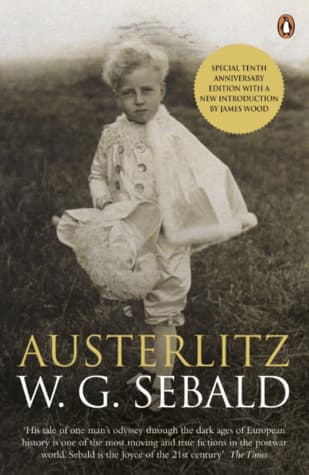
- Austerlitz
W.G. Sebald
4.0 (14k) average on GoodreadsHistorical Fiction"Netherland" shares a profound sense of melancholic introspection and a quiet, observational narrative style with Sebald's "Austerlitz." Both novels feature protagonists who are somewhat detached from their immediate surroundings, haunted by a past (personal or historical) and grappling with a sense of displacement. Sebald's work is often more overtly concerned with memory, history, and the Holocaust, using a distinctive blend of prose and photographs. O'Neill, while dealing with personal trauma and displacement, grounds his narrative more firmly in the contemporary immigrant experience and the search for community, without Sebald's unique formal experimentation.
- American Pastoral
Philip Roth
3.9 (65k) average on GoodreadsLiterary FictionWhile stylistically very different, both "Netherland" and Roth's "American Pastoral" explore the disillusionment with the American dream and the impact of societal shifts on individual lives. Roth's novel is a more sprawling, politically charged examination of a family's unraveling amidst the turbulence of the 1960s, told with a characteristic vigor and a focus on grand American narratives. O'Neill's approach is far more subdued, focusing on an outsider's quiet struggle to find footing in a post-9/11 America, and his critique of the dream is more subtle, embedded in the aspirations and ultimate fate of characters like Chuck Ramkissoon, rather than a direct frontal assault on a perceived national failure.
- The Old Man and the Sea
Ernest Hemingway
3.8 (831k) average on GoodreadsLiterary FictionA Cuban fisherman's long struggle with a giant marlin becomes a story of endurance and dignity, now retold for young adults with illustrations, phonetic guides, and writing prompts in Traditional Chinese.
- One Hundred Years of Solitude
Gabriel García Márquez
4.1 (753k) average on GoodreadsLiterary FictionThrough the multi-generational story of the Buendía family, a mythical town deals with the repeating patterns of time, love, and solitude, as the extraordinary mixes with the ordinary.
- The Goldfinch
Donna Tartt
3.9 (720k) average on GoodreadsLiterary FictionHaunted by a tragic explosion and clutching a stolen Dutch masterpiece, a young orphan navigates the opulent drawing rooms of New York and the gritty underbelly of the art world, desperately seeking connection and redemption amidst a life spiraling into crime and obsession.
- Little Fires Everywhere
Celeste Ng
4.1 (713k) average on GoodreadsLiterary FictionIn Shaker Heights, an artist and her daughter move in, and their free-spirited lives clash with a rule-bound matriarch, revealing hidden conflicts beneath a perfect surface.





Enjoyed the summary?
A summary gives you the shape of the book. The book itself has the detail, the examples and the voice.
Find Netherland on AmazonAs an Amazon Associate, BookBrief earns from qualifying purchases. How we're funded