
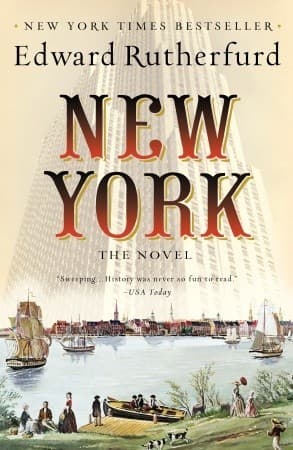
Synopsis
Covers the whole plot, including the ending.
- Difficulty
- Medium
- Pacing
- Moderate
- Mood
- Epic, Informative, Panoramic, Ambitious
- Read it if
- You love sweeping historical sagas that span generations and want to experience the complete history of New York City through the eyes of its diverse inhabitants.
- Skip it if
- You prefer tightly focused plots with a small cast of characters or find very long books with a broad historical scope daunting.
New York Plot Summary
Covers the whole plot, including the ending.
The First Inhabitants and European Arrival
The story begins in 1609, showing the Lenape people's life on Mannahatta, a land with many resources. Chief Ramapo and his family, including his son, Running Deer, live in balance with nature. Their world changes with the arrival of Henry Hudson's ship, the Half Moon, which is the first contact with Europeans. Later chapters describe the founding of New Amsterdam by the Dutch West India Company, led by people like Peter Stuyvesant. The Lenape first trade with the Europeans but soon face more pressure as settlers expand, leading to fights and the eventual removal of the native population from their lands. These early interactions set the stage for centuries of cultural clashes and the first struggle for control of the island.
Dutch Rule and English Takeover
Under Dutch rule, New Amsterdam becomes a busy trading post. Families like the Van Dycks and the Master families, including the ambitious Dirck van Dyck, settle there, involved in trade and buying land. The city grows, known for its varied population and practical approach to business. However, the English, wanting more power, see the Dutch presence as a problem. In 1664, an English fleet arrives, demanding surrender. Governor Peter Stuyvesant, though he first resists, has to give in to the stronger force, and New Amsterdam is peacefully given to English control, becoming New York. This change is a big shift in the city's identity and government, making it part of the larger British colonial system.
Colonial New York and the Seeds of Revolution
As a British colony, New York continues to grow in importance, becoming a key port and trade center. Families like the Master and the Maverick families deal with colonial life. The story follows generations, including the lawyer Ben Master, as they build their wealth and power. However, British rules, like the Stamp Act and other taxes, cause widespread anger among the colonists. New Yorkers, along with other colonial cities, start to organize protests and resistance. People like Alexander Hamilton appear, arguing for independence. The city becomes a place of revolutionary feeling, setting the stage for the coming fight with Britain.
The Revolutionary War and Its Aftermath
New York has a role in the American Revolutionary War. George Washington's Continental Army tries to defend the city but loses battles, leading to British occupation for most of the war. Families are split by their loyalties, with some supporting the Loyalists and others the Patriots. Characters like the descendants of the Master and Maverick families experience the difficulties and political unrest. After the British surrender at Yorktown, the war ends, and New York celebrates its freedom. The city then faces the task of rebuilding and becoming a part of the new United States, preparing for its future as a national capital and economic center.
The Rise of Commerce and Early Immigration
In the years after the Revolution, New York quickly becomes America's main port and financial center. The Erie Canal's completion in 1825 secures its place, connecting the city to the Great Lakes and the continent's interior. The story introduces new immigrant families, such as the O'Donnells from Ireland, who arrive looking for opportunity and a new life. They face bias and hardship but add to the city's growing workforce and varied culture. People like the ambitious bankers and merchants from the Master and Van Dyck lines continue to shape the city's economy, building wealth and affecting its growth. The difference between the established rich and the struggling newcomers is a repeated idea.
The Civil War and the Draft Riots
The Civil War greatly affects New York, which remains a divided city with strong business ties to the South. The story follows characters like the O'Donnells, some of whom join the Union Army, while others, especially poor Irish immigrants, dislike the draft. The Draft Riots of 1863 happen, driven by class and racial tensions, leading to widespread violence, looting, and destruction. The riots show the deep social divisions within the city, showing the struggles of its varied population. Despite the chaos, the city's economy keeps going, and families like the Masters and Mavericks deal with the changing political and social situation, some making money from the war.
The Gilded Age and Rapid Urbanization
The late 19th century, the Gilded Age, sees New York changed by great wealth, industry, and immigration. Large houses rise on Fifth Avenue, built by families like the Mavericks, who now represent old money, and new industrialists. At the same time, the Lower East Side becomes a busy area for millions of European immigrants, including the Jewish immigrants, the Steinbergs. They face crowded housing, poverty, and exploitation, but also find community and opportunity. The story looks at the sharp contrast between the city's rich elite and its struggling working class, as well as the rise of political groups like Tammany Hall, which have great power. New technologies, like skyscrapers and elevated trains, begin to change the city's appearance.
Early 20th Century: World Wars and the Great Depression
The early 20th century brings more change and problems to New York. The city helps in both World War I and World War II, providing troops and industrial power. The 1920s bring a time of economic growth and cultural activity, with new art forms and social freedoms. However, the Great Depression destroys this prosperity, putting many New Yorkers into poverty and despair. The story follows families like the O'Donnells and Steinbergs as they deal with these difficult times, experiencing both hardship and strength. The city's buildings continue to develop, with public works projects aimed at jobs and modernization, further solidifying its global standing.
Post-War Boom and Mid-Century Challenges
After World War II, New York enters a time of new prosperity and cultural leadership, becoming a global center for finance, art, and media. The story follows descendants of the established families and newer arrivals as they work and live in the growing city. However, the latter half of the 20th century brings new problems: racial tensions, rising crime, and the financial crisis of the 1970s. The city experiences a period of urban decline and uncertainty, with many fearing its downfall. Characters see some residents move to the suburbs and the difficulties faced by those who stay, especially in the outer areas and struggling neighborhoods.
Rebirth and the New Millennium
The 1980s and 1990s see New York City come back, driven by economic growth, less crime, and renewed civic pride. New businesses appear, and the city again attracts talent and money from around the world. The story ends in the early 21st century, focusing on the lives of current New Yorkers, including a young woman named Sarah Master, a descendant of the original Master family. The city's strength is tested by the attacks of September 11, 2001, on the World Trade Center. The book finishes with thoughts on the city's lasting spirit, its ability to rebuild, and the shared memory of its residents, showing its continuous development.
New York Characters
Chief Ramapo / Running Deer / Black Hawk
Protagonist / Ancestral Figures
Lenape leaders and their descendants, representing the indigenous inhabitants of Mannahatta.
Chief Ramapo is the leader of the Lenape tribe when Henry Hudson arrives. His son, Running Deer, and later descendants like Black Hawk, represent the enduring spirit and tragic fate of the indigenous people as they are gradually dispossessed of their land. They are deeply connected to the land and its traditions, often serving as moral compasses or tragic figures witnessing the destruction of their way of life. Their struggle highlights the profound impact of European colonization and the loss of native cultures. Their stories underscore the theme of displacement and the enduring memory of the land's original inhabitants.
Relationships: Dirck van Dyck (Initial trader, later land encroacher); Henry Hudson (First European contact)
Dirck van Dyck
Supporting / Ancestor
Ambitious Dutch settler and merchant, founder of one of the city's prominent families.
Dirck van Dyck is an early Dutch settler who arrives in New Amsterdam with ambition and a keen eye for opportunity. He is instrumental in establishing trade and acquiring land, laying the foundation for a wealthy and influential family line. He represents the pragmatic, entrepreneurial spirit of the early Dutch colonists. His interactions with the Lenape people, initially for trade, gradually turn into land acquisition, illustrating the colonial expansion. His descendants continue to be prominent figures throughout the city's history, often in finance and commerce, reflecting the enduring legacy of early European settlement.
Relationships: Chief Ramapo (Trading partner, then land rival); Peter Stuyvesant (Colonial governor)
Ben Master
Supporting / Ancestor
Prominent lawyer and landowner, representing the English colonial elite and later Patriot cause.
Ben Master is a significant figure in colonial New York, a lawyer and landowner whose family rises to prominence under British rule. He represents the educated, influential class who navigate the political landscape leading up to the American Revolution. Initially benefiting from the British system, his descendants often become staunch Patriots, actively participating in the struggle for independence. The Master family line continues to be involved in the city's development, often as professionals, politicians, or philanthropists, embodying the evolution of the city's Anglo-American establishment. They symbolize continuity and adaptation through different historical periods.
Relationships: Alexander Hamilton (Political contemporary); Maverick Family (Intertwined social and business circles)
William Maverick
Supporting / Ancestor
Wealthy merchant and Loyalist, representing the divided loyalties during the Revolution.
William Maverick is a wealthy merchant whose family's fortunes are tied to the British Crown. He embodies the Loyalist faction during the American Revolution, choosing to remain loyal to Britain, which leads to significant personal and financial consequences for his family. His descendants, however, manage to adapt and rebuild their fortunes in post-Revolutionary New York, often through shrewd business dealings. The Maverick family line frequently appears as figures of established wealth, sometimes clashing with newer money or representing the conservative elements of the city's elite. Their story reflects the shifting political allegiances and the resilience of old families.
Relationships: Ben Master (Social and political peer, often with differing views); George Washington (Opposing military leader)
Michael O'Donnell
Supporting / Ancestor
Irish immigrant, representing the wave of impoverished but determined newcomers.
Michael O'Donnell is an Irish immigrant who arrives in New York during the mid-19th century, fleeing poverty and seeking a better life. He represents the countless immigrants who built the city from the ground up, facing discrimination, hardship, and dangerous labor. His family line, initially struggling in the tenements and working on construction projects, gradually rises through hard work, community involvement, and sometimes through the city's political machine. The O'Donnells illustrate the immigrant experience, their contributions to the city's infrastructure and culture, and their eventual integration into the broader society, often retaining a strong sense of their heritage.
Relationships: Steinberg Family (Fellow immigrant family, often in similar social strata); Tammany Hall figures (Beneficiaries of political patronage)
Samuel Steinberg
Supporting / Ancestor
Jewish immigrant from Eastern Europe, embodying the late 19th-century wave of immigration.
Samuel Steinberg is a Jewish immigrant who arrives in New York in the late 19th or early 20th century, seeking refuge and opportunity from persecution in Eastern Europe. He represents the massive wave of Jewish immigrants who settled in the Lower East Side, establishing vibrant communities and contributing significantly to the city's cultural and economic fabric. His family's journey reflects the challenges of tenement life, the struggle to learn English, and the eventual rise through entrepreneurship, education, and the professions. The Steinbergs highlight themes of cultural preservation, religious identity, and the pursuit of the American Dream in the face of adversity.
Relationships: O'Donnell Family (Fellow working-class immigrant family); Maverick Family (Contrasting social class)
Sarah Master
Protagonist / Contemporary
Modern-day descendant of the Master family, representing contemporary New York.
Sarah Master is a contemporary character, a descendant of the original Master family, living in New York in the late 20th and early 21st centuries. She represents the current generation of New Yorkers, grappling with the city's past while looking towards its future. Her narrative often serves as a lens through which the reader experiences the city's modern challenges and triumphs, including the events of 9/11. She embodies the continuity of the city's history through its families, connecting the long lineage of the Masters to the present day. Her perspective offers a reflection on the city's enduring spirit and its constant evolution.
Relationships: Her family ancestors (Direct descendant, carrying the legacy); Various contemporary New Yorkers (Professional and personal connections)
New York Themes
Immigration and the American Dream
The novel is a story of immigration, from the first Dutch and English settlers to the waves of Irish, Jewish, and other European immigrants, and later global arrivals. Characters like Michael O'Donnell and Samuel Steinberg show the hard journey of leaving one's home, facing bias and difficulty, yet working for a better life and adding to the city's growth. The search for opportunity, freedom, and social movement is a constant force, shaping individual lives and the city's varied character. The story shows both the successes and the struggles in this search.
“For New York was built on the dreams of strangers, and its streets were paved with the hope of a new beginning.”
The Enduring Spirit of New York
Despite wars, fires, economic downturns, social unrest, and attacks, New York shows a strong ability to recover and rebuild. The novel tells of the city's ability to rebuild, change itself, and come back stronger from every crisis. This idea is throughout the story, from the early Dutch settlers rebuilding after conflicts to the city's recovery from the 1970s financial crisis and the 9/11 tragedy. The shared determination and inventive spirit of its residents are shown as the force behind its continuous development and lasting global importance.
“The city would always rise again, a phoenix of concrete and dreams, because its people would not allow it to do otherwise.”
Conflict and Coexistence
New York's history is a constant mix of conflict and living together. From the first fights between the Lenape and European settlers, through the rivalries between Dutch and English, Loyalists and Patriots, and later, tensions between old wealth and new immigrants, the city is a mix of competing interests and cultures. Despite these conflicts, there is also a thread of adaptation, negotiation, and eventually, if sometimes difficult, living together that allows the city to grow. The Draft Riots of 1863 clearly show the violent potential of these conflicts, while everyday interactions show the slow formation of a shared civic identity.
“Two worlds had collided, and from their uneasy embrace, a new one was being born, scarred but vibrant.”
Land, Power, and Legacy
The buying and control of land are central to the city's growth and its families' wealth. From the 'purchase' of Manhattan from the Lenape to the large estates of colonial landowners and the later building of skyscrapers, land is a basic source of wealth and power. The novel carefully shows how families like the Van Dycks and Masters gain and keep their influence through generations by controlling key pieces of land and doing business. This idea shows the lasting impact of early decisions on the city's physical and social makeup, and how legacies are built on property and ambition.
“The very ground beneath their feet was a testament to ownership, a palimpsest of forgotten deeds and ancient claims.”
Plot Devices & Literary Techniques
Generational Saga
Traces the lives of several intertwined families across centuries.
The novel uses a multi-generational saga structure, following the descendants of a few key families (e.g., Master, Van Dyck, O'Donnell, Steinberg, Maverick, and the indigenous Lenape) from the 17th century to the 21st. This device allows Rutherfurd to illustrate the long-term impact of historical events, the evolution of social classes, and the enduring characteristics of the city through the continuity of bloodlines and names. It provides a personal lens through which to view the vast sweep of New York's history, highlighting both change and continuity in its inhabitants' fortunes and identities. Each new generation faces new challenges, but their lineage connects them to the city's founding moments.
Panoramic Historical Scope
Covers over 400 years of the city's development, integrating real historical events.
Rutherfurd employs a panoramic historical scope, moving chronologically through four centuries of New York's history. This allows him to integrate major historical events—such as the arrival of Henry Hudson, the English takeover, the Revolutionary War, the Erie Canal, the Civil War Draft Riots, the Gilded Age, the Great Depression, and 9/11—directly into the narrative. The fictional characters interact with, and are shaped by, these real historical moments and figures (like Peter Stuyvesant or Alexander Hamilton), providing a comprehensive and immersive historical experience. The city itself becomes a central character, evolving through these epochs.
The City as a Character
New York itself functions as a dynamic, evolving entity that shapes its inhabitants.
Beyond merely being a setting, New York City is presented as a living, breathing character in the novel. Its physical landscape, economic opportunities, social challenges, and cultural identity are not static but constantly evolving, directly influencing the lives and fates of the fictional families. The city's growth, decline, and rebirth are central to the narrative, reflecting its resilience and dynamism. Characters' dreams and struggles are inextricably linked to the city's fortunes, making its transformation over centuries as compelling as any individual's arc. The changing street names, buildings, and demographics are all part of this character's development.
Interwoven Family Histories
The destinies of diverse families are intricately linked through marriage, business, and conflict.
The novel skillfully interweaves the histories of various families—some old money, some new immigrants, some indigenous—through generations. Their paths cross through marriages, business partnerships, rivalries, and chance encounters. This device emphasizes the interconnectedness of New York's diverse population and how different social strata and ethnic groups contributed to the city's complex tapestry. It allows for contrasts in experience (e.g., the wealthy Maverick and the struggling O'Donnell families) while showing how their lives, over time, become part of a shared, collective history that defines the city. This creates a rich social mosaic.
New York Quotes
“New York was not a city of dreams; it was a city of realities, hard and unyielding, but it was also a city of hope.”
“In New York, you could be whoever you wanted to be, and nobody would ask where you came from.”
“The skyline was not just a collection of buildings; it was a testament to human ambition.”
“Money talked in New York, but so did art, and sometimes they spoke the same language.”
“Every stone in the city had a story, if you knew where to look.”
“The harbor was the city's beating heart, pumping life into its veins with every ship that arrived.”
“In the chaos of the streets, there was a strange kind of order, a rhythm that only New Yorkers understood.”
“They built their fortunes on the backs of others, but they also built a city that would outlast them all.”
“The fire of 1835 did not destroy New York; it merely cleared the way for something greater.”
“Love in New York was as fleeting as a cab in the rain, but just as desperately sought.”
“The subways carved through the city like arteries, connecting lives that would otherwise never touch.”
“In the shadow of the great bridges, people found ways to cross divides that seemed insurmountable.”
“New York was a palimpsest, each generation writing over the last, but never quite erasing it.”
“The stock market crash didn't just break fortunes; it broke spirits, but New Yorkers mended both.”
Quiz
10 questions on the plot and the characters. Each answer comes with a short explanation.
Question 1
What is the primary narrative structure Edward Rutherfurd uses to tell New York's story?
- A chronological biography of a single protagonist
- A series of interconnected family sagas spanning generations
- A collection of unrelated short stories about famous New Yorkers
- A documentary-style analysis of economic trends
Show answer
B. A series of interconnected family sagas spanning generations Rutherfurd structures the novel around multiple fictional families whose intertwined stories unfold across New York's history, allowing readers to experience the city's evolution through personal perspectives rather than a single narrative thread.
Question 2
Which historical event marks the beginning of New York's transformation in the novel?
- The American Revolution
- The arrival of Dutch merchants
- The Civil War
- The Gilded Age
Show answer
B. The arrival of Dutch merchants The novel opens with New York as a Native American fishing village before detailing how Dutch merchants established New Amsterdam, setting in motion the city's development into a major urban center.
Question 3
What recurring theme is emphasized through the experiences of immigrant characters in the novel?
- The inevitability of assimilation into American culture
- The pursuit of freedom and opportunity
- The superiority of European traditions
- The decline of urban communities
Show answer
B. The pursuit of freedom and opportunity Rutherfurd portrays immigrants from various eras—such as Dutch, British, and later waves—as driven by hopes for better lives, echoing the book's description of 'the search for freedom and opportunity at the heart of our nation's history.'
Question 4
How does the novel depict New York's role during the Revolutionary War?
- As a neutral territory unaffected by the conflict
- As a loyalist stronghold occupied by the British
- As the primary battleground for most major fights
- As a city that immediately supported independence
Show answer
B. As a loyalist stronghold occupied by the British The novel shows New York as a key British-held city during the war, with characters experiencing occupation, espionage, and divided loyalties, reflecting its historical significance as a strategic center.
Question 5
Which period is described as involving 'excesses' and a focus on wealth in the novel?
- The Colonial era
- The Gilded Age
- The Great Depression
- The 1970s decline
Show answer
B. The Gilded Age The Gilded Age is portrayed as a time of opulence and social stratification in New York, with characters navigating newfound riches and the disparities between wealthy elites and the poor.
Question 6
What symbolizes New York's resilience in the face of tragedy in the later parts of the novel?
- The construction of the Erie Canal
- The roaring rebirth in the 1990s after near demise
- The end of Prohibition
- The rise of Wall Street in the 1980s
Show answer
B. The roaring rebirth in the 1990s after near demise After depicting the city's struggles in the 1970s, the novel highlights its recovery and revitalization in the 1990s, showcasing New York's enduring spirit—a theme that extends to its response to the 9/11 attacks.
Question 7
How are real historical figures integrated into the fictional narrative?
- They serve as narrators for each chapter
- They interact with fictional characters in key events
- They are only mentioned in passing references
- They replace fictional characters entirely in later sections
Show answer
B. They interact with fictional characters in key events Rutherfurd weaves actual people like politicians, business leaders, and cultural icons into the plot, having them engage with the novel's families to ground the story in historical authenticity.
Question 8
Which of these is NOT a major historical event covered in the novel?
- The attack on the World Trade Center
- The California Gold Rush
- The convulsions of the Civil War
- The explosion of immigration in the late 19th/early 20th centuries
Show answer
B. The California Gold Rush While the novel spans from pre-colonial times to 9/11 and includes events like the Civil War and immigration waves, it focuses on New York-specific history; the California Gold Rush is not a central plot point, as it occurred far from the city.
Question 9
What aspect of New York's development does the novel highlight through its portrayal of the 19th and 20th centuries?
- Its consistent decline as a financial center
- Its transformation into a great trading and financial hub
- Its isolation from global events
- Its reliance on agricultural exports
Show answer
B. Its transformation into a great trading and financial hub The novel details New York's rise as an economic powerhouse, from early trade to Wall Street's growth, emphasizing how commerce and finance shaped the city's identity and attracted diverse populations.
Question 10
In what way does the novel's ending reflect its overarching message about New York?
- By suggesting the city's best days are behind it
- By emphasizing cyclical renewal and enduring hope
- By concluding with a political manifesto for change
- By focusing solely on architectural achievements
Show answer
B. By emphasizing cyclical renewal and enduring hope Through events like the 1990s rebirth and response to 9/11, the novel closes by underscoring New York's ability to overcome adversity and reinvent itself, mirroring the 'fates rise and fall and rise again' theme from its description.
New York FAQ
What is 'New York' by Edward Rutherfurd about?
The novel follows multiple fictional families—including the Masters, Van Dycks, and Carusos—across four centuries of New York City's history, from its origins as a Lenape fishing village through Dutch colonization, the Revolutionary War, the Gilded Age, immigration waves, World War II, the 1970s decline, and the 9/11 attacks. It blends their personal dramas with real historical events to showcase the city's evolution.
Why should I read 'New York'?
It offers an immersive, sweeping narrative that makes history accessible through relatable characters, highlighting how ordinary people shaped and were shaped by New York's growth. Readers gain insight into America's social and economic transformations, from early trade to modern resilience, with vivid depictions of events like the Draft Riots and the construction of the Brooklyn Bridge.
What is the background/setting of 'New York'?
The setting spans from 1664, when New Amsterdam became New York under British rule, to 2009 post-9/11. Key locations include Wall Street's early trading posts, Five Points slums, Ellis Island, Harlem during the Renaissance, and the World Trade Center, reflecting the city's changing landscape and diverse neighborhoods.
What are the most memorable quotes?
Notable quotes include: 'In New York, you can be born in a tenement and die in a penthouse,' capturing the city's promise of upward mobility, and 'The city isn't just bricks and mortar; it's the people who keep rebuilding it,' emphasizing resilience. Another is, 'Freedom isn't given; it's taken,' spoken during the Revolutionary War scenes.
What writing style does the author use?
Rutherfurd employs an episodic, multi-generational narrative with a omniscient third-person perspective, interweaving fictional family sagas with detailed historical research. His prose is descriptive yet accessible, blending dramatic dialogue with factual accounts to create an educational yet engaging epic.
What minor details add significant meaning?
The recurring symbol of an oak tree on the Masters' property represents endurance and rootedness amid change. Small details like a character saving a Dutch tile from the 1660s, passed down through generations, highlight cultural preservation. The mention of specific street names, like Broadway's evolution from a Native American trail, underscores continuity.
What are some subtle foreshadowing moments?
Early references to trade and finance in the 1700s foreshadow New York's rise as a global economic hub. A character's fear of fire in the 1830s hints at the Great Fire of 1835. Discussions about immigration quotas in the 1920s subtly prefigure later debates, and tensions over land use presage 9/11's impact on the city's identity.
What unexpected character connections exist?
The Van Dyck family, originally Dutch merchants, intermarries with the Irish immigrant O'Donnell clan in the 1800s, showing assimilation. A minor character from the Revolutionary era reappears as an ancestor to a 20th-century activist, linking struggles for freedom. The Caruso family's ties to the Masters through business dealings span centuries, revealing hidden alliances.
What are unspoken character motivations?
Dirk Master's drive to expand his shipping business in the 1700s masks a desire to outshine his British rivals and prove his worth as a New Yorker. In the 1900s, Maria Caruso's push for her children's education stems from unspoken fears of poverty she experienced as an immigrant. These motivations often tie to broader themes of ambition and survival.
What psychological complexities do characters exhibit?
Characters like James Master grapple with loyalty conflicts during the Revolutionary War, torn between family ties and patriotic ideals. In the Gilded Age, socialite Charlotte Van Dyck faces internal strife between her privileged upbringing and guilt over inequality. Post-9/11, a firefighter's survivor guilt reveals deep trauma, showcasing resilience amid personal crisis.
What are the major emotional turning points?
Key moments include the death of a protagonist during the Draft Riots of 1863, highlighting urban violence's toll; a family's reunion at Ellis Island in 1910, symbolizing hope; the stock market crash of 1929 devastating the Masters' fortune; and the 9/11 attacks, which unite characters in grief and determination to rebuild.
How do relationship dynamics evolve?
Early Dutch-British rivalries give way to intermarriage and blended identities by the 1800s. Master family tensions shift from generational conflicts over land to shared struggles during the Civil War. In the 20th century, immigrant and native-born relationships evolve from suspicion to collaboration, as seen in labor movements and post-9/11 community efforts.
Which parts remain ambiguous or open-ended?
The fate of some minor characters, like a Lenape descendant's integration into modern society, is left unresolved. The novel doesn't definitively answer whether New York's cyclical rebirths will continue indefinitely, leaving its future open to interpretation. Certain family secrets, such as undisclosed parentage in the 19th century, are hinted at but never fully revealed.
What are controversial scenes or decisions?
Scenes depicting the violent suppression of the Draft Riots and racial tensions during the Harlem Renaissance spark debate on historical accuracy and social justice. Characters' decisions, like a businessman profiting from slavery in the 1700s or a politician supporting restrictive immigration laws, raise ethical questions about complicity and morality in America's growth.
'New York' ending explained: how it ends & what it means
The novel ends in 2009 with characters reflecting on 9/11's aftermath and New York's resilience, symbolized by the rebuilding at Ground Zero. It suggests that the city's strength lies in its diverse, enduring communities, tying past struggles to present hope. The conclusion emphasizes that New York's story is ongoing, shaped by continuous adaptation and collective memory.
What themes are central to the novel's interpretation?
Key themes include the tension between progress and preservation, as seen in skyscraper construction versus historic neighborhoods; the American Dream's accessibility across eras, from immigrants to financiers; and resilience through crises like wars and economic downturns. These themes invite debate on whether New York's success comes at a cost to its soul.
About the author
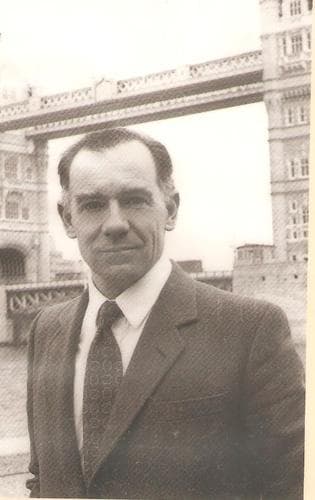
Edward Rutherfurd is a British author known for his historical fiction that explores the rich tapestry of cities and landscapes. His notable works include "New York," which chronicles the history of the city through interconnected stories, "Paris," which delves into the life of the French capital, and "The Forest," set in the ancient woodlands of England.
Similar books
- The Source
James A. Michener
4.0 (11k) average on GoodreadsFantasyA sprawling historical novel covering the history of a place (Israel) over millennia through interwoven stories.
- Hawaii
James A. Michener
4.2 (72k) average on GoodreadsLifestyleExplores the long history of a specific location and its diverse peoples through an epic narrative.
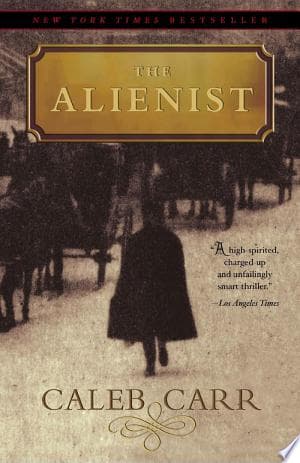
- The Alienist
Caleb Carr
4.1 (182k) average on GoodreadsFictionCarr's The Alienist focuses on a much narrower period (1890s Gilded Age New York), offering significantly deeper character development, psychological suspense, and atmospheric detail. While Rutherfurd provides breadth, Carr delivers depth and intricate plotting within a specific historical moment.
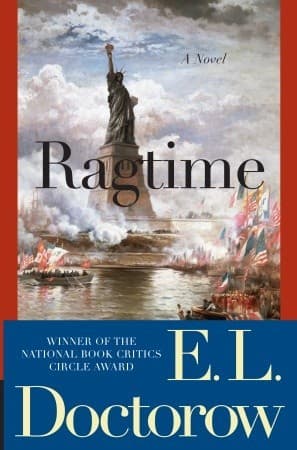
- Ragtime
E.L. Doctorow
3.9 (38k) average on GoodreadsLiterary FictionDoctorow's Ragtime also explores early 20th-century New York but employs a more experimental, postmodern style, blending fictional and historical figures with greater thematic profundity and stylistic flair. Doctorow's prose is more evocative and his social commentary more incisive than Rutherfurd's more straightforward historical survey.
- Eat, Pray, Love
Elizabeth Gilbert
3.6 (1.5M) average on GoodreadsLifestyleA heartbroken writer leaves her conventional life for a year-long global search for pleasure in Italy, spiritual devotion in India, and unexpected love and balance in Bali.
- Wild: From Lost to Found on the Pacific Crest Trail
Cheryl Strayed
4.0 (615k) average on GoodreadsLifestyleAfter losing her mother and her marriage, a young woman impulsively hikes over a thousand miles of the Pacific Crest Trail alone, finding strength and healing in the unforgiving wilderness.


Enjoyed the summary?
A summary gives you the shape of the book. The book itself has the detail, the examples and the voice.
Find New York on AmazonAs an Amazon Associate, BookBrief earns from qualifying purchases. How we're funded