
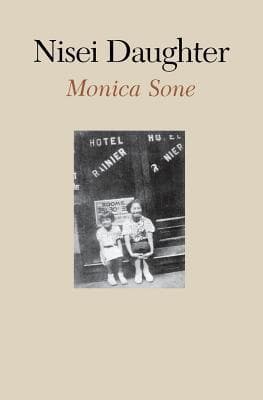
Core Idea
- Difficulty
- Medium
- Read it if
- You are interested in personal accounts of Japanese American internment, exploring themes of identity and prejudice, or understanding a critical period in American history through a deeply human lens.
- Skip it if
- You prefer a purely academic or detached historical analysis rather than a personal, emotional narrative, or if you are not prepared for a detailed account of racial injustice and trauma.
Key Takeaways from Nisei Daughter
The Dual Identity Tightrope
Navigating the complexities of being both Japanese and American in pre-war Seattle.
Monica Sone's early life shows the psychological tightrope Nisei (second-generation Japanese Americans) walked in the 1930s. They were American citizens, educated in American schools, and part of American culture, but constantly reminded of their Japanese heritage through family traditions, community expectations, and societal prejudice. This made them feel like 'others,' neither fully Japanese nor fully American. Sone explains this internal conflict, the desire to assimilate, and the simultaneous pull of ancestral identity, a theme many hyphenated Americans relate to. Her experiences show the challenges of forming a self-identity when outside forces constantly question one's belonging.
“I was a sort of Japanese-American 'schizophrenic.' On the one hand, I was proud to be American, but on the other, I couldn't escape the fact that I looked Japanese.”
In the book: Sone describes her family's adherence to Japanese customs at home, like bowing and speaking Japanese, contrasted with her public school life where she learned American history and yearned for 'American' experiences like slumber parties. She recounts her shame over her mother's broken English and her own efforts to perfect her English to fit in.
Try this: Reflect on how your personal identity is shaped by cultural heritage and societal expectations. Seek understanding and empathy for those who navigate dual or multiple cultural identities, recognizing the inherent tensions and strengths in such positions.
Related ideas: nisei-identity, cultural-assimilation, immigrant-experience
Pre-War Prejudice: A Daily Reality
Subtle and overt discrimination shaped the Nisei experience long before the internment.
Sone's memoir demonstrates that anti-Japanese sentiment was not just a wartime event. Even in Seattle, Nisei faced widespread, systemic discrimination. They were often denied housing, limited in certain jobs, and subjected to racial slurs and stereotypes. This 'quiet prejudice' led to resignation and a clear understanding of their limited social mobility. It shows how deeply racial bias was in American society, preparing the way for the drastic measures taken during WWII. The internment, while surprising, was an increase of existing prejudices, not an isolated event.
“Before the war, we had faced prejudice, but it was a quiet, simmering kind. We knew our place.”
In the book: Sone mentions the limited job opportunities available to Nisei, often relegated to family businesses or service roles. She recounts instances of being stared at or treated differently by white Americans, and the unspoken understanding within the Japanese community about where they 'belonged' in society.
Try this: Recognize that prejudice often exists in subtle forms long before it escalates into overt discrimination or violence. Challenge microaggressions and unspoken biases in your environment to prevent the normalization of 'othering' that can lead to more severe injustices.
Related ideas: racial-discrimination, prejudice-history, anti-asian-racism
The Unraveling of Home
The abrupt and traumatic displacement from Seattle's Nihonmachi.
Sone's account of the forced removal from their Seattle home is sad and shows the injustice of Executive Order 9066. The suddenness, lack of fair process, and large scale of the evacuation are conveyed through her family's personal struggle. The Japanese American community of Nihonmachi was dismantled quickly, businesses sold at a loss, and cherished items discarded. This part of the book humanizes the statistics, showing the emotional and material cost of forced displacement. It emphasizes how fragile citizenship and rights are when fear and racial paranoia take over.
“Our home, our life, everything we knew was packed into a few suitcases. It was as if our very existence was being erased.”
In the book: Sone details the frantic scramble to sell their hotel, the limited time given to pack, and the profound sadness as they left their familiar neighborhood. She describes the public humiliation of being tagged with identification numbers and herded onto buses.
Try this: Understand the human cost of forced migration and displacement. Advocate for due process and the protection of civil liberties, especially for vulnerable communities, to prevent similar injustices from recurring.
Related ideas: japanese-internment, forced-displacement, civil-rights-violation
Puyallup: The Assembly Center Shock
The initial shock and dehumanization of life in a temporary detention facility.
The move from home to the Puyallup 'assembly center' (a converted fairground) was a big shock, showing the dehumanizing conditions of the initial detention. Sone's descriptions of living in horse stalls, the lack of privacy, and communal living arrangements clearly depict the immediate loss of dignity. This experience introduced them to the reality of their incarceration, removing personal space, control, and the comforts of normal life. It highlights the psychological effect of being reduced to a number and confined in unsanitary, undignified places, a step before the long-term camps.
“We were in a horse stall, for goodness sake. It was a stable. We were treated like animals.”
In the book: Sone recounts the stench of manure in their 'rooms,' the communal latrines with no partitions, and the constant noise and lack of privacy. She describes the shock and disbelief of her parents at their living conditions.
Try this: Recognize the importance of dignity and privacy in all living situations, especially for incarcerated or displaced populations. Support efforts to ensure humane conditions and respect for human rights in detention facilities.
Related ideas: assembly-centers, dehumanization, detention-conditions
Minidoka: Adapting to the 'Camp' Normal
The resilience and resourcefulness of a community creating life amidst barbed wire.
Despite the injustice and confinement, Sone shows the resilience of the Japanese American community in Minidoka. They not only endured; they worked to create a sense of normalcy and community. This included establishing schools, newspapers, activities, and even growing gardens in the harsh desert. This adaptation was not an acceptance of their situation, but an act of resistance—a refusal to let their spirits be broken. It shows the human ability to find purpose even in oppressive situations, rebuilding social structures and cultural practices behind barbed wire.
“We tried to make a life, a normal life, out of the abnormal. It was our way of resisting.”
In the book: Sone details the establishment of schools, a camp newspaper, and various clubs and activities. She describes her own involvement in camp life, including working in the hospital and participating in social events, highlighting the efforts to maintain a sense of purpose and community.
Try this: Look for examples of resilience and community building in challenging environments. Support initiatives that empower marginalized groups to create their own structures and maintain cultural identity in adverse conditions.
Related ideas: minidoka-internment, community-resilience, cultural-preservation
The Loyalty Questionnaire's Cruelty
Forced allegiance tests fractured families and exposed the hypocrisy of 'democracy.'
The 'loyalty questionnaire,' especially Questions 27 and 28, is one of the worst parts of the internment. It forced internees to disavow allegiance to Japan (which many never had) and pledge unqualified allegiance to the U.S., including willingness to serve in combat. For many, especially Kibei (those educated in Japan) or older Issei (first generation, denied citizenship), answering 'yes' was dangerous or impossible. This test caused deep divisions within families and the community, labeling some as 'disloyal' and leading to more segregation. Sone explains how this tool, supposedly for security, was a psychological weapon meant to create conflict and justify more oppression, instead of truly checking loyalty.
“The questionnaire tore us apart. It made us choose between our loyalty to America and our family's safety, or our dignity.”
In the book: Sone describes the intense debates and anxieties within the camp regarding the questionnaire. She highlights the impossible choices faced by many, particularly the older generation who could not renounce a citizenship they didn't officially hold in the U.S., or the young men asked to fight for a country that had imprisoned them and their families.
Try this: Critically examine loyalty tests or oaths, especially when applied to marginalized groups. Question policies that force individuals into impossible choices, as they often serve to divide and control rather than unify.
Related ideas: loyalty-questionnaire, kibei, issei, civil-liberties
Seeking Freedom, Finding New Prejudices
Leaving camp meant facing a different, but still pervasive, form of discrimination.
Sone's experiences after camp, especially her move to the Midwest for college, show that 'freedom' from the camps did not mean the end of prejudice. While no longer behind barbed wire, Nisei faced significant challenges in rejoining American society. They encountered housing discrimination, job barriers, and continued social exclusion. Her account shows that the trauma of internment was not just the confinement, but also the lasting societal stigma and the need to rebuild lives from scratch in a still-hostile environment. This period highlights the long-term effect of systemic discrimination and the difficulty of true reintegration after such a profound injustice.
“Leaving Minidoka was freedom, but it was also walking into a world that still didn't quite know what to do with us.”
In the book: Sone details her struggles to find suitable housing and the subtle biases she encountered in her interactions with white Americans outside the camps. She also mentions the efforts of organizations helping Nisei resettle, indicating the widespread challenges.
Try this: Support rehabilitation and reintegration programs for individuals affected by historical injustices. Challenge lingering stereotypes and biases that prevent full inclusion and equity for marginalized communities.
Related ideas: post-internment, resettlement, systemic-racism
The Power of Humor and Perspective
Maintaining sanity and humanity through wit in the face of adversity.
One of the most notable parts of Sone's story is her consistent use of humor, even when describing upsetting situations. This does not make suffering seem unimportant but shows the human spirit's ability to find light in darkness. Her clever observations, self-deprecating jokes, and ability to find absurdity in their situation are a coping mechanism, a way to keep dignity and sanity. This shows how humor can be a strong tool for resilience, allowing people to process trauma, connect with others, and keep a sense of self during dehumanizing circumstances. It is a key element that makes her memoir accessible and impactful.
“If we didn't laugh, we'd cry. And there was enough crying already.”
In the book: Sone frequently injects humor into her descriptions of camp life, from the initial shock of the horse stalls to the challenges of adapting to communal living. She describes her own awkward attempts to navigate social situations and the humorous antics of fellow internees.
Try this: Cultivate a sense of humor and perspective, even in difficult times, as a tool for resilience and emotional well-being. Recognize the power of shared laughter in fostering connection and coping with adversity.
Related ideas: coping-mechanisms, narrative-voice, resilience
A Legacy of Silence Broken
Sone's memoir as a crucial first step in documenting the internment experience.
Published in 1952, 'Nisei Daughter' was one of the earliest and most important personal accounts of the Japanese American internment, breaking a widespread silence about the event. For decades, many internees were hesitant to speak about their experiences due to shame, trauma, or a desire to move on. Sone's courage in sharing her story prepared the way for future memoirs, historical analyses, and eventually, the redress movement. Her honest, yet measured, tone helped shape public understanding and challenged the idea that the internment was a 'military necessity.' This memoir is not just a personal story; it is a fundamental text in the broader historical reckoning.
“This story needed to be told, not just for us, but for those who would come after.”
In the book: The historical context of its publication in 1952, just seven years after the war, making it one of the first voices to publicly detail the internment from an insider's perspective. Its impact on subsequent literature and historical understanding.
Try this: Support and amplify marginalized voices in history. Recognize the importance of early narratives in shaping public discourse and laying the groundwork for future justice and reconciliation efforts.
Related ideas: historical-memory, redress-movement, japanese-american-literature
The Enduring American Question
Sone's story forces a confrontation with the true meaning of American citizenship.
Ultimately, 'Nisei Daughter' makes readers consider basic questions about American identity, citizenship, and justice. Monica Sone's experience as a U.S. citizen imprisoned by her own government shows how fragile constitutional rights are when faced with wartime fear and racial prejudice. Her journey from unquestioning patriotism to a complex understanding of her country's flaws is a lesson in civic responsibility and the importance of holding institutions accountable. The book is a strong reminder that America's promise is not always equally applied and that vigilance is needed to protect the rights of all citizens, especially during crises.
“I was an American, but my country had betrayed me. What did that make me?”
In the book: Sone's internal struggles with her patriotism after the internment, her continued efforts to contribute to American society despite the injustice, and the lingering questions about her place within the nation.
Try this: Actively participate in civic discourse and advocate for policies that uphold civil liberties for all, especially during national crises. Critically examine historical narratives to understand how fear and prejudice can undermine democratic principles.
Related ideas: american-citizenship, civil-liberties, constitutional-rights, historical-injustice
Nisei Daughter Quotes
“I was born an American, but I looked like the enemy.”
“We were Americans, but we were not treated as such.”
“The barbed wire fence became a symbol of our lost freedom.”
“Mother always said, 'Gaman'—endure with patience and dignity.”
“In camp, we created a community out of nothing.”
“Our loyalty was questioned simply because of our faces.”
“I learned that home is not a place, but the people you love.”
“The war changed everything, even the way we saw ourselves.”
“We were ghosts in our own country, invisible yet feared.”
“Father said, 'Education is the one thing they cannot take away.'”
“Leaving camp was like being born again into a hostile world.”
“Our story is a part of American history, however painful.”
“In the silence of the desert, we found our voices.”
Quiz
10 questions on the main ideas. Each answer comes with a short explanation.
Question 1
What is the primary setting of Monica Sone's childhood in 'Nisei Daughter'?
- A farming community in California
- Seattle's waterfront in the 1930s
- A Japanese internment camp in Idaho
- A suburban neighborhood in Oregon
Show answer
B. Seattle's waterfront in the 1930s The book begins with Sone's childhood growing up on Seattle's waterfront in the 1930s, where her family ran a hotel, before detailing the forced relocation during WWII.
Question 2
What does the term 'Nisei' refer to in the context of the book?
- First-generation Japanese immigrants to the U.S.
- Second-generation Japanese-Americans, like Monica Sone
- Japanese-Americans who served in the U.S. military
- Japanese citizens living in the U.S. during WWII
Show answer
B. Second-generation Japanese-Americans, like Monica Sone 'Nisei' refers to the second generation of Japanese-Americans, born in the U.S. to immigrant parents (Issei). Sone uses this term to explore her dual identity as both Japanese and American.
Question 3
What major historical event forces Monica Sone and her family to leave their home?
- The Great Depression
- The attack on Pearl Harbor and subsequent WWII internment
- A natural disaster in Seattle
- Economic opportunities in another state
Show answer
B. The attack on Pearl Harbor and subsequent WWII internment After the attack on Pearl Harbor in 1941, President Roosevelt's Executive Order 9066 led to the forced relocation and internment of Japanese-Americans, including Sone's family.
Question 4
How does Sone describe her family's initial reaction to the internment order?
- They immediately resisted and protested the order
- They felt a mix of shock, confusion, and attempts to maintain dignity
- They were relieved to leave Seattle due to wartime fears
- They saw it as an opportunity for a new start elsewhere
Show answer
B. They felt a mix of shock, confusion, and attempts to maintain dignity Sone portrays her family's reaction as one of disbelief and sorrow, but they tried to comply with the order while preserving their sense of self-respect and community.
Question 5
What role does humor play in Sone's narrative?
- It is used to mock the U.S. government's policies
- It lightens the memoir but does not undermine the serious themes
- It is absent, as the book is entirely somber
- It is used primarily to describe her childhood before internment
Show answer
B. It lightens the memoir but does not undermine the serious themes Sone employs charm and humor throughout the book, even in difficult times, to provide a nuanced and humanizing perspective on her experiences, balancing the gravity of injustice with resilience.
Question 6
Which camp is Monica Sone sent to as part of the internment?
- Manzanar in California
- Minidoka in Idaho
- Tule Lake in California
- Heart Mountain in Wyoming
Show answer
B. Minidoka in Idaho After being initially held at the Puyallup Assembly Center (a fairground), Sone and her family were relocated to the Minidoka internment camp in Idaho, where she describes life in the harsh conditions.
Question 7
What is a key theme Sone explores regarding her identity as a Nisei?
- The superiority of Japanese culture over American culture
- The struggle to reconcile her Japanese heritage with her American citizenship
- The desire to fully assimilate and reject Japanese traditions
- The economic challenges of being an immigrant in the U.S.
Show answer
B. The struggle to reconcile her Japanese heritage with her American citizenship Sone delves into the internal conflict of being caught between two worlds—her Japanese ancestry and her American upbringing—especially heightened by the discrimination and internment she faces.
Question 8
How does Sone's account contribute to historical understanding of the internment?
- It provides a statistical analysis of the internment's impact
- It offers a detached, third-person perspective on the events
- It gives a personal, firsthand narrative of the human experience
- It focuses solely on the political causes of the internment
Show answer
C. It gives a personal, firsthand narrative of the human experience As one of the earliest memoirs published (1952), Sone's book provides a unique personal account that humanizes the internment experience, highlighting emotional and social impacts beyond mere facts.
Question 9
What does Sone suggest about the resilience of the Japanese-American community during internment?
- They were completely broken and unable to cope
- They passively accepted their fate without resistance
- They maintained cultural practices and supported each other despite adversity
- They focused solely on escaping the camps at any cost
Show answer
C. They maintained cultural practices and supported each other despite adversity Sone describes how internees created schools, gardens, and social activities in the camps, showing how they preserved dignity and community spirit in the face of injustice.
Question 10
Why is 'Nisei Daughter' considered a significant work in American literature?
- It was the first book to criticize U.S. internment policies
- It offers a rare early voice from a Japanese-American woman on identity and injustice
- It primarily focuses on the military aspects of WWII
- It is a fictionalized account that became a bestseller
Show answer
B. It offers a rare early voice from a Japanese-American woman on identity and injustice Published in 1952, it is one of the first memoirs by a Japanese-American woman to detail the internment experience, blending personal narrative with broader themes of race, citizenship, and resilience, thus contributing to multicultural American literature.
Nisei Daughter FAQ
What is 'Nisei Daughter' about?
'Nisei Daughter' is a memoir by Monica Itoi Sone that recounts her experiences growing up as a Japanese-American in Seattle during the 1930s and her family's forced relocation and imprisonment in an internment camp during World War II. It provides a personal perspective on the historical injustice faced by over 120,000 Japanese-Americans.
Does 'Nisei Daughter' accurately portray the Japanese-American internment experience?
Yes, 'Nisei Daughter' is considered a significant and authentic firsthand account of the Japanese-American internment, blending personal narrative with historical context. Sone's memoir is praised for its detailed, humanizing portrayal of life before, during, and after the camps.
What is the significance of the term 'Nisei' in the book?
In the book, 'Nisei' refers to second-generation Japanese-Americans, like the author, who were born in the United States to immigrant parents (Issei). The term highlights their dual cultural identity and the challenges they faced during the internment era.
How is 'Nisei Daughter' different from other internment memoirs like 'Farewell to Manzanar'?
While both books are personal accounts of Japanese-American internment, 'Nisei Daughter' focuses more on pre-war life in Seattle and the author's humorous, nuanced observations, whereas 'Farewell to Manzanar' centers on camp life in Manzanar and its psychological impact.
Does the book discuss the impact of internment on Japanese-American identity?
Yes, 'Nisei Daughter' deeply explores how internment affected Japanese-American identity, detailing Sone's struggle with loyalty, citizenship, and cultural belonging as she navigates discrimination and displacement.
What historical context does 'Nisei Daughter' provide about World War II?
The book contextualizes WWII through the lens of Japanese-American experiences, covering events like Executive Order 9066, the forced removal of families, and life in internment camps, while highlighting the resilience of the community.
How does 'Nisei Daughter' address themes of racism and discrimination?
Sone addresses racism and discrimination by recounting instances of prejudice in Seattle, the trauma of internment, and the post-war challenges, using personal anecdotes to illustrate systemic injustice and personal resilience.
Is 'Nisei Daughter' suitable for educational use?
Yes, 'Nisei Daughter' is widely used in schools and universities to teach about Japanese-American history, WWII internment, and themes of identity and civil rights, due to its accessible narrative and historical value.
What is the writing style of 'Nisei Daughter' like?
Sone's writing style is engaging and reflective, blending charm and humor with poignant insights. It combines memoir elements with historical commentary, making complex experiences relatable and emotionally resonant.
How does 'Nisei Daughter' compare to academic histories of Japanese-American internment?
Unlike academic histories that focus on facts and analysis, 'Nisei Daughter' offers a subjective, emotional account from a survivor's perspective, complementing scholarly works by humanizing the statistics and policies of the era.
About the author

Monica Itoi Sone was a Japanese American author known for her non-fiction work, particularly "Nisei Daughter," which reflects her experiences as a second-generation Japanese American during World War II. Her writing often explores themes of identity and cultural heritage. Sone's contributions to literature provide valuable insights into the Japanese American experience.
Similar books
- When the Emperor Was Divine
Julie Otsuka
3.8 (18k) average on GoodreadsHistorical FictionA fictionalized account that captures the emotional impact and daily realities of Japanese American internment.
- Pachinko
Min Jin Lee
4.3 (208k) average on GoodreadsLiterary FictionExplores themes of identity, prejudice, and family resilience across generations within an ethnic minority community (Koreans in Japan).
- The Diary of a Young Girl
Anne Frank
4.2 (2.7M) average on GoodreadsBiographyDuring the Nazi occupation, a teenage girl's diary, written from a secret annex, shares observations on humanity, hope, and the wait for freedom.
- Eat, Pray, Love
Elizabeth Gilbert
3.6 (1.5M) average on GoodreadsLifestyleA heartbroken writer leaves her conventional life for a year-long global search for pleasure in Italy, spiritual devotion in India, and unexpected love and balance in Bali.
- Night
Elie Wiesel
4.3 (970k) average on GoodreadsBiographyIn the darkness of Auschwitz and Buchenwald, a teenage Elie Wiesel faces the extermination of his family, the loss of his faith, and the lasting scars of humanity's deepest cruelty.
- Steve Jobs
Walter Isaacson
4.1 (957k) average on GoodreadsBusinessSteve Jobs was a visionary who fused creativity and technology to revolutionize six industries and shape our digital world.





Enjoyed the summary?
A summary gives you the shape of the book. The book itself has the detail, the examples and the voice.
Find Nisei Daughter on AmazonAs an Amazon Associate, BookBrief earns from qualifying purchases. How we're funded