
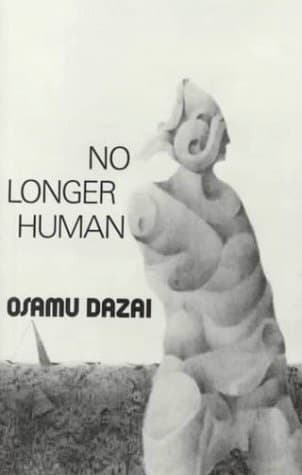
Synopsis
Covers the whole plot, including the ending.
- Difficulty
- Medium
- Pacing
- Slow
- Mood
- Melancholy, Dark, Reflective, Existential
- Read it if
- You are interested in classic Japanese literature, psychological studies of alienation and despair, or character-driven narratives focusing on mental health struggles.
- Skip it if
- You prefer optimistic stories, fast-paced plots, or find themes of self-destruction and nihilism too bleak.
No Longer Human Plot Summary
Covers the whole plot, including the ending.
The First Notebook: Early Childhood and the Mask
Yozo Oba starts his story by recalling his earliest memories, marked by a strong feeling of being an outsider and a fear of people. He sees the world as confusing, filled with strange social rules. To cope, he creates a detailed persona of a happy fool, a 'clown,' meant to entertain and distract from his inner turmoil. This mask lets him navigate social situations without showing his true feelings of terror and inadequacy, even within his wealthy family. He describes early examples of his clowning, like intentionally falling down stairs to make his family laugh, showing his desperate need for acceptance and his inability to truly connect.
The Second Notebook: School Years and the Discovery of Shame
During middle school, Yozo’s carefully built facade almost breaks when a sharp classmate named Takeichi Horiki sees through him. Horiki confronts Yozo with a drawing Yozo made, which Horiki correctly interprets as a self-portrait of a troubled person. This meeting deeply bothers Yozo; it is the first time someone has accurately seen his inner state, making him feel exposed. He begins to understand 'shame' and how it works in society, realizing his attempts to hide his true self are not always successful. This time marks growing anxiety about his inability to fit in and a further retreat into his inner world of despair.
The Third Notebook, Part One: Art School and the Pleasures of Vice
Yozo moves to Tokyo, supposedly for art school, but he soon quits his studies. Reunited with Horiki, now a bohemian artist, Yozo is introduced to a life of drinking, smoking, and visiting prostitutes. He finds a strange comfort in this wild lifestyle, believing it is more 'real' than the hypocrisy he sees in polite society. Despite his self-destructive behavior, he keeps up his clown persona, even with Horiki, who seems to encourage his bad habits. Yozo’s financial reliance on his family lets him indulge in these activities without immediate consequences, further trapping him in a cycle of self-hatred and escape.
The Third Notebook, Part Two: Double Suicide Attempt and Disgrace
While at bars, Yozo meets Tsuneko, a married hostess. He feels a strange bond with her, believing she understands his despair and shares his wish for oblivion. They decide to commit suicide together by drowning. However, only Tsuneko dies; Yozo is rescued. This event brings great public shame and disgrace upon Yozo and his family. The police question him, and his family's reputation is badly damaged. This traumatic experience deepens his feeling of being 'disqualified from being human,' as he failed not only at life but also at death, and harmed another person and his family name.
The Third Notebook, Part Three: Living with Shige ko and Artistic Stagnation
After the scandal, Yozo is taken in by Shigeko, a bar madam. She gives him a place to live, and he starts to produce more serious manga illustrations, hoping to earn a living. Despite this time of relative stability, Yozo remains deeply troubled. His art is inconsistent, and he struggles with guilt and inadequacy. He continues to drink heavily and feels a deep emptiness, unable to find real purpose or joy in his work or relationships. The shadow of his past actions and his inherent alienation continue to define his life.
The Third Notebook, Part Four: Marrying Yoshiko and Brief Happiness
Yozo meets Yoshiko, a young, innocent, and trusting woman who works at a tobacco shop. He is drawn to her purity and believes she sees the good in him, despite his past. They marry, and for a short time, Yozo experiences some happiness and stability. Yoshiko’s steady faith in him offers a fragile hope that he might still find redemption or a way to live a 'normal' life. He tries to be a good husband, and his drinking temporarily stops. This period is Yozo's closest experience to a conventional, content life, though his underlying worries remain.
The Third Notebook, Part Five: Yoshiko's Betrayal and Yozo's Collapse
Yozo’s fragile happiness breaks when he sees his wife, Yoshiko, being sexually assaulted by an acquaintance. The incident utterly destroys him. He cannot intervene, frozen by fear and his deep sense of powerlessness. Yoshiko, in her innocence, does not fully grasp the seriousness of what happened, further isolating Yozo in his horror and shame. This event completely shatters his trust in humanity and his belief in purity. He has a severe emotional breakdown, drinks more, and eventually turns to morphine to escape his unbearable reality, marking the start of his irreversible decline.
The Third Notebook, Part Six: Morphine Addiction and Institutionalization
Yozo's morphine addiction quickly takes over his life and ruins his health. His family, especially his brother, learns of his condition and steps in. They arrange for him to be forcibly committed to a mental institution. Yozo sees this as the final proof of his 'disqualification from being human,' a complete removal from the world of normal people. He feels deep despair and utter defeat, abandoned and beyond help. The institution, despite its purpose, feels like a prison that only isolates him further from any chance of real human connection or recovery.
The Third Notebook, Part Seven: Life After the Asylum and Utter Despair
After some time in the asylum, Yozo is released and sent to live in a remote, snowy village with an elderly couple, former servants of his family. He is completely broken, his body ruined by addiction and his spirit crushed. He has no will to live, no goals, and no connection to the world outside his immediate, bleak surroundings. He feels like a ghost, an empty shell, existing without purpose. He reflects on his life, concluding that he is indeed 'no longer human,' a mere husk of a man, without hope and unable to rejoin society. His story ends with a profound sense of quiet despair.
Postscript: The Bar Madam's Perspective
The book ends with a short postscript from the bar madam (Mama-san) who knew Yozo. She offers a more sympathetic, yet tragic, view of his life. She remembers him as a 'good boy,' gentle and easily led, suggesting he was more victim than villain. She laments his fate, saying his downfall was not due to inherent evil, but perhaps to a basic inability to handle the harsh realities of the world and the expectations placed on him. Her words provide a different view from Yozo's self-condemnation, hinting at his complex character and the forces that shaped his tragic life.
Principal Figures
Yozo Oba
Protagonist
A deeply alienated young man who feels 'disqualified from being human'.
Yozo is a young man from an aristocratic family who struggles with profound social anxiety and a feeling of alienation from humanity. He develops a 'clown' persona to hide his terror and inability to understand human interactions. Beneath this façade, he is sensitive, intelligent, and artistic, but also deeply insecure and self-destructive. He seeks solace in vices and fleeting relationships, always feeling like an outsider observing a world he can't comprehend or participate in authentically.
Relationships: Horiki (Friend and corrupting influence); Tsuneko (Bar hostess, suicide pact partner); Shige ko (Madam, temporary caretaker); Yoshiko (Innocent wife, victim of assault)
Takeichi Horiki
Supporting
A bohemian artist who introduces Yozo to a life of debauchery.
Horiki is a fellow art student and Yozo's primary 'friend' and accomplice in Tokyo. He is cynical, worldly, and observant, being the first to see through Yozo's clowning. While seemingly a confidant, Horiki often leads Yozo further into a life of drinking, women, and general dissipation, acting as both a mirror to Yozo's despair and a catalyst for his self-destructive tendencies. He represents a certain kind of intellectual cynicism that resonates with Yozo's own disillusionment.
Relationships: Yozo Oba (Friend, drinking companion, intellectual sparring partner)
Tsuneko
Supporting
A married bar hostess who attempts a double suicide with Yozo.
Tsuneko is a bar hostess who Yozo encounters during his dissolute period. She is depicted as a weary, melancholic woman who shares Yozo's profound sense of despair and desire for escape. She is vulnerable and seems to understand Yozo's inner turmoil in a way others don't, leading to their ill-fated suicide pact. Her death, while Yozo survives, becomes a pivotal moment in Yozo's descent, intensifying his guilt and sense of being 'disqualified' even from a successful death.
Relationships: Yozo Oba (Brief romantic/suicidal partner)
Shige ko (Madam)
Supporting
A bar owner who takes Yozo in after his first suicide attempt.
Shige ko, also referred to as 'Mama-san,' is a pragmatic and somewhat maternal bar owner who provides Yozo with shelter and a temporary sense of stability after his double suicide attempt. She seems to have a certain affection for Yozo, offering him a place to live and encouraging his manga art. Her perspective in the postscript offers a more compassionate, external view of Yozo's character, seeing him as a 'good boy' rather than the monster he perceives himself to be.
Relationships: Yozo Oba (Landlady, temporary caretaker)
Yoshiko
Supporting
Yozo's innocent and trusting young wife.
Yoshiko is a pure, guileless young woman who works at a tobacco shop. She is characterized by her extraordinary innocence and unwavering trust in others, particularly Yozo. She believes in his goodness and offers him a brief period of domestic peace and hope. Her inability to comprehend the darker aspects of human nature, particularly after her assault, tragically mirrors Yozo's own fundamental misunderstanding of the world, but from an opposite extreme of naivety. Her suffering leads to Yozo's final collapse.
Relationships: Yozo Oba (Wife)
Yozo's Family
Mentioned
An aristocratic family that provides financial support but little emotional connection.
Yozo's family is depicted as an aristocratic, somewhat distant entity. They provide Yozo with financial support throughout his life, enabling his destructive habits, but offer little in the way of genuine emotional understanding or connection. They are concerned with appearances and family honor, particularly after the scandal of the double suicide attempt. Their intervention mostly comes in the form of financial aid or practical solutions like institutionalization, rather than empathetic engagement with Yozo's inner turmoil.
Relationships: Yozo Oba (Family members, financial providers)
Themes & Insights
Alienation and Isolation
The main theme of 'No Longer Human' is Yozo's deep and constant feeling of being an outsider. From childhood, he feels fundamentally separate from humanity, unable to understand or take part in social norms. He sees people as terrifying and confusing, which leads him to create elaborate false identities to survive. This isolation grows throughout the novel, pushing him to self-destructive actions and ultimately leaving him an empty shell, 'disqualified from being human.' His inability to connect genuinely, even with those who care for him, defines his tragic existence, as shown when he feels like an alien observing human customs.
“I have always been tormented by the question of what it means to be a human being. I have never been able to understand human beings.”
The Mask and Authenticity
Yozo's 'clown' persona is a central idea, showing his desperate attempt to navigate a world he fears. This mask of cheerfulness lets him hide his true feelings of terror and inadequacy, but it also stops him from forming real connections. The tension between his public facade and his private despair highlights the theme of authenticity. As the novel goes on, the mask becomes harder to maintain, and its eventual collapse, especially after Yoshiko's assault, leads to his complete breakdown. The constant performance underscores his struggle to align his inner self with societal expectations, ultimately failing to achieve any true authenticity.
“My clowning was a thin veil, a covering for my own terror, and it was the only way I knew how to approach human beings.”
Self-Destruction and Despair
Yozo's life is a continuous spiral of self-destruction, driven by his deep despair and self-hatred. His indulgence in alcohol, prostitutes, and eventually morphine, are not acts of rebellion but desperate attempts to escape the unbearable reality of his life. The double suicide attempt with Tsuneko, and his later drug addiction, show his deep desire for oblivion and his inability to find meaning. Each failed attempt at a normal life pushes him further into despair, illustrating the tragic path of a soul consumed by its own darkness. This theme is clearly shown in his increasing physical and mental decline.
“I felt as if I were a criminal, a monster, a creature of some other species. I was 'disqualified from being human.'”
The Nature of Guilt and Shame
Guilt and shame are powerful forces that torment Yozo throughout the novel. He feels an inherent guilt simply for existing and for his perceived inability to be a 'normal' person. The scandal of the double suicide attempt brings immense public shame, which he internalizes deeply. The incident with Yoshiko further increases his guilt; he feels responsible for her suffering and his own inaction. These feelings are not just external pressures but are deeply embedded in how he sees himself, driving his self-punishment and reinforcing his belief that he is flawed and unworthy of happiness. He constantly tries to make amends, but never finds forgiveness.
“I learned that humans are capable of the most terrible things, and I knew that I was one of them.”
Plot Devices & Literary Techniques
First-Person Confessional Narrative
Yozo's story is told through his intensely personal and unreliable 'notebooks.'
The novel is structured as a series of 'notebooks' written by Yozo Oba, presented as a posthumous discovery. This first-person confessional style offers an intimate, subjective, and often unreliable account of his inner life and experiences. It allows the reader direct access to Yozo's tormented thoughts, fears, and self-loathing, emphasizing his profound alienation. The unreliability stems from his biased self-perception and his tendency to exaggerate his despair, making the reader question the objective truth of events while fully immersing them in his psychological landscape. This device heightens the sense of tragedy and personal struggle.
The Clown Persona (The Mask)
Yozo's elaborate facade of joviality used to hide his inner terror.
The 'clown' persona is a recurring motif and a central plot device. It's Yozo's primary coping mechanism, a carefully constructed mask of humor and lightheartedness designed to deflect attention from his deep-seated fear and inability to understand human interactions. This mask allows him to survive socially but prevents any genuine connection. The gradual deterioration of this mask, and its ultimate failure to protect him, marks key stages in his descent into despair. It highlights the theme of authenticity versus performance and the psychological toll of living a lie.
Degeneration and Decline
A consistent downward spiral in Yozo's physical, mental, and moral state.
The narrative arc of 'No Longer Human' is characterized by a relentless and irreversible degeneration. Yozo's life is a continuous downward spiral, moving from youthful alienation to increasing self-destruction, addiction, and mental collapse. Each significant event in his life, rather than offering a chance for redemption, pushes him further into despair. This device emphasizes the tragic inevitability of his fate and reinforces the theme of his 'disqualification from being human,' as he progressively loses his humanity in all aspects—physical, mental, and social—culminating in his institutionalization and utter brokenness.
The Postscript
An external, more objective perspective offered at the end of Yozo's narrative.
The novel concludes with a brief postscript from the perspective of the bar madam who knew Yozo. This device breaks the first-person confessional narrative, offering a crucial external viewpoint that contrasts sharply with Yozo's self-condemnation. The madam's sympathetic words ('He was a good boy... an angel') challenge Yozo's own harsh judgment of himself, suggesting that he might have been more a victim of circumstance or an overly sensitive soul than a truly depraved individual. It adds a layer of complexity and ambiguity to Yozo's character, prompting the reader to reconsider the reliability of his self-assessment.
No Longer Human Quotes
“I have always been a great pretender, and I have always been a great comedian.”
“What is it that makes people like one another? What is it that makes people not like one another?”
“I am a failure. I have failed to be a human being.”
“The world is a terrifying place.”
“Even now, I am assailed by the thought that I am not a human being.”
“All I ever wanted was to be loved.”
“For someone like me, who cannot even feel anything, to suffer like this is almost a joke.”
“I cannot even kill myself. I am too afraid.”
“My suffering, which I could not share with anyone, was so intense that it made me want to laugh.”
“I have lived my life in a constant state of terror.”
“I tried to commit suicide, but I failed. I can't even die properly.”
“Mine has been a life of much shame.”
“Where there is laughter, there is always tragedy.”
“I had been born into a world of human beings, but I had never felt myself to be one.”
Quiz
10 questions on the plot and the characters. Each answer comes with a short explanation.
Question 1
What is the protagonist's name in 'No Longer Human'?
- Kenji
- Yozo Oba
- Takeshi
- Shuji
Show answer
B. Yozo Oba The protagonist of 'No Longer Human' is Yozo Oba, whose life and struggles are detailed through his notebooks.
Question 2
What skill does Yozo initially use to mask his true feelings and interact with others?
- Singing
- Athleticism
- Clowning/Humor
- Academic excellence
Show answer
C. Clowning/Humor Yozo develops a persona of being a clown, using humor and antics to entertain people and hide his deep-seated alienation and fear of human interaction.
Question 3
What is the literal translation of the Japanese title of the novel, 'Ningen Shikkaku'?
- The Setting Sun
- Disqualified from Being Human
- A Human Failure
- Man's Despair
Show answer
B. Disqualified from Being Human As stated in the provided text, the literal translation of 'Ningen Shikkaku' is 'Disqualified from Being Human,' which directly reflects Yozo's internal state.
Question 4
Yozo's 'notebooks' serve what primary narrative function in the novel?
- They are historical records of post-war Japan.
- They are a collection of short stories Yozo wrote.
- They form the confessional first-person narrative of the protagonist's life.
- They are a series of letters exchanged between Yozo and his family.
Show answer
C. They form the confessional first-person narrative of the protagonist's life. The novel is primarily structured as a series of notebooks written by Yozo Oba, offering a deeply personal and confessional account of his life experiences and internal turmoil.
Question 5
Which recurring theme is most central to Yozo's internal conflict and his interactions with society?
- The pursuit of artistic fame.
- The struggle for political power.
- Alienation and the inability to comprehend human beings.
- The desire for a traditional family life.
Show answer
C. Alienation and the inability to comprehend human beings. Yozo's profound sense of alienation and his inability to understand or connect with other people is the driving force behind his actions and his 'disqualification from being human'.
Question 6
What is the ultimate fate of Yozo Oba at the end of the novel, as implied by the narrative's conclusion?
- He finds peace and integrates into society.
- He becomes a successful artist.
- He is committed to a mental institution and lives a 'broken' existence.
- He commits suicide.
Show answer
C. He is committed to a mental institution and lives a 'broken' existence. After a series of failed relationships and drug abuse, Yozo is eventually institutionalized, living out his days in a state of profound mental and emotional decay, considered 'broken' beyond repair by the end.
Question 7
How does Yozo's aristocratic family background influence his early development and sense of self?
- It provides him with a strong sense of identity and purpose.
- It forces him into a rigid social role, contributing to his feelings of inauthenticity and alienation.
- It grants him the freedom to pursue his artistic passions without societal pressure.
- It insulates him from the harsh realities of the outside world, making him naive.
Show answer
B. It forces him into a rigid social role, contributing to his feelings of inauthenticity and alienation. Yozo's aristocratic background imposes expectations and a perceived 'proper' way of living that he finds suffocating and inauthentic, leading him to feel like an impostor and further deepening his alienation.
Question 8
What recurring act of perceived betrayal or misunderstanding significantly impacts Yozo's trust in human relationships?
- His father's refusal to fund his artistic endeavors.
- His wife, Yoshiko, being sexually assaulted and his inability to react.
- His friends abandoning him for political reasons.
- His teachers publicly shaming him for his poor academic performance.
Show answer
B. His wife, Yoshiko, being sexually assaulted and his inability to react. The incident where Yozo witnesses Yoshiko being sexually assaulted and is paralyzed by fear, leading him to feel complicit and further shattering his already fragile sense of humanity and trust.
Question 9
The novel's structure, featuring three notebooks and an epilogue, contributes to what effect on the reader's perception of Yozo?
- It creates a sense of objective distance, allowing the reader to judge Yozo impartially.
- It emphasizes the subjective and fragmented nature of his self-perception and descent.
- It suggests a linear progression toward self-improvement and recovery.
- It highlights the collective experiences of a generation rather than an individual's.
Show answer
B. It emphasizes the subjective and fragmented nature of his self-perception and descent. The notebook format intensifies the subjective, stream-of-consciousness style, reflecting Yozo's increasingly fragmented mind and his distorted view of himself and the world, drawing the reader deep into his psychological deterioration.
Question 10
How does the character of Horiki, Yozo's bohemian friend, primarily function in the narrative?
- He serves as Yozo's moral compass and guide.
- He represents a path of genuine artistic expression that Yozo fails to achieve.
- He introduces Yozo to vices and a dissolute lifestyle, accelerating his downfall while also reflecting aspects of Yozo's own hidden self.
- He is a rival for Yozo's affections and attention.
Show answer
C. He introduces Yozo to vices and a dissolute lifestyle, accelerating his downfall while also reflecting aspects of Yozo's own hidden self. Horiki acts as a catalyst for Yozo's descent into various vices, including alcohol and prostitutes, and often mocks or challenges Yozo's 'clowning,' bringing out the darker, more self-destructive aspects of his personality.
No Longer Human FAQ
What is the central premise of 'No Longer Human'?
'No Longer Human' follows the life of Oba Yozo, a young man from an aristocratic family in northern Japan, as he navigates a profound sense of alienation and an inability to connect with others. He adopts a persona of buffoonery to mask his inner turmoil, feeling increasingly 'disqualified from being human' amidst societal pressures and personal struggles.
Who is Oba Yozo, and what is his primary internal conflict?
Oba Yozo is the protagonist and narrator of the novel, presenting his life through three notebooks. His primary internal conflict stems from a deep-seated fear and misunderstanding of human beings, which leads him to constantly feel like an outsider and to construct elaborate façades to survive in society. He struggles with his true self versus the performative self he presents to others.
How does Yozo's childhood influence his later struggles?
Yozo's childhood is marked by early traumas, including sexual abuse by servants, and a pervasive feeling of being an alien among his family. These experiences contribute to his lifelong distrust of others and his development of a 'clown' persona, as he learns to hide his true feelings and anxieties behind forced humor and compliance to avoid punishment or rejection.
What role do women play in Yozo's life, and how does he perceive them?
Women in Yozo's life often represent fleeting moments of solace or further avenues for his self-destruction. He perceives them as both victims and enablers, frequently entering into relationships that exploit their kindness or lead to tragic outcomes. His inability to form genuine connections extends to his romantic relationships, which often end in betrayal, abandonment, or suicide attempts.
What is the significance of Yozo's 'clown' persona?
Yozo's 'clown' persona is his primary coping mechanism, a deliberate act of buffoonery designed to make people laugh and prevent them from seeing his true, terrified self. It's a shield that allows him to superficially interact with society without revealing his profound sense of alienation, but it ultimately prevents him from forming authentic human connections.
How does the structure of the novel, particularly the 'notebooks,' contribute to its themes?
The novel's structure, presented as Yozo's three notebooks with a prologue and epilogue, creates a sense of intimate confession and subjective truth. This first-person narrative allows readers direct access to Yozo's distorted perceptions and internal monologues, emphasizing his isolation and unreliable interpretation of events, while the epilogue offers an external, somewhat detached perspective.
What specific historical or cultural context is subtly referenced in the novel?
The novel is set in post-war Japan, a period of immense societal upheaval and the breakdown of traditional values, particularly evident in the aristocratic family's decline and the embrace of Western ideas. This backdrop subtly mirrors Yozo's internal disorientation, as he feels adrift in a world where old certainties are collapsing and new ones offer no comfort.
Is there a connection between the character Takeichi and Yozo's artistic inclinations?
Yes, Takeichi, Yozo's only friend in middle school, discovers Yozo's talent for drawing and encourages him. Takeichi's appreciation for Yozo's art is one of the few instances where Yozo feels genuinely seen and accepted, highlighting the brief periods when his artistic endeavors offer a potential escape or form of expression before his self-destructive tendencies take over.
How does the motif of 'disqualification' evolve throughout Yozo's life?
The motif of 'disqualification' begins as Yozo's internal feeling of being separate from humanity, escalating with each failure, betrayal, and self-destructive act. By the end, after his drug addiction and institutionalization, he truly feels stripped of his humanity and agency, a mere shell of a person, reflecting the literal translation of the Japanese title.
To what extent is 'No Longer Human' autobiographical?
'No Longer Human' is widely considered a thinly veiled autobiography of Osamu Dazai, mirroring many aspects of his own life including his aristocratic background, struggles with depression, multiple suicide attempts, drug addiction, and relationships with women. While fictionalized, the raw emotional honesty and specific details strongly suggest Dazai poured his personal experiences into Yozo's narrative.
What is the significance of the prostitute, Shizuko, and her child?
Shizuko and her child represent a brief, almost idyllic interlude for Yozo, offering a semblance of domesticity and stability he craves but cannot maintain. Shizuko's simple acceptance and the child's innocence provide a temporary respite from his anxieties, yet Yozo's inherent self-destructiveness ultimately prevents him from finding lasting peace within this unconventional family unit.
How does Yozo's relationship with Horiki contribute to his downfall?
Horiki is a corrupting influence who introduces Yozo to alcohol, prostitutes, and a bohemian lifestyle, exacerbating Yozo's existing tendencies towards self-destruction. He preys on Yozo's weakness and lack of self-worth, leading him further down a path of depravity and pushing him away from any chance of a stable or meaningful existence.
What is the symbolism of the painting 'The Scream' mentioned in the novel?
While 'The Scream' by Edvard Munch is not explicitly mentioned, Yozo's inner turmoil and sense of existential dread strongly echo the themes of alienation and terror depicted in such Expressionist art. His internal 'scream' is a constant, unspoken reality, reflecting his inability to articulate his suffering and his profound isolation from the human condition.
Does Yozo ever find redemption or peace by the end of the novel?
No, Yozo does not find redemption or peace. By the novel's conclusion, he is a broken man, institutionalized and completely devoid of purpose or will, living in a state of 'nothingness.' The epilogue, from an external perspective, offers a slightly sympathetic but ultimately helpless view of his irreversible decline, emphasizing his permanent 'disqualification' from human society.
How does Dazai use humor in a novel with such dark themes?
Dazai masterfully employs dark humor, often through Yozo's 'clown' persona and his cynical observations, to highlight the absurdity and hypocrisy of human interaction. This humor serves as both a coping mechanism for Yozo and a narrative device to underscore the profound tragedy of his alienation, making the reader laugh even as they witness his descent.
What is the significance of the final lines of the epilogue, particularly the landlady's comment?
The landlady's comment in the epilogue, 'He was a good boy, an angel,' is deeply ironic and tragic. It highlights the profound gap between how Yozo presented himself to the world and his inner torment, suggesting that even those closest to him never truly understood his suffering. It also reinforces his perceived innocence despite his self-destructive actions.
How does Yozo's fear of 'humanity' differ from general misanthropy?
Yozo's fear isn't general misanthropy; it's a deep-seated terror of being unable to understand or participate in normal human interactions. He doesn't necessarily hate people, but rather feels utterly alien to their customs and emotions, leading to a crippling anxiety about exposing his perceived abnormality, which he masks with his clownish acts.
What role does alcohol and drugs play in Yozo's life?
Alcohol and drugs serve as potent escapes for Yozo, offering temporary oblivion from his anxieties and the unbearable burden of his existence. Initially a social lubricant, they quickly become a crutch and then an addiction, deepening his isolation, destroying his physical and mental health, and accelerating his spiral into complete despair and institutionalization.
About the author
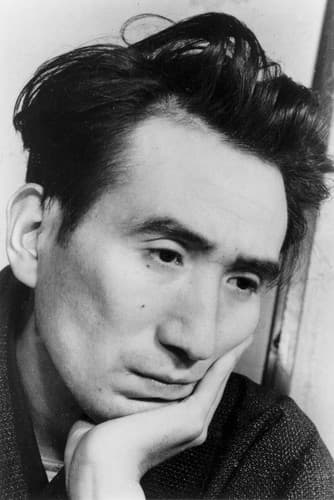
Osamu Dazai was a Japanese author active in the early to mid-20th century, known for his exploration of existential themes and human psychology. His notable work, "No Longer Human," delves into the struggles of identity and alienation. Dazai's writing often reflects his own tumultuous life experiences and has left a significant impact on Japanese literature.
Similar books
- Notes from Underground
Fyodor Dostoevsky
4.2 (84k) average on GoodreadsPsychologyFeatures a deeply alienated and self-loathing narrator who grapples with his place in society and his own psychological torment.
- The Stranger
Albert Camus
4.1 (3k) average on GoodreadsFantasyPresents a protagonist who feels detached from societal norms and emotions, leading to an exploration of existential themes.
- Confessions of a Mask
Yukio Mishima
3.9 (15k) average on GoodreadsFictionMishima's Confessions of a Mask also delves into themes of alienation, performance, and the struggle with one's true identity, particularly in the context of suppressed homosexuality. Like Dazai's Yozo, Mishima's protagonist, Kochan, feels a profound disconnect from societal norms and adopts a 'mask.' However, Kochan's alienation is rooted in his sexuality and his fascination with death and violence, leading him to a more intellectualized and aestheticized form of self-deception, distinct from Yozo's almost pathological inability to comprehend human connection. While both are first-person accounts of internal struggle, Mishima's prose is often more ornate and philosophical, contrasting with Dazai's starker, more directly confessional style.
- The Old Man and the Sea
Ernest Hemingway
3.8 (831k) average on GoodreadsLiterary FictionA Cuban fisherman's long struggle with a giant marlin becomes a story of endurance and dignity, now retold for young adults with illustrations, phonetic guides, and writing prompts in Traditional Chinese.
- One Hundred Years of Solitude
Gabriel García Márquez
4.1 (753k) average on GoodreadsLiterary FictionThrough the multi-generational story of the Buendía family, a mythical town deals with the repeating patterns of time, love, and solitude, as the extraordinary mixes with the ordinary.
- The Goldfinch
Donna Tartt
3.9 (720k) average on GoodreadsLiterary FictionHaunted by a tragic explosion and clutching a stolen Dutch masterpiece, a young orphan navigates the opulent drawing rooms of New York and the gritty underbelly of the art world, desperately seeking connection and redemption amidst a life spiraling into crime and obsession.




Enjoyed the summary?
A summary gives you the shape of the book. The book itself has the detail, the examples and the voice.
Find No Longer Human on AmazonAs an Amazon Associate, BookBrief earns from qualifying purchases. How we're funded