
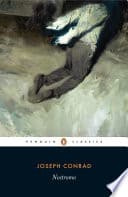
Synopsis
Covers the whole plot, including the ending.
- Difficulty
- Hard
- Pacing
- Slow
- Mood
- Atmospheric, Brooding, Philosophical, Cynical
- Read it if
- You enjoy complex, character-driven literary fiction with a focus on political intrigue, moral decay, and the corrupting influence of wealth, set against a vivid historical backdrop.
- Skip it if
- You prefer fast-paced plots, straightforward narratives, or lighthearted stories without deep philosophical exploration.
Nostromo Plot Summary
Covers the whole plot, including the ending.
The San Tomé Mine and Sulaco's Fragile Peace
The story begins in the fictional South American country of Costaguana, in the Occidental Province of Sulaco. Charles Gould, an English-descended mine owner, has revived the San Tomé silver mine, making Sulaco a center of economic activity and European influence. His wife, Emilia Gould, is kind and observes the complex social dynamics and political currents with a sharp, often sad, eye. The mine's great wealth brings order and infrastructure, but it also makes Sulaco a desired prize in Costaguana's always unstable political situation. Dr. Monygham, a cynical doctor, and Captain Mitchell, the port's superintendent, are also important figures in this early picture of Sulaco's uneasy prosperity, which is always threatened by distant revolutionary movements.
The Arrival of Decoud and the Political Divide
Martin Decoud, a Parisian-educated journalist and a native Costaguanan, arrives in Sulaco. He is drawn by his love for Antonia Avellanos, the daughter of the influential historian Don Jose Avellanos. Decoud, an intellectual, quickly supports separating Sulaco from the rest of Costaguana. He imagines an independent 'Occidental Republic' that would protect its wealth and stability from the constant corruption and civil wars in the nation. Meanwhile, the central government in Costaguana's capital is overthrown, and the new dictatorial regime of Montero threatens to extend its power to Sulaco, putting the San Tomé mine and its European interests at serious risk. The various groups in Sulaco, including the Europeans, the local aristocracy, and the growing working class, start to prepare for conflict.
Nostromo's Reputation and the Looming Threat
Nostromo, the 'Capataz de Cargadores' (Chief Stevedore) of Sulaco, is shown as a man of great physical strength, courage, and charm. The European community, especially Captain Mitchell and Charles Gould, trusts him completely. They rely on his organizing skills and his influence over the local people. His reputation for honesty and his ability to get things done make him essential. As the Monterist revolution moves towards Sulaco, panic spreads among the wealthy residents and the foreign community. The silver mine is in danger of falling into rebel hands, leading to desperate measures to protect its vast fortune from being seized or used to fund the revolution.
The Plan to Hide the Silver
With Montero's forces quickly approaching Sulaco, a desperate plan is made to protect the San Tomé silver. Charles Gould, fearing the mine's wealth will be used by the revolutionaries, decides that the large amounts of refined silver must be hidden or removed. He gives this dangerous mission to Nostromo, the only man believed capable of it. Nostromo is told to transport a large shipment of silver bars by lighter (a small boat) to a point down the coast, where it is hoped it can be safely stored or later retrieved. Martin Decoud, seeing this as a key step in establishing Sulaco's independence, insists on going with Nostromo on this dangerous trip, even though he lacks practical experience.
The Perilous Voyage and the Silver's Loss
Nostromo and Decoud start their mission at night, navigating the dangerous waters of the Golfo Placido. Their lighter is accidentally hit by General Sotillo's escaping steamer. Sotillo is a Monterist commander looking for the silver. In the confusion, Decoud manages to sink the lighter with all the silver, to keep it from Sotillo. Nostromo, a strong swimmer, believes Decoud died in the collision. He swims ashore to the deserted Great Isabel island, exhausted but alive. He is later rescued and returns to Sulaco, where he is celebrated as a hero, though the silver's fate remains a secret known only to him and the now-missing Decoud.
Decoud's Isolation and Despair
Unknown to Nostromo, Decoud had also survived the collision and reached the Great Isabel island. He managed to get a small part of the silver from the sunken lighter and hid it. Alone and surrounded by the vast, indifferent sea, Decoud's intellectual detachment gives way to deep despair. He realizes his grand political plans were pointless and his own life hollow without Antonia. After several days of agonizing solitude, believing himself forgotten and without hope, Decoud kills himself, weighing himself down with the recovered silver bars and sinking into the Gulf. He becomes the first victim of the silver's corrupting power.
Nostromo's Heroism and Unacknowledged Sacrifice
After returning to Sulaco, Nostromo makes a dangerous overland journey to get help for the counter-revolution. He successfully brings General Barrios and his forces to Sulaco, turning the tide against the Monterists. His actions are crucial in securing Sulaco's independence and creating the Occidental Republic. However, despite his clear heroism, Nostromo feels bitter. The European elite and the new government of the Occidental Republic praise him but do not acknowledge his true sacrifice or reward him in a way he feels is fair. He remains the 'man of the people,' but is never truly accepted as an equal by those in power, increasing his sense of disappointment.
The Secret of the Silver and Nostromo's Corruption
Bitter about the lack of real recognition and the perceived ingratitude of the Europeans, Nostromo decides to get his own reward. He returns to the Great Isabel island, where he knows the silver is submerged. Over the next few years, he secretly starts to retrieve the bars, becoming the only guardian and owner of the vast fortune. This secret act of taking the silver marks a deep change in Nostromo. The once honest 'Capataz de Cargadores' becomes obsessed with his hidden wealth, his character twisted by greed and suspicion. The silver, meant to secure Sulaco's future, now ties Nostromo to a life of secrecy and moral compromise.
The Lighthouse and the Love Triangle
Years pass, and Sulaco thrives as the independent Occidental Republic. A lighthouse is planned for the Great Isabel island, threatening Nostromo's secret access to the silver. The lighthouse keeper is Giorgio Viola, an old Garibaldino revolutionary, and his two daughters, Linda and Giselle. Nostromo, now a shadowy figure known as a smuggler, becomes romantically involved with both sisters. He is unofficially engaged to the older, watchful Linda, but is secretly attracted to the younger, more lively Giselle. This complicated love triangle, set around the isolated lighthouse, creates new dangers for Nostromo's hidden life and his growing paranoia, as Linda's jealousy and Giorgio's watchfulness constantly threaten his secret.
Nostromo's Tragic End
Nostromo's obsession with the silver and his divided affections eventually lead to his death. One night, while trying to secretly visit Giselle at the lighthouse, Giorgio Viola, the aging lighthouse keeper, mistakes him for a prowler or a rival, possibly one of the local bandits he always fears. Giorgio, always alert and fiercely protective of his daughters, fires his rifle. Nostromo is fatally wounded. In his last moments, he confesses his secret about the silver to Dr. Monygham, revealing the full extent of his corruption and the burden he carried. His death symbolizes the destructive power of greed and the ultimate futility of his life built on a secret fortune.
The Legacy of the Silver
Nostromo's death, though tragic, does not end the silver's influence. Dr. Monygham, now knowing the secret, is burdened by the information. The silver, first meant as a sign of progress and stability for Sulaco, ultimately brought corruption, isolation, and death to Nostromo. The San Tomé mine continues to operate, fueling the Occidental Republic's prosperity, but the moral cost of that wealth is always present in the lives of the remaining characters. Emilia Gould, in particular, thinks about the 'material interests' that have shaped and ultimately warped the lives of those around her, including her husband, Charles, who has become increasingly absorbed by the mine, losing touch with his earlier ideals and even his wife.
Principal Figures
Nostromo
Protagonist
The charismatic Chief Stevedore, revered by the people but ultimately corrupted by hidden wealth.
Nostromo, whose real name is Giovanni Fidanza, is an Italian immigrant and the 'Capataz de Cargadores' in Sulaco. He is a figure of immense physical strength, courage, and charisma, known for his ability to command respect and get things done. He thrives on public adulation and is fiercely proud of his reputation for being incorruptible. Initially, he serves the European elite and the people of Sulaco with unwavering loyalty, performing extraordinary feats of heroism. However, his deep-seated desire for recognition, coupled with the perceived ingratitude of those he serves, leads him to appropriate the sunken silver, transforming him into a secretive, paranoid, and ultimately tragic figure.
Relationships: Charles Gould (Employer, relies heavily on Nostromo for difficult tasks); Emilia Gould (Admires his capabilities, pities his ultimate fate); Captain Mitchell (Admires and relies on Nostromo, often blindly); Martin Decoud (Companion on the silver mission, mutual distrust); Linda Viola (Fiancée, but largely a relationship of convenience and obligation); Giselle Viola (Lover, the object of his fatal desires); Giorgio Viola (Respected elder, his eventual killer)
Charles Gould
Supporting
The English-descended owner of the San Tomé mine, whose devotion to 'material interests' shapes Sulaco.
Charles Gould is the owner of the San Tomé silver mine, inherited from his father. Driven by a desire to bring order and progress to Costaguana and to redeem his family's honor, he dedicates himself entirely to the mine's success. He believes in the transformative power of 'material interests' as a force for stability and civilization. While initially idealistic, his single-minded devotion to the mine gradually hardens him, making him emotionally distant from his wife and blind to the moral compromises inherent in his pursuit of wealth and power. He embodies the complex and often destructive nature of economic ambition.
Relationships: Emilia Gould (Husband, but increasingly emotionally distant due to his obsession with the mine); Nostromo (Relies on him for his capabilities, but views him as a tool for his interests); Martin Decoud (Initially dismisses Decoud's political ideas, later relies on him for the silver's escape)
Emilia Gould
Supporting
Charles Gould's compassionate and perceptive wife, who observes the moral decay with melancholy.
Emilia Gould is Charles Gould's English wife, a woman of great compassion, intuition, and moral sensitivity. She serves as a keen observer of the events unfolding in Sulaco, often seeing the deeper truths and moral compromises that others miss. She supports her husband's work but gradually becomes disillusioned by the corrosive effects of the San Tomé silver and the 'material interests' it represents. Her character embodies the novel's moral conscience, offering a perspective that highlights the human cost of political ambition and economic progress. She is often seen as the moral center of the story, providing a counterpoint to the masculine world of power and politics.
Relationships: Charles Gould (Wife, deeply loves him but feels increasingly alienated by his obsession); Nostromo (Understands his character, pities his tragic end); Dr. Monygham (Confidante, shares observations on Sulaco's moral landscape)
Martin Decoud
Supporting
The cynical, intellectual journalist who champions Sulaco's independence, but succumbs to isolation.
Martin Decoud is a sophisticated, Parisian-educated journalist and a native Costaguanan. He is an intellectual and a cynic who initially believes in the power of ideas and political maneuvering to shape destiny. He champions the cause of an independent Occidental Republic for Sulaco, driven by his love for Antonia Avellanos and a desire to protect the region's unique identity. Despite his intellectual prowess, he lacks practical experience and resilience in the face of true adversity. His isolation on the Great Isabel island, after the silver is lost, exposes his fundamental fragility and leads to his tragic demise, highlighting the limits of intellectualism without robust human connection.
Relationships: Antonia Avellanos (Lover, his primary motivation for political involvement); Nostromo (Companion on the silver mission, a relationship marked by mutual distrust and differing worldviews); Don Jose Avellanos (Prospective father-in-law, political ally)
Dr. Monygham
Supporting
A cynical but ultimately compassionate doctor, burdened by a past scandal and keen observer of human nature.
Dr. Monygham is an English doctor in Sulaco, a cynical and sardonic man with a dark past involving a scandal that forced him to leave England. He is a keen observer of human nature and the political machinations of Costaguana, often providing a jaded but insightful commentary on events. Despite his outwardly detached demeanor, he possesses a deep capacity for compassion, particularly towards Emilia Gould, and ultimately proves to be a man of integrity, burdened by the secrets he uncovers. His past experience with disgrace makes him particularly sensitive to the moral pitfalls of public life.
Relationships: Emilia Gould (Confidante, respects her moral compass); Nostromo (Receives his deathbed confession, understands his corruption); Charles Gould (Professional acquaintance, observes his increasing detachment)
Captain Mitchell
Supporting
The port superintendent, a pompous and somewhat naive Englishman who idealizes Nostromo.
Captain Mitchell is the port superintendent of Sulaco and a loyal, if somewhat pompous and naive, Englishman. He is fiercely proud of his role and his association with the San Tomé mine. He views Nostromo as an almost mythical figure, the embodiment of courage and loyalty, often exaggerating his exploits in his storytelling. Mitchell represents a certain kind of colonial blindness, unable to fully grasp the complex realities of Costaguanan politics or the true nature of the people he governs. His idealized view of Nostromo contrasts sharply with the reality of Nostromo's eventual corruption.
Relationships: Nostromo (Admires and relies on him, often to an exaggerated degree); Charles Gould (Respects his authority and enterprise); Emilia Gould (Respects her, but doesn't fully understand her deeper insights)
Giorgio Viola
Supporting
An old Garibaldino revolutionary and lighthouse keeper, whose revolutionary ideals clash with the new order.
Giorgio Viola is an elderly Italian immigrant and a veteran of Garibaldi's campaigns, a passionate and unyielding idealist who believes in the purity of revolutionary principles. He runs a small inn and later becomes the lighthouse keeper on the Great Isabel island. He represents the older, more romantic ideal of revolution, contrasting sharply with the corrupt political realities of Costaguana. Fiercely protective of his daughters, he remains vigilant against all perceived threats, ultimately leading to Nostromo's tragic death through a fatal misunderstanding. His unwavering principles, though admirable, are ultimately out of step with the new, pragmatic world of the Occidental Republic.
Relationships: Nostromo (Initially respects him, but views him with suspicion later, and ultimately kills him); Linda Viola (Father, deeply protective); Giselle Viola (Father, deeply protective)
Antonia Avellanos
Supporting
The intelligent and principled daughter of Don Jose, admired by Decoud and a symbol of Sulaco's ideals.
Antonia Avellanos is the intelligent, beautiful, and highly principled daughter of Don Jose Avellanos. She embodies the aristocratic ideals and aspirations for Sulaco's independence, holding strong political convictions. She is admired by many, particularly Martin Decoud, whose love for her is a significant motivation for his political involvement. Antonia represents the purity of political ideals, untainted by the direct corruption of wealth, yet her ideals are ultimately shown to be somewhat naive in the face of harsh political realities. She remains a symbol of hope and uncompromised principle in a world increasingly defined by material interests.
Relationships: Martin Decoud (Object of his affection, his primary motivation); Don Jose Avellanos (Daughter, shares his political ideals); Emilia Gould (Acquaintance, respected by Emilia)
Themes & Insights
The Corrupting Power of Material Interests
The novel explores how seeking and owning wealth, especially the San Tomé silver, corrupts individuals and societies. Charles Gould's early idealism is slowly taken over by his dedication to the mine, making him emotionally distant. Nostromo, once honest, changes into a paranoid, secretive, and ultimately tragic figure because of his hidden silver. The wealth, meant to bring stability and progress to Sulaco, instead causes moral decay, political instability, and personal destruction. This shows that 'material interests' can overshadow and destroy human values.
“There is a curse of corruption in this country upon anything that may be called a treasure.”
Idealism vs. Reality
Conrad contrasts the high ideals of various characters with the harsh realities of politics and human nature. Martin Decoud's intellectual vision for an independent Sulaco, though well-intentioned, collapses under isolation and despair. Don Jose Avellanos's lifelong commitment to his country's history and future faces constant political upheaval. Even Charles Gould's ideal of bringing order through industry ultimately leads to a sterile, unfulfilling life. The novel suggests that grand ideals are often fragile and easily crushed or twisted by self-serving actions and the relentless forces of political ambition.
“A man that is not a fool can have no imagination.”
The Nature of Heroism and Reputation
The novel examines the idea of heroism, especially through Nostromo. He is a public hero, praised for his courage and deeds, but his heroism is largely superficial, based on outside approval and others' views. When his true sacrifice is ignored, he feels betrayed, leading to his moral decline. Conrad suggests that true heroism is complex and often goes unrewarded, while public reputation can be a fragile thing that hides deeper truths. Nostromo's tragedy highlights the emptiness of a life lived only for public praise and the bitterness that can come from unappreciated service, leading him to seek his own, secret reward.
“He was a man who could not be discomposed by the trifles of this world, not even by the thought of death.”
Colonialism and Imperialism
Set in a fictional South American country, the novel implicitly criticizes the effects of European involvement and 'progress' on developing nations. The San Tomé mine, owned by an English-descended family, brings European money and technology but also fuels internal conflicts and political instability. The European characters, while bringing order, often remain separate from the true cultural and political complexities of Costaguana, seeing locals as either tools or obstacles. The creation of the Occidental Republic, though seemingly a step towards self-governance, is still deeply influenced and ultimately controlled by foreign 'material interests,' showing the lasting impact and subtle forms of colonial power.
“The only form of political idea they have is to get as much as they can for themselves out of the country.”
Isolation and Loneliness
Many characters in Nostromo feel deep isolation. Martin Decoud, alone on the Great Isabel, gives in to existential loneliness and kills himself. Nostromo, after taking the silver, lives a life of secrecy and paranoia, isolated by his hidden wealth and unable to share his true self with anyone. Charles Gould, consumed by his mine, becomes emotionally isolated from his wife. Emilia Gould, despite her compassion, often feels a deep loneliness, watching the moral decay around her without being able to truly help. This theme emphasizes the psychological cost of ambition, secrecy, and the failure of human connection in the face of overwhelming outside forces.
“There is no peace for me in this world.”
Plot Devices & Literary Techniques
Non-Linear Narrative
The story jumps backward and forward in time, revealing events out of chronological order.
Conrad employs a complex non-linear narrative structure, frequently shifting between past and present events, and from one character's perspective to another. This technique creates a sense of historical depth and allows the reader to gradually piece together the full story, revealing the long-term consequences of actions and the intricate web of cause and effect. It also mirrors the fragmented and often chaotic nature of memory and historical truth, enhancing the novel's thematic exploration of fate and human agency.
Third-Person Omniscient with Shifting Focalization
A narrator with comprehensive knowledge, but who often filters events through specific characters' consciousnesses.
The novel is told by an omniscient narrator who possesses knowledge of all events and characters' inner thoughts. However, this omniscience is often filtered through the perspectives of various characters (e.g., Emilia Gould's observations, Dr. Monygham's cynicism, Captain Mitchell's idealizations). This shifting focalization allows for multiple interpretations of events and characters, creating a nuanced and often ambiguous portrayal of truth. It reinforces the idea that reality is subjective and that no single character, or even the narrator, holds a complete understanding of the complex forces at play.
Symbolism of the Silver
The San Tomé silver represents not just wealth, but also the corrupting influence of 'material interests'.
The silver from the San Tomé mine is the central symbolic object in the novel. It initially represents progress, stability, and the potential for a better future for Sulaco. However, as the narrative unfolds, it increasingly symbolizes the corrupting power of wealth, greed, and 'material interests.' It drives political conflict, isolates individuals, and ultimately destroys Nostromo. The silver is not just a commodity; it is a moral force that tests and often breaks the characters, revealing the dark side of human ambition and the destructive potential of an object valued above all else.
The Gulf and Great Isabel Island
Geographical features that symbolize isolation, concealment, and the vast indifference of nature.
The Golfo Placido (Pacific Gulf) and the Great Isabel island serve as powerful symbolic settings. The vast, often calm, but ultimately indifferent Gulf conceals the sunken silver and acts as a stage for pivotal events, including Decoud's demise. The Great Isabel, a desolate island, becomes a place of profound isolation for Decoud and later a secret sanctuary for Nostromo's hidden wealth. These locations symbolize the isolation of characters from society, the concealment of truth, and the overwhelming, indifferent power of nature that dwarfs human endeavors and secrets, ultimately claiming lives and secrets alike.
Nostromo Quotes
“There is no peace for me in this world. I am like a man who has been trying to climb a wall, and has fallen back, and has broken his leg. I can do no more.”
“A man's character is his fate.”
“Action is the first word of the world.”
“The greatest joy in life is to be used for a purpose recognized by yourself as a mighty one.”
“Material interests. The only morality of the state. The only morality of men.”
“He was a man who had never been able to believe in anything but himself, and in his own fortune.”
“The great silver mine was a provider of wealth, but also a source of endless trouble and moral corruption.”
“There is no virtue in being a victim.”
“The world is a bad place for a man to live in who has no money.”
“He had an immense contempt for the forms of government, for the forms of society, for the forms of human virtue.”
“Nobody can be more professional than a man who is paid for it.”
“The earth is a tomb, and men are its worms.”
“It was not a question of principles, but of fact; not of right or wrong, but of success or failure.”
“The only thing that stands between us and the horrors of a world in chaos is the strength of our own hands.”
“The true peace of God begins at any spot a thousand miles from the nearest railway station.”
Quiz
10 questions on the plot and the characters. Each answer comes with a short explanation.
Question 1
What is the name of the fictional South American country where 'Nostromo' is set?
- Bolivia
- Costaguana
- San Tomé
- Veraguas
Show answer
B. Costaguana 'Nostromo' is set in the fictional South American country of Costaguana.
Question 2
What is Nostromo's primary occupation at the beginning of the novel, which earns him respect among the common people?
- A mine owner
- A military general
- A longshoreman (capataz de cargadores)
- A political leader
Show answer
C. A longshoreman (capataz de cargadores) Nostromo is a charismatic and trusted longshoreman, or 'capataz de cargadores,' revered by many for his efficiency and strength.
Question 3
What precious commodity is Nostromo entrusted to spirit away from Sulaco when rebels threaten the city?
- Gold
- Diamonds
- Silver
- Jewels
Show answer
C. Silver Nostromo is entrusted with a consignment of silver from the San Tomé mine to prevent it from falling into rebel hands.
Question 4
Which character is the owner of the San Tomé mine and represents foreign economic interests in Costaguana?
- Dr. Monygham
- Charles Gould
- Don José Avellanos
- General Montero
Show answer
B. Charles Gould Charles Gould, an Englishman, is the owner of the San Tomé silver mine and a central figure representing the economic exploitation and development of Costaguana.
Question 5
What is the primary motivation behind Nostromo's decision to take his 'own reward' after the silver consignment plan goes awry and his efforts are unacknowledged?
- To fund a new political revolution
- To gain acceptance from the upper class
- A sense of betrayal and a desire for personal gain (greed)
- To establish a shipping empire
Show answer
C. A sense of betrayal and a desire for personal gain (greed) Feeling betrayed and unacknowledged for his heroic efforts in saving the silver, Nostromo succumbs to greed and decides to keep a portion of the silver for himself, leading to tragic consequences.
Question 6
The novel explores the corrupting influence of the San Tomé silver mine on Costaguana. Which theme does this best represent?
- The triumph of democracy
- The power of altruism
- Materialism and its destructive impact
- The simplicity of rural life
Show answer
C. Materialism and its destructive impact The San Tomé silver mine, while bringing prosperity, also fuels greed, political instability, and corruption, highlighting the destructive impact of materialism.
Question 7
What is the eventual fate of Nostromo, stemming from his secret possession of the silver?
- He becomes a wealthy and respected politician
- He escapes Costaguana and lives a peaceful life
- He is accidentally shot and killed while guarding his hidden silver
- He is discovered and imprisoned for theft
Show answer
C. He is accidentally shot and killed while guarding his hidden silver Nostromo is accidentally shot and killed by Giorgio Viola, the lighthouse keeper, who mistakes him for a rival suitor while Nostromo is visiting the island where he has hidden the silver.
Question 8
Mrs. Gould, Charles Gould's wife, is often seen as a moral compass in the novel. What is her primary disillusionment regarding her husband's work and the mine?
- She believes the mine is not profitable enough.
- She despairs over the moral cost and human suffering caused by the mine's success and the ensuing political turmoil.
- She wishes her husband would pursue a political career instead.
- She is concerned about the environmental impact of the mining operations.
Show answer
B. She despairs over the moral cost and human suffering caused by the mine's success and the ensuing political turmoil. Mrs. Gould becomes increasingly disillusioned, recognizing that despite the material prosperity, the silver mine brings only moral corruption, political instability, and human suffering to Costaguana.
Question 9
The 'material interests' are a recurring concept in the novel. What do they fundamentally refer to?
- The spiritual well-being of the Costaguanan people.
- The foreign investments and economic development, particularly the San Tomé mine, that shape Costaguana's destiny.
- The traditional customs and cultural heritage of the country.
- The personal relationships and family ties within Sulaco.
Show answer
B. The foreign investments and economic development, particularly the San Tomé mine, that shape Costaguana's destiny. The 'material interests' in 'Nostromo' refer to the foreign economic investments, primarily the San Tomé silver mine, which are presented as the driving force behind the country's development and its political fate, often with corrupting consequences.
Question 10
How does the eventual outcome of the revolution in Sulaco contribute to the novel's overarching critique of political idealism and foreign intervention?
- It results in a stable, truly democratic government free from outside influence.
- It leads to the establishment of an independent, prosperous state (the Occidental Republic), but one still fundamentally shaped and controlled by foreign 'material interests' and local corruption, rather than genuine popular will.
- It ushers in a period of complete anarchy and economic collapse.
- It proves that self-governance is impossible for the people of Costaguana.
Show answer
B. It leads to the establishment of an independent, prosperous state (the Occidental Republic), but one still fundamentally shaped and controlled by foreign 'material interests' and local corruption, rather than genuine popular will. The revolution in Sulaco leads to the creation of the independent Occidental Republic, but this new state is not truly autonomous. It remains heavily influenced and effectively controlled by the foreign 'material interests' (like the San Tomé mine) and the self-serving actions of local elites, underscoring Conrad's critique of the futility of political idealism when confronted with greed and power.
Nostromo FAQ
What is the central conflict in 'Nostromo' and how does it manifest in the early parts of the story?
The central conflict revolves around the struggle for control over the San Tomé silver mine and its immense wealth, which fuels political instability in Costaguana. This manifests early on through the machinations of Charles Gould, the mine's owner, who believes the mine's prosperity can bring order, and the escalating tension between the established conservative government and the liberal revolutionaries led by Sotillo.
Who is Nostromo and what is his primary role in Sulaco before the major revolutionary events?
Nostromo, whose real name is Giovanni Fidanza, is a highly capable and charismatic Italian longshoreman and capo de cargadores in Sulaco. He is known for his immense physical strength, daring, and reliability, making him indispensable for various tasks, from organizing port activities to handling delicate personal errands for prominent figures like the Goulds and Captain Mitchell.
What is the significance of the San Tomé silver mine to the political landscape of Costaguana?
The San Tomé silver mine is the economic heart of Costaguana, its wealth becoming both a source of potential progress and intense corruption. Its existence underpins the fragile stability of the Costaguanan government, and its control is the ultimate prize for any faction, leading directly to the civil war and the eventual secession of Sulaco as an independent state.
How does Emilia Gould's perspective differ from her husband Charles Gould's regarding the silver mine?
Emilia Gould, while initially supportive, gradually comes to view the silver mine as a destructive force that consumes her husband's soul and their marriage, bringing only sorrow and moral decay. Charles, conversely, remains steadfast in his belief that the mine's material interests are the only stable foundation for order and progress in Costaguana, sacrificing personal happiness for this grand, impersonal ideal.
What is the specific task Nostromo is entrusted with during the rebel invasion, and what goes wrong?
Nostromo is entrusted by Charles Gould and Dr. Monygham with spiriting away a massive consignment of San Tomé silver on a lighter to prevent it from falling into the hands of the advancing rebel forces led by Sotillo. The plan goes awry when the lighter collides with Sotillo's invading steamer in the fog, forcing Nostromo and Decoud to abandon the silver on the Great Isabel island.
What is the symbolic significance of the 'material interests' that Charles Gould so strongly champions?
The 'material interests' championed by Charles Gould symbolize the belief that economic prosperity and tangible wealth are the only reliable foundations for order, civilization, and progress in a chaotic world. However, the novel ultimately demonstrates how these very interests can corrupt individuals and societies, leading to exploitation, moral compromise, and ultimately, a different kind of servitude.
How does the character of Martin Decoud contribute to the novel's themes, particularly regarding idealism and disillusionment?
Martin Decoud, an intellectual and journalist, arrives in Sulaco with an idealistic vision of creating an independent republic, initially believing in the power of words and reason. However, his experiences, particularly his isolation with Nostromo on the lighter and his subsequent abandonment on the island, lead to profound disillusionment and ultimately suicide, highlighting the fragility of ideals against brutal reality and the isolating nature of self-reliance.
What is the 'inviolable' nature of Nostromo's reputation and how does it relate to his later actions?
Nostromo's reputation as the 'incorruptible' and universally reliable 'Capataz de Cargadores' is his most prized possession, a form of public identity that grants him immense influence and respect. When his crucial role in saving the silver and defeating the rebels goes largely unacknowledged, his public image feels violated, driving him to secretly claim the silver for himself, transforming his 'inviolable' reputation into a private, corrupting burden.
How does Dr. Monygham's past affect his character and his cynical view of human nature?
Dr. Monygham carries the burden of a past public humiliation and false accusation, which led to torture and a deep-seated cynicism about human integrity and motives. This experience makes him acutely perceptive to the moral failings of others, yet also capable of profound loyalty and a clear-eyed assessment of the dangers inherent in the pursuit of wealth and power, contrasting with Gould's more naive idealism.
Analyze Emilia Gould's psychological journey throughout the novel, particularly her evolving relationship with her husband and the mine.
Emilia Gould begins as a hopeful and supportive wife, believing in her husband's vision for Costaguana. However, as Charles becomes increasingly consumed by the mine and its 'material interests,' Emilia experiences profound isolation and sorrow. Her psychological journey is one of increasing disillusionment, recognizing the mine as a 'monster' that devours human connection and happiness, leaving her with a deep sense of unfulfilled love and quiet despair.
How does Nostromo's psychological state change after he obtains the silver for himself?
After obtaining the silver, Nostromo's psychological state shifts dramatically from a man driven by public adulation to one consumed by a secret, isolating burden. He becomes paranoid, secretive, and increasingly alienated from the community he once served, haunted by the fear of discovery and the desire to protect his hidden wealth, which ultimately leads to his tragic demise.
Discuss the psychological impact of the 'treasure' on those who seek or possess it in 'Nostromo.'
The 'treasure' (the silver) has a profoundly corrupting psychological impact on those who seek or possess it. For Nostromo, it transforms him from a public hero into a secretive, isolated man driven by greed. For Sotillo, the mere rumor of it drives him to brutal acts and ultimately his downfall. Even for Charles Gould, the mine's wealth consumes his soul, leaving him emotionally barren, demonstrating how material interests can warp human character.
Is 'Nostromo' ultimately a pessimistic novel regarding human nature and political progress?
While 'Nostromo' presents a deeply cynical view of human nature, exposing greed, corruption, and self-interest as driving forces, it's not entirely pessimistic. The novel suggests that while grand political schemes often fail and individuals are easily corrupted, there are glimmers of selfless dedication (like Emilia Gould's compassion) and a tragic beauty in the pursuit of ideals, even if ultimately unattainable. The 'progress' it depicts often comes at a high human cost.
How does Conrad use setting and atmosphere to enhance the novel's themes?
Conrad masterfully uses the sultry, oppressive atmosphere of Costaguana, with its vast, indifferent natural landscape and the isolating sea, to mirror and amplify the novel's themes. The oppressive heat, the impenetrable jungle, and the dark, treacherous waters of the Golfo Placido create a sense of foreboding, emphasizing humanity's insignificance against larger forces and the moral decay beneath a beautiful, exotic surface.
What is the role of irony in 'Nostromo,' particularly concerning characters' intentions versus outcomes?
Irony is central to 'Nostromo,' often highlighting the vast gulf between characters' noble intentions and the tragic, unintended consequences of their actions. Charles Gould's pursuit of 'material interests' to bring order ironically leads to further chaos and his own spiritual emptiness. Nostromo's quest for public recognition, when unfulfilled, ironically drives him to a secret, corrupting act that ultimately destroys him. The very things characters strive for often become their undoing.
How does the novel explore the concept of heroism, and does it offer a definitive definition?
The novel critically examines the concept of heroism without offering a definitive definition, instead presenting various flawed interpretations. Nostromo is initially a public hero, but his heroism is based on reputation and physical prowess, eventually corrupted by self-interest. Charles Gould sees himself heroically sacrificing for progress, but his 'heroism' is cold and impersonal. True, quiet heroism might be found in figures like Emilia Gould, enduring suffering with compassion, suggesting heroism is complex, often unrecognized, and rarely unblemished.
Discuss the ending of 'Nostromo.' Is it a complete tragedy, or are there any elements of hope or resolution?
The ending of 'Nostromo' is largely tragic, with Nostromo's death, Emilia Gould's profound sorrow, and the ongoing political instability in Sulaco despite its secession. However, there's a nuanced sense of resolution in the revelation of Nostromo's secret and the enduring, if melancholic, presence of characters like Emilia, who carries the burden of knowing the true cost of 'material interests.' The tragedy lies in the cycle of corruption continuing, but the narrative achieves a powerful, albeit bleak, sense of completeness.
About the author
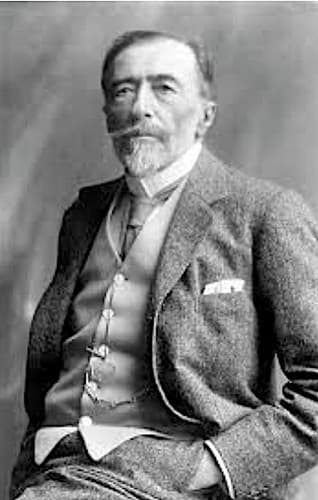
Joseph Conrad was a Polish-British novelist and short story writer. He is regarded as one of the greatest writers in the English language; though he did not speak English fluently until his twenties, he came to be regarded a master prose stylist who brought a non-English sensibility into English literature. He wrote novels and stories, many in nautical settings, that depict crises of human individuality in the midst of what he saw as an indifferent, inscrutable and amoral world.
Similar books
- One Hundred Years of Solitude
Gabriel García Márquez
4.1 (753k) average on GoodreadsLiterary FictionEpic scope, political themes, and a deep dive into the history and psyche of a fictional Latin American place.
- Heart of Darkness
Joseph Conrad
3.4 (415k) average on GoodreadsHistorical FictionExploration of human nature, moral ambiguity, and the corrupting influence of power in a colonial setting.
- The Power and the Glory
Graham Greene
4.0 (33k) average on GoodreadsLiterary FictionMoral and political themes in a Latin American setting, focusing on a flawed protagonist.
- The Old Man and the Sea
Ernest Hemingway
3.8 (831k) average on GoodreadsLiterary FictionA Cuban fisherman's long struggle with a giant marlin becomes a story of endurance and dignity, now retold for young adults with illustrations, phonetic guides, and writing prompts in Traditional Chinese.
- The Goldfinch
Donna Tartt
3.9 (720k) average on GoodreadsLiterary FictionHaunted by a tragic explosion and clutching a stolen Dutch masterpiece, a young orphan navigates the opulent drawing rooms of New York and the gritty underbelly of the art world, desperately seeking connection and redemption amidst a life spiraling into crime and obsession.
- Little Fires Everywhere
Celeste Ng
4.1 (713k) average on GoodreadsLiterary FictionIn Shaker Heights, an artist and her daughter move in, and their free-spirited lives clash with a rule-bound matriarch, revealing hidden conflicts beneath a perfect surface.





Enjoyed the summary?
A summary gives you the shape of the book. The book itself has the detail, the examples and the voice.
Find Nostromo on AmazonAs an Amazon Associate, BookBrief earns from qualifying purchases. How we're funded