
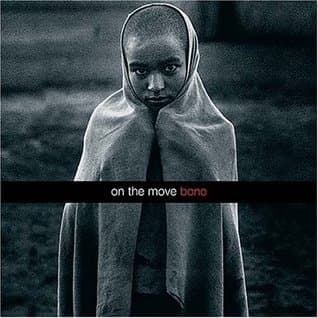
Core Idea
- Difficulty
- Easy
Key Takeaways from On the Move
Justice, Not Charity
The core argument: alleviating poverty is a matter of fundamental justice, not merely a charitable act.
Bono reframes the discussion around global poverty, arguing that preventable deaths and lack of basic resources for millions are not a call for optional generosity but a demand for justice. He says that current global economic and social structures create and maintain inequality, making it a systemic issue rather than individual misfortune. This view challenges the common understanding of aid as a kind gesture, instead stating that a just world would prevent such suffering. The moral focus shifts from 'giving to the poor' to 'fixing an unjust system' that allows treatable diseases to kill thousands daily because of a lack of affordable medication available in wealthier nations. This is arguably the book's strongest insight, pushing readers to a deeper ethical consideration.
“This is not about charity, this is about Justice and Equality.”
In the book: Bono's statistic of '6,500 Africans are still dying every day of a preventable, treatable disease, for lack of drugs we can buy at any drug store' directly supports the justice argument, highlighting a systemic failure rather than a lack of individual compassion.
Try this: Individuals can advocate for policy changes that promote equitable access to healthcare and resources, rather than solely relying on direct donations. Support organizations that focus on systemic change, fair trade, and equitable distribution.
God's Preferential Option for the Poor
Bono interprets faith through the lens of solidarity with the vulnerable, seeing God's presence in their suffering.
Bono expresses a belief that God's presence is most felt among the marginalized and suffering. This theological stance, often called the 'preferential option for the poor,' suggests that true faith requires actively helping and speaking up for those on the edges of society. He describes finding God not in grand cathedrals but in the 'debris of wasted opportunity and lives,' challenging usual ideas of divinity and worship. This shift in spiritual focus means that human connection with the divine is linked to our compassion and actions toward the 'least of these.' For Bono, faith is not a passive belief system but a call to action, demanding solidarity with the world's most vulnerable people.
“God is with the vulnerable and poor. God is in the slums and in the cardboard boxes where the poor play house.”
In the book: Bono's assertion that 'God is in the slums and in the cardboard boxes where the poor play house' and 'God is in the debris of wasted opportunity and lives' directly illustrates this theological perspective.
Try this: Engage in community service or activism focused on poverty alleviation, viewing these actions as a direct expression of spiritual commitment. Reflect on how personal faith traditions call for solidarity with the marginalized.
Universal Call to Action
The book emphasizes that the challenge of poverty transcends religious and political divides, demanding a unified human response.
Bono's message is inclusive, appealing to 'people of all faiths' and even those without religious belief. He seeks common ground by saying that empathy for the vulnerable is a universal human value, a point of agreement that can bridge ideological divides. By framing poverty as a shared human responsibility, he aims to bring together a broad group for change. The book suggests that while different traditions may express the call to justice in various ways, the need to care for the suffering is a unifying idea. This approach avoids divisive theological debates in favor of a practical, shared mission, showing the power of collective action when focused on a clear, ethical goal.
“The one thing, on which we can all agree, is that God is with the vulnerable and poor.”
In the book: The text explicitly states Bono's challenge 'to people of all faiths to reach across boundaries and come together on behalf of what the Scriptures call "the least of these."'
Try this: Seek out interfaith or non-denominational initiatives working on social justice issues. Focus on shared values like human dignity and compassion when discussing global challenges with diverse groups.
The Power of Personal Witness
Bono's narrative is deeply personal, leveraging his experiences to lend authenticity and urgency to his global advocacy.
The book's impact is stronger because of Bono's personal journey and thoughts. His status as a global rock star turned activist gives him a unique platform, but his willingness to share his own faith and changing understanding of justice is what connects with readers. He doesn't preach from an ivory tower but speaks from a place of conviction formed through direct encounters with poverty and injustice. This personal account makes his arguments more convincing and less abstract. It shows that engaging with global issues isn't just for politicians or academics, but for anyone willing to open their eyes and heart. While some might criticize the 'celebrity activist' idea, Bono's sustained commitment and clear arguments, rooted in personal experience, largely move beyond such criticisms, making his advocacy effective.
“Here, in Bono's own words, is a reflection on his own faith and a challenge to people of all faiths...”
In the book: The book is 'based upon the speech given by Bono' and contains 'reflection on his own faith,' indicating a deeply personal foundation for his message.
Try this: Share personal stories and experiences when advocating for causes, as personal narratives can be more persuasive than statistics alone. Connect your own values and beliefs to your involvement in social issues.
Confronting Systemic Inaction
The book implicitly critiques global leaders and institutions for their failure to adequately address preventable suffering.
While not explicitly naming and shaming, Bono's statistics and plea are a strong criticism of the current situation. The fact that '6,500 Africans are still dying every day' from treatable diseases points not just to a lack of resources, but to a failure of political will, economic priorities, and global governance. He highlights the absurdity of a world where life-saving drugs are available in some regions but unobtainable in others. This implicit critique challenges readers to consider not just individual responsibility, but also the collective failures of leadership and policy that allow such preventable tragedies to continue. The book suggests that mere sympathy is not enough; what's needed is a basic re-evaluation of how societies are structured and governed globally.
“6,500 Africans are still dying every day of a preventable, treatable disease, for lack of drugs we can buy at any drug store.”
In the book: The recurring statistic about preventable deaths directly challenges the efficacy of current global health and economic systems.
Try this: Research and support organizations that hold governments and corporations accountable for their impact on global health and poverty. Engage in political processes to advocate for policies that prioritize equitable resource distribution.
The 'Least of These' as a Moral Compass
The biblical concept of caring for the most vulnerable serves as a guiding principle for ethical action.
Bono uses the biblical phrase 'the least of these,' referring to Matthew 25:40, to highlight the moral need to help the poor and marginalized. This concept is not just a religious reference but a universal ethical way to measure a society's compassion and justice. By focusing on the 'least of these,' he argues that the well-being of a society, and humanity, should be judged by how it treats its most vulnerable members. This framework gives a clear, actionable way to measure ethical behavior, suggesting that true progress is not measured by economic growth alone, but by how much no one is left behind. This argument has implications for how we define success and prioritize resources, both individually and collectively.
“reach across boundaries and come together on behalf of what the Scriptures call 'the least of these.'”
In the book: The book summary's explicit mention of 'what the Scriptures call "the least of these"' highlights its centrality to Bono's message.
Try this: When evaluating policies or personal choices, consider their impact on the most vulnerable populations. Prioritize actions and investments that directly benefit those who are often overlooked.
Faith as a Catalyst for Action
Bono demonstrates how personal faith can be a powerful motivator for social and political engagement.
For Bono, faith is not a retreat from the world but a direct reason to engage with its most urgent problems. His thoughts show a spirituality deeply connected with social justice, where prayer and advocacy are two sides of the same coin. This view challenges the idea that faith is a purely private or otherworldly matter, showing how it can spark a passionate commitment to change on Earth. He shows how deeply held beliefs can lead to sustained, public activism, using his platform to advocate for specific policy changes and resource allocation rather than just abstract moralizing. This blend of faith and action provides a compelling model for individuals seeking to make a real difference.
“Here, in Bono's own words, is a reflection on his own faith and a challenge to people of all faiths...”
In the book: The book's origin as a speech and its focus on 'challenge to people of all faiths to reach across boundaries and come together' illustrates faith as a call to collective action.
Try this: Explore how your own spiritual or ethical convictions can motivate you to engage in social or political activism. Seek ways to bridge personal belief with public action.
The Urgency of Preventable Suffering
The book underscores the moral horror and immediate need for action regarding deaths from treatable conditions.
The daily death toll from preventable and treatable diseases is presented as a shocking and unacceptable reality, acting as the book's most powerful call for urgency. Bono highlights the stark contrast between the availability of life-saving drugs in some parts of the world and their complete absence in others, making a strong ethical point about global inequity. This is not a problem for future generations; it is a current crisis demanding immediate attention and systemic change. The sheer scale of the suffering, made worse by its preventability, creates a moral outrage that Bono directs into a demand for justice. This emphasis on the immediacy and avoidability of these deaths is important for mobilizing action, as it turns an abstract problem into a concrete, human tragedy.
“6,500 Africans are still dying every day of a preventable, treatable disease, for lack of drugs we can buy at any drug store.”
In the book: The specific statistic of '6,500 Africans dying every day' is repeatedly emphasized to convey the scale and urgency of the crisis.
Try this: Support organizations focused on global health and access to medicine. Advocate for policies that prioritize research and development for diseases affecting low-income countries and ensure equitable distribution of treatments.
Beyond Borders: A Global Community
Bono implicitly argues for a shared human identity that transcends national and cultural boundaries.
The call to 'reach across boundaries' suggests a vision of a global community where the suffering of one group concerns everyone. Bono's advocacy challenges isolated or nationalist views, implying that our connection means we have a shared responsibility for global well-being. Poverty and preventable disease are not limited to specific nations but are human problems requiring a collective human solution. This view promotes a sense of global citizenship, where empathy and action extend beyond immediate geographical or cultural limits. While the book is brief, this underlying theme is critical for understanding the scope of the challenge and the necessary breadth of the response. It says that true justice can only be achieved by recognizing our shared humanity.
“reach across boundaries and come together on behalf of what the Scriptures call 'the least of these.'”
In the book: The phrase 'reach across boundaries' directly supports the idea of transcending national and cultural divides for a common cause.
Try this: Educate yourself about global issues and interconnectedness. Support international organizations that work to build bridges between communities and nations for shared humanitarian goals.
Quiz
10 questions on the main ideas. Each answer comes with a short explanation.
Question 1
What is the central theme of Bono's message in the provided excerpt?
- The importance of personal faith and prayer.
- The need for global justice and equality for the poor and vulnerable.
- The economic benefits of international aid.
- The philosophical differences between various religions.
Show answer
B. The need for global justice and equality for the poor and vulnerable. Bono explicitly states that the issue is 'not about charity, this is about Justice and Equality,' highlighting the systemic needs of the vulnerable.
Question 2
According to Bono, where is God found in the context of the excerpt?
- Only in places of worship and religious ceremonies.
- In the homes of the wealthy and influential.
- With the vulnerable and poor, in slums and difficult circumstances.
- Primarily in the scriptures and ancient texts.
Show answer
C. With the vulnerable and poor, in slums and difficult circumstances. Bono states, 'God is with the vulnerable and poor. God is in the slums and in the cardboard boxes where the poor play house.'
Question 3
What statistic does Bono use to illustrate the urgency of the issue?
- 10,000 children dying daily from hunger.
- 5,000 Africans dying daily from treatable diseases.
- 6,500 Africans dying daily from preventable diseases.
- 2,000 people globally dying from lack of clean water.
Show answer
C. 6,500 Africans dying daily from preventable diseases. Bono mentions, '6,500 Africans are still dying every day of a preventable, treatable disease, for lack of drugs we can buy at any drug store.'
Question 4
The excerpt suggests that the lack of access to essential medicines for Africans is a problem related to:
- Incurable diseases.
- Lack of medical professionals.
- Economic sanctions.
- Lack of affordability and availability of drugs.
Show answer
D. Lack of affordability and availability of drugs. Bono contrasts the deaths with 'lack of drugs we can buy at any drug store,' implying accessibility and cost are the primary barriers.
Question 5
Bono's challenge to people of all faiths is to:
- Focus solely on their own spiritual development.
- Engage in interfaith dialogue to understand theological differences.
- Unite and act collectively on behalf of the marginalized.
- Promote their own religious doctrines more widely.
Show answer
C. Unite and act collectively on behalf of the marginalized. He challenges people 'to reach across boundaries and come together on behalf of what the Scriptures call 'the least of these.'
Question 6
The phrase 'the least of these' is a reference to:
- The youngest members of a community.
- Those who are least influential in society.
- The poor, marginalized, and suffering, often found in religious texts.
- Individuals who are least educated.
Show answer
C. The poor, marginalized, and suffering, often found in religious texts. This phrase is a direct biblical allusion, commonly interpreted in Christian theology to refer to the most vulnerable and needy in society.
Question 7
The book 'On the Move' is based upon:
- A series of interviews with world leaders.
- A speech given by Bono at the 2006 NPB.
- A collection of Bono's personal diaries.
- A research paper on global poverty.
Show answer
B. A speech given by Bono at the 2006 NPB. The provided text explicitly states, 'This small book, based upon the speech given by Bono at the 2006 NPB...'
Question 8
Bono's argument that the issue is 'not about charity, but about Justice and Equality' implies that:
- Charity is inherently bad and should be avoided.
- The current situation is a result of systemic failures rather than individual acts of kindness.
- Justice and equality are abstract concepts with no practical application.
- Only governments have the responsibility to address poverty.
Show answer
B. The current situation is a result of systemic failures rather than individual acts of kindness. By distinguishing from charity, Bono elevates the issue to a matter of fundamental rights and fair systems, suggesting that the problem lies in unequal structures.
Question 9
The excerpt uses the contrast between 'drugs we can buy at any drug store' and the deaths in Africa to emphasize:
- The advanced medical technology available in developed countries.
- The moral failing of pharmaceutical companies.
- The stark disparity in access to basic healthcare and the preventable nature of the deaths.
- The need for more extensive medical research.
Show answer
C. The stark disparity in access to basic healthcare and the preventable nature of the deaths. The juxtaposition highlights the irony and injustice that readily available and affordable treatments exist in some parts of the world, yet are inaccessible to those dying from the same conditions elsewhere.
Question 10
Bono's reflection on his own faith, mentioned in the book's description, suggests that his activism is:
- Separate from his spiritual beliefs.
- Driven by a desire for personal recognition.
- Deeply intertwined with his understanding of faith and compassion.
- Primarily a political strategy.
Show answer
C. Deeply intertwined with his understanding of faith and compassion. The description states it's 'a reflection on his own faith and a challenge to people of all faiths to reach across boundaries,' indicating that faith is a motivating factor for his call to action.
On the Move FAQ
What is Bono's book 'On the Move' about?
'On the Move' is based on a speech Bono gave in 2006, reflecting on his faith and urging people of all faiths to unite for the sake of the vulnerable and poor. It emphasizes justice and equality over charity.
What is Bono's core message in 'On the Move'?
Bono's core message is that God is with the vulnerable and poor, and that addressing preventable suffering, like disease in Africa, is a matter of justice and equality, not just charity.
Does 'On the Move' discuss Bono's personal faith?
Yes, the book is a reflection on Bono's own faith journey and how it informs his activism and views on global issues.
What does Bono mean by 'justice and equality' in the book?
Bono uses 'justice and equality' to argue that providing basic necessities like medicine to those suffering from preventable diseases is a fundamental right, not an act of goodwill. It's about rectifying systemic inequalities.
Who is the intended audience for 'On the Move'?
The book is aimed at people of all faiths, challenging them to transcend boundaries and work together for the benefit of the marginalized.
What is the context of the speech that 'On the Move' is based on?
The book is derived from a speech Bono delivered at the 2006 NPB, where he articulated his views on faith, poverty, and global responsibility.
How does Bono connect faith and action in 'On the Move'?
Bono connects faith and action by asserting that true faith compels individuals to act in solidarity with the poor and to advocate for systemic change that ensures justice and equality.
What specific issue does Bono highlight in 'On the Move'?
He highlights the tragic reality of preventable deaths from treatable diseases in Africa, emphasizing the moral imperative to provide access to life-saving medication.
About the author
Bono, the iconic frontman of U2, is also a dedicated activist and author. His memoir, 'Surrender: 40 Songs, One Story,' offers a deeply personal look into his life and work. Beyond music, Bono has been a prominent voice in global humanitarian efforts, advocating for causes ranging from poverty eradication to AIDS relief.
Similar books
- My Life
Bill Clinton
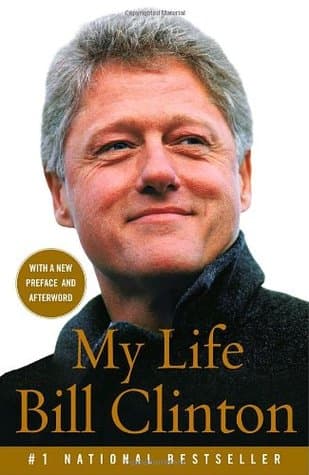
3.7 (44k) average on GoodreadsPoliticsCompared to Bill Clinton's 'My Life,' Bono's 'On the Move' is significantly more introspective and philosophical. While Clinton's memoir offers a comprehensive, chronological account of his political career with detailed policy discussions, Bono's book focuses more on the internal journey, the 'why' behind his actions, and the spiritual and ethical dilemmas he faces. Clinton's narrative is largely external, documenting achievements and challenges in the political arena; Bono's is an internal dialogue, exploring the soul of the activist and artist, often using specific events as springboards for deeper reflection rather than exhaustive historical accounts. Both are long, but Bono's feels less like a historical record and more like an extended meditation.
- 1984
George Orwell
4.2 (3.1M) average on GoodreadsPoliticsIn a future where surveillance and thought control are absolute, a man's search for truth clashes with the Party, showing that hope can be a form of rebellion.
- Animal Farm
George Orwell
4.0 (2.7M) average on GoodreadsPoliticsA farm animals' rebellion against humans turns into a pig-led dictatorship, showing how power corrupts and revolutionary ideals are betrayed.
- Freakonomics: A Rogue Economist Explores the Hidden Side of Everything
Steven D. Levitt
4.0 (709k) average on GoodreadsBusinessThis book uses economic principles to reveal the surprising incentives behind everything from drug dealing and real estate to cheating teachers and the decline of crime.
- I Am Malala: The Story of the Girl Who Stood Up for Education and Was Shot by the Taliban
Malala Yousafzai
4.1 (419k) average on GoodreadsPoliticsA teenage girl from a Taliban-controlled valley refuses to give up her books, becoming a global voice for education even after an assassination attempt.
- Atlas Shrugged
Ayn Rand
3.7 (354k) average on GoodreadsPoliticsIn a dystopian America where innovators vanish, a brilliant heiress races to uncover the truth behind the disappearing industrialists and the enigmatic John Galt, who vows to stop the world's progress.





Enjoyed the summary?
A summary gives you the shape of the book. The book itself has the detail, the examples and the voice.
Find On the Move on AmazonAs an Amazon Associate, BookBrief earns from qualifying purchases. How we're funded