

Core Idea
- Difficulty
- Hard
- Read it if
- You are interested in a philosophical critique of the role of history in culture, how the past influences the present, and the potential pitfalls of historical obsession. This book is for those who question the value of excessive historical knowledge and seek a more active, life-affirming engagement with history.
- Skip it if
- You are looking for a straightforward historical account or a light introduction to Nietzsche's broader philosophy. This is a dense, polemical work that requires careful reading and is not a historical survey or an easy self-help guide.
Key Takeaways from On the Use and Abuse of History for Life
History for Life, Not Luxury
Use history to empower action, not to escape from it.
Nietzsche argues that history's real purpose is to help life and action, not to be a comfortable escape or an intellectual pastime. He criticizes the 'spoilt idler' who consumes history without using it, suggesting that such consumption weakens action and ignores real problems. History's essential use is its ability to help individuals and societies live more fully and act more decisively. When history becomes an end in itself, a collection of facts or something to think about without acting, it can lead to a 'consumptive historical fever' that weakens a culture's vital forces. This makes it an 'expensive surplus' rather than a tool for growth.
“We wish to use history only insofar as it serves living. But there is a degree of doing history and a valuing of it through which life atrophies and degenerates.”
In the book: Nietzsche's opening statement, drawing on Goethe, despises 'everything which merely instructs me without increasing or immediately enlivening my activity,' setting the stage for his critique of history as 'knowledge which enervates activity.'
Try this: Before delving into historical study, define a clear purpose: How will this knowledge inform my present actions, decisions, or creative endeavors? Actively seek connections between past events and current challenges to find actionable insights, rather than passively absorbing information.
Related ideas: vitality, action-oriented-knowledge, historical-utility
The Peril of Hypertrophic History
An excessive historical sense can be as destructive as a vice, eroding a culture's vitality.
Nietzsche believes that an overdeveloped historical sense, while seeming like a good thing, can become a 'hypertrophic virtue' that eventually harms a people. Just as too much of anything good can turn bad, an overwhelming focus on the past can stop the present and future. This 'consumptive historical fever' leads to an inability to forget, too much respect for what has been, and less ability for spontaneous action and creation. A culture obsessed with its history becomes weighed down by it, losing its unique voice and its drive to make new paths. It risks becoming a museum instead of a living, changing entity, eventually falling into a kind of cultural standstill.
“if, as everyone knows, a hypertrophic virtue (as the historical sense of our age appears to me to be) can serve to destroy a people just as well as a hypertrophic vice, then people may make allowance for me this once.”
In the book: Nietzsche describes the historical sense of his age as a 'hypertrophic virtue' and compares its destructive potential to that of a hypertrophic vice, noting that 'we are all suffering from a consumptive historical fever.'
Try this: When evaluating cultural trends or personal habits, identify areas where an overemphasis on tradition or past achievements might be hindering innovation or progress. Actively seek to balance respect for the past with a forward-looking, creative impulse, allowing for strategic forgetting to make space for new ideas.
Related ideas: historical-burden, cultural-stagnation, over-intellectualization
The Three Modes of History
History serves different life-affirming purposes: monumental, antiquarian, and critical.
Nietzsche identifies three ways history can serve life, each with its own benefits and problems. Monumental history looks to the past for inspiration, finding examples of greatness to copy and giving courage for big projects. Antiquarian history values and keeps the past, creating a sense of identity and belonging, and reminding us of where we came from. Critical history judges and condemns the past, freeing us from its bad parts and making room for new possibilities. These ways are not separate but show different ways of engaging, each important for a healthy relationship with history. The key is to use the right way at the right time and avoid using any one too much.
“Every human being, every people needs a certain knowledge of the past, whether it is for monumental, antiquarian, or critical purposes.”
In the book: Nietzsche explicitly outlines these three types of history: 'monumental, antiquarian, or critical purposes' as necessary for every human being and people.
Try this: Before engaging with a historical event, consciously decide which mode best serves your current needs. Are you seeking inspiration (monumental), understanding of roots (antiquarian), or liberation from past mistakes (critical)? This intentional approach prevents passive consumption and directs historical inquiry toward specific life-affirming goals.
Related ideas: monumental-history, antiquarian-history, critical-history, historical-modes
The Danger of Monumental History
While inspiring, monumental history can lead to dangerous idealization and stifle originality.
Monumental history, which celebrates past great figures and achievements, inspires courage and ambition. However, Nietzsche warns of its dangers. By showing an idealized, often simple version of past greatness, it can create a false sense of ease. This can lead people to overestimate their own abilities or to simply copy rather than create new things. This approach can also hide the true struggles and complexities of historical figures, leading to a shallow understanding. When used too much, monumental history can create fanaticism, blind copying, and a stop to real originality, as people become focused on repeating past glories instead of making new ones. It can also be selectively used to justify current actions or silence opposing views.
“Monumental history deceives through analogy: it makes the great appear easy, and thus encourages the weak to venture too much.”
In the book: Nietzsche states that 'monumental history deceives through analogy: it makes the great appear easy, and thus encourages the weak to venture too much.' He also notes its tendency to 'ignore differences' and 'magnify similarities.'
Try this: When drawing inspiration from historical figures, consciously seek out the full context of their struggles, failures, and unique circumstances. Avoid simplistic analogies and recognize that true greatness often lies in adaptation and innovation, not mere replication. Use monumental history as a spark, not a blueprint.
Related ideas: idealization, imitation-vs-innovation, historical-hero-worship
The Stifling Grip of Antiquarian History
Unchecked reverence for the past can paralyze action and prevent necessary change.
While antiquarian history provides a sense of belonging and continuity, too much of it can harm life. An unquestioning respect for everything old, a need to collect and preserve without thinking, can stop action. This method becomes a problem when it values mere existence over energy, when it sees value in tradition just because it is tradition, rather than because it helps present life. It can create a conservative mindset that resists all change, even necessary evolution. It can also burden a culture with the weight of its past, stopping it from adapting to new realities or creating anything truly new. The 'dusty old man' of antiquarianism represents a culture that values old items over living creation.
“The antiquarian sense of a man or a people, however, has a very restricted field of vision: it does not understand how to evaluate, to discriminate, to choose, but only to collect and to preserve.”
In the book: Nietzsche describes the antiquarian sense as having 'a very restricted field of vision' that 'does not understand how to evaluate, to discriminate, to choose, but only to collect and to preserve,' ultimately hindering 'new life.'
Try this: Regularly question traditions and established practices: Are they still serving their original purpose? Are they hindering progress? While appreciating cultural heritage, be willing to discard or adapt elements that no longer contribute positively to present life and future growth.
Related ideas: conservatism, tradition-vs-progress, cultural-preservation, historical-paralysis
The Double-Edged Sword of Critical History
While necessary for liberation, critical history risks destroying the very foundations of life.
Critical history, which judges and condemns the past, is needed to break free from old traditions and make room for new life. It lets us see the injustices, mistakes, and limits of past generations, creating a sense of responsibility for making a better future. However, Nietzsche warns that this method is dangerous. Too much or purely destructive criticism can become negative, tearing down without building up. It can also erode the basic beliefs, values, and institutions that life and culture depend on. If everything from the past is seen as bad, a society risks losing its sense of continuity, its ability to learn, and its capacity to create, leading to confusion and a lack of roots.
“The critical mode of history is always a dangerous one, as it can easily become a nihilistic one, destroying the very roots from which life springs.”
In the book: Nietzsche warns that 'critical history is always a dangerous one, as it can easily become a nihilistic one, destroying the very roots from which life springs.' He also notes that it requires 'great strength' to practice without becoming purely destructive.
Try this: When critiquing historical events or societal structures, ensure the goal is constructive change rather than mere destruction. Accompany deconstruction with proposals for reconstruction, acknowledging what elements are worth preserving or adapting while shedding what is harmful. Seek to understand *why* things were the way they were, even as you judge them.
Related ideas: nihilism, historical-critique, deconstruction, foundational-values
The Necessity of Forgetting
To live and act decisively, one must cultivate the capacity to strategically forget the past.
Nietzsche argues that the ability to forget is as important for life as the ability to remember. An individual or culture always burdened by its entire past, unable to selectively forget, becomes stopped by 'historical insomnia' or 'rumination.' This constant focus on every detail, success, and failure prevents decisive action and new creation. Forgetting is not ignorance; it is intentionally making space for the present moment and future possibilities. It allows for a fresh view, new energy, and the ability to move past old grievances or achievements that no longer help life. A healthy relationship with history involves a dynamic balance between remembering what is useful and forgetting what is a burden.
“It is not possible to live at all without forgetting. Or, to put it more learnedly, there is a degree of insomnia, of rumination, of historical sense, which is harmful and finally fatal to the living thing, whether this living thing be a man or a people or a culture.”
In the book: Nietzsche explicitly states, 'It is not possible to live at all without forgetting' and describes 'a degree of insomnia, of rumination, of historical sense, which is harmful and finally fatal to the living thing.'
Try this: Practice conscious 'forgetting' by regularly reviewing past projects, relationships, or failures and intentionally releasing the emotional or intellectual baggage that no longer serves your current goals. Focus on extracting lessons learned, then let go of the specific details that might hinder future action or creativity. Embrace a forward-looking mindset.
Related ideas: forgetting, historical-insomnia, present-moment, mental-clarity
The Unhistorical and Superhistorical
True vitality stems from a balance between immersion in life and detachment for contemplation.
Nietzsche introduces the 'unhistorical' and 'superhistorical' as important balances to an overwhelming historical sense. The 'unhistorical' person is in the present moment, acting spontaneously and without the burden of the past. This is where true energy and creative drive come from. The 'superhistorical' person, on the other hand, looks at all of time, seeing patterns and eternal truths, separate from any one era. This view offers a broader, more philosophical understanding, stopping one from being trapped by the short-term concerns of the present or past. A healthy culture needs both: the unhistorical drive to create and live, and the superhistorical ability for detached thought, allowing for both passionate involvement and critical perspective. Neither should completely take over.
“The unhistorical man and the superhistorical man: the man who lives in the present and the man who gazes upon the whole of time. Both are necessary.”
In the book: Nietzsche contrasts the 'unhistorical man' who lives in the present with the 'superhistorical man' who 'gazes upon the whole of time,' asserting that 'Both are necessary.'
Try this: Integrate periods of deep, focused work or creative flow (unhistorical immersion) with periods of detached reflection, philosophical inquiry, or long-term planning (superhistorical perspective). Avoid getting stuck solely in daily tasks or solely in abstract thought; consciously shift between these modes to maintain balance and effectiveness.
Related ideas: unhistorical, superhistorical, present-focus, eternal-perspective
History as a Symptom of Weakness
An obsession with history often betrays a fundamental lack of creative power and will to live.
Nietzsche suggests that too much historical sense is not a sign of strength or wisdom, but often a symptom of cultural weakness and less 'plastic power'—the ability to shape and create new things. When people focus too much on their past, it shows a lack of present energy and a will to create a unique future. They consume history instead of living, rather than using it to prompt action. This 'consumptive historical fever' drains energy that should go towards creation, innovation, and overcoming present problems. It shows a retreat from the difficult task of building something new, preferring instead to dwell on what has already been done or endured, thus stopping real cultural growth.
“The excess of history has attacked life's plastic power, it no longer knows how to employ the past as a nourishing food.”
In the book: Nietzsche states that 'the excess of history has attacked life's plastic power,' implying that an overemphasis on history is a symptom of a weakened capacity for creation and adaptation.
Try this: When feeling overwhelmed by past events or societal narratives, examine whether this preoccupation is masking a reluctance to act or create in the present. Challenge yourself to initiate new projects, embrace novel experiences, and contribute actively to shaping your future, rather than passively observing or analyzing the past.
Related ideas: plastic-power, will-to-power, cultural-decadence, creative-paralysis
The German Malady
Nietzsche critiques German historical culture as a prime example of debilitating excess.
Nietzsche's essay is a critique of his contemporary German culture. He believed it suffered from an excessive and weakening historical sense. He thought that Germans, with their growing academic history and vast knowledge of the past, were losing their unique cultural identity and creative energy. This focus on historical scholarship, while seeming like a strength, was becoming a weakness, stopping them from creating a distinct German future. He saw this as a 'consumptive historical fever' that was draining the nation's strength and leading to a lack of originality and decisive action. His essay directly challenges what he saw as a national illness, urging his countrymen to break free from the oppressive weight of the past.
“I believe, in fact, that we are all suffering from a consumptive historical fever and at the very least should recognize that we are afflicted with it...particularly among the Germans.”
In the book: Nietzsche explicitly mentions his concern 'particularly among the Germans' regarding the 'powerful historical tendency of the times' and their 'historical culture' as a 'contemporary disgrace, infirmity, and defect.'
Try this: Reflect on your own cultural or national context. Are there areas where an over-reliance on tradition or a constant revisiting of past glories (or grievances) might be hindering progress, innovation, or the development of a unique contemporary identity? Challenge dominant historical narratives to ensure they serve a life-affirming purpose for the present and future.
Related ideas: german-culture, historicism, national-identity, cultural-critique
On the Use and Abuse of History for Life Quotes
“For it is a matter of fact that it is precisely the strongest and most powerful individuals who have in the past displayed the most robust faith in humanity's future.”
“The unhistorical and the historical are equally necessary for the health of an individual, a people, and a culture.”
“Only he who has much to build in the future has a right to judge the past.”
“Man is an animal that needs to be unhistorical at times; this is as true as that he needs to be historical at times.”
“The greatest danger for a nation is when it begins to believe that it knows everything about its own past.”
“Let us consider the herd of grazing cattle, passing by us, whether they learn nothing from the past, and feel nothing from the present, but live in the moment.”
“The historical sense, when it is unrestrained, uproots the future, because it takes away the present from the living, and makes them into spectators.”
“He who cannot understand history as a tool for life, but only as a burden, has not yet understood life itself.”
“Every great human being instinctively creates a tabula rasa with respect to his past, in order to make room for new creation.”
“The past must be forgotten if it is not to become the gravedigger of the present.”
“We need history for life and action, not for a comfortable turning away from life and action, or even for whitewashing a selfish life and cowardly action.”
“The historical sense is so strong that it can destroy the living, because it turns everything into a problem.”
“A people, however, that is degenerate and has reached its end, may use history as a mirror for its own decline.”
“The past does not forgive him who lives in the present only for the sake of the past.”
Quiz
10 questions on the main ideas. Each answer comes with a short explanation.
Question 1
Which author's words does Nietzsche use to open his consideration of history's worth, emphasizing the need for knowledge to enliven activity?
- Arthur Schopenhauer
- Immanuel Kant
- Johann Wolfgang von Goethe
- Georg Wilhelm Friedrich Hegel
Show answer
C. Johann Wolfgang von Goethe Nietzsche explicitly quotes Goethe's words: 'Incidentally, I despise everything which merely instructs me without increasing or immediately enlivening my activity,' to begin his essay.
Question 2
Nietzsche argues that history is needed 'for life and action.' What does he explicitly state it is NOT for?
- Understanding past mistakes
- A comfortable turning away from life and action
- Inspiring future generations
- Providing moral lessons
Show answer
B. A comfortable turning away from life and action Nietzsche states, 'we need it for life and action, not for a comfortable turning away from life and action or merely for glossing over the egotistical life and the cowardly bad act.'
Question 3
What phrase, expressing a strong contrary opinion, does Nietzsche use in parallel with Goethe's words to introduce his critique of history?
- Carpe Diem
- Cogito, ergo sum
- Ceterum censeo
- Ad infinitum
Show answer
C. Ceterum censeo Nietzsche uses the Latin phrase 'Ceterum censeo [I judge otherwise]' as a 'heartfelt expression' alongside Goethe's words.
Question 4
Nietzsche views 'historical culture' in his age as a 'contemporary disgrace, infirmity, and defect.' What specific medical analogy does he use to describe this affliction?
- A chronic fever
- A consumptive historical fever
- A mental paralysis
- A historical amnesia
Show answer
B. A consumptive historical fever Nietzsche states, 'For I believe, in fact, that we are all suffering from a consumptive historical fever and at the very least should recognize that we are afflicted with it.'
Question 5
What is Nietzsche's primary concern regarding the excessive 'doing history and a valuing of it'?
- It leads to a loss of national identity.
- It makes people overly critical of the past.
- It causes life to atrophy and degenerate.
- It distracts from scientific progress.
Show answer
C. It causes life to atrophy and degenerate. The text states: 'But there is a degree of doing history and a valuing of it through which life atrophies and degenerates.' This is a central argument.
Question 6
Nietzsche describes the 'spoilt idler in the garden of knowledge' who uses history. What is this idler's attitude towards the 'coarse and graceless needs and distresses' of others?
- He empathizes with them.
- He actively tries to alleviate them.
- He looks down on them elegantly.
- He ignores them completely.
Show answer
C. He looks down on them elegantly. Nietzsche mentions 'no matter how elegantly he may look down on our coarse and graceless needs and distresses,' describing the idler's disdain.
Question 7
Nietzsche anticipates various reactions to his essay. What does he expect 'most people' will tell him about his feeling regarding history?
- That it is insightful and timely.
- That it is totally wrong, unnatural, abominable, and absolutely forbidden.
- That he has not expressed it with sufficient certainty.
- That it aligns with the powerful historical tendency of the times.
Show answer
B. That it is totally wrong, unnatural, abominable, and absolutely forbidden. He explicitly states: 'However, most people will tell me that this feeling is totally wrong, unnatural, abominable, and absolutely forbidden.'
Question 8
Nietzsche mentions that his 'feelings of torment' have been derived primarily from himself, but also from others for what specific purpose?
- To gain sympathy
- For the purpose of comparison
- To prove his originality
- To avoid accusations of solipsism
Show answer
B. For the purpose of comparison He states, 'the experiences which aroused these feelings of torment in me I have derived for the most part from myself and only from others for the purpose of comparison'.
Question 9
Nietzsche describes his essay as 'out of touch with the times.' What does he seek to expose as a 'contemporary disgrace' that his age is otherwise proud of?
- Its scientific advancements
- Its industrial progress
- Its historical culture
- Its political reforms
Show answer
C. Its historical culture He explicitly states, 'here I am trying for once to see as a contemporary disgrace, infirmity, and defect something of which our age is justifiably proud, its historical culture.'
Question 10
As a 'student more of ancient times, particularly the Greeks,' how does Nietzsche characterize his own experiences concerning himself in 'these present times'?
- As profoundly insightful
- As widely accepted
- As anachronistic
- As universally applicable
Show answer
C. As anachronistic Nietzsche writes, 'insofar as I am a student more of ancient times, particularly the Greeks, I come as a child in these present times to such anachronistic experiences concerning myself.'
On the Use and Abuse of History for Life FAQ
What is the main argument of Nietzsche's 'On the Use and Abuse of History for Life'?
Nietzsche argues that history should serve life and action, not merely provide instruction or a comfortable escape from reality. He criticizes an excessive, 'hypertrophic' historical sense that can enervate activity and hinder genuine living, proposing that we need history only insofar as it fosters vitality.
Does Nietzsche believe all historical study is bad?
No, Nietzsche does not believe all historical study is bad. He explicitly states, 'To be sure, we need history.' His critique is directed at the *abuse* of history – when it becomes an end in itself, leading to passive knowledge rather than active engagement with life, or a 'consumptive historical fever' that weakens a culture.
What does Nietzsche mean by 'life' in the context of history?
In this context, 'life' refers to active, vital existence, marked by creation, action, and a forward-looking orientation. History, for Nietzsche, should empower individuals and cultures to live more fully and robustly, rather than becoming paralyzed by the past or retreating from present challenges.
How does Nietzsche's view of history differ from traditional historical scholarship of his time?
Nietzsche critiques the prevailing historical culture of his time, particularly in Germany, which he saw as excessively focused on collecting knowledge for its own sake, often leading to a 'luxury' of superfluous information. He advocates for a pragmatic use of history that serves the needs of the living, in contrast to a purely objective or antiquarian approach.
What are the dangers of an 'excessive' historical sense according to Nietzsche?
Nietzsche warns that an excessive historical sense can lead to a 'consumptive historical fever,' making a people weak and degenerate. It can enervate activity, foster a turning away from life and action, and hinder the development of essential virtues by overemphasizing the past at the expense of present vitality and future creation.
How does Nietzsche propose we should use history 'for life'?
Nietzsche suggests that history should be used 'for life and action,' not for comfortable detachment or glossing over egotistical acts. It should serve living by inspiring, empowering, and providing models for action, helping individuals and cultures to grow and create rather than merely observe and accumulate knowledge.
Is this book relevant to contemporary historical studies?
Yes, Nietzsche's critique remains highly relevant. His questions about the purpose of historical inquiry, the potential for historical knowledge to overwhelm rather than empower, and the relationship between history and present-day action continue to be debated in philosophy of history and historical methodology.
What is the significance of Goethe's quote at the beginning of the book?
Goethe's quote, 'Incidentally, I despise everything which merely instructs me without increasing or immediately enlivening my activity,' sets the foundational premise for Nietzsche's essay. It encapsulates his central argument that knowledge, especially historical knowledge, must serve to invigorate life and action, not merely provide passive instruction.
How does Nietzsche's view compare to a purely objective approach to history?
Nietzsche strongly contrasts with a purely objective approach, which he views as potentially enervating and detrimental if it doesn't serve life. He advocates for a selective and interpretive use of history, where the past is engaged with for its utility to the present and future, rather than for detached, exhaustive factual accumulation.
About the author
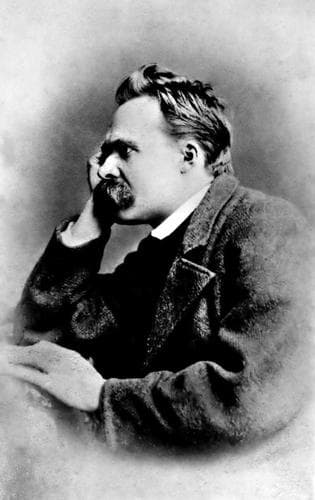
Friedrich Nietzsche was a German philosopher active in the late 19th century, known for his critiques of traditional moral values and religion. His notable works include "Thus Spoke Zarathustra," "Beyond Good and Evil," and "On the Genealogy of Morals," which explore themes of individualism, power, and the nature of existence. Nietzsche's writings have had a profound influence on modern philosophy and literature.
Similar books
- Thus Spoke Zarathustra
Friedrich Nietzsche
4.0 (111k) average on GoodreadsPsychologyExplores themes of overcoming, creating new values, and the will to power, echoing the call for active engagement with life over passive historical reverence.
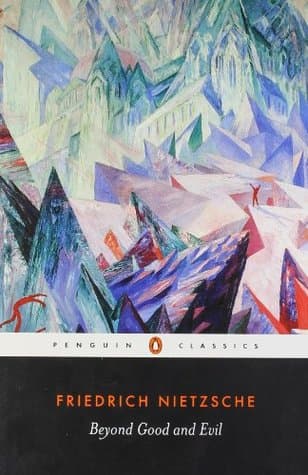
- Beyond Good and Evil
Friedrich Nietzsche
4.0 (67k) average on GoodreadsPsychologyCritiques traditional morality and philosophy, similar to how 'On the Use and Abuse' critiques traditional approaches to history.
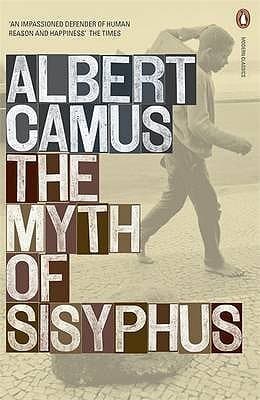
- The Myth of Sisyphus
Albert Camus
4.2 (25k) average on GoodreadsPhilosophyAddresses the absurd and the human struggle for meaning in a world without inherent purpose, resonating with Nietzsche's emphasis on creating value in the present.
- The Diary of a Young Girl
Anne Frank
4.2 (2.7M) average on GoodreadsBiographyDuring the Nazi occupation, a teenage girl's diary, written from a secret annex, shares observations on humanity, hope, and the wait for freedom.
- Night
Elie Wiesel
4.3 (970k) average on GoodreadsBiographyIn the darkness of Auschwitz and Buchenwald, a teenage Elie Wiesel faces the extermination of his family, the loss of his faith, and the lasting scars of humanity's deepest cruelty.
- Steve Jobs
Walter Isaacson
4.1 (957k) average on GoodreadsBusinessSteve Jobs was a visionary who fused creativity and technology to revolutionize six industries and shape our digital world.




Enjoyed the summary?
A summary gives you the shape of the book. The book itself has the detail, the examples and the voice.
Find On the Use and Abuse of History for Life on AmazonAs an Amazon Associate, BookBrief earns from qualifying purchases. How we're funded