

Core Idea
- Difficulty
- Medium
- Read it if
- You are an artist, writer, or creative struggling with self-doubt, or you appreciate raw, unconventional memoirs that blend visual art with personal narrative to explore the complexities of life and memory.
- Skip it if
- You prefer traditional, linear prose memoirs without illustrations, or you are uncomfortable with an experimental, sometimes disjointed narrative style that doesn't offer neat resolutions.
Key Takeaways from One Hundred Demons
Embrace 'Autobifictionalography'
Truth and fiction intertwine to reveal deeper emotional realities.
Barry's idea of 'autobifictionalography' asks us to mix memoir and fiction. It doesn't mean making up events, but seeing that memory is creative, shaped by feelings, viewpoint, and time. By feeling free to add to, reframe, or even invent details, Barry finds a deeper emotional truth than a factual story might. This way frees the artist (and reader) from needing exact accuracy, focusing instead on the felt experience and the 'demons' or joys of a moment. It suggests the 'real' story is often beyond facts, in our inner lives.
“I mixed the true and the un-true into something she calls 'autobifictionalography.'”
In the book: The entire structure of 'One Hundred Demons' exemplifies this, with stories like 'The Thing' or 'Resurrection' where the emotional impact is paramount, regardless of precise historical accuracy.
Try this: When reflecting on personal experiences for creative work or self-understanding, allow for the possibility that emotional resonance can be more important than strict factual recall. Experiment with re-imagining scenes or conversations to uncover deeper feelings.
Related ideas: creative-nonfiction, subjective-truth, autobiographical-fiction
Confront Your Inner Demons
Naming and depicting personal struggles is a path to understanding and catharsis.
Barry's 'One Hundred Demons' shows how helpful it is to face one's personal 'demons.' By giving shape and name to hard experiences—an abusive relationship, a difficult family, or adolescent pain—she puts them outside herself. This act of naming and drawing makes internal pain observable, something that can be dealt with. It means acknowledging the past parts that haunt us, rather than hiding them. The book suggests that by looking at these 'monsters,' we start to lessen their power, moving from being affected by them to understanding them.
“Name that Demon!!! Freaky boyfriends! Shouting Moms! Innocence betrayed! These are some of the pickled demons you_ll meet...”
In the book: Each chapter is titled after a 'demon,' such as 'Freaky Boyfriends,' 'The Thing,' or 'The Persimmon Tree,' directly addressing the source of her past anxieties and struggles.
Try this: Identify a recurring personal struggle or difficult memory. Give it a name and try to describe or draw it. This act of externalization can create distance and clarity, making it less overwhelming.
Related ideas: shadow-work, catharsis, emotional-processing
The Power of the Unflattering Portrait
Embrace the raw, uncomfortable truths of human relationships.
Barry shows people and situations as they are, often uncomfortably real. Her grandmother is 'nattering and intolerant/loving,' a good example of complex family. Her ex-boyfriend is 'from hell' and had 'lice,' a real, unflattering detail that makes the memory clear. This willingness to show others, and herself, without making them seem better is refreshing. It confirms the messy, imperfect nature of human connection and experience. By showing these 'unflattering portraits,' Barry creates a space for truth, showing that truth is not always pretty, but it is always interesting and relatable.
“From her nattering and intolerant/loving Filipina grandmother to the ex-boyfriend from hell who had lice, Lynda Barry's demons jump out of these pages...”
In the book: The detailed, often cringeworthy descriptions of her ex-boyfriends, or the nuanced, sometimes harsh, portrayal of her grandmother, illustrate this commitment to raw honesty.
Try this: When creating art or reflecting on relationships, resist the urge to sanitize or idealize. Allow for the full spectrum of human behavior and emotion, including the uncomfortable parts.
Related ideas: authenticity, unvarnished-truth, complex-relationships
The Everyday as Sacred
Finding profound meaning and art in mundane or challenging moments.
Barry turns ordinary or even painful life experiences into something important through her art. A fight with a boyfriend, a childhood pet memory, or a family member's quirks are not small; they become the focus of her 'demons.' Her 'shimmering watercolor images' turn these raw stories into something beautiful and thoughtful, suggesting that even hard memories have a certain light when seen through art. This way encourages us to find art and meaning in our daily lives, seeing that important stories are not just in big events.
“One Hundred Demons has been hailed for its shimmering watercolor images and unforgettable stories about life's little monsters.”
In the book: The chapter 'What It Is' where she reflects on a seemingly simple moment of observing a cat, or 'The Thing,' which describes a childhood memory of a mysterious object, are examples of finding depth in the everyday.
Try this: Practice observing your daily life with an artist's eye. Choose a seemingly mundane object or event and try to describe it in detail, focusing on sensory information and emotional resonance, as if it were the subject of a painting or story.
Related ideas: mindfulness, everyday-art, observational-practice
The Healing Power of Visual Storytelling
Combining words and images creates a unique pathway to emotional processing.
The graphic novel format is key to Barry's way of dealing with and sharing her 'demons.' The watercolors are not just pictures; they are an expressive language that works with the text, often showing emotions or details that words alone cannot. A face, colors, or how a panel is set up can show fear, longing, or confusion more quickly than prose. This dual way allows for a richer experience for the reader and, likely, for Barry in creating it. It shows how visual art can be a strong tool for self-reflection, remembering, and emotional understanding, especially with complex or hard experiences.
“Lynda Barry mixes the true and the un-true into something she calls 'autobifictionalography.'”
In the book: The distinct watercolor style and hand-lettered text in each chapter, such as the muted tones in 'The Persimmon Tree' or the vibrant energy in 'The Thing,' demonstrate how visual choices enhance the narrative.
Try this: If struggling to articulate a feeling or memory, try drawing or doodling about it first, without worrying about artistic skill. Let the images guide your words, or simply let the images speak for themselves.
Related ideas: art-therapy, graphic-memoir, visual-narrative
Adolescence as a Crucible
The formative years are a battleground where many 'demons' are born.
Many of Barry’s strongest 'demons' come from her teen years. This time, full of self-discovery, social worries, and first experiences with betrayal and heartbreak, is shown as a period where identities are made and scars are gained. 'Innocence betrayed' describes the pain of losing childhood innocence through hard realities of peer relationships, romantic ties, and family. Barry’s honest look at this time reminds us of the lasting impact these early experiences have, shaping our adult selves and often leaving 'demons' that need to be recognized.
“Innocence betrayed! These are some of the pickled demons you'll meet...”
In the book: Stories like 'Freaky Boyfriends' or those touching on her early friendships and social awkwardness vividly illustrate the struggles of adolescence.
Try this: Reflect on your own adolescence. Identify a key event or relationship from that time that still resonates. How did it shape who you are today? Consider writing or drawing about it to gain new perspective.
Related ideas: coming-of-age, identity-formation, adolescent-psychology
The Enduring Impact of Family
Family relationships, however flawed, leave an indelible mark.
Barry's family portrayal, especially her Filipina grandmother, shows complex, often conflicting love. Her grandmother is both 'nattering and intolerant' and 'loving,' showing that family members are rarely simple. These early relationships, with all their flaws and moments of both care and frustration, form our emotional base. Barry shows how these dynamics, even years later, still affect how we see ourselves and others. The 'demons' from family interactions are often the deepest, needing ongoing thought and acceptance to handle their lasting effects.
“From her nattering and intolerant/loving Filipina grandmother...”
In the book: The chapter focusing on her grandmother, 'The Persimmon Tree,' vividly captures the nuanced and sometimes difficult relationship, showing both affection and cultural clashes.
Try this: Consider a significant family member. Instead of viewing them as 'good' or 'bad,' list five contradictory adjectives that describe them. This can help you see their full humanity and how their complexity impacted you.
Related ideas: family-dynamics, intergenerational-trauma, attachment-theory
The Act of Creation as an Antidote
Art-making transforms personal pain into something meaningful and shared.
Ultimately, 'One Hundred Demons' shows how creating art can help with personal suffering. Barry takes her 'demons'—her worries, heartbreaks, and awkward moments—and turns them into 'shimmering watercolor images and unforgettable stories.' This process is not just about telling; it's about making sense, finding beauty, and changing. By sharing her vulnerabilities, she creates a shared human experience, letting readers connect with their own 'demons.' The book itself proves that even hard truths can become art, offering both the creator and the audience a way to understand and heal.
“Called by Time magazine 'a work of art as well as literature,' One Hundred Demons has been hailed for its shimmering watercolor images and unforgettable stories...”
In the book: The very existence of the book, where each 'demon' chapter is a complete artistic piece, serves as the primary evidence.
Try this: When facing a difficult emotion or memory, try to channel it into a creative outlet—writing, drawing, music, dance. Focus on the process of expression rather than the outcome, allowing the act itself to be therapeutic.
Related ideas: art-as-therapy, creative-expression, sublimation
The Universal in the Specific
Highly personal narratives resonate deeply by touching shared human experiences.
While Barry's stories are very personal—from her unique childhood, background, and relationships—they are also very common. The 'freaky boyfriends,' 'shouting moms,' and 'innocence betrayed' are hers, but the feelings of confusion, hurt, love, and growth are common to everyone. By asking us to 'speak their names,' Barry invites us to see our own versions of these 'demons.' This ability to make the specific common is a mark of good memoir, showing that honest accounts of individual experience often provide a clear mirror for others to see themselves.
“Lynda Barry's demons jump out of these pages and double-dare you to speak their names.”
In the book: The broad appeal and critical acclaim of the book, despite its highly idiosyncratic content, indicates its universal resonance.
Try this: When sharing a personal story, focus on the specific details that made it unique to you. Paradoxically, these precise details often make the story more relatable to a wider audience, allowing them to connect through shared emotions.
Related ideas: universal-themes, relatability, personal-narrative
The Beauty of Imperfection
Flawed art and messy lives hold a profound, authentic charm.
Barry's art style, with its bright watercolors and raw quality, fits her story. It is not about perfect realism, but about immediate expression. This art choice reflects her acceptance of life's flaws and messy parts. The 'shimmering' quality of her watercolors suggests that beauty can be found even when showing hard subjects, and that the handmade, slightly rough quality of her drawings makes them charming and real. The book supports the idea that art does not need to be perfect to be strong, and that our lives, with all their difficulties, are beautiful in their experience.
“One Hundred Demons has been hailed for its shimmering watercolor images and unforgettable stories...”
In the book: The unique, often child-like yet deeply expressive watercolor and hand-lettering style throughout the book, which prioritizes feeling over technical precision.
Try this: When creating, allow for spontaneity and imperfection. Embrace 'happy accidents' and the unique character of your own hand. In life, practice self-compassion by accepting your own flaws and the imperfections of your journey.
Related ideas: wabi-sabi, authentic-expression, artistic-freedom
One Hundred Demons Quotes
“I think I was born knowing that the world was a dangerous place and that the only way to survive was to stay in your own head.”
“The feeling of being alive is always a surprise.”
“Most of the important things in my life happened when I was not paying attention.”
“The hardest thing is to be in the present moment.”
“What if the monsters are not outside us? What if they are inside?”
“Sometimes the only way to feel alive is to draw something that scares you.”
“You can't really know a person until you've seen their doodles.”
“Every time I write something, I'm trying to figure out what I believe.”
“The only way to get rid of a demon is to draw it.”
“I'm not trying to be an artist. I'm just trying to make sense of things.”
“That's the thing about memories. They're never quite what you expect.”
“The world is full of people who are just trying to get through the day.”
“You have to be willing to look at the ugly stuff if you want to make anything real.”
“Childhood is a foreign country. They do things differently there.”
Quiz
10 questions on the main ideas. Each answer comes with a short explanation.
Question 1
Which specific 'demon' does Lynda Barry recall from her childhood as a source of both frustration and affection, often associated with her Filipina heritage?
- The 'Freaky Boyfriends' demon
- The 'Nattering and Intolerant/Loving Filipina Grandmother' demon
- The 'Shouting Moms' demon
- The 'Innocence Betrayed' demon
Show answer
B. The 'Nattering and Intolerant/Loving Filipina Grandmother' demon The book description specifically mentions 'her nattering and intolerant/loving Filipina grandmother' as a key demon, highlighting the complex relationship.
Question 2
What unique term does Lynda Barry use to describe the blend of true and untrue elements in her storytelling, reflecting the nature of 'One Hundred Demons'?
- Autobio-fiction
- Graphic Memoir
- Autobifictionalography
- Creative Non-fiction
Show answer
C. Autobifictionalography The book description explicitly states that Lynda Barry 'mixes the true and the un-true into something she calls 'autobifictionalography'.'
Question 3
According to the book's description, what visual medium is characteristic of Lynda Barry's artwork in 'One Hundred Demons'?
- Black and white ink drawings
- Digital illustrations
- Shimmering watercolor images
- Acrylic paintings
Show answer
C. Shimmering watercolor images The description highlights the book being 'hailed for its shimmering watercolor images,' making this a direct detail from the text.
Question 4
Beyond personal anecdotes, 'One Hundred Demons' is also described as a 'creativity primer.' What does this imply about the book's purpose?
- It teaches readers how to draw watercolor comics.
- It offers guidance and inspiration for unlocking one's own creative potential.
- It provides a step-by-step guide to writing memoirs.
- It primarily focuses on the technical aspects of graphic novel creation.
Show answer
B. It offers guidance and inspiration for unlocking one's own creative potential. A 'creativity primer' suggests the book aims to teach or introduce fundamental aspects of creativity, inspiring readers rather than providing technical instruction.
Question 5
The book description mentions 'ex-boyfriend from hell who had lice' as a specific 'demon.' What broader theme does this particular demon likely represent within the memoir?
- The challenges of maintaining personal hygiene.
- The difficulties and unpleasantness of past relationships.
- The importance of choosing partners carefully.
- The literal depiction of physical ailments.
Show answer
B. The difficulties and unpleasantness of past relationships. While specific, the 'ex-boyfriend from hell' demon, especially combined with 'freaky boyfriends,' clearly represents the broader theme of difficult or troublesome romantic relationships from her past.
Question 6
What is the primary function of the 'demons' in 'One Hundred Demons' as presented in the book's description?
- To serve as literal supernatural entities that haunt Lynda Barry.
- To symbolize significant, often challenging, experiences and people from Lynda Barry's life.
- To represent abstract concepts of good versus evil.
- To act as antagonists in a fictional narrative.
Show answer
B. To symbolize significant, often challenging, experiences and people from Lynda Barry's life. The description states 'These are some of the pickled demons you'll meet' and lists specific life elements like 'Freaky boyfriends! Shouting Moms! Innocence betrayed!' indicating they are symbolic representations of life's challenges.
Question 7
The book description mentions 'the funk and sweetness of love, family, adolescence, race, and the hood.' What does the inclusion of both 'funk' and 'sweetness' suggest about Barry's approach to these themes?
- She focuses exclusively on the negative aspects of these experiences.
- She only highlights the positive and nostalgic elements of her past.
- She explores the complex, often contradictory, nature of these life experiences.
- She maintains a detached, academic perspective on her past.
Show answer
C. She explores the complex, often contradictory, nature of these life experiences. The juxtaposition of 'funk' (difficult, unpleasant) and 'sweetness' (pleasant, cherished) implies a nuanced and comprehensive exploration of both the good and bad aspects of her life experiences.
Question 8
Given the book's description as a 'creativity primer' and its exploration of personal 'demons,' what might be a practical application or takeaway for a reader, as implied by the text?
- To learn specific drawing techniques from Lynda Barry.
- To be inspired to confront and creatively express their own personal struggles and memories.
- To understand the historical context of graphic novels.
- To develop a deeper appreciation for Filipina culture.
Show answer
B. To be inspired to confront and creatively express their own personal struggles and memories. As a 'creativity primer' dealing with 'demons' that 'double-dare you to speak their names,' a practical application would be to encourage readers to engage with and express their own challenging experiences creatively.
Question 9
Time magazine called 'One Hundred Demons' 'a work of art as well as literature.' What does this specific praise emphasize about the graphic novel format in this context?
- That the literary merit is secondary to the visual art.
- That the book successfully integrates both visual and textual elements to achieve high aesthetic and narrative quality.
- That the book is primarily a visual art piece with minimal textual content.
- That the book's literary themes are more impactful than its artistic style.
Show answer
B. That the book successfully integrates both visual and textual elements to achieve high aesthetic and narrative quality. Calling it 'a work of art as well as literature' highlights that both the visual (art) and textual (literature) components are equally strong and contribute to its overall quality and impact.
Question 10
The phrase 'double-dare you to speak their names' regarding the demons suggests a particular kind of engagement with the reader. What is this engagement primarily aimed at?
- Encouraging readers to literally identify specific characters in the book.
- Challenging readers to acknowledge and confront their own uncomfortable truths and past experiences.
- Inviting readers to participate in a game or puzzle within the narrative.
- Asking readers to name the artistic techniques used in the book.
Show answer
B. Challenging readers to acknowledge and confront their own uncomfortable truths and past experiences. To 'speak their names' in the context of personal 'demons' implies a challenge to acknowledge or confront difficult aspects of one's own life, mirroring Barry's own process in the memoir.
One Hundred Demons FAQ
What is 'autobifictionalography' as coined by Lynda Barry?
Autobifictionalography is Lynda Barry's unique term for her creative process, blending autobiography, biography, and fiction. It signifies her approach to storytelling where personal memories and experiences are intertwined with imaginative elements, creating a narrative that transcends strict factual recounting.
Does 'One Hundred Demons' offer practical advice for aspiring artists or writers?
While not a traditional 'how-to' guide, 'One Hundred Demons' serves as a primer on creativity by demonstrating Barry's own process and perspective. It encourages readers to explore their personal 'demons' and experiences as catalysts for artistic expression, making it inspiring for those seeking to tap into their own creative wellsprings.
What kind of 'demons' does Lynda Barry explore in the book?
Lynda Barry explores a wide array of personal 'demons' stemming from her life experiences, including challenging family dynamics, difficult romantic relationships, the complexities of adolescence, issues of race, and the environment of her neighborhood. These 'demons' represent the emotional struggles and significant moments that have shaped her.
How does 'One Hundred Demons' differ from a typical memoir?
'One Hundred Demons' deviates from a typical memoir through its graphic novel format, watercolor artwork, and the 'autobifictionalography' approach. Instead of a linear narrative, it presents fragmented, thematic stories, blending factual recollection with imaginative interpretation, making it more experimental and reflective than a straightforward autobiography.
Is 'One Hundred Demons' suitable for all ages?
Due to its exploration of mature themes such as complex family issues, difficult relationships, and the challenges of adolescence, 'One Hundred Demons' is generally recommended for young adult and adult readers. Its content delves into nuanced emotional landscapes that may be more appreciated by a mature audience.
What role do the watercolor images play in the storytelling?
The shimmering watercolor images are integral to the storytelling in 'One Hundred Demons,' enhancing the emotional depth and unique atmosphere of each narrative. They often convey mood and character more powerfully than words alone, adding a visceral and dreamlike quality to Barry's recollections and imaginative tales.
How does Lynda Barry's Filipino heritage influence the book?
Lynda Barry's Filipino heritage, particularly through her 'nattering and intolerant/loving Filipina grandmother,' is a significant influence, shaping many of the personal 'demons' and stories explored in the book. It provides a cultural lens through which themes of family, identity, and complex relationships are examined.
Does 'One Hundred Demons' offer a resolution or coping mechanisms for 'demons'?
'One Hundred Demons' doesn't necessarily offer prescriptive resolutions but rather a powerful act of confronting and acknowledging personal 'demons' through artistic expression. By naming and illustrating these experiences, Barry demonstrates a unique way of processing and finding understanding, suggesting that creativity itself can be a coping mechanism.
About the author

Lynda Barry is an American cartoonist, author, and educator known for her unique blend of visual art and storytelling. Her book "One Hundred Demons" explores themes of memory and childhood through a series of illustrated narratives. Barry's work often reflects her experiences and insights into the creative process, making significant contributions to both graphic literature and non-fiction.
Similar books
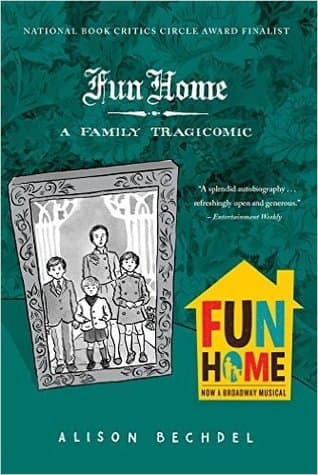
- Fun Home: A Family Tragicomic
Alison Bechdel
4.1 (130k) average on GoodreadsBiographyBoth are graphic memoirs exploring complex family dynamics and identity through unique visual storytelling.
- Persepolis: The Story of a Childhood
Marjane Satrapi
4.3 (158k) average on GoodreadsBiographyA graphic memoir that uses a distinct visual style to recount personal history and cultural experiences.
- A Contract With God
Will Eisner
4.1 (11k) average on GoodreadsHistorical FictionPioneering graphic novel that delves into everyday life and emotional depth through sequential art.
- The Diary of a Young Girl
Anne Frank
4.2 (2.7M) average on GoodreadsBiographyDuring the Nazi occupation, a teenage girl's diary, written from a secret annex, shares observations on humanity, hope, and the wait for freedom.
- Eat, Pray, Love
Elizabeth Gilbert
3.6 (1.5M) average on GoodreadsLifestyleA heartbroken writer leaves her conventional life for a year-long global search for pleasure in Italy, spiritual devotion in India, and unexpected love and balance in Bali.
- Night
Elie Wiesel
4.3 (970k) average on GoodreadsBiographyIn the darkness of Auschwitz and Buchenwald, a teenage Elie Wiesel faces the extermination of his family, the loss of his faith, and the lasting scars of humanity's deepest cruelty.




Enjoyed the summary?
A summary gives you the shape of the book. The book itself has the detail, the examples and the voice.
Find One Hundred Demons on AmazonAs an Amazon Associate, BookBrief earns from qualifying purchases. How we're funded