
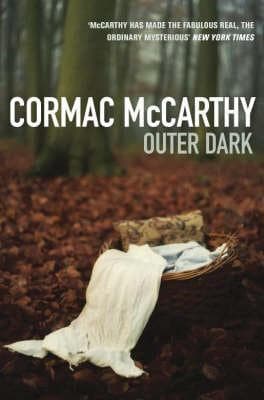
Synopsis
Covers the whole plot, including the ending.
- Difficulty
- Hard
- Pacing
- Slow
- Mood
- Bleak, Desolate, Haunting, Primal, Apocalyptic
- Read it if
- You appreciate sparse, poetic prose, bleak existential themes, and a raw, unflinching exploration of human depravity and suffering against a desolate natural backdrop.
- Skip it if
- You prefer clear moral resolutions, fast-paced plots, or stories with a strong sense of hope and redemption.
Outer Dark Plot Summary
Covers the whole plot, including the ending.
A Secret Birth and a Desperate Act
In a remote Appalachian cabin, Rinthy Holme gives birth to her brother Culla's child, who has a clubfoot. Overwhelmed by the incest and the child's deformity, Culla secretly takes the baby into the woods. He leaves the newborn under a tree, expecting it to die, then tells Rinthy the baby was stillborn and he buried it. Rinthy, suspicious, questions him, sensing a lie in his answers. She is upset by the loss and Culla's strange behavior.
Rinthy's Search Begins
Believing her child is alive, Rinthy asks Culla for more details about the burial. Her questions lead Culla to admit he left the child in the woods. Devastated and angry, Rinthy decides to find her son. Despite being weak from childbirth and Culla's warnings about the outside world, she leaves the cabin alone with only a few things, determined to retrace Culla's steps and find the infant.
Culla's Flee and a Fateful Encounter
Fearing Rinthy's anger and the results of his actions, Culla also leaves the cabin, going deeper into the wilderness. He becomes a wanderer, moving through the desolate and often dangerous landscape. He has a series of unsettling meetings with isolated and often desperate people. He sees men digging for treasure, meets a traveling preacher, and experiences the harshness of survival in a savage world. These meetings show his growing isolation and the moral decay around him.
The Infant's Survival and Adoption
By chance, a passing tinker finds the infant Culla left, still alive. The tinker, seeing the child's clubfoot, feels sorry for the baby and carries it with him. He eventually brings the child to a small settlement where a childless shoemaker and his wife adopt the infant, naming him John. They do not know the child's true parents or the tragic way he was abandoned. The shoemaker believes the child is a gift from God, despite his deformity, and loves him as his own.
Rinthy's Perilous Journey
Rinthy's journey is hard and dangerous. She walks, enduring hunger, cold, and constant threats. Her resolve to find her son is strong, even as she becomes disoriented and sick. She meets many indifferent or hostile strangers who offer little help or information. Her health worsens, and she experiences moments of confusion, blurring reality with her desperate hope. She meets a hog drover who gives her some food but little comfort or direction.
The Appearance of the Dark Strangers
As Culla and Rinthy wander, three mysterious and terrifying figures appear, moving through the same area. These men are dark, silent, and deeply disturbing. They are a force of random violence and cruelty, leaving destruction, murder, and fear. Their reasons are never explained; they seem to be a primal force of destruction. Their presence casts a long shadow, hinting at coming doom and chaos for anyone they encounter.
Culla's Growing Desperation
Culla's travels take him to various settlements and isolated homes, but he finds no peace. People often view him with suspicion because of his vagrant look and evasive nature. He works odd jobs, always moving, trying to escape his past. He sees violence and sometimes takes part in it, always on the edge. He is accused of theft, barely avoids being lynched, and is increasingly aware of the widespread darkness that seems to follow him. His inner turmoil shows as growing despair and fatalism.
Rinthy's Fading Hope and a Vague Lead
Rinthy's body and mind continue to decline. She is thin and feverish, barely able to keep going. Amidst her suffering, she hears a faint rumor from a peddler or traveler about a child with a clubfoot who was found and taken in by a shoemaker. This vague information, though unconfirmed, reignites a spark of hope in her, giving her a renewed sense of purpose and direction for her search. She holds onto this fragile clue, pushing herself despite her severe weakness.
The Tinker's Fate and the Strangers' Proximity
The tinker who found Rinthy's baby continues his travels. He eventually meets the three dark strangers, who murder him without clear reason, taking his few belongings. This act of pointless violence shows the widespread evil that has come to the land and the random nature of their brutality. The strangers are now actively moving through the same territory as Rinthy and Culla, their paths heading towards a violent climax, bringing them closer to the child.
Rinthy's Arrival and the Child's Discovery
Following the faint rumors, Rinthy finally finds the shoemaker's isolated cabin. Through a window, she sees the child with the clubfoot, her son, being cared for by the shoemaker and his wife. A deep mix of relief, exhaustion, and maternal love washes over her. However, her moment of discovery is broken by the ominous arrival of the three dark strangers at the shoemaker's door. Their presence means immediate danger, threatening the home's fragile peace and the child's safety, setting the stage for a tragic confrontation.
The Shoemaker's Stand and the Strangers' Cruelty
The shoemaker, fiercely protective of the child, tries to defend his home and family from the intruders. He bravely faces the three dark strangers, but their ruthless violence overpowers him. The strangers murder the shoemaker and his wife. Rinthy, hidden outside, sees the terrible events, unable to help. The child, her son, is now vulnerable and alone after the senseless killing, as the strangers prepare to leave.
Culla's Return and the Final Act
As the dark strangers finish their brutal work and get ready to leave, Culla, drawn by an unknown force or fate, arrives at the shoemaker's cabin. He sees the bloodshed and the strangers. The child, now an orphan, is taken by the strangers. Culla, seeing the full horror of his original act of abandonment and the violence it caused, is frozen. The strangers, having completed their dark purpose, leave with the child, vanishing into the darkness, leaving Culla to witness the devastating results of his choices. The child is lost forever.
Outer Dark Characters
Culla Holme
Protagonist/Antagonist
A man haunted by incest and abandonment, wandering a desolate landscape.
Culla is a morally complex and deeply flawed character. He is the brother and lover of Rinthy, and the father of her child. Driven by a mixture of shame, fear, and a primal desire for self-preservation, he abandons his newborn son in the woods. His subsequent journey is one of aimless wandering, marked by suspicion, violence, and a growing sense of fatalism. He is largely passive, reacting to circumstances rather than shaping them, and seems unable to escape the consequences of his initial act. He struggles with an inner guilt but rarely articulates it, instead manifesting as a detached, almost animalistic survival instinct.
Relationships: Rinthy Holme (sister and lover, mother of his child); The Child (his abandoned son); The Dark Strangers (predatory figures he encounters)
Rinthy Holme
Protagonist
A determined mother on a relentless quest to find her abandoned child.
Rinthy is Culla's sister and the mother of their incestuously conceived child. Despite her physical frailty after childbirth and her initial shock, she possesses an unwavering maternal instinct and a fierce determination. Upon discovering Culla's lie, she embarks on a perilous, solitary journey through a dangerous wilderness to find her son. Her quest is driven by love, hope, and an almost primal urge to reclaim what was taken from her. She endures immense hardship, illness, and danger, representing a force of enduring love and resilience in a brutal world.
Relationships: Culla Holme (brother and lover, father of her child); The Child (her son, whom she desperately seeks); The Shoemaker (the man who adopts her child)
The Child (John)
Supporting
The clubfooted infant, central to the narrative, abandoned and later adopted.
The child, born of incest and bearing a clubfoot, is the catalyst for the entire narrative. Abandoned by Culla, he is miraculously found by a tinker and subsequently adopted by a kind shoemaker and his wife, who name him John. He is a symbol of innocence and vulnerability in a world filled with darkness and violence. His physical deformity marks him as an outsider from birth, and his existence drives both Culla's flight and Rinthy's desperate search. His ultimate fate is tragic, highlighting the arbitrary nature of suffering in the novel.
Relationships: Culla Holme (biological father); Rinthy Holme (biological mother); The Tinker (rescuer); The Shoemaker (adoptive father)
The Tinker
Supporting
A nomadic craftsman who discovers and saves the abandoned infant.
The tinker is a transient figure who travels the backcountry, mending pots and pans. He is the one who discovers the abandoned, clubfooted infant in the woods and, out of a moment of compassion, decides to take the child with him. He plays a crucial role in the child's survival, eventually bringing him to the shoemaker and his wife. His act of kindness stands in stark contrast to the pervasive cruelty of the world. He is ultimately a victim of the dark strangers, his life ending abruptly and violently, underscoring the arbitrary nature of evil.
Relationships: The Child (rescuer and temporary guardian); The Shoemaker (entrusts the child to him); The Dark Strangers (his murderers)
The Shoemaker
Supporting
A kind, childless man who adopts the abandoned infant.
The shoemaker is a solitary, devout man who lives with his wife in an isolated cabin. He is childless and longs for a family. When the tinker brings him the clubfooted infant, he sees it as a gift from God and adopts the child, naming him John. He is a figure of quiet piety, compassion, and domesticity, providing a brief haven of love and normalcy for the abandoned baby. His fierce protectiveness of the child ultimately leads to his tragic death at the hands of the dark strangers, highlighting the vulnerability of goodness in a brutal world.
Relationships: The Child (adoptive father); The Tinker (receives the child from him); The Dark Strangers (his murderers)
The Three Dark Strangers
Antagonist
Enigmatic and malevolent figures who embody senseless violence and evil.
These three unnamed men are a pervasive and terrifying force of evil in the novel. They are silent, relentless, and seemingly without motive for their acts of indiscriminate violence, which include murder, mutilation, and destruction. They move through the landscape like a plague, leaving a trail of death and fear. They embody the 'outer dark' itself – a primal, inexplicable malevolence that is beyond human comprehension or morality. Their presence heightens the sense of dread and inevitability, serving as a symbolic representation of the world's inherent cruelty and the ultimate futility of escape.
Relationships: Culla Holme (pursuer and tormentor); Rinthy Holme (a threat to her quest); The Child (ultimately take the child); The Tinker (their victim); The Shoemaker (their victim)
The Hog Drover
Supporting
A transient figure who offers Rinthy temporary aid and a cryptic warning.
The hog drover is one of the few individuals Rinthy encounters who offers her any form of sustenance or brief interaction. He is a gruff, practical man, focused on his work. While he provides Rinthy with some food, his compassion is limited, and he offers her little in the way of true help or comfort. His presence highlights the harsh realities of survival in the wilderness and the general indifference of most people Rinthy meets. He also serves to emphasize Rinthy's vulnerability and isolation on her journey.
Relationships: Rinthy Holme (brief, transactional encounter)
The Preacher
Mentioned
A traveling religious figure who embodies the hypocrisy of faith.
The preacher is a minor character Culla observes from a distance. He preaches fire and brimstone, condemning the sins of the world. However, his actions are often contradictory to his sermons, revealing a hypocrisy that mirrors the moral decay of the society. He represents a corrupted form of religion, offering no true solace or redemption in a world that desperately needs it. His presence emphasizes the novel's bleak outlook on human nature and institutions.
Relationships: Culla Holme (observed by Culla)
Outer Dark Themes
The Nature of Evil and Violence
A main theme is the widespread, often pointless nature of evil. The three dark strangers show an unexplained, primal evil that moves through the land, causing random violence and death. Their actions are not for gain or revenge but seem to be an inherent force of destruction. This theme is also seen in Culla's initial act of abandonment, which starts a series of tragic events, suggesting that human cruelty can be as devastating as external, unexplained evil. The novel portrays a world where evil is not unusual but a natural part of existence, inescapable and often without reason.
“What would you do with a man like that? Would you hang him? Would you burn him? Would you turn him loose to wander the outer dark?”
Guilt, Consequence, and Atonement
Culla's journey is a constant pursuit by the results of abandoning his child. His guilt, though mostly unsaid, shows in his aimless wandering, his inability to find peace, and the dangers he meets. Rinthy's search, driven by love, is also a form of penance for the incest, seeking to reclaim and protect the innocent life that resulted. The novel suggests that some wrongs cannot be escaped or forgiven but must be carried as a constant burden, leading to a fatalistic view of personal responsibility and destiny. The final scene leaves Culla to see the ultimate, terrible outcome of his actions.
“He knew that he was a man of sorrow and that he would be a man of sorrow until the day he died.”
Maternal Love and Sacrifice
Rinthy's character shows the deep and lasting power of a mother's love. Despite her physical weakness, the journey's dangers, and her bleak situation, her resolve to find her son never lessens. Her constant search shows the self-sacrificing nature of a mother's bond. She endures starvation, sickness, and constant threats, driven only by the hope of finding her child. This theme contrasts sharply with Culla's abandonment and the common cruelty in the world, standing as a sign of lasting human connection amid despair.
“She would find him, she knew. She would find him if it took her all the days of her life.”
The Desolation of the American South
The setting acts as a character itself, showing a desolate, post-apocalyptic, or pre-modern American South. The landscape is harsh, unforgiving, and has few isolated, often desperate people. Towns are rare, and the wilderness is both a refuge and a source of constant danger. This desolation reflects the moral and spiritual decay of the characters and their society. The lack of organized authority or community adds to the widespread lawlessness and individual isolation, showing a world stripped of civilizing influences.
“The country was raw and without order, a place of hardscrabble and wildness, where men lived as they could.”
Fate vs. Free Will
The story explores how much characters control their lives versus being subject to an indifferent or evil fate. Culla's initial act of abandonment starts a series of events that seem destined to end in tragedy. His wandering is less a choice and more a desperate flight that eventually returns to his original sin. The random violence of the dark strangers further emphasizes that life is often controlled by forces beyond human power. While Rinthy actively pursues her goal, even her strong will cannot prevent her child's tragic fate, suggesting a powerful, almost cosmic inevitability.
“He wondered what road he would travel and if he would ever find an end to it.”
Plot Devices & Literary Techniques
The Journey/Wanderer Motif
Both Culla and Rinthy embark on separate, aimless journeys through a brutal landscape.
The entire novel is structured around the parallel, yet distinct, journeys of Culla and Rinthy. Culla's journey is one of flight, an attempt to escape the consequences of his actions, but it becomes an aimless wandering, a metaphor for his spiritual lostness. Rinthy's journey, in contrast, is a purposeful quest, driven by an unwavering maternal instinct. These journeys through a desolate, often violent landscape serve to expose the raw, unforgiving nature of the world and to strip the characters bare, revealing their essential humanity (or lack thereof) in extreme circumstances. The lack of specific geographical markers enhances the allegorical quality of their wanderings.
The Dark Strangers (Apostles of the Outer Dark)
Three enigmatic figures embodying senseless evil and chaos.
The three dark strangers function as a symbolic representation of pure, unadulterated evil. They are not characters in the traditional sense, lacking dialogue, motivation, or backstory. Instead, they are a force, an almost supernatural manifestation of the 'outer dark' – a cosmic, indifferent malevolence that plagues the land. Their presence escalates the sense of dread and inevitability, acting as agents of fate who bring destruction and chaos to those they encounter. They are a constant, looming threat, making the world feel inherently hostile and devoid of justice, ensuring the tragic conclusion of the plot.
The Clubfoot
The infant's deformity, symbolizing his otherness and the 'mark' of his origins.
The child's clubfoot is a significant symbol. It immediately marks him as different, deformed, and an outcast. It serves as a physical manifestation of the incestuous union that produced him and Culla's reason for abandoning him. For Rinthy, it becomes the identifying characteristic she clings to in her search. The deformity sets the child apart, making him vulnerable and drawing the attention of both compassionate figures (the tinker, the shoemaker) and ultimately, the dark strangers. It symbolizes the inescapable 'mark' of his origins and the inherent imperfections of life in this brutal world.
Biblical Allusions
Subtle references to biblical narratives, particularly Cain and Abel and the Fall.
McCarthy subtly weaves in biblical allusions throughout the text. The story of Culla and Rinthy, with its themes of incest, abandonment, and wandering, echoes elements of the Fall from Eden and the story of Cain, who is marked and condemned to wander the earth after murdering his brother. The 'outer dark' itself is a phrase with biblical connotations, referring to a place of weeping and gnashing of teeth. These allusions lend a mythic, timeless quality to the narrative, framing the characters' struggles within a larger, archetypal framework of sin, judgment, and exile, without explicitly endorsing religious dogma.
Outer Dark Quotes
“He looked at a world of incredible loveliness. Old distaff Celt's blood in some back chamber of his brain moved him to discourse with the birches, with the oaks. A cool wind had sprung up. The sun shone.”
“The man who believes that the secrets of the world are forever hidden lives in mystery and fear. Superstition will drag him down. The rain will erode the deeds of his life. But that man who sets himself the task of singling out the thread of order from the tapestry will by the decision alone have taken charge of the world and it is only by such taking charge that he will effect a way to dictate the terms of his own fate.”
“He saw for a brief moment the absolute truth of the world. The cold relentless circling of the intestate earth. Darkness implacable. The blind dogs of the sun in their running. The crushing black vacuum of the universe.”
“They rode on. The country did not change. The sun sat in the west like a molten ingot and the land lay in a dark and bloody haze.”
“He had divested himself of the little world of fathers and mothers and the will of gods, and he was alone in the dark of the wood.”
“The night was filled with stars. He could see them through the trees. They seemed to be moving. He watched them. They were not moving.”
“He had not known that terror could be a kind of love.”
“The road descended through a pine wood and came out upon a barren plain. A wind was blowing and it was cold.”
“He saw that the world was a tale told by a idiot. A tale full of sound and fury, signifying nothing.”
“In the morning the sun rose blood red and the land lay in a silence so profound it seemed the earth had died in the night.”
“He had come to see that the only thing that mattered was the will to see it through.”
“The dark was falling and the stars were coming out. They were like holes in the fabric of the night.”
“He thought that in the world's heart there was a coldness that no fire could ever warm.”
“The road went on. It seemed to have no end. It was the only thing that was real.”
Quiz
10 questions on the plot and the characters. Each answer comes with a short explanation.
Question 1
What does Culla Holme do with the baby after his sister Rinthy gives birth?
- He gives the baby to a traveling preacher
- He leaves the baby in the woods to die
- He sells the baby to a tinker
- He drowns the baby in a river
Show answer
B. He leaves the baby in the woods to die Culla Holme abandons his newborn son in the woods and tells his sister Rinthy that the baby died of natural causes, setting the main plot in motion.
Question 2
What does Rinthy discover that makes her realize her brother lied about their baby's fate?
- She finds the baby's blanket in the woods
- She overhears Culla confessing to a stranger
- She sees the tinker who took the baby
- She finds a note Culla wrote about his deed
Show answer
C. She sees the tinker who took the baby Rinthy encounters a tinker who reveals he found and took the baby, exposing Culla's lie that the child died naturally.
Question 3
What are the three terrifying strangers who scourge the countryside often called by critics?
- The Three Furies
- The Three Horsemen
- The Three Murderers
- The Three Fates or Weird Sisters
Show answer
D. The Three Fates or Weird Sisters The three mysterious, violent figures are frequently interpreted as embodiments of fate or doom, drawing comparisons to mythological figures like the Three Fates or Weird Sisters from Macbeth.
Question 4
Why does Culla wander through the countryside after abandoning the baby?
- He is searching for work as a laborer
- He is fleeing from the law for his crime
- He is trying to find Rinthy to apologize
- He is following the three strangers out of curiosity
Show answer
A. He is searching for work as a laborer Culla drifts from place to place seeking odd jobs and survival, his journey marked by guilt and avoidance rather than purposeful pursuit.
Question 5
What symbolic role does the tinker play in the novel?
- A symbol of redemption and forgiveness
- A messenger of truth who reveals the baby's fate
- A representation of technological progress
- A comic relief character in a dark story
Show answer
B. A messenger of truth who reveals the baby's fate The tinker serves as a catalyst for the plot by telling Rinthy he found the baby, embodying a truth-bringer in a world of deception and darkness.
Question 6
How does the setting contribute to the novel's themes?
- The lush, fertile landscape symbolizes hope and renewal
- The decaying, oppressive countryside reflects moral and spiritual desolation
- The urban areas represent civilization's triumph over chaos
- The changing seasons mirror the characters' emotional growth
Show answer
B. The decaying, oppressive countryside reflects moral and spiritual desolation McCarthy's depiction of a bleak, impoverished, and violent rural America mirrors the inner darkness and existential despair of the characters.
Question 7
What is the significance of the novel's title, 'Outer Dark'?
- It refers to the physical darkness of the woods where the baby is left
- It symbolizes the moral and spiritual darkness enveloping the characters and world
- It describes the time of day when most key events occur
- It is the name of a location the characters travel to
Show answer
B. It symbolizes the moral and spiritual darkness enveloping the characters and world The title evokes a profound sense of existential and ethical darkness, reflecting the novel's exploration of sin, guilt, and a godless universe.
Question 8
In the apocalyptic resolution, what ultimately happens to the baby?
- The baby is reunited with Rinthy and they find happiness
- The baby dies from neglect by the tinker
- The baby is killed by the three strangers in a grim ritual
- The baby is adopted by a kind family and survives
Show answer
C. The baby is killed by the three strangers in a grim ritual In a harrowing climax, the three strangers murder the baby, emphasizing the novel's themes of inexorable fate and pervasive violence.
Question 9
How does McCarthy use biblical and mythological allusions in the novel?
- To provide a framework of redemption and salvation for the characters
- To contrast the characters' actions with heroic archetypes
- To underscore themes of sin, judgment, and a fallen world
- To create a historical setting based on ancient times
Show answer
C. To underscore themes of sin, judgment, and a fallen world Allusions to figures like Cain and Abel or the Three Fates deepen the exploration of primal guilt, destiny, and a universe devoid of divine grace.
Question 10
What does the final separation of Culla and Rinthy symbolize?
- Their successful escape from the past and a new beginning
- The inevitable consequence of their sin and the irreparable brokenness of their world
- A temporary parting before they reunite later
- Their individual achievements in overcoming adversity
Show answer
B. The inevitable consequence of their sin and the irreparable brokenness of their world Their permanent separation at the end underscores the novel's bleak vision: actions have irreversible consequences, and redemption is absent in a dark, unforgiving world.
Outer Dark FAQ
What is 'Outer Dark' about?
'Outer Dark' follows siblings Culla and Rinthy Holme in a bleak, unnamed Appalachian setting. After Rinthy gives birth to their incestuous son, Culla abandons the baby in the woods and tells Rinthy it died. When she discovers the lie, she sets out to find her child, while Culla wanders separately, both encountering a trio of terrifying strangers who bring violence and an apocalyptic atmosphere to the countryside.
Why should I read 'Outer Dark'?
You should read 'Outer Dark' for its stark, poetic prose and profound exploration of guilt, sin, and existential dread. Cormac McCarthy masterfully creates a haunting, allegorical landscape that delves into human darkness, making it a compelling yet challenging work of literary fiction that lingers long after reading.
What is the background/setting of 'Outer Dark'?
The novel is set in an unspecified, rural Appalachian region in the early 20th century, characterized by desolate forests, isolated farms, and decaying towns. This timeless, almost mythical setting enhances the story's themes of isolation and moral decay, with a backdrop that feels both historical and eerily universal.
What are the most memorable quotes?
Memorable quotes include: 'He walked out in the gray light and stood and he saw for a brief moment the absolute truth of the world,' reflecting the novel's bleak insight. Another is 'They rode on,' often repeated, symbolizing the relentless, futile journey of the characters through a cursed landscape.
What writing style does the author use?
Cormac McCarthy employs a sparse, lyrical style with minimal punctuation and vivid, often brutal imagery. His prose blends biblical cadences with stark realism, creating a haunting, atmospheric narrative that immerses readers in the characters' psychological and physical turmoil.
What minor details add significant meaning?
Minor details like the constant references to 'gray light' and decaying nature symbolize moral ambiguity and death. The baby's swaddling clothes, which Rinthy carries as a relic, represent her lost innocence and the tangible proof of her son's existence, driving her obsessive quest.
What are some subtle foreshadowing moments?
Early scenes of Culla encountering ominous figures or natural omens, such as dead animals or barren landscapes, foreshadow the arrival of the three strangers and the apocalyptic violence. Rinthy's intuitive sense that her baby is alive, despite being told otherwise, hints at the tragic truth she uncovers.
What unexpected character connections exist?
The three strangers, who act as a sinister, almost supernatural force, are subtly linked to Culla's sins, mirroring his guilt and pursuing him relentlessly. Rinthy's encounters with various townsfolk often reveal shared themes of loss and desperation, weaving a web of human frailty across the narrative.
What are unspoken character motivations?
Culla's motivation is rooted in deep shame and a desire to erase his sin, leading him to abandon the baby and lie to Rinthy. Rinthy is driven by a primal maternal instinct and denial, refusing to accept the baby's death, which fuels her relentless, often delusional search.
What psychological complexities do characters exhibit?
Culla exhibits guilt-ridden paranoia and a tendency to flee responsibility, while Rinthy shows a mix of determination and fragile hope, bordering on madness. The three strangers represent collective evil or divine punishment, acting as psychological projections of the siblings' inner turmoil.
What are the major emotional turning points?
Key emotional turning points include Rinthy discovering Culla's lie about the baby's death, which ignites her journey. Culla's repeated encounters with the strangers escalate his fear and guilt, culminating in the apocalyptic finale where he witnesses the baby's fate, leading to a profound sense of despair.
How do relationship dynamics evolve?
The sibling relationship deteriorates from complicit secrecy to complete separation, with Culla's deceit destroying their bond. Rinthy's interactions shift from dependency on Culla to a solitary, obsessive pursuit, while Culla becomes increasingly isolated, haunted by his actions and the strangers' pursuit.
Which parts remain ambiguous or open-ended?
The nature and origin of the three strangers remain ambiguous—whether they are real, symbolic, or supernatural. The baby's ultimate fate is left somewhat open, with implications of death or consumption, and the novel's ending offers no resolution, leaving characters in a state of perpetual wandering and despair.
What are controversial scenes or decisions?
Controversial scenes include the incestuous conception and Culla's abandonment of the baby, which challenge moral boundaries. The graphic violence perpetrated by the strangers, such as implied cannibalism, and the bleak, hopeless ending have sparked debate about the novel's pessimism and ethical commentary.
'Outer Dark' ending explained: how it ends & what it means
The novel ends with Culla witnessing the three strangers possibly killing and consuming the baby, then leaving him in a desolate field. This apocalyptic resolution symbolizes the inescapable consequences of sin and guilt, suggesting a world devoid of redemption, where characters are condemned to eternal suffering and darkness.
About the author
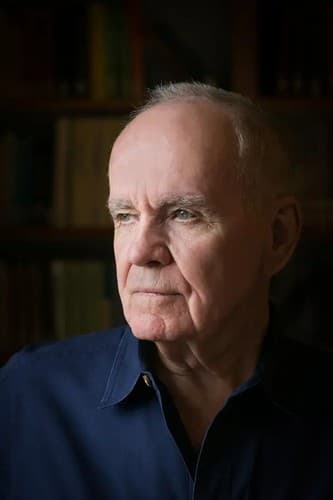
Cormac McCarthy was an American writer who authored twelve novels, two plays, five screenplays, and three short stories, spanning the Western and postapocalyptic genres. He was known for his graphic depictions of violence and his unique writing style, recognizable by a sparse use of punctuation and attribution. McCarthy is widely regarded as one of the greatest American novelists.
Similar books
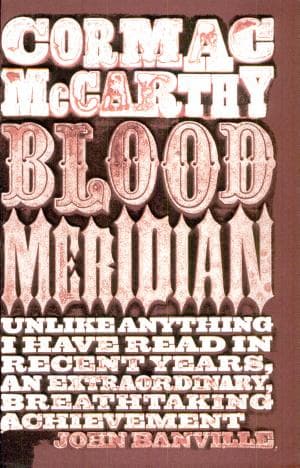
- Blood Meridian
Cormac McCarthy
4.2 (227k) average on GoodreadsFictionShares McCarthy's signature prose, unrelenting violence, and exploration of evil in a historical American setting.
- The Road
Cormac McCarthy
4.0 (716k) average on GoodreadsScience FictionFeatures a similar post-apocalyptic, desolate landscape and a parent's desperate journey, though with a different central conflict.
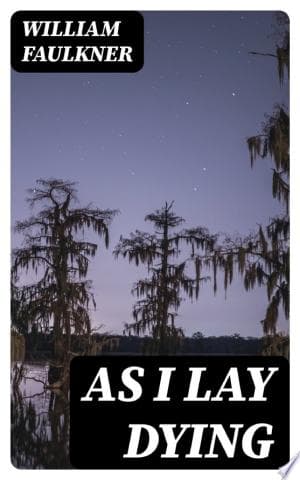
- As I Lay Dying
William Faulkner
3.7 (137k) average on GoodreadsLiterary FictionExplores a poor Southern family's journey through hardship with multiple perspectives and a focus on rural American life and death.
- The Old Man and the Sea
Ernest Hemingway
3.8 (831k) average on GoodreadsLiterary FictionA Cuban fisherman's long struggle with a giant marlin becomes a story of endurance and dignity, now retold for young adults with illustrations, phonetic guides, and writing prompts in Traditional Chinese.
- One Hundred Years of Solitude
Gabriel García Márquez
4.1 (753k) average on GoodreadsLiterary FictionThrough the multi-generational story of the Buendía family, a mythical town deals with the repeating patterns of time, love, and solitude, as the extraordinary mixes with the ordinary.
- The Goldfinch
Donna Tartt
3.9 (720k) average on GoodreadsLiterary FictionHaunted by a tragic explosion and clutching a stolen Dutch masterpiece, a young orphan navigates the opulent drawing rooms of New York and the gritty underbelly of the art world, desperately seeking connection and redemption amidst a life spiraling into crime and obsession.




Enjoyed the summary?
A summary gives you the shape of the book. The book itself has the detail, the examples and the voice.
Find Outer Dark on AmazonAs an Amazon Associate, BookBrief earns from qualifying purchases. How we're funded