
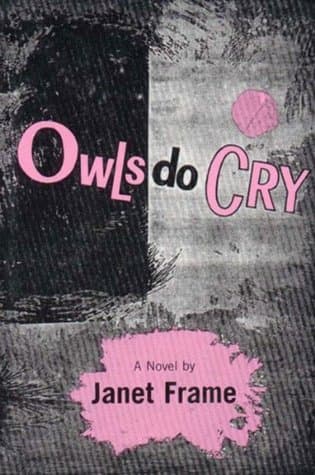
Synopsis
Covers the whole plot, including the ending.
- Difficulty
- Medium
- Pacing
- Slow
- Mood
- Melancholy, Poetic, Introspective, Haunting
- Read it if
- You appreciate deep psychological exploration, poetic prose, and a poignant look at societal attitudes towards mental illness in a historical setting.
- Skip it if
- You prefer fast-paced plots, lighthearted themes, or straightforward narratives without complex symbolism.
Owls Do Cry Plot Summary
Covers the whole plot, including the ending.
The Withers Family in Waimaru
The Withers family lives in Waimaru, a small New Zealand town. Bob Withers, a disillusioned and gentle man, works at a boot factory. His wife, Amy, is practical but often overwhelmed. They have four children: Toby, the eldest; Francie, a dreamy girl; Daphne, imaginative and prone to fantasy; and Chicks, the youngest. The children often use their imaginations, especially Daphne, who sees the world with poetic wonder and struggles to tell reality from her thoughts. This early part establishes the family, their modest life, and Daphne's unique perception, which sets her apart.
The Bonfire and Francie's Death
One evening, the Withers family has a bonfire in their backyard. The children are excited, and Daphne is captivated by the flames. The event turns tragic when Francie runs too close, and her dress catches fire. Despite her parents' efforts, Francie is severely burned and dies. This sudden event shatters the family. For Daphne, Francie's death is a trauma, further blurring the lines between her inner and outer worlds and intensifying her fragile connection to reality. She struggles to understand death's finality.
Daphne's Growing Isolation
After Francie's death, Daphne withdraws further into her mind. Her imaginative tendencies, once charming, now worry her parents and create a barrier between her and her siblings. She struggles to express her loss and her unique view of the world, often speaking in metaphors that others find nonsensical. Her behavior, including vivid hallucinations and not conforming to social expectations, alienates her from peers and distresses her parents, who cannot understand or help her. This period marks the start of Daphne's ostracization and eventual institutionalization.
The First Asylum Admission
Because of her erratic behavior and inability to function in society, Daphne is committed to a mental asylum. Here, she meets others deemed 'mad,' each with their own struggles. Daphne's initial experiences are disorienting, but she finds a strange sense of belonging among those who, like her, see reality differently. She observes the staff, routines, and often dehumanizing treatments, including early shock therapy. This environment, meant to 'cure' her, often reinforces her internal world and her sense of being an outsider. She continues to process her grief and her unique understanding of existence.
Life in the 'Dead Room'
Inside the asylum, Daphne is in the 'Dead Room,' a space that represents both her physical confinement and her psychological state. From this place, her narrative voice becomes more poetic, offering insights into sanity, madness, reality, and imagination. She reflects on her past, her family, and the world she left behind, all filtered through her unique perspective. The 'Dead Room' becomes a place for her thoughts, where she processes experiences, questions social norms, and expresses a deep understanding of human suffering and the elusive nature of truth, often using vivid, symbolic language.
Toby's Escape and Return
Toby, the eldest Withers sibling, finds provincial life and his family's problems stifling. He tries to escape the shadow of Francie's death and Daphne's madness by leaving Waimaru for work and a new life. He seeks normalcy and independence, distancing himself from the family's pain. However, he finds he cannot truly escape his past. Toby eventually returns to Waimaru, having gained some experience but still bearing the emotional scars of his family's history. His return shows the lasting ties of family and the difficulty of completely separating oneself from one's origins.
Chicks' Adaptation and Ambition
Chicks, the youngest Withers sibling, grows up determined to live a conventional and successful life, contrasting with Daphne's path. He learns to suppress his emotions and conform to social expectations, aiming for material success and respectability. He works hard, marries, and tries to build a stable, 'normal' existence, often distancing himself from his family's past, especially Daphne's mental illness. Chicks represents the social pressure to conform and the desire to escape the stigma of mental health issues, showing how different siblings react to the same traumatic family history by choosing different paths.
Amy and Bob's Enduring Grief
Amy and Bob Withers continue to carry the weight of Francie's death and Daphne's institutionalization. Their lives are marked by quiet grief and helplessness regarding their daughter's condition. Amy, the more practical parent, struggles to balance her love for Daphne with social judgment and financial strain. Bob, gentle and introspective, carries deep sadness. Their relationship is strained by the ongoing tragedy. They try to maintain a semblance of normalcy while their family remains fractured.
Daphne's Return Home and Further Decline
After treatment, Daphne is discharged from the asylum and tries to return home. Her time away has not 'cured' her; instead, it has deepened her unique perspective, making reintegration into society even harder. She still struggles to tell reality from her inner visions, and her poetic language often alienates those around her. The world outside the asylum feels alien. Her family, while loving, is not equipped to support her. Her behavior soon leads to further misunderstandings, showing that her 'madness' is not just an illness but an intrinsic part of her being.
The Final Institutionalization
Unable to function outside the asylum's structure and with her family unable to cope, Daphne is readmitted. This final institutionalization seals her fate as someone confined to society's margins. However, even within the asylum walls, Daphne's unique voice persists. Her poetic insights continue to punctuate the story, critiquing social norms, the nature of sanity, and the beauty and terror of her inner world. The novel ends with Daphne's consciousness, her 'cry' from the 'Dead Room,' echoing with power, suggesting that while her body is confined, her spirit and vision remain unbroken.
Principal Figures
Daphne Withers
Protagonist
An intensely imaginative and sensitive girl, later institutionalized for her unique perceptions.
Daphne is the central figure, characterized by her profound imagination, poetic sensibility, and inability to conform to conventional reality. From a young age, she sees the world through a lens of vivid metaphors and internal visions, often blurring the lines between fact and fantasy. She is deeply affected by her sister Francie's death, which intensifies her already fragile connection to the 'real' world. Her 'madness' is portrayed not merely as an illness but as an alternative way of experiencing and understanding existence, marked by a deep sensitivity and an inability to filter sensory input or societal expectations. Her voice, particularly from the asylum, is the novel's poetic heart, offering profound critiques of sanity and society.
Relationships: Francie Withers (Beloved sister, her death is a profound trauma for Daphne.); Toby Withers (Elder brother, a source of comfort but eventually distant.); Chicks Withers (Younger brother, whose conventionality contrasts sharply with Daphne's.); Amy Withers (Mother, struggling to understand and cope with Daphne's condition.); Bob Withers (Father, gentle but helpless in the face of Daphne's illness.)
Francie Withers
Supporting
Daphne's sensitive sister, whose tragic death profoundly impacts the family.
Francie is Daphne's slightly older sister, portrayed as sensitive and imaginative, sharing some of Daphne's dreamy qualities but perhaps more grounded. Her presence is brief but pivotal, as her accidental death in a bonfire serves as the primary catalyst for Daphne's subsequent psychological decline and the family's enduring grief. Francie represents lost innocence and the fragility of life, and her memory continues to haunt Daphne throughout the novel, often merging with Daphne's own internal landscape. Her death symbolizes the shattering of the family's initial, albeit precarious, happiness and sets the trajectory for the rest of the narrative.
Relationships: Daphne Withers (Beloved sister, her death is the central trauma for Daphne.); Toby Withers (Brother, affected by her death.); Chicks Withers (Brother, affected by her death.); Amy Withers (Mother, devastated by her loss.); Bob Withers (Father, devastated by her loss.)
Toby Withers
Supporting
The eldest Withers child, who seeks escape and normalcy from his family's troubles.
Toby is the eldest of the Withers children, initially portrayed as the most responsible and grounded. He attempts to provide a sense of stability within the chaotic family dynamic. However, he is deeply affected by Francie's death and Daphne's increasing mental fragility. He eventually leaves Waimaru, seeking to forge his own path and escape the shadow of his family's misfortunes. His journey represents the struggle for independence and the desire to distance oneself from trauma, yet he ultimately finds himself unable to fully sever ties with his origins. He is a character who yearns for a conventional life but is perpetually marked by his past.
Relationships: Daphne Withers (Sister, whose illness he struggles to understand and cope with.); Francie Withers (Sister, whose death impacts him deeply.); Chicks Withers (Brother, with whom he shares the family burden.); Amy Withers (Mother, whom he supports but also seeks to escape.); Bob Withers (Father, with whom he shares a quiet understanding.)
Chicks Withers
Supporting
The youngest Withers child, who strives for conventional success and normalcy.
Chicks is the youngest Withers sibling, characterized by his ambition and his strong desire for a conventional, respectable life. In contrast to Daphne, he actively suppresses his emotions and strives to conform to societal norms, seeking material success and social acceptance. He represents the societal pressure to maintain appearances and to distance oneself from anything deemed 'abnormal.' His path is one of carefully constructed normalcy, often at the expense of genuine emotional connection to his family's past and to Daphne's plight. He embodies the 'sane' response to trauma, which often involves denial and a focus on external validation.
Relationships: Daphne Withers (Sister, whose illness he largely distances himself from and struggles to accept.); Francie Withers (Sister, whose death he tries to move past.); Toby Withers (Brother, with whom he shares a strained familial bond.); Amy Withers (Mother, whom he tries to support in a practical sense.); Bob Withers (Father, whose quiet despair he seeks to avoid.)
Amy Withers
Supporting
The practical and often overwhelmed mother of the Withers children.
Amy Withers is the matriarch of the family, a practical and hardworking woman who struggles to keep her family afloat amidst financial difficulties and profound tragedy. She is deeply affected by Francie's death and Daphne's subsequent mental illness, often feeling overwhelmed and helpless. While she loves her children, she struggles to understand Daphne's unique perceptions, often defaulting to societal explanations and seeking conventional 'cures.' Her character embodies the burden of motherhood in difficult circumstances and the societal pressure to maintain a semblance of normalcy, even when faced with unimaginable pain and the stigma of mental illness.
Relationships: Daphne Withers (Daughter, whom she loves but struggles to understand and help.); Francie Withers (Daughter, whose death causes her immense and lasting grief.); Toby Withers (Son, whom she relies on and eventually sees leave.); Chicks Withers (Son, whose conventional success she finds some comfort in.); Bob Withers (Husband, with whom she shares a strained but enduring partnership.)
Bob Withers
Supporting
The gentle, disillusioned father of the Withers children.
Bob Withers is the patriarch, a gentle and introspective man who works in a boot factory. He is often portrayed as somewhat passive and disillusioned, carrying a quiet sadness that deepens with the family's tragedies. He loves his children deeply, particularly Daphne, whose sensitivity he seems to understand more intuitively than Amy, though he is equally helpless in finding a practical solution for her condition. Bob represents the quiet despair and resignation that can settle upon individuals in the face of overwhelming personal and societal pressures. His character underscores the limited resources and understanding available for mental illness in the pre-war provincial setting.
Relationships: Daphne Withers (Daughter, whom he loves and perhaps understands on a deeper level, but cannot help.); Francie Withers (Daughter, whose death causes him profound grief.); Toby Withers (Son, with whom he shares a quiet bond.); Chicks Withers (Son, whose ambition he observes.); Amy Withers (Wife, with whom he shares the burden of family tragedy.)
Themes & Insights
The Nature of Sanity and Madness
The novel questions society's definitions of sanity and madness. Daphne's 'madness' often appears as an alternative, heightened perception of reality, rich with poetic insight. Her institutionalization shows how society labels those who do not conform to conventional thought. The asylum, meant to 'cure,' often strengthens her unique voice. This suggests that madness might be a different way of experiencing and expressing truth. This theme is central to Daphne's narrative from the 'Dead Room,' where her 'insane' observations offer more profound truths than the 'sane' world outside.
“I was not mad, I was simply alive in a different way.”
Imagination vs. Reality
A core theme is the blending of imagination and reality, especially in Daphne's mind. Her vivid internal world, initially a source of childhood joy, becomes a barrier to functioning in 'normal' society after Francie's death. The novel explores how imagination can be both a refuge and a trap, offering beauty and insight while causing isolation. Daphne's struggle to distinguish between her inner visions and external events highlights reality's subjective nature, suggesting that what one perceives as real is deeply personal and influenced by internal states.
“The world was full of glass, and one could never tell which was the real glass and which was the imaginary.”
Grief and Trauma
The novel explores grief and trauma, specifically how Francie's death affects the Withers family. This event is a catalyst for Daphne's mental decline and impacts Toby, Chicks, Amy, and Bob. Each family member processes the trauma differently: Daphne through her perception, Toby through escape, Chicks through conformity, and the parents through despair. The story shows how trauma can shatter a family and how unresolved grief can shape individual destinies, leading to isolation and a sense of loss.
“The grief was a separate room in their house, always there, always locked, but its presence was felt everywhere.”
Societal Conformity and Ostracization
The novel examines the pressures of social conformity and the consequences of ostracization for those who do not adhere to its norms. Daphne's 'madness' is largely defined by her inability to fit into the expectations of provincial New Zealand society. Her poetic language and unconventional behavior are met with misunderstanding, fear, and institutionalization. The contrasting paths of Toby, who seeks normalcy, and Chicks, who embraces it, highlight the rewards for conformity and the penalties for deviation. This shows how society silences and confines those who challenge its established order.
“The world outside the asylum was a conspiracy of the sane, whispering their dull truths.”
Plot Devices & Literary Techniques
Stream of Consciousness
A narrative technique mirroring Daphne's internal thought processes.
The novel frequently employs stream of consciousness, particularly in Daphne's internal monologues and observations. This technique allows the reader direct access to Daphne's unique and often fragmented thought patterns, blurring the lines between conscious thought, memory, and imagination. It reflects her 'madness' not as chaotic but as a different, deeply poetic way of experiencing and interpreting the world. This device is crucial for conveying her subjective reality and for challenging the reader's own perceptions of sanity, making her voice from the asylum deeply resonant and credible within its own terms.
Symbolism of the 'Dead Room'
A metaphorical space representing confinement, death, and profound insight.
The 'Dead Room' is a powerful symbolic setting. Physically, it represents Daphne's confinement within the asylum and the societal dismissal of her 'dead' sanity. Metaphorically, it is a space of profound introspection and existential reflection, where Daphne's consciousness is both trapped and liberated. From this 'dead' place, her 'cry' emerges, filled with vibrant, living truth and poetic insight. It symbolizes the idea that even in the most desolate circumstances, the human spirit and its capacity for unique perception can endure and offer a powerful critique of the 'living' world outside.
The Bonfire
A pivotal event that serves as a catalyst for the family's tragedy.
The bonfire is a crucial plot device, acting as the inciting incident for the Withers family's unraveling. Initially a symbol of warmth and family unity, it quickly transforms into a symbol of destruction and irreparable loss with Francie's death. This event traumatizes Daphne, exacerbating her existing sensitivities and setting her on the path to institutionalization. The bonfire also represents the fragility of life and happiness, and how a seemingly innocuous event can lead to profound and lasting tragedy, forever altering the family's trajectory and defining their subsequent struggles with grief and madness.
Owls Do Cry Quotes
“The wind was a thin, hungry ghost, whimpering around the corners of the house, trying to find a way in.”
“Everyone had a secret world. Everyone was lonely.”
“The world was a book, and those who do not travel read only one page.”
“It was impossible to tell where the madness began and the sanity ended, or if there was any difference at all.”
“Memory was a strange country, where the past and the present danced a perpetual jig.”
“The silence was not empty, but full of the unspoken words and thoughts of those who lived there.”
“To be different was to be dangerous. To be the same was to be safe.”
“The world was full of glass houses, and everyone was throwing stones.”
“Children were like sponges, soaking up the unspoken anxieties and fears of their parents.”
“There was a world inside her head, a world more real than the one outside.”
“The past was never past. It was always present, a shadow walking beside you.”
“Even the smallest things held a universe of meaning, if only one knew how to look.”
“We are all merely actors in a play we do not understand, speaking lines we have not written.”
“The sound of owls crying was not a sound of sorrow, but a sound of being.”
Quiz
10 questions on the plot and the characters. Each answer comes with a short explanation.
Question 1
Which member of the Withers family dies early in the novel, precipitating a crisis for Daphne?
- Toby Withers
- Chicks Withers
- Francie Withers
- Garnet Withers
Show answer
C. Francie Withers It is the death of Francie Withers, Daphne's sister, that profoundly impacts the family and sets Daphne on her path toward the asylum.
Question 2
What is the name of the institution where Daphne Withers receives shock treatment?
- The House of Light
- Seacliff Asylum
- The Quiet Place
- Willow Creek Sanatorium
Show answer
B. Seacliff Asylum Daphne is committed to Seacliff Asylum, a real historical institution in New Zealand, where she undergoes various treatments, including shock therapy.
Question 3
From which metaphorical 'room' does Daphne's poetic voice often narrate or reflect throughout the novel?
- The Echo Chamber
- The Quiet Ward
- The Dead Room
- The Memory Palace
Show answer
C. The Dead Room Daphne's unique and introspective voice often emanates from what she calls 'the Dead Room,' a symbolic space representing her internal world and isolation within the asylum.
Question 4
What is the primary reason the Withers family is considered 'different' or 'odd' by their provincial community?
- Their extreme wealth and social isolation.
- Their intellectual pursuits and unconventional way of thinking.
- Their involvement in local scandalous affairs.
- Their reclusive lifestyle and refusal to engage with neighbors.
Show answer
B. Their intellectual pursuits and unconventional way of thinking. The Withers family, particularly Daphne, is characterized by a sensitive, imaginative, and often unconventional way of perceiving the world, which clashes with the rigid social norms of their provincial New Zealand setting.
Question 5
How does the motif of 'owls' function within the novel's thematic landscape?
- They symbolize wisdom and guidance for the characters.
- They represent the unseen, the nocturnal, and the cries of those unheard or misunderstood.
- They are a literal threat that the family must contend with.
- They signify the coming of death for various characters.
Show answer
B. They represent the unseen, the nocturnal, and the cries of those unheard or misunderstood. The 'owls' in the title and throughout the novel symbolize the cries of the misunderstood, the marginalized, and those whose inner worlds are not recognized by society, particularly Daphne.
Question 6
Which of Daphne's siblings attempts to conform most strongly to societal expectations, often at the expense of their true self?
- Toby Withers
- Garnet Withers
- Chicks Withers
- Francie Withers
Show answer
C. Chicks Withers Chicks Withers is depicted as the sibling most desperate to fit in and be 'normal,' often shunning Daphne's eccentricities and trying to distance herself from the family's perceived strangeness.
Question 7
What is the significance of the novel's setting in pre-1940s provincial New Zealand?
- It highlights the rapid industrialization of the country.
- It provides a backdrop of rigid social norms and limited understanding of mental health.
- It emphasizes a period of artistic and intellectual flourishing.
- It showcases a society highly tolerant of individual differences.
Show answer
B. It provides a backdrop of rigid social norms and limited understanding of mental health. The provincial pre-1940s New Zealand setting is crucial for establishing the conservative, judgmental society that struggles to comprehend or accept the Withers family's, and particularly Daphne's, unique inner world, leading to her institutionalization.
Question 8
The novel frequently blurs the line between 'sanity' and 'madness.' How does Daphne's perspective challenge conventional definitions of mental illness?
- She explicitly argues for the medical model of mental illness.
- Her rich internal world and poetic language suggest an alternative form of perception, rather than mere delusion.
- She recovers completely and integrates seamlessly back into society.
- She demonstrates that her 'madness' is purely a result of external circumstances.
Show answer
B. Her rich internal world and poetic language suggest an alternative form of perception, rather than mere delusion. Daphne's narrative voice, filled with profound poetic insights and complex internal monologues, suggests that her 'madness' is often a deeper, more sensitive way of experiencing the world, rather than a simple pathology, thereby questioning societal norms of sanity.
Question 9
What narrative technique does Janet Frame frequently employ to convey Daphne's fragmented perception and internal state?
- Strictly chronological, third-person omniscient narration.
- Linear plot progression with clear cause-and-effect sequences.
- Stream of consciousness, poetic language, and shifts in perspective.
- Dialogue-heavy scenes with minimal internal monologue.
Show answer
C. Stream of consciousness, poetic language, and shifts in perspective. Janet Frame masterfully uses stream of consciousness, lyrical prose, and shifts between Daphne's internal voice and external observations to convey her fragmented, yet deeply insightful, perception of reality.
Question 10
How does the novel ultimately portray the effectiveness of the 'shock treatment' Daphne receives?
- As a miraculous cure that fully restores her to conventional society.
- As a brutal, dehumanizing experience that further isolates her and attempts to erase her unique self.
- As a necessary but gentle intervention that helps her cope.
- The novel provides no clear stance on its effectiveness.
Show answer
B. As a brutal, dehumanizing experience that further isolates her and attempts to erase her unique self. The novel depicts shock treatment not as a cure, but as a violent and invasive procedure that seeks to strip Daphne of her individuality and force her into conformity, highlighting the destructive nature of institutional attempts to 'normalize' those deemed different.
Owls Do Cry FAQ
What is the central premise of 'Owls Do Cry' and who are the main characters?
'Owls Do Cry' centers on the Withers family in a small New Zealand town before WWII, particularly the sensitive and artistic Daphne Withers. The novel explores her descent into mental illness and institutionalization after a series of family tragedies, alongside the struggles of her siblings, Toby, Francie, and Charles, to navigate their own lives and the societal expectations of their time.
How does the death of one of Daphne's sisters act as a catalyst in the narrative?
The accidental death of the youngest Withers sister, Amy, from burns after playing with matches, profoundly destabilizes the family. For Daphne, who was with Amy at the time, this event triggers a deeper withdrawal into her imaginative world and an increased sensitivity to the harsh realities around her, ultimately contributing to her eventual commitment to Seacliff Asylum.
Where does the title 'Owls Do Cry' originate and what is its significance?
The title comes from a children's nursery rhyme, 'The Owl and the Pussycat,' specifically the line 'And there they sat, and made their home wherever they could; with a runcible spoon, and a green pea, they dined on mince, and sliced quince, and owls do cry.' The phrase suggests a world turned upside down or an unnatural occurrence, symbolizing the disruption of innocence and the pervasive sorrow within the Withers family and society.
What is the 'Dead Room' and what role does it play in Daphne's story?
The 'Dead Room' is Daphne's term for the locked room in Seacliff Asylum where patients deemed 'hopeless' or 'unrecoverable' were kept. From this space, Daphne's poetic and often fragmented voice narrates parts of the novel, offering insights into her inner world and the dehumanizing experiences of institutionalization, contrasting sharply with the 'sane' world outside.
How does the novel portray the treatment of mental illness in pre-1940s New Zealand?
The novel depicts the brutal and largely unsympathetic treatment of mental illness prevalent in the era, specifically through Daphne's experiences at Seacliff Asylum. She endures shock treatment, isolation, and a profound loss of autonomy, highlighting the societal fear and misunderstanding of mental health conditions, where 'madness' was seen as something to be contained rather than treated with compassion.
Are there any subtle indications of Daphne's artistic or poetic nature before her institutionalization?
Yes, even as a child, Daphne displays an unusual sensitivity and a vivid imagination, often retreating into her own world of thoughts and observations. Her early fascination with language, her unique way of perceiving everyday objects, and her tendency to personify inanimate things all subtly foreshadow her later poetic voice and her struggle to conform to conventional reality.
How does the author use the motif of 'windows' throughout the novel?
Windows serve as a recurring motif, representing both connection and separation. For Daphne, windows are often barriers, allowing her to observe the outside world but keeping her isolated from it, especially within the asylum. They also symbolize her longing for freedom and understanding, while highlighting the 'window' into her unique internal world that the reader is afforded.
What is the significance of the character Miss Peabody and her interactions with the Withers children?
Miss Peabody, the children's teacher, represents the conventional, often rigid, societal expectations of the time. Her attempts to 'normalize' the Withers children, particularly Daphne, and her inability to understand Daphne's unique perspective, highlight the clash between conformity and individuality, subtly contributing to Daphne's feeling of being an outsider.
How does the novel explore the theme of 'otherness' through Daphne's experiences?
Daphne is consistently portrayed as 'other' from a young age due to her heightened sensitivity and unconventional way of seeing the world. This otherness is amplified by her institutionalization, where she is literally separated from society. The novel explores how society defines and rejects those who deviate from the norm, making Daphne a symbol for all who are marginalized.
What psychological impact does the provincial setting have on the Withers family?
The stifling, gossipy, and judgmental atmosphere of the provincial New Zealand town exacerbates the Withers family's struggles. The lack of understanding and resources for mental health, coupled with intense social pressure to conform, contributes to Daphne's isolation and the family's inability to cope effectively with their tragedies, fostering a sense of entrapment.
How does the narrative structure, particularly the shifts in perspective, contribute to the psychological depth?
The novel frequently shifts between an omniscient third-person narrator, the perspectives of various family members (Toby, Francie, Charles), and Daphne's first-person poetic voice from the 'Dead Room.' This multi-faceted approach allows for a complex psychological portrait, revealing the internal lives of characters, societal judgments, and the profound disconnect between Daphne's inner world and external reality.
In what ways does Daphne's 'madness' serve as a form of resistance or an alternative way of knowing?
Daphne's 'madness' can be interpreted not merely as an illness but as an intensified, perhaps even more authentic, way of perceiving the world, a resistance to the mundane and often cruel realities of her environment. Her poetic language and unique insights from the asylum suggest that her 'insanity' allows her a deeper understanding of human suffering and beauty than those deemed 'sane.'
To what extent is the novel a critique of societal norms and institutions?
'Owls Do Cry' offers a profound critique of societal norms, particularly those concerning conformity, mental health, and the treatment of the vulnerable. It challenges the definition of 'sanity' and 'madness,' exposing the hypocrisy and cruelty of institutions like the asylum, and the narrow-mindedness of the small-town community that fails to embrace difference.
How does the ending of the novel resonate with the themes of hope and despair?
The ending is ambiguous, offering a mix of despair and a fragile sense of enduring spirit. While Daphne remains institutionalized, her voice and poetic vision persist, suggesting that her spirit cannot be entirely extinguished. This leaves the reader to ponder whether her survival is a triumph of individuality or a testament to the enduring tragedy of her confinement, balancing the bleak reality with the power of the human imagination.
Is there a debate about the reliability of Daphne's narration, especially from the 'Dead Room'?
Yes, there is an inherent debate about the reliability of Daphne's narration, given her mental state and institutionalization. While her poetic insights are profound, the fragmented nature of her thoughts and her altered perception of reality raise questions about the literal truth of her statements, inviting readers to interpret her voice as a subjective, deeply personal truth rather than an objective account.
How does the character of Charles Withers, the brother, contrast with Daphne?
Charles represents an attempt to assimilate and succeed within conventional society. He strives for respectability and often feels burdened by his family's perceived eccentricities, particularly Daphne's. His journey reflects the pressures of conformity and the desire to escape the stigma associated with his family, contrasting sharply with Daphne's inability or unwillingness to conform.
What is the significance of the recurring imagery of birds, particularly owls, throughout the book?
Birds, especially owls, are significant symbols. Owls, traditionally associated with wisdom but also with ill omen and the night, echo the title's theme of a disrupted, sorrowful world. Birds often represent freedom and the soul, and their confinement or distress can symbolize the characters' own entrapment and suffering, particularly Daphne's longing for liberation.
How does Francie Withers, another sister, cope with the family's misfortunes compared to Daphne?
Francie attempts to find solace and normalcy in traditional roles, seeking marriage and a family life. While she also experiences hardship and the weight of family tragedy, her coping mechanism involves trying to fit into societal expectations and create a stable domestic sphere, offering a contrasting response to Daphne's retreat into her internal world.
About the author
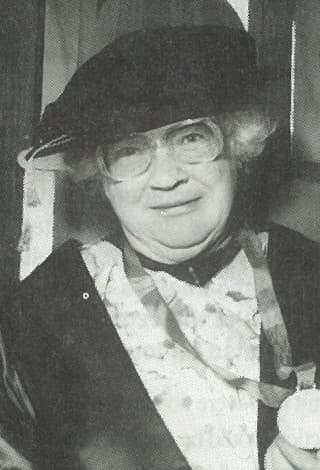
Janet Frame was a New Zealand author known for her contributions to fiction. Her notable work, "Owls Do Cry," explores themes of mental health and the complexities of human experience. Frame's writing is characterized by its lyrical style and deep psychological insight.
Similar books
- The Bell Jar
Sylvia Plath
4.0 (591k) average on GoodreadsPsychologyExplores a young woman's struggle with mental illness and societal pressures with introspective depth.
- One Flew Over the Cuckoo's Nest
Ken Kesey
4.2 (631k) average on GoodreadsPsychologyDepicts life within a mental institution and critiques its dehumanizing aspects.
- To the Lighthouse
Virginia Woolf
3.8 (133k) average on GoodreadsLiterary FictionFeatures stream-of-consciousness narration and a focus on internal lives and family dynamics, though with a different thematic focus.
- The Old Man and the Sea
Ernest Hemingway
3.8 (831k) average on GoodreadsLiterary FictionA Cuban fisherman's long struggle with a giant marlin becomes a story of endurance and dignity, now retold for young adults with illustrations, phonetic guides, and writing prompts in Traditional Chinese.
- One Hundred Years of Solitude
Gabriel García Márquez
4.1 (753k) average on GoodreadsLiterary FictionThrough the multi-generational story of the Buendía family, a mythical town deals with the repeating patterns of time, love, and solitude, as the extraordinary mixes with the ordinary.
- The Goldfinch
Donna Tartt
3.9 (720k) average on GoodreadsLiterary FictionHaunted by a tragic explosion and clutching a stolen Dutch masterpiece, a young orphan navigates the opulent drawing rooms of New York and the gritty underbelly of the art world, desperately seeking connection and redemption amidst a life spiraling into crime and obsession.





Enjoyed the summary?
A summary gives you the shape of the book. The book itself has the detail, the examples and the voice.
Find Owls Do Cry on AmazonAs an Amazon Associate, BookBrief earns from qualifying purchases. How we're funded