
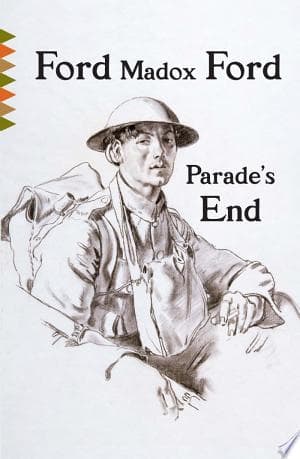
Synopsis
Covers the whole plot, including the ending.
- Difficulty
- Hard
- Pacing
- Slow
- Mood
- Melancholy, Reflective, Disillusioned, Intense, Atmospheric
- Read it if
- You enjoy deep psychological studies of character, historical fiction set during WWI that explores societal change, or intricate prose that delves into moral and philosophical dilemmas. Fans of 'Downton Abbey' seeking a more complex and morally ambiguous aristocratic drama will also appreciate this.
- Skip it if
- You prefer fast-paced plots, lighthearted stories, or character who are easily understood and consistently sympathetic. The dense prose and detailed exploration of internal states might be challenging for some.
Parade's End Plot Summary
Covers the whole plot, including the ending.
A Misunderstood Marriage and a Chance Encounter
The novel begins in 1912, introducing Christopher Tietjens, a principled English aristocrat and government statistician. His marriage to the manipulative Sylvia Satterthwaite causes constant trouble and public scandal, especially regarding their son, Michael. Despite Sylvia's open infidelity, Christopher, bound by his moral code, refuses to divorce her or publicly admit her wrongs. While traveling, he meets Valentine Wannop, a young, intelligent suffragette and pacifist. Their intellectual connection starts immediately, hinting at an emotional bond that contrasts with his difficult marriage. This meeting sets up Christopher's internal conflict and the coming war.
Sylvia's Provocations and Christopher's Endurance
Sylvia, tired of Christopher's calm and her inability to make him angry or divorce her, increases her psychological attacks. She shows off her affairs, spreads rumors about him, and tries to ruin his professional reputation. Christopher, however, stays calm, internalizing the pain. His adherence to his gentlemanly code, which says he must protect his wife's reputation even at his own cost, only frustrates Sylvia more. This period shows Christopher's strong sense of duty and his adherence to an outdated moral framework, even as social conventions begin to break, hinting at the changes the war will bring.
The Shadow of War and Developing Affections
As the Great War nears, Christopher's professional life becomes tied to Sylvia's actions. Her brother, General Campion, tries to use his influence against Christopher, who some in aristocratic circles see as an eccentric. Despite these pressures, Christopher's intelligence is recognized, and he is given important statistical work for the war effort. At the same time, his connection with Valentine Wannop grows. Their meetings, though innocent, hold unspoken emotion and mutual respect. Valentine represents a modern, progressive spirit, a contrast to Sylvia's destructive traditionalism. Christopher finds comfort and intellectual companionship with Valentine, a refuge from his marriage and the coming global conflict.
Deployment to the Front
Wanting to escape his home life, feeling a sense of duty, and perhaps a subconscious wish for death, Christopher volunteers for active service. He leaves his position in the War Office and goes to the Western Front as an officer. This decision gets different reactions; Sylvia sees it as another escape, while Valentine understands his desire for a clean break. Christopher's experiences in the trenches are brutal. He sees the horror of modern warfare, the breakdown of social order, and the erosion of traditional values. His rigid moral code is tested by survival, camaraderie, and the constant threat of death, further separating him from his pre-war world.
The Horrors of the Trenches
Life in the trenches is hard for Christopher. He endures shelling, gas attacks, and constant death, seeing men around him break down. Despite the chaos, he keeps his calm and sense of duty, earning his men's respect. He deals with military bureaucracy and the disconnect between front-line sacrifices and perceived indifference at home. His experiences remove his pre-war innocence and strengthen his disappointment with the old order. He is wounded multiple times, physically and mentally, and suffers from shell shock, though he tries to hide it. His time at the front changes how he sees himself and the world.
Brief Reprieves and Lingering Attachments
During his short leaves from the front, Christopher returns to England, a changed man. He finds the home front largely unaware of the war's true horrors, and his familiar social fabric is unraveling. He meets Sylvia, who continues her manipulative games, trying to control him again, but her efforts now seem empty against his experiences. More importantly, he reconnects with Valentine Wannop, whose genuine concern offers a contrast to Sylvia's cruelty. Their bond deepens, and their unspoken love becomes more clear, representing a possible future free from his past. These moments of connection give Christopher fragile hope amidst the war's despair.
The End of the War and a New Beginning
As the Great War ends, Christopher, now affected by shell shock and physical injuries, leaves the army. The world he returns to is different; the old aristocratic order is crumbling, and traditional values are questioned. He wants to cut ties with his past, especially his marriage to Sylvia. He finally admits his love for Valentine Wannop and seeks to build a life with her, despite social stigma and the financial ruin his principled stand against Sylvia has brought. They move to a small cottage in the countryside, showing their attempt to create a new, simpler existence based on mutual respect and affection, free from the Edwardian era's hypocrisies.
Sylvia's Final Gambit and Christopher's Resolution
Even after the war, Sylvia refuses to let Christopher go. She appears at the cottage he shares with Valentine, attempting a final manipulation to reclaim him and ruin his new life. She uses their son, Michael, and tries to appeal to Christopher's sense of duty. However, Christopher, hardened by the war and strengthened by his love for Valentine, finally breaks free from her psychological hold. He rejects her, asserting his right to happiness and a life free from her torment. This confrontation marks a moment of liberation for Christopher, as he sheds the last of his past obligations and commits to his future with Valentine, embracing a new kind of morality and freedom.
Building a New Life
Christopher and Valentine settle into their unconventional life in the countryside, living together without legal marriage, a radical choice then. They face financial hardship and social exclusion, but find contentment in their intellectual companionship and shared values. Christopher, despite his aristocratic background, embraces a simpler existence, working and finding peace away from London society. Their relationship is built on honesty, mutual respect, and a progressive outlook, a departure from pre-war social norms. This period shows Christopher's complete break from his past and his embrace of a new future, symbolizing broader societal shifts in post-war England.
The Future Unfolds
The novel ends with Christopher and Valentine having built a strong and loving partnership. They have endured much personal and societal change, and while their future is uncertain and their lifestyle unconventional, they face it together. Christopher, though bearing war scars, has found peace and purpose with Valentine. The old world of inherited wealth, rigid social codes, and moral hypocrisy has ended for him, replaced by a more authentic, if challenging, existence. Their relationship, built on affection and shared ideals, shows the possibility of finding love and meaning amidst a shattered world, embodying hope for a new moral and social order in post-Great War Britain.
Parade's End Characters
Christopher Tietjens
Protagonist
Principled aristocrat and statistician, grappling with a destructive marriage and the Great War.
Christopher Tietjens is a brilliant, highly principled, and deeply moral English aristocrat, often described as the 'last Tory.' He possesses an eidetic memory and works as a government statistician. Bound by an anachronistic code of gentlemanly conduct, he endures his wife Sylvia's flagrant infidelities and malicious torment without public complaint, believing it his duty to protect her reputation. His stubborn adherence to these ideals, even when they cause him immense suffering, makes him appear eccentric and misunderstood to many. The Great War profoundly impacts him, stripping away his illusions about society and forcing him to forge a new path based on authenticity and love with Valentine Wannop, rather than inherited duty.
Relationships: Sylvia Tietjens (Wife; manipulative, adulterous, tormentor); Valentine Wannop (Lover; intellectual, independent, compassionate); Michael Tietjens (Son (paternity disputed); object of duty); Mark Tietjens (Brother; supportive, pragmatic)
Sylvia Tietjens
Antagonist
Beautiful, manipulative, and unfaithful wife of Christopher Tietjens.
Sylvia Tietjens is Christopher's beautiful, aristocratic wife, whose charm masks a cruel and deeply manipulative nature. She is openly unfaithful, engaging in numerous affairs, and delights in tormenting Christopher, attempting to provoke him into a public breakdown or divorce. Her actions are often driven by boredom, a desire for control, and a perverse fascination with Christopher's unyielding moral fortitude. She embodies the decadent and hypocritical aspects of the pre-war aristocracy, using social conventions to her advantage while flouting them herself. Despite her malice, she also possesses a complex, almost tragic inability to find contentment, and a strange, grudging respect for Christopher's integrity.
Relationships: Christopher Tietjens (Husband; object of torment and control); Michael Tietjens (Son; often used as a pawn); General Campion (Brother; complicit in some schemes)
Valentine Wannop
Supporting
Independent suffragette and pacifist, Christopher's intellectual and emotional counterpart.
Valentine Wannop is a young, intelligent, and progressive woman, a suffragette and pacifist who works as a classics teacher. She represents the emerging modern woman, valuing intellectual independence, honesty, and genuine connection over social convention. Her initial meetings with Christopher spark an immediate and profound intellectual and emotional bond. She sees and appreciates Christopher's true character, offering him understanding and respect that his wife denies him. Valentine's strength, compassion, and forward-thinking nature make her Christopher's ideal partner, providing him with a path to personal liberation and a new, authentic life beyond the constraints of his past.
Relationships: Christopher Tietjens (Lover; intellectual and emotional partner); Mrs. Wannop (Mother; supportive and understanding); Gerald Drake (Friend/acquaintance; a suitor she rejects)
Mark Tietjens
Supporting
Christopher's older brother, a pragmatic and influential aristocrat.
Mark Tietjens is Christopher's older brother, a wealthy and influential member of the aristocracy. Unlike Christopher, Mark is pragmatic, worldly, and less burdened by strict moral codes, though he possesses his own sense of honor. He is fond of Christopher and often tries to help him navigate the complexities of his marriage and social standing, albeit with a more cynical perspective. Mark represents the older, more established, but perhaps less idealistic, segment of the English upper class. He provides Christopher with financial support and attempts to protect him, often baffled by Christopher's unwavering adherence to principles that seem self-destructive.
Relationships: Christopher Tietjens (Brother; supportive, though often baffled by Christopher's principles); Edith Ethel Duchemin (Lover/mistress; provides social insights)
General Campion
Supporting
Sylvia's brother, an influential military figure with a biased view of Christopher.
General Campion is Sylvia's brother, a high-ranking military officer and a prominent figure in society. He is fiercely loyal to Sylvia and holds a deeply prejudiced view of Christopher, whom he perceives as an eccentric, a difficult brother-in-law, and later, an officer whose unconventional behavior is a liability. He often uses his influence to subtly undermine Christopher's career, particularly during the war, believing he is acting in Sylvia's best interests or upholding social order. He embodies the rigid, traditional military and aristocratic establishment, resistant to change and quick to judge those who don't conform.
Relationships: Sylvia Tietjens (Sister; fiercely loyal to her); Christopher Tietjens (Brother-in-law; antagonistic, critical)
Mrs. Wannop
Supporting
Valentine's mother, a respected academic and intellectual.
Mrs. Wannop is Valentine's mother, a highly intelligent and respected academic in her own right, known for her dictionary work. She is a progressive and understanding woman who provides a stable and intellectually stimulating home for Valentine. She is aware of the unspoken connection between Christopher and Valentine and supports her daughter's unconventional choices, representing a more enlightened and less judgmental aspect of society. Her presence offers a stark contrast to the destructive family dynamics of the Tietjens, embodying intellectual integrity and genuine human kindness.
Relationships: Valentine Wannop (Daughter; supportive, understanding); Christopher Tietjens (Acquaintance; respects his intellect)
Michael Tietjens
Mentioned
Christopher and Sylvia's son, whose paternity is a source of marital conflict.
Michael Tietjens is the young son of Christopher and Sylvia. His paternity is a central point of contention in their marriage, as Sylvia openly suggests he is not Christopher's biological child. Despite this, Christopher remains committed to his role as Michael's father, fulfilling his duty and ensuring his son's welfare, even as Sylvia uses the child as a pawn in her games. Michael primarily serves as a symbolic representation of Christopher's unwavering sense of responsibility and the destructive nature of Sylvia's manipulations, rather than a developed character himself.
Relationships: Christopher Tietjens (Father; object of duty and protection); Sylvia Tietjens (Mother; uses him in her schemes)
Edith Ethel Duchemin
Supporting
A society hostess and Mark Tietjens' mistress.
Edith Ethel Duchemin is a prominent society hostess and Mark Tietjens' mistress. She is a shrewd and well-connected woman, privy to much of the gossip and machinations within the upper echelons of society. She provides Mark, and by extension Christopher, with insights into the social currents and opinions concerning Christopher's predicament. Her character highlights the intricate web of social relationships and the discreet compromises made within the Edwardian aristocracy, contrasting with Christopher's rigid adherence to public propriety.
Relationships: Mark Tietjens (Lover/mistress; confidante); General Campion (Acquaintance; part of the same social circle)
Parade's End Themes
The Decline of the Aristocracy and Old Order
The novel shows the breakdown of the Edwardian aristocracy's social hierarchy and moral codes during the Great War. Christopher Tietjens, the 'last Tory,' embodies values like duty and honor, even when they cause him suffering. The war, however, reveals the hypocrisy of these old ways, shown by Sylvia's destructive behavior and the general's inability to adapt. Christopher's eventual choice to leave his social standing for an authentic life with Valentine means the old order must end for a more honest, modern world. The novel highlights how the war sped up this societal change.
“'The world,'' Christopher thought, ''has changed its rules. One must change with them, or perish.'”
Identity and Self-Discovery
Christopher's journey is one of self-discovery, forced by his marriage and war trauma. Initially defined by his status and old moral code, he gradually sheds these external layers to find his true self. His experiences in the trenches remove his illusions, while his love for Valentine Wannop offers him a path to authenticity. By the novel's end, he rejects the public persona and inherited duties that once suffocated him, choosing instead a life based on genuine connection and personal integrity, forming an identity independent of societal expectations. This change is central to the story.
“'He had, in effect, to shed his skin; he had to re-become a naked man.'”
Love, Duty, and Betrayal
The novel explores love, duty, and betrayal, mainly through Christopher's relationships. His marriage to Sylvia is a cycle of betrayal, yet Christopher stays bound by a sense of duty, refusing to publicly condemn her. This duty, however, prevents him from pursuing genuine love. His growing relationship with Valentine Wannop represents a different kind of love—one based on mutual respect, intellectual companionship, and honesty—that challenges his ingrained sense of duty. The war further complicates these themes, as duty to country clashes with personal desires, and betrayal takes on new meanings in human suffering and societal collapse. Ultimately, Christopher chooses love and authenticity over a destructive sense of duty.
“'One had to stand by one's word. It was the only way for a gentleman.'”
The Psychological Impact of War
Ford Madox Ford details the psychological impact of the Great War, especially on Christopher Tietjens. The constant bombardment, threat of death, and breakdown of social order in the trenches leave Christopher with severe shell shock and disillusionment. The war shatters his ideas of honor, replacing them with the reality of suffering. His struggle to adjust to a home front that seems unaware of the horrors he endured shows the deep psychological gap between soldiers and civilians, emphasizing the lasting trauma that reshaped a generation.
“'The whole world was a series of explosions, of flashes, of whizzing fragments.'”
Modernity vs. Tradition
The conflict between modernity and tradition is a theme, shown by the clash between Christopher's old moral code and the changing world around him. Christopher, with his Edwardian gentlemanly ideals, struggles against modern sensibilities represented by Valentine Wannop's progressive views and the war's societal upheaval. The novel shows how old traditions, while once noble, become stifling in a new era. Christopher's eventual embrace of an unconventional life with Valentine means a shift towards modernity, where personal integrity and genuine connection are more important than outdated social conventions and inherited status, marking a clear 'end of parade' for the old ways.
“'The War had changed everything. It had abolished all the old certainties, all the old decencies.'”
Plot Devices & Literary Techniques
Stream of Consciousness / Interior Monologue
Allows deep insight into Christopher's complex internal world.
Ford Madox Ford frequently employs stream of consciousness and extensive interior monologues, particularly for Christopher Tietjens. This technique plunges the reader directly into Christopher's thoughts, allowing for a deep exploration of his intricate moral code, his suffering, his intellectual prowess, and his struggles with duty and desire. It reveals the vast chasm between his private thoughts and his public, stoic demeanor, highlighting his isolation and the psychological toll of his circumstances. This device also serves to convey the fragmented and often chaotic nature of his perception, especially during and after his experiences in the trenches, mirroring the psychological impact of war.
Non-Linear Narrative / Flashbacks
Disrupts chronological order to deepen character and thematic understanding.
The narrative structure of 'Parade's End' is not strictly chronological. Ford frequently uses flashbacks and shifts in time, particularly in the earlier parts of the novel, to gradually reveal past events and the complex history of Christopher's marriage and his relationship with Sylvia. This non-linear approach mirrors the fragmented nature of memory and perception, particularly for a character like Christopher who is constantly re-evaluating his past. It allows for a more nuanced understanding of character motivations and the slow erosion of the pre-war world, building suspense and thematic depth by unveiling information at strategic points rather than in a straightforward sequence.
Symbolism of the 'Tory Gentleman'
Christopher represents the ideals and eventual obsolescence of the English gentleman.
Christopher Tietjens is a potent symbol of the 'Tory Gentleman' and the anachronistic ideals of the Edwardian era. His unwavering adherence to duty, honor, and public decorum, even when it leads to personal ruin, embodies the best and worst aspects of this dying class. His intellectual brilliance combined with his social awkwardness and moral rigidity make him a walking anachronism. His eventual 'break' from these traditions and his choice of an authentic life with Valentine symbolizes the necessary demise of the old social order and the birth of a new, more honest, albeit less outwardly 'gentlemanly,' world in post-Great War Britain. He is the 'last' of his kind, paving the way for something new.
The Great War as a Catalyst
The war acts as an external force driving internal and societal change.
The Great War is not merely a backdrop but a fundamental plot device that acts as a catalyst for profound personal and societal transformation. For Christopher, the horrors of the trenches strip away his illusions, accelerating his disillusionment with the old order and forcing him to confront his true desires. For English society, the war irrevocably shatters the rigid class system, moral hypocrisy, and established traditions. It serves as a crucible, forging new identities and relationships (like Christopher and Valentine's unconventional pairing) and exposing the fragility of the pre-war 'parade.' The war effectively marks the 'end' of an era and the beginning of a different, more uncertain future.
The Tietjens' Estate (Grosvenor House)
Symbolizes the decaying grandeur and burden of the old aristocratic order.
Grosvenor House, the ancestral Tietjens estate, functions as a powerful symbol throughout the novel. Initially representing the family's inherited wealth, status, and the weight of tradition, it gradually comes to embody the decaying grandeur and the immense burden of the old aristocratic order. Christopher's internal struggles are often tied to his obligations to the estate, and its eventual state of neglect and the financial difficulties associated with it reflect the broader decline of his class. It is a physical manifestation of the past that Christopher must ultimately shed to find his freedom, a place he can no longer truly inhabit or afford in the new world.
Parade's End Quotes
“The world was not going to be run by good chaps, but by the bad chaps who were going to smash it up.”
“It was the end of a whole era, of a whole world. And nobody knew it. They couldn't know it. They were too busy being themselves.”
“For the whole point of life, after all, was to make a good job of it. And you couldn't make a good job of it if you were continually trying to make a good job of something else.”
“One had to go on doing one's job, however unpleasant. That was the only thing.”
“The public school system was a device for producing gentlemen. But it was not a device for producing human beings.”
“It was all a question of sticking it out. The longer you stuck it out, the more likely you were to win.”
“The world was a place of facts, and facts were things that could be verified.”
“He seemed to have been born too late for the world he loved and too early for the world that was coming.”
“War was not a thing of heroism, but a thing of mud, blood, and endless waiting.”
“The only thing that mattered was to keep one's head, and to go on doing one's work.”
“He had the feeling that he was perpetually in the wrong, and that it was his own fault.”
“It was a world of masks, where everyone pretended to be something they were not.”
“The queer thing about it was that he did not mind. He was beyond minding.”
“He thought the world had better be run by intelligent people, not by the sentimental.”
Quiz
10 questions on the plot and the characters. Each answer comes with a short explanation.
Question 1
Which major historical event serves as the primary backdrop and catalyst for Christopher Tietjens's personal and societal upheaval in 'Parade's End'?
- The Crimean War
- The Great War (World War I)
- The Second Boer War
- The Napoleonic Wars
Show answer
B. The Great War (World War I) The description explicitly states that 'The Great War changes everything' and 'war turns the world of privileged, English aristocrat Christopher Tietjens upside down.' This historical conflict is central to the novel's themes and plot.
Question 2
Christopher Tietjens is characterized as a specific type of professional, which influences his perspective and actions. What is his primary professional background?
- A diplomat
- A banker
- A statistician and civil servant
- A military general
Show answer
C. A statistician and civil servant Christopher Tietjens is famously a brilliant statistician and civil servant, a detail that underscores his methodical mind and his commitment to order, which is then challenged by the chaos of war and personal life.
Question 3
What is the nature of Christopher Tietjens's marriage to Sylvia?
- A loving and supportive partnership
- A tumultuous and often hostile relationship marked by betrayal and manipulation
- A quiet, traditional arrangement with little emotional connection
- A marriage of convenience that eventually blossoms into love
Show answer
B. A tumultuous and often hostile relationship marked by betrayal and manipulation Sylvia Tietjens is a notoriously difficult and unfaithful wife, and their marriage is a central source of Christopher's personal torment and disillusionment throughout the novel, embodying themes of betrayal.
Question 4
Which of the following themes is NOT explicitly highlighted as central to 'Parade's End' in the provided description?
- The questioning of social order and morality
- The rise of communism in England
- Love, betrayal, and disillusionment
- The impact of war on English society
Show answer
B. The rise of communism in England The description mentions 'social order, morality, marriage and loyalty,' 'love, betrayal and disillusionment,' and the war 'rocking the very foundations of English society.' The rise of communism is not mentioned as a primary theme.
Question 5
How many parts were originally published separately before being collected into a single edition, as mentioned in the description?
- Two parts
- Three parts
- Four parts
- Five parts
Show answer
C. Four parts The description states: 'This edition of the novel includes all four parts, originally published separately between 1924 and 1928.'
Question 6
Beyond the personal struggles, what broader societal shift does Christopher Tietjens represent or embody in the novel?
- The triumph of the working class over aristocracy
- The decline of the traditional English aristocracy and its values in the modern world
- The embrace of new industrialization and technological progress
- The steadfast continuation of Edwardian social norms
Show answer
B. The decline of the traditional English aristocracy and its values in the modern world Christopher is an 'English aristocrat' whose world is turned 'upside down' and who questions 'social order, morality, marriage and loyalty.' The novel depicts the erosion of the old order, which Tietjens, in his adherence to traditional principles, struggles to reconcile with the changing world.
Question 7
Who wrote the screenplay for the 2012 BBC adaptation of 'Parade's End'?
- Julian Fellowes
- Andrew Davies
- Tom Stoppard
- Abi Morgan
Show answer
C. Tom Stoppard The description explicitly states: 'with a screenplay by the legendary playwright Tom Stoppard'.
Question 8
Christopher Tietjens is often seen as a man of extreme integrity and a strong moral code. How does this character trait contribute to his suffering throughout the novel?
- It makes him an easy target for manipulation by his military superiors.
- His rigid adherence to principles makes him unable to adapt to the moral relativism and chaos of the war and his personal life, leading to his disillusionment.
- It prevents him from forming any meaningful relationships, leaving him isolated.
- He is constantly challenged to compromise his integrity for financial gain, which he always refuses.
Show answer
B. His rigid adherence to principles makes him unable to adapt to the moral relativism and chaos of the war and his personal life, leading to his disillusionment. Christopher's unwavering commitment to his moral code and sense of duty (his 'parade') is constantly tested and ultimately shattered by the betrayal, deceit, and moral collapse he witnesses, particularly in his marriage and in the larger societal context of the war. This conflict is a core source of his disillusionment.
Question 9
Which actor played Christopher Tietjens in the 2012 BBC adaptation?
- Eddie Redmayne
- Benedict Cumberbatch
- Tom Hiddleston
- Dan Stevens
Show answer
B. Benedict Cumberbatch The description notes the BBC adaptation had 'a stellar cast that included Benedict Cumberbatch,' who played the lead role of Christopher Tietjens.
Question 10
The title 'Parade's End' itself carries symbolic weight. What does 'Parade' generally refer to in the context of the novel's themes?
- A literal military parade marking the end of the war.
- The formal social conventions, moral codes, and ordered structures of the Edwardian era that are crumbling.
- The theatrical performances and public displays of affection by the characters.
- A series of public scandals that bring down the aristocracy.
Show answer
B. The formal social conventions, moral codes, and ordered structures of the Edwardian era that are crumbling. The 'parade' symbolizes the rigid, ordered, and often superficial social conventions, moral codes, and class structures of pre-war England that Christopher Tietjens holds dear. The 'end' signifies the collapse of this old order under the pressure of the Great War and personal betrayal, leading to a new, chaotic world.
Parade's End FAQ
What is Parade's End about?
Parade's End is an epic tale following Christopher Tietjens, a privileged English aristocrat, through the tumultuous years surrounding World War I. It chronicles his personal struggles with his manipulative wife Sylvia, his burgeoning love for Valentine Wannop, and his profound disillusionment with the collapse of the Edwardian social order and traditional morality under the brutal impact of the Great War.
Why should I read Parade's End?
You should read Parade's End for its profound exploration of the psychological and societal impact of World War I on English aristocracy, its intricate character studies, and its masterful modernist prose. It offers a scathing critique of a dying era, blending personal drama with sharp social commentary, and provides a deep dive into themes of duty, love, and betrayal amidst global upheaval.
What is the background/setting of Parade's End?
The novel is set primarily in England, spanning the years just before, during, and immediately after World War I, from approximately 1912 to 1918. It moves between the country estates of the English gentry, the bustling social circles of London, and the harrowing, mud-soaked trenches of the Western Front, vividly portraying the contrast between the 'old world' and the brutal 'new world' forged by war.
What are the most memorable quotes?
One memorable quote is Christopher Tietjens's stoic declaration, 'It is useless to try and make me into a modern man. I am a Tory.' Another is the poignant reflection on the war's impact: 'The world had changed. The old world was gone, and there was no new world to take its place.'
What writing style does the author use?
Ford Madox Ford employs a modernist, impressionistic writing style characterized by stream-of-consciousness, shifting perspectives, and non-linear chronology. He often uses repetition and internal monologue to delve into Christopher's mental state, creating a fragmented yet deeply immersive experience that mirrors the chaos and uncertainty of the era.
What minor details add significant meaning?
The recurring motif of Christopher's inability to 'understand' modern life, particularly his steadfast adherence to anachronistic codes of honor and chivalry, highlights his tragic isolation. Minor interactions, like his precise financial calculations, subtly underscore his deep-seated sense of duty and his often-misunderstood integrity amidst a society that values appearances over substance.
What are some subtle foreshadowing moments?
Early descriptions of Sylvia Tietjens's capricious nature and her casual cruelties subtly foreshadow her later, more devastating acts of betrayal and manipulation. Similarly, the initial discussions about the political climate and the inevitability of war, often dismissed by the characters, hint at the catastrophic societal upheaval to come.
What unexpected character connections exist?
Beyond the central love triangle, there are unexpected connections like Christopher's often-strained but ultimately loyal relationship with his brother Mark, who, despite his more worldly cynicism, often acts as Christopher's anchor. There's also the surprising camaraderie Christopher finds with fellow officers and even some lower-class soldiers, transcending typical class barriers during the shared ordeal of war.
What are unspoken character motivations?
Sylvia's motivations are often unspoken, driven by a complex mix of boredom, a desire for control, and perhaps a perverse longing for Christopher's attention, even if it's negative. Christopher's deep-seated sense of duty and honor, though often articulated, is also fueled by an unspoken need to maintain order and tradition in a world rapidly losing both, a personal bulwark against chaos.
What psychological complexities do characters exhibit?
Christopher Tietjens exhibits profound psychological complexity, struggling with his rigid moral code in a morally ambiguous world, leading to immense internal conflict and a sense of alienation. Sylvia, on the other hand, embodies a destructive narcissism, deriving perverse satisfaction from manipulating those around her, especially Christopher, blurring the lines between love and cruelty.
What are the major emotional turning points?
A major emotional turning point is Christopher's realization that his marriage to Sylvia is irrevocably broken, despite his adherence to vows. Another is his growing, undeniable love for Valentine Wannop, which forces him to confront his own deep-seated principles. The experience of the trenches itself is a profound emotional turning point, stripping away his aristocratic detachment and forcing him to confront raw human suffering.
How do relationship dynamics evolve?
The relationship between Christopher and Sylvia devolves from a strained, codependent dynamic rooted in societal expectation and manipulation into open hostility and eventual emotional separation, though their legal ties persist. Conversely, Christopher's relationship with Valentine Wannop evolves from intellectual admiration and platonic affection into a deep, mutual love and understanding, offering him a chance at genuine happiness and partnership.
Which parts remain ambiguous or open-ended?
The full extent of Sylvia's motivations for her cruelest acts remains somewhat ambiguous; while her boredom and desire for control are evident, the depth of her underlying psychological damage is left for the reader to interpret. The ultimate fate of some minor characters and the complete restoration of the social order after the war are also left open-ended, reflecting the lingering uncertainty of the era.
What are controversial scenes or decisions?
Christopher's unwavering refusal to divorce Sylvia, even when it would clearly benefit him and Valentine, is a controversial decision that frustrates many readers, highlighting his rigid adherence to an outdated moral code. Sylvia's deliberate public humiliation of Christopher and her blatant infidelities are also highly controversial, sparking debate about her villainy versus her own societal constraints.
Parade's End ending explained: how it ends & what it means
The novel ends with Christopher Tietjens, having survived the war and finally free from Sylvia through a legal separation, settling down with Valentine Wannop in a simpler, rural life. They embark on rebuilding a new life together, embodying a quiet defiance against the ruined old world. The ending signifies a hopeful, albeit muted, beginning for Christopher, suggesting that personal integrity and genuine love can endure and even thrive amidst the debris of a shattered society.
About the author
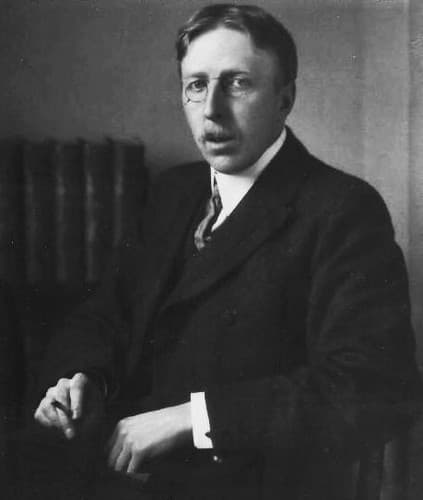
Ford Madox Ford was an English novelist, poet, critic and editor whose journals The English Review and The Transatlantic Review were important in the development of early 20th-century English and American literature.
Similar books
- A Farewell to Arms
Ernest Hemingway
3.8 (263k) average on GoodreadsHistorical FictionOffers another powerful and poignant perspective on love, loss, and the disillusionment of war during WWI.
- Mrs Dalloway
Virginia Woolf
3.8 (361k) average on GoodreadsFictionFeatures a similar stream-of-consciousness style and delves into the internal lives of characters in post-WWI England, grappling with societal shifts.
- To Kill a Mockingbird
Harper Lee
4.3 (4.5M) average on GoodreadsHistorical FictionIn the 1930s Jim Crow South, Harper Lee writes about racial injustice, moral growth, and the quiet courage of a lawyer father, Atticus Finch, as seen through his young daughter's eyes.
- The Great Gatsby
F. Scott Fitzgerald
3.9 (3.8M) average on GoodreadsHistorical FictionIn the opulent Roaring Twenties, a mysterious millionaire's lavish parties hide his desperate, tragic pursuit of a lost love, exposing the emptiness within the American Dream.
- Pride and Prejudice
Jane Austen
4.3 (3M) average on GoodreadsHistorical FictionIn a society focused on status and money, Elizabeth Bennet navigates love and pride, challenging Mr. Darcy and social expectations to find true affection.
- Angels & Demons
Dan Brown
3.9 (2.7M) average on GoodreadsThrillerA Harvard symbologist races through Rome's ancient sites, deciphering cryptic clues to unmask the Illuminati and stop a vengeful plot to destroy the Vatican with a stolen antimatter weapon.





Enjoyed the summary?
A summary gives you the shape of the book. The book itself has the detail, the examples and the voice.
Find Parade's End on AmazonAs an Amazon Associate, BookBrief earns from qualifying purchases. How we're funded