
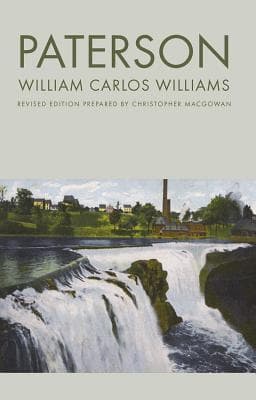
Synopsis
Covers the whole plot, including the ending.
- Difficulty
- Hard
- Pacing
- Variable
- Mood
- Philosophical, Reflective, Experimental, Lyrical, Dense
- Read it if
- You are interested in experimental poetry, modernist literature, or a deep dive into the American urban landscape and the interplay between man and nature.
- Skip it if
- You prefer linear narratives, traditional poetic forms, or a straightforward plot with clear character arcs.
Paterson Plot Summary
Covers the whole plot, including the ending.
The Man and the City
The epic begins with Dr. Paterson, who is both a man and the city of Paterson, New Jersey. He wakes up, thinking about the Passaic River and the Great Falls, which are the city's geographical and symbolic center. Dr. Paterson reflects on the city's history, its industrial past, and the lives of its people. He sees himself as holding these experiences, a living example of the city's shared memory. The poem immediately sets its fragmented, associative style, mixing observations, historical documents, letters, and bits of conversation, all seen through Dr. Paterson's mind as he tries to understand and express the 'beautiful thing' that is the city.
The Falls and the Library
Dr. Paterson continues exploring the city, focusing on the Passaic Falls' raw power and destructive potential. He contrasts this natural force with the knowledge in the city's library, a place where history and individual stories are kept, though often in pieces. He looks into historical accounts, including those of early explorers and indigenous people, and considers the difficulty of truly capturing a place and its people through language. The library becomes a symbol for the poet's mind, a large collection of different information he tries to combine into a clear story.
Letters from Women
A large part of the poem includes letters from various women, notably 'C.' (Cress) and Phyllis. These letters show personal struggles, unfulfilled desires, and difficulties in communication and understanding in relationships. 'C.' expresses her intellectual and emotional needs, often feeling misunderstood by Dr. Paterson, who represents a male, dominant view. Phyllis, another letter writer, also shares her feelings and experiences. These letters highlight the repeated theme of language failing to fully convey meaning and the isolation of individuals, even in close connections. Dr. Paterson tries to respond to these voices, recognizing his own limits and the complexities of human interaction.
The Industrial Landscape
The story shifts to observe Paterson's industrial scene, focusing on factories, the working class, and the machines that define much of the city's identity. Dr. Paterson thinks about the workers' lives, their labor's repetitive nature, and the economic forces that shape their existence. He considers the industrial process's beauty and harshness, seeing it as both a source of life and destruction. This section includes more direct observations of the urban environment, the sounds, smells, and sights of a city built on industry, further connecting the man with Paterson's physical and social makeup.
The Search for the 'Beautiful Thing'
Throughout the poem, Dr. Paterson wants to find and express the 'beautiful thing'—an elusive truth, meaning, or unifying idea he believes is at the heart of the city's seemingly chaotic existence. This search involves sifting through daily life's details, historical records, and personal stories. He questions what poetry is and its ability to capture reality. The poem's fragmented structure reflects this ongoing struggle as he tries to assemble different elements into a whole, always aware of language's limits and his subject's complexity.
The Sermon and the Crowd
Dr. Paterson observes a street preacher giving a sermon to a diverse crowd in the city. This scene brings out the city's religious and spiritual aspects, as well as the different voices and views that exist within it. The preacher's strong statements are contrasted with the onlookers' reactions, from indifference to engagement. This section further emphasizes the many experiences and beliefs that make up the city, and the poet's challenge to include such a wide range of human expression in his work. It highlights that the city is a living thing made of countless individual stories.
The River's Journey to the Sea
As the poem moves through its first four books, the story metaphorically follows the Passaic River from its source above the falls towards its eventual entry into the sea. This geographical path mirrors Dr. Paterson's journey of understanding and his attempt to combine the city's different parts. The river symbolizes the flow of time, history, and individual lives, all moving towards a final, though perhaps unclear, destination. The sea represents a form of dissolving or joining, a return to a larger, undifferentiated whole, suggesting a type of resolution or acceptance of the city's complexities.
Book Five: The Imagination Triumphant
Book Five, published years after the first four, offers a new look and perspective. Dr. Paterson, now older, reflects on imagination and art's lasting power, even as he considers age, death, and the changing world. He attends an art exhibition, finding new inspiration in creative acts. This book emphasizes the human spirit's triumph and the artist's ability to change reality through language and vision. It suggests that while the physical city may change and people may die, the imaginative life, the act of creation, continues and offers a profound form of immortality and meaning.
The Persistence of Memory and Language
The end of Book Five strengthens the main role of language and memory in creating meaning. Dr. Paterson, having gone through the city's complex history and his own inner world, confirms the poet's important role in giving voice to the voiceless, in finding order among fragments. He acknowledges the ongoing struggle but asserts the creative act's ultimate necessity and power. The poem ends not with a final answer, but with a sense of lasting engagement, suggesting that the search for understanding and the act of poetic creation are continuous processes, essential to human experience.
Paterson Characters
Dr. Paterson
Protagonist
The poet-persona, embodying both a man and the city of Paterson, New Jersey.
Dr. Paterson is the central consciousness through which the poem unfolds. He is a physician and a poet, deeply intertwined with the city of Paterson, New Jersey. He acts as an observer, a chronicler, and a vessel for the city's history, its people, and its natural environment. His mind is a vast repository of facts, observations, and fragmented narratives, constantly striving to make sense of the 'beautiful thing' that is the city. He is driven by a profound desire to understand and articulate the essence of life and language, often grappling with the limitations of both.
Relationships: The City of Paterson (Inseparable identity; he embodies its past, present, and spirit.); C. (Cress) (Correspondent and intellectual/emotional confidante, though often misunderstanding each other.); Phyllis (Another correspondent, representing the struggles of women and communication.); Various historical figures (He interacts with their stories and legacies through historical documents.)
C. (Cress)
Supporting
A woman who writes letters to Dr. Paterson, expressing her intellectual and emotional frustrations.
Cress is a significant character primarily revealed through her extensive letters to Dr. Paterson. She is intelligent, articulate, and deeply sensitive, often feeling misunderstood and constrained by societal expectations and her relationships. Her letters convey a sense of yearning for intellectual connection and emotional fulfillment, as well as a frustration with Dr. Paterson's perceived distance or inability to fully grasp her inner world. She represents the individual's struggle for expression and recognition, and the inherent difficulties in achieving true understanding between people.
Relationships: Dr. Paterson (Intellectual and emotional correspondent, a complex relationship marked by both connection and misunderstanding.)
Phyllis
Supporting
Another woman who corresponds with Dr. Paterson, sharing her personal experiences.
Phyllis is another female correspondent whose letters contribute to the tapestry of individual lives within the poem. While less extensively detailed than Cress, her contributions further illustrate the theme of communication and misunderstanding. Her letters often touch upon personal struggles, relationships, and the daily realities of life. She serves to broaden the scope of female voices and experiences presented in the poem, reinforcing the idea that the city is made up of countless individual stories, each seeking an outlet for expression and understanding.
Relationships: Dr. Paterson (Correspondent, sharing personal thoughts and experiences.)
The Passaic River
Mentioned/Symbolic
The geographical and symbolic backbone of the city and the poem.
The Passaic River is not a character in the traditional sense but functions as a vital, almost sentient, entity within the poem. It is the lifeblood of Paterson, providing power for its industries and shaping its landscape. Symbolically, it represents the flow of time, history, and the collective unconscious. Its journey from the falls to the sea mirrors the poem's own progression and Dr. Paterson's quest for understanding. It is a source of both destructive power and life-giving sustenance, embodying the dualities inherent in nature and human existence.
Relationships: The City of Paterson (Its geographical and economic heart, shaping its identity.); Dr. Paterson (A constant point of reference and metaphor for his internal journey.)
The Great Falls
Mentioned/Symbolic
The powerful natural feature at the heart of Paterson.
The Great Falls of the Passaic River are a dominant natural landmark and a profound symbol in the poem. They represent raw, untamed power, the force of nature, and the destructive potential that underlies creation. Historically, they were harnessed to power Paterson's industries, symbolizing the human attempt to control and utilize nature. For Dr. Paterson, the falls are a constant source of contemplation, embodying the sublime and the terrifying, and serving as a metaphor for the overwhelming flow of information and experience he attempts to process.
Relationships: The City of Paterson (Its defining natural feature and source of industrial power.); Dr. Paterson (A central point of contemplation and metaphor.)
The Crowd / The People of Paterson
Supporting/Collective
The anonymous, collective inhabitants whose lives contribute to the city's identity.
The 'crowd' or the 'people of Paterson' represent the diverse, anonymous inhabitants of the city, both historical and contemporary. They are glimpsed through observations of daily life, snippets of conversation, and historical accounts. They are the workers, the dreamers, the struggling individuals whose collective experiences form the rich tapestry of the city. While individual characters emerge, the poem also emphasizes the collective spirit and the shared human condition within the urban environment. Their stories, though often fragmented, are essential to Dr. Paterson's understanding of the city.
Relationships: The City of Paterson (Their lives and labor constitute the city's essence.); Dr. Paterson (He observes and attempts to incorporate their experiences into his understanding.)
Paterson Themes
The City as a Man / The Man as a City
This main theme explores how individual consciousness is deeply connected with a place's shared identity. Dr. Paterson is not just a resident of Paterson, New Jersey, but embodies the city itself—its history, industry, natural features, and the lives of its people. The poem blurs the lines between inner thought and outer reality, suggesting that a place greatly shapes the individual, and in turn, the individual's perception and expression shape the place's identity. This is clear from the first lines, where the city is personified and the man becomes a holder of its experiences, constantly sifting through its 'detritus' to find meaning.
“Paterson lies in the valley under the Passaic Falls its spent waters / forming the outline of his back.”
The Search for a 'Beautiful Thing' / Meaning in Fragmentation
A driving force in the poem is Dr. Paterson's constant search to find and express a 'beautiful thing'—an elusive truth, a unifying idea, or a clear meaning among modern life's chaos and fragmentation. This search often fails because language cannot fully capture reality and because individuals are inherently disconnected. The poem's own fragmented structure, including different materials like letters, historical documents, and observations, reflects this struggle. Ultimately, the 'beautiful thing' may not be a single answer but the ongoing process of seeking, the act of creation itself, as suggested by imagination's triumph in Book Five.
“No ideas but in things.”
The Failure and Power of Language
The poem constantly deals with language's limits in conveying true meaning and allowing real understanding. The repeated theme of unanswered or misunderstood letters, especially from Cress, highlights communication's inherent difficulties. Dr. Paterson himself struggles to find the 'words' to sum up the city's vastness. However, paradoxically, the poem itself shows language's power—its ability to create, connect, and preserve. It explores how language, despite its flaws, is the main tool humans use to order their world, share experiences, and achieve a form of immortality through art.
“A man in himself is a city, beginning, seeking, achieving and concluding his life in ways which the various aspects of a city may embody—if imaginatively conceived—any city, all the details of which may be made to voice his intimate convictions.”
Nature vs. Industry
This theme explores the tension between nature and human industry. The Passaic Falls' raw power is repeatedly contrasted with the factories and machines that define Paterson's economy. The poem examines how humanity tries to control and change nature for its own purposes, often with both creative and destructive results. This duality is central to the city's character, as it owes its existence and success to the very natural force it tried to master. The river itself is a constant reminder of nature's lasting power, even as the city builds on and around it.
“The river is a flood of tears, a flood of tears, a flood of tears / from the eyes of a man, from the eyes of a woman, from the eyes of a child.”
History and Memory
Paterson is deeply concerned with collecting and interpreting history and memory. Dr. Paterson acts as a chronicler, sifting through historical documents, newspaper clippings, personal letters, and his own observations to build a varied understanding of the city's past. The poem suggests that history is not a straight story but a complex, often fragmented, collection of individual and shared experiences. It questions how memory is kept, distorted, and reinterpreted over time, and how the past continues to shape the present identity of both the city and the individual.
“History begins for us with murder and enslavement, not with discovery.”
Plot Devices & Literary Techniques
Collage / Juxtaposition
The assembly of disparate texts and observations to create a mosaic of meaning.
Williams employs a collage technique, weaving together seemingly unrelated materials such as historical documents, newspaper clippings, personal letters, overheard conversations, and lyrical observations. This juxtaposition of different voices, styles, and periods creates a fragmented yet rich tapestry of the city. It mirrors the fragmented nature of modern experience and the way a mind processes information. The reader is invited to make connections between these disparate elements, much like Dr. Paterson attempts to find coherence in the 'detritus' of the city, forcing an active engagement with the text to construct meaning.
Persona / Speaker (Dr. Paterson)
A unified consciousness that embodies both the poet and the city.
The use of Dr. Paterson as the central persona is a crucial device. He is not merely a character but a composite figure: a physician, a poet, and literally the city of Paterson itself. This allows Williams to explore the intricate relationship between the individual and their environment, blurring the lines between subjective experience and objective reality. The persona provides a consistent lens through which the diverse elements of the poem are filtered, giving a sense of coherence to the otherwise fragmented narrative and allowing for deep philosophical and historical reflection from an embodied perspective.
The Passaic River as Structural Metaphor
The river's flow dictates the poem's progression and thematic development.
The Passaic River serves as the primary structural and thematic metaphor for the entire poem. Its course, from the Great Falls to its entrance into the sea, dictates the progression of the original four books. This geographical journey mirrors Dr. Paterson's internal exploration of the city's history, its people, and his own consciousness. The river symbolizes the flow of time, the continuous stream of human experience, and the search for resolution or understanding. It provides a natural, organic framework for the poem's otherwise fragmented content, grounding the abstract in the tangible.
Inclusion of Letters
Direct incorporation of personal correspondence to reveal individual struggles and communication failures.
The extensive inclusion of personal letters, particularly from women like 'C.' (Cress) and Phyllis, is a significant plot device. These letters provide intimate, unfiltered glimpses into individual lives, desires, and frustrations. They serve to humanize the collective 'city' by bringing specific voices to the forefront. More importantly, they highlight the theme of the failure of language and communication, as the correspondents often express feelings of being misunderstood or unheard, and Dr. Paterson struggles with how to adequately respond. This device adds emotional depth and a sense of realism to the poem's broader philosophical concerns.
Paterson Quotes
“No ideas but in things.”
“—Say it, no ideas but in things— / nothing but the things themselves / when the mind will be a sieve through which / new understanding can percolate.”
“A man in himself is a city, beginning, seeking, achieving and concluding his life in ways which the various aspects of a city may embody.”
“The city / an old woman, / whose hair / is the rain / and whose eyes / are the puddles / and whose mouth / is the river.”
“The great mass of the unwritten, of the unrecaptured, of the unrecorded / waiting to be written.”
“The stream / flows / over the rocks / that are in its way.”
“It is difficult / to get the news from poems / yet men die miserably every day / for lack / of what is found there.”
“The river, / the river, / the river / pours over the rocks / and falls, / and falls.”
“We know nothing and can know nothing / but what passes through the senses.”
“The flower / is as much / a part of the city / as the street / itself.”
“The world / is not a world / until it is written.”
“The mind / is a kind of / city, / always / building, / always / tearing down, / always / rebuilding.”
“The light / is in the things / and not in the eye.”
“The poem / a field / of action.”
Quiz
10 questions on the plot and the characters. Each answer comes with a short explanation.
Question 1
Which natural landmark does the structure of 'Paterson' by William Carlos Williams primarily follow?
- The Appalachian Trail
- The Delaware River
- The Passaic River
- The Atlantic Ocean coastline
Show answer
C. The Passaic River As stated in the book's description, the structure of 'Paterson' 'follows the course of the Passaic River' from the falls to the sea.
Question 2
In 'Paterson,' what does the city of Paterson represent?
- Only the historical events of New Jersey
- A combination of the poet's life, the public history, and the physical place
- Primarily the industrial decline of American cities
- The future aspirations of urban development
Show answer
B. A combination of the poet's life, the public history, and the physical place The description clearly states that Paterson is 'both a place—the New Jersey city in whom the person (the poet's own life) and the public (the history of the region) are combined.'
Question 3
How many books were originally published individually as part of 'Paterson'?
- Three
- Four
- Five
- Six
Show answer
B. Four The text states that the work was 'Originally four books (published individually between 1946 and 1951)'. Book Five was published later.
Question 4
What is the primary significance of Book Five in 'Paterson,' published in 1958?
- It details the final decline of the city of Paterson.
- It focuses exclusively on the historical figures of New Jersey.
- It affirms the triumphant life of the imagination despite age and death.
- It provides a scientific analysis of the Passaic River's ecosystem.
Show answer
C. It affirms the triumphant life of the imagination despite age and death. The description highlights that 'The unexpected Book Five, published in 1958, affirms the triumphant life of the imagination, in spite of age and death.'
Question 5
Who meticulously re-edited the revised edition of 'Paterson' and supplied extensive notes?
- William Carlos Williams himself
- Ezra Pound
- Christopher MacGowan
- T.S. Eliot
Show answer
C. Christopher MacGowan The revised edition 'has been meticulously re-edited by Christopher MacGowan, who has supplied a wealth of notes and explanatory material.'
Question 6
What literary genre is 'Paterson' classified as?
- Historical Romance
- Science Fiction
- Literary Fiction
- Detective Mystery
Show answer
C. Literary Fiction The provided information explicitly states the genre as 'Literary Fiction'.
Question 7
What is the implied relationship between the poet's own life and the city of Paterson in the work?
- The poet's life is entirely separate from the city's narrative.
- The city serves as a mere backdrop for the poet's personal struggles.
- The poet's life is combined with the city, suggesting a deep personal identification.
- The poet uses the city to critique modern urban planning without personal involvement.
Show answer
C. The poet's life is combined with the city, suggesting a deep personal identification. The description states 'the New Jersey city in whom the person (the poet's own life) and the public (the history of the region) are combined,' indicating a profound personal connection and identification.
Question 8
Considering the structure following the Passaic River, what thematic element is likely emphasized through this progression?
- The static nature of urban environments.
- A journey, transformation, and the flow of time and experience.
- The cyclical repetition of historical events.
- The isolation of individual lives within a large city.
Show answer
B. A journey, transformation, and the flow of time and experience. Following a river from its source to the sea inherently suggests a journey, progression, and the continuous flow of time and experience, mirroring the themes of life, history, and imagination within the poem.
Question 9
Given the 'meticulously re-edited' nature and 'wealth of notes and explanatory material' in the revised edition, what can be inferred about the original text's accessibility or complexity?
- The original text was straightforward and required no additional context.
- The original text likely presented significant challenges in comprehension, necessitating extensive annotation.
- The re-editing was primarily for stylistic changes, not clarification.
- The notes were added mainly to increase the book's physical length.
Show answer
B. The original text likely presented significant challenges in comprehension, necessitating extensive annotation. The need for a 'meticulously re-edited' version with a 'wealth of notes and explanatory material' strongly implies that the original text was complex, dense, or contained historical/local references that required elucidation for modern readers.
Question 10
How does the inclusion of 'the public (the history of the region)' contribute to the overall scope of 'Paterson'?
- It limits the poem's focus solely to genealogical records.
- It broadens the poem beyond personal experience to encompass a collective, historical narrative.
- It serves primarily as a factual almanac for New Jersey.
- It functions as an allegorical representation of universal human history, detached from specific place.
Show answer
B. It broadens the poem beyond personal experience to encompass a collective, historical narrative. By combining the 'public (the history of the region)' with the poet's personal life and the physical place, the poem gains a broader scope, weaving individual experience into a larger historical and communal fabric.
Paterson FAQ
What is the central premise of 'Paterson' and how does the city relate to the main character?
'Paterson' explores the interconnectedness of a man, Dr. Paterson, and the city of Paterson, New Jersey. The city serves as a metaphor for the individual's consciousness, its history reflecting his personal experiences, and its industrial landscape mirroring his internal struggles and observations.
How does the Passaic River contribute to the structure and thematic development of the poem?
The Passaic River is the central structural device of the poem, with its course from the Great Falls to the sea mirroring the flow of consciousness, history, and the life cycle. It symbolizes the relentless movement of time and experience, connecting disparate elements of the narrative and the city's identity.
Who are some of the key figures or archetypes Dr. Paterson encounters, and what do they represent?
Dr. Paterson encounters a range of characters, often representing various facets of the human condition and the city itself. Figures like Mrs. Cumming, the 'beautiful thing,' and various poets or madwomen symbolize the creative spirit, the destructive forces of society, or the search for meaning amidst urban decay.
What role does language and the act of writing play within Dr. Paterson's journey?
Language is paramount, as Dr. Paterson grapples with the inadequacy of words to capture the 'beautiful thing' he seeks to understand. His struggle to find a new language, one that is both local and universal, reflects Williams's own poetic project and the larger quest for authentic expression in a fragmented world.
How does Book Five alter or expand upon the themes established in the initial four books?
Book Five, published years later, introduces a more explicit affirmation of the imagination's enduring power, even in the face of aging and mortality. It shifts focus slightly to the visual arts and the idea of 'the dance,' suggesting a continued creative vitality beyond the initial quest for a definitive 'measure' of the city.
What is the significance of the 'divorce' motif and its connection to the city's industrial landscape?
The 'divorce' motif, appearing throughout the poem, signifies the separation between man and nature, the mind and the body, and the individual from a coherent cultural identity. This fragmentation is mirrored in the industrial decay and the social disconnect observed in Paterson's urban environment.
How do the various historical documents and letters integrated into the text contribute to the poem's overall message?
The inclusion of historical letters, newspaper clippings, and other documents serves to ground the poem in specific historical and social realities, enriching the texture of the city's past and present. They provide concrete examples of the struggles, aspirations, and failures that shape the collective consciousness of Paterson.
What is the 'beautiful thing' that Dr. Paterson continually seeks, and is it ever fully realized?
The 'beautiful thing' is an elusive concept, representing a unified vision, a perfect language, or an ultimate understanding of life's meaning and beauty. While Dr. Paterson never fully grasps it in a definitive sense, his persistent search itself becomes a form of realization and a testament to the ongoing human endeavor.
Discuss Dr. Paterson's internal conflict regarding his role as both a poet and a physician.
Dr. Paterson struggles to reconcile his scientific, diagnostic mind as a physician with his intuitive, imaginative spirit as a poet. This internal conflict reflects Williams's own life and his belief that both professions, in their attention to detail and human suffering, could inform a deeper understanding of reality.
How does the poem explore themes of isolation and connection within the urban setting?
The poem frequently depicts characters experiencing profound isolation amidst the bustling city, highlighted by Dr. Paterson's own introspective journeys. However, moments of fleeting connection, often through shared observation or artistic expression, offer glimpses of potential unity and understanding.
What psychological impact does the constant influx of disparate information and voices have on Dr. Paterson?
The overwhelming influx of historical data, personal narratives, and environmental observations creates a sense of fragmentation and sensory overload for Dr. Paterson. This psychological burden reflects the modernist experience of trying to synthesize meaning from a chaotic, information-rich world.
Can 'Paterson' be considered an environmental poem, given its focus on the Passaic River and the urban landscape?
Yes, 'Paterson' can certainly be read as an environmental poem, deeply engaging with the natural and built environment of the city. The poem critiques industrial degradation while simultaneously celebrating the raw power of nature, particularly through the imagery of the Great Falls.
How does Williams's use of 'the local' in 'Paterson' challenge traditional notions of epic poetry?
Williams radically redefines epic poetry by focusing intensely on 'the local'—the specific details, history, and language of Paterson, New Jersey. This challenges traditional epic scope, arguing that universal truths can be found not in grand narratives of heroes, but in the meticulous observation of one's immediate surroundings.
Is Dr. Paterson a heroic figure, or is his role more that of an observer or chronicler?
Dr. Paterson's heroism lies not in traditional feats of strength but in his persistent, often solitary, intellectual and imaginative labor. He is primarily an observer and chronicler, attempting to give voice and form to the 'unarticulated' life of the city, making his struggle a quiet, internal heroism.
What is the significance of the recurring image of the waterfall in the poem?
The Great Falls of the Passaic River is a central, recurring image, symbolizing both immense power and destructive force, as well as the constant flow of life and creativity. It represents the untamed energy that Dr. Paterson seeks to harness and understand through language.
How does the poem's fragmented structure reflect its modernist aesthetic?
The poem's fragmented structure, incorporating prose documents, letters, and shifts in voice and perspective, is a hallmark of modernist aesthetics. It mirrors the brokenness of modern experience, challenging readers to actively participate in constructing meaning from disparate parts, much like Dr. Paterson himself.
What is the 'descent' that Dr. Paterson undertakes, and what does he hope to find?
The 'descent' refers metaphorically to Dr. Paterson's immersion into the depths of the city's history, its social strata, and his own subconscious. He hopes to find a foundational 'measure,' a new language or understanding that can unify the fragmented experiences of life in Paterson.
How does the presence of women, particularly figures like Phyllis and Cress, contribute to Dr. Paterson's understanding of the city and himself?
Women in 'Paterson' often serve as muses, objects of desire, or figures of both inspiration and frustration for Dr. Paterson. Characters like Phyllis and Cress represent different aspects of the city's vitality and its capacity for both beauty and betrayal, profoundly shaping his emotional and creative landscape.
About the author
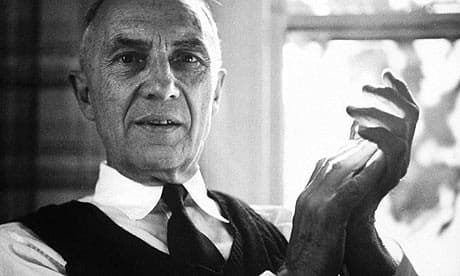
William Carlos Williams was an American poet, writer, and physician closely associated with modernism and imagism.
Similar books
- The Waste Land
T.S. Eliot
4.1 (43k) average on GoodreadsFictionBoth are modernist long poems using fragmented structures and multiple voices to explore urban decay and cultural crisis.
- Leaves of Grass
Walt Whitman
4.1 (90k) average on GoodreadsPhilosophyShares an epic scope, a democratic vision, and a focus on the American landscape and the individual's place within it.
- Ulysses
James Joyce
3.7 (111k) average on GoodreadsLiterary FictionFeatures a single day's journey through a city (Dublin), employing stream-of-consciousness and a vast array of literary techniques.
- The Old Man and the Sea
Ernest Hemingway
3.8 (831k) average on GoodreadsLiterary FictionA Cuban fisherman's long struggle with a giant marlin becomes a story of endurance and dignity, now retold for young adults with illustrations, phonetic guides, and writing prompts in Traditional Chinese.
- One Hundred Years of Solitude
Gabriel García Márquez
4.1 (753k) average on GoodreadsLiterary FictionThrough the multi-generational story of the Buendía family, a mythical town deals with the repeating patterns of time, love, and solitude, as the extraordinary mixes with the ordinary.
- The Goldfinch
Donna Tartt
3.9 (720k) average on GoodreadsLiterary FictionHaunted by a tragic explosion and clutching a stolen Dutch masterpiece, a young orphan navigates the opulent drawing rooms of New York and the gritty underbelly of the art world, desperately seeking connection and redemption amidst a life spiraling into crime and obsession.




Enjoyed the summary?
A summary gives you the shape of the book. The book itself has the detail, the examples and the voice.
Find Paterson on AmazonAs an Amazon Associate, BookBrief earns from qualifying purchases. How we're funded