
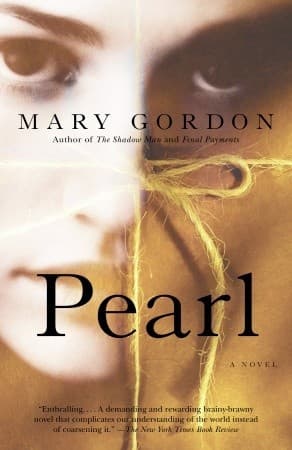
Synopsis
Covers the whole plot, including the ending.
- Difficulty
- Medium
- Pacing
- Moderate
- Mood
- Introspective, Suspenseful, Thought-provoking, Emotional
- Read it if
- You enjoy deep psychological dives into complex family relationships, especially mother-daughter dynamics, set against a backdrop of political and religious turmoil.
- Skip it if
- You prefer fast-paced plots with clear resolutions and dislike introspective, character-driven narratives that grapple with heavy themes.
Pearl Plot Summary
Covers the whole plot, including the ending.
The Call from Dublin
On Christmas night, 1998, Maria Meyers, a literature professor at a New York university, gets a phone call that shatters her holiday peace. Her twenty-year-old daughter, Pearl, has chained herself to the gates of the American embassy in Dublin, Ireland, declaring a hunger strike. Pearl plans to starve herself to death in protest, though the specific cause remains vague to Maria. This news is especially shocking because Pearl, known for her gentle nature and love of books, has always been apolitical and disconnected from the radical activism that defined Maria's youth. Maria, a former student radical herself, struggles to understand her daughter's sudden, extreme act.
Joseph Kasperman's Immediate Response
Upon hearing the news, Joseph Kasperman, Maria's lifelong friend and Pearl's godfather, acts decisively. Joseph, a successful and pragmatic lawyer, immediately books a flight to Dublin. He feels a deep responsibility towards Pearl, having been a constant, stable presence in her life, often providing the practical care and emotional grounding that Maria, absorbed in her academic pursuits, sometimes struggled to offer. His swift departure highlights his deep love for Pearl and his practical approach to crisis, contrasting with Maria's initial paralysis and intellectual struggle to understand.
Maria's Journey and Recollections
Maria, after dealing with the shock, also arranges to travel to Dublin. During her journey and upon arrival, she is troubled by memories and questions about Pearl's life and their relationship. She recalls Pearl's quiet childhood, her immersion in books, and her seemingly detached observation of the world. Maria also thinks about her own past as a fiery young radical, her rejection of her Catholic upbringing, and her complex, often strained relationship with Pearl's father, who is now deceased. These reflections show Maria's anxieties about her effectiveness as a mother and her struggle to reconcile her past ideals with her present reality.
Encountering Pearl at the Embassy
Upon arriving at the American embassy, Maria and Joseph see a distressing scene. Pearl is visibly emaciated, her once lively presence diminished by days of fasting. She is surrounded by a small group of supporters, but she remains silent and unresponsive to her mother and godfather. Her eyes, however, convey a chilling resolve. The police and embassy officials are present, monitoring the situation, but are largely unable to intervene directly without Pearl's consent. This initial encounter is agonizing for Maria and Joseph, as Pearl's silence deepens the mystery of her motives and highlights her unwavering commitment to her protest.
The Role of Father Power
Father Power, a local Irish Catholic priest, gets involved, having been called by some of Pearl's supporters. He tries to mediate between Pearl and the authorities, and also tries to communicate with Pearl herself. Through his interactions, Maria and Joseph begin to understand that Pearl's protest is not purely political but deeply spiritual, rooted in a sudden, intense embrace of Catholicism — a faith Maria had rejected and never introduced to Pearl. Father Power, at first skeptical, becomes increasingly concerned for Pearl's well-being and is puzzled by the intensity of her newfound faith and her chosen form of martyrdom.
Flashbacks to Maria's Radical Past
As Maria deals with Pearl's actions, she often thinks back to her own youth, particularly her involvement in radical politics during the 1960s. She recalls the fervor of protests, her passionate belief in social justice, and the sense of community she found among fellow activists. She also remembers the personal costs and eventual disappointment that came with that period, including her complex relationship with Pearl's father, a charismatic but ultimately unreliable figure. These flashbacks show how her own activism differs from Pearl's, and explore the legacy of their generation's ideals.
Joseph's Practical Efforts
While Maria reflects, Joseph focuses on practical solutions. He consults with lawyers, doctors, and embassy officials, trying to find any legal or medical way to intervene and force-feed Pearl. He navigates the complexities of Irish law and international relations, facing constant frustration due to Pearl's refusal to consent to treatment. His efforts highlight his practical nature and his deep love for Pearl, showing his willingness to try everything to save her life, even as Maria struggles with the emotional and intellectual aspects of the crisis.
The Mystery of Pearl's Motivation Deepens
As Pearl's health gets worse, the mystery surrounding her motivation grows. Through snippets of conversation among her supporters and subtle clues, Maria and Joseph learn that Pearl's protest is linked to a specific, unnamed injustice, possibly involving a young Irish man named Ciaran. There are also hints of a personal tragedy or betrayal that deeply affected Pearl, pushing her towards this extreme act of self-sacrifice. Her silence, however, maintains the ambiguity, leaving Maria and Joseph to piece together the fragments of information and confront the possibility of a past they were unaware of.
The Role of Ciaran and the Unspoken Truth
It is gradually revealed that Ciaran was a young Irish man Pearl met and fell in love with during her time in Ireland. Ciaran was involved in a political incident, possibly linked to paramilitary activities or a wrongful conviction, and died in prison under suspicious circumstances. Pearl believes he was unjustly treated and that his death was a miscarriage of justice. Her hunger strike is not just a general protest but a specific act of solidarity and atonement for Ciaran, whom she sees as a martyr. This revelation explains the depth of her commitment and the personal nature of her sacrifice, tying her spiritual awakening to a very real, tragic event.
Maria's Spiritual Reckoning
Witnessing Pearl's unwavering faith and her embrace of a martyrdom that mirrors Catholic saints, Maria must confront her own past rejection of Catholicism. She revisits the reasons for her departure from the Church and questions her secular beliefs. The intensity of Pearl's spiritual conviction challenges Maria's intellectual framework, forcing her to consider the possibility of faith beyond dogma and the human need for meaning and sacrifice. This internal struggle is as agonizing as her external battle to save Pearl.
The Media and Public Opinion
As Pearl's hunger strike continues, it attracts significant media attention, both locally in Ireland and internationally. Reporters gather outside the embassy, and Pearl becomes a symbol for various causes, though her specific demands remain unclear to the broader public. This public scrutiny adds immense pressure on Maria, Joseph, and the authorities. The media narrative portrays Pearl as either a deluded fanatic or a courageous martyr, further complicating efforts to intervene and save her, as any action could be seen as violating her rights or validating her cause.
The Imminent Climax
Pearl's physical condition gets to a critical point, and doctors warn that she is nearing irreversible organ failure and death. The urgency of the situation reaches a peak. Maria and Joseph face the agonizing decision of whether to attempt a forced intervention, knowing it could be traumatic and potentially useless, or to respect Pearl's autonomy and allow her to die for her beliefs. The novel builds to a climax as they confront the limits of their love and the ultimate power of individual will in the face of death.
The Resolution of Pearl's Fate
In a heartbreaking turn of events, Pearl's hunger strike reaches its tragic conclusion. The specific outcome—whether she dies, is force-fed, or finds another resolution—is delivered with emotional weight, leaving a lasting impact on Maria and Joseph. Regardless of the exact ending, Pearl's act of self-sacrifice irrevocably alters their lives, forcing them to re-evaluate their beliefs, their relationships, and the meaning of love and loss. The resolution is not necessarily one of triumph or defeat, but of a deep, transformative reckoning with the power of conviction and the pain of maternal love.
Aftermath and Reflection
In the aftermath of Pearl's protest, Maria and Joseph are left to pick up the pieces of their lives, forever changed by the experience. Maria continues to deal with the spiritual and existential questions Pearl's actions raised, re-examining her own life choices and the legacy she passed on to her daughter. Joseph, while perhaps more outwardly resilient, carries the deep wound of Pearl's suffering and his inability to save her. The novel concludes with their ongoing process of grief, understanding, and acceptance, emphasizing that some wounds never fully heal, but can lead to growth and a deeper understanding of the human spirit.
Pearl Characters
Maria Meyers
Protagonist
A literature professor and former radical grappling with her daughter's extreme act.
Maria is a complex, intellectual woman in her fifties, a literature professor who was a passionate student radical in the 1960s. She is fiercely independent, articulate, and deeply analytical, often processing emotions through an intellectual lens. Her past activism shaped her anti-establishment views and her rejection of her Catholic upbringing. While she deeply loves Pearl, she struggles with the practicalities of motherhood and often feels a disconnect from her daughter's quiet nature. She is driven by a need to understand and control, but Pearl's actions force her to confront the limits of her understanding and the power of faith.
Relationships: Pearl (Mother-daughter, complex, loving but often strained by differing worldviews.); Joseph Kasperman (Lifelong best friend, confidant, co-parent figure.); Pearl's Father (Ex-lover, fellow radical, complicated and ultimately painful past.)
Pearl
Catalyst/Protagonist's daughter
Maria's quiet, book-loving daughter who embarks on a radical hunger strike.
Pearl is Maria's twenty-year-old daughter, initially presented as gentle, quiet, and apolitical, with a deep love for books. Her sudden, extreme act of a hunger strike at the American embassy in Dublin is the central mystery of the novel. She is characterized by her unwavering resolve and a newfound, intense spiritual conviction, rooted in Catholicism, a faith her mother rejected. Pearl embodies a blend of innocence and radical self-sacrifice, driven by a deeply personal sense of justice and atonement, particularly in relation to a young Irish man named Ciaran. Her silence throughout much of the crisis makes her a powerful, enigmatic figure.
Relationships: Maria Meyers (Daughter-mother, loving but with a significant generational and ideological gap.); Joseph Kasperman (Godfather and surrogate father, a source of stability and practical love.); Ciaran (Lover, the catalyst for her protest and spiritual awakening.)
Joseph Kasperman
Supporting
Maria's pragmatic best friend and Pearl's devoted godfather.
Joseph is Maria's oldest and most steadfast friend, a successful and pragmatic lawyer. He serves as Pearl's godfather and a consistent, loving male presence in her life, often providing the stability Maria could not. He is grounded, practical, and action-oriented, immediately flying to Dublin to address the crisis. Joseph represents a counterpoint to Maria's intellectualism, focusing on tangible solutions and legal avenues to save Pearl. He is deeply loyal and protective, and his love for Pearl is unwavering, driving his tireless efforts to intervene. His character provides a necessary balance to the emotional and intellectual turmoil of Maria.
Relationships: Maria Meyers (Lifelong best friend, confidant, shared history.); Pearl (Godfather, surrogate father, deeply loving and protective.)
Father Power
Supporting
An Irish Catholic priest who attempts to understand and mediate Pearl's protest.
Father Power is a local Irish Catholic priest who becomes involved in Pearl's situation. Initially, he approaches the situation with a degree of clerical skepticism but becomes genuinely concerned for Pearl's spiritual and physical well-being. He represents the institutional Church and offers a perspective on faith that contrasts with Maria's secularism and Pearl's intense, personal piety. His interactions with Pearl and his attempts to mediate help to reveal the spiritual dimensions of Pearl's protest, and he is genuinely puzzled by the depth of her conviction and her chosen path of martyrdom.
Relationships: Pearl (Spiritual advisor/confidant, though Pearl remains largely silent.); Maria Meyers (Intermediary, often a source of information about Pearl's spiritual state.)
Ciaran
Mentioned
The young Irish man whose tragic fate is the catalyst for Pearl's protest.
Ciaran is a young Irish man whom Pearl met and fell in love with during her time in Ireland. Though never physically present in the main narrative, his story is gradually revealed as the central catalyst for Pearl's hunger strike. He was involved in a political incident, possibly linked to Irish republicanism or a wrongful conviction, and died in prison under circumstances that Pearl believes were unjust. He represents the personal impact of political conflict and injustice, and his memory fuels Pearl's intense desire for atonement and protest. His unseen presence is a powerful driving force in the narrative.
Relationships: Pearl (Lover, the inspiration and focus of her protest.); Maria Meyers (Unknown to her until the crisis, a source of profound mystery and pain.)
Pearl's Father
Mentioned
Maria's former lover and fellow radical, now deceased.
Pearl's father is a largely unseen but influential figure from Maria's past. He was a charismatic and passionate radical activist, sharing Maria's political fervor in the 1960s. Their relationship was intense and complex, ultimately ending in disillusionment and pain for Maria. He is remembered as both an inspiring figure and one who was perhaps less reliable or emotionally present. His legacy subtly shapes Maria's views on activism, love, and the challenges of raising a child within a non-traditional family structure. His absence and Maria's memories of him underscore the generational divide between her and Pearl.
Relationships: Maria Meyers (Former lover, father of Pearl, a significant but painful part of her past.); Pearl (Father, though his presence in her life was limited or absent after early childhood.)
Pearl Themes
Faith and Martyrdom
The novel explores the nature of faith, both religious and secular, and the concept of martyrdom. Pearl's hunger strike is an act of religious martyrdom, fueled by a newfound, intense Catholic faith, contrasting sharply with Maria's intellectual atheism. This theme looks at what drives individuals to extreme acts of self-sacrifice, whether for a spiritual conviction, a political cause, or a deeply personal sense of justice. It raises questions about the line between conviction and delusion, and the power of belief to go beyond logic, as seen in Pearl's unwavering resolve at the embassy gates and Maria's struggle to understand it.
“She was starving herself to death for a God she had never known, for a justice no one could name.”
Maternal Love and Its Limits
Central to the novel is the profound and often painful bond of maternal love. Maria's love for Pearl is fierce, but her inability to understand or control her daughter's actions pushes her to the brink. The theme explores the anxieties, responsibilities, and ultimate powerlessness a mother can feel when her child chooses a path she cannot comprehend or prevent. Maria's introspection shows her past struggles with balancing her intellectual pursuits with the demands of motherhood, and her present anguish highlights the unconditional yet often unrequited nature of a mother's devotion. Joseph's role as a godfather further complicates and illuminates the different facets of parental love.
“How could she have raised a child who would choose this? How could she have failed so utterly to transmit her own understanding of the world?”
The Legacy of Radicalism and Disillusionment
The novel examines the lasting impact of the 1960s radical movement on later generations. Maria, a former student activist, deals with her own past ideals and the disappointment that followed. Pearl's protest, though different, echoes the spirit of radical action and self-sacrifice, forcing Maria to confront the legacy of her own generation. This theme questions whether past political fervor translates or distorts into new forms of protest, and how the ideals of one generation are understood or rejected by the next. It also explores the personal costs of activism and the difficulty of sustaining revolutionary zeal.
“They had believed they could change the world, and perhaps they had, but not in the ways they had imagined, and not without leaving scars.”
Identity and Self-Definition
Both Maria and Pearl are on journeys of self-definition. Maria, defined by her intellectualism and past radicalism, must re-evaluate who she is when confronted with Pearl's unexpected spiritual awakening. Pearl, at first quiet and seemingly lacking a strong personal identity, finds her ultimate self-definition through her extreme act of protest and faith. The novel explores how individuals create their identities through their beliefs, actions, and relationships, and how these identities can be challenged or solidified through crisis. It questions whether identity is inherited, chosen, or formed through suffering, and the power of an individual to define their own meaning and purpose.
“She had always been a quiet girl, a reader, a watcher. Now she was a martyr, a symbol, a force.”
Ireland's History and Political Echoes
While not solely a historical novel, 'Pearl' is deeply set in the context of Ireland's troubled history, particularly its legacy of political conflict, martyrdom, and the role of Catholicism. Pearl's hunger strike relates to historical Irish hunger strikes, especially those related to the Troubles, and her connection to Ciaran links her protest to specific instances of perceived injustice. The setting of Dublin and the involvement of local figures like Father Power ground the story in a specific cultural and political setting, showing how historical narratives of suffering and resistance can inspire or haunt contemporary actions. It subtly explores how the past is never truly past, but continues to shape individual and national identity.
“The land itself seemed to remember, to whisper of old wounds and ancient grievances.”
Plot Devices & Literary Techniques
Flashbacks
Frequent shifts to Maria's past to illuminate her character and the story's themes.
The novel extensively uses flashbacks, primarily to Maria's youth in the 1960s as a student radical. These serve multiple purposes: they develop Maria's character, explaining her ideological foundations and her relationship with Pearl's father; they provide a stark contrast between her generation's activism and Pearl's; and they implicitly explore the legacy of past movements. By juxtaposing Maria's memories with the present crisis, the flashbacks deepen the reader's understanding of the generational divide and the evolving nature of protest and belief.
The Enigmatic Protagonist (Pearl)
Pearl's silence and mysterious motivations drive the central conflict.
Pearl herself functions as a powerful plot device. Her almost complete silence throughout her hunger strike and the initial ambiguity of her motivations create the central mystery and tension of the novel. This enigma forces Maria, Joseph, and the reader to actively piece together clues, interpret actions, and grapple with the unknown. Pearl's unwavering resolve, despite her silence, makes her a compelling, almost symbolic figure, embodying the power of individual will and the ineffability of profound conviction, which Maria's rational mind struggles to penetrate.
The Dublin Setting
The Irish capital provides a historical and spiritual backdrop for the conflict.
Dublin is more than just a location; it acts as a symbolic plot device. Its rich history of political struggle, rebellion, and deep Catholic faith provides a resonant backdrop for Pearl's protest. The city's atmosphere, with its blend of ancient tradition and modern life, amplifies the themes of faith, martyrdom, and national identity. The specific location of the American embassy further highlights the international dimension and the clash of cultures and ideologies, making the setting integral to understanding the layers of Pearl's motivation and the broader societal forces at play.
Internal Monologue
Maria's extensive inner thoughts provide insight into her struggles and the book's themes.
Maria's extensive internal monologues are a primary vehicle for character development and thematic exploration. Given Pearl's silence, Maria's thoughts and reflections become crucial for understanding the emotional and intellectual stakes of the narrative. Her internal debates about faith, motherhood, politics, and her past allow the author to delve deeply into the psychological complexities of grief, love, and the search for meaning. This device immerses the reader in Maria's perspective, making her struggle to comprehend Pearl's actions palpable and deeply personal.
Pearl Quotes
“She had thought, when she was young, that the world was a place where one learned, gradually, how to be good. She had been wrong.”
“The past, like a persistent child, refused to be put to bed.”
“Grief was a country she had visited many times, but it always felt new, always demanded a different passport.”
“Love was not a thing that could be given or taken; it was a state of being, a constant becoming.”
“The silence in the house was not empty; it was filled with unspoken words, with the weight of things that could not be said.”
“She understood then that loneliness was not simply the absence of others, but the absence of oneself in the presence of others.”
“History was not a straight line, but a tangled skein, threads knotted and re-knotted, impossible to untangle completely.”
“Forgiveness, she realized, was not forgetting, but remembering without bitterness.”
“The world was full of small kindnesses, like tiny lamps lit in the encroaching darkness.”
“To be human was to carry a burden of memory, to be shaped by the ghosts of what had been.”
“There was a fierce, protective love that bloomed in the face of injustice, a refusal to let the spirit be broken.”
“The truth, like water, always found its way to the surface, no matter how deeply it was buried.”
“Hope was a delicate thing, easily crushed, but also incredibly persistent, like a weed pushing through concrete.”
“She had learned that courage was not the absence of fear, but the decision to act in spite of it.”
Quiz
10 questions on the plot and the characters. Each answer comes with a short explanation.
Question 1
What is Pearl's stated intention by chaining herself outside the American embassy in Dublin?
- To protest American foreign policy in Ireland.
- To draw attention to the plight of political prisoners.
- To starve herself to death.
- To demand the release of an Irish republican.
Show answer
C. To starve herself to death. Pearl's extreme act is a hunger strike, intending to starve herself to death, which is the central mystery her mother tries to unravel.
Question 2
What is Maria Meyers's past political involvement described as?
- A supporter of conservative causes.
- A student radical.
- A silent observer of political events.
- An activist for animal rights.
Show answer
B. A student radical. The synopsis explicitly states that Maria was once a 'student radical' and still lives by her beliefs.
Question 3
Who is Joseph Kasperman in relation to Pearl?
- Pearl's biological father.
- Maria's brother.
- Pearl's surrogate father and Maria's childhood friend.
- A journalist covering Pearl's protest.
Show answer
C. Pearl's surrogate father and Maria's childhood friend. Joseph Kasperman is described as Maria's childhood friend and Pearl's 'surrogate father,' indicating a close, non-biological paternal role.
Question 4
What is surprising about Pearl's actions given her past interests?
- She was previously very politically active.
- She had always been interested in Catholicism.
- She had never been interested in politics or the Catholicism her mother rejected.
- She preferred physical activities over intellectual pursuits.
Show answer
C. She had never been interested in politics or the Catholicism her mother rejected. The synopsis highlights the mystery by stating that Pearl 'has never been interested in politics–nor in the Catholicism her mother rejected years before,' making her current act unexpected.
Question 5
Which city is the American embassy located in, where Pearl stages her protest?
- London
- Belfast
- Dublin
- New York
Show answer
C. Dublin Pearl chains herself 'outside the American embassy in Dublin,' which is a key setting detail mentioned early in the synopsis.
Question 6
What themes does the novel Pearl explore, according to the synopsis?
- The challenges of space exploration and technological advancement.
- The labyrinths of maternal love, religious faith, and Ireland’s tragic history.
- The rise and fall of corporate empires and financial corruption.
- The impact of climate change on small island nations.
Show answer
B. The labyrinths of maternal love, religious faith, and Ireland’s tragic history. The synopsis explicitly states that the story delves 'deep into the labyrinths of maternal love, religious faith, and Ireland’s tragic history.'
Question 7
On what specific holiday night does Maria learn of Pearl's protest?
- New Year's Eve
- Halloween
- Christmas night of 1998
- Thanksgiving Day
Show answer
C. Christmas night of 1998 The very first sentence of the synopsis sets the scene: 'On Christmas night of 1998, Maria Meyers learns that her twenty-year-old daughter, Pearl, has chained herself...'
Question 8
How is the novel's narrative style or tension described?
- A meandering, contemplative memoir.
- A lighthearted romantic comedy.
- An emotionally daring novel of ideas, told with the tension of a thriller.
- A straightforward historical biography.
Show answer
C. An emotionally daring novel of ideas, told with the tension of a thriller. The synopsis concludes by describing Pearl as 'a grand and emotionally daring novel of ideas, told with the tension of a thriller.'
Question 9
What is Maria's stance on Catholicism, a faith Pearl seemingly adopts or is influenced by?
- She is a devout Catholic.
- She recently converted to Catholicism.
- She rejected Catholicism years before.
- She is indifferent to all religions.
Show answer
C. She rejected Catholicism years before. The synopsis notes that Pearl was never interested in 'the Catholicism her mother rejected years before,' highlighting a significant difference in their religious views.
Question 10
What specifically makes Pearl's act a 'mystery' that Maria is 'shaken by'?
- Pearl had explicitly told Maria she was going on a trip to Ireland.
- Pearl was known for her rebellious and politically charged behavior.
- Pearl had never shown interest in politics or the religious faith her mother rejected, making her current motivations unclear.
- Maria was expecting Pearl to join her in a similar protest.
Show answer
C. Pearl had never shown interest in politics or the religious faith her mother rejected, making her current motivations unclear. The core of the mystery is that Pearl, described as 'gentle, book-loving' and never interested in politics or Catholicism, is now undertaking such an extreme, politically and religiously charged act.
Pearl FAQ
What is the central conflict that initiates the plot of 'Pearl'?
The central conflict begins on Christmas night of 1998 when Maria Meyers learns that her twenty-year-old daughter, Pearl, has chained herself outside the American embassy in Dublin, intending to starve herself to death. This act of protest, seemingly out of character for the gentle Pearl, forces Maria and Joseph Kasperman to rush to her side, seeking to understand her motivations.
Who are the primary characters in the novel and what is their relationship?
The primary characters are Maria Meyers, a former student radical; her daughter, Pearl, a gentle and book-loving young woman; and Joseph Kasperman, Maria's childhood friend and Pearl's surrogate father. The novel explores the complex bonds among these three, particularly the maternal love between Maria and Pearl, and Joseph's deep connection to both.
What is Pearl's stated reason for her hunger strike outside the American embassy?
Pearl's explicit reason for her hunger strike is a protest against global injustices and, more specifically, the perceived complicity of the United States in various international conflicts and humanitarian crises. She sees her act as a form of moral witness and a self-sacrificial attempt to draw attention to suffering.
How does Maria's past as a student radical inform her reaction to Pearl's protest?
Maria, despite her own radical past, is deeply conflicted by Pearl's protest. While she understands the impulse for social justice, she is horrified by the self-destructive nature of Pearl's act, especially given Pearl's previous lack of political engagement. Maria grapples with whether Pearl is truly acting on her own convictions or being manipulated, and whether her own past influenced Pearl in unforeseen ways.
What role does Joseph Kasperman play in the narrative, beyond being a friend?
Joseph Kasperman serves as a grounding presence and a surrogate father figure for Pearl, offering a different perspective than Maria's. He is often the voice of reason and practical concern, attempting to mediate the intense emotional dynamic between mother and daughter, and providing emotional support to both during the crisis.
What is the significance of the novel being set in Dublin, particularly in relation to Ireland's history?
The Dublin setting is crucial, as Ireland's tragic history of political struggle, religious conflict, and martyrdom provides a powerful backdrop and thematic resonance for Pearl's protest. The historical context of Irish hunger strikes and self-sacrifice for political ideals subtly influences the interpretation of Pearl's actions and the characters' understanding of her motivations.
How does the novel explore the theme of religious faith, especially given Maria's rejection of Catholicism?
Despite Maria's rejection of Catholicism, the novel deeply explores themes of religious faith, sacrifice, and martyrdom, particularly as Pearl's act takes on a quasi-religious fervor. Pearl, who was not raised Catholic, seems to be drawn to a spiritual, self-denying path, forcing Maria to confront the lingering influence of religious archetypes and the concept of spiritual conviction.
Are there any clues or foreshadowing about Pearl's actions prior to her protest?
The novel subtly reveals that Pearl, despite her gentle demeanor, had been undergoing a quiet internal transformation, marked by increasing introspection and a growing preoccupation with global suffering. Her sudden, drastic action is framed as the culmination of a deeply personal spiritual and moral awakening, rather than a completely spontaneous act.
How does the novel delve into the 'labyrinths of maternal love'?
The novel explores maternal love through Maria's agonizing struggle to understand and save her daughter, Pearl. It delves into the guilt, fierce protectiveness, and profound helplessness Maria experiences, examining how a mother's past choices and beliefs might inadvertently shape or even alienate her child, and the desperate lengths a mother will go to for her child.
What psychological factors might be driving Pearl's extreme protest, beyond explicit political reasons?
Psychologically, Pearl's protest can be interpreted as a complex confluence of idealism, a search for meaning, a desire for personal agency, and potentially a subconscious yearning for a transcendent experience or a radical form of self-definition. It might also be a reaction to perceived parental expectations or a way to forge her own unique identity.
How does the narrative structure contribute to the 'tension of a thriller'?
The narrative maintains tension through its immediate crisis, the ticking clock of Pearl's hunger strike, and the constant suspense surrounding her survival and the reasons behind her actions. Flashbacks and internal monologues are interwoven with the present-day drama, gradually revealing complex character motivations and secrets, keeping the reader on edge.
What is the significance of Pearl being 'book-loving' but not politically inclined before this event?
Pearl's prior gentleness and love for books highlight the dramatic shift in her character, making her protest even more perplexing and profound. Her intellectual curiosity, channeled through literature, might have been a precursor to her moral awakening, suggesting a deep, internal processing of ideas that ultimately led to her radical action, rather than an external political influence.
Does the novel offer a definitive answer to 'What is driving her to martyr herself?'
The novel deliberately avoids a single, simplistic answer, instead presenting a multifaceted exploration of Pearl's motivations. It suggests a complex interplay of personal idealism, a search for spiritual meaning, a response to global suffering, and perhaps subconscious psychological factors, leaving the ultimate interpretation somewhat open to the reader.
How does the generational gap between Maria's activism and Pearl's protest manifest in their interactions?
The generational gap manifests in Maria's struggle to reconcile her own 1960s-era activism with Pearl's more isolated, absolute form of protest. Maria's activism was often communal and outward-looking, whereas Pearl's is deeply personal and self-sacrificial, highlighting evolving forms of dissent and the different psychological landscapes of their respective eras.
What philosophical questions does 'Pearl' raise about the nature of sacrifice and protest?
The novel raises profound philosophical questions about the efficacy and morality of self-sacrifice as a form of protest, the line between idealism and fanaticism, and the individual's responsibility in the face of global injustice. It explores whether such extreme acts achieve anything tangible or if they are primarily personal statements.
How does the novel use the character of Joseph to reflect different perspectives on Pearl's actions?
Joseph often represents a more pragmatic, humanist perspective compared to Maria's passionate, conflicted views. He tries to understand Pearl's actions through a lens of care and concern for her physical well-being, often questioning the effectiveness of her protest while still empathizing with her underlying idealism, providing a crucial counterpoint.
Is there a specific historical event or figure that might have inspired Pearl's form of protest?
While not explicitly stated, Pearl's hunger strike in Dublin evokes historical precedents like the Irish republican hunger strikers (e.g., Bobby Sands), who used self-starvation as a political weapon. This historical resonance adds layers of meaning to Pearl's actions, whether she consciously emulates them or is unconsciously drawn to a similar form of protest.
What is the ultimate fate of Pearl, and how does it impact Maria?
The novel culminates in a pivotal moment regarding Pearl's hunger strike, and while the specific outcome isn't detailed here to avoid spoilers, it profoundly impacts Maria, forcing her to confront the limits of maternal intervention, the nature of belief, and the enduring legacy of her daughter's radical act, regardless of the physical outcome.
About the author

Mary Gordon is an American author known for her fiction, including the novel "Pearl." Her works often explore themes of identity, faith, and the complexities of human relationships. Gordon's writing has garnered attention for its depth and insight into the human experience.
Similar books
- The Vanishing Act of Esme Lennox
Maggie O'Farrell
3.9 (26k) average on GoodreadsHistorical FictionFeatures a mystery surrounding a female character's past and present, with a focus on family secrets and societal judgment.
- The God of Small Things
Arundhati Roy
3.9 (244k) average on GoodreadsLiterary FictionOffers a richly layered narrative exploring family bonds, political undertones, and tragic events in a specific cultural context.
- The Corrections
Jonathan Franzen
3.8 (156k) average on GoodreadsLiterary FictionBoth Gordon and Franzen delve into complex family relationships and the disillusionment with past ideals, particularly the radicalism of previous generations. However, Franzen's 'The Corrections' offers a broader, more satirical, and often cynical lens on American consumerism and the failures of the nuclear family. Gordon's 'Pearl' maintains a more serious and introspective tone, focusing intently on the mother-daughter bond and the specific spiritual and political ramifications of Pearl's actions, rather than a wide-ranging social commentary on an entire family's dysfunctions across various societal spheres. Franzen's characters are often driven by more mundane, albeit deeply psychological, desires, while Gordon's are propelled by profound moral and political imperatives.
- The Old Man and the Sea
Ernest Hemingway
3.8 (831k) average on GoodreadsLiterary FictionA Cuban fisherman's long struggle with a giant marlin becomes a story of endurance and dignity, now retold for young adults with illustrations, phonetic guides, and writing prompts in Traditional Chinese.
- One Hundred Years of Solitude
Gabriel García Márquez
4.1 (753k) average on GoodreadsLiterary FictionThrough the multi-generational story of the Buendía family, a mythical town deals with the repeating patterns of time, love, and solitude, as the extraordinary mixes with the ordinary.
- The Goldfinch
Donna Tartt
3.9 (720k) average on GoodreadsLiterary FictionHaunted by a tragic explosion and clutching a stolen Dutch masterpiece, a young orphan navigates the opulent drawing rooms of New York and the gritty underbelly of the art world, desperately seeking connection and redemption amidst a life spiraling into crime and obsession.





Enjoyed the summary?
A summary gives you the shape of the book. The book itself has the detail, the examples and the voice.
Find Pearl on AmazonAs an Amazon Associate, BookBrief earns from qualifying purchases. How we're funded