

Synopsis
Covers the whole plot, including the ending.
- Difficulty
- Medium
- Pacing
- Moderate
- Mood
- Dark, Obsessive, Angsty, Melodramatic, Suspenseful
- Read it if
- You're looking for a dark, intense family saga with themes of revenge, forbidden love, and psychological trauma, and enjoy highly dramatic narratives.
- Skip it if
- You are sensitive to incestuous themes, emotional abuse, and disturbing content, or prefer lighter, more uplifting stories.
Petals on the Wind Plot Summary
Covers the whole plot, including the ending.
Escape and New Beginnings
After the events in the attic of Foxworth Hall, Cathy, Chris, and Carrie Dollanganger escape. Dr. Paul Sheffield, a kind and wealthy surgeon, takes them in. He does not know their past or true identities, believing them to be orphans named Sheffield. Cathy, now sixteen, struggles with trauma and her growing sexuality, often clashing with the more stable Chris. Carrie, the youngest, is fragile and easily frightened. They try to adapt to their new, privileged lives in the Sheffield mansion, attending school and trying to forget their past. However, the psychological scars run deep, especially for Cathy, who wants revenge against Corinne and Malcolm Foxworth.
Cathy's Ambitions and Chris's Love
Cathy, driven by her artistic side and a need for control, dedicates herself to ballet, showing talent and ambition. She sees dance as a way to express her pain and independence. Chris, always protective and in love with Cathy, supports her dreams but struggles with their incestuous relationship, knowing it can never be public. He studies medicine, aiming to become a doctor, partly to provide for Cathy and Carrie, and partly to find a cure for their shared psychological wounds. Their bond remains strong, but full of tension and unspoken desires.
Carrie's Fragility and Exposure
Carrie, despite years of stability, remains scarred by the attic. Her innocence and vulnerability remind them of their past. At a new school, she meets a girl who turns out to be her half-sister, Corinne's legitimate daughter, Jory. This meeting leads Carrie to find Corinne Foxworth, their biological mother, living in luxury and presenting herself as Malcolm Foxworth's grieving widow. Carrie, overwhelmed by the injustice and betrayal, confronts Corinne, who cruelly rejects her, denying their past and calling Carrie a liar. This devastating encounter pushes Carrie to a breaking point, making her existing trauma worse.
Tragedy Strikes Carrie
After the confrontation with Corinne, Carrie's fragile mental state shatters. The weight of her past, combined with her mother's brutal denial and rejection, proves too much. Feeling abandoned and unloved by the one person who should have protected her, Carrie commits suicide by ingesting poisoned doughnuts, an echo of how their youngest brother, Cory, died in the attic. Her death is a blow to Cathy and Chris, reigniting their anger and strengthening Cathy's resolve for revenge against Corinne and Olivia Foxworth.
Cathy's Reckless Path
Grief-stricken and fueled by a desire for vengeance after Carrie's death, Cathy spirals into self-destruction and reckless behavior. She uses her beauty and talent as a dancer to attract and manipulate men, seeking validation and control, but never true intimacy. She enters a passionate, volatile relationship with Julian Marquet, a fellow dancer, who is equally ambitious and troubled. Their relationship is marked by intense highs and destructive lows, mirroring her internal turmoil. Chris watches helplessly as Cathy pushes him away, choosing a path that seems destined for heartbreak and further pain.
Marriage to Julian and Further Degradation
Cathy marries Julian Marquet, a decision driven by passion, rebellion, and a desperate attempt to escape her past and Chris's love. However, their marriage quickly becomes a nightmare of emotional and physical abuse. Julian, consumed by jealousy and insecurity regarding Cathy's talent and her hidden past, becomes possessive and violent. Despite the escalating abuse, Cathy throws herself into her ballet career, becoming a prima ballerina. She endures Julian's cruelty, believing she deserves it, while planning her revenge against the Foxworths, using her growing fame as a means to an end.
Julian's Tragic End
The relationship between Cathy and Julian reaches its tragic end. During an argument, Julian, in a rage and possibly under the influence, drives recklessly, causing a car accident. Julian dies instantly, and Cathy, though severely injured, survives. The accident leaves her with lasting physical pain and deep emotional scars. Afterward, Cathy discovers she is pregnant with Julian's child. This adds complexity to her fractured life, forcing her to confront the consequences of her choices and the cycle of pain she cannot escape.
Return to Dr. Sheffield and the Birth of Jory
After Julian's death and her injuries, a broken and pregnant Cathy returns to Dr. Paul Sheffield's home. He welcomes her back with unwavering love and compassion. Paul, still unaware of her full past, provides a stable and nurturing environment. He helps her recover and stands by her as she gives birth to her son, Jory. Jory brings new purpose to Cathy's life, and she dedicates herself to being a loving mother, determined to break the cycle of abuse and neglect that has plagued her family. Paul's kindness and stability offer a temporary break from her vengeful plans.
The Foxworth Mansion Revisited
Driven by a need for justice, Cathy, with Chris, finally returns to Foxworth Hall, the place of their childhood torment. Their plan is to confront Corinne and Olivia Foxworth, expose their crimes, and make them pay for the suffering they caused. They enter the decaying mansion, a symbol of the family's dark secrets. Cathy, disguised and using her stage name, seeks to infiltrate Corinne's life, while Chris, now a doctor, looks for an opportunity to administer a slow-acting poison, mirroring their brother Cory's fate. The stage is set for a dramatic and potentially deadly confrontation.
Confrontation and Revelation
Cathy and Chris, having infiltrated Corinne's life, confront their mother and grandmother, Olivia Foxworth, in the decaying halls of Foxworth Hall. Cathy dramatically reveals their true identities as Corinne's children, the "devil's spawn" she locked away. The confrontation is explosive, with Corinne initially denying everything, while Olivia, frail and guilt-ridden, begins to confess her role in their suffering. Cathy recounts every horror of the attic, every betrayal, every act of cruelty. The truth, long buried, comes to light, shattering Corinne's denial and exposing her monstrous actions.
Corinne's Breakdown and Olivia's Death
Overwhelmed by Cathy and Chris's revelations and the truth of her past crimes, Corinne Foxworth suffers a complete mental breakdown. Her sanity shatters, and she descends into a state of catatonia, unable to cope with reality. Meanwhile, Olivia Foxworth, wracked with guilt and shame, succumbs to old age and the weight of her conscience, dying shortly after the confrontation. Her death marks the end of an era of cruelty and fanaticism that had plagued the Foxworth family, leaving Cathy and Chris with a bitter victory and the realization that true peace remains elusive.
The Aftermath and Paul's Sacrifice
After the Foxworth Hall tragedy, Dr. Paul Sheffield discovers the horrifying truth about Cathy, Chris, and Carrie's past, and their true identities. Despite the shock and the morally compromising nature of their relationship, Paul's love for Cathy remains. Realizing that Cathy and Chris are bound to each other and that their love, though unconventional, is genuine, Paul makes a sacrifice. He fakes his own death, allowing Cathy and Chris to inherit his wealth and live together as a seemingly legitimate couple with Jory, free from societal judgment and the legal implications of their incestuous bond. This act of selfless love ensures their future.
Chris and Cathy's Future
With Paul Sheffield's selfless act, Cathy and Chris are free to live openly as a couple, under the guise of being siblings who inherited a vast fortune. They raise Jory together, creating a loving and stable home, determined to shield him from the darkness that consumed their own childhoods. Cathy, no longer driven by vengeance, finds new purpose in motherhood and her renewed relationship with Chris. While the scars of the attic will remain, they find a fragile peace in their shared love and the hope of a better future for Jory. Their journey, though tragic, leads them to an unconventional form of happiness.
Principal Figures
Cathy Dollanganger
Protagonist
The vengeful, passionate, and artistic survivor of the attic.
Cathy is the central protagonist, a beautiful and fiercely independent young woman scarred by the trauma of her childhood imprisonment. She is artistic, finding solace and expression in ballet, but also deeply manipulative and driven by an insatiable desire for revenge against her mother and grandmother. Her passionate nature often leads her into destructive relationships, yet she possesses an unwavering loyalty to her brothers, Chris and Carrie. She struggles with her identity, her sexuality, and the moral complexities of her incestuous love for Chris, constantly battling between her desire for normalcy and her need for justice.
Relationships: Chris Dollanganger (Brother, forbidden lover, confidante); Carrie Dollanganger (Younger sister, object of protection); Dr. Paul Sheffield (Adoptive father, guardian, selfless benefactor); Julian Marquet (Husband, fellow dancer, abusive partner); Corinne Foxworth (Biological mother, target of revenge); Olivia Foxworth (Biological grandmother, target of revenge)
Chris Dollanganger
Protagonist/Supporting
Cathy's protective brother and forbidden lover, aspiring doctor.
Chris is Cathy's older brother and her devoted, forbidden lover. He is intelligent, pragmatic, and incredibly protective of his sisters, especially Cathy. Haunted by the attic, he channels his trauma into a pursuit of medicine, hoping to find a cure for their physical and psychological wounds. He struggles with the moral implications of his love for Cathy, often trying to suppress it for her sake, but ultimately unable to deny their deep connection. He represents stability and reason amidst Cathy's impulsiveness, serving as her anchor and her most loyal supporter.
Relationships: Cathy Dollanganger (Sister, forbidden lover, object of devotion); Carrie Dollanganger (Younger sister, object of protection); Dr. Paul Sheffield (Adoptive father, mentor in medicine)
Carrie Dollanganger
Supporting
The youngest and most fragile survivor of the attic.
Carrie is the youngest of the Dollanganger children, a sweet and innocent girl whose spirit was irrevocably broken by the attic. She remains fragile and emotionally vulnerable throughout the story, easily frightened and deeply affected by the past. Her attempts to lead a normal life are constantly undermined by her trauma. Her accidental encounter with Corinne and subsequent rejection proves to be the final straw, leading to her tragic death. Carrie symbolizes the ultimate victims of Corinne and Olivia's cruelty, her innocence shattered beyond repair.
Relationships: Cathy Dollanganger (Older sister, protector); Chris Dollanganger (Older brother, protector); Corinne Foxworth (Biological mother, cause of ultimate despair)
Dr. Paul Sheffield
Supporting
The kind and selfless adoptive father figure.
Dr. Paul Sheffield is a wealthy and compassionate surgeon who adopts the Dollanganger children, believing them to be orphans. He provides them with a loving home, education, and stability, offering a stark contrast to their abusive past. Paul genuinely loves Cathy and offers her unwavering support, despite her tumultuous behavior and the dark secrets she keeps. He is a moral compass in the story, embodying goodness and unconditional love. His ultimate sacrifice allows Cathy and Chris to find a semblance of happiness, highlighting his profound selflessness.
Relationships: Cathy Dollanganger (Adoptive daughter, love interest); Chris Dollanganger (Adoptive son, protégé); Carrie Dollanganger (Adoptive daughter)
Corinne Foxworth (née Dollanganger)
Antagonist
The cruel and self-serving biological mother.
Corinne is Cathy, Chris, and Carrie's biological mother and the primary antagonist. Driven by greed and a desire to reclaim her inheritance, she imprisoned her children in the attic and slowly poisoned them. In 'Petals on the Wind,' she lives a life of luxury, having successfully suppressed her past. She is a master of denial, incapable of acknowledging her monstrous actions or showing remorse. Her cruelty is exposed when she rejects Carrie, ultimately leading to Carrie's death. She represents the ultimate betrayal of maternal love and the corrupting influence of wealth and social status.
Relationships: Cathy Dollanganger (Biological daughter, vengeful accuser); Chris Dollanganger (Biological son, vengeful accuser); Carrie Dollanganger (Biological daughter, tragic victim); Olivia Foxworth (Biological mother, accomplice)
Olivia Foxworth
Antagonist/Supporting
The fanatical and guilt-ridden grandmother.
Olivia is the grandmother of Cathy, Chris, and Carrie, and a deeply religious, fanatical woman who believed the children were products of incest and therefore evil. She was an active participant in their imprisonment and abuse in the attic. In 'Petals on the Wind,' she is an old, frail woman, living with the heavy burden of her past sins. While still harsh, her conscience begins to weigh on her, and she eventually confesses her role in the children's suffering. She represents the destructive power of religious extremism and rigid morality, ultimately consumed by her guilt.
Relationships: Cathy Dollanganger (Biological granddaughter, accuser); Chris Dollanganger (Biological grandson, accuser); Carrie Dollanganger (Biological granddaughter, victim); Corinne Foxworth (Biological daughter, accomplice)
Julian Marquet
Supporting
Cathy's talented but abusive first husband.
Julian Marquet is a talented and ambitious ballet dancer who becomes Cathy's husband. He is passionate, charismatic, and initially captivating, but beneath the surface lies a deep well of insecurity, jealousy, and a violent temper. His relationship with Cathy is marked by intense highs and devastating lows, mirroring Cathy's own internal struggles. He becomes physically and emotionally abusive, unable to cope with Cathy's talent, her hidden past, or her unspoken connection to Chris. His tragic death in a car accident frees Cathy from a destructive cycle, but leaves her with their child.
Relationships: Cathy Dollanganger (Wife, dance partner, victim of abuse)
Jory Marquet
Supporting
Cathy and Julian's son, a symbol of hope.
Jory is Cathy's son with Julian Marquet. His birth marks a turning point for Cathy, giving her a new sense of purpose and a desire to break the cycle of abuse and neglect. He represents innocence, hope, and the potential for a healthy future, untainted by the Foxworth legacy. Cathy's fierce love for Jory motivates her to seek stability and a loving home, ultimately contributing to her finding a form of peace with Chris.
Relationships: Cathy Dollanganger (Mother); Chris Dollanganger (Adoptive father figure, uncle)
Themes & Insights
The Enduring Scars of Trauma
The novel explores how the trauma of the attic imprisonment haunts Cathy, Chris, and Carrie long after their escape. Carrie's fragile mental state and eventual suicide are direct results of her inability to overcome the past. Cathy's reckless behavior, destructive relationships, and desire for revenge are all signs of her unprocessed pain and anger. Even Chris, the most stable, carries the burden of their shared history, especially in his forbidden love for Cathy. The past is not just a memory; it shapes their present and dictates their choices.
“The past was not a ghost; it was a living, breathing monster that still stalked their every step.”
Revenge vs. Forgiveness
A main theme is Cathy's pursuit of revenge against Corinne and Olivia Foxworth. Her life after the attic is largely shaped by this goal. While Chris often urges caution and healing, Cathy is consumed by the need for justice and to make her mother and grandmother pay for their crimes. The novel explores the destructive nature of vengeance, as it leads Cathy down a path of self-destruction and unhealthy relationships. Ultimately, while she achieves her revenge, it brings a hollow victory, suggesting that true peace is not in retribution but in breaking free from hatred.
“I wanted them to hurt as much as I had hurt. I wanted them to know what it felt like to be abandoned, to be starved, to be forgotten.”
Forbidden Love and Incest
The complex and morally ambiguous relationship between Cathy and Chris is a cornerstone of the story. Their incestuous love, born from shared trauma and isolation, is both a source of comfort and a burden. It is a love that cannot be openly acknowledged, forcing them to live in secrecy and face societal judgment. The novel looks at the psychological reasons for this bond, exploring how extreme circumstances can change traditional family dynamics. While it gives them an unbreakable connection, it also contributes to their isolation and struggle for normalcy, showing the lasting impact of their unique past.
“Our love was a secret garden, beautiful and lush, but hidden behind walls of shame and fear.”
The Illusion of Normalcy
Despite being adopted into a wealthy and seemingly ideal life with Dr. Paul Sheffield, the Dollanganger children struggle to achieve true normalcy. They assume new identities and try to fit into society, but their past always lurks beneath the surface. Carrie's inability to cope, Cathy's rebellious behavior, and Chris's internal conflict all show that outward appearances cannot fully hide deep psychological wounds. The novel suggests that for some, a return to a 'normal' life is an impossible dream, and that the past will always shape their reality.
“We could change our names, our clothes, our entire lives, but we could never change who we were, what we had been.”
Plot Devices & Literary Techniques
The Foxworth Mansion
A physical and psychological symbol of past trauma.
Foxworth Hall serves as more than just a setting; it is a powerful symbol of the Dollanganger children's past trauma and the pervasive evil of their family legacy. Its decaying grandeur reflects the moral decay within the family. Returning to the mansion for revenge is a crucial plot point, forcing a confrontation with their past and the physical space where their suffering occurred. The house itself seems to hold the memories, amplifying the emotional weight of their final confrontation with Corinne and Olivia, making the setting an active participant in their psychological journey.
Poisoned Doughnuts
A recurring motif symbolizing betrayal and slow death.
The poisoned doughnuts are a haunting motif throughout the series, first used to slowly kill Cory in the attic. In 'Petals on the Wind,' the motif reappears tragically when Carrie commits suicide by eating poisoned doughnuts, an act that directly mirrors Cory's death and underscores the lasting psychological damage inflicted by Corinne. This device powerfully connects the past to the present, reminding the characters and the reader of the insidious and slow nature of the betrayal they endured, and the way the past continues to claim victims.
Cathy's Ballet Career
A vehicle for emotional expression and self-destruction.
Cathy's dedication to ballet serves as a multi-faceted plot device. It provides an outlet for her intense emotions and a means of escape, allowing her to channel her pain and anger into art. However, it also becomes a vehicle for her self-destructive tendencies, as she uses her beauty and talent to manipulate men and engage in reckless behavior. Her rise to prima ballerina status gives her a platform and a public identity, which she eventually leverages in her plans for revenge, making her artistic talent an integral part of her journey towards both healing and retribution.
Paul Sheffield's Sacrifice
A deus ex machina providing a path to freedom.
Dr. Paul Sheffield's ultimate sacrifice — faking his own death to allow Cathy and Chris to inherit his wealth and live together as a conventional, albeit secretly incestuous, family — functions as a benevolent deus ex machina. This plot device resolves the seemingly insurmountable societal and legal obstacles preventing Cathy and Chris from living openly as a couple. It provides a means for them to achieve a fragile form of happiness and stability, free from the immediate pressures of their past and the judgment of society, effectively ensuring their future and the possibility of raising Jory in a safe environment.
Petals on the Wind Quotes
“I’ll never forgive you for what you did to us, Mother. Never!”
“The past is a living thing, Cathy. It breathes, it whispers, it waits for you to stumble.”
“You can't escape what's in your blood, no matter how far you run.”
“Love can be a cage, just as surely as hate can be a key.”
“Sometimes, the only way to be free is to burn everything down.”
“We were meant to be together, Cathy. It was always meant to be.”
“The stage was my escape, my sanctuary, a place where I could be someone else.”
“He saw the darkness in me, and he loved it. That's what truly terrified me.”
“A mother's love... it can be the most beautiful thing, or the most twisted.”
“I wanted to hurt them, to make them feel just a fraction of the pain they had caused me.”
“Some secrets are too monstrous to ever be fully buried.”
“You can't build a new life on old lies, Cathy. They'll always crumble.”
“I was a puppet, and they were pulling my strings, even from beyond the grave.”
“The taste of freedom was intoxicating, but it came with a bitter aftertaste of loneliness.”
“He was my mirror, reflecting back all the twisted parts of myself I tried to hide.”
Quiz
10 questions on the plot and the characters. Each answer comes with a short explanation.
Question 1
After escaping Foxworth Hall, what new surname do Cathy, Chris, and Carrie adopt?
- Winchester
- Sheffield
- Maxwell
- Fontaine
Show answer
C. Maxwell After their escape, the children are adopted by Dr. Paul Sheffield and take on the surname Maxwell.
Question 2
What career path does Cathy pursue in New York City?
- A veterinarian
- A dancer
- A fashion designer
- A teacher
Show answer
B. A dancer Cathy dedicates herself to ballet and becomes a professional dancer, eventually achieving success on stage.
Question 3
What is Chris's chosen profession as an adult?
- An architect
- A lawyer
- A doctor
- A musician
Show answer
C. A doctor Chris pursues a medical career, becoming a skilled and respected doctor.
Question 4
Who does Carrie fall in love with and plan to marry, much to Cathy's concern?
- Jory Marindell
- Julian Marindell
- Bart Winslow
- Paul Sheffield
Show answer
C. Bart Winslow Carrie falls for Bart Winslow, the pastor, whose connection to the Foxworth family history causes great distress for Cathy.
Question 5
What is the ultimate fate of Carrie?
- She runs away to Europe.
- She dies by suicide after learning the truth about her parentage.
- She becomes a successful artist.
- She marries Bart and lives happily.
Show answer
B. She dies by suicide after learning the truth about her parentage. Carrie dies by suicide after the revelation of her true parentage and the incestuous nature of her origins, unable to cope with the truth.
Question 6
What is the primary motivation behind Cathy's actions and decisions throughout the book?
- To achieve fame and fortune as a dancer.
- To seek revenge on Corrine and Malcolm Foxworth for their past cruelty.
- To find true love and start a family.
- To protect Chris and Carrie from all harm.
Show answer
B. To seek revenge on Corrine and Malcolm Foxworth for their past cruelty. Cathy is largely driven by a powerful desire for revenge against her mother, Corrine, and the Foxworth family for the suffering they endured in the attic.
Question 7
How does Cathy attempt to get revenge on Corrine and Bart Winslow after Carrie's death?
- She publicly exposes their crimes to the police.
- She seduces Bart Winslow and manipulates him.
- She buys Foxworth Hall and burns it down.
- She writes a tell-all book about their family.
Show answer
B. She seduces Bart Winslow and manipulates him. Cathy's primary act of revenge involves seducing Bart Winslow, marrying him, and attempting to destroy his life and Corrine's through manipulation and emotional torment.
Question 8
What is the significant secret that Dr. Paul Sheffield keeps from the children for many years?
- He is secretly wealthy and owns several businesses.
- He is aware of their true identities and the Foxworth scandal.
- He has another secret family living nearby.
- He is terminally ill and hiding it from them.
Show answer
B. He is aware of their true identities and the Foxworth scandal. Dr. Sheffield knew the children's true identities and the horrific circumstances of their past all along, having been involved in the original investigation into their disappearance.
Question 9
What is the nature of the relationship between Cathy and Julian Marindell?
- He is her dance instructor and mentor.
- He is her first husband, a fellow dancer, who is emotionally abusive.
- He is a wealthy patron who supports her dance career.
- He is a detective investigating the Foxworth family.
Show answer
B. He is her first husband, a fellow dancer, who is emotionally abusive. Julian Marindell is Cathy's first husband, a brilliant but volatile and abusive dancer, with whom she has a tumultuous and ultimately tragic relationship.
Question 10
What is the ultimate fate of Corrine Foxworth in 'Petals on the Wind'?
- She is arrested and imprisoned for her crimes.
- She dies in a fire at Foxworth Hall.
- She is committed to a mental institution after a breakdown.
- She runs away and is never seen again.
Show answer
C. She is committed to a mental institution after a breakdown. Corrine suffers a complete mental breakdown and is ultimately committed to a mental institution, a consequence of her past actions and Cathy's relentless pursuit of revenge.
Petals on the Wind FAQ
What is the central premise of 'Petals on the Wind' following the events of 'Flowers in the Attic'?
'Petals on the Wind' continues the story of the Dollanganger siblings—Cathy, Chris, and Carrie—after their escape from Foxworth Hall. They are adopted by Dr. Paul Sheffield, who provides them with a new life and education, but they struggle to overcome the psychological trauma of their imprisonment and the abuse they endured.
How do Cathy's relationships evolve with Chris and Paul during the novel?
Cathy's relationship with Chris remains intensely close and forbidden, marked by their shared past and mutual dependence, eventually becoming physically intimate. Her relationship with Dr. Paul Sheffield is one of deep affection and gratitude; he becomes a father figure and later a romantic interest, offering her stability and love, though she ultimately leaves him.
What role does Carrie's character play in the overall plot and its tragic climax?
Carrie, the youngest, is the most fragile of the siblings, deeply scarred by the attic. She struggles to fit into society and is particularly sensitive to rejection and past trauma. Her tragic suicide, triggered by her mother Corrine's rejection and her own emotional fragility, serves as a catalyst for Cathy's intensified desire for revenge.
How does Cathy initiate her revenge against Corrine and Malcolm Neal?
Cathy orchestrates her revenge by seducing Malcolm Neal, her mother Corrine's new husband, and subtly manipulating him to reveal Corrine's past crimes and current vulnerabilities. She also uses her position as a dancer to gain access to their social circle, slowly unraveling their lives.
What is the ultimate fate of Corrine Foxworth and Bart Winslow?
Corrine Foxworth suffers a complete mental breakdown after Cathy's revelations and manipulations, ending up institutionalized and catatonic. Bart Winslow, her second husband, also faces ruin and public humiliation as the truth about Corrine and the Dollanganger children comes to light, losing his reputation and fortune.
What is the significance of Cathy's career as a dancer in her journey?
Cathy's career as a dancer is multifaceted: it provides an outlet for her intense emotions and repressed trauma, allows her to gain independence and financial stability, and serves as a tool for her revenge, giving her access to social circles and a platform to subtly torment her mother.
How does the novel subtly hint at the lasting impact of the attic on Chris's career choices?
Chris chooses to pursue a career in medicine, specifically surgery. This choice subtly reflects his desire to heal and fix, perhaps stemming from his inability to protect his siblings from physical and emotional harm in the attic, and his wish to prevent similar suffering in others.
Are there any symbolic objects or recurring motifs that represent the characters' past trauma?
The recurring motif of locked doors and confined spaces, even in their new lives, symbolizes their psychological imprisonment. Flowers, particularly wilting ones, often represent their lost innocence and the decay of their family. The attic itself remains a powerful, ever-present symbol in their minds.
What specific actions or dialogue reveal Bart Winslow's true nature before Cathy fully exposes him?
Bart Winslow's true nature is hinted at through his controlling behavior towards Corrine, his dismissive attitude towards others, and his initial, unsettling attraction to Cathy. His dialogue often reveals a self-serving and manipulative personality, especially when he tries to assert dominance.
How does Cathy's complex relationship with her own sexuality reflect her past abuse?
Cathy's sexuality is profoundly shaped by her past abuse and the incestuous relationship with Chris. She uses her beauty and allure as a means of control and manipulation, particularly in her revenge, yet she also struggles with genuine intimacy and trust, often seeking validation through male attention while simultaneously fearing it.
Analyze Chris's psychological struggle with his incestuous feelings for Cathy.
Chris grapples with immense guilt and internal conflict regarding his incestuous feelings for Cathy, recognizing their impropriety but feeling powerless to resist due to their shared trauma and deep emotional bond. He attempts to suppress these desires by focusing on his medical career and seeking conventional relationships, but ultimately succumbs to them.
How does Corrine's denial and self-deception contribute to her ultimate downfall?
Corrine's profound denial of her past actions and her continuous self-deception regarding her children's existence prevent her from seeking redemption or making amends. This denial makes her vulnerable to Cathy's manipulations, as she is unwilling to confront the truth, ultimately leading to her mental collapse.
What is the psychological impact of Paul Sheffield's unconditional love on the siblings, particularly Cathy?
Paul Sheffield's unconditional love and stability provide a crucial, albeit temporary, sanctuary for the siblings. For Cathy, it offers a glimpse of a normal, healthy relationship and a chance at healing. However, her deep-seated trauma and desire for revenge ultimately prevent her from fully accepting his love and building a conventional life with him.
Is Cathy's revenge justified, or does it ultimately consume her and make her as cruel as her tormentors?
This is debatable. While Cathy's desire for revenge stems from unimaginable suffering, her methods often involve manipulation and causing pain to others. Some argue her actions, particularly towards Bart and Corrine, mirror the cruelty she endured, suggesting she becomes consumed by bitterness, while others see it as a necessary act of reclaiming agency.
How does the novel explore themes of nature vs. nurture through the Dollanganger children?
The novel heavily explores how the children's horrific 'nurture' in the attic fundamentally shapes their personalities and destinies, suggesting that their traumatic experiences had a more profound impact than any inherent 'nature.' Their genetic predisposition to beauty and intelligence is overshadowed by the psychological scars of their upbringing.
To what extent does 'Petals on the Wind' challenge or reinforce societal norms regarding family and morality?
'Petals on the Wind' strongly challenges societal norms by depicting incest, child abuse, and extreme revenge, forcing readers to confront the darkest aspects of human nature within a family unit. It questions conventional morality by presenting characters driven to extreme actions by their past, making it difficult to assign simple labels of good or evil.
Could the ending be interpreted as a form of tragic victory for Cathy, or is it a hollow one?
The ending can be seen as a tragic victory; Cathy achieves her revenge, but it comes at a great personal cost, including the loss of Paul, Carrie, and a chance at a conventional life. While she reclaims agency, the lingering trauma and the continuation of her incestuous relationship with Chris suggest a hollow victory, as true peace remains elusive.
What is the significance of the recurring theme of beauty and its corruption in the novel?
Beauty, inherited from the Foxworth lineage, is a recurring theme that is consistently corrupted. The children's physical beauty initially hides their suffering, then becomes a tool for manipulation and revenge, highlighting how something inherently positive can be twisted and used for destructive purposes due to trauma.
How does the author use the setting of Foxworth Hall, even after the escape, to influence the narrative?
Even after the escape, Foxworth Hall remains a pervasive presence, a symbol of their past trauma that colors every aspect of the siblings' lives. Its shadow extends into their new homes and relationships, metaphorically trapping them even when physically free, influencing their choices and driving Cathy's desire to return and confront it.
About the author
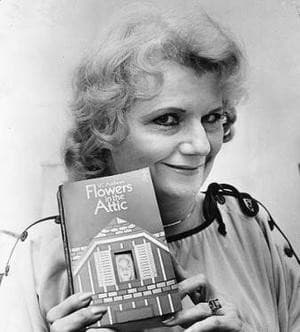
V.C. Andrews was an American author known for her gothic and family saga novels. She gained popularity with works such as "Flowers in the Attic," "Petals on the Wind," "If There Be Thorns," "Seeds of Yesterday," "Garden of Shadows," and "My Sweet Audrina," which often explore themes of betrayal, family secrets, and psychological drama. Her writing has captivated readers since the late 20th century.
Similar books
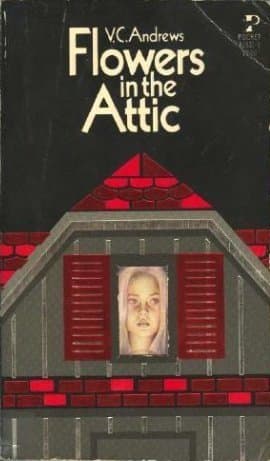
- Flowers in the Attic
V.C. Andrews
3.8 (161k) average on GoodreadsThrillerDirect prequel, sharing characters, themes, and tone.
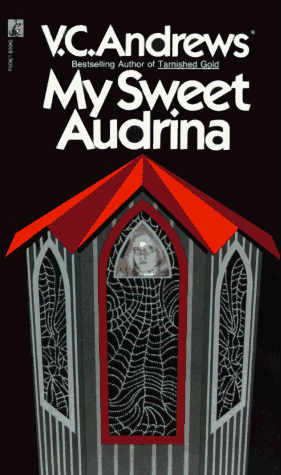
- My Sweet Audrina
V.C. Andrews
3.9 (24k) average on GoodreadsThrillerFeatures a traumatized protagonist, family secrets, and a gothic atmosphere.
- Rebecca
Daphne du Maurier
4.2 (450k) average on GoodreadsThrillerGothic atmosphere, psychological drama, and a sense of haunting past.
- Flowers for Algernon
Daniel Keyes
4.1 (478k) average on GoodreadsPsychologyWhile both 'Petals on the Wind' and 'Flowers for Algernon' explore themes of vulnerability and tragic deterioration, Keyes's novel offers a more profound and psychologically nuanced examination of intelligence, identity, and the human condition through a singular, empathetic protagonist, Charlie Gordon. Andrews's work, in contrast, prioritizes sensational drama and the complexities of intergenerational trauma over deep character introspection, often sacrificing realism for heightened emotional impact.
- Wuthering Heights
Emily Brontë
3.9 (1.3M) average on GoodreadsHistorical Fiction'Petals on the Wind' shares with 'Wuthering Heights' a focus on intense, destructive, and often forbidden love, and the generational impact of past wrongs. However, Brontë's novel achieves its dark romanticism and tragic scope through rich literary prose, complex character motivations, and a more subtle exploration of social constraints and psychological torment. Andrews's style is far more direct and relies heavily on explicit sensationalism and melodramatic plot twists to convey its themes, lacking the literary depth and ambiguity of Brontë's classic.
- Angels & Demons
Dan Brown
3.9 (2.7M) average on GoodreadsThrillerA Harvard symbologist races through Rome's ancient sites, deciphering cryptic clues to unmask the Illuminati and stop a vengeful plot to destroy the Vatican with a stolen antimatter weapon.




Enjoyed the summary?
A summary gives you the shape of the book. The book itself has the detail, the examples and the voice.
Find Petals on the Wind on AmazonAs an Amazon Associate, BookBrief earns from qualifying purchases. How we're funded