
Synopsis
Covers the whole plot, including the ending.
- Difficulty
- Medium
- Pacing
- Moderate
- Mood
- Introspective, Political, Romantic, Social Commentary
- Read it if
- You enjoy detailed Victorian political dramas, character-driven narratives about ambition and integrity, or the Palliser series.
- Skip it if
- You prefer fast-paced plots, modern political thrillers, or find extensive parliamentary discussions tedious.
Phineas Finn Plot Summary
Covers the whole plot, including the ending.
A Young Man's Ambition
Phineas Finn, a young Irishman from County Clare, arrives in London with money from his father, Dr. Finn, wanting to join Parliament. His family initially worries about the cost, but his father encourages him. Phineas has passed the Bar but does not plan to practice law. He quickly gets involved in politics, making connections and learning about Parliament, hoping to find a way to a seat. His charm and intelligence help him fit into social circles, which is important for someone without established connections or wealth.
A Seat in Parliament
Phineas's chances seem low until he is offered a seat for Loughshane in Ireland, a borough controlled by Lord Brentford, a Liberal peer. This chance comes after the sudden death of the current MP. With Lord Brentford's backing and help from his Irish friend, Laurence Fitzgibbon, Phineas wins the election for the House of Commons. This quick rise to Parliament is mostly due to patronage, a common practice then, and starts his active political life in the Liberal party.
Early Political Manoeuvres and Romantic Entanglements
As a new MP, Phineas soon finds himself divided between his beliefs and party loyalty. He gains notice by speaking about Irish tenant rights, earning both praise and criticism. At the same time, his personality attracts several women. He becomes close friends with Lady Laura Standish, Lord Brentford's smart daughter. He also falls for Violet Effingham, a wealthy heiress engaged to his friend, Lord Chiltern. These early relationships set up much of the novel's romantic plot.
The Irish Question and Ministerial Office
Phineas continues to support Irish tenant rights, often disagreeing with his party's more conservative members. His independent stand earns him respect from some, but also makes him a difficult subordinate. Still, his abilities are recognized, and Mr. Monk, a respected Liberal statesman, offers him a junior role as a Lord of the Treasury. This appointment is a big step in his political career, bringing him closer to government and increasing his social standing, though it also brings new pressures about party discipline.
Love and Loyalty
Lady Laura Standish, seeing Phineas's potential, asks him to marry her. Phineas, despite his strong affection for Laura, realizes he does not love her enough and declines. Laura then marries the wealthy but cold Robert Kennedy, an older Scottish MP. Phineas, meanwhile, keeps pursuing Violet Effingham, even after she breaks off her engagement to Lord Chiltern. His attempts to win Violet are complicated by Chiltern's lasting love for her and Phineas's own feelings for Laura.
Challenges to Principle
As a minister, Phineas faces increasing challenges. He is pressured to vote against measures he believes in, especially those about Irish land reform, for party unity. He struggles with the compromises of political life, often talking to his mentor, Mr. Monk. His honesty and ideals are both his strength and weakness, making him a target for political maneuvering. He also faces money problems, as his minister's salary is barely enough for his London life and to support his family in Ireland.
A Duel and a Decision
Lord Chiltern, still in love with Violet Effingham and angry about Phineas's pursuit of her, challenges Phineas to a duel. The duel happens in Belgium, and though neither is badly hurt, the event causes a scandal and further complicates Phineas's life. After this confrontation, Violet finally accepts Lord Chiltern's proposal, recognizing his steady devotion. This frees Phineas from his romantic involvement with Violet, allowing him to focus more on his political career, though with sadness.
Resignation and Disillusionment
The Liberal government introduces a reform bill, but Phineas cannot support a clause about Irish tenant rights, which he feels is not enough. Despite strong pressure from his party and the Prime Minister, Mr. Daubeny, Phineas votes against the government. This act of conscience leads to his resignation from his government role. While some praise his integrity, his resignation effectively ends his immediate chances for advancement in the party, leaving him unhappy with the realities of parliamentary politics.
The Irish Farewell
After resigning, Phineas is at a crossroads. He sacrificed his political career for his beliefs, but without a clear path forward. He decides to return to Ireland, to his family home in County Clare, to think about his options. His father, Dr. Finn, and his sister, Mary, welcome him, though they worry about his future. During this time, he thinks about his time in London, his successes and failures, and his personal sacrifices. He finds comfort in familiar surroundings but also feels the pain of his political exile.
A New Chapter with Mary Flood Jones
While in Ireland, Phineas meets Mary Flood Jones again, a childhood friend and daughter of a local clergyman, whom he always respected. Mary has quietly loved Phineas for years. After the intense world of London politics and high society, Phineas starts to see Mary differently, valuing her steadiness, kindness, and true affection. He realizes a stable life with true companionship might be more fulfilling than constantly seeking political fame. He proposes to Mary, and she happily accepts, marking a big change in his personal life.
The Promise of Return
Even after deciding to marry Mary and live in Ireland, Phineas cannot entirely let go of his political ambitions. His mentor, Mr. Monk, and other political friends suggest that his principled stand, though costly now, has earned him respect and that a return to Parliament is possible later. Phineas starts to consider how he might re-enter politics, perhaps with a clearer understanding of the compromises involved, but also with a stronger sense of his own beliefs and his new wife's support. The novel ends implying that Phineas Finn's political journey is not over.
Phineas Finn Characters
Phineas Finn
Protagonist
An ambitious and principled Irish politician.
Phineas Finn is a charming, intelligent, and handsome young Irishman from County Clare, driven by a strong desire for a political career in London. He possesses a keen sense of justice and a natural idealism, particularly regarding Irish tenant rights. While ambitious, he struggles with the compromises inherent in political life, often prioritizing his principles over party loyalty or personal gain. He is prone to romantic entanglements, often finding himself torn between various women and their social standings. His relative lack of wealth makes him reliant on patronage and his own social graces.
Relationships: Dr. Finn (supportive father); Lady Laura Standish Kennedy (close friend, unrequited love interest); Violet Effingham (primary love interest, ultimately rejected); Lord Chiltern (friend, rival in love); Mr. Monk (political mentor); Mary Flood Jones (childhood friend, eventual wife)
Lady Laura Standish Kennedy
Supporting
A intelligent and politically astute woman who marries for wealth.
Lady Laura is the strong-willed, intelligent, and politically aware daughter of Lord Brentford. She is deeply interested in politics and forms a close bond with Phineas, recognizing his potential. Despite her feelings for Phineas, she marries the wealthy but unlikable Robert Kennedy for financial security, believing Phineas cannot offer her the necessary means to pursue her political interests. Her marriage becomes a source of great unhappiness, highlighting the societal pressures on women of her class.
Relationships: Phineas Finn (close friend, unrequited love interest); Robert Kennedy (her husband, a cold and controlling man); Lord Brentford (her father); Lord Chiltern (her brother, friend to Phineas)
Violet Effingham
Supporting
A beautiful, wealthy, and independent heiress.
Violet Effingham is a beautiful, wealthy, and spirited heiress. She is highly sought after for her fortune and charm, but she is also independent and discerning in her choice of a partner. She initially rejects Lord Chiltern due to his wild nature, but her affections are swayed by Phineas. Ultimately, she realizes her true feelings for Chiltern and accepts his persistent proposals, valuing his unwavering devotion and reformed character over Phineas's more fleeting attentions. She represents an ideal of English womanhood, combining beauty, wit, and a strong sense of self.
Relationships: Phineas Finn (love interest); Lord Chiltern (her persistent suitor, eventual husband); Lady Laura Standish Kennedy (close friend)
Lord Chiltern
Supporting
A hot-headed but ultimately devoted nobleman.
Lord Chiltern, the son of Lord Brentford and brother to Lady Laura, is initially portrayed as a wild, impulsive, and somewhat reckless young nobleman. He is deeply in love with Violet Effingham, enduring multiple rejections before finally winning her hand. His friendship with Phineas Finn is tested by their rivalry for Violet's affection, culminating in a duel. Despite his flaws, Chiltern possesses a strong sense of honor and loyalty, and he ultimately reforms his character for the woman he loves. He represents the English aristocracy, with its privileges and its occasional excesses.
Relationships: Violet Effingham (love interest, eventual wife); Phineas Finn (friend, rival); Lady Laura Standish Kennedy (sister); Lord Brentford (father)
Mr. Monk
Supporting
Phineas's wise political mentor.
Mr. Monk is a highly respected and experienced Liberal statesman who serves as Phineas Finn's political mentor and confidant. He is a man of integrity and principle, known for his eloquent speeches and his commitment to reform. He guides Phineas through the complexities of parliamentary life, offering advice and support, even when Phineas's independent actions conflict with party lines. Monk embodies the ideal of a principled politician, capable of both pragmatism and idealism, and he represents a moral compass for Phineas in the often-opportunistic world of Westminster.
Relationships: Phineas Finn (mentor and friend)
Robert Kennedy
Antagonist
A wealthy, cold, and controlling Scottish MP.
Robert Kennedy is a wealthy Scottish Member of Parliament who marries Lady Laura Standish. He is portrayed as cold, rigid, and deeply religious in a severe, joyless manner. His possessive and controlling nature makes Laura's life miserable, and he is incapable of understanding or appreciating her intelligence and spirit. He represents the oppressive aspects of a marriage based on convenience rather than affection, and his character highlights the social constraints placed upon women in the Victorian era.
Relationships: Lady Laura Standish Kennedy (his wife, whom he mistreats)
Dr. Finn
Supporting
Phineas's supportive and practical father.
Dr. Finn is Phineas's father, a respected physician in County Clare, Ireland. While initially apprehensive about Phineas's ambition for a political career due to its financial uncertainties, he ultimately supports his son's dreams. He provides Phineas with a modest allowance and offers practical advice, representing the grounding influence of family and the realities of financial responsibility. He is a loving and concerned parent, always ready to welcome Phineas home.
Relationships: Phineas Finn (father and son)
Mary Flood Jones
Supporting
A kind and steadfast childhood friend who becomes Phineas's wife.
Mary Flood Jones is a childhood friend of Phineas from County Clare, the daughter of a local clergyman. She is portrayed as kind, gentle, and quietly devoted to Phineas, having loved him for many years. She represents a simpler, more stable life away from the complexities and temptations of London society. After Phineas's political disillusionment and romantic failures, he eventually realizes her true worth and proposes marriage, finding comfort and genuine affection in her steadfast character.
Relationships: Phineas Finn (childhood friend, eventual wife)
Phineas Finn Themes
Idealism vs. Political Pragmatism
A main theme is the conflict between Phineas Finn's ideals and the practical, often compromising, nature of politics. Phineas struggles to align his beliefs, especially on Irish tenant rights, with party loyalty and his government role. His resignation over a reform bill clause (Plot Summary, Section 8) shows his inability to compromise his convictions, illustrating the novel's question of whether one can keep integrity while pursuing a political career. Mr. Monk often shows how one can be both principled and effective within the system.
“A man's conscience is a very troublesome thing, and if he lets it get the upper hand of him, he is very apt to find himself in a minority.”
Love, Marriage, and Social Standing
The novel explores how love, marriage, and social ambition connect, especially for Victorian men and women. Phineas's romantic choices are often influenced by potential social and financial gains, as seen in his pursuit of the wealthy Violet Effingham. Lady Laura Standish's marriage to Robert Kennedy, driven by a need for money despite her love for Phineas, leads to deep unhappiness (Plot Summary, Section 5). Phineas's eventual marriage to Mary Flood Jones, a woman of lower social standing but true affection, questions marriages based only on status, highlighting the importance of real companionship.
“A man must be either a god or a beast who can stand alone in the world and own no wants.”
Patronage and Political Access
Trollope shows the system of political patronage in 19th-century Britain, where access to Parliament and government roles often depended on connections, not just merit. Phineas's entry into Parliament through Lord Brentford's 'pocket borough' of Loughshane (Plot Summary, Section 2) is an example. His later rise, while partly due to his abilities, is greatly helped by figures like Mr. Monk and his social connections. The novel implicitly questions the fairness of this system, even while showing its reality.
“He knew that he was there, in Parliament, not by his own merits, but by the nomination of a peer.”
The Irish Question
The novel's political background focuses on 'The Irish Question,' specifically tenant rights and Ireland's relationship with the British Parliament. Phineas Finn, as an Irish MP, often supports his countrymen, which often puts him at odds with the Liberal party (Plot Summary, Section 4). His principled stand on Irish land reform eventually leads to his resignation (Plot Summary, Section 8). This theme shows Trollope's interest in current political issues and offers a critical view of how Irish concerns were often handled in British politics.
“He thought that no country could be well governed unless the people of that country were contented.”
Plot Devices & Literary Techniques
The Political Salon
Social gatherings as crucial spaces for political and personal networking.
The novel frequently uses political salons, dinner parties, and social gatherings as key plot devices. These environments, often hosted by influential women like Lady Laura Standish or Madame Max Goesler, are where Phineas makes crucial connections, gathers information, and advances both his political and romantic interests. They serve as informal arenas for political maneuvering, gossip, and the formation of alliances, illustrating how much of Victorian politics happened outside the official chambers of Parliament. These scenes allow for the development of character relationships and the subtle shifting of political loyalties.
The Love Triangle (or Quadrangle)
Complex romantic rivalries driving personal and social conflict.
The intricate web of romantic relationships, particularly the dynamic between Phineas, Lady Laura, Violet Effingham, and Lord Chiltern, serves as a primary driver of the non-political plot. These romantic entanglements create personal drama, test friendships, and reflect the societal pressures surrounding marriage and status. The rivalries, culminating in a duel (Plot Summary, Section 7), highlight the emotional stakes for the characters and often parallel the political maneuvering Phineas experiences, showing how his personal life is as complicated and demanding as his public one.
The Moral Dilemma
Characters facing choices between personal integrity and external pressures.
Throughout the novel, characters, especially Phineas, are repeatedly presented with moral dilemmas where they must choose between their deeply held principles and the pragmatic demands of their situation. Phineas's decision to resign his ministerial post over the Irish tenant-right clause (Plot Summary, Section 8) is the most prominent example. These dilemmas underscore the novel's central theme of idealism versus pragmatism, forcing characters to confront the cost of integrity in a world often driven by self-interest and political expediency. They serve to define character and drive the plot towards moments of significant personal sacrifice.
Phineas Finn Quotes
“Of all the needs of a statesman in a free country, the chief need is courage.”
“A man must be a Tory, or a Whig, or a Radical, or a Liberal, or a Liberal-Conservative, or a Conservative-Liberal, or a Conservative-Radical, or a Radical-Conservative.”
“It is a grand thing to be in Parliament. It is a grand thing to make speeches. It is a grand thing to have your name in the papers. It is a grand thing to have your voice heard.”
“What is the good of a principle, if you are not to be allowed to carry it out?”
“It is not by speeches that things are done, but by votes.”
“There are some men who are always striving to make the world better, and who, in their efforts, make it worse.”
“A man who wants to get on in the world should marry a woman with money.”
“The greatest pleasure in life is to do what people say you cannot do.”
“It is so hard for a man to be honest when he is poor.”
“The House of Commons is a good school, but it is a dear one.”
“A man's private life has very little to do with his public character.”
“It is a great thing to be a gentleman, but it is a greater thing to be a man.”
“The highest ambition of a young man is to get into Parliament, and the next highest is to get out of it.”
“There is no knowing what a man may be made to do, if he is only sufficiently pressed by circumstances.”
Quiz
10 questions on the plot and the characters. Each answer comes with a short explanation.
Question 1
Which political party does Phineas Finn initially join when he enters Parliament?
- The Conservatives
- The Liberals (Whigs)
- The Radicals
- The Irish Nationalists
Show answer
B. The Liberals (Whigs) Phineas Finn, coming from Ireland but seeking to make his way in English politics, aligns himself with the Liberal party, often referred to as Whigs in the novel, which is in power at the beginning of his career.
Question 2
What is the name of the wealthy and influential Duchess who takes a particular interest in Phineas's political career and personal life?
- Lady Glencora Palliser
- Lady Laura Kennedy
- Violet Effingham
- Madame Max Goesler
Show answer
A. Lady Glencora Palliser Lady Glencora Palliser, wife of Plantagenet Palliser, is a key figure in Phineas's social and political ascent, often offering advice and support, and is known for her wit and influence.
Question 3
What position does Phineas Finn first obtain in the government?
- Secretary of State for the Colonies
- A Lord of the Treasury
- Chancellor of the Exchequer
- Under-Secretary for Foreign Affairs
Show answer
B. A Lord of the Treasury Phineas's initial government appointment is as a Lord of the Treasury, a junior but significant position that marks his entry into the ministerial ranks.
Question 4
Which character does Phineas Finn duel with over a matter of honor related to Violet Effingham?
- Mr. Kennedy
- Lord Chiltern
- Lord Fawn
- Mr. Quintus Slide
Show answer
D. Mr. Quintus Slide Phineas Finn fights a duel with Mr. Quintus Slide, a newspaper editor, after Slide publishes a scandalous and untrue article about Violet Effingham, whom Phineas admires.
Question 5
What is the primary dilemma Phineas faces regarding his political principles throughout the novel?
- Whether to support Irish Home Rule or maintain the Union
- Whether to prioritize personal gain and ambition over his convictions
- Whether to align with the extreme radicals or the moderate liberals
- Whether to accept a peerage or remain in the House of Commons
Show answer
B. Whether to prioritize personal gain and ambition over his convictions A central theme of the novel is Phineas's struggle to reconcile his ambition for political advancement with his genuine liberal principles, often finding himself in situations where compromise is necessary but difficult.
Question 6
Who is Phineas Finn's first love interest and eventually his wife from his home country, Ireland?
- Lady Laura Standish
- Mary Flood Jones
- Violet Effingham
- Madame Max Goesler
Show answer
B. Mary Flood Jones Mary Flood Jones is Phineas's childhood sweetheart from Killaloe, Ireland, and despite his various entanglements in London, she remains a constant in his affections and eventually becomes his wife.
Question 7
Why does Phineas Finn ultimately resign from his position as a Lord of the Treasury?
- He is offered a higher position in the opposition party.
- He disagrees with the government's policy on Irish tenant rights.
- He is involved in a scandal that forces his resignation.
- He decides to leave politics and return to Ireland permanently.
Show answer
B. He disagrees with the government's policy on Irish tenant rights. Phineas resigns from his government post because he cannot in good conscience support a government measure concerning Irish tenant rights, choosing to prioritize his principles over his career advancement.
Question 8
Which character marries Mr. Kennedy, much to Phineas's initial disappointment, and later experiences a tragic and isolated life?
- Violet Effingham
- Madame Max Goesler
- Lady Laura Standish
- Marie Goesler
Show answer
C. Lady Laura Standish Lady Laura Standish, whom Phineas admired and considered proposing to, marries the wealthy and austere Mr. Kennedy, a decision she comes to regret deeply as her life with him becomes increasingly unhappy.
Question 9
What is the ultimate fate of Phineas Finn's political career by the end of the novel 'Phineas Finn'?
- He becomes Prime Minister of England.
- He is permanently disgraced and leaves politics entirely.
- He returns to Ireland, marries Mary Flood Jones, and briefly serves in Parliament before retiring.
- He accepts a peerage and moves to the House of Lords.
Show answer
C. He returns to Ireland, marries Mary Flood Jones, and briefly serves in Parliament before retiring. By the end of 'Phineas Finn' (before 'Phineas Redux'), Phineas has resigned from government, married Mary Flood Jones, and returned to Ireland, seemingly ending his English political career, though he does consider standing for an Irish seat.
Question 10
The novel explores the theme of 'gentlemanly conduct' in politics. What specific aspect of this theme is highlighted through Phineas's interactions and decisions?
- The necessity of inherited wealth for political success.
- The conflict between personal integrity and the demands of party loyalty.
- The importance of oratorical skill above all else in Parliament.
- The strict social hierarchy that prevents commoners from rising.
Show answer
B. The conflict between personal integrity and the demands of party loyalty. Phineas frequently grapples with the tension between maintaining his personal integrity and adhering to the often compromising demands of party loyalty and political advancement, a key aspect of 'gentlemanly conduct' in the Victorian political sphere.
Phineas Finn FAQ
What is the central conflict Phineas Finn faces throughout the novel?
Phineas Finn's central conflict revolves around balancing his ambition for political advancement and social standing with his inherent moral principles and desire to do good. He is constantly tempted by patronage and the allure of compromise, particularly when it comes to his relationships and parliamentary votes, forcing him to choose between expediency and integrity.
Who are the primary romantic interests for Phineas Finn, and how do they represent different paths for him?
Phineas has several significant romantic interests: Lady Laura Kennedy (née Standish), who offers social elevation and political connections; Madame Max Goesler, who represents wealth, independence, and a more unconventional path; and Mary Flood Jones, his childhood sweetheart, who embodies simplicity, genuine affection, and a return to his Irish roots. Each woman symbolizes a different potential future and set of values for Phineas.
How does the novel portray the role of women in 19th-century British politics and society?
The novel vividly demonstrates how women, despite lacking direct voting rights, wield significant indirect influence through their social connections, salons, and personal relationships with powerful men. Lady Laura Kennedy and Madame Max Goesler, in particular, are portrayed as astute political observers and manipulators, capable of advancing or hindering a man's career, often through their wealth and social standing.
What is the significance of Phineas Finn's Irish background to his political career in Westminster?
Phineas's Irish background both aids and complicates his political journey. It provides him with a unique perspective and a constituency to represent, but it also marks him as an outsider in the predominantly English Parliament. His commitment to Irish issues, such as tenant-right, often puts him at odds with his party's establishment and necessitates careful navigation of Anglo-Irish relations.
What is the 'Palliser' connection, and how does it manifest in 'Phineas Finn'?
'Phineas Finn' is the second novel in Trollope's 'Palliser' series, which chronicles the lives and political careers of Plantagenet Palliser, the Duke of Omnium, and his wife, Lady Glencora. They appear as key secondary characters, representing the highest echelons of British aristocracy and government, and their political maneuvers and personal struggles often intersect with Phineas's own ambitions and dilemmas.
What subtle hints does Trollope give about Phineas's true feelings for Mary Flood Jones even when he is pursuing other women?
Trollope subtly indicates Phineas's enduring affection for Mary through his frequent thoughts of her as a symbol of home and uncomplicated happiness. Despite his ambitious pursuits of Lady Laura and Madame Max, he often contrasts their sophisticated worlds with the simple, honest comfort Mary represents, suggesting she is his emotional anchor and ultimate ideal of domesticity.
How does Mr. Kennedy's character foreshadow the darker aspects of Victorian societal expectations and marital pressures?
Mr. Kennedy's rigid, controlling nature and eventual descent into madness subtly highlight the oppressive aspects of Victorian marriage, especially for women like Lady Laura. His wealth and social standing initially appear desirable, but his profound lack of emotional warmth and his severe moral code ultimately stifle Laura, foreshadowing the devastating consequences of marrying for status over affection.
Are there any allusions to real-life political figures or events in Phineas Finn's parliamentary experiences?
While Trollope generally avoided direct caricatures, the political landscape and debates in 'Phineas Finn' reflect the real-life parliamentary struggles of the mid-19th century, including discussions on tenant-right (Irish land reform) and the complexities of party loyalty and coalition governments. Phineas's own journey from an earnest backbencher to a prominent figure echoes the careers of many ambitious young politicians of the era.
What is the underlying commentary on the nature of political friendship and loyalty in the novel?
The novel explores the transactional nature of political friendships, where loyalty is often conditional on shared interests or potential gain. Phineas experiences both genuine camaraderie (e.g., with Lord Chiltern) and more cynical alliances, revealing how personal affections can be strained or exploited within the competitive and often morally ambiguous world of Westminster politics, where principles sometimes yield to party lines.
Analyze Phineas Finn's 'imposter syndrome' or feelings of inadequacy despite his successes.
Phineas often grapples with a sense of being an outsider or an 'imposter,' particularly in the grand social and political circles of London. Despite his charm and intelligence, his relatively humble Irish background and lack of inherited wealth make him feel perpetually on trial, leading to moments of self-doubt and an acute awareness of the precariousness of his position, even as he achieves significant milestones.
How does Lady Laura Kennedy's decision to marry Mr. Kennedy reflect a common psychological trap for ambitious Victorian women?
Lady Laura's marriage to Mr. Kennedy, driven by a desire for political influence and financial independence from her father, exemplifies a common psychological trap for ambitious Victorian women. She sacrifices personal happiness and emotional fulfillment for perceived power and security, only to find herself trapped in an emotionally desolate and ultimately destructive relationship, highlighting the limited avenues for female agency at the time.
Discuss the psychological impact of Phineas's constant oscillation between his principles and his ambition.
Phineas's constant oscillation creates significant internal psychological strain, leading to moments of self-reproach and moral conflict. This internal struggle manifests as anxiety and indecision, as he tries to reconcile his desire for advancement with his conscience, often resulting in temporary compromises that leave him feeling unfulfilled or guilty. His journey is one of continuous self-assessment and moral navigation.
How does Madame Max Goesler's character challenge the traditional Victorian expectations of female behavior and independence?
Madame Max Goesler is a formidable character who defies Victorian norms through her financial independence, sharp intellect, and social assertiveness. As a wealthy widow, she operates outside traditional marital dependency, confidently engaging in political discussions and social maneuvering without a male guardian. Her self-possession and directness challenge the period's expectations of female demureness and subservience.
Is Phineas Finn ultimately a successful politician, or does his idealism prevent him from reaching true greatness?
This is debatable. Phineas achieves considerable success for a man of his background, becoming a Lord of the Admiralty and making a name for himself. However, his idealism and reluctance to completely compromise his principles may prevent him from reaching the very highest echelons of power, which often demand a more ruthless pragmatism. His 'success' is perhaps measured more in his integrity than in sheer political might.
Does the novel suggest that true happiness lies in ambition and public life, or in domestic contentment?
The novel strongly suggests that true happiness for Phineas ultimately lies in domestic contentment and a return to simpler values, as evidenced by his eventual marriage to Mary Flood Jones. While ambition offers excitement and status, it is often fraught with moral compromises and emotional instability. The narrative subtly champions the virtues of a stable home life and genuine affection over the ephemeral triumphs of public life.
How does Trollope use Phineas's journey to comment on the nature of 'progress' in 19th-century British society?
Trollope uses Phineas's journey to explore the complexities of 'progress' by showing how advancements in political representation and social mobility are often accompanied by moral ambiguities and personal sacrifices. While Phineas rises from humble beginnings, the novel questions whether this 'progress' truly leads to a more just or happier society, highlighting the enduring human struggles within a changing world.
What is the novel's stance on the importance of inherited wealth and social standing versus merit and hard work in achieving success?
The novel presents a nuanced view. While it acknowledges that inherited wealth and social standing provide significant advantages (e.g., the Pallisers, Lord Chiltern), it also demonstrates that merit and hard work, combined with charm and connections, can lead to considerable success, as seen with Phineas Finn. However, it also suggests that those without inherited advantages face a much harder, more precarious path.
Why does Phineas Finn ultimately choose Mary Flood Jones over Madame Max Goesler, despite Madame Max's wealth and influence?
Phineas chooses Mary because she represents genuine, uncomplicated love, stability, and a connection to his authentic self and Irish roots. While Madame Max offers wealth, intellectual companionship, and continued access to high society, Phineas recognizes that Mary provides the emotional security and domestic happiness he truly craves, allowing him to escape the constant moral and social pressures of London life.
About the author
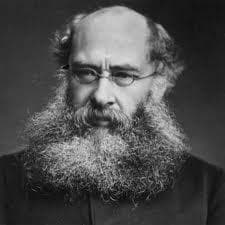
Anthony Trollope was an English novelist and civil servant of the Victorian era. Among his best-known works is a series of novels collectively known as the Chronicles of Barsetshire, which revolves around the imaginary county of Barsetshire. He also wrote novels on political, social, and gender issues, and other topical matters.
Similar books
- Barchester Towers
Anthony Trollope
4.0 (14k) average on GoodreadsHistorical FictionExplores social and institutional politics with deep character studies, typical of Trollope's style.
- Middlemarch
George Eliot
4.0 (136k) average on GoodreadsHistorical FictionExamines ambition, social structures, and moral dilemmas in a Victorian setting with a large cast of characters.
- Vanity Fair
William Makepeace Thackeray
3.8 (118k) average on GoodreadsHistorical FictionA sprawling social satire of 19th-century English society, focusing on ambition and moral compromise.
- Daniel Deronda
George Eliot
3.8 (23k) average on GoodreadsHistorical FictionGeorge Eliot's Daniel Deronda (1876) explores political and social themes, particularly concerning Jewish identity and national aspirations, with a profound psychological depth and philosophical complexity that sets it apart. While Phineas Finn provides an excellent external view of political maneuvering and social interaction, Eliot delves much deeper into the internal lives, moral struggles, and intellectual debates of her characters. Eliot's narrative often grapples with larger questions of purpose and identity, whereas Trollope, while addressing moral dilemmas, tends to focus more on the practicalities and social consequences of political decisions. Literary critic F.R. Leavis, in his work on the great tradition, often contrasted Eliot's 'moral intensity' with what he perceived as Trollope's more 'surface-level' realism.
- 1984
George Orwell
4.2 (3.1M) average on GoodreadsPoliticsIn a future where surveillance and thought control are absolute, a man's search for truth clashes with the Party, showing that hope can be a form of rebellion.
- Animal Farm
George Orwell
4.0 (2.7M) average on GoodreadsPoliticsA farm animals' rebellion against humans turns into a pig-led dictatorship, showing how power corrupts and revolutionary ideals are betrayed.




Enjoyed the summary?
A summary gives you the shape of the book. The book itself has the detail, the examples and the voice.
Find Phineas Finn on AmazonAs an Amazon Associate, BookBrief earns from qualifying purchases. How we're funded