

Synopsis
Covers the whole plot, including the ending.
- Difficulty
- Medium
- Pacing
- Fast
- Mood
- Dark, Satirical, Suspenseful, Provocative
- Read it if
- You enjoy dark satire, thrillers that explore the ethics of media violence, and character-driven mysteries with a cynical edge. Perfect for those who like their social commentary sharp and unflinching.
- Skip it if
- You are sensitive to graphic violence, prefer lighthearted reads, or dislike stories that heavily critique pop culture and media.
Popcorn Plot Summary
Covers the whole plot, including the ending.
Hollywood's Golden Boy and a Violent Premiere
Bruce Delamitri, a successful but morally ambiguous Hollywood director, prepares for his latest film's premiere, 'Ordinary Americans', a violent movie about a couple on a killing spree. Critics say his work glorifies violence and desensitizes audiences, but Bruce argues his art reflects society, it does not cause violence. He gets an Oscar nomination, which further fuels the debate around his work. His personal life is a mess: his wife, Farrah, is tired of his self-absorption, and his relationships are superficial, based on his celebrity. Bruce thinks he is an intellectual provocateur, unaware of his cinematic creations' real-world impact.
The Arrival of Wayne and Scout
Bruce does not know that the 'Mall Murderers', Wayne and Scout, a young, Bonnie and Clyde-like couple responsible for a series of seemingly motiveless killings across the country, are heading to Los Angeles. They are obsessed with Bruce Delamitri and his films, especially 'Ordinary Americans', which they see as a guide for their actions. Wayne, the charismatic and manipulative leader, believes Bruce's movies provide a philosophical reason for their violence. He argues that society is corrupt and their actions are a form of artistic expression, similar to Bruce's own defenses. Scout, though more hesitant, is under Wayne's influence, caught between her love for him and her growing unease with their increasing brutality.
The Oscar Party Invasion
On the night of the Academy Awards, where Bruce Delamitri is nominated, Wayne and Scout violently invade his lavish Hollywood mansion party. They burst in, heavily armed, taking Bruce, his estranged wife Farrah, his producer Karl, and his mistress Brooke, along with other guests, hostage. The couple wants to confront Bruce directly, to make him acknowledge his responsibility for their actions, and to make him live out the 'art' he creates. They see this as the ultimate performance art, a real-life re-enactment of his cinematic violence, complete with a live television broadcast they plan to arrange.
The Media Frenzy Begins
When news of the hostage situation breaks, the media gathers at Bruce's mansion, turning the crisis into a national spectacle. Wayne, enjoying the attention, demands live television coverage, which authorities, under pressure, provide. He uses the broadcast to explain his twisted philosophy, claiming Bruce's films inspired him and that his violence extends Bruce's art. The lines between reality and entertainment blur as millions watch, captivated by the drama. Bruce, initially terrified, slowly sees an opportunity for self-promotion, even as his life is in danger. This shows his narcissism and detachment.
Bruce's Confrontation with Reality
Trapped and scared, Bruce Delamitri faces a direct, difficult confrontation with Wayne. Wayne carefully explains how Bruce's films, especially 'Ordinary Americans', gave him the inspiration and reason for his killing spree. He quotes lines and references scenes, showing a deep, disturbing understanding of Bruce's work, which he has twisted into a personal statement. Bruce, who has always intellectually separated himself from his films' real-world impact, now faces undeniable, bloody proof of their influence. He tries to argue his artistic intention, but Wayne's chilling logic, which mirrors Bruce's own past defenses, leaves him shaken. This forces him to question his beliefs about art and responsibility.
The Hostages' Desperation and Manipulation
Inside the mansion, the other hostages, including Farrah, Karl, and Brooke, deal with their fear and try to survive. Farrah, initially angry with Bruce, finds common ground with him in their shared terror. Karl, the practical producer, tries to negotiate and even flatter Wayne, seeing the situation as a twisted business opportunity. Brooke, Bruce's superficial mistress, mostly cares about her own safety and appearance. The crisis shows the superficiality and self-interest of Hollywood's elite, as they struggle to understand the raw, unscripted violence they experience, a contrast to the stylized brutality of Bruce's films.
Scout's Growing Doubts
As the hostage situation continues, Scout, Wayne's girlfriend, starts to show signs of breaking down. She initially followed Wayne out of love and a shared sense of nihilism, but the prolonged, intense pressure of the live broadcast and the direct confrontation with Bruce begins to weaken her resolve. She sees Wayne's increasingly erratic and cruel behavior, and the genuine terror of the hostages. This contrasts with the detached violence of the movies. Her conscience stirs, and she questions the morality of their actions and Wayne's twisted reasons, suggesting she might break from his control and desire redemption, however faint.
Bruce's Twisted 'Redemption' Arc
In a perverse twist, Bruce Delamitri, despite being a hostage, starts to see the crisis as a possible plot for his next film, or even a live performance he can 'direct.' He subtly manipulates the narrative for the cameras, trying to portray himself as a victim, a hero, or a misunderstood artist. He engages Wayne in philosophical debates, not out of genuine thought, but to control public perception of the event and himself. This shows his deep narcissism; he struggles to understand the real-world effects of violence, always seeing it through the lens of cinematic storytelling and personal gain, even when facing death.
The Climax and Confrontation
The tension inside the mansion reaches a breaking point. As authorities prepare for a possible raid, Wayne's behavior becomes more unpredictable and violent. Scout, increasingly horrified by Wayne's actions and her own involvement, makes a desperate move. A struggle happens, leading to a chaotic and bloody confrontation. Guns are fired, and the hostages' lives are in extreme danger. Bruce, pushed to his limit, acts not as a director, but as a man fighting for survival, dropping his detached artistic persona when facing death. The lines between art and life completely disappear in real violence.
The Aftermath and Public Reaction
The hostage crisis ends in a violent resolution, with Wayne and Scout either dead or caught. Bruce Delamitri, though shaken, survives. Immediately after, he is praised as a survivor, even a hero, by a public still captivated by the televised drama. However, the experience has changed him. The debate over art and violence intensifies, with the media and public dealing with the implications of the 'Mall Murderers' being inspired by a film director. Bruce must confront the real impact of his artistic choices and the devastating consequences they can have, forced to finally acknowledge the blurred, dangerous line between his cinematic fantasies and brutal reality.
Popcorn Characters
Bruce Delamitri
Protagonist
Narcissistic Hollywood director grappling with the consequences of his violent films.
Bruce is a highly successful, Oscar-nominated film director known for his hyper-violent movies. He is deeply narcissistic, self-absorbed, and intellectually arrogant, believing his films are profound social commentary rather than mere entertainment or incitement. He is detached from reality, seeing life through the lens of cinematic narrative. His personal relationships are superficial, and he struggles with intimacy. Throughout the hostage crisis, he initially attempts to maintain his artistic detachment, even seeing the situation as a potential film plot, before being brutally forced to confront the real-world consequences of his art and his own moral culpability.
Relationships: Farrah (Estranged wife); Brooke (Mistress); Wayne (His captor and 'disciple'); Scout (Wayne's accomplice and captor)
Wayne
Antagonist
Charismatic, nihilistic leader of the 'Mall Murderers', obsessed with Bruce's films.
Wayne is a young, charismatic, and deeply disturbed serial killer who, along with his girlfriend Scout, is responsible for a string of brutal murders. He is highly intelligent but nihilistic, believing that society is corrupt and that his violence is a legitimate form of artistic expression, directly inspired by Bruce Delamitri's films. He is manipulative, controlling, and seeks fame and validation through his crimes, which he sees as performance art. His obsession with Bruce is central to the plot, as he forces the director to confront the real-world impact of his work. He embodies the extreme manifestation of the 'art imitates life' debate.
Relationships: Scout (Girlfriend and accomplice); Bruce Delamitri (Obsessive 'fan' and captor)
Scout
Supporting
Wayne's accomplice, who gradually develops doubts about their violent actions.
Scout is Wayne's girlfriend and accomplice in the 'Mall Murders'. Initially, she is deeply devoted to Wayne and complicit in their crimes, seemingly sharing his nihilistic worldview, albeit with less conviction. She is largely under Wayne's influence but possesses a nascent conscience. As the hostage situation progresses and the violence becomes more personal and real, she begins to question Wayne's actions and her own role, showing signs of remorse and a desire to escape their destructive path. Her internal conflict provides a moral counterpoint to Wayne's unwavering brutality.
Relationships: Wayne (Boyfriend and accomplice); Bruce Delamitri (Captor)
Farrah
Supporting
Bruce's estranged wife, a victim of his self-absorption.
Farrah is Bruce Delamitri's estranged wife. She is intelligent and perceptive, having grown tired of Bruce's narcissism, self-absorption, and his constant need for validation. She understands the superficiality of Hollywood and Bruce's artistic pretenses better than he does. During the hostage crisis, she is forced into a terrifying proximity with Bruce, and their shared ordeal reveals the cracks in their relationship while also forging a fragile, reluctant bond born of shared trauma. She represents the personal cost of Bruce's artistic obsession and detachment.
Relationships: Bruce Delamitri (Estranged husband); Wayne (Captor)
Karl
Supporting
Bruce's pragmatic, opportunistic producer.
Karl is Bruce Delamitri's film producer, a quintessential Hollywood executive driven by profit and public relations. He is pragmatic, cynical, and always looking for an angle, even during the hostage crisis. His initial reactions to the situation involve damage control and attempting to turn the event into a marketable story. He represents the commercial, often ethically compromised, side of the film industry, contrasting with Bruce's supposed artistic integrity. He is a survivor, adept at navigating the cutthroat world of Hollywood.
Relationships: Bruce Delamitri (Colleague/producer); Wayne (Captor)
Brooke
Supporting
Bruce's superficial mistress, concerned with appearances.
Brooke is Bruce Delamitri's mistress, a young, attractive woman who embodies the superficiality of Hollywood's glamour. She is largely concerned with her appearance, her social standing, and her own immediate comfort. During the hostage crisis, her reactions are often self-centered and focused on trivialities, highlighting the stark contrast between her privileged, insulated world and the brutal reality of the situation. She serves as a symbol of the superficiality that Bruce often surrounds himself with, further emphasizing his detachment from genuine human connection.
Relationships: Bruce Delamitri (Mistress); Wayne (Captor)
The Police/SWAT Commander
Supporting
The law enforcement official attempting to resolve the hostage crisis.
This unnamed character represents the external authority attempting to control the chaotic situation. He is a professional, albeit frustrated, law enforcement officer tasked with negotiating with Wayne and ensuring the safety of the hostages. He struggles with the media frenzy and Wayne's unpredictable demands, highlighting the difficulties of managing a crisis that has become a public spectacle. His role is to provide a grounded, practical counterpoint to the philosophical and artistic pretensions of Bruce and Wayne.
Relationships: Wayne (Adversary); Bruce Delamitri (Hostage)
The Media
Mentioned
The omnipresent force broadcasting the hostage situation.
Though not a single character, 'The Media' functions as a collective entity, a pervasive and often intrusive presence throughout the novel. They are depicted as sensationalist, driven by ratings, and eager to exploit the tragedy for entertainment value. They turn the hostage crisis into a live reality show, blurring the lines between news and entertainment. Their actions amplify Wayne's message and further complicate the efforts of law enforcement, playing a crucial role in the novel's exploration of media ethics and the public's consumption of violence.
Popcorn Themes
Art vs. Life: Responsibility of the Artist
This is the main theme of 'Popcorn.' Bruce Delamitri strongly argues that his violent films reflect society and do not cause violence. Wayne directly challenges this, claiming Bruce's films inspired his murderous spree, forcing Bruce to confront his art's real-world consequences. The novel questions if artists have a moral responsibility for how their work is interpreted and used, especially when it shows extreme violence. It asks about the line between artistic expression and moral fault, suggesting that art, particularly when it glorifies or normalizes brutality, can influence life in dangerous ways.
“You see, Bruce, you make the films, but we live them. We are your art, Bruce. We are your art come to life.”
Media Sensationalism and the Cult of Celebrity
The novel criticizes the media's role in making violence sensational and turning criminals into celebrities. The hostage crisis becomes a live, televised event, making Wayne and Scout national figures and blurring the lines between news and entertainment. The media's desire for ratings and dramatic stories fuels the crisis, empowering Wayne and making it hard for law enforcement to act. Bruce, too, is a product of celebrity culture, initially seeing the crisis as a chance for self-promotion, which shows how media creates a superficial, detached relationship with reality.
“And the ratings, Bruce, oh man, the ratings! This is bigger than the O.J. trial, bigger than Waco, bigger than anything! And you're the star, Bruce, you're the Oscar winner!”
Narcissism and Moral Detachment
Bruce Delamitri shows narcissism and moral detachment. He is self-absorbed, more concerned with his artistic reputation and public image than with the human cost of his films or his personal relationships. His inability to empathize or take responsibility for his actions defines him. Wayne, in a twisted way, also shows extreme narcissism, believing his actions are important and deserve public attention. The novel explores how such self-obsession can lead to a disconnect from reality and an inability to understand others' suffering, whether through artistic creation or violent acts.
“Bruce Delamitri believed he was an intellectual, a provocateur, a man who dared to hold a mirror up to society. He never considered that sometimes, the reflection might just be his own ugly face.”
The Nature of Reality and Entertainment
'Popcorn' constantly blurs the lines between what is real and what is made for entertainment. Bruce's films show hyper-reality, and Wayne and Scout actively try to make their crimes 'live art.' The televised hostage crisis further collapses this distinction, as millions watch a real-life horror show unfold as if it were a movie. The novel questions if modern society, filled with media and entertainment, has lost its ability to tell the difference between real suffering and staged spectacle, and how this desensitization affects moral judgment and societal values.
“Is this real, Bruce? Is this really happening? Or is it just another one of your movies?”
Violence and Its Glorification
The novel directly addresses the glorification of violence in media. Bruce's films are graphically violent, and he defends them as art. Wayne and Scout, in turn, glorify their own violence, seeing it as a justified response to a corrupt world, directly referencing Bruce's cinematic depictions. The book makes the reader confront how violence, when stylized and presented as entertainment, can become normalized or even appealing for some individuals. It explores the dangerous cycle between media depictions of violence and real-world acts.
“You showed us how, Bruce. You gave us the script, the costumes, the soundtrack. All we did was press 'play' on your masterpiece.”
Plot Devices & Literary Techniques
Meta-Narrative/Self-Referentiality
The story comments on the act of storytelling and the nature of fiction itself.
The novel is highly meta-narrative, constantly reflecting on the relationship between art and life. Bruce's films within the story, particularly 'Ordinary Americans,' serve as a direct commentary on the kind of violent cinema that Ben Elton himself might be critiquing. Wayne and Scout's actions are explicitly framed as an 'imitation' of Bruce's art, making the novel a story about a story, and a critique of the artistic process and its impact. This device forces the reader to consider the novel's own role in the debate it presents.
Mirroring/Parallelism
Characters and situations reflect each other to highlight thematic connections.
Elton uses extensive mirroring, particularly between Bruce and Wayne. Wayne's philosophical justifications for his violence directly echo Bruce's defenses of his art, forcing Bruce to see his own arguments twisted and enacted in real life. Both characters are narcissistic and detached from genuine human connection. This parallelism underscores the central theme of art imitating life and the artist's responsibility, suggesting a disturbing connection between the creator and his most extreme 'admirer.'
Live Television Broadcast
A real-time media event that amplifies the story's themes of sensationalism and reality.
The hostage situation being broadcast live on national television is a crucial plot device. It transforms the private terror into a public spectacle, directly enabling Wayne's desire for fame and allowing the novel to critique media sensationalism in real-time. The live broadcast blurs the lines between reality and entertainment for the viewing public and the characters themselves, making the audience complicit in consuming the violence. It also creates immense pressure and complicates the resolution of the crisis.
Dramatic Irony
The audience is aware of information that characters are not, heightening tension and thematic impact.
Dramatic irony is prevalent, particularly in the early stages of the novel. The reader is aware of Wayne and Scout's true nature and their obsession with Bruce long before Bruce himself is. This creates a sense of dread and inevitability, as Bruce blithely defends his violent art while his biggest 'fans' are actively preparing to live it out, directly impacting him. This device enhances the suspense and underscores the theme of artistic responsibility, as Bruce's intellectual detachment is set against the looming, violent reality.
Social Satire
Humorous or exaggerated critique of societal flaws, particularly Hollywood and media culture.
While a thriller, 'Popcorn' is infused with Ben Elton's characteristic social satire. He uses exaggerated characters and situations, particularly in depicting the superficiality of Hollywood, the self-importance of artists, and the sensationalism of the media, to critique modern society. The absurdity of Bruce's initial reactions to being held hostage, or Karl's constant search for a business angle, serves to highlight the moral bankruptcy and detachment that Elton is targeting, making the serious themes more palatable and impactful through dark humor.
Popcorn Quotes
“The camera was not an impartial observer, it was a participant, and a very active one at that.”
“He didn't just want to be famous, he wanted to be infamous. He wanted to be a legend, a household name, a byword for terror.”
“In a world where everybody was a victim, nobody was a victim.”
“The only thing worse than being talked about is not being talked about.”
“Violence was not a solution, it was a symptom. A symptom of a deeper malaise in society.”
“Everyone wants their fifteen minutes of fame, but some people are willing to kill for it.”
“The truth was a malleable thing, easily shaped by the hands of those who told the story.”
“He was a product of his environment, and his environment was television.”
“Celebrity was a drug, and he was an addict.”
“The line between art and exploitation had blurred into non-existence.”
“In the end, all anyone really wanted was to be noticed.”
“He wasn't a monster, he was a mirror. Reflecting back the ugliness of the world.”
“The world had become a stage, and everyone was performing.”
“Ignorance was not bliss; it was a carefully constructed illusion.”
Quiz
10 questions on the plot and the characters. Each answer comes with a short explanation.
Question 1
What is the primary profession of Bruce Delamitri, the protagonist?
- Novelist
- Film Director
- Journalist
- Theater Producer
Show answer
B. Film Director Bruce Delamitri is a controversial film director known for his violent movies, which are central to the plot's themes.
Question 2
Which of the following best describes the core philosophical debate explored in 'Popcorn'?
- The nature of true love versus infatuation
- The influence of media violence on real-world crime
- The ethics of celebrity privacy
- The struggle between capitalism and socialism
Show answer
B. The influence of media violence on real-world crime The novel directly confronts the argument that violent films, like Bruce's, incite real-world violence, particularly through the actions of Wayne and Scout.
Question 3
Who are Wayne and Scout in relation to Bruce Delamitri?
- His estranged children
- Journalists covering his latest film
- A pair of serial killers who admire his work
- His production assistants
Show answer
C. A pair of serial killers who admire his work Wayne and Scout are serial killers who claim to be inspired by Bruce's violent films, leading them to hold him hostage.
Question 4
Where does the climactic hostage situation primarily take place?
- A remote cabin in the woods
- Bruce Delamitri's Hollywood mansion
- A television studio
- A police station
Show answer
B. Bruce Delamitri's Hollywood mansion Wayne and Scout invade Bruce's home, turning his lavish mansion into the stage for their deadly 'performance' and the media circus.
Question 5
What award does Bruce Delamitri win that sets off a chain of events?
- A Lifetime Achievement Award
- An Oscar for Best Director
- The Golden Globe for Best Screenplay
- The Cannes Film Festival Palme d'Or
Show answer
B. An Oscar for Best Director Bruce wins an Oscar, and it's during the post-Oscars celebrations that Wayne and Scout ambush him, using his public profile to amplify their message.
Question 6
How do Wayne and Scout justify their murders?
- They believe they are fulfilling a religious prophecy.
- They claim to be acting out scenes from Bruce's movies, proving his films cause violence.
- They are seeking revenge for past injustices.
- They are paid assassins hired by a rival director.
Show answer
B. They claim to be acting out scenes from Bruce's movies, proving his films cause violence. Their central argument is that Bruce's 'art' directly inspired their 'life' of violence, making him complicit and blurring the lines between fiction and reality.
Question 7
What role does the media play during the hostage crisis?
- They are entirely shut out by police, unable to report.
- They actively participate in negotiations, acting as intermediaries.
- They sensationalize the events, turning it into a live reality show.
- They universally condemn Bruce Delamitri and his films.
Show answer
C. They sensationalize the events, turning it into a live reality show. The media becomes an integral part of the spectacle, broadcasting the hostage situation live and further blurring the lines between entertainment and reality, a key theme of the book.
Question 8
What is the significance of the question 'Does sugar-pie really love his honeybun?' mentioned in the book's description?
- It's a throwaway line with no real meaning.
- It refers to a specific line of dialogue from one of Bruce's films.
- It's a personal, intimate question between Bruce and his wife, highlighting the breakdown of their relationship amidst the chaos.
- It's a code phrase used by the police during the hostage negotiation.
Show answer
C. It's a personal, intimate question between Bruce and his wife, highlighting the breakdown of their relationship amidst the chaos. This seemingly trivial question highlights the personal breakdown and the superficiality of Bruce's domestic life, contrasted with the extreme violence unfolding around him, and the deep questions about what is truly 'real' in his life.
Question 9
How does Bruce Delamitri's perception of his own work evolve during his ordeal with Wayne and Scout?
- He becomes even more convinced of the artistic merit of violence.
- He remains indifferent, seeing it purely as entertainment.
- He is forced to confront the potential real-world impact and ethical implications of his violent films.
- He decides to retire from filmmaking altogether.
Show answer
C. He is forced to confront the potential real-world impact and ethical implications of his violent films. Through the direct experience of being a victim of violence inspired by his own films, Bruce is forced to re-evaluate his artistic responsibility and the 'art imitates life' versus 'life imitates art' debate.
Question 10
The novel's title, 'Popcorn,' likely alludes to which of the following?
- The snack Bruce enjoys while watching his own films.
- The idea that real-life tragedy has become a form of entertainment, consumed casually by the public.
- A specific, significant prop used by Wayne and Scout.
- The sound of gunfire, likened to popping kernels.
Show answer
B. The idea that real-life tragedy has become a form of entertainment, consumed casually by the public. The title 'Popcorn' symbolizes how horrific real-life events, like the hostage situation, are consumed by the public as if they were mere entertainment, like watching a movie with popcorn, highlighting the desensitization to violence and the media's role in it.
Popcorn FAQ
What is 'Popcorn' about?
'Popcorn' by Ben Elton is a satirical thriller that follows Hollywood director Bruce Delamitri, a purveyor of ultra-violent films, as he becomes the target of real-life serial killers Wayne and Scout. The killers, who claim to be inspired by Bruce's movies, take him hostage, forcing a confrontation between his on-screen violence and the grim reality of their actions, all while a media circus unfolds.
Why should I read 'Popcorn'?
You should read 'Popcorn' for its sharp, satirical commentary on media violence, celebrity culture, and the blurred lines between art and reality. Ben Elton's witty dialogue, dark humor, and suspenseful plot make it a thought-provoking and entertaining read that challenges readers to question their own consumption of violent entertainment.
What is the background/setting of 'Popcorn'?
The story is primarily set in contemporary Los Angeles, specifically in Bruce Delamitri's luxurious home, which becomes the stage for the hostage crisis. The broader setting encompasses the cutthroat world of Hollywood filmmaking, the sensationalist American media landscape, and the public's fascination with true crime and celebrity.
What are the most memorable quotes?
Memorable quotes often revolve around the meta-commentary on violence, such as Wayne's declarations about being 'inspired' by Bruce's films, or Bruce's increasingly desperate attempts to justify his artistic choices. The dialogue is full of ironic observations about fame and morality, highlighting the hypocrisy inherent in the characters' situations.
What writing style does the author use?
Ben Elton employs a fast-paced, darkly comedic, and often cynical writing style. He uses sharp dialogue, rapid scene changes, and a satirical tone to dissect societal issues. The narrative frequently shifts perspective, offering insights into the minds of Bruce, Wayne, Scout, and the various media figures covering the crisis.
What minor details add significant meaning?
The persistent media coverage, including the live news feeds and interviews with 'experts,' serves as a crucial minor detail. It highlights the voyeuristic nature of society and the way events are sensationalized and distorted, often overshadowing the real human cost of violence, transforming a tragedy into entertainment.
What are some subtle foreshadowing moments?
Subtle foreshadowing occurs early on with Bruce's flippant remarks about the impact of his violent films, dismissing any responsibility. These comments subtly hint at the idea that he will eventually be forced to confront the real-world consequences of his art, personified by Wayne and Scout, who take his words literally.
What unexpected character connections exist?
The most unexpected connection is between Bruce Delamitri and the killers, Wayne and Scout, who see themselves as his ultimate fans and artistic inheritors. Their twisted admiration forms a perverse bond, as they believe they are completing his work by bringing the violence from his films into reality, directly involving him.
What are unspoken character motivations?
Beyond their stated desire for fame and 'artistic expression,' Wayne and Scout have an unspoken motivation rooted in a deeper, possibly deprived, need for recognition and validation, which they seek through extreme acts. Bruce, too, has an unspoken motivation: a deep-seated insecurity about the artistic merit of his work, masked by bravado.
What psychological complexities do characters exhibit?
Bruce exhibits significant psychological complexity as he grapples with guilt, denial, and a desperate need for self-preservation, all while maintaining a facade of artistic integrity. Wayne and Scout display sociopathic tendencies, coupled with a warped sense of justice and an almost childlike understanding of cause and effect, believing their actions are justified by art.
What are the major emotional turning points?
A major emotional turning point for Bruce is when he is forced to witness the cold, calculating nature of Wayne and Scout's violence firsthand, stripped of the glamour and special effects of his films. This direct confrontation shatters his detachment and forces him to confront the moral implications of his artistic choices.
How do relationship dynamics evolve?
The relationship dynamic between Bruce and Wayne/Scout evolves from a fan-idol dynamic to a twisted captor-hostage relationship, imbued with a perverse sense of collaboration. Initially, Bruce sees them as threats, but as the crisis unfolds, a strange, uncomfortable understanding, and even a form of Stockholm syndrome, begins to emerge as they debate art and life.
Which parts remain ambiguous or open-ended?
The ultimate 'truth' about the influence of media violence remains ambiguous. While the book presents a strong argument against it, it also leaves room for debate on individual responsibility and the complex interplay between societal factors and artistic expression. The true depth of Wayne and Scout's psychological damage is also left somewhat open to interpretation.
What are controversial scenes or decisions?
The most controversial scenes involve the actual acts of violence committed by Wayne and Scout, particularly their seemingly arbitrary choice of victims and their cold justification for their actions. Bruce's initial refusal to accept any responsibility for inspiring them, even when directly confronted, also serves as a controversial aspect of his character's decisions.
'Popcorn' ending explained: how it ends & what it means
The ending sees the hostage crisis reaching a bloody climax, resulting in the deaths of Wayne and Scout. Bruce Delamitri, while surviving, is profoundly changed by the ordeal. The ending means that while the immediate threat is neutralized, the underlying questions about art, violence, and responsibility are not neatly resolved. Bruce is left to grapple with the legacy of his films and the real-world consequences of his artistic choices, suggesting that the debate continues even after the 'show' is over.
About the author

Ben Elton is a renowned British comedian, author, playwright, and screenwriter. He is celebrated for his satirical wit and socially conscious storytelling, evident in novels like 'Two Brothers,' 'Popcorn,' and 'Time and Time Again.' Elton's work often tackles contemporary issues with sharp humor and a distinctive narrative voice.
Similar books
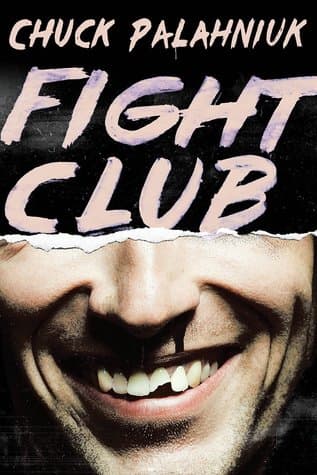
- Fight Club
Chuck Palahniuk
4.2 (499k) average on GoodreadsThrillerFeatures dark social commentary, a critique of consumerism and modern masculinity, and a subversive plot.
- American Psycho
Bret Easton Ellis
3.8 (242k) average on GoodreadsThrillerDelves into the mind of a serial killer, satirizes societal excess, and blurs lines between reality and delusion.
- The Old Man and the Sea
Ernest Hemingway
3.8 (831k) average on GoodreadsLiterary FictionA Cuban fisherman's long struggle with a giant marlin becomes a story of endurance and dignity, now retold for young adults with illustrations, phonetic guides, and writing prompts in Traditional Chinese.
- One Hundred Years of Solitude
Gabriel García Márquez
4.1 (753k) average on GoodreadsLiterary FictionThrough the multi-generational story of the Buendía family, a mythical town deals with the repeating patterns of time, love, and solitude, as the extraordinary mixes with the ordinary.
- The Goldfinch
Donna Tartt
3.9 (720k) average on GoodreadsLiterary FictionHaunted by a tragic explosion and clutching a stolen Dutch masterpiece, a young orphan navigates the opulent drawing rooms of New York and the gritty underbelly of the art world, desperately seeking connection and redemption amidst a life spiraling into crime and obsession.
- Little Fires Everywhere
Celeste Ng
4.1 (713k) average on GoodreadsLiterary FictionIn Shaker Heights, an artist and her daughter move in, and their free-spirited lives clash with a rule-bound matriarch, revealing hidden conflicts beneath a perfect surface.




Enjoyed the summary?
A summary gives you the shape of the book. The book itself has the detail, the examples and the voice.
Find Popcorn on AmazonAs an Amazon Associate, BookBrief earns from qualifying purchases. How we're funded