

Synopsis
Covers the whole plot, including the ending.
- Difficulty
- Hard
- Pacing
- Moderate
- Mood
- Dark, Provocative, Thought-provoking, Intense, Somber
- Read it if
- You are interested in a powerful, unflinching exploration of female genital mutilation and its devastating psychological impact, told through a literary lens.
- Skip it if
- You are sensitive to graphic descriptions of trauma, violence, and the psychological aftermath, or prefer lighter, less challenging reads.
Possessing the Secret of Joy Plot Summary
Covers the whole plot, including the ending.
Tashi's Early Life and Initiation
Tashi, a young Olinka girl, grows up in an African village, seeing her sister Dura's botched initiation into womanhood, which results in Dura's death. Despite the tragic outcome and warnings from her friend M'Groupu, Tashi internalizes the cultural pressure to undergo 'tsunga,' or female genital mutilation. She believes it is essential to truly belong to her tribe and become a 'real woman.' Her sister, Olivia, who has embraced Western education and married Adam, tries to dissuade her, highlighting the dangers and the practice's cruelty. However, Tashi's yearning for cultural acceptance and fear of being an outsider lead her to choose the procedure, a decision that will haunt her for the rest of her life.
The Trauma of Tsunga
Driven by a desperate need for belonging, Tashi, at age twelve, undergoes the 'tsunga' ritual. M'Lissa, a traditional circumciser, performs the procedure. It is excruciatingly painful, leaving Tashi with severe physical and psychological scars. The immediate aftermath is immense suffering, both from the physical wound and the realization of what has been done to her body. She experiences shock and a sense of betrayal. This event marks a turning point, leading directly to her lifelong struggle with mental illness, a deep-seated trauma she tries to suppress but which continuously resurfaces, including dissociative episodes and a growing sense of alienation.
Life in America with Adam
After her initiation, Tashi eventually marries Adam, Olivia's brother-in-law, and moves with him to America. Adam, a kind and patient man, genuinely loves Tashi and tries to understand her suffering, but he struggles to fully grasp the depth of her trauma. In America, Tashi tries to assimilate, learning English and living a 'normal' life, but she remains deeply scarred. She experiences recurring nightmares, flashbacks, and an inability to connect with her own body or experience joy. The cultural shift, combined with her unresolved trauma, increases her psychological distress, making her feel even more isolated and misunderstood in a foreign land that offers no familiar comforts or understanding of her pain.
The Birth of Her Children and Mental Decline
Tashi becomes pregnant and gives birth to two sons, William and Benny. The births are extremely difficult and painful due to the scarring from her 'tsunga.' The physical trauma of childbirth reopens her original wound, both literally and figuratively, intensifying her mental anguish. She struggles to bond with her children, experiencing periods of deep depression and detachment. Her mental health declines, seen in increasingly erratic behavior, hallucinations, and a complete withdrawal from reality. Adam, despite his best efforts, is overwhelmed by the severity of her condition and seeks professional help for her, hoping to find a way to alleviate her suffering and bring her back to him and their children.
Psychiatric Hospitalization and Diagnosis
Tashi's mental state deteriorates to the point where she requires hospitalization. She is admitted to a psychiatric institution where she is diagnosed with a severe mental disorder, likely a form of dissociative identity disorder or complex PTSD, though the novel uses terms of the time. During her time in the hospital, Tashi's 'secret of joy' – her ability to feel genuine happiness – is missing. She struggles to communicate her experiences, feeling that no one truly understands the root cause of her madness. The medical staff, while trying to help, often treat her symptoms without fully addressing the underlying trauma of her genital mutilation, leaving her feeling further isolated in her pain.
The Return to Africa and Seeking M'Groupu
Years later, after periods of lucidity and relapse, Tashi decides to return to Africa. This journey is not just a physical one, but a desperate quest for understanding and resolution. She is determined to confront the source of her pain and perhaps find a way to reclaim herself. Her primary goal is to find M'Groupu, the circumciser who performed her 'tsunga,' believing that only by facing her directly can she find peace. Adam, though apprehensive, supports her decision, recognizing that this confrontation is essential for Tashi's healing, even if it carries significant risks. This return shows Tashi's active engagement with her trauma rather than passive suffering.
Confrontation with M'Groupu
Tashi eventually locates M'Groupu, who is now an old woman living in poverty. Their confrontation is full of tension and complex emotions. Tashi demands to know why M'Groupu performed the 'tsunga,' seeking an explanation for her lifelong suffering. M'Groupu, however, remains largely unrepentant, viewing her actions as adherence to sacred tradition and a necessary part of Olinka womanhood. She expresses regret for Tashi's pain but believes she was doing her duty. This encounter does not provide the easy answers Tashi hoped for, but it forces her to confront the ingrained cultural beliefs that perpetuated her trauma, shifting her focus from personal blame to systemic issues.
The Plan for Vengeance
Following her unsatisfying confrontation with M'Groupu, Tashi’s despair transforms into a cold, resolute determination. She concludes that M'Groupu, as the direct instrument of her pain and a symbol of the oppressive tradition, must be held accountable. Tashi plans to kill M'Groupu, seeing it as the only way to achieve justice, not just for herself, but for all the women who have suffered under the practice of 'tsunga.' This decision comes from a sense of powerlessness and a desperate need to reclaim agency over her own life and body, even if it means resorting to violence. She believes this act will finally free her from her madness.
The Act and Its Aftermath
Tashi kills M'Groupu. The act is swift and decisive. Immediately after, Tashi does not feel the overwhelming relief or joy she anticipated, but a complex mix of emotions. She is soon arrested and put on trial for murder. The trial becomes a platform for discussing female genital mutilation, bringing international attention to the issue. Tashi, through her testimony and the support of Adam and others, uses the court to articulate the profound suffering inflicted by 'tsunga,' aiming to expose the barbarity of the tradition and advocate for its abolition, even as she faces the consequences of her violent act.
Imprisonment and Finding Peace
Tashi is found guilty of M'Groupu's murder and sentenced to death. While awaiting execution in prison, Tashi finds a sense of peace she had rarely experienced before. The act of taking control, even through violence, and the public acknowledgment of her suffering during the trial, allow her to integrate her fragmented self. She finds a different kind of 'joy' – not the carefree happiness of childhood, but a profound inner calm derived from confronting her trauma, speaking her truth, and accepting her fate. She dedicates her remaining time to writing and reflecting, finding solace in her newfound clarity and the knowledge that her actions brought attention to the suffering of others.
The Legacy of Tashi's Story
Tashi's execution, though a tragic end, is a powerful symbol and a catalyst for change. Her story, amplified by the international media attention surrounding her trial, brings the issue of female genital mutilation to the forefront of global discourse. Adam, Olivia, and others continue her advocacy, working to educate and prevent 'tsunga.' Tashi's life and death highlight the devastating consequences of cultural practices that violate human rights and the impact of unresolved trauma. Her 'secret of joy' ultimately lies not in its recovery, but in the radical act of self-assertion and the enduring legacy of awareness she leaves behind, inspiring future generations to fight for the dignity and autonomy of women.
Possessing the Secret of Joy Characters
Tashi
Protagonist
An Olinka woman whose life is defined by the trauma of female genital mutilation.
Tashi is a complex and deeply scarred woman, originally from the Olinka tribe in Africa. She is intelligent and sensitive, but her identity is profoundly shaped by her childhood decision to undergo 'tsunga,' or female genital mutilation, in a desperate attempt to belong. This act shatters her spirit, leading to a lifelong battle with mental illness, including dissociative episodes, depression, and a profound inability to experience joy. She struggles with her identity, torn between her traditional roots and the modern world, and carries immense psychological pain.
Relationships: Adam (Husband, loyal and loving, but struggles to fully understand her trauma.); Olivia (Sister, educated and Westernized, tries to protect Tashi from FGM.); M'Groupu (The circumciser who performed Tashi's FGM; a symbol of tradition and the object of Tashi's vengeance.); Dura (Sister, died from FGM complications, an early warning for Tashi.)
Adam
Supporting
Tashi's devoted American husband, who tirelessly tries to understand and help her.
Adam is a kind, patient, and deeply loving man who marries Tashi and brings her to America. He genuinely cares for her and dedicates his life to trying to alleviate her suffering, even when he cannot fully comprehend the depth of her trauma from 'tsunga.' He is a symbol of unwavering support and unconditional love, enduring Tashi's mental breakdowns and erratic behavior with remarkable resilience. He represents the Western perspective, initially ignorant of the specific cultural trauma but committed to learning and advocating for Tashi.
Relationships: Tashi (Husband, her primary caregiver and emotional support.); Olivia (Sister-in-law, shares a concern for Tashi's well-being.); William and Benny (Father to Tashi's children.)
Olivia
Supporting
Tashi's sister, who rejects Olinka traditions and tries to save Tashi from FGM.
Olivia is Tashi's older sister, who, unlike Tashi, embraces Western education and marries an American. She is intelligent, outspoken, and fiercely independent, having rejected the traditional Olinka practice of 'tsunga' herself. She serves as a foil to Tashi, representing an alternative path and a voice of reason against the harmful tradition. Olivia tries desperately to warn Tashi against the procedure and later advocates for her, understanding the cultural context of Tashi's trauma better than Adam.
Relationships: Tashi (Sister, deeply concerned for her well-being, tried to prevent her FGM.); Adam (Brother-in-law, shares a common goal of supporting Tashi.)
M'Groupu
Antagonist/Supporting
The traditional Olinka circumciser who performs Tashi's 'tsunga.'
M'Groupu is the old woman who performs the 'tsunga' on Tashi. She represents the ingrained traditions and cultural beliefs that perpetuate female genital mutilation. From her perspective, she is merely fulfilling her societal role and ensuring the continuation of her people's customs, believing it to be a sacred and necessary rite of passage for Olinka women. She is not portrayed as inherently evil, but rather as a product and enforcer of a harmful system, making her a complex figure of both tradition and unwitting cruelty. Tashi's eventual target of vengeance.
Relationships: Tashi (The circumciser of Tashi, later her victim.)
Dura
Mentioned/Symbolic
Tashi's sister, who dies from complications of FGM, serving as an early warning.
Dura is Tashi's older sister who undergoes 'tsunga' and tragically dies from complications of the procedure. Her death serves as an early, haunting warning to Tashi about the dangers of the tradition. Although she only appears briefly and is mostly remembered, Dura's fate underscores the physical brutality and potentially lethal consequences of female genital mutilation, influencing Tashi's initial fear and later, her understanding of the profound risks involved.
Relationships: Tashi (Sister, her death foreshadows Tashi's own suffering.)
Benny and William
Supporting
Tashi and Adam's sons, whose births intensify Tashi's trauma.
Benny and William are Tashi and Adam's two sons. Their births are incredibly difficult for Tashi due to the scarring from her 'tsunga,' reopening her physical and psychological wounds. Tashi struggles to bond with them, often detaching due to her mental illness. They represent the innocent lives affected by Tashi's trauma and Adam's efforts to maintain a family despite her struggles. Their presence highlights the intergenerational impact of FGM, as Tashi's inability to fully parent them is a direct consequence of her past.
Relationships: Tashi (Sons, represent the challenges of motherhood for Tashi.); Adam (Sons, his children with Tashi.)
Dr. Carlsen
Supporting
Tashi's psychiatrist in America.
Dr. Carlsen is Tashi's psychiatrist in America. He represents the Western medical establishment's attempt to understand and treat Tashi's mental illness. While he is compassionate and tries to help, he initially struggles to fully grasp the unique cultural and physical trauma of female genital mutilation as the root cause of Tashi's severe psychological symptoms. He uses the diagnostic tools available to him, but his understanding evolves as Tashi's story unfolds, highlighting the limitations of Western medicine in dealing with culturally specific traumas.
Relationships: Tashi (Psychiatrist, attempts to treat her mental illness.)
Possessing the Secret of Joy Themes
The Trauma of Female Genital Mutilation (FGM)
This is the central theme, exploring the devastating physical, psychological, and emotional consequences of FGM. The novel vividly portrays Tashi's lifelong suffering, from the excruciating pain of the 'tsunga' itself to the subsequent chronic pain, inability to experience sexual pleasure, difficult childbirths, and profound mental illness. FGM robs women of their bodily autonomy, identity, and 'secret of joy,' as seen in Tashi's descent into madness and her fragmented sense of self. The practice is a violation that transcends physical injury, leaving indelible scars on the soul. Tashi's struggle to name and articulate her pain shows the societal silence surrounding this issue.
“What is the secret of joy? To be able to experience it.”
Cultural Identity vs. Personal Autonomy
The novel explores the painful conflict between adhering to deeply ingrained cultural traditions and an individual's right to bodily integrity and self-determination. Tashi's decision to undergo 'tsunga' is driven by a desperate desire to belong to her Olinka tribe, to be a 'real woman' in the eyes of her community, despite her sister Olivia's warnings. This theme questions the cost of cultural conformity, particularly when traditions are harmful and oppressive. It also examines the struggle of individuals like Tashi and Olivia, who are caught between two worlds – their African heritage and Western influences – and must navigate their identities amidst conflicting values.
“I wanted to be a real Olinka woman. I wanted to belong.”
Madness and Healing
Tashi's journey is one of madness and a desperate search for healing. Her mental illness – characterized by dissociation, hallucinations, and deep depression – is a direct result of her unresolved trauma. The novel explores how her 'madness' is a form of communication, a way her mind tries to cope with unspeakable pain. Tashi's healing is not a linear process; it involves a return to the source of her trauma, a confrontation with her past, and ultimately, a radical act of self-assertion. Her 'secret of joy' is not restored in the conventional sense, but she finds a profound inner peace and clarity through facing her demons and accepting her fate, transforming her suffering into a legacy of awareness.
“My madness was my only friend, for only it knew what had happened to me.”
Justice and Vengeance
The theme of justice is woven into Tashi's narrative, evolving from a desire for personal healing to a quest for accountability. Initially, Tashi seeks understanding and relief from her pain. When confrontation with M'Groupu offers no true solace, her despair transforms into a cold determination for vengeance. Her act of killing M'Groupu is not merely personal retribution but a symbolic strike against the entire system that perpetuates FGM. The trial that follows elevates her personal quest for justice into a public platform, aiming to expose and condemn the practice, ultimately seeking justice for all women who have suffered.
“I killed M'Groupu not for myself, but for all the girls and women whose lives had been ruined by the custom.”
The Power of Storytelling and Witnessing
The novel itself, through Tashi's fragmented narratives and the perspectives of others, emphasizes the role of storytelling in bearing witness to suffering and advocating for change. Tashi's struggle to articulate her trauma highlights the silencing effect of FGM, but her eventual testimony during her trial becomes a powerful act of speaking truth to power. Adam's role in documenting her story and Olivia's advocacy further show the importance of giving voice to the voiceless. The novel shows that by sharing these painful narratives, awareness can be raised, and societal change can be inspired, ensuring that such atrocities are not forgotten or dismissed.
“If I can tell my story, perhaps others will be saved.”
Plot Devices & Literary Techniques
First-Person Plural Narration (We)
A collective voice that represents Tashi's fragmented identity.
The novel frequently employs a first-person plural 'we' narrator, particularly when Tashi's mental state is most fractured. This 'we' represents Tashi's multiple personalities or fragmented selves, a direct manifestation of her dissociative identity disorder caused by the trauma of FGM. It allows Walker to convey the profound psychological damage and the sense of a self shattered into pieces. This device immerses the reader in Tashi's subjective experience of madness, making her internal world palpable and emphasizing the profound loss of a unified self.
Flashbacks and Non-Linear Narrative
Disrupted chronology reflecting Tashi's broken memory and trauma.
The story is not told chronologically but jumps between Tashi's childhood in Africa, her life in America, and her eventual return to Africa. This non-linear structure mirrors Tashi's fragmented memory and her struggle to process her past. Flashbacks to the 'tsunga' ritual and its aftermath are frequent and often intrusive, demonstrating how the trauma continues to haunt her present. This device effectively conveys the pervasive nature of PTSD, where the past is never truly past but constantly intrudes upon the present, preventing true healing until confronted.
Symbolism of 'The Secret of Joy'
A metaphorical representation of Tashi's lost innocence and inner peace.
The 'secret of joy' is a recurring motif and the title of the novel, symbolizing Tashi's lost capacity for genuine happiness, pleasure, and inner peace, directly taken from her by the act of FGM. It represents her stolen innocence and the profound emotional void left by the trauma. Throughout the novel, Tashi's search for this 'secret' is her quest for wholeness and healing. Ultimately, the 'secret of joy' is not found in a return to her former self, but in a different kind of peace achieved through confronting her past and accepting the consequences of her actions, transforming her suffering into a form of clarity and purpose.
Interspersed Perspectives/Testimonies
Multiple viewpoints that broaden the understanding of FGM and Tashi's story.
Beyond Tashi's primary narration (including her 'we' voice), the novel incorporates sections from the perspectives of other characters like Adam, Olivia, and even a psychiatrist. These interspersed testimonies provide different angles on Tashi's story and the practice of FGM. Adam's perspective offers a loving but sometimes bewildered outsider's view; Olivia's provides a culturally informed, yet critical, sisterly insight; and the psychiatrist's offers a medical but initially limited understanding. This device creates a more comprehensive and nuanced picture of the issue, preventing a singular, potentially biased narrative and highlighting the ripple effects of FGM on a community.
Possessing the Secret of Joy Quotes
“I am an African woman. I am the mother of a child who died. I am a woman who loves other women, and I have known the love of men. I have tried to make a life out of my own, and I have tried to help other women make lives out of theirs. I have been circumcised.”
“It is useless to try to explain to a man what it is like to be a woman. He will never understand. And it is even more useless to try to explain to a white man what it is like to be a black woman.”
“My father said: It is a custom. My mother said: It is our way. My grandmother said: It is the will of God. And I believed them. I believed them all.”
“I wanted to possess the secret of joy. But I knew that the secret of joy was not a secret at all. It was simply the ability to feel, and to express, and to be.”
“How can one be whole when one's most vital part has been cut away?”
“To be silent about one's pain is to allow it to fester. To speak of it is to begin the healing.”
“I understood then that the world was not divided into good and evil people, but into people who suffered and people who caused suffering.”
“The greatest gift you can give another is the strength to be themselves.”
“It is not enough to survive. One must thrive. One must learn to dance again, even if the music is sad.”
“They say that time heals all wounds. But some wounds are so deep, they change the very nature of the body and soul.”
“I learned that freedom is not just the absence of chains, but the presence of dignity.”
“The earth is our mother. She feeds us, she clothes us, she protects us. And we, her children, must protect her in return.”
“I knew then that my life was not mine alone. It belonged to all the women who had suffered as I had suffered, and to all the women who would suffer still.”
“Sometimes, the only way to find joy is to remember that you once possessed it, and to believe that you can possess it again.”
Quiz
10 questions on the plot and the characters. Each answer comes with a short explanation.
Question 1
What is the name of Tashi's husband?
- Adam
- Olinka
- Adam Johnson
- Ray Johnson
Show answer
C. Adam Johnson Tashi's husband is Adam Johnson, a character who also appears in 'The Color Purple'.
Question 2
What is the primary reason Tashi decides to undergo the Olinka tribal ritual of female genital mutilation (FGM)?
- To please her mother and uphold family tradition.
- To secure her marriage to Adam Johnson.
- To reclaim her Olinka identity and fully belong to her tribe.
- To escape the influence of Western culture and missionaries.
Show answer
C. To reclaim her Olinka identity and fully belong to her tribe. Tashi, having spent time in America, feels a profound disconnect from her Olinka heritage and believes undergoing FGM will make her a 'true' Olinka woman.
Question 3
Who is M'Lissa, the woman who performs Tashi's FGM?
- Tashi's aunt, a respected elder.
- A traditional circumciser known for her skill.
- A former friend of Tashi's from childhood.
- A religious leader in the Olinka village.
Show answer
B. A traditional circumciser known for her skill. M'Lissa is the traditional circumciser, or 'tsunga', who performs the FGM on Tashi, a figure who later becomes a focus of Tashi's rage.
Question 4
What is the ultimate fate of Tashi at the end of the novel?
- She finds lasting peace and recovers from her trauma.
- She is committed to a mental institution for life.
- She is executed for the murder of M'Lissa.
- She returns to America with Adam to start a new life.
Show answer
C. She is executed for the murder of M'Lissa. Tashi is tried and executed for the murder of M'Lissa, a symbolic act of reclaiming agency and confronting her trauma.
Question 5
Which of the following literary devices is most prominently used to explore Tashi's fragmented mental state?
- Third-person omniscient narration.
- Epistolary format, through letters to her sister.
- Multiple first-person narrators and stream of consciousness.
- Linear narrative with extensive flashbacks.
Show answer
C. Multiple first-person narrators and stream of consciousness. The novel employs multiple first-person narrators, including Tashi, Adam, Olivia, and even Tashi's psychiatrist, Dr. Carlotta, to piece together Tashi's story and her fractured psyche.
Question 6
What is the significance of the 'secret of joy' in the novel's title?
- It refers to the hidden pleasure Tashi finds in her marriage.
- It symbolizes the suppressed sexual and emotional vitality taken from women by FGM.
- It represents the spiritual enlightenment Tashi seeks.
- It is a literal secret that Tashi keeps from her family.
Show answer
B. It symbolizes the suppressed sexual and emotional vitality taken from women by FGM. The 'secret of joy' refers to the joy and pleasure, particularly sexual, that is 'stolen' from women through FGM, leaving them with a profound sense of loss and trauma.
Question 7
Which character represents a more Westernized, intellectual perspective on Tashi's struggles?
- Olivia
- Dr. Carlotta
- Ray Johnson
- Celie
Show answer
B. Dr. Carlotta Dr. Carlotta is Tashi's psychiatrist, providing a clinical and Western-trained perspective on Tashi's mental health and the impact of FGM.
Question 8
What is the primary emotional state Tashi experiences throughout the novel as a direct result of her FGM?
- Peace and contentment.
- A deep sense of longing for her homeland.
- Madness, dissociation, and profound emotional pain.
- Empowerment and self-discovery.
Show answer
C. Madness, dissociation, and profound emotional pain. Tashi's experience of FGM leads to severe psychological trauma, manifesting as madness, dissociation, and an inability to experience true joy or connection.
Question 9
How does the novel portray the role of tradition and culture in the Olinka tribe regarding FGM?
- It is universally condemned by all tribal members.
- It is seen as a sacred and necessary rite of passage for women to achieve full womanhood.
- It is a practice enforced by male elders against the will of the women.
- It is a forgotten practice that Tashi revives.
Show answer
B. It is seen as a sacred and necessary rite of passage for women to achieve full womanhood. The novel depicts FGM as a deeply ingrained and highly valued tradition within the Olinka culture, believed to be essential for a woman's purity, marriageability, and acceptance within the community.
Question 10
What is the narrative purpose of including perspectives from characters like Adam and Olivia?
- To provide comic relief from the dark subject matter.
- To offer external viewpoints on Tashi's internal struggles and the broader impact of FGM.
- To introduce subplots unrelated to Tashi's main story.
- To contrast Tashi's Olinka culture with their Western heritage.
Show answer
B. To offer external viewpoints on Tashi's internal struggles and the broader impact of FGM. Adam and Olivia's narratives provide crucial external perspectives, showing how Tashi's trauma affects those around her and offering different interpretations of her behavior and the practice of FGM.
Possessing the Secret of Joy FAQ
What is the central premise of 'Possessing the Secret of Joy'?
The novel centers on Tashi, an Olinka woman, who undergoes female genital mutilation (FGM) as a child and struggles with the profound psychological and emotional consequences throughout her life, ultimately leading her to seek justice and confront her trauma. It explores her journey from Africa to America and back, and her quest for healing and meaning.
Who are the primary characters in Tashi's life, and what roles do they play?
Tashi's husband, Adam, supports her despite not fully understanding her pain, while his former wife, Olivia, offers a more direct, critical perspective on Tashi's choices. M'Lissa, Tashi's sister, also underwent FGM and represents a different path of coping, while Raye, Tashi's childhood friend, offers a contrasting view of Olinka tradition. Her mother and father also play significant roles in her initial decision.
What is the 'secret of joy' that Tashi struggles to possess?
The 'secret of joy' refers to the intrinsic happiness, wholeness, and sexual pleasure that Tashi believes was stolen from her by FGM. Her journey is an attempt to reclaim this lost joy, which manifests as a struggle for self-acceptance, mental stability, and a sense of belonging in a world that has traumatized her.
How does the novel depict Tashi's cultural displacement?
Tashi experiences significant cultural displacement, first by moving to America with Adam, where she struggles to adapt to Western norms and values while carrying the weight of her African traditions. Upon returning to Africa, she finds herself alienated from both the traditional Olinka way of life and the modern world, existing in a liminal space.
What is the significance of Tashi's name change to 'Dura'?
Tashi changes her name to Dura as a symbolic act of reclaiming agency and identity after her FGM. 'Dura' represents her enduring pain and her determination to confront the trauma, but also signifies a hardening, a resilience forged in suffering, as she prepares for her final act of defiance.
How does the narrative structure, with multiple narrators, contribute to the story?
The novel employs multiple narrators, including Adam, Olivia, and Tashi herself, along with others like her psychiatrist and lawyers. This polyphonic structure provides diverse perspectives on Tashi's experiences, her mental state, and the cultural practice of FGM, allowing readers to piece together a complex understanding of her journey and the societal forces at play.
What is the symbolic importance of the 'Olinka' tribe and its customs?
The Olinka tribe, while fictionalized, represents many real-world communities that practice FGM, serving as a microcosm for the cultural traditions and patriarchal structures that perpetuate such practices. Their customs highlight the deep-seated beliefs and social pressures that make it difficult for individuals like Tashi to resist or escape the tradition.
How does Tashi's relationship with her mother evolve throughout the novel?
Tashi's relationship with her mother is complex and fraught with pain. Initially, her mother pressures her into FGM, believing it essential for her daughter's acceptance and marriage. Later, Tashi struggles to reconcile her love for her mother with the profound betrayal and suffering her mother inflicted, highlighting the intergenerational trauma and complicity within the community.
How does Tashi's madness manifest, and what are its root causes?
Tashi's madness manifests as severe depression, dissociation, self-harm, and hallucinations, specifically the recurring image of a 'weeping vagina.' These symptoms are directly rooted in the psychological trauma of FGM, which stripped her of her bodily autonomy and sense of self, leaving her with profound emotional and physical scars.
What is the psychological impact of FGM on Tashi beyond physical pain?
Beyond the immediate physical pain, FGM inflicts deep psychological wounds on Tashi, leading to a loss of identity, chronic depression, sexual dysfunction, and a pervasive sense of incompleteness. It fundamentally alters her perception of herself, her body, and her place in the world, hindering her ability to form healthy relationships and experience joy.
How does Tashi's struggle with identity relate to her mental health?
Tashi's struggle with identity is inextricably linked to her deteriorating mental health. She grapples with being an Olinka woman, an American citizen, and a survivor of FGM, never fully fitting into any category. This fractured identity, coupled with her trauma, contributes to her feelings of alienation, confusion, and ultimately, her descent into madness.
What role does therapy play in Tashi's journey, and how effective is it?
Tashi undergoes therapy with several professionals, particularly Dr. Carlsen, who attempts to help her process her trauma. While therapy offers some diagnostic clarity and a space for her to articulate her pain, it ultimately proves insufficient to fully heal her deep-seated wounds, leading her to seek a more radical form of resolution.
Is Tashi's final act of violence portrayed as justified or tragic?
Tashi's final act of violence against the circumcisers is presented as both tragic and, from her perspective, a desperate act of justice. While the novel doesn't explicitly condone violence, it frames her actions as the inevitable outcome of unaddressed trauma and a system that failed to protect her, leaving readers to interpret the ethical complexities.
How does the novel challenge traditional notions of justice?
The novel challenges traditional notions of justice by highlighting the inadequacy of legal systems to address the profound and culturally embedded harm of FGM. Tashi's decision to take justice into her own hands forces readers to consider whether conventional legal frameworks can truly account for such deep-seated cultural traumas and their lasting impact.
What is the novel's stance on cultural relativism versus universal human rights?
The novel strongly critiques cultural relativism when it comes to practices like FGM, arguing for universal human rights, particularly the right to bodily autonomy and freedom from harm. It demonstrates how 'culture' can be used to justify horrific practices, asserting that certain traditions should not be immune to moral scrutiny.
How does the ending of the novel contribute to its overall message?
The ending, with Tashi's execution, serves as a powerful and tragic culmination of her journey, underscoring the devastating consequences of FGM and the societal failures to address it. It reinforces the novel's message about the long-lasting trauma and the desperate measures individuals might take when conventional justice is elusive, leaving a lasting impression of the cost of silence.
What role do Adam and Olivia play in representing different responses to Tashi's ordeal?
Adam represents a loving but often helpless and somewhat detached Western male perspective, struggling to understand the depth of Tashi's pain. Olivia, conversely, offers a more critical, feminist, and empathetic understanding, having herself experienced cultural clashes and advocating more directly for Tashi's liberation from oppressive traditions.
How does the novel explore the concept of generational trauma?
The novel vividly explores generational trauma by showing how the practice of FGM is passed down through generations, with mothers inflicting it upon their daughters, believing it necessary for their future. Tashi's suffering is a direct result of this cycle, highlighting how unaddressed pain and harmful traditions perpetuate suffering across families and communities.
What is the significance of the novel being published in the early 1990s?
Published in 1992, the novel was groundbreaking in bringing the issue of FGM to a wider Western audience at a time when awareness was far less prevalent. Its release contributed significantly to global discussions on women's rights, cultural practices, and the psychological impact of such traditions, sparking important dialogues and advocacy efforts.
About the author

Alice Malsenior Tallulah-Kate Walker is an American novelist, short story writer, poet, and social activist. In 1982, she became the first African-American woman to win the Pulitzer Prize for Fiction, which she was awarded for her novel The Color Purple. Over the span of her career, Walker has published seventeen novels and short story collections, twelve non-fiction works, and collections of essays and poetry.
Similar books
- The Color Purple
Alice Walker
4.2 (521k) average on GoodreadsHistorical FictionExplores themes of trauma, resilience, and female empowerment within a historical context, with Walker's distinct literary style.
- A Thousand Splendid Suns
Khaled Hosseini
4.4 (1.2M) average on GoodreadsHistorical FictionAddresses severe female oppression and violence in a cultural context, focusing on the psychological and physical suffering of women.
- Half of a Yellow Sun
Chimamanda Ngozi Adichie
4.3 (103k) average on GoodreadsLiterary FictionOffers a deep dive into African history and culture, featuring strong female characters facing profound societal challenges and personal struggles.
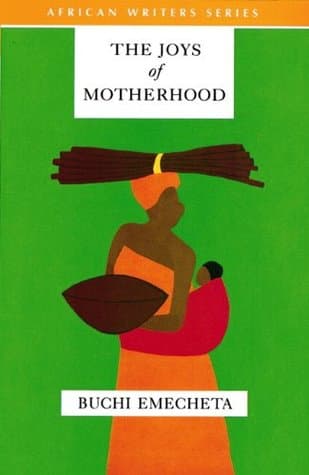
- The Joys of Motherhood
Buchi Emecheta
4.1 (5k) average on GoodreadsHistorical FictionEmecheta's novel explores the challenges of womanhood in traditional African societies through a more realist and sociological lens, focusing on societal pressures and expectations. Walker's novel, in contrast, delves deeper into the psychological and allegorical impacts of a specific cultural practice (FGM), using a more experimental narrative structure to portray internal trauma.
- Woman at Point Zero
Nawal El Saadawi
4.1 (11k) average on GoodreadsFictionEl Saadawi's work offers a stark, direct, and often journalistic account of female oppression and resistance within an Egyptian context, emphasizing systemic injustices. Walker's "Possessing the Secret of Joy" also addresses female oppression but integrates it into a broader, intergenerational narrative of Black women's experiences, with a stronger emphasis on the psychological aftermath of trauma and the search for personal healing and vengeance, connecting to the universe of The Color Purple.
- The Old Man and the Sea
Ernest Hemingway
3.8 (831k) average on GoodreadsLiterary FictionA Cuban fisherman's long struggle with a giant marlin becomes a story of endurance and dignity, now retold for young adults with illustrations, phonetic guides, and writing prompts in Traditional Chinese.




Enjoyed the summary?
A summary gives you the shape of the book. The book itself has the detail, the examples and the voice.
Find Possessing the Secret of Joy on AmazonAs an Amazon Associate, BookBrief earns from qualifying purchases. How we're funded