

Core Idea
- Difficulty
- Medium
- Read it if
- You are interested in a raw, insider's perspective on the British prison system, the psychological impact of incarceration, and how individuals navigate extreme adversity through resilience and storytelling.
- Skip it if
- You prefer an objective, academic analysis of criminal justice or are not interested in a personal memoir from a controversial public figure.
Key Takeaways from Purgatory
The Bureaucracy of Degradation
Prison life is defined by an arbitrary, often dehumanizing, bureaucratic maze.
Archer's account shows the prison system as a maze of petty rules and arbitrary decisions designed to manage, not rehabilitate, inmates. The large amount of paperwork, unexpected delays, and constant threat of rule violations for minor issues create an environment where prisoners are always disempowered. This bureaucratic machine reduces an individual's self-worth, making every request a battle and every privilege a fragile concession. The system's inefficiency and lack of empathy are not just inconveniences; they are basic parts of the 'purgatorial' experience, ensuring that even basic human needs are met with resistance.
“The rules are not there for justice, but for control. And control, in this environment, often means the systematic stripping away of dignity.”
In the book: Archer recounts the endless struggle to access basic amenities, the convoluted process for requesting a new toothbrush, or the sheer frustration of having letters delayed for days due to administrative backlogs. He details the 'reclassification' process as a drawn-out, opaque ritual rather than a fair assessment.
Try this: Recognize that large systems, even those with good intentions, can become self-perpetuating machines of control. Advocate for transparency and accountability in institutional processes, especially where vulnerable populations are concerned. Challenge 'rules for rules' sake'.
Related ideas: institutional-dehumanization, bureaucratic-inefficiency
Unexpected Humanity in the Margins
Despite the harsh environment, genuine human connection and resilience flourish among inmates.
A compelling aspect of Archer's diary is his discovery of humanity among fellow prisoners. Stripped of their societal roles, men from different backgrounds form unexpected bonds, offering each other support, humor, and a shared sense of resilience. These interactions show a human capacity for empathy and solidarity, even in extreme adversity. Archer describes how inmates create informal support networks, sharing stories, offering advice, and finding moments of levity. This suggests that the human need for connection can exist even in the most oppressive environments.
“It is in the darkest corners that you sometimes find the brightest sparks of humanity.”
In the book: Archer describes specific instances of inmates sharing food, lending books, or simply listening to each other's stories. He notes the camaraderie during communal activities and the unexpected kindnesses shown by men often stereotyped as hardened criminals.
Try this: Seek out human connection and shared experiences, especially in challenging or isolating environments. Recognize that superficial judgments often mask deeper, more complex human stories. Cultivate empathy and look for common ground.
Related ideas: social-solidarity, human-resilience
The Privilege of Perspective
Archer's unique background offers a rare, if controversial, lens into the prison system.
Archer's status as a former politician gives him a distinct view of prison life. While he experiences the same degradations as others, his prior life of privilege offers a stark contrast that highlights the systemic failures he observes. This dual perspective allows him to articulate injustices with a unique blend of personal experience and intellectual critique. However, it also raises questions about the 'authenticity' of his suffering compared to those who have known only hardship. His ability to write and publish his diaries, for example, is a privilege most inmates do not share, making his account both valuable and, at times, limited.
“My past life, for all its grandiosity, now served only to highlight the stark realities of this one.”
In the book: Archer frequently juxtaposes his past life (e.g., dining with royalty, parliamentary debates) with the mundane, often humiliating routines of prison. He also notes how his 'name' sometimes affords him slightly different treatment or access, even if minimal.
Try this: When evaluating social critiques, consider the author's background and potential biases, recognizing both the strengths and limitations of their perspective. Use privilege to amplify the voices of the unheard, rather than just narrate personal experience.
Related ideas: social-privilege, autobiographical-bias
The Cruelty of Inactivity
Lack of purposeful activity is a profound form of punishment and a barrier to rehabilitation.
Archer repeatedly stresses the soul-crushing boredom and lack of meaningful activity in the prison system. Limited opportunities for work, education, or even structured recreation mean inmates spend vast amounts of time idle. This inactivity is not just unproductive; it actively harms mental well-being, creating resentment, despair, and a sense of purposelessness. It becomes clear that a system that fails to provide constructive outlets for energy and intellect is not preparing individuals for reintegration into society. Instead, it deepens their alienation and may worsen problematic behaviors. The 'purgatory' is as much about the absence of purpose as it is about confinement.
“Idleness is not just a void; it's a corrosive agent that eats away at the mind and soul.”
In the book: Archer details the daily routine of waking, eating, and then having hours stretching ahead with nothing to do. He describes the desperate search for books, the limited access to workshops, and the mental toll of simply 'doing time' with no stimulating engagement.
Try this: Advocate for prison reform that prioritizes meaningful work, education, and skill-building programs over mere containment. In personal life, recognize the importance of purpose and activity for mental health and well-being; avoid prolonged periods of unproductive idleness.
Related ideas: prison-reform, mental-wellbeing-in-confinement
The Power of Storytelling
Sharing personal narratives becomes a vital coping mechanism and a source of connection.
Throughout his time in Wayland, Archer observes and participates in the act of storytelling among inmates. Sharing their pasts, crimes, regrets, and hopes becomes a way for prisoners to process experiences, maintain identity, and connect with others. These narratives, often raw, offer insights into the complex lives that led men to prison, challenging simple notions of 'good' and 'bad.' For Archer, a storyteller himself, this exchange of narratives is not just entertainment but an act of human validation and a way to understand the multifaceted nature of justice and punishment.
“Every man here has a story, and in telling it, he reclaims a piece of himself.”
In the book: Archer frequently recounts conversations with fellow inmates, detailing their personal histories and the circumstances that led them to prison. He also notes how he himself becomes a listener and a recipient of these often-confessional tales.
Try this: Actively listen to others' stories without judgment, recognizing the power of narrative in shaping identity and fostering empathy. Encourage environments where individuals feel safe to share their experiences, as this can be a powerful tool for healing and understanding.
Related ideas: narrative-therapy, empathy-building
The Illusion of Control
The prison system, while asserting absolute control, is often chaotically inefficient.
Archer's diary exposes a paradox of the prison system: a regime designed for total control that often collapses into disorganization and inefficiency. Despite many rules and constant surveillance, basic services often fail, communication breaks down, and decisions appear arbitrary or contradictory. This administrative chaos undermines the authority it seeks to project, creating frustration for both inmates and staff. It shows how an overstretched and underfunded system, focused on punitive measures, struggles to function effectively, leading to a breakdown in both order and humane treatment. The 'control' is often more theatrical than practical, serving to humiliate rather than genuinely manage.
“They control everything, yet manage nothing with true competence.”
In the book: Archer details instances of messed-up food orders, lost paperwork, conflicting instructions from different officers, and the general sense of disarray in daily operations, despite the rigid structure of prison life.
Try this: Be critical of systems that prioritize control over competence and efficiency. Advocate for reforms that address the root causes of systemic failures, rather than simply adding more layers of bureaucracy or punishment. Demand accountability for administrative shortcomings.
Related ideas: systemic-failure, administrative-chaos
The Enduring Power of Hope
Even in the bleakest circumstances, the human spirit clings to the possibility of a better future.
Despite the daily degradations and the seemingly endless wait, Archer consistently observes and feels the enduring power of hope among his fellow inmates. Whether it is hope for an appeal, a successful reclassification, a visit from family, or simply release, this underlying optimism keeps many from succumbing to despair. It is a testament to the human spirit's capacity to envision a future beyond immediate suffering. Archer's own journey, waiting for reclassification to an 'open' prison, is driven by this very hope, showing that even small advancements or possibilities can sustain individuals through prolonged hardship. This hope is not naive; it is a vital psychological defense mechanism.
“Hope, however faint, is the last thing they can take from you.”
In the book: Archer details conversations with inmates about their upcoming release dates, their plans for life after prison, and the anticipation of family visits. His own focus on the reclassification process and the eventual move to an 'open' prison exemplifies this hope.
Try this: Cultivate and protect hope, both in oneself and in others, especially during difficult times. Recognize that even small glimmers of possibility can provide immense strength and motivation. Support initiatives that offer pathways to rehabilitation and a future for those in confinement.
Related ideas: psychological-resilience, optimism-in-adversity
The True Cost of Incarceration
Prison exacts a profound psychological and emotional toll beyond mere loss of liberty.
Archer's diary goes beyond a simple chronicle of events to reveal the deep psychological and emotional scars from incarceration. Constant surveillance, loss of privacy, lack of autonomy, and separation from loved ones combine to create an intense environment of stress and anxiety. He describes the mental gymnastics needed to cope, the moments of despair, and the struggle to maintain a sense of self. This 'purgatory' is not just physical confinement; it is an internal battle against the erosion of identity and dignity. The book implicitly argues that society often underestimates the comprehensive damage done by prison, extending far beyond the 'justice' of a sentence.
“The sentence is not just time; it is a slow, relentless assault on the spirit.”
In the book: Archer frequently reflects on his own emotional state, describing bouts of depression, anxiety about his family, and the constant mental effort required to navigate prison life. He also observes the mental health struggles of other inmates.
Try this: Advocate for mental health support within correctional facilities and for policies that consider the long-term psychological impact of incarceration. Understand that punitive measures alone are insufficient; rehabilitation must address the whole person.
Related ideas: psychological-impact-of-prison, dignity-in-confinement
The Public's Blind Spot
Society largely ignores the realities of prison life, perpetuating a cycle of misunderstanding and neglect.
Archer suggests that the general public holds a simplistic and often punitive view of prison, preferring to keep it out of sight and out of mind. This collective indifference allows systemic failings and dehumanizing conditions to persist largely unchecked. The lack of public scrutiny means there is little pressure for meaningful reform, contributing to underfunding, overcrowding, and a focus on containment over rehabilitation. Archer's account, therefore, is an attempt to pull back the curtain and force readers to confront the truths about a system designed to punish, often at the expense of human dignity and societal benefit. The 'purgatory' is as much societal neglect as it is institutional design.
“Outsiders prefer to imagine prisons as dark, distant places, rather than acknowledge the complex human dramas unfolding within.”
In the book: Archer contrasts the public's perception of his own 'fall from grace' with the anonymous suffering of other inmates, highlighting how the public narrative simplifies complex issues. He implies that the public rarely sees the reality inside prison walls.
Try this: Actively seek out information and diverse perspectives on issues like prison reform and social justice. Challenge simplistic narratives about crime and punishment. Support organizations working to bring transparency and accountability to correctional systems.
Related ideas: public-ignorance, prison-reform-advocacy
Purgatory Quotes
“It is not the strongest of the species that survives, nor the most intelligent that survives. It is the one that is most adaptable to change.”
“The greatest glory in living lies not in never falling, but in rising every time we fall.”
“A week is a long time in politics.”
“The price of greatness is responsibility.”
“Power tends to corrupt, and absolute power corrupts absolutely.”
“Every politician has a past, and every saint has a future.”
“History is written by the victors.”
“The only thing necessary for the triumph of evil is for good men to do nothing.”
“Politics is the art of the possible.”
“Character is destiny.”
“To be a politician, you need to be able to predict what is going to happen tomorrow, next week, next month, and next year. And to have the ability afterwards to explain why it didn't happen.”
“The past is a foreign country; they do things differently there.”
“In politics, there are no permanent friends, no permanent enemies, only permanent interests.”
“Every man has his price.”
“The greatest lesson of life is that you are responsible for your life.”
Quiz
10 questions on the main ideas. Each answer comes with a short explanation.
Question 1
Upon his transfer from Belmarsh, to which medium-security prison was Jeffrey Archer, Prisoner FF8282, initially moved?
- HMP Brixton
- HMP Wayland
- HMP Ford
- HMP North Sea Camp
Show answer
B. HMP Wayland The book explicitly states that Archer was transferred to HMP Wayland in Norfolk after his time in Belmarsh.
Question 2
How many days did Jeffrey Archer spend at HMP Wayland, as detailed in 'Purgatory'?
- 22 days
- 67 days
- 90 days
- 120 days
Show answer
B. 67 days The book specifically covers the 67 days Archer spent at HMP Wayland while awaiting reclassification.
Question 3
What was the primary reason Jeffrey Archer was awaiting reclassification during his time at HMP Wayland?
- To be transferred to a prison closer to his family.
- To be moved to an 'open,' minimum security prison.
- To appeal his perjury conviction.
- To secure a job within the prison system.
Show answer
B. To be moved to an 'open,' minimum security prison. Archer was waiting to be reclassified for an 'open,' minimum security prison, a common goal for prisoners in the British system.
Question 4
Which of the following best describes Archer's dual experience at HMP Wayland, according to the book's description?
- A period of peaceful reflection and academic study.
- Encountering both the degradations of the prison system and the spirit of fellow inmates.
- Primarily focused on legal strategizing for his appeal.
- A brief, uneventful transition between secure facilities.
Show answer
B. Encountering both the degradations of the prison system and the spirit of fellow inmates. The book's description highlights 'the daily degradations of a dangerously overstretched prison system but also the spirit and courage of his fellow inmates.'
Question 5
What criminal offense led to Jeffrey Archer's four-year prison sentence, as mentioned in the context of 'Purgatory'?
- Fraud
- Embezzlement
- Perjury
- Tax Evasion
Show answer
C. Perjury The introductory text clearly states Archer was sentenced to four years in prison for perjury.
Question 6
The book 'Purgatory' is described as 'Volume 2' of Archer's prison diaries. What does this imply about his overall prison experience narrative?
- It focuses exclusively on his time before sentencing.
- It is a continuation of a previously published account of his imprisonment.
- It is a sequel to a fictional novel set in prison.
- It is a collection of essays by different prisoners.
Show answer
B. It is a continuation of a previously published account of his imprisonment. Being 'Volume 2' indicates that 'Purgatory' follows a previous volume detailing an earlier period of his imprisonment, likely his initial time in maximum security.
Question 7
What is the significance of 'FF8282' in the context of Jeffrey Archer's imprisonment, as mentioned in the book's description?
- It was his cell number at HMP Wayland.
- It was the date of his sentencing.
- It was his prisoner identification number.
- It refers to a specific prison wing he was assigned to.
Show answer
C. It was his prisoner identification number. The text states 'Archer—now known as Prisoner FF8282—was sentenced...', indicating it was his prisoner number or identifier.
Question 8
Considering Archer's background as a politician and author, what unique perspective might 'Purgatory' offer on the British prison system?
- A purely objective, statistical analysis of prison reform.
- An insider's view from someone who previously held a position of influence, now subjected to the system's flaws.
- A fictionalized account of prison life, drawing on common tropes.
- A historical overview of UK prison evolution over centuries.
Show answer
B. An insider's view from someone who previously held a position of influence, now subjected to the system's flaws. As a former politician, Archer's personal experience as a prisoner offers a unique, critical perspective from someone who would have been involved in shaping policy, now experiencing its direct impact.
Question 9
The description mentions 'the daily degradations of a dangerously overstretched prison system.' What broader issue is Archer likely highlighting through his personal narrative?
- The need for more recreational activities for prisoners.
- Systemic underfunding and resource shortages in the UK correctional facilities.
- The psychological impact of solitary confinement.
- The effectiveness of rehabilitation programs for violent offenders.
Show answer
B. Systemic underfunding and resource shortages in the UK correctional facilities. 'Dangerously overstretched' directly points to issues of understaffing, overcrowding, and insufficient resources, which are common problems in underfunded prison systems.
Question 10
Given the 'sometimes humorous, sometimes horrifying' tone and the focus on fellow inmates, what practical application might readers find in Archer's memoir?
- Instructions on how to navigate the legal appeals process from prison.
- An understanding of the human element and daily realities within a prison, beyond media stereotypes.
- A guide to becoming a successful author while incarcerated.
- Strategies for avoiding prison sentences through legal loopholes.
Show answer
B. An understanding of the human element and daily realities within a prison, beyond media stereotypes. By detailing both the systemic issues and the 'spirit and courage of his fellow inmates,' the memoir offers a humanized, ground-level understanding of prison life, challenging common preconceptions.
Purgatory FAQ
What is 'Purgatory' by Jeffrey Archer about?
'Purgatory' is the second volume of Jeffrey Archer's prison diaries, chronicling his 67 days spent in HMP Wayland, a medium-security prison, in 2001. It details his experiences, observations of the prison system, and interactions with fellow inmates while awaiting reclassification.
Does 'Purgatory' offer an accurate depiction of the British prison system?
Archer's account provides a firsthand, albeit subjective, perspective on the British prison system in 2001, highlighting issues like overcrowding and daily degradations. While based on his personal experiences, it aims to offer a candid and sometimes shocking look at the realities of incarceration.
What is the 'reclassification' process Archer mentions in the book?
Reclassification refers to the process within the prison system where an inmate's security level is reassessed based on their behavior, sentence, and risk. Archer was awaiting reclassification from medium security to an 'open' (minimum security) prison during the period covered in 'Purgatory'.
How does 'Purgatory' differ from other prison memoirs?
'Purgatory' stands out due to Archer's unique background as a former politician and public figure, offering a distinct perspective on adapting to prison life. It blends personal reflection with social commentary, often with a touch of his characteristic narrative style, compared to memoirs from career criminals or activists.
Is 'Purgatory' a standalone book, or do I need to read 'Hell' first?
'Purgatory' is the second volume of Archer's prison diaries. While it can be read independently as it focuses on a specific period, reading 'Hell' (Volume 1) first would provide valuable context regarding his initial incarceration and the events leading up to his transfer to HMP Wayland.
What kinds of 'daily degradations' does Archer describe in 'Purgatory'?
Archer details various aspects of prison life he perceived as degrading, including the harsh living conditions, lack of privacy, dehumanizing routines, and the constant struggle within an overstretched system. These experiences contribute to his portrayal of the 'purgatorial' nature of his time there.
Does 'Purgatory' include any political commentary?
Given Archer's background, 'Purgatory' naturally includes underlying political commentary on the state of the British justice and prison systems. He reflects on the inefficiencies and challenges he observed, often implicitly or explicitly criticizing the governmental handling of penal institutions.
What role do Archer's fellow inmates play in the narrative?
Archer's interactions with his fellow inmates are central to 'Purgatory'. He shares their stories, observes their resilience, and often finds moments of humanity, humor, and courage among them, portraying them as significant figures in his own journey through the prison system.
About the author

Jeffrey Howard Archer, Baron Archer of Weston-super-Mare is an English novelist, life peer, convicted criminal, and former politician. Before becoming an author, Archer was a Member of Parliament (1969–1974), but did not seek re-election after a financial scandal that left him almost bankrupt.
Similar books
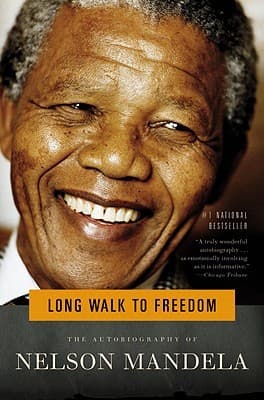
- Long Walk to Freedom
Nelson Mandela
4.3 (68k) average on GoodreadsPoliticsA powerful memoir of incarceration and resilience against an oppressive system, though in a very different political context.
- 1984
George Orwell
4.2 (3.1M) average on GoodreadsPoliticsIn a future where surveillance and thought control are absolute, a man's search for truth clashes with the Party, showing that hope can be a form of rebellion.
- Animal Farm
George Orwell
4.0 (2.7M) average on GoodreadsPoliticsA farm animals' rebellion against humans turns into a pig-led dictatorship, showing how power corrupts and revolutionary ideals are betrayed.
- Freakonomics: A Rogue Economist Explores the Hidden Side of Everything
Steven D. Levitt
4.0 (709k) average on GoodreadsBusinessThis book uses economic principles to reveal the surprising incentives behind everything from drug dealing and real estate to cheating teachers and the decline of crime.
- I Am Malala: The Story of the Girl Who Stood Up for Education and Was Shot by the Taliban
Malala Yousafzai
4.1 (419k) average on GoodreadsPoliticsA teenage girl from a Taliban-controlled valley refuses to give up her books, becoming a global voice for education even after an assassination attempt.
- Atlas Shrugged
Ayn Rand
3.7 (354k) average on GoodreadsPoliticsIn a dystopian America where innovators vanish, a brilliant heiress races to uncover the truth behind the disappearing industrialists and the enigmatic John Galt, who vows to stop the world's progress.





Enjoyed the summary?
A summary gives you the shape of the book. The book itself has the detail, the examples and the voice.
Find Purgatory on AmazonAs an Amazon Associate, BookBrief earns from qualifying purchases. How we're funded