
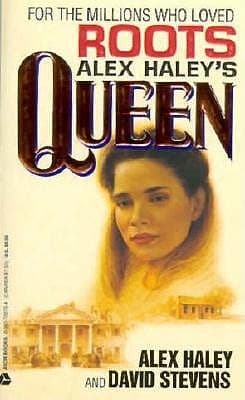
Synopsis
Covers the whole plot, including the ending.
- Difficulty
- Medium
- Pacing
- Moderate
- Mood
- Epic, Resilient, Historical, Reflective, Emotional
- Read it if
- You are interested in a sweeping, character-driven historical saga focusing on the experience of biracial individuals in the American South from slavery through the early 20th century.
- Skip it if
- You prefer fast-paced thrillers or stories with minimal historical detail.
Queen Plot Summary
Covers the whole plot, including the ending.
The Peculiar Birth of Queen
The story begins with the birth of Queen, a light-skinned girl, on the Henning plantation in Alabama, around the 1840s. Her mother is Easter, a dark-skinned slave, and her father is James Jackson Henning, the white plantation owner. Queen's unusual parents immediately set her apart; society sees her as neither fully white nor fully black. James Henning, despite owning slaves, shows a surprising amount of affection and protection toward Queen, often bringing her into the main house and treating her with a kindness not given to other enslaved children. This special treatment, however, separates Queen from both the white family, who dislike her presence, and the other slaves, who view her with suspicion and envy.
Growing Up in Limbo
As Queen grows, her identity problems worsen. Her white half-sister, Lizzie, teaches her to read and write, skills forbidden to most slaves. This education, while a benefit, further isolates her. She is too light-skinned and educated to be fully accepted by the black community, yet too black to ever truly be part of the white world, despite her father's family. Her relationship with Lizzie is full of jealousy and anger, as Lizzie constantly reminds Queen of her lower status. Queen's mother, Easter, tries to give her a sense of pride and strength, but Queen often feels lost, caught between two worlds with no real home in either.
The Civil War and Emancipation
The American Civil War starts, causing great disruption on the Henning plantation. James Henning leaves to fight for the Confederacy, leaving the plantation to his wife and Lizzie. The war's end brings freedom, supposedly freeing Queen and the other slaves. However, freedom turns out to be a complex and often harsh reality. Many former slaves, including Queen and Easter, stay on the plantation at first, unsure where to go or how to survive in a society still deeply prejudiced against them. The economic and social structures of the South are broken, creating an unstable environment where opportunities are few and danger is always present.
Leaving the Plantation
After the war, Queen decides to leave the Henning plantation, looking for a new life away from her past. She travels through the Reconstruction-era South, meeting both kind and cruel people. Her light skin often lets her 'pass' as white, a dangerous but sometimes necessary way to survive. She works various jobs, experiences the harshness of sharecropping, and sees the struggles of newly freed people trying to build their lives. This time is marked by a constant search for belonging and a stable life, as Queen deals with the promise of freedom versus widespread racism and economic hardship.
Love and Loss with Daguerre
Queen meets and falls deeply in love with Daguerre, a white photographer. Their relationship is strong and real, giving Queen a brief sense of acceptance and happiness she had long wanted. Daguerre, despite his own social standing, sees Queen for who she is, not just her race. However, their interracial love is forbidden and dangerous in the post-Civil War South. They face constant threats of violence and social exclusion. In the end, societal pressures and the brutal realities of racial prejudice tear them apart, leaving Queen heartbroken and more disappointed with the idea of true equality and acceptance.
Marriage to Alex Haley's Grandfather
After the heartbreak with Daguerre, Queen eventually marries a black man named Alec Haley, a strong and moral man who works as a lumberman. This marriage gives Queen a sense of stability and belonging she had not known before. Despite the scars of her past, Queen dedicates herself to building a family and a home. Alec is a loving and supportive husband, and together they face the challenges of raising children in a racially segregated and economically struggling South. Their marriage marks the start of the Haley family line that Alex Haley, the author, would later trace.
Raising a Family
Queen and Alec raise several children, including Simon, who would become Alex Haley's father. Queen, using her own experiences of being marginalized and her father's secret education, is determined to give her children a strong sense of self-worth and resilience. She teaches them the importance of education and hard work, emphasizing that they must aim for more than society expects of them. Despite the widespread racism and limited opportunities in their community, Queen works hard to provide for her family, making sure they have the best possible chance to succeed and escape poverty and oppression.
Challenges and Triumphs
The Haley family endures significant difficulties, including money problems and the constant threat of racial violence and discrimination. They experience the rise of Jim Crow laws, which further cemented racial segregation and inequality. Despite these challenges, Queen's strength and determination, along with Alec's steady nature, keep the family together. They celebrate small victories, such as their children's educational achievements and their ability to maintain their dignity despite adversity. Queen's journey shows the lasting spirit of African Americans during a difficult time in American history.
Queen's Legacy
As Queen ages, her experiences and wisdom continue to shape her family. Her children and grandchildren hear stories of her unusual upbringing, her white father, and her struggles for identity and acceptance. These stories become a main part of the Haley family's oral history, providing a rich picture of their heritage. Queen's strength, her refusal to be limited by society, and her constant love for her family leave a lasting mark. Her life connects the era of slavery with the growing hopes of African Americans in the 20th century, influencing her grandson, Alex Haley, deeply.
The Author's Connection
The story ends with Alex Haley's own thoughts on his grandmother, Queen. He puts her story together through family stories, historical research, and his deep understanding of his family's origins. Haley recognizes the great impact Queen's life had on him and his family, seeing her as a central figure in his ancestry. Her struggles and successes, her mixed heritage, and her journey from slavery to a respected matriarch of a black family, provide the basis for his own identity and his later work, especially 'Roots,' which looked at his mother's side of the family. Queen's story is presented as a historical account and a personal example of the strength of the human spirit.
Principal Figures
Queen
Protagonist
The biracial daughter of a slave and her white owner, navigating a world of racial prejudice.
Queen is a complex and resilient woman, born of a white plantation owner, James Jackson Henning, and an enslaved black woman, Easter. Her light skin and mixed heritage set her apart from both black and white communities, leading to a lifelong struggle with identity and belonging. She is intelligent, proud, and fiercely independent, often pushing against the boundaries imposed upon her by society. Despite experiencing profound heartbreak and discrimination, Queen possesses an indomitable spirit and an unwavering determination to create a better life for herself and her family.
Relationships: Easter (Mother, source of strength and cultural connection); James Jackson Henning (Father, complex protector and owner); Lizzie Henning (White half-sister, resentful and cruel); Daguerre (White lover, source of profound but ultimately tragic love); Alec Haley (Husband, source of stability, love, and family foundation); Simon Haley (Son, future father of Alex Haley)
Easter
Supporting
Queen's enslaved mother, a strong and loving figure.
Easter is Queen's dark-skinned enslaved mother, a woman of deep resilience and quiet strength. Despite her subjugated status, she possesses an inner dignity and fierce love for her daughter. She tries to protect Queen from the harsh realities of plantation life and the emotional toll of her mixed heritage, instilling in her a sense of pride in her black identity. Easter is a practical and hardworking woman who endures immense suffering but remains a steadfast and loving presence in Queen's early life.
Relationships: Queen (Daughter, whom she loves and tries to protect); James Jackson Henning (Owner and father of her child)
James Jackson Henning
Supporting
Queen's white plantation owner father, a complex and contradictory figure.
James Jackson Henning is the wealthy white owner of the Henning plantation and Queen's biological father. He is a contradictory character, embodying the moral complexities of the antebellum South. While he is a slave owner, he shows an unusual and often conflicted affection for Queen, providing her with privileges and protection not afforded to other enslaved people. This affection, however, is limited by the societal norms of the time and his own self-interest, preventing him from fully acknowledging Queen as his daughter in public. He represents the hypocrisy and paternalism inherent in the slave system.
Relationships: Queen (Daughter, whom he offers limited protection and affection); Easter (Enslaved woman and mother of his child); Lizzie Henning (Legitimate white daughter, who resents Queen)
Lizzie Henning
Antagonist/Supporting
Queen's white half-sister, driven by jealousy and resentment.
Lizzie Henning is James Jackson Henning's legitimate white daughter and Queen's half-sister. She is a character consumed by jealousy and resentment towards Queen, particularly due to their father's preferential treatment of his biracial child. Lizzie constantly reminds Queen of her inferior status and uses her position to exert power and cruelty. She embodies the racial prejudice and class snobbery of the white Southern society, serving as a direct antagonist to Queen's aspirations and sense of self-worth.
Relationships: Queen (Half-sister, object of her jealousy and cruelty); James Jackson Henning (Father)
Daguerre
Supporting
A white photographer who falls in love with Queen.
Daguerre is a white photographer who meets Queen in the post-Civil War South. He is a kind and progressive man, who sees beyond Queen's racial identity and falls deeply in love with her. Their relationship is a beacon of hope for Queen, offering her a rare experience of genuine acceptance and affection. However, Daguerre is ultimately unable to withstand the immense societal pressures and dangers associated with an interracial relationship in that era, leading to their tragic separation. He represents the fleeting possibility of love and equality that was often crushed by prejudice.
Relationships: Queen (Lover, a profound but doomed romantic connection)
Alec Haley
Supporting
Queen's husband and Alex Haley's paternal grandfather, a steadfast and loving man.
Alec Haley is the man Queen eventually marries, and Alex Haley's paternal grandfather. He is a strong, principled, and hardworking black man, initially working as a lumberman. Alec provides Queen with the stability, love, and respect she has long sought. He is a devoted husband and father, committed to building a secure future for his family in the face of widespread racial discrimination. Alec represents the strength and dignity of black men in the Reconstruction era, and his marriage to Queen forms the bedrock of the Haley family lineage.
Relationships: Queen (Wife, a loving and enduring partnership); Simon Haley (Son)
Simon Haley
Supporting
Queen's son and Alex Haley's father, representing the next generation's aspirations.
Simon Haley is Queen and Alec Haley's son, and the father of author Alex Haley. He embodies the next generation's aspirations for education and advancement in the early 20th century. Influenced by his mother's emphasis on learning, Simon pursues education despite the systemic barriers faced by African Americans. His journey reflects the gradual progress and continued struggles of black Americans striving for social mobility and intellectual growth, laying the groundwork for his son's future literary achievements.
Relationships: Queen (Mother, a profound influence on his values and pursuit of education); Alec Haley (Father)
Alex Haley
Narrator/Mentioned
The author, piecing together his grandmother's story.
Alex Haley is the author and the narrator of the book, though he appears more as a framing device and a recipient of the family history. He is Queen's grandson, and his presence is felt as the meticulous researcher and storyteller who brings his grandmother's extraordinary life to light. He is driven by a deep desire to understand his heritage and the struggles of his ancestors. His role is to contextualize Queen's story within the broader sweep of American history and to honor her legacy.
Relationships: Queen (Grandmother, the subject of his historical and personal quest)
Themes & Insights
Identity and Belonging
The novel deeply explores identity, especially for Queen, who is biracial in a society focused on race. She is 'too white' for the black community and 'too black' for the white community, leaving her in a constant state of uncertainty. Her struggle to find a place where she is fully accepted is central to her journey, from the Henning plantation to her marriage with Alec Haley. This theme is clearly shown when she tries to 'pass' for white, highlighting how fluid and dangerous racial identity was in the Reconstruction South.
“She was neither fish nor fowl, not wholly white, not wholly black, and that was a terrible thing to be in a world that insisted on one or the other.”
The Legacy of Slavery and Reconstruction
The book carefully details the lasting effects of slavery and the difficult time of Reconstruction on people and families. It shows how freedom, while giving liberty, did not remove the deep-seated racism, economic hardship, and social instability that continued to trouble African Americans. Queen's experiences with sharecropping, Jim Crow laws, and the constant threat of violence show the challenges of building a life in a society still actively trying to oppress black people. The story highlights how the trauma and injustices of slavery continued to affect generations.
“Freedom had come, but it had not brought with it the promised land, only a new set of chains, invisible but no less binding.”
Resilience and Perseverance
Queen's life shows the great strength of the human spirit when facing huge difficulties. Despite deep personal losses, systemic racism, and constant struggles to survive, Queen never gives up. Her determination to educate herself, to find love, and to build a strong family against all odds shows an unyielding will to keep going. This theme is especially clear in her efforts to instill pride and ambition in her children, ensuring that her family would rise above society's limitations.
“She had learned that life, no matter how hard, was for living, and that a spirit unbroken was the greatest treasure a person could possess.”
Family and Ancestry
At its core, the novel celebrates family and the great importance of knowing one's ancestry. Alex Haley's search to uncover Queen's story emphasizes that individual lives are closely linked to the generations before them. Queen's journey, her choices, and her sacrifices directly shape the lives of her descendants, including the author himself. The book stresses how family stories, passed down orally, are a vital part of cultural identity and historical memory, connecting the past to the present.
“A people's history is not just in books, but in the blood, in the stories, in the very fiber of their being.”
Plot Devices & Literary Techniques
Oral Tradition/Family Lore
The passing down of stories through generations.
The entire novel is framed by Alex Haley's reconstruction of his grandmother's story, largely based on fragmented family lore and oral histories passed down through his father's side of the family. This device emphasizes the importance of storytelling in preserving cultural memory and personal identity, particularly for African Americans whose written history was often suppressed. Haley pieces together the narrative, highlighting how these spoken accounts fill the gaps in official records and provide a more intimate, human perspective on history.
First-Person (Implied) Narration/Biographical Account
The author's voice guiding the historical narrative.
While the main body of the story is told in a third-person limited perspective focusing on Queen, Alex Haley's presence as the author and narrator is an ever-present, guiding force. This device adds a layer of authenticity and personal investment to the historical fiction. Haley's implied first-person voice, especially in the book's introductory and concluding sections, reinforces the idea that this is a deeply personal quest to understand his own roots, blending historical research with familial love and respect. It grounds the epic saga in a tangible, personal connection.
Symbolism of Light Skin
Queen's light complexion as a symbol of her liminal status.
Queen's light skin, a direct result of her biracial parentage, serves as a powerful symbol throughout the novel. It represents her liminal existence, caught between two worlds. While it sometimes affords her certain privileges or the ability to 'pass' for white, it more often isolates her, making her an outsider to both black and white communities. Her skin color is a constant reminder of her complex identity, the violence of slavery, and the arbitrary nature of racial divisions, highlighting the social construction of race and its devastating impact on individuals.
Queen Quotes
“Every time I ever got in trouble, it was because I was trying to do something that looked like what somebody else was doing.”
“You can't pick your kin, but you can pick your friends.”
“Some things a person just knows, deep down, without being told.”
“The past ain't never really past. It's always right there, breathing down your neck.”
“Freedom ain't just a word, it's a feeling, and it's something you got to fight for every single day.”
“A person can have a whole lot of different mothers in their life, not just the one who birthed them.”
“You got to make your own way in this world, 'cause nobody else is gonna do it for you.”
“Love ain't always easy, and sometimes it hurts more than it helps.”
“Every scar tells a story, and some stories are too hard to tell out loud.”
“You can run from where you been, but you can't run from who you are.”
“Sometimes the strongest thing a person can do is just keep on breathing.”
“The world ain't always fair, but you still got to try to make your own little corner of it fair for yourself.”
“Silence can speak louder than any words, if you just listen close enough.”
“A dream deferred is a dream still waiting, but it needs tending to, or it might just wither away.”
Quiz
10 questions on the plot and the characters. Each answer comes with a short explanation.
Question 1
What is the name of Queen's white father, who is also the owner of the plantation where she is born?
- James Jackson
- James Anderson
- Thomas Jefferson
- William Reynolds
Show answer
B. James Anderson Queen's white father and the owner of the plantation is James Anderson. This detail is crucial to understanding her early life and status.
Question 2
What is the primary reason Queen struggles to find her place in both the white and Black communities?
- She is too educated for the Black community and too unrefined for the white community.
- She is lighter-skinned than most Black people but still considered Black by white society.
- She rejects both cultures entirely, preferring to live in isolation.
- She is a runaway slave, making her an outsider everywhere.
Show answer
B. She is lighter-skinned than most Black people but still considered Black by white society. Queen's mixed heritage, being lighter-skinned but still categorized as Black by white society, creates a profound sense of not belonging fully to either world, a central theme of the book.
Question 3
In what state does much of Queen's early life and the plantation setting take place?
- Georgia
- Mississippi
- Virginia
- South Carolina
Show answer
B. Mississippi The Anderson plantation where Queen is born and spends her early years is located in Mississippi, a key geographical detail for the historical context.
Question 4
What specific skill or talent does Queen possess that initially sets her apart and gives her a measure of pride, despite her circumstances?
- Exceptional cooking abilities
- Her ability to read and write, taught by her white father's family
- Her talent for playing musical instruments
- Her skill in crafting intricate textiles
Show answer
B. Her ability to read and write, taught by her white father's family Queen is taught to read and write by her white relatives, a rare and valuable skill for a person of color during that era, which gives her a unique status and insight.
Question 5
After the Civil War, what significant event disrupts Queen's life and forces her to leave the Anderson plantation?
- Her white father disowns her completely, leaving her penniless.
- The plantation is destroyed by a fire, leaving her homeless.
- Her white stepmother and half-sister's cruelty intensifies, making her life unbearable.
- She is offered a job in a different state and willingly leaves.
Show answer
C. Her white stepmother and half-sister's cruelty intensifies, making her life unbearable. Following the death of her white father, James Anderson, Queen's stepmother and half-sister's animosity and mistreatment escalate, driving her away from the only home she'd known.
Question 6
What is the name of Queen's first significant romantic partner, a Black man she meets after leaving the plantation?
- Sam
- Daguerre
- Simon
- Jackson
Show answer
B. Daguerre After leaving the plantation, Queen meets and falls in love with Daguerre, a Black man, marking a new chapter in her life and a different kind of relationship.
Question 7
A recurring theme in 'Queen' is the search for identity. How does Queen primarily try to assert her identity throughout her life, despite societal pressures?
- By attempting to pass for white and denying her Black heritage.
- By embracing her mixed heritage and demanding respect from both white and Black communities.
- By isolating herself from society and living as a recluse.
- By focusing solely on acquiring wealth and material possessions.
Show answer
B. By embracing her mixed heritage and demanding respect from both white and Black communities. Queen's struggle is not to deny her heritage but to reconcile and embrace both parts of it, demanding recognition and respect for who she is, a biracial woman in a divided society.
Question 8
What is the specific nature of Queen's relationship with her mother, Easter, a slave on the plantation?
- They have a close, loving, and openly affectionate bond.
- Easter is resentful of Queen's lighter skin and privileged position, leading to a strained relationship.
- Queen is largely unaware that Easter is her mother until much later in life.
- Their relationship is purely functional, with Easter serving Queen as a domestic.
Show answer
B. Easter is resentful of Queen's lighter skin and privileged position, leading to a strained relationship. Easter, Queen's mother, harbors significant resentment towards Queen because of her lighter skin and the preferential treatment she receives due to her white paternity, creating a complex and often painful mother-daughter dynamic.
Question 9
How does Queen's physical appearance, particularly her lighter skin and 'good hair,' paradoxically contribute to both advantages and disadvantages in her life?
- It allows her to pass for white in certain situations, but she always feels guilty about it.
- It grants her some privileges and protection from the harshest aspects of slavery, but also alienates her from the Black community and prevents full acceptance from the white.
- It makes her a target for kidnapping by both white and Black opportunists.
- It has no significant impact on her life, as race is not a major factor in her experiences.
Show answer
B. It grants her some privileges and protection from the harshest aspects of slavery, but also alienates her from the Black community and prevents full acceptance from the white. Queen's appearance, a direct result of her mixed parentage, offers her a degree of 'privilege' compared to other slaves (like being taught to read), but simultaneously isolates her from the Black community who view her with suspicion, and from the white community who still see her as Black.
Question 10
Beyond her personal story, what larger historical period and societal changes does 'Queen' primarily illustrate through the eyes of its protagonist?
- The Roaring Twenties and the Jazz Age.
- The American Civil War, Reconstruction, and the post-slavery era of racial segregation and struggle.
- The Great Depression and World War II.
- The Civil Rights Movement of the mid-20th century.
Show answer
B. The American Civil War, Reconstruction, and the post-slavery era of racial segregation and struggle. The novel spans Queen's life, beginning before the Civil War and continuing through Reconstruction and into the early 20th century, vividly portraying the profound societal changes, racial tensions, and economic struggles of these pivotal periods in American history.
Queen FAQ
What is the central premise of 'Queen' by Alex Haley?
'Queen' chronicles the life of Queen Jackson, the daughter of a Black enslaved woman named Easter and her white enslaver, James Jackson. The narrative follows Queen's struggle for identity and acceptance as she navigates a world where she is neither fully Black nor fully white, experiencing the harsh realities of post-Civil War America and the deep-seated prejudices of both communities.
Who are Queen's parents and what is the nature of their relationship?
Queen's mother is Easter, a strong-willed enslaved woman, and her father is James Jackson, the white enslaver who owns Easter and her family. Their relationship is complex and coercive, marked by the power imbalance inherent in slavery, yet James shows a degree of paternal affection towards Queen, even though he cannot openly acknowledge her.
How does Queen's mixed heritage impact her early life and sense of belonging?
Queen's light skin and mixed heritage make her an outcast in many ways; she is not fully accepted by the Black community due to her appearance and her father's identity, nor can she ever truly belong to the white world. This liminal existence causes her significant emotional pain and a lifelong quest for a place where she feels truly seen and valued.
What significant historical periods does the book cover through Queen's life?
The book spans several crucial historical periods, beginning before the Civil War, moving through the Emancipation Proclamation, Reconstruction, and into the early 20th century. It vividly portrays the challenges faced by newly freed slaves and mixed-race individuals during these tumultuous times, including the rise of Jim Crow laws and racial violence.
What role does the character of Easter play in shaping Queen's resilience?
Easter is a foundational figure for Queen, instilling in her a fierce pride and an understanding of her lineage, despite the circumstances of her birth. Easter's unwavering strength and determination to protect her daughter, even from a distance, provide Queen with an underlying resilience that helps her endure immense hardship throughout her life.
How does the relationship between Queen and James Jackson evolve over time?
Initially, James shows a guarded tenderness towards young Queen, but as she grows, the societal pressures and his own limitations prevent him from fully embracing her as his daughter. Their relationship remains fraught with unspoken affection and deep-seated regret on James's part, leaving Queen with a persistent longing for full paternal recognition.
What are some of the key struggles Queen faces after leaving the Jackson plantation?
After leaving the plantation, Queen faces relentless discrimination, poverty, and the challenge of finding work and a safe home. She experiences betrayal, loss, and the constant threat of racial violence, all while trying to maintain her dignity and provide for her own children, including her son Alex Haley Sr.
How does the book connect to Alex Haley's other famous work, 'Roots'?
'Queen' serves as a companion piece to 'Roots,' as it tells the story of Alex Haley's paternal grandmother's lineage, specifically his father's side of the family. While 'Roots' traced his maternal ancestors back to Africa, 'Queen' explores the complex heritage on his father's side, providing a more complete picture of his American roots.
Are there any subtle allusions to the broader socio-political climate beyond direct plot points?
Yes, the narrative subtly weaves in the pervasive fear of the Ku Klux Klan, the economic struggles of sharecroppers, and the systemic injustices of the legal system against Black individuals during Reconstruction and beyond. These elements are not always central plot points but form the oppressive backdrop of Queen's existence.
What is the significance of Queen's name in relation to her character arc?
The name 'Queen' is deeply ironic given her life of hardship and lack of formal power, yet it also reflects her inherent dignity, pride, and the regal bearing she tries to maintain despite her circumstances. It symbolizes her internal strength and her aspiration for a life of respect and recognition.
How does the novel explore themes of identity and belonging for mixed-race individuals in post-slavery America?
The novel profoundly explores the 'in-betweenness' of mixed-race identity, showing how Queen is often rejected by both Black and white communities. It highlights the psychological toll of not having a clear place, forcing Queen to forge her own sense of self outside of conventional societal categories.
What is the role of memory and oral tradition in the narrative structure?
As with 'Roots,' oral tradition and family memory are central to 'Queen.' Alex Haley reconstructs his grandmother's story from family anecdotes, historical records, and his own investigative journalism, emphasizing how stories passed down through generations preserve identity and history in the absence of formal documentation.
How does the book challenge or reinforce perceptions of 'family' during its period?
The book challenges conventional notions of family by showing how relationships were fractured and redefined by slavery and racial segregation. It demonstrates that family bonds, whether biological or chosen, often transcended legal definitions and societal norms, highlighting the resilience and adaptability of kinship.
Does the novel offer any hope or resolution for Queen's struggles by its conclusion?
While Queen's life is marked by profound hardship, the novel concludes with a sense of enduring legacy. Her survival and the continuation of her family line, culminating in her grandson Alex Haley, represent a form of triumph. Her story ensures that her struggles and resilience are remembered, giving her life a significant purpose.
What psychological impact does the constant threat of racial violence have on Queen and her family?
The constant threat of racial violence, from lynchings to everyday harassment, creates a pervasive atmosphere of fear, anxiety, and hyper-vigilance for Queen and her children. This psychological burden shapes their decision-making, their trust in others, and their perception of safety, forcing them to always be on guard.
How does Queen's relationship with her son, Alex Haley Sr., reflect her own upbringing?
Queen's fierce protective instinct and desire for her son, Alex Haley Sr., to have a better life mirror Easter's dedication to Queen. She instills in him a sense of pride and resilience, much like her mother did for her, hoping to equip him to navigate the harsh realities of the world while striving for upward mobility.
What is the author's primary message about the nature of American identity through Queen's story?
Alex Haley suggests that American identity is intricately woven with the complex tapestry of race, slavery, and the enduring struggles for equality. Queen's story highlights that the nation's history is deeply personal and often painful, demonstrating how individual lives embody broader historical injustices and the persistent quest for freedom and recognition.
In what ways does Queen exhibit agency, despite the restrictive circumstances of her life?
Despite being subjected to immense societal and economic constraints, Queen exhibits agency through her unwavering determination to survive, protect her children, and maintain her dignity. She makes difficult choices, such as leaving oppressive situations and fighting for her family's well-being, demonstrating a powerful will to shape her destiny within limited possibilities.
About the author
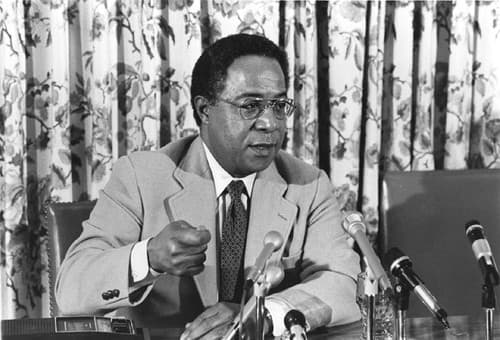
Alex Haley was an American writer and author, best known for his 1976 novel "Roots: The Saga of an American Family." This epic work traced his family history from Africa to slavery and freedom in the United States, becoming a cultural phenomenon and inspiring a television miniseries. He also co-authored "The Autobiography of Malcolm X" and wrote the novel "Queen." Haley received a special Pulitzer Prize citation for "Roots."
Similar books
- Roots: The Saga of an American Family
Alex Haley
4.4 (146k) average on GoodreadsHistorical FictionBoth are multigenerational sagas by the same author, exploring African American heritage and the impact of slavery.
- The Color Purple
Alice Walker
4.2 (521k) average on GoodreadsHistorical FictionExplores the lives of African American women in the early 20th century South, dealing with hardship and resilience.
- Beloved
Toni Morrison
3.9 (325k) average on GoodreadsLiterary FictionDeals with the traumatic legacy of slavery and its psychological impact on individuals and families.
- Middle Passage
Charles R. Johnson
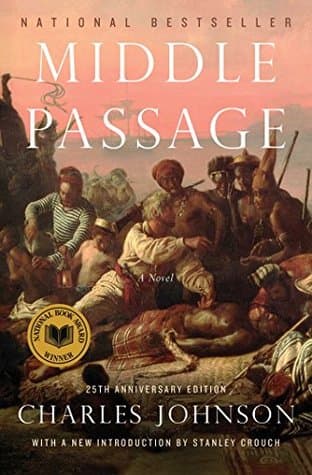
3.8 (4k) average on GoodreadsHistorical FictionMiddle Passage is a philosophical and adventurous novel that uses the transatlantic slave trade as a backdrop for existential questions about freedom, identity, and morality. It is more allegorical and satirical in tone. Queen, by contrast, is a more grounded historical fiction, deeply personal and biographical, focusing on the specific challenges and triumphs of a mixed-race woman navigating the socio-political landscape of 19th-century America. Johnson's work is a broader meditation, while Haley's is a specific family history.
- To Kill a Mockingbird
Harper Lee
4.3 (4.5M) average on GoodreadsHistorical FictionIn the 1930s Jim Crow South, Harper Lee writes about racial injustice, moral growth, and the quiet courage of a lawyer father, Atticus Finch, as seen through his young daughter's eyes.
- The Great Gatsby
F. Scott Fitzgerald
3.9 (3.8M) average on GoodreadsHistorical FictionIn the opulent Roaring Twenties, a mysterious millionaire's lavish parties hide his desperate, tragic pursuit of a lost love, exposing the emptiness within the American Dream.





Enjoyed the summary?
A summary gives you the shape of the book. The book itself has the detail, the examples and the voice.
Find Queen on AmazonAs an Amazon Associate, BookBrief earns from qualifying purchases. How we're funded