

Synopsis
Covers the whole plot, including the ending.
- Difficulty
- Medium
- Pacing
- Variable
- Mood
- Epic, Resilient, Heartbreaking, Informative, Hopeful
- Read it if
- You are interested in a sweeping, multi-generational historical saga of an African American family, tracing their origins from Africa through slavery and emancipation to modern times.
- Skip it if
- You prefer lighthearted stories or are not prepared for detailed and often graphic depictions of slavery and racial injustice.
Roots Plot Summary
Covers the whole plot, including the ending.
The Birth of Kunta Kinte
The story begins in 1750 in Juffure, Gambia. Kunta Kinte is born to Omoro and Binta Kinte, a respected Mandinka family. From a young age, Kunta learns his people's rich culture and traditions. He learns about his ancestors, honor, and survival skills like farming, hunting, and the Mandinka language. His grandfather, Kairaba, teaches him about his family line and spiritual connection to his heritage. Kunta completes the Fula initiation rites, becoming a man. He dreams of becoming a warrior and marrying a woman from his village, continuing his family's legacy.
Abduction and the Middle Passage
In 1767, at sixteen, Kunta Kinte goes into the forest near Juffure to find wood for a drum. Four white slave catchers ambush him. They overpower and chain him, dragging him away. He is forced onto the Lord Ligonier, a slave ship, enduring the brutal Middle Passage. Packed in the hold with hundreds of other Africans, Kunta suffers from disease, starvation, and constant violence. He sees terrible cruelty and death. His identity is systematically stripped away, yet he holds onto his Mandinka heritage and his will to live.
Arrival in America and Initial Resistance
Kunta Kinte and other captured Africans arrive in Annapolis, Maryland. They face a humiliating inspection and auction. John Waller, a rich planter from Spotsylvania County, Virginia, buys him. Kunta resists his new name, 'Toby,' given by the overseer, Ames. He tries to escape many times, driven by a strong desire for freedom and to return to Juffure. Each escape attempt brings harsh punishment, including brutal whippings. But Kunta's spirit does not break. He continues to speak his native Mandinka language whenever he can.
Life on the Waller Plantation
Kunta Kinte is assigned to work in the Waller plantation fields. He struggles with the unfamiliar tasks and slavery's harsh realities. His repeated escape attempts lead to his Achilles tendon being cut. This cruel act aims to stop him from running and break his spirit. This injury forces him to become a buggy driver for John Waller. Eventually, he bonds with Belle, the plantation cook. She offers him comfort and understanding. They marry, and Belle helps him navigate slave life, providing family and stability amid the oppression.
Kizzy's Birth and Sale
Kunta and Belle have a daughter, Kizzy. Kunta, despite the dangers, secretly teaches Kizzy about her African heritage. He tells her stories of Juffure and the Kinte clan. Kizzy grows into a strong, intelligent young woman. But her life takes a tragic turn. As a teenager, she helps a young slave boy write a pass to escape. Her act is discovered. John Waller, fearing rebellion, sells Kizzy away from her parents. This breaks their family bond and devastates Kunta and Belle.
Chicken George and the Mingo Plantation
Kizzy is sold to Tom Lea, a struggling, often cruel, white planter in North Carolina. Lea rapes Kizzy, and she gives birth to a son, George. George, known as 'Chicken George' for his skill in training fighting cocks, becomes valuable to Tom Lea. He helps Lea win large bets. Despite his relative privileges as a slave and his complicated relationship with Lea, George wants freedom for himself and his family. He marries Matilda, a religious slave, and they have several children, including Tom, continuing the Kinte line.
Freedom and Betrayal
Chicken George wins a major cockfight for Tom Lea, which should secure his freedom. However, Lea had bet George himself and lost a lot of money. Lea is forced to send George to England to work for seven years to pay off the debt. This is a devastating betrayal. George is separated from Matilda and their children, who remain enslaved. Despite the heartbreak, George works hard in England. He saves money and gains a wider view of life and freedom. He is determined to return and buy his family's liberty.
Post-Civil War Life and the Kinte Family's Resilience
When he returns from England, Chicken George finds the Civil War has ended. His family, along with millions of other enslaved people, is now free. He reunites with Matilda and their children, including Tom, who has become a skilled blacksmith. The family faces the huge challenges of Reconstruction. These include poverty, racial prejudice, and the struggle to get their own land and livelihoods. They move to Henning, Tennessee, where they work hard to build a new life. They establish themselves as farmers and craftsmen, holding onto their family bonds and the stories passed down through generations.
Tom Murray and Cynthia
Tom Kinte, Chicken George's son, becomes a respected blacksmith in Henning, Tennessee. He and his wife, Irene, have a daughter named Cynthia. Cynthia carries on the family's resilience and pride. She hears the stories of Kunta Kinte from her elders, though details become more legendary over time. Cynthia marries Will Palmer, a successful lumber mill worker. Their marriage brings economic stability and community for the Kinte family in the post-slavery era. They work to build a future for their children.
Bertha and Simon Haley
Cynthia's daughter, Bertha George Palmer, grows up in Henning, Tennessee. She marries Simon Alexander Haley, a college-educated professor. Their marriage marks a major step forward for the Kinte descendants. They move beyond manual labor into intellectual and professional careers. Bertha, like her ancestors, keeps family stories. She passes them to her children, including her son, Alex Haley. She tells tales of 'the African' and his journey, starting Alex's lifelong quest to trace his family's origins. This sets the stage for the book itself.
Alex Haley's Quest for Roots
Inspired by his grandmother Bertha's stories of 'the African' who called the river 'Kamby Bolongo' and was captured while chopping wood, Alex Haley begins a long journey. Now a successful writer, he spends a decade tracing his family's roots. He travels widely, researching historical documents, slave ship manifests, and oral traditions. His search leads him to the National Archives, libraries, and eventually, to Gambia, West Africa. There, he connects with griots, traditional oral historians. They confirm the story of Kunta Kinte of Juffure, captured in 1767.
The Discovery of Juffure
Alex Haley's tireless research leads to the amazing discovery of Juffure, Kunta Kinte's ancestral village in Gambia. He meets the Kinte clan's griot, who recites the family's oral history. It details Kunta Kinte's birth, abduction, and ancestors' names. This perfectly matches the stories passed down through generations in America. This deep moment of connection brings Haley face-to-face with his heritage. It confirms his grandmother's tales and gives him a strong sense of closure and identity, linking two continents and two centuries of family history.
Principal Figures
Kunta Kinte
Protagonist
The proud Mandinka warrior abducted from Africa and enslaved in America.
Kunta Kinte is a proud and intelligent Mandinka youth from Juffure, Gambia. He is deeply rooted in his culture, traditions, and the values of his family. After being brutally abducted and brought to America, he embodies an unyielding spirit of resistance and a profound desire for freedom. He struggles constantly against the dehumanization of slavery, clinging to his African identity and language. Though physically broken by the system, his spirit remains unbroken, and he strives to pass on his heritage to his daughter, Kizzy.
Relationships: Omoro Kinte (Father, taught him Mandinka traditions); Binta Kinte (Mother, loving and supportive); Belle (Wife, fellow slave, source of comfort and family); Kizzy (Daughter, recipient of his African heritage and stories)
Belle
Supporting
The plantation cook who becomes Kunta Kinte's wife and offers him solace.
Belle is a kind, nurturing, and pragmatic enslaved woman who works as a cook on the Waller plantation. She understands the harsh realities of slavery but has learned to navigate its dangers with quiet strength and resilience. She provides Kunta Kinte with much-needed comfort, love, and a sense of family, helping him adapt to his new life while respecting his fierce independence and African heritage. Belle is a pillar of support and a source of wisdom for Kunta, and later, for their daughter, Kizzy.
Relationships: Kunta Kinte (Husband, source of deep love and respect); Kizzy (Daughter, whom she protects and nurtures)
Kizzy
Protagonist
Kunta Kinte's spirited daughter, sold away and mother to Chicken George.
Kizzy is the only child of Kunta Kinte and Belle, inheriting her father's intelligence and spirited nature. She grows up hearing stories of Africa and cherishing her heritage. Her teenage act of kindness in helping another slave escape leads to her being cruelly sold away from her family. Kizzy endures the additional trauma of being raped by her new master, Tom Lea, and gives birth to their son, George. Despite her suffering, she remains strong and determined to instill a sense of pride and family history in her son.
Relationships: Kunta Kinte (Father, taught her about Africa); Belle (Mother, loving and protective); Tom Lea (Master and rapist, father of her son); Chicken George (Son, to whom she passes on the family history)
Chicken George (George Lea)
Protagonist
Kizzy's son, a skilled cockfighter who eventually earns his freedom.
George, known as 'Chicken George,' is the son of Kizzy and Tom Lea. He is a charismatic and intelligent slave, famous for his exceptional skill in training fighting cocks. Despite the privileges this skill affords him, George deeply yearns for freedom for himself and his family. He is a complex character, loyal to his family but also pragmatic in his dealings with white masters. His journey takes him to England and back, and he becomes a central figure in leading his family towards a new life after emancipation.
Relationships: Kizzy (Mother, taught him family history); Matilda (Wife, a religious and supportive partner); Tom Lea (Master and biological father, a complex and often cruel relationship); Tom Harvey (Son, continues the family line)
Matilda
Supporting
Chicken George's devout wife and the mother of his children.
Matilda is Chicken George's wife and the mother of their many children. She is a deeply religious woman, finding strength and solace in her faith amidst the harsh realities of slavery. Matilda is a steadfast and loving partner, providing a moral compass and emotional anchor for George and their family. She endures George's forced separation with resilience, maintaining their home and continuing to raise their children with strong values, embodying the spiritual endurance of the enslaved community.
Relationships: Chicken George (Husband, whom she deeply loves and supports); Tom Harvey (Son, whom she raises with strong faith)
Tom Harvey
Supporting
Chicken George's son, a skilled blacksmith and family patriarch after emancipation.
Tom Harvey is the son of Chicken George and Matilda. He is a skilled blacksmith, a trade that provides him and his family with a valuable livelihood both before and after emancipation. Tom is practical, hardworking, and dedicated to his family. He takes on the role of patriarch after his father's return and helps lead the family in establishing a new life in Henning, Tennessee. He embodies the industriousness and determination of the first generation of freedmen, striving for economic independence and stability.
Relationships: Chicken George (Father, whom he respects and learns from); Matilda (Mother, instills strong values); Irene (Wife, shares in building their new life); Cynthia (Daughter, continues the Kinte legacy)
Cynthia
Supporting
Tom Harvey's daughter, who marries Will Palmer and helps establish the family in Henning.
Cynthia is the daughter of Tom Harvey and Irene. She represents a generation that grows up in the early years of freedom, still bearing the scars of the past but looking towards a brighter future. Cynthia is a strong and resilient woman who marries Will Palmer, a successful lumber mill worker. Their union signifies further progress for the Kinte descendants, moving towards greater economic stability and community integration in Henning, Tennessee. She is a vital link in the chain of family storytellers.
Relationships: Tom Harvey (Father, a respected role model); Will Palmer (Husband, a supportive partner in building their life); Bertha George Palmer (Daughter, continues the storytelling tradition)
Bertha George Palmer
Supporting
Cynthia's daughter, Alex Haley's grandmother, who keeps the family stories alive.
Bertha George Palmer is Cynthia's daughter and the grandmother of Alex Haley. She is a crucial figure in the narrative, as she is the primary keeper and teller of the family's oral history, particularly the stories of 'the African' and his journey. Bertha's vivid and consistent recounting of these tales, including details like 'Kamby Bolongo,' directly inspires Alex Haley's genealogical quest. She represents the enduring power of oral tradition and the vital role of women in preserving cultural memory.
Relationships: Cynthia (Mother, from whom she learned family history); Simon Alexander Haley (Husband, a college-educated professor); Alex Haley (Grandson, to whom she passes the family legacy)
Alex Haley
Protagonist/Narrator
The author and descendant of Kunta Kinte, who traces his family roots.
Alex Haley is the author and the seventh-generation descendant of Kunta Kinte. He is driven by a profound need to uncover and authenticate his family's oral history, a quest sparked by his grandmother Bertha's stories. Haley is a meticulous researcher, embarking on a decade-long, international journey to piece together the fragments of his family's past. His dedication and perseverance lead to the astonishing discovery of his African ancestors, culminating in the writing of 'Roots.' He represents the culmination of generations of struggle and the power of historical truth.
Relationships: Bertha George Palmer (Grandmother, the primary source of his initial inspiration); Kunta Kinte (Ancestral patriarch, whose story he meticulously reconstructs)
Themes & Insights
The Indomitability of the Human Spirit
This theme is key to 'Roots,' showing a strong will to survive and keep dignity despite immense suffering. Kunta Kinte shows this by refusing the name 'Toby' and trying to escape many times, even after his Achilles tendon is cut. His spirit stays strong, and he finds ways to pass on his heritage. Later generations, like Kizzy enduring rape and separation, and Chicken George navigating betrayal, all show incredible resilience. Their ability to find love, build families, and work for a better future, despite oppression, highlights the lasting strength of the human spirit.
“For the first time, he was seeing not just a black man, but a Kinte. He was seeing the spirit of his ancestors, the fire that had burned in Kunta, in Kizzy, in George, in Tom. It was in him too.”
The Power of Identity and Heritage
The fight to keep and regain identity is a core theme. Kunta Kinte's refusal to give up his Mandinka name and language, even under torture, is a strong act of resistance. He secretly teaches Kizzy about Juffure, making sure the stories and names are passed down. This oral tradition, from Kunta to Kizzy, to Chicken George, to Tom, to Cynthia, and finally to Bertha, forms the family's identity. Alex Haley's quest is the best example of this theme. He rebuilds a lost heritage, showing how connecting to one's roots brings strength, pride, and belonging.
“He knew that one day, he would go home. And if not him, then his children. And if not his children, then his children's children. But a Kinte would return to Juffure.”
The Dehumanizing Impact of Slavery
'Roots' clearly shows slavery's brutal and dehumanizing nature. The Middle Passage, with its terrible cruelty and loss of life, sets the tone. On plantations, characters like Kunta Kinte lose their names, language, and freedom. They are treated as property, facing physical violence, sexual assault (as with Kizzy), and constant threats of family separation. The story shows how slavery tried to erase its victims' humanity, turning people into goods and destroying cultural ties. Yet, it also shows the ongoing fight against this dehumanization.
“The white man had taken his name, his home, his freedom. But he would never take his spirit.”
The Importance of Family and Oral Tradition
Family is the basis of survival and resistance throughout the book. The Kinte family's ability to endure and eventually succeed comes directly from their commitment to each other and keeping their shared history. Kunta's stories of Juffure become a sacred trust passed down through generations. The oral tradition, seen in griots in Africa and grandmothers like Bertha in America, is a vital link. It connects the present to the past and gives a sense of identity and purpose that slavery tried to destroy. This theme ends with Alex Haley's successful family search, which proves the power of these family stories.
“Every griot in Gambia, like every family elder in America, was a living, walking library. They were the human record of who you were, and where you came from.”
The Journey Towards Freedom and Self-Determination
From Kunta Kinte's first escape attempts to Chicken George and Tom Harvey's post-Civil War struggles, the desire for freedom and self-determination drives the story. For Kunta, it is about physical escape and keeping inner liberty. For Kizzy, it is about protecting her child and passing on heritage. For Chicken George, it is about earning freedom for his family. After emancipation, this journey changes to achieving economic independence, owning land, and building a community, as seen with Tom and Cynthia in Henning. The story shows that freedom is not just the absence of chains, but the ability to define one's own life and future.
“A man's freedom, he learned, was not a gift from God. It was a fight to be won, every single day.”
Plot Devices & Literary Techniques
Oral Tradition / Griot
The passing down of history and culture through spoken word.
Oral tradition is the foundational plot device, serving as the primary vehicle for the Kinte family's history. In Africa, the griot system meticulously preserves lineage and events. In America, this transforms into the family stories passed from Kunta to Kizzy, and down through generations, culminating in Bertha's tales to Alex Haley. These stories, containing specific details like 'Kamby Bolongo' and 'the African' chopping wood, act as crucial clues that enable Alex Haley to connect his American family history to its African origins, effectively bridging two continents and centuries of time.
The Achilles Tendon Injury
A physical act of violence that symbolically breaks Kunta's ability to run but not his spirit.
The severing of Kunta Kinte's Achilles tendon by the slave overseer, Ames, is a pivotal and brutal plot device. Physically, it cripples Kunta, preventing further escape attempts and forcing him into a less physically demanding role as a buggy driver. Symbolically, however, it fails to break his spirit. Instead, it redirects his resistance from physical flight to cultural preservation, compelling him to pass on his African heritage to his daughter, Kizzy. This act highlights the cruelty of slavery while simultaneously underscoring Kunta's enduring internal strength and his shift in focus to ensuring his legacy lives on.
The Family Name 'Kinte'
A name that represents identity, heritage, and continuity through generations.
The name 'Kinte' is a powerful symbol of identity and heritage throughout the narrative. Kunta's desperate attempts to hold onto his name, even after being renamed 'Toby,' underscore its importance. Though the name itself is largely lost in the American generations, the *memory* of 'the African' and his family, passed down through the generations, serves the same purpose. Alex Haley's ultimate discovery of the name 'Kunta Kinte' and the 'Kinte' clan in Juffure provides a profound sense of closure and validation, reconnecting a lost lineage and demonstrating the enduring power of a name to embody an entire history and culture.
The Lord Ligonier
The slave ship that transports Kunta Kinte and symbolizes the Middle Passage.
The Lord Ligonier is not just a vessel but a powerful symbol of the Middle Passage and the forced migration of Africans to America. Its description vividly portrays the inhumane conditions, suffering, and dehumanization endured by Kunta Kinte and countless others. The ship represents the violent rupture from home, culture, and freedom. It is the crucible where Kunta's physical journey into slavery begins, and its historical reality grounds the personal narrative in the broader, tragic history of the transatlantic slave trade, making the journey tangible and horrific.
Roots Quotes
“He was a Kinte. And to the Kintes, a child was not a child until he was named.”
“Every time I hear the wind blow, I hear the names of my people.”
“Dat's de onliest way you kin keep yo' head up, Toby. You gotta know who you is.”
“A sound as old as time, a sound as new as the first breath of a child, a sound that would echo down through generations...”
“It was not enough to survive. One had to live.”
“Every generation must find its own way to fight the good fight.”
“Dat's de way it always is, ain't it? De white folks always got de power.”
“The past, he knew, was not just something that happened; it was something that lived.”
“He had heard it said that a man could not be truly free until he had fought for his freedom.”
“Roots, he thought. That was it. Roots. The deepest part of you.”
“And the drumming, the constant drumming, was the heartbeat of Africa.”
“He knew that one day he would return to his homeland, no matter how long it took.”
“Every scar on his body was a story, a testament to what he had endured.”
“He felt in his heart that he was a free man, even if his body was in chains.”
Quiz
10 questions on the plot and the characters. Each answer comes with a short explanation.
Question 1
What was the name of the African ancestor Alex Haley's grandmother spoke of, who was abducted from his village?
- Toby Waller
- Kunta Kinte
- Chicken George
- Tom Lea
Show answer
B. Kunta Kinte Alex Haley's extensive research confirmed the name of 'the African' ancestor as Kunta Kinte, who was abducted from Juffure.
Question 2
In what year was Kunta Kinte abducted from his village in The Gambia?
- 1750
- 1776
- 1767
- 1789
Show answer
C. 1767 The provided text explicitly states that Kunta Kinte was abducted in 1767 at the age of sixteen.
Question 3
What was Kunta Kinte doing when he was captured by four men in the forest?
- Hunting for food
- Gathering herbs for medicine
- Chopping wood to make a drum
- Fishing in the Kamby Bolongo
Show answer
C. Chopping wood to make a drum Haley's grandmother's stories, as recounted in the text, stated that Kunta Kinte 'had been out in the forest one day chopping wood to make a drum when he was set upon by four men.'
Question 4
What was the name of the slave ship that transported Kunta Kinte from Africa to Colonial America?
- The Mayflower
- The Queen Anne's Revenge
- The Lord Ligonier
- The Amistad
Show answer
C. The Lord Ligonier The text states that Kunta Kinte was 'taken on the Lord Ligonier to Maryland and sold to a Virginia planter.'
Question 5
How many years did Alex Haley spend on his genealogical research for 'Roots'?
- Five years
- Ten years
- Fifteen years
- Twenty years
Show answer
B. Ten years The passage states, 'It took ten years and a half a million miles of travel across three continents to find it.'
Question 6
Where was Kunta Kinte first taken ashore in Colonial America?
- Jamestown, Virginia
- Charleston, South Carolina
- Annapolis, Maryland
- New Orleans, Louisiana
Show answer
C. Annapolis, Maryland The text states, 'On September 29, 1967, he stood on the dock in Annapolis where his great-great-great-great-grandfather was taken ashore on September 29, 1767.'
Question 7
What is the primary message or theme that 'Roots' conveys to 'all people and all races everywhere,' according to the description?
- The importance of economic prosperity
- The beauty of African landscapes
- The indomitability of the human spirit
- The challenges of modern genealogy
Show answer
C. The indomitability of the human spirit The final sentence of the description explicitly states: 'But Roots speaks, finally, not just to blacks, or to whites, but to all people and all races everywhere, for the story it tells is one of the most eloquent testimonials ever written to the indomitability of the human spirit.'
Question 8
What specific detail did Alex Haley's grandmother mention about the 'Kamby Bolongo' that helped him in his research?
- It was a sacred hunting ground.
- It was a large body of water near where 'the African' lived.
- It was the name of a specific tree species.
- It was the name of a rival village.
Show answer
B. It was a large body of water near where 'the African' lived. The text states his grandmother said Kunta Kinte 'had lived across the ocean near what he called the 'Kamby Bolongo'', implying it was a geographical feature, specifically a body of water (the Gambia River). This detail was crucial for Haley's research.
Question 9
Beyond his own family's history, what broader impact did Alex Haley's 'Roots' have on '25,000,000 Americans of African descent'?
- It provided them with a new form of entertainment.
- It helped them discover a rich cultural heritage that slavery had taken away.
- It encouraged them to move back to Africa.
- It inspired them to become professional genealogists.
Show answer
B. It helped them discover a rich cultural heritage that slavery had taken away. The passage explains, 'He has rediscovered for an entire people a rich cultural heritage that slavery took away from them, along with their names and their identities.'
Question 10
What diverse range of occupations did Kunta Kinte's descendants pursue over the two centuries covered in 'Roots'?
- Only farmers and domestic servants
- Slaves and freedmen, farmers, blacksmiths, lumber mill workers, Pullman porters, lawyers, and architects
- Mostly slave owners and plantation managers
- Only politicians and military leaders
Show answer
B. Slaves and freedmen, farmers, blacksmiths, lumber mill workers, Pullman porters, lawyers, and architects The text explicitly lists these roles: 'slaves and freedmen, farmers and blacksmiths, lumber mill workers and Pullman porters, lawyers and architects—and one author.'
Roots FAQ
What is the central premise of 'Roots'?
'Roots: The Saga of an American Family' traces the lineage of Alex Haley, beginning with his ancestor Kunta Kinte, a Mandinka youth abducted from Juffure, Gambia, in 1767. The book chronicles Kunta's enslavement in America and the subsequent generations of his family, detailing their struggles, resilience, and eventual journey towards freedom and self-discovery over two centuries.
Who is Kunta Kinte and what is his significance to the story?
Kunta Kinte is the foundational character, a sixteen-year-old Mandinka boy from Juffure, Gambia, who is forcibly taken from his homeland and enslaved in Colonial America. His unwavering spirit, deep connection to his African heritage, and determination to resist the dehumanizing aspects of slavery serve as the initial spark for the family's enduring legacy and cultural memory.
How does the story progress after Kunta Kinte's generation?
Following Kunta Kinte, the narrative details the lives of his daughter Kizzy, her son George (Chicken George), and subsequent generations including Tom, Cynthia, Bertha, and finally Alex Haley himself. Each generation faces unique challenges under slavery and then in post-emancipation America, reflecting the evolving social and political landscape for Black Americans.
What role does the 'Kamby Bolongo' play in Kunta Kinte's memory?
The 'Kamby Bolongo' is Kunta Kinte's Mandinka name for the Gambia River, a significant geographical landmark in his homeland. It serves as a powerful symbol of his origins, a constant reminder of the life he lost, and a piece of his identity he desperately tries to pass on to his daughter, Kizzy, despite the brutal realities of slavery.
How did Alex Haley authenticate his family's oral history?
Alex Haley undertook extensive genealogical research, traveling across three continents for ten years. He meticulously cross-referenced his grandmother's oral accounts with historical records, eventually identifying Kunta Kinte, his village of Juffure, and the slave ship Lord Ligonier, even standing on the Annapolis dock where his ancestor arrived exactly 200 years prior.
What specific details does Haley include about Kunta Kinte's life in Africa?
Haley vividly describes Kunta Kinte's childhood in Juffure, including his Mandinka coming-of-age rituals, his training in farming and hunting, and his deep respect for his family and community traditions. These details establish his strong identity and the profound cultural loss he experiences upon abduction.
What is the significance of Kunta Kinte's repeated escape attempts?
Kunta's persistent escape attempts, despite severe punishment, highlight his unyielding desire for freedom and his refusal to accept his enslaved status. They symbolize the broader human yearning for liberty and serve as a testament to his unbreakable spirit, even when his foot is eventually cut off.
How does Kizzy embody both her father's legacy and the realities of slavery?
Kizzy inherits her father's spirit and the stories of Africa, but she is also born into slavery and endures its horrors, including being sold away from her mother and forced into sexual servitude. She becomes a conduit for Kunta's memory, passing down his tales and a sense of identity to her own son, George, despite her own immense suffering.
What psychological impact does the constant threat of family separation have on the characters?
The omnipresent threat of family separation, exemplified by Kizzy being sold away from her mother Bell, creates deep-seated trauma, anxiety, and a fierce, protective love among the enslaved characters. It underscores the psychological warfare inherent in slavery, designed to break bonds and diminish hope, yet it often strengthens the resolve to maintain familial connections.
How does 'Chicken George' navigate his identity as a biracial enslaved man?
Chicken George, the son of Kizzy and his enslaver Tom Lea, develops a complex identity, skillfully maneuvering between the worlds of the enslaved and his white father. His talent with gamecocks provides him with a degree of agency and unique privileges, yet he remains enslaved, constantly reminded of his precarious position and the injustices faced by his family.
What is the broader message about the 'indomitability of the human spirit' that the book conveys?
Through the generations of the Kinte family, 'Roots' illustrates the enduring strength of the human spirit in the face of unimaginable brutality and systemic oppression. Each character, from Kunta's defiance to Chicken George's resilience and later generations' pursuit of education and professional success, demonstrates an unwavering will to survive, maintain identity, and strive for a better future.
How does the narrative challenge conventional understandings of American history?
'Roots' profoundly challenges the sanitized versions of American history by placing the brutal realities of slavery and its enduring impact at the forefront. It humanizes the enslaved, giving them voices, histories, and complex internal lives, thereby forcing readers to confront the foundational injustices upon which much of American society was built and the ongoing legacies of racial inequality.
What is the significance of the family names and oral traditions throughout the book?
The preservation of family names, especially 'Kinte,' and the oral traditions passed down through generations are central to maintaining identity and cultural heritage against the efforts of slavery to strip them away. These stories and names act as anchors, connecting each descendant to their African origins and providing a sense of belonging and historical continuity.
How do the post-Civil War generations, like Tom and Cynthia, continue the family's struggle for dignity?
After the Civil War, characters like Tom, a skilled blacksmith, and his daughter Cynthia, continue the fight for dignity by striving for economic independence and establishing stable family lives. They navigate the new challenges of Reconstruction and Jim Crow, demonstrating resilience through hard work, community building, and passing on the values of perseverance and self-respect to their children.
What is the lasting legacy of 'Roots' for African Americans and American society as a whole?
'Roots' provided a powerful narrative that reconnected millions of African Americans to their ancestral heritage, offering a sense of pride and a re-claimed history that slavery had attempted to erase. For American society, it served as a crucial catalyst for understanding the profound human cost of slavery and its enduring impact on national identity and race relations, fostering a deeper, albeit often painful, dialogue about the past.
How does the character of Bell, Kunta Kinte's wife, contribute to his survival and the family's continuity?
Bell, a fellow enslaved person, provides Kunta Kinte with companionship, emotional support, and a practical understanding of navigating the brutal realities of plantation life. Her love and resilience enable him to find a measure of solace and purpose in raising their daughter, Kizzy, ensuring that his African heritage and stories have a chance to be passed down.
What parallels can be drawn between Kunta Kinte's struggle for identity and the later generations' experiences?
Kunta Kinte's initial struggle to retain his African identity and language is mirrored in subsequent generations' fights for freedom, education, and professional recognition. Each generation, though facing different forms of oppression, consistently strives to assert their humanity and heritage against systems designed to deny it, showcasing a continuous thread of resistance and self-determination.
About the author
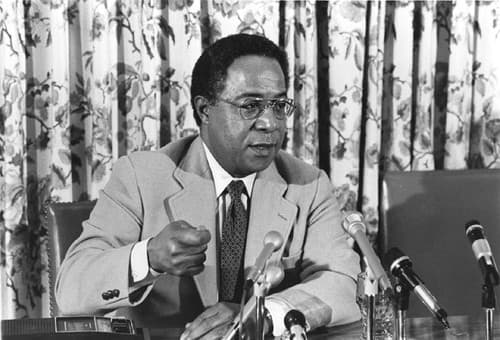
Alex Haley was an American writer and author, best known for his 1976 novel "Roots: The Saga of an American Family." This epic work traced his family history from Africa to slavery and freedom in the United States, becoming a cultural phenomenon and inspiring a television miniseries. He also co-authored "The Autobiography of Malcolm X" and wrote the novel "Queen." Haley received a special Pulitzer Prize citation for "Roots."
Similar books
- The Underground Railroad
Colson Whitehead
4.0 (290k) average on GoodreadsLiterary FictionExplores the brutality of slavery and the fight for freedom with a powerful, immersive narrative.
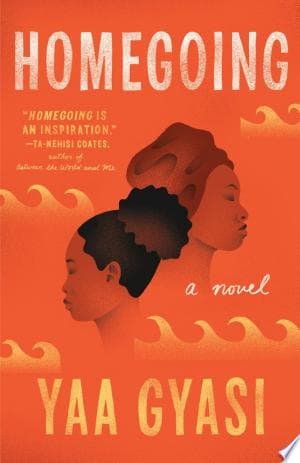
- Homegoing
Yaa Gyasi
4.4 (175k) average on GoodreadsLiterary FictionTraces the descendants of two half-sisters in Ghana, one remaining in Africa, the other sold into slavery, across generations.
- Beloved
Toni Morrison
3.9 (325k) average on GoodreadsLiterary FictionA poignant and haunting exploration of the psychological scars of slavery and its aftermath.
- To Kill a Mockingbird
Harper Lee
4.3 (4.5M) average on GoodreadsHistorical FictionIn the 1930s Jim Crow South, Harper Lee writes about racial injustice, moral growth, and the quiet courage of a lawyer father, Atticus Finch, as seen through his young daughter's eyes.
- The Great Gatsby
F. Scott Fitzgerald
3.9 (3.8M) average on GoodreadsHistorical FictionIn the opulent Roaring Twenties, a mysterious millionaire's lavish parties hide his desperate, tragic pursuit of a lost love, exposing the emptiness within the American Dream.
- Pride and Prejudice
Jane Austen
4.3 (3M) average on GoodreadsHistorical FictionIn a society focused on status and money, Elizabeth Bennet navigates love and pride, challenging Mr. Darcy and social expectations to find true affection.





Enjoyed the summary?
A summary gives you the shape of the book. The book itself has the detail, the examples and the voice.
Find Roots on AmazonAs an Amazon Associate, BookBrief earns from qualifying purchases. How we're funded