
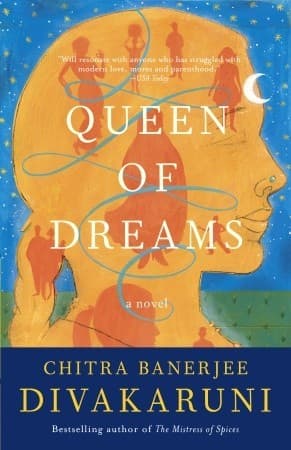
Synopsis
Covers the whole plot, including the ending.
- Difficulty
- Medium
- Pacing
- Moderate
- Mood
- Introspective, Melancholy, Hopeful, Cultural
- Read it if
- You enjoy introspective stories about mother-daughter relationships, cultural identity, and the process of grief and self-discovery.
- Skip it if
- You prefer fast-paced plots with high fantasy elements or straightforward narratives without much introspection.
Queen of Dreams Plot Summary
Covers the whole plot, including the ending.
A Mother's Gift and a Daughter's Struggle
Rakhi, a painter and single mother to Jona, lives in Berkeley, California. She co-owns a teahouse with her friend, Belle. Rakhi is in a creative slump, struggling with her art and co-parenting with her ex-husband, Sonny, a popular DJ. Her mother, a known dream-teller, is always present but emotionally distant, rarely speaking of her past in India. Rakhi feels a growing gap from her mother, who seems focused on her dream-telling clients and her own thoughts, leaving Rakhi feeling lost and wanting a deeper connection.
A World Upended
The story happens during a national tragedy—likely 9/11—which affects Rakhi's community and personal life. The event increases existing worries and biases, especially for the South Asian community in America. Rakhi feels more isolated and scared, and the tragedy shows her great need for her mother's comfort and wisdom. This shared trauma makes Rakhi feel more vulnerable and long for family connection.
Sudden Loss and Lingering Grief
After the national tragedy, Rakhi's mother dies in a car accident. This sudden loss shatters Rakhi's world, leaving her deep in grief and feeling incomplete. Her mother's absence, especially when Rakhi felt she needed her most, creates a void. The accident feels jarring because it is so ordinary and random, contrasting with her mother's mystical life, leaving Rakhi searching for meaning.
The Discovery of Secrets
Amid her grief, Rakhi finds her mother's hidden dream journals. These journals are not just records of dreams told to clients, but also a personal account of her mother's inner life, experiences, and connection to dream-telling. As Rakhi reads these writings, she starts to piece together her mother's past, including her life in India and her sacrifices. The journals become a way to understand the woman her mother truly was, far more complex than Rakhi had known.
A Mother's Past Unveiled
The journals show the often painful history of Rakhi's mother, especially her time as a young woman in India. Rakhi learns about her mother's arranged marriage, the difficulties she faced, and the powerful, sometimes heavy, nature of her inherited dream-telling gift. The journals detail how her mother came to use her abilities to guide and heal others, but also how they isolated her. This helps Rakhi understand her mother's emotional distance, realizing it was not a lack of love, but a result of her unique and demanding path.
Reconnecting with Her Father
The insights from her mother's journals make Rakhi look again at her relationship with her father, who has also been distant. As she talks with him, prompted by her new understanding of her mother's past, she uncovers more family history. Her father, previously quiet, begins to open up, sharing his views on their marriage and the life they built. This shared grief and the journal revelations create an unexpected link between Rakhi and her father, allowing them to connect more deeply.
Confronting Fears and Finding Voice
As Rakhi explores her mother's world through the journals, she begins to face her own fears and creative block. The journals not only show her mother's past but also subtly challenge Rakhi to embrace her own artistic voice. She realizes that her mother's gift, though different from her own, was also a form of art and a way to understand the world. This journey helps Rakhi overcome her creative block, inspiring her to paint again with new purpose and a deeper understanding of her heritage and identity.
Revisiting Sonny
The changes in Rakhi, caused by her mother's death and the discoveries, also affect her relationship with Sonny, her ex-husband and Jona's father. As Rakhi grows, she starts to see Sonny differently, recognizing his lasting qualities and their shared history. The grief and self-discovery allow her to lower her guard and reconsider reconciliation or at least a deeper, more understanding connection. She realizes her emotional state has shifted, opening her heart to possibilities she had dismissed.
Embracing the Legacy
Towards the end, Rakhi starts to feel a connection to her mother's abilities. While she does not become a dream-teller in the same way, she begins to understand the deeper meaning and power of dreams, and perhaps even experiences subtle signs of her mother's gift within herself. This new sensitivity allows her to feel her mother's presence, not just in memory, but as a lasting legacy. She realizes her mother's wisdom has passed down, changing her own view of reality and her place in it.
A New Beginning
By the end of the novel, Rakhi has changed a lot. She has grieved her mother, made up with her father, and found her artistic passion again. She understands her heritage and her mother's complex life better. The teahouse, her business with Belle, remains a stable part of her life. Rakhi comes out of her grief and self-discovery with a new sense of purpose and identity, ready to face the future, perhaps with Sonny, and with a richer understanding of herself and her family's history.
Principal Figures
Rakhi
Protagonist
A struggling painter and single mother who embarks on a journey of self-discovery after her mother's death.
Rakhi is an Indian-American painter living in Berkeley, grappling with a creative dry spell, the challenges of single motherhood to Jona, and a complex relationship with her ex-husband, Sonny. She co-owns a teahouse with her best friend, Belle. Initially, Rakhi feels a disconnect from her enigmatic dream-teller mother, yearning for a deeper understanding of her past and her mystical abilities. She is observant, artistic, and often introspective, but struggles with expressing her deeper emotions and finding her own distinct voice.
Relationships: Mother (unnamed) (Daughter, initially distant but deeply loved; later a source of profound discovery.); Sonny (Ex-husband and co-parent, with lingering romantic tension.); Jona (Daughter, a source of joy and responsibility.); Belle (Best friend and business partner, a confidante.)
Rakhi's Mother (unnamed)
Supporting/Posthumous Catalyst
A renowned and enigmatic dream-teller whose hidden journals unlock the family's past.
Rakhi's mother is a powerful and respected dream-teller within her community, known for her ability to interpret and guide others through their dreams. She is a woman of deep spiritual insight but also carries a profound sense of privacy and emotional distance, rarely speaking about her past in India. Her life is dedicated to her unique gift, which often isolates her from conventional life. Despite her reserve, her love for Rakhi is evident, though expressed in subtle ways. Her death serves as the primary catalyst for Rakhi's journey.
Relationships: Rakhi (Mother, initially perceived as distant but revealed to be deeply loving and complex.); Rakhi's Father (Husband, a partner in an often unspoken understanding.)
Sonny
Supporting
Rakhi's charming ex-husband, a DJ, with whom she shares a complex co-parenting relationship.
Sonny is a hip and charismatic Bay Area DJ, Rakhi's ex-husband, and the father of Jona. He maintains a friendly, albeit sometimes tense, relationship with Rakhi, often trying to bridge the gap between them. He represents a more modern, Americanized aspect of Rakhi's life, contrasting with her mother's traditional roots. Sonny is generally supportive of Rakhi, particularly in co-parenting, and there are clear indications of lingering affection and unresolved feelings between them. He is grounded and practical, offering a counterpoint to Rakhi's artistic and introspective nature.
Relationships: Rakhi (Ex-husband, co-parent, with potential for rekindled romance.); Jona (Father, loving and involved.); Rakhi's Mother (Ex-mother-in-law, a figure of respect and slight mystification.)
Jona
Supporting
Rakhi's young daughter, a source of love and grounding in her mother's life.
Jona is Rakhi's young daughter, a bright and curious child who provides a constant source of joy and responsibility for Rakhi. She represents the future and the tangible connection between Rakhi and Sonny. Jona is observant and sensitive, often reflecting the emotional currents around her. Her presence reminds Rakhi of her duties and pushes her to find stability and meaning, even amidst personal turmoil. She is a symbol of innocence and the hope for a new generation that bridges cultural divides.
Relationships: Rakhi (Daughter, deeply loved and cared for.); Sonny (Daughter, beloved by her father.); Rakhi's Mother (Granddaughter, a source of gentle affection.)
Belle
Supporting
Rakhi's best friend and business partner, offering practical support and friendship.
Belle is Rakhi's best friend and co-owner of the teahouse. She is a pragmatic and supportive presence in Rakhi's life, providing a sounding board for her artistic struggles and personal dilemmas. Belle is a loyal confidante, offering a grounded perspective to Rakhi's more introspective nature. She represents the stability of friendship and the practical demands of running a business, often encouraging Rakhi to focus on the present and maintain her responsibilities. Her friendship is a consistent source of comfort and normalcy for Rakhi.
Relationships: Rakhi (Best friend and business partner, a trusted confidante.)
Rakhi's Father (unnamed)
Supporting
A quiet and initially distant figure who later opens up about his past and his wife's life.
Rakhi's father is initially presented as a somewhat distant and reserved figure, particularly in contrast to his mystical wife. He is a traditional Indian man who has adapted to life in America but holds his past close. After his wife's death, and prompted by Rakhi's discoveries in the journals, he begins to open up, sharing his perspective on their marriage and his wife's unique gift. He embodies the quiet strength and resilience of his generation, and his revelations help Rakhi piece together a fuller picture of her family's history.
Relationships: Rakhi (Father, initially distant but later forms a closer bond.); Rakhi's Mother (Husband, a man who loved and supported his enigmatic wife.)
The Dream-Telling Clients
Mentioned
Various individuals who seek Rakhi's mother's guidance through their dreams.
These are the numerous individuals who regularly consult Rakhi's mother for her dream interpretations. While none are individually central to the plot, their collective presence highlights the mother's reputation and the importance of her gift within the community. Their dreams, sometimes briefly described, offer glimpses into the universal human anxieties, hopes, and fears, and underscore the profound impact Rakhi's mother had on people's lives. They serve to establish the mystical and culturally rich atmosphere surrounding Rakhi's mother.
Relationships: Rakhi's Mother (Clients seeking guidance and interpretation of their dreams.)
Themes & Insights
Identity and Belonging
The novel looks at the complexities of identity for Indian-Americans, especially Rakhi's effort to balance her heritage with her modern American life. She feels 'between' two cultures, a feeling made worse by her mother's mysterious past and her father's silence. The national tragedy further highlights issues of being an outsider and belonging. By uncovering her mother's story, Rakhi begins to understand how her heritage shapes her, allowing her to form a more complete self that includes both her Indian roots and her American upbringing.
“I was a woman caught between worlds, an artist caught between canvases, a daughter caught between the stories my mother told and the ones she kept hidden.”
Mother-Daughter Relationships and Legacy
At its core, the book is about the intricate and often unspoken bond between mothers and daughters. Rakhi's relationship with her mother is central, marked by both love and emotional distance. Her mother's death forces Rakhi to truly 'see' her mother, not just as a parent, but as a complex woman with her own history, sacrifices, and gifts. The dream journals help Rakhi understand her mother's legacy, both the mystical gift of dream-telling and the strength of her spirit, which Rakhi eventually inherits through her art and understanding.
“Perhaps this was how mothers passed on their wisdom: not through words, but through the silent, potent language of their lives, left for their daughters to decipher.”
Grief and Healing
The novel deeply explores grief, especially the impact of sudden loss. Rakhi's mother's death, coming after a period of national trauma, throws her into raw and confusing grief. Going through her mother's things, especially the dream journals, becomes a key part of her healing. This discovery helps Rakhi move through her grief by understanding, rather than just mourning, her mother. It shows that healing is not about forgetting, but about integrating the past and finding new meaning.
“Grief was a language I was just learning, a tongue that twisted and turned, finding words where there had only been silence.”
The Power of Dreams and Storytelling
Dreams are a central idea and plot device, representing a path to deeper truths, ancestral knowledge, and the subconscious. Rakhi's mother's gift of dream-telling highlights the cultural importance of dreams as more than just subconscious activity, but as messages and guidance. The dream journals themselves are a form of storytelling, allowing the past to speak to the present. Rakhi's own art is a form of storytelling, and through her mother's legacy, she learns to interpret and convey meaning, much like her mother interpreted dreams, bridging the gap between the seen and unseen worlds.
“Dreams are not just shadows; they are whispers from the soul, echoes from the past, and maps to the future.”
Artistic Expression and Creativity
Rakhi is a painter experiencing a creative dry spell at the start of the novel. Her struggle with her art mirrors her emotional and identity struggles. As she reads her mother's dream journals and uncovers her family's history, Rakhi finds new inspiration. Her mother's dream-telling, a form of intuitive interpretation and storytelling, influences Rakhi's understanding of her own artistic process. Creating art becomes a way for Rakhi to process her grief, integrate her heritage, and express her evolving understanding of herself and the world, breaking through her block.
“Perhaps art, like dreams, was a way of making sense of the chaos, of finding patterns in the invisible threads that connected us all.”
Plot Devices & Literary Techniques
The Dream Journals
A collection of Rakhi's mother's writings that reveal her past and the nature of her gift.
The dream journals are the central plot device. Discovered after her mother's death, they serve as a posthumous voice for Rakhi's mother, unveiling her hidden past, her life in India, her arranged marriage, and the origins and burdens of her dream-telling gift. These journals are not just a narrative tool for exposition but also act as a catalyst for Rakhi's emotional and psychological journey. They enable Rakhi to connect with her mother on a deeper level than she ever could in life, prompting her self-discovery and understanding of her own heritage.
The National Tragedy (implied 9/11)
A background event that intensifies the narrative's emotional stakes and themes of identity.
While not explicitly named, the 'national tragedy' serves as a crucial backdrop, amplifying the novel's themes of fear, xenophobia, and the search for identity in a fractured world. It underscores the vulnerability of the South Asian community and heightens Rakhi's personal anxieties. This external crisis creates a somber and urgent atmosphere, making Rakhi's personal loss and her journey of discovery feel more poignant and necessary. It highlights the political and social dimensions of her personal struggles, intertwining the individual experience with broader societal events.
The Teahouse
A physical setting that symbolizes community, tradition, and Rakhi's creative and business ventures.
The teahouse, co-owned by Rakhi and Belle, serves as a significant setting. It represents a space of community, comfort, and cultural exchange, offering a tangible link to tradition while existing in a modern American context. For Rakhi, it's not just a business but a place where she grounds herself amidst her artistic and personal struggles. It symbolizes her practical responsibilities and her connection to her friend, offering a counterpoint to the more mystical and introspective aspects of her life, and a place where different worlds can intersect.
Rakhi's Painting
A symbol of Rakhi's inner state, creativity, and connection to her heritage.
Rakhi's painting is a powerful symbol throughout the novel. Her creative block at the beginning reflects her emotional stagnation and her inability to connect with her deepest self. As she uncovers her mother's story and begins to understand her heritage, her artistic inspiration returns. Painting becomes her primary mode of expression and a way to process her experiences, much like her mother's dream-telling was her form of interpretation. Her art evolves to reflect her newfound understanding of her identity and her acceptance of her mother's legacy.
Queen of Dreams Quotes
“The past is a country we can never return to, even if we still live in it.”
“Dreams are not just the stories we tell ourselves at night, but the stories we live in the day.”
“Sometimes the greatest love is not in holding on, but in letting go.”
“A secret is a living thing. It grows in the dark, and sometimes it consumes the one who keeps it.”
“We are all made of stories. Some we tell, some we keep hidden, some we don't even know we carry.”
“The hardest journeys are often the ones we make inside ourselves.”
“To truly see someone, you must look beyond what they show you, into the dreams they hide.”
“Grief is a house with many rooms. You can stay in one for a long time, but eventually, you must move through them all.”
“Magic isn't something you find; it's something you make, with your will and your belief.”
“Sometimes, the most ordinary lives hold the most extraordinary secrets.”
“Fear is a fog that blinds us to what is truly possible.”
“Love is not a single thread, but a tapestry woven from many colors, some bright, some dark, all necessary.”
“The world is full of echoes, if only we learn to listen.”
“To truly live, one must sometimes step into the unknown, even if it frightens you.”
Quiz
10 questions on the plot and the characters. Each answer comes with a short explanation.
Question 1
What is Rakhi's profession at the beginning of the story?
- A writer
- A painter
- A musician
- A chef
Show answer
B. A painter The book description states that Rakhi is a 'young painter' who is experiencing a 'creative dry spell'.
Question 2
What kind of business does Rakhi own with her best friend Belle?
- A bookstore
- A yoga studio
- A Berkeley teahouse
- An art gallery
Show answer
C. A Berkeley teahouse The synopsis mentions Rakhi 'trying to save the Berkeley teahouse she and her best friend Belle own'.
Question 3
What is Rakhi's mother's unique ability or role?
- She is a renowned chef.
- She is a dream-teller.
- She is a famous dancer.
- She is a successful businesswoman.
Show answer
B. She is a dream-teller. The description clearly states Rakhi is 'struggling to come to terms... with her dream-teller mother'.
Question 4
What event immediately precedes Rakhi's mother's death?
- A personal argument between Rakhi and her mother.
- A national tragedy.
- Rakhi's daughter falling ill.
- The teahouse facing bankruptcy.
Show answer
B. A national tragedy. The text states, 'When a national tragedy turns her world upside down and Rakhi needs her mother’s strength and wisdom more than ever, she loses her in a freak car accident.'
Question 5
What is the primary method through which Rakhi learns about her mother's past after her death?
- Conversations with her father.
- Letters from her mother's friends.
- Her mother's dream journals.
- Old family photographs.
Show answer
C. Her mother's dream journals. The summary indicates, 'But uncovering her mother’s dream journals allows Rakhi to discover her mother’s long-kept secrets and sacrifices'.
Question 6
What is Sonny's relationship to Rakhi?
- Her current boyfriend
- Her brother
- Her ex-husband
- Her business partner
Show answer
C. Her ex-husband The description clearly identifies Sonny as Rakhi's 'ex-husband'.
Question 7
Which of the following challenges is NOT explicitly mentioned as something Rakhi is juggling before her mother's death?
- A creative dry spell
- Raising her daughter
- Dealing with her mother's illness
- Trying to save the teahouse
Show answer
C. Dealing with her mother's illness The text lists 'juggling a creative dry spell, raising her daughter, and trying to save the Berkeley teahouse'. Her mother's illness is not mentioned as a pre-existing challenge.
Question 8
What does Rakhi ultimately achieve regarding her relationship with her father by the end of the story?
- She completely cuts ties with him.
- She discovers he was not her biological father.
- She forges a new relationship with him.
- She learns he was responsible for her mother's accident.
Show answer
C. She forges a new relationship with him. The summary states that uncovering her mother's journals allows Rakhi 'ultimately to confront her fears, forge a new relationship with her father'.
Question 9
What is one of the overarching themes explored through Rakhi's journey of discovery about her mother?
- The pursuit of corporate success.
- The importance of technological advancement.
- Mothers and daughters, love, and cultural identity.
- The challenges of space exploration.
Show answer
C. Mothers and daughters, love, and cultural identity. The very first sentence of the book description highlights the themes: 'a spellbinding tale of mothers and daughters, love and cultural identity.'
Question 10
Beyond learning about her mother's past, what personal growth does Rakhi experience by the end of the narrative?
- She decides to move to India permanently.
- She confronts her fears and revisits Sonny's place in her heart.
- She abandons her painting career for good.
- She sells the teahouse and opens a new business.
Show answer
B. She confronts her fears and revisits Sonny's place in her heart. The summary concludes with Rakhi learning 'ultimately to confront her fears... and revisit Sonny’s place in her heart,' indicating significant personal growth.
Queen of Dreams FAQ
What is the central conflict Rakhi faces at the beginning of 'Queen of Dreams'?
Rakhi, a struggling painter and single mother, grapples with multiple challenges: a creative dry spell, financial difficulties threatening her Berkeley teahouse, and complex relationships with her ex-husband Sonny and her enigmatic, dream-teller mother, who has largely kept her past in India a secret.
How does the national tragedy mentioned in the synopsis impact Rakhi's life?
The national tragedy serves as a catalyst, intensifying Rakhi's need for her mother's guidance. Tragically, it's during this vulnerable time that Rakhi loses her mother in a freak car accident, plunging her into deeper grief and forcing her to confront life without her primary source of maternal wisdom.
What role do the dream journals play in Rakhi's journey?
Her mother's dream journals become Rakhi's primary link to her deceased parent, revealing long-kept secrets about her mother's past in India, her sacrifices, and her true identity as a dream-teller. These journals are crucial for Rakhi to understand her heritage and her mother's hidden life.
How does Rakhi's relationship with her father evolve throughout the book?
Initially distant or strained due to her mother's protective secrecy, Rakhi's relationship with her father undergoes a significant transformation. Through uncovering her mother's past, Rakhi gains a deeper understanding of her father's role and sacrifices, allowing them to forge a new, more authentic connection.
What is the significance of the Berkeley teahouse co-owned by Rakhi and Belle?
The teahouse represents Rakhi's entrepreneurial spirit and her connection to her best friend, Belle. Its struggle for survival mirrors Rakhi's own professional and personal challenges, symbolizing her efforts to maintain stability and creative outlets amidst her emotional turmoil.
Are there any clues early in the book that hint at Rakhi's mother's true nature as a dream-teller?
While the synopsis mentions her mother is a 'dream-teller,' the narrative likely includes subtle hints such as her mother's profound but often unspoken insights, her unique way of interpreting events, or her general aura of mysticism that Rakhi might have dismissed as eccentricities before discovering the journals.
How might the 'freak car accident' that takes Rakhi's mother be more significant than it appears?
Given the magical realism inherent in Divakaruni's work and the mother's dream-teller abilities, the accident might not be purely random. It could be a fated event, a sacrifice, or even a symbolic transition that was foreseen or interpreted in her dreams, adding layers of mystical depth to her passing.
What specific 'sacrifices' might Rakhi uncover about her mother's past in India?
Rakhi might discover sacrifices related to her mother's choice to leave India, her decision to marry Rakhi's father, or perhaps giving up her full dream-telling practice to assimilate into American life. These sacrifices likely shaped her mother's guarded personality and her reluctance to speak of her past.
How does Rakhi's 'creative dry spell' connect to her emotional state and her mother's secrets?
Rakhi's artistic block is likely a manifestation of her subconscious struggles with identity, unresolved family issues, and suppressed grief. Unlocking her mother's secrets and understanding her heritage could be the key to unlocking Rakhi's creative flow, as art often draws from deep personal truths.
What psychological impact does 'cultural identity' have on Rakhi, particularly as a painter?
Rakhi's struggle with cultural identity, being caught between her Indian heritage and American upbringing, likely manifests in her art. Her creative search might be a quest to integrate these two parts of herself, and understanding her mother's past could provide the missing pieces for her artistic and personal wholeness.
How does the theme of 'mothers and daughters' transcend simple family dynamics in this novel?
The mother-daughter theme goes beyond personal relationships to explore inherited trauma, ancestral wisdom, and the passing down of mystical abilities or cultural knowledge. Rakhi's journey is not just about her mother, but about understanding the lineage of women who came before her.
What psychological barriers prevent Rakhi's mother from speaking about her past or India?
Her mother's silence likely stems from a desire to protect Rakhi from difficult truths, to assimilate into American culture, or perhaps from the trauma of her past experiences in India. This silence, while perhaps well-intentioned, inadvertently creates a barrier between mother and daughter.
Is Sonny, Rakhi's ex-husband, a purely romantic interest, or does he serve a deeper purpose in her journey?
While a romantic interest, Sonny likely represents Rakhi's past choices and perhaps a part of her identity she's trying to reconcile. Revisiting his place in her heart suggests that resolving her feelings for him is part of her overall healing and self-discovery, rather than just a simple romantic subplot.
How does the concept of 'dreams' function in the novel beyond literal dream-telling?
Dreams likely operate on multiple levels: as literal premonitions or insights from Rakhi's mother, as Rakhi's own aspirations and artistic visions, and as symbolic representations of the subconscious truths and hidden histories that shape the characters' lives.
What is the implied message about 'fear' that Rakhi must confront?
Rakhi's fears likely encompass fear of failure (artistically, financially), fear of vulnerability (in relationships), and fear of her own heritage or potential. Confronting these fears, spurred by her mother's revelations, is essential for her growth and for embracing her true self.
Could the 'national tragedy' be a specific historical event, and if so, how might that influence the story's themes?
If the national tragedy is a specific event like 9/11, it would add a layer of collective grief and uncertainty, amplifying Rakhi's personal loss and emphasizing themes of resilience, cultural identity in a post-tragedy world, and the search for meaning in chaos. The synopsis hints at a contemporary setting.
How does Rakhi's mother's past in India, specifically her dream-telling ability, reflect larger themes of tradition vs. modernity?
Her mother's dream-telling likely represents ancient traditions and spiritual wisdom, which she may have suppressed or adapted in modern American life. Rakhi's discovery of this heritage forces her to bridge the gap between these two worlds, exploring how ancestral practices can inform contemporary identity.
What does the title 'Queen of Dreams' imply about the mother, and potentially Rakhi?
The title clearly refers to Rakhi's mother, honoring her powerful gift and her central role in guiding others through dreams. It also suggests that Rakhi, by inheriting or understanding this legacy, might herself become a 'queen' of her own dreams—her aspirations, her subconscious, and her future.
About the author

Chitra Banerjee Divakaruni is an Indian-American author celebrated for her evocative novels that explore the lives of women and the intersection of cultures. Her notable works include 'The Palace of Illusions,' a reimagining of the Mahabharata, and 'The Mistress of Spices.' Divakaruni's writing often blends mythology, history, and magical realism to create rich, immersive narratives.
Similar books
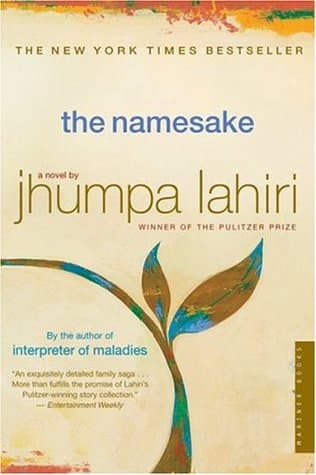
- The Namesake
Jhumpa Lahiri
4.0 (234k) average on GoodreadsLiterary FictionExplores themes of cultural identity, immigrant experience, and family relationships across generations.
- The Joy Luck Club
Amy Tan
3.9 (598k) average on GoodreadsHistorical FictionFocuses on complex mother-daughter dynamics, hidden pasts, and the challenges of cultural assimilation.
- Homegoing
Yaa Gyasi
4.4 (175k) average on GoodreadsLiterary FictionSpans generations, delving into the impact of ancestry and historical trauma on individual lives.
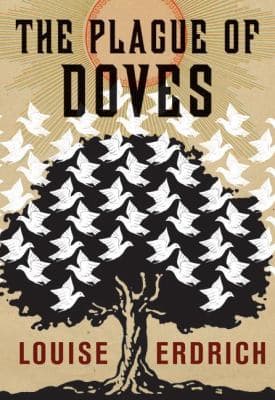
- The Plague of Doves
Louise Erdrich
3.8 (13k) average on GoodreadsLiterary FictionBoth deal with intergenerational trauma, secrets, and a sense of inherited destiny within specific cultural contexts. Erdrich's novel grounds its mysticism more deeply in spiritual tradition and historical events of the Ojibwe people, whereas Divakaruni's magic is more individually focused on a unique, inherited dream-telling gift within a contemporary setting.
- The Old Man and the Sea
Ernest Hemingway
3.8 (831k) average on GoodreadsLiterary FictionA Cuban fisherman's long struggle with a giant marlin becomes a story of endurance and dignity, now retold for young adults with illustrations, phonetic guides, and writing prompts in Traditional Chinese.
- One Hundred Years of Solitude
Gabriel García Márquez
4.1 (753k) average on GoodreadsLiterary FictionThrough the multi-generational story of the Buendía family, a mythical town deals with the repeating patterns of time, love, and solitude, as the extraordinary mixes with the ordinary.




Enjoyed the summary?
A summary gives you the shape of the book. The book itself has the detail, the examples and the voice.
Find Queen of Dreams on AmazonAs an Amazon Associate, BookBrief earns from qualifying purchases. How we're funded