
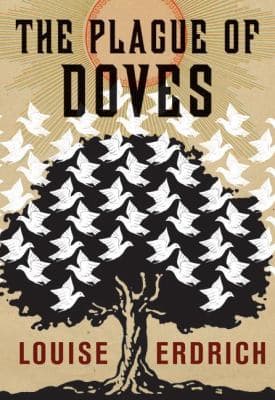
Synopsis
Covers the whole plot, including the ending.
- Difficulty
- Medium
- Pacing
- Moderate
- Mood
- Atmospheric, Reflective, Haunting, Thought-provoking
- Read it if
- You enjoy multi-generational sagas, complex historical mysteries, and exploring themes of justice, memory, and cultural identity through multiple perspectives.
- Skip it if
- You prefer straightforward plots, fast-paced thrillers, or narratives without significant moral ambiguity and historical injustice.
The Plague of Doves Plot Summary
Covers the whole plot, including the ending.
The Summer of the Plague of Doves
Evelina Harp, a main narrator, describes her childhood in Pluto, North Dakota, a small town near the Ojibwe reservation. She talks about her family, especially her grandfather, Mooshum, an elder and storyteller, and her Uncle Billy Peace, a gentle, artistic man. Young Evelina focuses on first loves and family mysteries. She mentions a historical event, 'the plague of doves,' a brutal murder of the Couch family decades earlier. This event deeply affected both Pluto's white community and the Ojibwe people on the reservation. The unsolved crime and its aftermath still influence present relationships and identities. Evelina recounts her early crushes, especially on Corwin Peace, setting up the intertwined stories.
Mooshum's Stories and the Couch Murders
Mooshum, Evelina's grandfather, shares his fragmented, often exaggerated, memories of the 1911 Couch family murders. He was a young boy on the reservation at the time. He describes finding the murdered white family – the parents and their daughter – and the immediate, racially charged fear that gripped Pluto's white community. Without a trial, a vigilante mob lynched or executed four innocent Ojibwe men, including Mooshum's uncle, in revenge. Mooshum's accounts are vivid and sometimes conflicting, showing his people's trauma and oral tradition. He hints at a more complex truth behind the murders, suggesting the first assumptions were wrong and the real killers were never punished, leaving a lasting wound in the community.
Judge Coutts's Investigation
Judge Antone Bazil Coutts, another main narrator, is a respected member of the Ojibwe community and a relative of the men wrongly accused and killed after the Couch killings. Driven by a quiet sense of justice and a wish to understand his family's history, he carefully examines old newspaper clippings, court documents, and oral testimonies. His story offers a more objective, though deeply personal, view of the historical events. He finds inconsistencies in the official story and begins to suspect that the true killer of the Couch family was not one of the lynched Ojibwe men, but someone else entirely. This secret was carefully kept by Pluto's white community for generations. His investigation is slow and careful, showing the lasting power of historical injustice.
Evelina's Early Loves and Corwin Peace
Evelina's story continues, focusing on her growing up and her intense, often misguided, romantic pursuits. She falls in love with her cousin, Corwin Peace, a troubled but artistic young man. Their relationship is complex, with both passion and an underlying sadness, further complicated by their family ties. Evelina's youthful crushes are set against her family and community's heavy historical burden. Her experiences with love and heartbreak reflect the novel's broader themes of longing and loss. This highlights how the unresolved past affects the present generation. Corwin's own struggles with identity and belonging suggest deeper scars within their family.
The Unveiling of Barnaby's Secret
Through the combined stories of Mooshum and Judge Coutts, the true killer of the Couch family begins to appear. It turns out that Barnaby, a white farmhand for the Couch family, was the killer. Barnaby, a disturbed man, had a dark interest in the Couch daughter, Lilith. His reason was not racial, but deeply personal. The white townspeople of Pluto, in their rush to judgment and desire for revenge against the Ojibwe, either missed or actively hid evidence pointing to Barnaby. This revelation is important, showing how racial prejudice allowed a killer to escape justice while innocent men paid the ultimate price, twisting the historical record for decades.
Evelina's Spiritual Journey and Sister Leopolda
Evelina's personal journey takes a spiritual turn as she deals with her Catholic faith and the church's influence in her community. She becomes interested in Sister Leopolda, a stern nun who has a deep, almost mystical, connection to nature and Ojibwe spiritual traditions. Sister Leopolda's character shows the complex mix of Indigenous spirituality and Catholicism on the reservation. Evelina seeks guidance and understanding from Sister Leopolda, who, in her own way, offers a path to healing and reconciliation. This spiritual exploration adds another layer to Evelina's growing up, as she tries to balance conflicting beliefs and find her place in a world shaped by historical trauma.
The Role of Seraphina and the Truth's Preservation
Seraphina, a strong Ojibwe woman, is important in keeping the true story of the Couch murders alive. As a direct descendant of one of the wrongly accused men, she carries the weight of her family's injustice. She keeps oral history, with details and views that challenge the official story. Seraphina's quiet resolve to ensure the truth eventually comes out shows her people's enduring spirit. She represents the Ojibwe community's collective memory, a memory that refuses to be silenced or forgotten, despite generations of oppression and attempts to erase their history. Her contributions are vital to Judge Coutts's investigation.
The Judge's Unraveling of the Cover-Up
As Judge Coutts investigates further, he uncovers the extent of the cover-up planned by Pluto's white establishment. Key figures, including the local sheriff and powerful families, actively suppressed evidence and spread the false story that the Ojibwe men were guilty. This cover-up stemmed from racial prejudice, a desire to protect one of their own (Barnaby), and a need to maintain social order after the horrific crime. The Judge's work exposes the systemic injustice and the deliberate manipulation of facts that allowed the true killer to go free and condemned innocent men. His findings highlight the moral compromises the community made.
Evelina's Adulthood and Reconciliation
Evelina's story moves into her adulthood. She thinks about her past loves, especially Corwin, and her experiences away from Pluto. She eventually returns to her hometown with a more mature view of her family's history and her own identity as a mixed-race woman. Her journey is one of self-discovery and reconciliation, both with her personal past and her community's collective trauma. Evelina deals with the complexities of love, loss, and the lasting power of family ties, even those strained by historical injustice. She learns to accept her multifaceted heritage, finding strength in both her Ojibwe and white roots.
The Final Truth and Its Aftermath
The novel ends with the full truth about the Couch murders: Barnaby, the white farmhand, was the killer. His confession, though delayed, eventually appears, confirming what many in the Ojibwe community had suspected for generations. While this truth cannot undo the past or bring back the innocent lives lost, it offers a form of closure. The communities of Pluto and the reservation must deal with the implications of this long-buried secret. The story emphasizes that while the facts are known, the scars of injustice remain, shaping the identities and relationships of those who live after the 'plague of doves.' The truth, however painful, is a necessary step toward healing.
The Plague of Doves Characters
Evelina Harp
Protagonist/Narrator
A curious, romantic young woman navigating her mixed heritage and the mysteries of her past.
Evelina is a spirited and intelligent young woman, part Ojibwe and part white, who serves as one of the primary narrators. She is prone to intense infatuations and possesses a keen observational eye for the nuances of her community. Throughout her life, she grapples with her identity, her family's complex history, and the lingering shadow of the Couch murders. Her narrative is characterized by a blend of youthful idealism and growing maturity, as she comes to understand the profound impact of the past on the present. She is driven by a desire to understand her place in the world and the meaning of love.
Relationships: Mooshum (Granddaughter, listener to his stories); Corwin Peace (Cousin and first love); Sister Leopolda (Spiritual guide and mentor)
Mooshum
Supporting/Narrator
Evelina's charismatic grandfather, a storyteller and keeper of fragmented, often embellished, history.
Mooshum is Evelina's grandfather, a vibrant and enigmatic Ojibwe elder. He is a master storyteller, whose narratives of the past, particularly the Couch murders, are rich with detail, though sometimes exaggerated or fragmented. He was a young boy during the 1911 events and carries the trauma of witnessing the lynching of his innocent relatives. Mooshum is a repository of tribal memory and traditional knowledge, and his stories, while not always strictly factual, convey a deeper emotional and historical truth. He represents the oral tradition of the Ojibwe people and their enduring connection to the land and their ancestors.
Relationships: Evelina Harp (Grandfather, storyteller to his granddaughter); Judge Antone Bazil Coutts (Relative, shares historical knowledge with him)
Judge Antone Bazil Coutts
Protagonist/Narrator
A respected Ojibwe judge and historian, driven to uncover the truth of the Couch murders.
Judge Coutts is a meticulous and thoughtful Ojibwe man, a relative of the innocent men lynched in 1911. He serves as another primary narrator, offering a more objective and investigative perspective on the historical mystery. Driven by a quiet sense of justice and a desire to heal the wounds of the past, he dedicates himself to researching the Couch murders, poring over documents and testimonies. He embodies the intellectual pursuit of truth and the resilience of his community in seeking justice. His narrative provides the factual backbone of the mystery, slowly unraveling the layers of deceit and prejudice.
Relationships: Mooshum (Relative, collaborates on historical research); Seraphina (Relative, consults her for family history)
Corwin Peace
Supporting
Evelina's artistic and troubled cousin, a recipient of her youthful affections.
Corwin Peace is Evelina's cousin and her first significant romantic interest. He is an artistic and sensitive young man, but also troubled and somewhat aimless. His character embodies the lingering effects of historical trauma on the younger generation, as he struggles with identity and belonging. His relationship with Evelina is intense and formative for her, marked by both deep connection and eventual heartbreak. Corwin represents the beauty and fragility of youth, as well as the burden of a complicated family history. His artistic inclinations offer a counterpoint to the harsh realities of their shared past.
Relationships: Evelina Harp (Cousin and romantic partner); Uncle Billy Peace (Nephew)
Sister Leopolda
Supporting
An enigmatic and spiritually profound nun, connecting Indigenous spirituality with Catholicism.
Sister Leopolda is a stern, ancient nun who is a formidable presence in Evelina's life. She embodies the complex interplay of Indigenous spirituality and Catholicism that exists on the reservation. She possesses a deep, almost mystical, connection to the natural world and a profound understanding of the human spirit. While outwardly strict, she offers Evelina guidance and a unique perspective on faith and tradition. Her character represents the enduring spiritual strength of the Ojibwe people and the ways in which different belief systems can intertwine, even in the face of historical conflict and cultural assimilation.
Relationships: Evelina Harp (Spiritual mentor); Aurelia (Colleague/fellow nun)
Seraphina
Supporting
A resilient Ojibwe woman, a keeper of oral history and a relative of the lynched men.
Seraphina is a strong, quiet Ojibwe woman who is a direct descendant of one of the men wrongly accused and lynched. She carries the family's history and the burden of their injustice with dignity and resilience. Seraphina is a vital source of oral history and specific details that aid Judge Coutts in his investigation. She represents the collective memory and unwavering spirit of the Ojibwe community, demonstrating how intergenerational trauma is carried but also how truth is preserved through storytelling and remembrance. Her presence underscores the profound and lasting impact of the historical events.
Relationships: Judge Antone Bazil Coutts (Relative, provides historical information)
Barnaby
Antagonist
The true, disturbed perpetrator of the Couch family murders, whose identity was suppressed.
Barnaby was a white farmhand for the Couch family and the actual murderer of the family in 1911. He is a disturbed and manipulative individual with a dark obsession with Lilith Couch. His crime was not racially motivated but stemmed from personal psychopathy. His identity was suppressed by the white community of Pluto, who, driven by racial prejudice, quickly blamed the Ojibwe. Barnaby represents the hidden evil within the seemingly 'innocent' white community and the moral corruption that allowed injustice to fester. His character highlights how prejudice can blind a community to the truth and protect a true criminal.
Relationships: Couch Family (Employer/Victims)
Uncle Billy Peace
Supporting
Evelina's gentle, artistic uncle, often detached from the harsh realities of the world.
Uncle Billy Peace is Evelina's uncle, a gentle and somewhat ethereal character. He is an artist, often engrossed in his own world of creation, which provides a contrast to the often harsh realities faced by his family and community. While not a central narrator, his presence and artistic endeavors offer moments of quiet beauty and reflection. He represents a different way of coping with or existing within a world marked by trauma – through creation and a certain detachment. His gentleness underscores the capacity for beauty and sensitivity even amidst profound historical pain.
Relationships: Evelina Harp (Uncle); Corwin Peace (Father)
Lilith Couch
Mentioned
The murdered daughter of the Couch family, whose death was the catalyst for the tragedy.
Lilith Couch is the young daughter of the murdered Couch family. Her death, along with her parents', ignites the racial hysteria and subsequent lynching of innocent Ojibwe men. She is a tragic figure, a victim whose story is distorted and used to justify horrific acts of violence. Though she is never fully developed as a character, her presence is central to the mystery and the unfolding of the historical injustice. Her beauty and innocence are tragically exploited, both by her killer and by the community's prejudiced reaction to her death.
Relationships: Couch Family (Daughter); Barnaby (Object of his obsession/victim)
The Plague of Doves Themes
The Enduring Legacy of Historical Injustice
The novel shows how past injustices, specifically the unpunished murder and wrongful lynching of innocent men, continue to affect generations. The 1911 Couch murders and their aftermath create a deep division between the white town of Pluto and the Ojibwe reservation. This impacts individual identities, family relationships, and community trust decades later. Judge Coutts's investigation and Mooshum's fragmented stories show how the truth, though hidden, constantly pressures the present, shaping the lives of Evelina and her peers who inherit this difficult history. Healing fully without acknowledging the truth is a central idea.
“History is a wound, and the wound is always open.”
The Power and Fragility of Storytelling
Storytelling in the novel both preserves history and distorts it. Mooshum's vivid, often exaggerated, oral accounts keep the memory of the injustice alive within the Ojibwe community, even if they are not always strictly factual. In contrast, the official 'story' spread by Pluto's white community actively suppresses the truth, creating a false narrative that serves their prejudices. Evelina, as a young narrator, learns to tell her own story and her family's stories, dealing with the personal nature of memory and the responsibility of witnessing. The novel itself is a collective act of storytelling, combining different views to reveal a more complete truth.
“A story is not a thing but a way of knowing. It is not just information but a relationship.”
Identity and Belonging in a Divided World
Many characters, especially Evelina, deal with their identity in a world divided by race and history. Evelina, with her mixed Ojibwe and white heritage, navigates belonging to both communities, often feeling caught between them. The generational trauma of the Couch murders further complicates these identities, as characters must balance their personal lives with their people's collective suffering and strength. The search for belonging extends to understanding one's place within the family, the community, and the broader historical narrative. The novel explores how individual identities are shaped by both personal experience and ancestral legacy.
“We are all the children of our grandfathers, no matter what color they were.”
Love, Loss, and Redemption
Below the historical mystery, the novel explores various forms of love and loss. Evelina's passionate, often heartbreaking, first loves with Corwin Peace highlight the universal human experience of connection and separation. The deep love within families, despite their flaws and historical burdens, is a constant force. The loss of innocent lives in 1911 leaves a lasting impact, but the characters' search for truth and justice can be seen as a form of redemption – an attempt to honor the dead and help the living heal. The story suggests that while true redemption for past wrongs may be hard to find, understanding and reconciliation offer a way forward.
“Love is a dangerous thing, a beautiful thing, and a thing that can save us.”
Plot Devices & Literary Techniques
Multiple First-Person Narrators
The story is told through the distinct voices of Evelina Harp, Mooshum, and Judge Antone Bazil Coutts.
This device allows the reader to experience the story from various perspectives, each offering a different lens on the historical events and their impact. Evelina provides a youthful, romantic, and contemporary view; Mooshum offers fragmented, often embellished, oral history from the perspective of an elder who lived through the initial trauma; and Judge Coutts brings a methodical, investigative, and emotionally resonant approach to uncovering the truth. This technique emphasizes the subjective nature of memory and history, illustrating how a single event can be interpreted and remembered differently by individuals and communities, ultimately building a richer, more complex picture of the truth.
Non-Linear Narrative Structure
The story shifts between different time periods, primarily the present day and 1911, and earlier memories.
The novel does not follow a strict chronological order, instead jumping between Evelina's coming-of-age in the present, Mooshum's memories of the past, and Judge Coutts's investigation that delves into historical records. This non-linear structure mirrors the way memory and history function, often surfacing in fragments and influencing the present. It creates suspense around the 1911 murders, gradually revealing details and allowing the reader to piece together the truth alongside the characters. This structure also highlights the enduring legacy of the past, showing how historical events are not simply confined to a specific time but continue to shape subsequent generations.
Oral Tradition and Storytelling
The reliance on spoken stories, particularly Mooshum's, as a means of preserving history and culture.
The Ojibwe oral tradition is a central plot device, particularly through Mooshum's character. His stories, though sometimes embellished or contradictory, are crucial for transmitting cultural knowledge, family history, and the memory of the 1911 injustice across generations. This device highlights the importance of spoken narratives in Indigenous cultures, contrasting them with written historical records which often omit or distort Indigenous perspectives. The act of telling and listening to stories becomes a way of understanding, healing, and resisting the erasure of history, demonstrating the power of narrative to shape identity and preserve truth.
The Unsolved Mystery as a Catalyst
The decades-old, unresolved murder of the Couch family drives the plot and character motivations.
The unsolved murder of the Couch family in 1911 serves as the central mystery and the primary catalyst for the entire narrative. Its lingering presence fuels Judge Coutts's investigation, shapes Mooshum's memories, and influences Evelina's understanding of her family and community. The fact that the mystery remains unsolved for so long underscores the deep-seated racial prejudice and cover-up that allowed injustice to fester. The eventual uncovering of the truth, however painful, becomes the driving force for potential healing and reconciliation, demonstrating how historical injustices must be confronted to move forward.
The Plague of Doves Quotes
“The past is a garden, no doubt, but one that is overgrown with the weeds of our own making.”
“There are some things that can only be healed by time, and some things that time only makes worse.”
“Love is not a house, it's a journey. And sometimes, the journey takes you to places you never expected.”
“A story is a way of holding time still, of keeping what's gone from going too far.”
“The truth is a tricky thing. It changes shape depending on who's holding it.”
“We carry our dead with us, not as burdens, but as the ground we walk on.”
“Sometimes, the only way to find your way out of the dark is to walk deeper into it.”
“Memory is a kind of haunting, but not always a bad one. Sometimes it's just company.”
“Justice, like a river, can be diverted, but it always finds a way to flow.”
“The world is full of signs, if you know how to read them. And if you don't, it's just noise.”
“Forgiveness is not forgetting. It's remembering without pain.”
“Every secret casts a shadow, and some shadows are long enough to cover a whole town.”
“We are all made of stories, and if you listen closely, you can hear the whole world whispering.”
“There's a kind of beauty in broken things, if you know how to look for it.”
Quiz
10 questions on the plot and the characters. Each answer comes with a short explanation.
Question 1
Which character is Evelina Harp's grandfather and a repository of family and tribal history?
- Judge Antone Bazil Coutts
- Mooshum
- Clemence White
- Warren Harp
Show answer
B. Mooshum Mooshum is explicitly described as Evelina's grandfather and a keeper of history in the book's description.
Question 2
What event from the past still haunts the white small town of Pluto, North Dakota, generations later?
- A devastating flood that destroyed much of the town.
- An unsolved murder of a farm family.
- A widespread illness that decimated the population.
- A major fire that burned down the town's church.
Show answer
B. An unsolved murder of a farm family. The book description states that the 'unsolved murder of a farm family still haunts the white small town of Pluto, North Dakota'.
Question 3
Which of the following describes Evelina Harp's character?
- A stoic and cynical woman who distrusts outsiders.
- An ambitious young girl prone to falling hopelessly in love.
- A quiet librarian dedicated to preserving local history.
- A rebellious teenager who frequently runs away from home.
Show answer
B. An ambitious young girl prone to falling hopelessly in love. The provided text describes Evelina Harp as 'an ambitious young girl prone to falling hopelessly in love'.
Question 4
What is the primary theme explored through Judge Antone Bazil Coutts's perspective?
- The challenges of modernizing rural communities.
- The weight of historical injustice and its impact on individuals.
- The complexities of intergenerational conflict.
- The beauty of the North Dakota landscape.
Show answer
B. The weight of historical injustice and its impact on individuals. Judge Antone Bazil Coutts 'understands the weight of historical injustice better than anyone', indicating this as a central theme for his character.
Question 5
How do the collective stories of the two interwoven communities (white small town and Ojibwe reservation) come together by the end of the novel?
- They merge through a series of intermarriages and shared festivals.
- They resolve their differences through a formal reconciliation process.
- They reveal a final wrenching truth about the past events.
- They remain separate, highlighting the enduring divide.
Show answer
C. They reveal a final wrenching truth about the past events. The description states that the collective stories 'ultimately come together to reveal a final wrenching truth'.
Question 6
What is the specific tribal affiliation of the reservation community living near Pluto, North Dakota?
- Lakota
- Cherokee
- Ojibwe
- Sioux
Show answer
C. Ojibwe The book description clearly states 'Ojibwe living on the nearby reservation'.
Question 7
The 'vengeance exacted' and 'distortions of fact' mentioned in the synopsis are directly linked to what initial event?
- A dispute over land ownership between the communities.
- The unsolved murder of the farm family.
- A historical treaty violation by the US government.
- An economic downturn affecting both the town and reservation.
Show answer
B. The unsolved murder of the farm family. The synopsis directly connects 'the vengeance exacted and the distortions of fact' to 'the unsolved murder of a farm family'.
Question 8
How does the narrative structure, with 'distinct and winning voices of three unforgettable narrators,' contribute to the overall uncovering of truth?
- It simplifies the plot by presenting a single, authoritative perspective.
- It allows for a chronological retelling of events from a detached viewpoint.
- It provides multiple, often conflicting, angles on the past, gradually piecing together a complex reality.
- It focuses solely on the emotional impact of the events on individual characters, ignoring broader historical context.
Show answer
C. It provides multiple, often conflicting, angles on the past, gradually piecing together a complex reality. Multiple narrators in a mystery/historical fiction context typically offer varied perspectives that, when combined, reveal a more complete and complex truth, often highlighting discrepancies or different understandings.
Question 9
Given the book's genres (Literary Fiction, Historical Fiction, Mystery), what can be inferred about the 'final wrenching truth' that is revealed?
- It will be a straightforward resolution that neatly ties up all loose ends with a happy ending.
- It will likely be complex, morally ambiguous, and potentially painful, reflecting the historical injustices and a long-unsolved mystery.
- It will be a simple explanation that exonerates all parties involved in the past events.
- It will primarily focus on a supernatural element behind the historical events.
Show answer
B. It will likely be complex, morally ambiguous, and potentially painful, reflecting the historical injustices and a long-unsolved mystery. The phrase 'wrenching truth' combined with the themes of historical injustice, unsolved murder, and 'distortions of fact' strongly suggests a difficult, complex, and probably painful revelation, rather than a simple or happy one.
Question 10
How does the phrase 'distortions of fact transformed the lives of Ojibwe' relate to the concept of historical injustice in the novel?
- It suggests that the Ojibwe community intentionally distorted facts to gain an advantage.
- It implies that the Ojibwe were unaffected by the factual inaccuracies surrounding the past event.
- It highlights how misrepresentations or lies about the past event led to prolonged suffering and negative consequences for the Ojibwe people.
- It indicates that the Ojibwe community was solely responsible for creating the 'distortions of fact'.
Show answer
C. It highlights how misrepresentations or lies about the past event led to prolonged suffering and negative consequences for the Ojibwe people. The 'distortions of fact' are presented as something that negatively 'transformed the lives of Ojibwe', implying they were victims or negatively impacted by these inaccuracies, which aligns with the theme of historical injustice.
The Plague of Doves FAQ
What is the central mystery driving the narrative in 'The Plague of Doves'?
The central mystery revolves around the brutal, unsolved murder of the Lochren family on their farm near Pluto, North Dakota, which occurred decades before the main narrative. This violent event led to the wrongful conviction and lynching of four innocent Ojibwe men, creating a deep-seated trauma and injustice that continues to resonate through generations in both the white town and the nearby reservation.
Who are the primary narrators, and how do their perspectives contribute to the story?
The story is primarily told through three distinct voices: Evelina Harp, a young, intelligent Ojibwe woman navigating her identity and romantic entanglements; Mooshum, Evelina's grandfather, whose vivid, often rambling stories provide crucial historical context and hidden truths; and Judge Antone Bazil Coutts, a white man with deep connections to the community and a profound understanding of the historical injustices faced by the Ojibwe people. Each narrator offers a unique lens, gradually piecing together the fragmented past.
What role does the setting of Pluto, North Dakota, and the nearby reservation play in the novel?
The dual setting of the white town of Pluto and the Ojibwe reservation highlights the stark cultural, social, and economic divisions that persist. The physical proximity yet emotional distance between these communities underscores the themes of prejudice, misunderstanding, and the enduring impact of historical violence. The landscape itself, with its harsh beauty, often mirrors the characters' internal struggles and the bleakness of past events.
How does the 'plague of doves' mentioned in the title relate to the events of the book?
The 'plague of doves' refers to a historical event in the novel where a massive influx of passenger pigeons (though often conflated with doves in local lore) descended upon the region, decimating crops and leaving behind a scene of overwhelming natural devastation. This event serves as a powerful metaphor for the overwhelming and destructive force of human violence and injustice that befell the Ojibwe people, particularly the lynching that followed the Lochren murders, and the lasting scar it left on the land and its inhabitants.
What is the significance of the character of Mooshum's storytelling?
Mooshum's storytelling is central to the novel, acting as a repository of tribal history, personal anecdotes, and fragmented truths about the Lochren murders. His narratives, often nonlinear and interspersed with traditional Ojibwe myths and trickster tales, serve to preserve cultural memory and gradually reveal the intricate, often painful, connections between characters and events. Despite his age and sometimes wandering thoughts, his stories are vital clues to unlocking the novel's central mystery.
Are there any clues early in the book that hint at the true perpetrator of the Lochren murders?
Subtle clues are woven throughout Mooshum's tales and the historical accounts. For instance, the descriptions of the crime scene and the nature of the violence, when examined closely, don't perfectly align with the narrative used to frame the Ojibwe men. Mooshum's intimate knowledge of the area and his often-veiled references to particular individuals or families, like the Judge's family, suggest a deeper, more complicated local involvement than initially presented, hinting that the official story is a deliberate distortion.
How does the novel connect the historical injustice of the Lochren murders to contemporary issues faced by the Ojibwe community?
The novel directly links the historical injustice of the wrongful convictions and lynchings to the ongoing struggles of the Ojibwe community, such as poverty, discrimination, and the erosion of cultural identity. The trauma of the past is not merely historical but manifests in the present lives of characters like Evelina, whose search for identity is complicated by this legacy, and in the persistent racial tensions that still simmer between the reservation and Pluto. The unresolved past continues to cast a long shadow on contemporary relationships and opportunities.
What is the significance of the various religious and spiritual elements, both Christian and Ojibwe, in the book?
The novel explores the complex interplay between Christian faith, which was often imposed on Indigenous communities, and traditional Ojibwe spirituality. Characters like Mooshum blend elements of both, reflecting the syncretic nature of belief in the community. The 'plague of doves' itself can be interpreted through both lenses – a biblical-scale catastrophe or a natural event imbued with spiritual meaning. This interplay highlights the resilience of Indigenous spiritual practices while also showing the lasting impact of missionary efforts and cultural assimilation.
How does Evelina Harp's character evolve throughout the narrative, particularly in relation to her romantic relationships?
Evelina begins as an ambitious but somewhat naive young woman prone to romantic idealization, often falling 'hopelessly in love' with figures who sometimes disappoint her or represent an escape. Her relationships, particularly with men like Billy Peace and the enigmatic Father Damien, are intertwined with her search for identity and understanding of her mixed heritage. Through these experiences, and her growing awareness of her family's history, she matures, becoming more discerning and self-possessed, ultimately finding strength in her own voice and heritage.
Discuss the psychological impact of intergenerational trauma as depicted in the novel.
The novel powerfully illustrates intergenerational trauma through the characters' lives. The unresolved injustice of the Lochren murders and the subsequent lynchings created a profound wound that affects descendants like Evelina and her family. This trauma manifests as a deep distrust of authority, a pervasive sense of grief and anger, and a struggle with identity for those caught between two cultures. Mooshum's vivid, sometimes disturbing memories and the community's collective silence or distorted narratives are direct results of this historical trauma, shaping the psychological landscape of the present.
What role does guilt play in the lives of the characters, particularly those connected to the white community?
Guilt plays a significant, albeit often suppressed, role, especially among characters in the white community who are either complicit in the historical injustice or benefit from its cover-up. Judge Antone Bazil Coutts, for example, carries the weight of his family's past and the community's silence, leading him to meticulously document the truth. The pervasive 'forgetting' or distortion of facts by many white townspeople can be seen as a collective psychological defense mechanism against acknowledging their community's role in the atrocities, highlighting a deep-seated, unaddressed guilt.
How does the novel explore the theme of justice, both legal and moral?
The novel critically examines the concept of justice, revealing the stark contrast between legal justice and moral justice. The legal system utterly failed the Ojibwe men, leading to wrongful convictions and lynchings, demonstrating how the law can be manipulated by prejudice and power. Moral justice, however, is painstakingly sought by characters like Judge Coutts and Evelina, who strive to uncover and acknowledge the truth, even if it means confronting uncomfortable historical narratives. The book suggests that true justice is not merely punitive but involves recognition, remembrance, and reconciliation.
Is the ending of 'The Plague of Doves' truly a resolution, or does it leave questions unanswered?
While the novel does reveal the 'final wrenching truth' about the Lochren murders, providing a sense of narrative closure regarding the central mystery, it does not offer a neat resolution to all the underlying issues. The revelation of the true perpetrators and the motivations behind the crime brings a form of truth and acknowledgment, but the deep-seated racial tensions, the trauma of the past, and the ongoing struggles of the Ojibwe community are not magically erased. The ending suggests that while truth can be uncovered, healing and true reconciliation are ongoing, complex processes.
How does Erdrich use language and narrative structure to convey the fragmented nature of memory and history?
Erdrich employs a non-linear narrative structure, shifting between different narrators, time periods, and even forms (stories, court documents, letters) to reflect the fragmented and subjective nature of memory and history. Mooshum's rambling tales, full of digressions and repetitions, perfectly embody the way oral histories are passed down. This mosaic-like approach forces the reader to actively piece together the story, mirroring the characters' own struggles to construct a coherent understanding of their past, highlighting how history is often subjective and contested.
What is the significance of the character of Judge Antone Bazil Coutts's meticulous documentation?
Judge Coutts's meticulous documentation of the Lochren murders and the subsequent events is crucial. As a white man with a position of authority, his efforts to record the truth stand in stark contrast to the official narratives and distortions. His work represents a personal quest for atonement and a commitment to historical accuracy, providing a counter-narrative to the prevailing prejudices. His detailed records serve as a vital, unbiased historical archive within the novel, helping to finally expose the truth and give voice to the silenced.
How does the theme of love, in its various forms, intersect with the themes of trauma and injustice?
Love, in 'The Plague of Doves,' is often intertwined with trauma and injustice. Evelina's romantic pursuits are frequently complicated by her family's past and her own identity struggles, reflecting a desire for connection and escape from a painful history. Familial love, particularly between Evelina and Mooshum, serves as a source of strength and cultural transmission, helping to preserve identity in the face of historical oppression. Even destructive forms of love or obsession contribute to the initial crime, showing how intense human emotions can lead to profound acts of violence and injustice.
What is the role of secrets and their eventual revelations in driving the plot and character development?
Secrets are fundamental to the novel's mystery and character arcs. The identity of the true murderers and the details surrounding the Lochren family's demise are deeply buried secrets, maintained by fear, prejudice, and a desire to protect certain individuals and community reputations. The gradual revelation of these secrets, primarily through Mooshum's stories and Judge Coutts's investigations, drives the plot forward and forces characters like Evelina to confront uncomfortable truths about her family and community, leading to significant personal growth and a deeper understanding of her heritage.
How does the novel challenge traditional notions of heroism and villainy?
The novel complicates traditional notions of heroism and villainy by presenting morally ambiguous characters and showing how circumstances, prejudice, and trauma can blur these lines. The Ojibwe men initially portrayed as villains were innocent, while some seemingly respectable community members harbored dark secrets. Even characters who commit heinous acts are sometimes shown with complex motivations, making it clear that evil is rarely simple. The true 'heroes' are often those who bravely seek truth and justice, regardless of personal cost, rather than those who fit conventional heroic molds.
About the author

Karen Louise Erdrich is an American author of novels, poetry, and children's books featuring Native American characters and settings. She is an enrolled member of the Turtle Mountain Band of Chippewa Indians, a federally recognized tribe of Ojibwe people.
Similar books
- Housekeeping
Marilynne Robinson
3.8 (44k) average on GoodreadsLiterary FictionExplores themes of memory, family, and the American landscape with a lyrical, introspective style.
- Ceremony
Leslie Marmon Silko
3.8 (18k) average on GoodreadsLiterary FictionDeals with the lasting impact of historical trauma on Native American communities and the search for healing.
- The Round House
Louise Erdrich
3.9 (96k) average on GoodreadsLiterary FictionAnother novel by Erdrich that delves into contemporary justice issues on a Native American reservation.
- One Hundred Years of Solitude
Gabriel García Márquez
4.1 (753k) average on GoodreadsLiterary FictionBoth novels employ a multi-generational saga structure and weave intricate family histories with elements of magical realism. Erdrich, like García Márquez, uses a rich, almost mythic narrative style to explore the founding and evolution of a community. However, Erdrich's 'Plague of Doves' is deeply rooted in the specific historical and socio-political realities of Native American experience, focusing on the enduring legacy of colonial violence, racism, and the struggle for justice. While García Márquez critiques political cycles and the solitude of power, Erdrich's critique is more pointedly directed at the systemic injustices faced by indigenous peoples in America, using the mystery as a vehicle to uncover historical truths rather than primarily exploring the cyclical nature of time and destiny.
- The Old Man and the Sea
Ernest Hemingway
3.8 (831k) average on GoodreadsLiterary FictionA Cuban fisherman's long struggle with a giant marlin becomes a story of endurance and dignity, now retold for young adults with illustrations, phonetic guides, and writing prompts in Traditional Chinese.
- The Goldfinch
Donna Tartt
3.9 (720k) average on GoodreadsLiterary FictionHaunted by a tragic explosion and clutching a stolen Dutch masterpiece, a young orphan navigates the opulent drawing rooms of New York and the gritty underbelly of the art world, desperately seeking connection and redemption amidst a life spiraling into crime and obsession.



Enjoyed the summary?
A summary gives you the shape of the book. The book itself has the detail, the examples and the voice.
Find The Plague of Doves on AmazonAs an Amazon Associate, BookBrief earns from qualifying purchases. How we're funded