

Core Idea
- Difficulty
- Medium
- Read it if
- You are interested in the ethics of looking, the impact of media on our perception of conflict, the philosophy of photography, or the nature of empathy and suffering in a visually saturated world.
- Skip it if
- You are looking for a historical account of specific conflicts or a prescriptive guide on how to 'fix' global suffering; this is a philosophical meditation, not a solution-oriented text.
Key Takeaways from Regarding the Pain of Others
The Anesthetic of Abundance
Repeated exposure to images of suffering can desensitize us, eroding our capacity for genuine empathy.
Sontag questions the simple idea that seeing terrible images automatically creates empathy or political action. She argues that the large number of atrocity images in modern media can lead to emotional exhaustion or 'anesthetic.' This desensitization doesn't mean we become uncaring, but that the images lose their impact and no longer cause a meaningful, lasting response. We see them, feel a brief pang, then move on, with suffering becoming background noise in our media-filled lives. This raises questions about how well visual media truly informs and mobilizes public conscience, suggesting that more visibility can sometimes lead to less effect.
“To suffer is one thing, another thing to confront the suffering of others.”
In the book: Sontag reflects on the shift from the singular impact of images like those from the Nazi death camps in the post-WWII era to the omnipresent, often fleeting, display of suffering from conflicts in Bosnia, Rwanda, or Sierra Leone on television news.
Try this: Actively resist passive consumption of news. When encountering images of suffering, pause to reflect on the context, the humanity of the subjects, and the systemic issues at play, rather than just scrolling past. Seek out deeper narratives beyond the immediate visual.
Related ideas: media-fatigue, desensitization, compassion-fade
The Gaze of the Spectator
Our perception of others' pain is profoundly shaped by our own position, privilege, and the framing of the image.
Sontag examines the power dynamics involved in seeing suffering. She argues that looking is never neutral; it is shaped by our social, cultural, and historical context. The viewer, often safe and privileged, watches the 'other' in pain. This creates a basic imbalance: the viewer is active, the subject often passive. This dynamic can lead to a feeling of moral superiority or helplessness. How the image is framed — what is shown, what is left out, the caption — further guides our interpretation, often strengthening existing biases or simplifying complex situations. Sontag insists that understanding our own position is essential for any ethical interaction with images of suffering.
“No one can look at the sun or death for very long.”
In the book: She contrasts the Western viewer's reaction to images from the American Civil War with those from the Bosnian War, highlighting how national identity, perceived 'justness' of the cause, and racial/ethnic proximity influence our capacity for identification and sympathy.
Try this: Before forming an opinion, question the perspective of the image. Who took it? Who is the intended audience? What narrative is being promoted or suppressed? Actively seek out diverse perspectives and counter-narratives to broaden understanding.
Related ideas: viewer-privilege, othering, framing-bias
From Witness to Voyeur
The line between bearing witness to atrocity and consuming it as spectacle is dangerously thin.
Sontag looks closely at the ethical balance photographers and viewers must maintain. While photography can provide clear evidence, a tool for documenting historical events, it also risks turning real suffering into a consumable image — a 'spectacle.' When images are consumed quickly, without deep thought or context, the subjects can become mere objects of pity or horror, losing their individuality and stories. This change from a call to conscience to a form of entertainment or 'pornography of grief' is a key concern, showing the moral responsibility in both creating and consuming such images. The goal should be to build understanding, not just to shock.
“The problem is not that people remember through photographs, but that they remember only the photographs.”
In the book: She discusses images of lynchings in the American South, where spectators often posed proudly next to the victims, illustrating how public viewing can become a form of participation in the atrocity, or at least a desensitized acceptance of it.
Try this: Approach images of suffering with reverence and a commitment to understanding the human story behind them. Avoid sharing or consuming images solely for their shock value. Prioritize sources that provide context and dignity to the subjects.
Related ideas: ethical-photography, spectacle-culture, trauma-porn
The Limits of Sympathy
While images can elicit sympathy, they rarely translate directly into sustained understanding or political action.
Sontag argues against the naive belief that simply showing people horrific images will automatically spur them to act. While an initial feeling of sympathy is common, it is often brief and not enough to drive meaningful change. Real understanding needs more than just emotion; it requires thought, historical context, and a willingness to face difficult truths about power, politics, and our own role. Sympathy, without this deeper framework, can easily become 'pity,' increasing the distance between the viewer and the viewed, rather than closing it. The book suggests that relying only on images for political action is often wishful thinking.
“Compassion is an unstable emotion. It needs to be translated into action, or it withers.”
In the book: Sontag points out that despite the widespread dissemination of images from various conflicts (e.g., Vietnam, Bosnia), public outrage often remains limited, temporary, or easily diverted, demonstrating that visual evidence alone is not a sufficient catalyst for sustained political will.
Try this: Recognize that initial emotional responses are just a starting point. Seek to understand the root causes of conflict and suffering by reading diverse analyses, engaging with history, and supporting organizations that work for systemic change, not just immediate relief.
Related ideas: empathy-gap, political-apathy, vicarious-trauma
War's Aesthetic Allure
Even images of brutality can possess an unintended aesthetic quality, complicating our moral response.
A thought-provoking part of Sontag's analysis is her recognition that even the most gruesome images can have a certain artistic power — their composition, light, shadow, and the drama of human struggle. This aesthetic side, whether intended or not, can distract from the moral message or even make suffering strangely compelling. She explores how artists like Goya depicted the horrors of war with clear artistic skill. This does not glorify violence, but acknowledges the complex interaction between visual form and content. This aestheticization can be problematic if it lets viewers appreciate the 'art' while ignoring the ethical need to confront the reality of the pain shown. It makes us question our own reactions and the inherent ambiguity of visual representation.
“The photographer's eye is not innocent.”
In the book: Sontag discusses Goya's 'The Disasters of War' etchings, noting their undeniable artistic mastery even as they depict extreme brutality. She also touches on the 'beautiful' composition of some war photographs despite their subject matter.
Try this: Be aware of the potential for aesthetic appreciation to overshadow moral judgment. When viewing powerful images, consciously separate the visual artistry from the ethical implications of the content. Challenge yourself to look beyond the 'beauty' to the suffering it represents.
Related ideas: aestheticization-of-violence, art-and-ethics, sublime-horror
History as a Gallery of Horrors
Photographs shape our historical memory, often reducing complex events to a collection of iconic, traumatic images.
Sontag argues that photographs play an important, though sometimes distorting, role in how we remember history. They offer undeniable proof, solidifying events in our shared memory. However, this power also means that history can become a 'gallery of horrors,' dominated by iconic images of suffering. While these images are vital for remembrance and warning, they can also simplify complex historical narratives, reducing involved political, social, and economic factors to a series of visually striking, often decontextualized, moments of trauma. This can lead to a simplified view of past events, where the 'what' is clear, but the 'why' and 'how' are less explored, potentially hindering true historical learning.
“Photographs furnish evidence. Something we hear about, but doubt, seems proven when we're shown a photograph of it.”
In the book: She refers to photographs of the American Civil War and the Nazi death camps as defining images that indelibly shape our understanding of those periods, often overshadowing the broader historical context for many.
Try this: When studying history, treat photographs as starting points for inquiry, not definitive summaries. Seek out diverse historical accounts, memoirs, and academic analyses to build a comprehensive understanding beyond the immediate visual impact of iconic images.
Related ideas: collective-memory, historical-narrative, iconic-images
The 'Us' vs. 'Them' Divide
Images of suffering often reinforce existing divisions, making it harder to identify with distant pain.
A key idea from Sontag is how images of suffering, rather than creating universal unity, can often reinforce an 'us' and 'them' dynamic. When we see distant suffering, especially from cultures or conflicts we see as 'other,' it is easy to distance ourselves, to view their pain as fundamentally different from our own potential suffering. This creates a moral and psychological barrier, where empathy is limited by perceived difference. Sontag suggests that this 'othering' can be made worse by media portrayals that highlight the unusual or incomprehensible nature of distant conflicts, making it harder for viewers to recognize shared humanity and common vulnerabilities.
“Compassion, when it is understood as a response to suffering, is a sentiment that can only be felt for others.”
In the book: She contrasts the public's reaction to images of suffering in conflicts perceived as 'foreign' (e.g., Rwanda) versus those closer to home or involving groups with whom the viewers identify more readily, highlighting the 'othering' effect.
Try this: Actively challenge the 'us' vs. 'them' narrative. Seek out stories that humanize individuals from different backgrounds and cultures. Focus on shared human experiences and vulnerabilities rather than perceived differences when engaging with images of suffering.
Related ideas: othering, moral-distance, empathy-barriers
The Obligation of Conscience
Despite the challenges, we retain a moral imperative to confront and respond to the pain of others.
While Sontag critiques the problems of seeing suffering, she does not suggest looking away. Instead, she emphasizes the lasting moral duty to confront the pain of others, even when it is uncomfortable or overwhelming. The book calls for intellectual rigor and ethical self-awareness, urging us to question our own reactions, the media's framing, and the political effects of what we see. This duty goes beyond mere sympathy; it requires a conscious effort to understand, to contextualize, and to acknowledge the reality of suffering, even if direct action seems impossible. It is about keeping a strong moral imagination in a world full of images.
“To be a spectator of calamities taking place in another country is an experience that is by no means the same as being a spectator of calamities taking place in one's own country.”
In the book: Her analysis of the ethical weight carried by images of the Holocaust, and how these images demand a particular kind of solemn engagement, even decades later, implies a lasting moral duty.
Try this: Cultivate a 'critical gaze' when encountering images of suffering. Don't just consume; reflect, question, and seek deeper understanding. Recognize that even if you can't solve the problem, bearing witness with informed empathy is an act of conscience.
Related ideas: moral-imperative, ethical-responsibility, critical-gaze
Photography as a Form of War
Images are not passive reflections; they are active participants in shaping perceptions and waging conflicts.
Sontag extends her critique beyond just how images are received to their active role in conflict itself. She argues that images are not neutral records but powerful tools, able to shape public opinion, incite hatred, gather support, or justify intervention. In modern warfare, the fight for hearts and minds is often fought through visual media. Photographs can be propaganda, evidence, or a way to humiliate. This view highlights the political nature of photography, especially during conflict. Understanding this active role is important for critically evaluating the information we receive and recognizing how images can be used or manipulated to serve specific goals.
“Photographs do not simply render reality; they interpret it.”
In the book: Sontag refers to how images of war are used by various factions – from governments to insurgent groups – to rally support, demonize enemies, and influence international opinion, making the visual narrative a crucial battlefield.
Try this: Be acutely aware of the potential for images to be used as propaganda. Always question the source, the context, and the implied message of any image related to conflict. Seek out multiple perspectives to identify potential biases or manipulative framing.
Related ideas: media-warfare, propaganda, visual-rhetoric
The Myth of Universal Understanding
While suffering is universal, its meaning and our response to it are culturally and historically contingent.
Sontag argues against the comforting idea that suffering, when shown visually, automatically creates a universal language of understanding. She states that while pain is a shared human experience, its interpretation, importance, and the right response to it are deeply set in specific cultural and historical contexts. What causes deep horror in one society might be seen differently in another, or even in the same society at a different time. This challenges the idea of a single, 'correct' emotional or political response to images of pain, pushing us to acknowledge the vast differences in how suffering is understood and processed globally and over time. True understanding requires bridging these contextual gaps, not assuming universal comprehension.
“The knowledge that one is able to empathize with people's suffering does not, by itself, make one a better person.”
In the book: Sontag contrasts the historical reception of images of violence (e.g., public executions in earlier centuries) with contemporary reactions, demonstrating how the meaning and impact of such depictions evolve with societal norms and moral frameworks.
Try this: Avoid projecting your own cultural understanding onto images of suffering from different contexts. Seek to learn about the cultural, political, and historical background of the depicted events to gain a more nuanced and respectful understanding.
Related ideas: cultural-relativism, historical-context, universalism-critique
Regarding the Pain of Others Quotes
“To suffer is one thing, another thing is to be told about it, and still another thing is to see the photographs of it.”
“Photographs of an atrocity may be more effective in arousing indignation than a written or spoken account.”
“Compassion is an unstable emotion. It needs to be translated into action, or it withers. The question is what to do with the feelings that have been aroused, the knowledge that has been communicated.”
“The knowledge that we can be anyone's prey is the quintessential modern horror.”
“The vast number of photographs of war means that we are exposed to war images more than ever before. But this does not necessarily mean we understand war better.”
“Photographs cannot create a moral position, but they can reinforce one – and can help build a nascent one.”
“In a world saturated with images of horror, the problem is not that people don't care enough, but that they care too much, or rather, that their caring is too diffuse.”
“No 'we' should be taken for granted when the subject is looking at other people's pain.”
“The camera's rendering of reality must always mask more than it discloses.”
“To be able to feel one's own pain, one has to be able to feel the pain of others.”
“The memory of a photograph is a kind of proxy for memory itself.”
“Photographs are a way of imprisoning reality, understood as whatever is in front of the lens.”
“Pity is not just a response to suffering, but a way of acknowledging the limits of one's own power.”
Quiz
10 questions on the main ideas. Each answer comes with a short explanation.
Question 1
Which historical event's imagery does Sontag NOT explicitly mention analyzing in 'Regarding the Pain of Others'?
- The American Civil War
- The Nazi death camps
- The Vietnam War
- The Rwandan genocide
Show answer
C. The Vietnam War While Sontag discusses many conflicts, the provided summary specifically lists the American Civil War, Nazi death camps, and Rwanda, but not the Vietnam War.
Question 2
Sontag's 'Regarding the Pain of Others' is presented as a return to and re-evaluation of themes from which earlier work?
- Illness as Metaphor
- Against Interpretation
- On Photography
- The Volcano Lover
Show answer
C. On Photography The book description explicitly states that 'Regarding the Pain of Others' is Sontag's return to the subject of visual representations of war and violence, twenty-five years after her classic 'On Photography'.
Question 3
What is one of the central questions Sontag poses about the effect of viewing images of suffering?
- Do these images primarily serve as historical archives?
- Are viewers inured or incited to violence by the depiction of cruelty?
- How can photography perfectly capture the truth of suffering?
- Should all images of pain be censored to protect public sensitivity?
Show answer
B. Are viewers inured or incited to violence by the depiction of cruelty? The summary directly states, 'Are viewers inured--or incited--to violence by the depiction of cruelty?' as a key question Sontag addresses.
Question 4
Sontag challenges the notion that viewing images of atrocity automatically leads to:
- A deeper understanding of geopolitical conflicts.
- Increased empathy and calls for action.
- The creation of new artistic movements.
- A complete rejection of all media.
Show answer
B. Increased empathy and calls for action. A core argument in the book is Sontag's analysis of our 'numbed response to images of horror' and her questioning of the limits of sympathy, suggesting that empathy and action are not guaranteed outcomes.
Question 5
When Sontag analyzes 'our numbed response to images of horror,' she is primarily concerned with:
- The technical quality of photographic reproduction.
- The psychological desensitization of viewers over time.
- The ethical responsibilities of war photographers.
- The historical accuracy of war reporting.
Show answer
B. The psychological desensitization of viewers over time. The 'numbed response' refers to the psychological impact on viewers, where repeated exposure to violent images can lead to desensitization, reducing the emotional impact and potential for action.
Question 6
Sontag's discussion of Goya's 'The Disasters of War' alongside contemporary photography highlights her interest in:
- The evolution of artistic techniques in depicting violence.
- The enduring human capacity for cruelty across different eras and media.
- The superiority of painting over photography in conveying truth.
- How artistic interpretations can romanticize war.
Show answer
B. The enduring human capacity for cruelty across different eras and media. By comparing Goya's etchings with modern photographs, Sontag explores the consistent themes of human suffering and atrocity and how different mediums represent them, emphasizing the enduring nature of violence and its visual documentation.
Question 7
What 'obligation' does Sontag suggest arises from confronting images of others' pain, even if sympathy is limited?
- The obligation to become a photojournalist.
- The obligation to critically engage with the images and their context, fostering conscience.
- The obligation to avoid all media depicting violence.
- The obligation to create counter-images of peace and harmony.
Show answer
B. The obligation to critically engage with the images and their context, fostering conscience. The summary mentions Sontag offering 'an important reflection about... the obligations of conscience.' This implies a critical engagement and moral responsibility beyond mere emotional response.
Question 8
Sontag's analysis suggests that the constant influx of horrific images via media like television can fundamentally alter:
- The physical infrastructure of news organizations.
- The way war itself is waged and understood in our time.
- The migratory patterns of global populations.
- The biological processes of human memory.
Show answer
B. The way war itself is waged and understood in our time. The summary explicitly states that Sontag 'offers an important reflection about how war itself is waged (and understood) in our time,' connecting the representation of pain to the very nature of conflict.
Question 9
A key philosophical implication of Sontag's work is that representations of suffering are not neutral, but instead:
- Are inherently manipulative and should be banned.
- Shape our understanding of the world and our moral responses.
- Are primarily valuable for their aesthetic qualities.
- Serve only to confirm existing political biases.
Show answer
B. Shape our understanding of the world and our moral responses. Sontag's work 'alters our thinking about the uses and meanings of images,' implying that these representations actively construct our understanding and influence our ethical stance, rather than being mere objective records.
Question 10
Sontag differentiates her perspective in 'Regarding the Pain of Others' from 'On Photography' by shifting focus from photography's inherent nature to:
- The economic impact of photojournalism.
- The spectator's response and the moral implications of viewing suffering.
- The technical advancements in digital imaging.
- The legal frameworks governing image dissemination.
Show answer
B. The spectator's response and the moral implications of viewing suffering. While 'On Photography' explored the medium itself, 'Regarding the Pain of Others' delves into 'how the spectacle of the sufferings of others (via television or newspapers) affect us?' and 'our numbed response,' emphasizing the viewer's experience and ethical responsibility.
Regarding the Pain of Others FAQ
What is 'Regarding the Pain of Others' about?
Susan Sontag's 'Regarding the Pain of Others' explores how visual representations of war and violence affect us, examining images from historical atrocities to contemporary conflicts. It delves into our responses to suffering depicted in media and challenges our understanding of sympathy and conscience.
Does viewing images of suffering make people numb or more empathetic?
Sontag critically examines this question, suggesting that while repeated exposure to horrific images can lead to a sense of 'inurement' or numbness, it also has the potential to incite reflection and a deeper understanding of human suffering. The book doesn't offer a simple answer but explores the complex psychological effects.
What is Sontag's main argument about the 'spectacle of suffering'?
Sontag argues that the constant influx of images depicting others' pain transforms suffering into a spectacle, raising questions about the ethics of viewing and the limits of sympathy. She challenges viewers to reflect on their role and responsibility when confronted with such representations.
How does 'Regarding the Pain of Others' differ from Sontag's 'On Photography'?
While 'On Photography' broadly analyzes the nature and impact of photography, 'Regarding the Pain of Others' specifically focuses on the ethical and psychological implications of images depicting war, violence, and atrocity. It can be seen as a more focused and updated reflection on a particular aspect of visual culture.
What historical examples of imagery does Sontag discuss?
Sontag analyzes a wide range of images, including Goya's 'The Disasters of War,' photographs from the American Civil War, images of lynchings, Nazi death camps, and contemporary conflicts in Bosnia, Rwanda, and the events of September 11, 2001.
Does 'Regarding the Pain of Others' offer solutions to our numbed response to violence?
Sontag doesn't provide prescriptive solutions but rather offers a profound critical analysis and prompts readers to engage in self-reflection. The book's goal is to alter our thinking about the uses and meanings of images, encouraging a more conscious and ethical engagement with them.
What is 'the limits of sympathy' as discussed in the book?
Sontag explores the idea that human sympathy, while powerful, has inherent limits, particularly when confronted with the vast scale of global suffering depicted through media. She questions whether sympathy can truly bridge the gap between observer and observed, and what obligations arise from witnessing pain.
Is this book relevant for understanding current media coverage of conflicts?
Absolutely. Written in the aftermath of 9/11, Sontag's insights into the representation of atrocity, the numbing effect of media, and the ethics of viewing remain highly relevant for understanding how contemporary conflicts are portrayed and perceived in our image-saturated world.
About the author

Susan Sontag was an American writer, filmmaker, and political activist known for her contributions to literature and cultural criticism. Her notable works include "Regarding the Pain of Others," which explores the representation of suffering in media, and "The Volcano Lover," a novel that delves into themes of love and desire against a historical backdrop.
Similar books
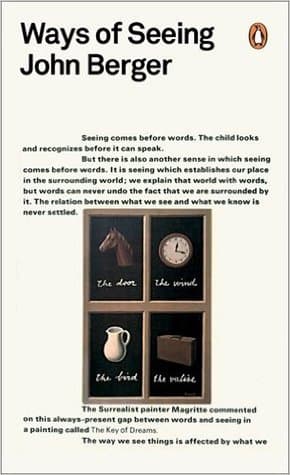
- Ways of Seeing
John Berger
3.9 (251k) average on GoodreadsHistoryExamines how images shape our understanding of the world, power, and gender.
- The Perks of Being a Wallflower
Stephen Chbosky
4.2 (1.3M) average on GoodreadsPsychologyThrough letters, a shy high school freshman learns to navigate first love, trauma, and self-discovery, stepping off the sidelines and into life.
- Eleanor Oliphant Is Completely Fine
Gail Honeyman
4.3 (708k) average on GoodreadsLiterary FictionA lonely woman's structured life changes when an IT guy and an elderly man help her learn to open her heart.
- One Flew Over the Cuckoo's Nest
Ken Kesey
4.2 (631k) average on GoodreadsPsychologyIn a mind-bending asylum, the boisterous Randle McMurphy wages a defiant war against the tyrannical Nurse Ratched, inspiring his fellow inmates, including the seemingly catatonic Chief Bromden, to reclaim their lost humanity.
- The Bell Jar
Sylvia Plath
4.0 (591k) average on GoodreadsPsychologyIn the suffocating grip of 1950s expectations, a brilliant young woman's descent into mental illness is painted with such vivid, internal clarity that her 'insanity' feels terrifyingly rational and inevitable.
- The Subtle Art of Not Giving a F*ck: A Counterintuitive Approach to Living a Good Life
Mark Manson
3.9 (530k) average on GoodreadsBusinessEmbrace your flaws and stomach life's lemons, because true happiness isn't about relentless positivity, but about choosing what truly matters to give a f*ck about.


Enjoyed the summary?
A summary gives you the shape of the book. The book itself has the detail, the examples and the voice.
Find Regarding the Pain of Others on AmazonAs an Amazon Associate, BookBrief earns from qualifying purchases. How we're funded