
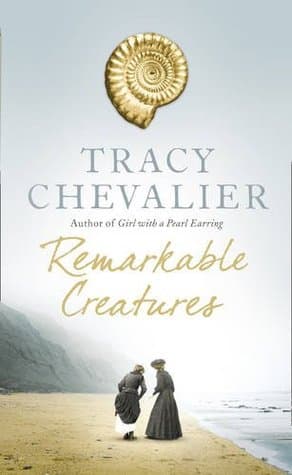
Synopsis
Covers the whole plot, including the ending.
- Difficulty
- Medium
- Pacing
- Moderate
- Mood
- Atmospheric, Inspiring, Thought-provoking, Resilient
- Read it if
- You enjoy historical fiction about overlooked female figures, stories of scientific discovery, and strong female friendships.
- Skip it if
- You prefer fast-paced thrillers or stories with a modern setting.
Remarkable Creatures Plot Summary
Covers the whole plot, including the ending.
A Stormy Discovery and a Budding Friendship
In Lyme Regis, Dorset, young Mary Anning, from a poor family, goes with her brother Joseph on fossil-hunting trips after storms. In 1810, they find a large, complete fossilized skull with a long snout and huge eye sockets in the cliffs, which is later identified as an ichthyosaur. This discovery brings them local notice and some small income from selling their finds. Around the same time, Elizabeth Philpot, an unmarried woman from London, moves to Lyme with her two sisters, Margaret and Louise. Elizabeth, a keen amateur fossil collector, is immediately drawn to Mary's natural talent and understanding of the cliffs. Despite their different social classes and ages, a friendship begins to form, centered on their shared interest in 'curiosities' from the ancient world.
The Ichthyosaur Sensation and Growing Recognition
After finding the first skull, Joseph and Mary Anning continue their dangerous work on the cliffs. Over several months, with much effort, they carefully dig out the rest of the ichthyosaur skeleton. The complete specimen, many feet long, becomes a sensation in the early scientific community. Local gentlemen and some London naturalists come to see the Anning's 'crocodile' and buy other fossils from Mary. This find further establishes Mary's reputation as a skilled fossil hunter, despite her youth and lack of formal education. Elizabeth Philpot, watching Mary's work and supporting her, encourages Mary to record her finds and offers guidance, helping Mary in the male-dominated world of science.
A Pliosaur's Head and Shifting Dynamics
Years pass, and Mary Anning continues to make important discoveries, including a large pliosaur skull in 1821. Her expertise and fame grow, attracting more visitors and buyers, including the wealthy Colonel Birch, who organizes a lottery to fund the sale of her finds. However, the scientific gentlemen who buy her fossils often take credit for the discoveries, publishing papers without properly crediting Mary. Elizabeth Philpot, still a close friend, sometimes struggles with Mary's growing independence and her direct, often unrefined manner. The social gap between them becomes clearer as Mary gains some celebrity, yet remains in the working class, while Elizabeth, though supportive, cannot fully close the class divide.
The Plesiosaur and Scientific Skepticism
In 1823, Mary Anning makes another discovery: a nearly complete skeleton of a plesiosaur. This creature, with its long neck, small head, and paddle-like limbs, is unlike anything seen before and starts much discussion. Georges Cuvier, a French anatomist, initially skeptical, even suggests it might be a fake because of its unusual appearance. This skepticism frustrates Mary, who knows her work is real. Elizabeth Philpot strongly defends Mary and her findings, writing to scientists and vouching for Mary's honesty. The plesiosaur helps to confirm the concept of extinction and the reality of creatures that no longer live on Earth, but only after Mary faces much struggle and needs validation.
Enter William Buckland and a Complicated Alliance
Professor William Buckland, a geologist and cleric from Oxford, visits Lyme Regis and takes an interest in Mary Anning's work. He sees her talent and knowledge of the local geology, often relying on her to guide him to sites and explain her finds. Buckland, however, shows the scientific attitude of the time, often treating Mary as a skilled laborer rather than a scientific equal. He buys many of her fossils and publishes on them, sometimes acknowledging her, other times not. This relationship shows the struggle Mary faces for proper recognition, as Buckland, despite respecting her skill, still upholds the social and intellectual hierarchy that places men of science above working-class women.
The Pterodactyl and a Moment of Triumph
Mary Anning continues her search along the dangerous cliffs. In 1828, she finds the first British specimen of a pterodactyl, a flying reptile. This discovery is another contribution to the developing field of paleontology and further establishes her reputation as a fossil finder. The pterodactyl, like her previous finds, challenges ideas of the natural world and the history of life on Earth. While she still struggles with the scientific establishment for full recognition, each new discovery strengthens her position and provides her with some financial stability, though never enough to escape the constant threat of poverty.
A Rift and Reconciliation
A disagreement happens between Mary Anning and Elizabeth Philpot. The cause is often a mix of class differences, Mary's directness, Elizabeth's occasional condescension, and life's pressures. Mary, feeling unappreciated and used by the scientific gentlemen, sometimes gets angry. Elizabeth, despite her deep affection for Mary, can be hurt by Mary's perceived ingratitude or lack of social graces. This period of separation is painful for both women, as their friendship has been central to their lives and intellectual pursuits. Eventually, after some time and recognizing their bond, they reconcile, affirming their unique and lasting connection.
Cobb's Collapse and Shared Grief
The dangerous cliffs of Lyme Regis are always a source of both discovery and danger. A large landslide at Cobb's Gate, a landmark, damages parts of the coastline. This event shows the constant risk Mary Anning faces in her daily work and the fragility of life. The community helps each other after the event, and both Mary and Elizabeth Philpot are affected by the destruction and loss. The shared experience of this natural disaster, and the reminder of the power of geological forces, further strengthens the bond between the two women, as they find comfort and understanding in each other during hard times.
The Coprolite Debate and Mary's Insight
Mary Anning's observation skills go beyond just finding fossils. She notices strange, stony lumps often found in the abdominal areas of ichthyosaur skeletons. While others dismiss them as 'bezoar stones' or simple concretions, Mary, through careful observation, figures out that they are fossilized excrement. She shares her ideas with Professor Buckland, who, initially skeptical, eventually accepts her deduction. He names these fossilized feces 'coprolite.' This discovery is important, as it gives direct evidence of the diets of ancient creatures, changing the understanding of prehistoric ecosystems and showing Mary's scientific ability, not just her skill as a collector.
Late Life and Lasting Legacy
As Mary Anning ages, she continues her hard work, facing financial struggles and the physical toll of her dangerous job. Despite her contributions, she remains largely uncredited by the male-dominated scientific societies, barred from membership and formal recognition. Elizabeth Philpot remains her steadfast friend, offering emotional support and intellectual companionship. Mary's health declines, and she dies in 1847. Though she never receives the formal honors she deserved in her lifetime, her discoveries change scientific understanding of Earth's history and the concept of extinction. Her legacy, supported by a few individuals like Elizabeth, slowly begins to be recognized for its true importance.
Principal Figures
Mary Anning
Protagonist
A working-class fossil hunter whose groundbreaking discoveries challenge scientific understanding.
Mary Anning is a tenacious, sharp-witted, and often blunt young woman from Lyme Regis. Born into poverty, she develops an extraordinary talent for finding and identifying fossils in the treacherous cliffs. Driven by both financial necessity and an innate scientific curiosity, she dedicates her life to this dangerous work. She possesses an intuitive understanding of geology and anatomy, often surpassing the knowledge of formally educated gentlemen. Mary struggles constantly for recognition and respect in a male-dominated scientific world, and her working-class status often puts her at odds with society. Despite her gruff exterior, she deeply values her friendship with Elizabeth Philpot.
Relationships: Elizabeth Philpot (Deep and enduring friendship, intellectual companionship); Joseph Anning (Brother, early fossil-hunting partner); Molly Anning (Mother, often worried and critical); William Buckland (Scientific acquaintance, patron, often dismissive of her scientific intellect); Henry De la Beche (Geologist and friend, one of her few consistent supporters); Colonel Birch (Wealthy collector, patron, helps sell her finds)
Elizabeth Philpot
Co-Protagonist/Supporting
A refined spinster from London with a passion for fossils, who befriends and champions Mary Anning.
Elizabeth Philpot is an intelligent, independent, and somewhat prickly spinster who moves to Lyme Regis with her sisters. She is a keen amateur fossil collector with a methodical approach to science, contrasting with Mary's intuitive genius. Elizabeth becomes Mary's closest friend and intellectual confidante, often acting as a bridge between Mary and the formal scientific community. She is fiercely protective of Mary, advocating for her recognition and defending her work against skepticism. While she sometimes struggles with Mary's social bluntness and her own class prejudices, her loyalty and admiration for Mary are unwavering. Elizabeth represents a more genteel, yet equally passionate, approach to natural history.
Relationships: Mary Anning (Deep and enduring friendship, intellectual companionship); Margaret Philpot (Sister, more conventional and socially conscious); Louise Philpot (Sister, artistic and somewhat detached); William Buckland (Acquaintance, fellow fossil enthusiast)
Joseph Anning
Supporting
Mary's older brother and initial fossil-hunting partner, who eventually seeks a different life.
Joseph Anning is Mary's older brother, who initially shares her passion for fossil hunting and makes some significant early discoveries alongside her, including the first ichthyosaur skull. He is hardworking and initially supportive of Mary. However, as he matures, Joseph finds the dangerous, low-paying work on the cliffs less appealing and more suited to Mary's singular focus. He eventually seeks a more stable and respectable profession, marrying and moving away from the family business. His departure leaves Mary to shoulder the primary responsibility of fossil hunting, highlighting her independence and the sacrifices she makes.
Relationships: Mary Anning (Sister, early fossil-hunting partner); Molly Anning (Mother)
William Buckland
Supporting
An eccentric but influential Oxford geologist who recognizes Mary's skill but rarely her scientific intellect.
Professor William Buckland is a prominent and often flamboyant geologist and cleric from Oxford. He is an important figure in the developing field of geology and paleontology. Buckland is genuinely fascinated by Mary's discoveries and relies on her expertise to locate and interpret fossils. He is a frequent visitor to Lyme and a purchaser of Mary's specimens. While he respects her skill as a collector, he embodies the patriarchal scientific establishment, often taking credit for her insights and rarely acknowledging her as an intellectual peer. His character highlights the systemic barriers Mary faces, even from those who benefit most from her work.
Relationships: Mary Anning (Patron, scientific collaborator (often uncredited), source of fossils); Elizabeth Philpot (Acquaintance, fellow fossil enthusiast)
Henry De la Beche
Supporting
A geologist and artist who becomes one of Mary's few consistent supporters and advocates.
Henry De la Beche is a geologist and artist who becomes a genuine friend and supporter of Mary Anning. Unlike many of his peers, De la Beche recognizes Mary's scientific contributions and actively tries to give her credit. He commissions a famous watercolor, 'Duria Antiquior' (An Ancient Dorset), depicting prehistoric life based on Mary's finds, and helps her financially. His character provides a contrast to the more dismissive attitudes of other scientists, showing that some within the establishment did appreciate Mary's intellect and not just her manual labor. He represents a glimmer of hope for Mary's eventual recognition.
Relationships: Mary Anning (Friend, scientific collaborator, advocate)
Molly Anning
Supporting
Mary's long-suffering mother, concerned with her family's survival and Mary's dangerous work.
Molly Anning is Mary's mother, a pragmatic and often worried woman burdened by poverty and the loss of many children. She is generally supportive of Mary's fossil hunting out of necessity, as it provides their meager income, but she constantly fears for Mary's safety on the dangerous cliffs. Molly often expresses her disapproval of Mary's rough manners and lack of interest in more 'feminine' pursuits. She represents the domestic concerns and societal expectations that Mary often defies in pursuit of her passion, providing a grounded perspective on the Anning family's struggles.
Relationships: Mary Anning (Daughter, source of family income); Joseph Anning (Son)
Colonel Birch
Supporting
A wealthy and enthusiastic fossil collector who helps Mary sell her major finds.
Colonel Thomas Birch is a wealthy military man and an avid fossil collector who visits Lyme Regis. He is impressed by Mary's discoveries and her skill. Recognizing the value of her finds, he organizes a lottery to sell Mary's ichthyosaur skeleton, helping her to gain some much-needed financial stability and broader scientific attention. While he is a patron and helps Mary, his interest is primarily in the collection and sale of specimens, not necessarily in promoting Mary as a scientific peer. He represents the financial aspect of the fossil trade and the way in which wealthy collectors interacted with working-class finders.
Relationships: Mary Anning (Patron, client)
Georges Cuvier
Mentioned
A renowned French anatomist whose initial skepticism challenged Mary's plesiosaur discovery.
Georges Cuvier is a highly influential French naturalist and zoologist, considered the 'father of paleontology'. He is mentioned in the book as a formidable authority whose initial skepticism about the authenticity of Mary's plesiosaur fossil caused significant concern and debate within the scientific community. His eventual validation of the plesiosaur, after much scrutiny, was a crucial moment for Mary's reputation and for the acceptance of her groundbreaking discoveries, despite his never meeting her in person. He represents the established scientific elite whose opinions held immense weight.
Margaret Philpot
Supporting
Elizabeth's conventional sister, often concerned with social propriety and appearances.
Margaret Philpot is Elizabeth's older sister. She is more conventional and socially conscious than Elizabeth, often disapproving of Elizabeth's fossil-hunting hobby and her close friendship with the working-class Mary Anning. Margaret values social standing and propriety, acting as a foil to Elizabeth's more independent and intellectually driven nature. Her presence in the household highlights the societal pressures and class distinctions that both Elizabeth and Mary navigate. She represents the societal expectations that Elizabeth must balance against her personal passions.
Relationships: Elizabeth Philpot (Sister); Louise Philpot (Sister)
Louise Philpot
Supporting
Elizabeth's artistic and somewhat detached younger sister.
Louise Philpot is Elizabeth's younger sister, who is more artistically inclined and somewhat detached from the practicalities and social concerns that occupy Margaret and Elizabeth. She is often depicted sketching or observing, bringing a different sensibility to the Philpot household. While not as directly involved in the fossil hunting, her artistic eye and quiet presence offer a different perspective on the natural world and the lives of her sisters. She often acts as a quiet observer, providing a calming presence amidst the more intense personalities of her sisters.
Relationships: Elizabeth Philpot (Sister); Margaret Philpot (Sister)
Themes & Insights
Science vs. Religion (Creation vs. Evolution)
The novel is set during a time when fossil discoveries directly challenged literal interpretations of biblical creation. Mary's finds of extinct creatures like the ichthyosaur and plesiosaur force characters like Professor Buckland, a cleric, to make scientific evidence fit with religious teachings. The debate over the age of the Earth and the concept of extinction fills the scientific discussions, setting the stage for later theories of evolution. The characters grapple with how these 'creatures' fit into a divinely created world, showing the intellectual tension of the era.
“What God would make a beast like that, only to hide it away for millions of years?”
Class and Gender Inequality
Mary Anning's working-class status and gender are constant barriers to her recognition in the scientific community. Despite her skill and insights, she is largely seen as a 'finder' rather than a 'scientist' by the educated, middle-class men who buy her fossils and publish papers on them. Elizabeth Philpot, though also a woman, benefits from her higher social standing, which gives her more access to scientific circles. The novel shows the systemic barriers Mary faces, from being excluded from scientific societies to the condescending attitudes of gentlemen who rely on her knowledge but deny her credit.
“A woman's place was not on the cliffs, nor in the learned societies, but in the home.”
Friendship and Intellectual Companionship
The friendship between Mary Anning and Elizabeth Philpot is central to the novel. Despite differences in age, social class, and personality, their shared interest in fossils creates a strong bond. Elizabeth gives Mary intellectual encouragement, social connections, and emotional support, while Mary offers Elizabeth a deeper, more intuitive understanding of the natural world. Their friendship goes beyond social expectations and gives both women a sense of belonging and validation in a world that often ignores them. Their shared intellectual pursuit supports them through personal and professional challenges.
“It was a strange friendship, born of mud and rock, and polished by the sea.”
The Dawn of Paleontology and Scientific Discovery
The novel captures the excitement and challenges of the early 19th century, a time of change in geology and paleontology. Mary Anning's discoveries, such as the ichthyosaur, plesiosaur, and pterodactyl, are not just interesting finds; they are pieces of a puzzle that reshapes scientific understanding of Earth's deep history and the concept of extinction. The book illustrates the process of scientific inquiry, from dangerous fieldwork to the debates and skepticism within learned societies, showing how new evidence gradually changes old beliefs. It shows the collaborative, yet often competitive, nature of scientific progress.
“Every new bone was a word in a language no one yet understood.”
Perseverance and Resilience
Mary Anning's life shows great perseverance in the face of adversity. She deals with poverty, the constant physical danger of the cliffs, the skepticism and condescension of the scientific establishment, and the social isolation that often comes with her unconventional life. Her dedication to her work, driven by curiosity and the need to support her family, is a key part of her character. Similarly, Elizabeth Philpot shows resilience in pursuing her intellectual interests despite social expectations for unmarried women and the challenges of supporting Mary.
“The cliffs gave up their secrets grudgingly, but Mary Anning was more stubborn than any rock.”
Plot Devices & Literary Techniques
Dual Perspective Narrative
Alternating chapters told from the viewpoints of Mary Anning and Elizabeth Philpot.
The novel employs a dual first-person narrative, alternating between the perspectives of Mary Anning and Elizabeth Philpot in successive chapters. This device allows the reader to experience the story through two distinct lenses, highlighting the contrasts in their social standing, education, and personalities. It provides a nuanced understanding of their evolving friendship, the challenges they each face, and their individual contributions to the world of paleontology. This structure emphasizes the theme of class and gender inequality by showing how the same events are perceived and experienced differently by women from opposite ends of the social spectrum.
Fossils as Symbols
The unearthed fossils represent scientific truth, the past, and Mary's quest for recognition.
The fossils themselves serve as powerful symbols throughout the novel. They represent the undeniable truth of a deep past, challenging contemporary religious and scientific beliefs about creation. For Mary, each fossil is not only a source of income but also a tangible piece of evidence of her intellectual prowess and her connection to a world millions of years old. The act of unearthing them symbolizes the difficult process of uncovering truth and challenging established norms. The intactness and uniqueness of her finds symbolize Mary's own singular and remarkable nature, often hidden beneath a rough exterior.
The Lyme Regis Cliffs
The dangerous, ever-changing cliffs symbolize both opportunity and peril, and the forces of nature.
The cliffs of Lyme Regis are more than just a setting; they are a dynamic character in the story. They represent both the source of Mary's livelihood and discoveries, and the constant threat to her life. Their unpredictable nature, with regular landslides and erosion, mirrors the tumultuous scientific and social landscape of the time. The cliffs symbolize the raw, untamed power of nature and the relentless march of geological time, providing a stark contrast to the refined drawing rooms where scientific debates often take place. They are a constant reminder of the physical demands and dangers of Mary's profession.
The 'Curiosity' Cabinet
A physical manifestation of scientific progress, personal passion, and social status.
The 'curiosity' cabinet, a common feature in Victorian homes, is a recurring motif. Both Mary and Elizabeth have their own collections, though vastly different in presentation. Elizabeth's cabinet is meticulously organized and displayed, reflecting her refined taste and systematic approach. Mary's humble shop, filled with her finds, serves a similar purpose but also functions as her livelihood. These cabinets symbolize the burgeoning interest in natural history, the personal passion for discovery, and the way in which scientific knowledge was collected and displayed, often reflecting the social status of the collector.
Remarkable Creatures Quotes
“The sea is a cruel mistress, but she rewards those who are patient and observant.”
“It is not enough to find; you must also understand.”
“A woman's mind is as capable as a man's, if only given the chance to prove it.”
“Fossils are not just stones; they are stories written in the earth.”
“The world is older than we imagine, and full of creatures we can scarcely conceive.”
“Sometimes the greatest treasures are found in the most unlikely places, by the most unlikely people.”
“Patience is a virtue, especially when dealing with the stubborn secrets of the past.”
“To see is one thing, to truly observe is another.”
“Fame is a fickle friend, but knowledge is a constant companion.”
“The earth holds its breath, waiting for us to uncover its ancient sighs.”
“We are all just trying to make sense of the world, one broken piece at a time.”
“The true scientist does not fear what she finds, but embraces the truth, no matter how unsettling.”
“Friendship, like a good fossil, must be carefully excavated and cherished.”
“There are more wonders beneath our feet than in the grandest of galleries.”
Quiz
10 questions on the plot and the characters. Each answer comes with a short explanation.
Question 1
Which ancient marine reptile's fossil discovery by Mary Anning is specifically mentioned as shaking the scientific community?
- Plesiosaur
- Mosasaur
- Ichthyosaur
- Pterodactyl
Show answer
C. Ichthyosaur The book description explicitly states that Mary Anning's discovery of 'ancient marine reptiles such as that ichthyosaur' was instrumental in shaking the scientific community.
Question 2
What is the primary obstacle Mary Anning faces in the scientific community, which is dominated by middle-class men?
- Her lack of formal education
- Her gender
- Her working-class background
- Her reclusive nature
Show answer
C. Her working-class background The synopsis states, 'Working in an arena dominated by middle-class men, however, Mary finds herself out of step with her working-class background.' This highlights her social class as a key barrier.
Question 3
Who is Mary Anning's unlikely friend and fellow fossil enthusiast?
- A London scientist
- Her brother, Joseph
- Elizabeth Philpot
- A local clergyman
Show answer
C. Elizabeth Philpot The description clearly identifies Elizabeth Philpot, a 'prickly London spinster,' as Mary's unlikely friend and someone who shares her passion for fossils.
Question 4
What distinctive feature of the initial fossil discovery (possibly an ichthyosaur) made it remarkable, according to the description?
- Its unusually long tail
- Its huge, bulbous eye
- Its multiple rows of teeth
- Its complete skeleton preservation
Show answer
B. Its huge, bulbous eye The text describes the initial discovery: 'With its long snout and prominent teeth, it might be a crocodile – except that it has a huge, bulbous eye.' This unique eye was a key distinguishing feature.
Question 5
Besides poverty and ostracism, what other major challenge do Mary and Elizabeth face due to their shared obsession?
- Political persecution
- Religious condemnation from their families
- Rivalry and physical dangers
- Lack of scientific recognition
Show answer
C. Rivalry and physical dangers The synopsis mentions, 'The strong bond between Mary and Elizabeth sees them through struggles with poverty, rivalry and ostracism, as well as the physical dangers of their chosen obsession.'
Question 6
What year does the story begin, when the sister and brother first uncover the fossilized skull?
- 1800
- 1810
- 1820
- 1830
Show answer
B. 1810 The first sentence of the description states: 'In 1810, a sister and brother uncover the fossilized skull...'
Question 7
The discovery of ancient marine reptiles by Mary Anning leads to new ways of thinking about what fundamental concept?
- The evolution of species
- The age of the Earth
- The creation of the world
- The classification of reptiles
Show answer
C. The creation of the world The text states Mary's discoveries 'shake the scientific community and leads to new ways of thinking about the creation of the world.' This refers to challenging prevailing religious or scientific views on how life and the Earth began.
Question 8
How does Mary Anning's working-class background specifically affect her standing within the scientific community, which is dominated by middle-class men?
- It makes her an immediate outcast due to her superior knowledge.
- It puts her 'out of step' and in danger of being an outcast in her own community.
- It grants her unique access to fossil sites unavailable to others.
- It forces her to publish her findings under a male pseudonym.
Show answer
B. It puts her 'out of step' and in danger of being an outcast in her own community. The description states, 'Working in an arena dominated by middle-class men, however, Mary finds herself out of step with her working-class background. In danger of being an outcast in her community...' This highlights the social disconnect and threat of ostracism.
Question 9
The theme of friendship is central to the novel. What specific challenges does the bond between Mary and Elizabeth help them overcome?
- Only their financial difficulties and the dangers of fossil hunting.
- Poverty, rivalry, ostracism, and physical dangers, as well as emotional struggles like anger and jealousy.
- Their differing scientific theories and family feuds.
- The judgment of the Royal Society and the loss of their fossil collection.
Show answer
B. Poverty, rivalry, ostracism, and physical dangers, as well as emotional struggles like anger and jealousy. The final sentence explicitly states, 'The strong bond between Mary and Elizabeth sees them through struggles with poverty, rivalry and ostracism, as well as the physical dangers of their chosen obsession. It reminds us that friendship can outlast storms and landslides, anger and jealousy.'
Question 10
The initial fossil discovery had a long snout and prominent teeth, leading the discoverers to initially consider it might be what animal?
- A dinosaur
- A shark
- A crocodile
- A large fish
Show answer
C. A crocodile The description mentions: 'With its long snout and prominent teeth, it might be a crocodile – except that it has a huge, bulbous eye.' This indicates their initial thought before the unique eye was considered.
Remarkable Creatures FAQ
What is Remarkable Creatures about?
Remarkable Creatures tells the story of Mary Anning, a working-class woman in early 19th-century Lyme Regis, England, who possesses an extraordinary talent for discovering ancient marine reptile fossils. Her groundbreaking finds, like the ichthyosaur, challenge prevailing scientific and religious beliefs about Earth's history, forcing the scientific community to reconsider the concept of extinction.
Why should I read Remarkable Creatures?
You should read Remarkable Creatures for its compelling portrayal of a pioneering female paleontologist, Mary Anning, who defied societal expectations and class barriers in a male-dominated scientific world. It offers a fascinating glimpse into the nascent field of paleontology, the clash between science and religion, and the enduring power of an unconventional friendship between Mary and Elizabeth Philpot.
What is the background/setting of Remarkable Creatures?
The book is set in the early 19th century, primarily in Lyme Regis, a small coastal town in Dorset, England. This period was marked by significant scientific inquiry and religious conservatism, creating a rich backdrop for Mary Anning's fossil discoveries to challenge established views on creation and the age of the Earth.
What are the most memorable quotes?
One memorable quote reflects Mary's deep connection to her work: 'The cliffs spoke to her in a language only she understood.' Another captures the awe of discovery: 'It was a creature from another time, another world, and she had brought it forth.' These quotes highlight the novel's themes of intuition and the profound impact of scientific discovery.
What writing style does the author use?
Tracy Chevalier employs a vivid and immersive historical fiction style, rich in sensory details that bring early 19th-century Lyme Regis and the perilous fossil hunting to life. The narrative often shifts between Mary Anning's and Elizabeth Philpot's perspectives, offering intimate insights into their thoughts and experiences while maintaining a respectful, observational tone.
What minor details add significant meaning?
The constant threat of landslides on the cliffs of Lyme Regis isn't just a physical danger; it's a metaphor for the shifting scientific and religious landscapes of the era, mirroring how Mary's discoveries erode long-held beliefs. Also, Mary's simple tools and methods, contrasting with the gentlemen scientists' more elaborate equipment, underscore her innate talent and practical approach.
What are some subtle foreshadowing moments?
Early mentions of the 'thunderbolts' (belemnites) Mary finds foreshadow her later, more significant discoveries of larger marine reptiles, hinting at the deeper secrets the cliffs hold. The initial skepticism and dismissal Mary faces from various gentlemen scientists subtly foreshadow the ongoing struggles she will have to gain proper recognition and acceptance for her work.
What unexpected character connections exist?
The most unexpected connection is the deep, enduring friendship between the uneducated, working-class Mary Anning and the refined, middle-class spinster Elizabeth Philpot. Despite their vastly different backgrounds and initial prickliness, their shared passion for fossils and mutual respect forge an unbreakable bond that transcends societal norms and provides essential emotional support for both women.
What are unspoken character motivations?
Mary Anning's unspoken motivation extends beyond mere survival; she is driven by an insatiable curiosity and an almost spiritual connection to the ancient creatures she unearths, seeking validation not just for her discoveries but for her own existence. Elizabeth Philpot, while outwardly seeking scientific understanding, is also driven by a desire for intellectual companionship and a meaningful purpose in a society that offers limited roles for unmarried women.
What psychological complexities do characters exhibit?
Mary Anning exhibits a complex blend of fierce independence and deep vulnerability, often feeling isolated due to her class and gender in the scientific community, yet fiercely protective of her intellectual property. Elizabeth Philpot struggles with her own pride and societal expectations, often masking her emotional needs with a sharp wit, yet demonstrating profound loyalty and empathy.
What are the major emotional turning points?
A major turning point is the discovery of the complete ichthyosaur skeleton, which catapults Mary into the scientific limelight but also exposes her to greater scrutiny and exploitation. Another is the rupture and subsequent reconciliation of Mary and Elizabeth's friendship, which highlights the depth of their bond and their dependence on each other for emotional support amidst personal and professional challenges.
How do relationship dynamics evolve?
The relationship between Mary and Elizabeth evolves from an initial, somewhat wary acquaintanceship based on a shared hobby into a profound and resilient friendship. Their dynamic shifts from Elizabeth often acting as Mary's patron and advocate to one of more equal intellectual partnership and unwavering emotional support, weathering professional jealousies, personal slights, and the passage of time.
Which parts remain ambiguous or open-ended?
The novel leaves some ambiguity around the ultimate recognition Mary Anning receives posthumously, hinting that while her work was foundational, full credit for her contributions would be slow to come. The personal lives of both Mary and Elizabeth, particularly their romantic prospects, remain largely open-ended, emphasizing their dedication to their work and their friendship over conventional societal paths.
What are controversial scenes or decisions?
One controversial aspect is the consistent appropriation of Mary's discoveries by male scientists who often took credit, published papers, and presented findings without adequately acknowledging her contributions or providing fair compensation. Mary's decision to continue fossil hunting despite the severe physical dangers and social ostracism, driven by her passion, could also be seen as controversial from a purely pragmatic perspective.
Remarkable Creatures ending explained: how it ends & what it means
The book ends with Mary Anning continuing her work as a fossil hunter, having cemented her reputation within the scientific community, albeit still facing the limitations of her class and gender. Her enduring friendship with Elizabeth Philpot remains a cornerstone of her life. The ending signifies Mary's triumph not in achieving conventional fame or wealth, but in her unwavering dedication to science, her profound discoveries, and the strength of her chosen family and intellectual bond, leaving a lasting legacy that would eventually be fully recognized.
About the author

Tracy Chevalier is a British-American author known for her historical fiction. Her notable works include "Girl with a Pearl Earring," which explores the life of the painter Johannes Vermeer, and "Remarkable Creatures," centered on fossil hunters in the 19th century. Other significant titles include "The Last Runaway," "Falling Angels," and "At the Edge of the Orchard."
Similar books
- The Signature of All Things
Elizabeth Gilbert
3.8 (96k) average on GoodreadsLiterary FictionFollows a female botanist in the 19th century, exploring themes of science, discovery, and independence.
- Wolf Hall
Hilary Mantel
3.9 (166k) average on GoodreadsLiterary FictionWhile Mantel's novel offers a deep, character-driven exploration of political power and male ambition in Tudor England, Chevalier focuses on a more intimate, domestic-yet-intellectual sphere of female collaboration and scientific discovery in a later period. Mantel's narrative is arguably more intricate in its psychological depth, while Chevalier prioritizes making scientific history accessible.
- The Other Boleyn Girl
Philippa Gregory
4.1 (456k) average on GoodreadsHistorical FictionGregory's work often centers on royal intrigue, romance, and the dramatic lives of historical figures within court settings. Chevalier, in contrast, grounds her narrative in the everyday struggles of working-class and genteel women pursuing scientific endeavors, offering a more grounded and less sensationalized exploration of historical female agency and intellectual passion outside of political power structures.
- To Kill a Mockingbird
Harper Lee
4.3 (4.5M) average on GoodreadsHistorical FictionIn the 1930s Jim Crow South, Harper Lee writes about racial injustice, moral growth, and the quiet courage of a lawyer father, Atticus Finch, as seen through his young daughter's eyes.
- The Great Gatsby
F. Scott Fitzgerald
3.9 (3.8M) average on GoodreadsHistorical FictionIn the opulent Roaring Twenties, a mysterious millionaire's lavish parties hide his desperate, tragic pursuit of a lost love, exposing the emptiness within the American Dream.
- Pride and Prejudice
Jane Austen
4.3 (3M) average on GoodreadsHistorical FictionIn a society focused on status and money, Elizabeth Bennet navigates love and pride, challenging Mr. Darcy and social expectations to find true affection.





Enjoyed the summary?
A summary gives you the shape of the book. The book itself has the detail, the examples and the voice.
Find Remarkable Creatures on AmazonAs an Amazon Associate, BookBrief earns from qualifying purchases. How we're funded