
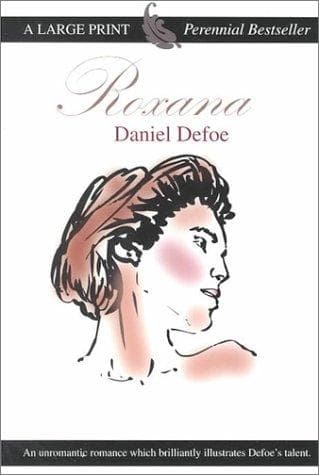
Synopsis
Covers the whole plot, including the ending.
- Difficulty
- Medium
- Pacing
- Moderate
- Mood
- Reflective, Critical, Ambitious, Melancholy, Suspenseful
- Read it if
- You enjoy classic literature with a strong, morally ambiguous female protagonist, explorations of 18th-century social mores, and tales of survival and ambition.
- Skip it if
- You prefer fast-paced plots, clear-cut moral lessons, or find detailed explorations of historical social constraints unengaging.
Roxana Plot Summary
Covers the whole plot, including the ending.
The First Husband's Ruin and Abandonment
Roxana, a beautiful French Protestant refugee in London, tells about her early life, which included a comfortable upbringing and a marriage to a handsome but foolish brewer. She has five children quickly. Her husband, driven by ambition and poor business skills, wastes his inheritance and Roxana's dowry. He declares bankruptcy and, ashamed and in debt, leaves England, abandoning Roxana and their children. This sudden poverty leaves Roxana and her children helpless, a sharp contrast to her earlier easy life.
The Jeweller's Protection and Affair
Desperate and starving, Roxana is approached by her landlord, a kind Dutch merchant and jeweler, who offers her and her children a place to stay and support. He secretly takes them to a country house, providing for them. During this time, Roxana and the jeweler begin a passionate affair. Sadly, her five children, neglected by the nurse Roxana hired to hide them, all get sick and die quickly. This loss, though painful, also removes the main barrier to Roxana's freedom and her relationship with the jeweler, strengthening their bond and secret arrangement.
Escape to France and a New Identity
Fearing discovery and social ruin from their secret relationship, Roxana and the jeweler decide to leave England. They travel to Holland, where the jeweler has family and business ties, then move to France. In Paris, Roxana, now pretending to be a rich widow, establishes herself in society. The jeweler, still married in England, provides her with money and advice. Roxana, using her beauty and intelligence, starts to gain a reputation, enjoying a life of luxury and freedom. This period shows her becoming a woman of means, no longer a victim but someone actively shaping her future through her choices.
The Prince's Patronage and Financial Independence
In Paris, Roxana's beauty and charm attract a powerful French Prince, who makes her his mistress. This relationship makes Roxana very rich. The Prince gives her gifts, money, and valuable jewels, greatly increasing her wealth. Beyond the money, Roxana, guided by the jeweler, learns about managing money, investments, and keeping her independence. She carefully handles her assets, securing her future. Her time with the Prince makes her a woman of great fortune and social standing, allowing her to live a life of luxury while also building significant personal wealth.
Return to England and the Turkish Dress
After the Prince's interest fades, Roxana decides to return to England with her maid, Amy. She arrives in London with great wealth and settles in a grand house in Pall Mall, keeping her past a secret. To entertain guests, Roxana, known for her beauty and bold spirit, performs a dance in an exotic Turkish dress, which becomes a key part of her public image. This performance, while exciting, also shows her control over her image and her willingness to challenge typical female behavior. She uses her wealth and charm to navigate London society, attracting new admirers.
The Quaker's Influence and Business Ventures
Upon returning to London, Roxana becomes good friends with a Quaker woman, who becomes her trusted helper and business partner. The Quaker, a smart and practical woman, helps Roxana manage her large fortune, investing in various businesses and ensuring her financial security. Through this connection, Roxana learns more about business, further strengthening her independent wealth. The Quaker also offers moral advice, often suggesting Roxana consider a more respectable life. This relationship shows Roxana's continued search for independence, not just through romantic relationships, but also through smart money management.
The Dutch Merchant's Proposal and Rejection of Marriage
The Dutch jeweler, Roxana's first protector and lover, returns to England and, now a widower, asks her to marry him. Despite their long history and his real affection, Roxana first refuses. She argues strongly against marriage, seeing it as giving up her freedom, property, and power to a man. She fears losing her hard-won independence and control over her life and money. This refusal highlights Roxana's early feminist views and her strong desire for self-reliance, preferring her current freedom to the perceived limits of marriage.
Marriage to the Dutch Merchant and Renewed Fears
Despite her initial refusal, Roxana eventually agrees to the jeweler's persistence and her own desire for a respected place in society, marrying him. They live a comfortable and seemingly respectable life. However, Roxana's past continues to bother her. She constantly fears that her former life, especially her children from her first marriage, will be revealed and ruin her new respectability. This anxiety is a repeated theme, showing how fragile her created identity is and the moral compromises she has made. Her marriage, while offering security, cannot fully remove the shadow of her past.
The Daughter's Return and Amy's Desperation
Roxana's oldest daughter, Susan, who had been sent to work as a child, reappears and, through chance, starts to suspect Roxana is her mother. Susan, wanting to know her parents and perhaps improve her own situation, keeps trying to find out Roxana's true identity. Roxana, terrified of being exposed and ruining her carefully built reputation, strongly denies being Susan's mother. Her maid, Amy, fiercely loyal but becoming unstable, grows desperate to silence Susan, seeing her as a major threat to Roxana's future and their shared secret.
Amy's Crime and Roxana's Guilt
Desperate to protect Roxana's secret, Amy takes extreme action and murders Susan. The exact details of the murder are unclear, but Amy clearly kills Susan to stop her from revealing Roxana's past. This act plunges Roxana into deep guilt and fear. She is horrified by Amy's crime and fears punishment for her own part, even if indirect. The murder permanently stains Roxana's life, leaving her with a heavy conscience and constant fear of being discovered and punished, destroying any hope of lasting peace or happiness.
Flight to Holland and Continued Remorse
After Susan's murder and the increasing fear of exposure, Roxana and her husband decide to leave England and move to Holland. They try to start a new life, hoping to escape their past. However, Roxana's guilt over Susan's death and her own past wrongdoings continue to trouble her. Despite her husband's love and their comfortable new home, she finds no real peace. The story ends with Roxana's ongoing struggle with her conscience, her fear of divine judgment, and the constant threat of her past catching up with her, leaving her in a state of continuous anxiety and regret.
Principal Figures
Roxana (Susan)
Protagonist
A beautiful, intelligent woman who navigates society through her wit, charm, and strategic use of her body.
Roxana, whose true name is Susan, is a French Protestant refugee of striking beauty and sharp intellect. Initially a victim of circumstance after her first husband's abandonment, she quickly learns to adapt and exploit her resources, primarily her physical appeal and quick wit, to survive and thrive. She is fiercely independent, valuing her liberty and financial autonomy above all else, often expressing proto-feminist views on marriage and women's roles. Despite her success and accumulation of wealth, she remains haunted by her past choices and the moral compromises she makes, particularly the fate of her children and the murder of her daughter.
Relationships: First Husband (Husband who abandons her and their children.); Dutch Jeweller (Lover, protector, business advisor, and later her second husband.); French Prince (Wealthy patron and lover.); Amy (Loyal, devoted, and ultimately murderous maid and confidante.); Susan (Daughter) (Eldest daughter from her first marriage, who threatens to expose her.)
Amy
Supporting
Roxana's fiercely loyal, resourceful, and morally ambiguous maid and confidante.
Amy is Roxana's devoted maid, who accompanies her throughout most of her adventures. She is fiercely loyal to Roxana, often acting as her co-conspirator and enabler. Amy is cunning, resourceful, and possesses a pragmatic, often ruthless, morality that mirrors and sometimes even surpasses Roxana's own. She manages Roxana's affairs, participates in her schemes, and is instrumental in maintaining her secrets. Her loyalty eventually leads her to commit a heinous crime, murdering Roxana's daughter, Susan, to protect her mistress's reputation, highlighting the extreme measures she is willing to take.
Relationships: Roxana (Mistress, confidante, and object of extreme loyalty.); Susan (Daughter) (Victim of Amy's protective rage.)
Dutch Jeweller
Supporting
Roxana's first protector, lover, business mentor, and eventually her second husband.
The Dutch Jeweller is a kind and pragmatic merchant who first offers Roxana and her children shelter after her abandonment. He becomes her lover and a significant figure in her financial education, teaching her about investments and business. He is consistently supportive and genuinely cares for Roxana, eventually proposing marriage after his first wife's death. He represents a more stable, respectable path for Roxana, though he is also complicit in her early illicit affairs. His devotion contrasts with Roxana's initial reluctance to marry, highlighting her struggle between independence and social respectability.
Relationships: Roxana (Lover, business partner, and later husband.); First Husband (of Roxana) (Roxana's first husband, whose ruin allows the jeweller to step in.)
First Husband (The Brewer)
Mentioned
Roxana's initial husband whose foolishness and abandonment set her on her path.
Roxana's first husband is a handsome but ultimately foolish and financially incompetent brewer. He squanders his inheritance and Roxana's dowry through poor business decisions and extravagance, eventually abandoning her and their five children to flee his creditors. His irresponsibility is the catalyst for Roxana's transformation, forcing her into a desperate struggle for survival and independence. He is largely a symbolic figure, representing the patriarchal constraints and economic vulnerabilities women faced in the 18th century.
Relationships: Roxana (Husband, then abandons her.); Susan (Daughter) (Father of Roxana's eldest daughter.)
French Prince
Supporting
A powerful and wealthy patron who provides Roxana with significant financial resources.
The French Prince is a powerful and affluent nobleman who takes Roxana as his mistress during her time in Paris. He showers her with money, jewels, and other gifts, significantly contributing to her vast fortune. His patronage allows Roxana to live a life of luxury and further develop her financial independence. He represents the opportunities available to beautiful and cunning women in high society, but also the transient nature of such relationships. He is a means to an end for Roxana, a stepping stone to greater wealth and autonomy.
Relationships: Roxana (Lover and patron.)
The Quaker Woman
Supporting
A shrewd and practical woman who helps Roxana manage her wealth and offers moral guidance.
The Quaker woman becomes a close confidante and business partner to Roxana upon her return to London. She is a woman of integrity and sharp business acumen, helping Roxana invest her money wisely and maintain her financial security. While she benefits from Roxana's wealth, she also provides a moral counterpoint, often advising Roxana towards a more respectable and virtuous life. Her presence highlights Roxana's internal conflict between her desire for independence and a yearning for social acceptance and spiritual peace.
Relationships: Roxana (Friend, business partner, and moral advisor.)
Susan (Roxana's Daughter)
Antagonist
Roxana's eldest daughter who unwittingly threatens to expose her mother's past.
Susan is Roxana's eldest daughter from her first marriage. Having been left in the care of others as a child, she grows up in service. Later in life, she begins to suspect that Roxana, the wealthy lady she encounters, is her long-lost mother. Her persistent efforts to uncover her parentage and connect with Roxana become a major threat to Roxana's carefully constructed identity and social standing. She is not malicious but her existence and curiosity inadvertently drive the plot's tragic climax, leading to her own murder by Amy.
Relationships: Roxana (Daughter, unknowingly threatens her mother.); Amy (Her murderer, acting to protect Roxana.)
Themes & Insights
Independence and Liberty
The novel shows Roxana's constant search for personal and financial independence. After being abandoned, she promises herself never again to depend on a man, viewing marriage as giving up 'Liberty, Estate, Authority.' Her wealth, her strategic relationships, and her choice to remain unmarried for much of her life all show this theme. She actively rejects social rules that limit women's freedom, always trying to control her own future and money, as seen in her careful financial management after her affair with the Prince, and her strong initial rejection of the Dutch Jeweler's marriage proposal.
“the Marriage Contract is [...] nothing but giving up Liberty, Estate, Authority, and every-thing, to the Man”
Social Mobility and Identity
Roxana's story explores social movement in 18th-century England and France. Starting in poverty, she cleverly reinvents herself many times, taking on new identities (rich widow, courtesan, respectable lady) to move up in society. Her 'Turkish dress' and the exotic image she creates are physical signs of her made-up identity, letting her move easily between different social groups. However, this upward movement is always risky, built on secrets and lies, leading to constant worry and fear of her true origins being found out, as shown by her daughter Susan's return.
“I was now become a great Lady, and was courted by all the World; but I was still the same Roxana, only a little more exalted.”
Moral Ambiguity and Guilt
Roxana's story has unclear morals. While she seeks independence, her methods often include prostitution, lying, and abandoning her children. The novel does not directly condemn her but shows her reasons and the psychological cost of her choices. Her initial lack of regret for her early actions slowly turns into deep guilt and fear of divine punishment, especially after Amy murders Susan. This growing feeling of an 'inner hell' highlights the conflict between her worldly success and her spiritual unease, showing that even great wealth cannot buy peace of mind or erase past wrongs.
“Thus I, that was the most prosperous Woman alive, was at the same time the most miserable; for I had a Hell within me.”
The Hypocrisy of Society
Defoe subtly criticizes the patriarchal and class-focused society of the 18th century through Roxana's experiences. Society accepts Roxana when she is rich and acts like a respectable lady, regardless of how she got her money. In contrast, her initial abandonment by her husband leaves her completely poor and vulnerable, with no social support. The novel reveals the double standards for men and women, especially regarding sex and financial independence. Roxana's ability to succeed by using these social hypocrisies shows how widespread they are.
“The World is all a Cheat, and they that will not cheat with it, are cheated by it.”
Plot Devices & Literary Techniques
First-Person Narrative
Roxana's direct, retrospective account of her life's events and internal struggles.
The entire novel is narrated by Roxana herself, looking back on her life from a later, more remorseful perspective. This allows for intimate access to her thoughts, justifications, and evolving moral conscience. The first-person perspective makes her a complex and often unreliable narrator, as she frequently rationalizes her actions and struggles with guilt. It also creates a sense of immediacy and personal confession, drawing the reader into her world and forcing them to confront the moral dilemmas alongside her. This device is crucial for exploring her psychological depth and the nuanced motivations behind her choices.
Symbolism of Dress
Clothing, particularly the 'Turkish dress,' representing Roxana's identity, freedom, and exotic allure.
Throughout the novel, Roxana's clothing serves as a powerful symbol of her changing identity, social status, and self-presentation. The most prominent example is the 'Turkish dress' she wears for her famous dance. This exotic attire represents her allure, her defiance of conventional English modesty, and her ability to captivate and manipulate. It signifies her chosen persona as a woman of mystery and independence, distinct from the domestic sphere. Her careful selection of attire for different occasions underscores her conscious construction of identity and her use of appearance as a tool for social navigation and power.
The Unreliable Narrator
Roxana's subjective and self-serving recounting of events, often justifying her actions.
Roxana's narration is often unreliable, as she frequently attempts to justify her morally questionable actions, downplay her culpability, and present herself in a more favorable light. While she confesses her sins, her retrospective account is colored by her desire for absolution and her internal struggles. Her rationalizations for abandoning her children or rejecting marriage, for instance, reveal her self-interest and a degree of moral blindness. This unreliability forces the reader to critically assess her narrative, question her motivations, and interpret the events through their own moral lens, adding layers of complexity to her character and the story's themes.
Foreshadowing of Guilt and Retribution
Subtle hints and Roxana's growing anxieties about the consequences of her actions.
Defoe employs foreshadowing through Roxana's recurring anxieties and premonitions of divine judgment. Even during her most prosperous periods, Roxana often expresses fears that her past will catch up to her, or that she will face spiritual retribution for her sins. This is particularly evident in her fears about her children's reappearance and her increasing remorse after the murder of Susan. These subtle hints build a sense of impending doom and underscore the idea that illicit gains cannot lead to lasting peace, preparing the reader for Roxana's ultimate psychological torment and lack of a happy ending.
Roxana Quotes
“It is not for me to determine what is the quality of an action, but what is the consequence.”
“Money is the general issue of the world, and there is no dealing without it.”
“I was now a single woman again, and I was resolved to be so for good and all.”
“All the happiness of this life consists in the not being out of the reach of money.”
“The greatest joy of my life was that I was mistress of myself, and of my own fortune.”
“What a world is this, and how does Providence order the affairs of mankind!”
“Necessity is the mother of invention, and I found it so now, in a particular manner.”
“I had been a whore, and I had been a lady, and I had been a rich woman, and I had been a poor woman.”
“I was not a woman to be kept; I was a woman to be married.”
“Conscience, that faithful monitor, began now to tell me I had done wrong.”
“I saw myself in a condition of life which I had always abhorred.”
“The devil, they say, is in the cards; but I think the devil is in the women.”
“It is a sad thing to be a woman, and not to be able to live without a man.”
“I began to have a perfect knowledge of the world, and to know that money was the best friend in it.”
Quiz
10 questions on the plot and the characters. Each answer comes with a short explanation.
Question 1
What is Roxana's primary motivation for trading her body at the beginning of the novel?
- To gain fame and social status
- For survival after her first husband abandons her
- To escape her family's control
- To fund a new business venture
Show answer
B. For survival after her first husband abandons her Roxana is abandoned by her first husband, leaving her and her children destitute. Her initial decision to become a mistress is driven by the immediate need for survival.
Question 2
Which character serves as Roxana's loyal maid and confidante throughout much of her adventures?
- Amy
- Susan
- Louisa
- Betsy
Show answer
A. Amy Amy is Roxana's long-serving maid who is privy to her secrets and often acts as a go-between in her affairs.
Question 3
Roxana famously states that 'the Marriage Contract is [...] nothing but giving up Liberty, Estate, Authority, and every-thing, to the Man.' What theme does this quote primarily highlight?
- The importance of financial independence
- Roxana's proto-feminist critique of patriarchal society
- The societal pressure for women to marry
- The legal complexities of 18th-century marriage
Show answer
B. Roxana's proto-feminist critique of patriarchal society This quote directly reflects Roxana's critical view of marriage as an institution that disempowers women, aligning with her character's proto-feminist leanings.
Question 4
After her time in France, where does Roxana primarily reside and establish her reputation as a wealthy woman?
- Amsterdam
- London
- Paris
- Edinburgh
Show answer
B. London After returning from her continental adventures, Roxana settles in London, where she becomes known for her wealth and fashionable lifestyle.
Question 5
What is the primary reason Roxana initially refuses the Quaker merchant's proposal of marriage?
- She does not find him attractive
- She fears losing her financial independence and control
- She is secretly in love with another man
- His Quaker faith conflicts with her own beliefs
Show answer
B. She fears losing her financial independence and control Roxana is deeply wary of marriage due to her past experiences and her desire to retain her wealth and autonomy, as marrying would mean giving control to her husband.
Question 6
What is the significance of Roxana's 'Turkish' dress and her performance at parties?
- It reflects her genuine interest in Turkish culture
- It is a symbol of her exotic allure and her theatrical manipulation of identity
- It is a disguise to avoid recognition from her past
- It is a gift from one of her wealthy lovers
Show answer
B. It is a symbol of her exotic allure and her theatrical manipulation of identity The 'Turkish' dress and her accompanying dance are part of her calculated performance, designed to enhance her mystique and attract wealthy patrons, symbolizing her constructed identity.
Question 7
How does Roxana primarily cope with the guilt and fear of exposure related to her past?
- She confesses her sins to a priest
- She attempts to distance herself from her past by changing her name and location multiple times
- She confronts those who threaten to expose her
- She donates large sums of money to charity
Show answer
B. She attempts to distance herself from her past by changing her name and location multiple times Roxana constantly tries to outrun her past, changing her identity and moving to new places to avoid recognition and the consequences of her former life.
Question 8
What is the ultimate fate of Roxana's daughter, Susan, who recognizes her mother and attempts to reconnect?
- Susan successfully reconciles with Roxana and lives with her
- Susan is married off to a wealthy suitor arranged by Roxana
- Susan is presumably murdered by Amy to protect Roxana's secret
- Susan eventually gives up her search and disappears
Show answer
C. Susan is presumably murdered by Amy to protect Roxana's secret Susan's relentless pursuit of her mother leads to her mysterious disappearance, strongly implied to be the result of Amy's intervention to silence her and protect Roxana's secret.
Question 9
How does Defoe use Roxana's narrative voice to convey her complex moral ambiguity?
- She consistently expresses deep regret for her actions from the outset
- She often rationalizes her choices with pragmatic arguments, even while acknowledging their sinfulness
- She relies heavily on external narrators to judge her actions
- Her language is consistently overtly religious and repentant
Show answer
B. She often rationalizes her choices with pragmatic arguments, even while acknowledging their sinfulness Roxana's narrative is characterized by her attempts to justify her actions through necessity and practicality, often conflicting with her stated moral awareness, creating her complex and ambiguous character.
Question 10
The novel concludes with Roxana facing 'a dreadful Precipice' and being 'plunged into a Sea of Trouble.' What is the most plausible interpretation of this ambiguous ending?
- She achieves lasting happiness and security
- She is arrested and publicly disgraced for her past crimes
- She faces an unresolved fate, implying a continued struggle with guilt, exposure, or divine judgment
- She voluntarily enters a convent to atone for her sins
Show answer
C. She faces an unresolved fate, implying a continued struggle with guilt, exposure, or divine judgment Defoe leaves Roxana's ultimate fate open-ended, suggesting that despite her material success, she cannot escape the psychological and spiritual consequences of her past actions, implying ongoing suffering or divine retribution rather than a clear resolution.
Roxana FAQ
What is the core premise of 'Roxana'?
'Roxana' is the autobiographical account of a woman, born into a prosperous French Huguenot family, who through a series of unfortunate events, including abandonment by her first husband, resorts to prostitution and ultimately becomes a highly successful courtesan. The novel chronicles her rise to wealth and notoriety in 17th and early 18th century Europe, detailing her moral dilemmas and the societal constraints she navigates.
Who is Roxana and what motivates her actions throughout the novel?
Roxana, also known as Lady Roxana, Susan, or the Countess de Wintz, is the protagonist and narrator. Her primary motivations evolve from initial survival for herself and her children after her first husband's desertion, to a powerful desire for financial independence, social status, and ultimately, a fear of losing her hard-won wealth and freedom. She is driven by a strong ambition to control her own destiny in a patriarchal society.
How does Roxana's relationship with her Dutch merchant benefactor develop?
Roxana's relationship with the Dutch merchant begins as a transactional one, where he offers her financial support and a home after her destitution. It deepens into a complex bond, as he becomes her lover, business partner, and a source of stability. He genuinely loves her, and she, in turn, values his loyalty and practical wisdom, though she consistently resists formal marriage to him to maintain her independence.
What role does Amy, Roxana's maid, play in the narrative?
Amy is Roxana's loyal and fiercely devoted maid, confidante, and accomplice. She is instrumental in Roxana's rise, often facilitating her encounters and schemes. Amy's own moral compass is often more flexible than Roxana's, and she is fiercely protective, even committing murder to safeguard Roxana's secrets, highlighting the dark underbelly of Roxana's seemingly glamorous life.
What is the significance of Roxana's Turkish dress and her 'Turkish dance'?
The Turkish dress and dance are pivotal to Roxana's public persona as 'Roxana.' They represent her exoticism, allure, and her ability to captivate and manipulate through performance. This disguise allows her to embody a different identity, separating her public persona from her private moral struggles, and becomes a symbol of her independence and power as a courtesan.
How does Defoe subtly hint at Roxana's eventual downfall or moral reckoning?
Defoe hints at Roxana's moral reckoning through her persistent internal monologues, where she expresses guilt and fear of divine judgment, particularly regarding the fate of her neglected children. The increasingly desperate measures she takes to conceal her past, especially involving Amy's actions, also foreshadow a coming crisis, suggesting that her accumulated sins will eventually catch up to her.
Are there any parallels between Roxana's story and other Defoe novels, particularly 'Moll Flanders'?
Yes, significant parallels exist. Both Roxana and Moll Flanders are female protagonists who narrate their lives of crime and moral compromise, driven by economic necessity and a desire for social advancement in a harsh society. Both explore themes of survival, marriage as a transaction, and the precariousness of female independence, though Roxana's ambition often appears more deliberate and less purely reactive than Moll's.
What is the 'marriage contract' quote and its broader implication for Roxana's character?
Roxana famously states, 'the Marriage Contract is [...] nothing but giving up Liberty, Estate, Authority, and every-thing, to the Man.' This quote encapsulates her proto-feminist stance and her profound skepticism towards traditional marriage, which she views as an institution that strips women of their autonomy and economic power. It underscores her fierce desire for independence and her rejection of patriarchal norms.
How does Roxana rationalize her choices, especially her continued life as a courtesan despite accumulating wealth?
Roxana rationalizes her choices by framing them as necessary for survival and, later, as a means to maintain the liberty and financial independence she values above all else. She often expresses a fear of poverty and a reluctance to surrender her freedom through marriage. Her internal monologues reveal a constant negotiation between her conscience and her pragmatic desire for security and power.
To what extent is Roxana a sympathetic character, given her actions?
Roxana is a complex and often contradictory character. Readers can sympathize with her initial plight and her struggle for survival in a society that offered few options for abandoned women. However, her increasing avarice, her willingness to exploit others, and her profound neglect of her children, especially her later actions regarding Susan, challenge that sympathy, presenting her as a morally ambiguous figure.
How does Roxana's relationship with her children reflect her psychological state?
Roxana's relationship with her children is largely characterized by neglect and a profound sense of guilt. She consistently prioritizes her own freedom and wealth over motherhood, abandoning her first set of children and later actively avoiding her daughter Susan. This reflects her psychological detachment, her fear of exposure, and her deep-seated anxieties about her past catching up to her, ultimately contributing to her inner turmoil.
Is Roxana truly a proto-feminist, or is her critique of marriage simply self-serving?
This is a key debate. While Roxana articulates powerful critiques of patriarchal marriage that resonate with feminist thought, her actions are often driven by self-interest and a desire for personal gain. Her refusal to marry the Dutch merchant, while framed as a pursuit of liberty, also allows her to maintain her wealth and avoid the legal entanglements of matrimony. Her feminism is arguably pragmatic and individualistic.
Does Defoe condemn Roxana's lifestyle, or does he present it as a critique of society?
Defoe's stance is ambiguous, allowing for varied interpretations. While Roxana's narrative is framed with a moralistic preface and concludes with her 'unhappy end,' suggesting condemnation, the novel also vividly portrays the limited options for women and the hypocrisy of society. Defoe might be criticizing society's role in creating figures like Roxana, even as he shows the moral consequences of her choices, leaving the final judgment to the reader.
What is the significance of the novel's ending, where Roxana's fate becomes 'unhappy'?
The 'unhappy end' is a crucial element, though its details are left somewhat vague. It typically refers to Roxana's eventual capture by her daughter Susan, the psychological torment she endures, and her ultimate imprisonment or ruin. This ambiguous ending serves as a moralistic warning, suggesting that despite her wealth and cunning, Roxana cannot escape the consequences of her past actions and her neglect of familial duties.
How does Roxana's narrative voice influence the reader's perception of her story?
Roxana's first-person narrative voice is highly subjective and often unreliable. She frequently justifies her actions, expresses remorse that sometimes feels superficial, and directly addresses the reader, inviting sympathy while simultaneously revealing her calculating nature. This intimate yet manipulative voice forces the reader to constantly question her motivations and the veracity of her moral pronouncements, complicating their judgment of her.
Is Roxana's pursuit of wealth and independence ultimately fulfilling for her?
Ultimately, Roxana's pursuit of wealth and independence does not bring her lasting fulfillment or peace. Despite her material success and the freedom she achieves, she is plagued by guilt, fear, and a constant need to conceal her past. The novel suggests that her chosen path, while offering temporary power, leads to an internal emptiness and an inability to form genuine, trusting relationships, culminating in an 'unhappy end.'
How does the novel explore the theme of identity and disguise?
The novel extensively explores identity and disguise through Roxana's various aliases (Lady Roxana, Susan, Countess de Wintz) and her use of elaborate costumes, like the Turkish dress. These disguises allow her to inhabit different social roles, escape her past, and manipulate perceptions. However, they also create a fragmented sense of self, highlighting the difficulty of maintaining a coherent identity when one's life is built on deception.
What role does London play as a setting in Roxana's story?
London is a vital backdrop, serving as Roxana's primary stage for her social and financial ascent. It is a city of opportunity, anonymity, and moral ambiguity, allowing her to reinvent herself and operate within its bustling, often corrupt, social circles. The map of contemporary London in the edition underscores its importance as a character in itself, reflecting the period's burgeoning capitalism and social mobility.
About the author
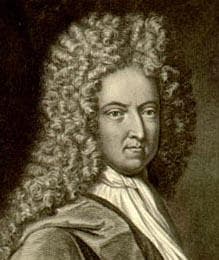
Daniel Defoe was an English writer, trader, journalist, pamphleteer and spy. He is most famous for his novel Robinson Crusoe, published in 1719, which is claimed to be second only to the Bible in its number of translations. He has been seen as one of the earliest proponents of the English novel, and helped to popularise the form in Britain with others such as Aphra Behn and Samuel Richardson. Defoe wrote many political tracts, was often in trouble with the authorities, and spent a period in prison. Intellectuals and political leaders paid attention to his fresh ideas and sometimes consulted him.
Similar books
- Moll Flanders
Daniel Defoe
3.5 (41k) average on GoodreadsHistorical FictionAnother Defoe novel featuring a resourceful, morally complex female protagonist navigating societal challenges in 18th-century England.
- Pamela
Samuel Richardson
2.8 (10k) average on GoodreadsHistorical FictionExplores themes of female virtue, social mobility, and the constraints placed upon women in 18th-century society, though from a different moral perspective.
- Lady Susan
Jane Austen
3.6 (30k) average on GoodreadsHistorical FictionFeatures a manipulative and charming female protagonist who cleverly navigates societal expectations and uses her wit to secure her position.
- To Kill a Mockingbird
Harper Lee
4.3 (4.5M) average on GoodreadsHistorical FictionIn the 1930s Jim Crow South, Harper Lee writes about racial injustice, moral growth, and the quiet courage of a lawyer father, Atticus Finch, as seen through his young daughter's eyes.
- The Great Gatsby
F. Scott Fitzgerald
3.9 (3.8M) average on GoodreadsHistorical FictionIn the opulent Roaring Twenties, a mysterious millionaire's lavish parties hide his desperate, tragic pursuit of a lost love, exposing the emptiness within the American Dream.
- Pride and Prejudice
Jane Austen
4.3 (3M) average on GoodreadsHistorical FictionIn a society focused on status and money, Elizabeth Bennet navigates love and pride, challenging Mr. Darcy and social expectations to find true affection.



Enjoyed the summary?
A summary gives you the shape of the book. The book itself has the detail, the examples and the voice.
Find Roxana on AmazonAs an Amazon Associate, BookBrief earns from qualifying purchases. How we're funded