

Synopsis
Covers the whole plot, including the ending.
- Difficulty
- Medium
- Pacing
- Variable
- Mood
- Dark, Sardonic, Anguished, Obsessive, Transgressive
- Read it if
- You enjoy dark, transgressive literary fiction exploring themes of aging, sexuality, grief, and the grotesque, with a morally ambiguous protagonist.
- Skip it if
- You prefer uplifting stories, characters with clear moral compasses, or are uncomfortable with explicit sexual content and misogynistic undertones.
Sabbath's Theater Plot Summary
Covers the whole plot, including the ending.
The Death of Drenka Balich
The novel opens with Mickey Sabbath, a disgraced, aging puppeteer, reeling from the recent death of his beloved mistress, Drenka Balich. Drenka, a Croatian immigrant and former butcher, was Sabbath's primary sexual and emotional outlet for over two decades, a relationship carried on behind the back of his wife, Rose. Her death from ovarian cancer leaves Sabbath grief-stricken, consumed by sorrow and a deep sense of loss. He reflects on their wild, uninhibited sexual escapades and the unique understanding they shared, which went beyond the conventional boundaries of his marriage. Drenka's absence creates a void in Sabbath's life, driving him towards erratic and self-destructive behavior, as he struggles to reconcile his past with a future without her presence.
Rose's Discovery and the Funeral
Rose Sabbath, Mickey's long-suffering wife, discovers the extent of his affair with Drenka Balich through Drenka's daughter, who sends her a box of Mickey's belongings found after Drenka's death. This revelation shatters Rose's already fragile world, confirming her deepest suspicions and humiliations. Despite her pain, Rose attends Drenka's funeral, where Mickey, in a fit of grief and defiance, makes a public spectacle of himself. He tries to steal a memento from Drenka's coffin and later accosts her grieving daughter, demanding to know if Drenka spoke of him in her final moments. His outrageous behavior further alienates him from his wife and solidifies his reputation as a depraved outcast in their small, respectable community.
The Visit to the Cemetery and the Grave Robbery
Consumed by his grief and an obsessive need to maintain a physical connection with Drenka, Mickey Sabbath drives to the cemetery where she is buried. He fantasizes about exhuming her body, a macabre yet deeply emotional impulse to retrieve something tangible of her. This morbid fantasy is intertwined with his memories of their intense sexual relationship and Drenka's uninhibited nature. He brings a shovel and even begins to dig, only to be interrupted by a groundskeeper. This thwarted act shows Sabbath's deep psychological distress and his inability to process loss in a conventional manner, highlighting his rejection of societal norms even in death.
The Phone Calls and the Impending Scandal
Following Drenka's death, Mickey Sabbath begins a campaign of provocative phone calls to various women from his past, including former students and lovers. He makes obscene suggestions, recounts explicit memories, and generally behaves in a manner designed to shock and disturb. These calls are partly an expression of his unbridled libido, partly a desperate attempt to feel alive, and partly an act of self-sabotage. His actions threaten to expose his scandalous history to a wider audience, particularly among the faculty of the small liberal arts college where he once taught. His behavior seems to be a deliberate effort to burn bridges and ensure his complete ostracization.
Rose's Ultimatum and Sabbath's Departure
After enduring Mickey's increasingly erratic and humiliating behavior, coupled with the public scandal surrounding Drenka's affair, Rose Sabbath delivers an ultimatum: he must leave their home. She can no longer tolerate his destructive presence and the constant emotional torment he inflicts. Though devastated by Rose's decision, Mickey, in his characteristic defiance, sees it as a form of liberation. He packs a bag and leaves their New England home, embarking on an aimless journey that he hopes will provide some form of escape or resolution. This departure is a key moment, pushing Sabbath further into his solitary and self-destructive spiral.
Return to the Old Neighborhood and Encounter with Bobby
Mickey Sabbath drives to his childhood neighborhood in New Jersey, a place filled with memories of his youth and the origins of his rebellious nature. He encounters Bobby, a man he knew from his past, who is now a successful, respectable member of the community. This meeting is a stark contrast to Sabbath's own life, highlighting the different paths they took. Sabbath, ever the provocateur, tries to shock Bobby with his lewd stories and cynical worldview, but Bobby remains largely unfazed. This encounter forces Sabbath to confront the ghosts of his past and the choices that shaped him, particularly his early experiences with sexuality and his rejection of conventional morality.
The Search for the Missing Hand
During his journey, Mickey Sabbath becomes fixated on finding the prosthetic hand of his cousin, Fishman, a World War II veteran who lost his arm and later committed suicide. This quest is deeply symbolic, representing Sabbath's grappling with guilt, memory, and the physical manifestations of loss. Fishman's story, particularly his tragic death and the lingering question of his lost prosthetic, becomes intertwined with Sabbath's own feelings of mutilation and incompleteness after Drenka's death. The search for the hand is a desperate attempt to connect with a lost past and perhaps to atone for unspoken transgressions, further illustrating Sabbath's unconventional coping mechanisms.
Encounters with Women from the Past
Mickey continues his journey, making a point to visit and call several women with whom he had affairs in the past. These encounters are often awkward, uncomfortable, and charged with unresolved tension. He tries to re-ignite old passions, or at least to get a reaction, a confirmation of his enduring power or depravity. Each interaction is a mirror, reflecting different facets of his past self and the impact he had on these women's lives. These visits are not about genuine connection but about Sabbath's desperate need to affirm his identity, even if it means dredging up painful memories or inflicting further emotional damage.
The Delirious Night in the Motel
Alone in a cheap motel room, Mickey Sabbath descends into a night of deep psychological torment. He experiences vivid hallucinations, fragmented memories, and feverish dreams, blurring the lines between reality and his inner turmoil. He is haunted by the ghosts of his past: Drenka, his mother, his cousin Fishman, and various women he has wronged. This delirious state is a culmination of his grief, guilt, and the sheer exhaustion of his self-destructive journey. The motel room becomes a crucible for his psychological breakdown, where he confronts the consequences of his life choices and the unbearable weight of his losses.
The Return to Rose and the Attempted Suicide
After his period of wandering, Mickey Sabbath returns to his home, hoping for reconciliation with Rose. However, Rose, having reached her breaking point, firmly rejects him, refusing to take him back. Her refusal shatters any remaining hope Sabbath harbored for a conventional future. Desperate and utterly alone, Mickey attempts suicide by carbon monoxide poisoning in his garage. This act is not simply a desire for death but a final, dramatic gesture of defiance and despair, a culmination of his lifelong rebellion against expectation and his inability to find peace within himself or with others.
Rose's Intervention and the Hospital Stay
Miraculously, Rose Sabbath discovers Mickey's suicide attempt in time and saves his life. Her intervention, though born of a complex mix of anger, duty, and perhaps lingering affection, prevents his death. Mickey is hospitalized, where he slowly recovers physically. During his hospital stay, he continues to grapple with his internal demons, his memories, and the implications of his failed suicide. This period of forced introspection, though painful, offers a brief respite from his chaotic existence, allowing him to reflect on his life from a more detached perspective, even if he remains fundamentally unchanged.
The Last Days and the Unresolved End
The novel concludes with Mickey Sabbath continuing his defiant and unrepentant existence. Though physically weakened by his suicide attempt, his spirit remains unbroken in its commitment to misrule and provocation. He rejects any notion of redemption or conventional peace, choosing instead to embrace his identity as an outsider and a sexual anarchist. The ending is ambiguous, offering no easy resolution to his torment or his relationships. Sabbath remains a figure of constant rebellion, a man who, even at the precipice of old age and death, refuses to submit to the demands of society or the quietude of a conventional life, leaving his fate uncertain but his character unyielding.
Principal Figures
Mickey Sabbath
Protagonist
An aging, disgraced puppeteer consumed by sex, grief, and defiance.
Mickey Sabbath is a sixty-four-year-old former puppeteer, notorious for his scandalous sexual exploits and antagonistic personality. He is a man driven by a powerful libido and a profound contempt for societal norms and conventional morality. His life is a continuous act of rebellion, often expressed through his art, his language, and his relentless pursuit of pleasure. Despite his outward cynicism and depravity, he possesses a deep capacity for love and grief, particularly evident in his reaction to Drenka's death. He is fiercely independent, preferring to live on the fringes, constantly provoking and challenging those around him. His internal world is a turbulent mix of memory, desire, and self-loathing.
Relationships: Drenka Balich (Long-term mistress, intense sexual and emotional bond); Rose Sabbath (Wife, strained and complex marriage, love-hate relationship); Fishman (Deceased cousin, source of guilt and symbolic obsession)
Drenka Balich
Supporting
Mickey's deceased mistress, a vibrant and uninhibited Croatian immigrant.
Drenka Balich is Mickey Sabbath's long-term mistress, a robust and uninhibited Croatian immigrant who works as a butcher. Even in her absence, her presence dominates the novel, as Mickey's grief over her death is the primary catalyst for his actions. Drenka is depicted as a woman of immense vitality, sensuality, and a frank acceptance of her own desires, mirroring and even surpassing Mickey's own libidinous nature. She provided Mickey with an escape from the constraints of his marriage and the intellectual world, offering a raw, physical, and emotionally honest connection. Her memory fuels both Mickey's despair and his continued acts of sexual rebellion.
Relationships: Mickey Sabbath (Long-term mistress, intense sexual and emotional bond)
Rose Sabbath
Supporting
Mickey's long-suffering wife, a woman pushed to her breaking point.
Rose Sabbath is Mickey's wife, a woman who has endured decades of his infidelity, public humiliations, and emotional abuse. She is depicted as a more conventional, respectable figure, constantly trying to maintain a semblance of order and dignity in her chaotic life with Mickey. Rose is deeply hurt by Mickey's actions, particularly the revelation of the depth of his affair with Drenka. Despite her anger and pain, she possesses a complex mixture of resentment, lingering affection, and a sense of duty towards Mickey. Her ultimate rejection of him, followed by her act of saving his life, highlights her conflicted nature and her profound weariness.
Relationships: Mickey Sabbath (Wife, strained and complex marriage, love-hate relationship)
Fishman
Mentioned
Mickey's deceased cousin, a World War II veteran and symbolic figure of loss and guilt.
Fishman is Mickey Sabbath's cousin, a World War II veteran who lost an arm in combat and later committed suicide. Though deceased, he plays a significant role in Mickey's psychological landscape. Fishman represents a past trauma, a lingering guilt, and a symbol of physical and emotional mutilation. Mickey's obsession with finding Fishman's prosthetic hand is a quest for a tangible connection to this lost past and a way to confront his own feelings of incompleteness and mortality. Fishman's story provides a counterpoint to Mickey's own self-inflicted wounds, highlighting the different ways men grapple with loss and the wreckage of war.
Relationships: Mickey Sabbath (Cousin, complex relationship marked by guilt and obsession)
Bobby
Supporting
An old acquaintance from Mickey's past, now a respectable member of society.
Bobby is a man from Mickey Sabbath's childhood neighborhood in New Jersey. He represents the path not taken by Mickey – a life of conventional respectability, family, and community integration. When Mickey encounters him, Bobby is a successful, well-adjusted individual, providing a stark contrast to Mickey's chaotic and disgraced existence. Bobby's calm and polite demeanor, even in the face of Mickey's provocations, highlights Mickey's inability to connect with the mainstream world. He serves as a mirror, reflecting Mickey's chosen alienation and the consequences of his lifelong rebellion against societal norms.
Relationships: Mickey Sabbath (Childhood acquaintance, brief and contrasting encounter)
Michal
Supporting
Drenka's daughter, who delivers the news of the affair to Rose.
Michal is Drenka Balich's daughter. She is the unwitting catalyst for Rose's discovery of Mickey's long-standing affair, as she sends Rose a box of Mickey's belongings found among Drenka's possessions. Michal is depicted as a grieving daughter, navigating the complexities of her mother's life and death. Her interactions with Mickey are marked by a mixture of sorrow, confusion, and a quiet dignity, contrasting sharply with Mickey's boisterous and often inappropriate behavior. She represents the collateral damage of Mickey and Drenka's illicit relationship, particularly the pain inflicted upon the innocent.
Relationships: Drenka Balich (Daughter); Mickey Sabbath (Mother's lover, tense and uncomfortable interactions)
Themes & Insights
Grief and Loss
The novel is deeply shaped by Mickey Sabbath's raw and unconventional grief over the death of his mistress, Drenka Balich. His mourning shows not in quiet sorrow, but in outrageous, self-destructive acts — trying to steal from her coffin, fantasizing about exhumation, and harassing women from his past. This theme explores how individuals cope with deep loss when conventional outlets are unavailable or rejected, highlighting the intense psychological turmoil that can come with the death of a significant, though illicit, love. His grief for Drenka is intertwined with a broader sense of loss for his youth, his potency, and a world he feels is slipping away.
“He understood what it was to be consumed. He was consumed. He was consumed by Drenka. He was consumed by Drenka's death.”
Sexuality and Desire
Sexuality is a central and pervasive theme, portrayed as both a driving force and a principle for Mickey Sabbath. For him, sex is not just pleasure but an instrument of rebellion, a way to assert his identity and defy societal norms. His affairs, particularly with Drenka, are acts of radical freedom and a rejection of bourgeois morality. The novel explores the uninhibited, often transgressive nature of desire in old age, challenging conventional notions of aging and libido. Sabbath's relentless pursuit of sexual connection, even in grief, shows its fundamental importance to his being, despite the chaos and destruction it often brings.
“For Sabbath, sex was an obsession and a principle, an instrument of perpetual misrule in his daily existence.”
Rebellion and Transgression
Mickey Sabbath embodies a lifelong spirit of rebellion and transgression against all forms of authority and convention. From his early days as a puppeteer using his art to provoke, to his numerous extramarital affairs, and his outrageous behavior after Drenka's death, Sabbath consistently chooses to flout expectations. This theme explores the nature of a life lived outside societal boundaries, questioning the costs and freedoms associated with such a path. His actions, often shocking and offensive, are a deliberate challenge to respectability, morality, and the quietude of old age, making him an anti-hero who refuses to be tamed.
“He was a man who had chosen to be outside. He was outside, and he liked it there.”
Memory and the Past
The novel is deeply immersed in Mickey Sabbath's memories, constantly shifting between his present grief and vivid recollections of his past. His journey is largely an exploration of his personal history, revisiting old haunts, former lovers, and the formative experiences that shaped his identity. The past is not a static entity but a living force that continually influences his present actions and psychological state. His obsession with Drenka and his cousin Fishman demonstrates how memory, both cherished and painful, can haunt and define an individual, blurring the lines between what was and what is, and making true escape impossible.
“The past was not a country he had left, but a country he inhabited still, every day.”
The Absurdity of Existence
Throughout the narrative, there is an underlying current of the absurd, particularly in Sabbath's actions and the situations he finds himself in. His attempts to steal from a coffin, his obscene phone calls, and his general disregard for decorum often verge on the farcical, highlighting the inherent meaninglessness he perceives in a structured, conventional life. This theme explores how humor and the grotesque can be used to confront the bleakness of mortality and the futility of human striving. Sabbath's outrageous behavior is his way of injecting meaning and defiance into an existence he views as inherently arbitrary.
“The world was a joke, and he was the punchline, and the setup, and the audience, all at once.”
Plot Devices & Literary Techniques
Non-Linear Narrative
The story frequently jumps between present events and Mickey's memories of the past.
The narrative structure is highly non-linear, with frequent flashbacks and digressions into Mickey Sabbath's past. These shifts are often triggered by a current event or a memory, allowing the reader to understand the complex history behind Sabbath's present actions and psychological state. This device reflects the fragmented nature of memory and grief, showing how the past constantly intrudes upon and informs the present. It also allows for a deeper exploration of Sabbath's character development and the origins of his rebellious nature, making his motivations more nuanced than a purely chronological account would allow.
Internal Monologue
Extensive use of Mickey Sabbath's thoughts, reflections, and stream-of-consciousness.
A significant portion of the novel is conveyed through Mickey Sabbath's internal monologue, providing direct access to his raw, unfiltered thoughts, obsessions, and philosophical musings. This device immerses the reader deeply into Sabbath's mind, revealing his complex inner world, his rationalizations for his behavior, his profound grief, and his relentless defiance. It allows for detailed explorations of his memories, his sexual fantasies, and his cynical worldview, making him a vivid and often uncomfortable presence. The internal monologue is crucial for understanding the depths of his character and the extent of his psychological turmoil.
Symbolism of the Hand
The prosthetic hand of Mickey's deceased cousin, Fishman, represents loss and guilt.
The prosthetic hand of Mickey's deceased cousin, Fishman, serves as a powerful recurring symbol. Fishman lost his arm in World War II and later committed suicide, and Mickey becomes obsessed with finding the missing prosthetic. The hand symbolizes physical and emotional mutilation, the lingering effects of war and trauma, and the impossibility of fully recovering what is lost. For Mickey, the search for the hand is intertwined with his own feelings of incompleteness after Drenka's death and his unresolved guilt regarding his past, representing a tangible link to a damaged history he cannot escape.
The Unreliable Narrator (Mickey Sabbath)
Mickey's perspective is often biased, self-serving, and prone to exaggeration.
While the novel is primarily told from Mickey Sabbath's perspective, he functions as an unreliable narrator. His accounts of events, his relationships, and his own motivations are often colored by his desires, his self-delusions, and his need to justify his transgressive behavior. He exaggerates, distorts, and selectively remembers, particularly concerning his sexual exploits and his perceived victimhood. This unreliability forces the reader to critically evaluate his narrative, recognizing the gap between his self-perception and how others might view him, adding layers of complexity to his character and the events of the story.
Sabbath's Theater Quotes
“Everything changed the day he achieved the insight that the purpose of life is not to be happy but to be useful.”
“The price of being a pariah, of course, is that you are hated. The price of being a genius is that you are envied. The price of being a free spirit is that you are misunderstood. The price of being a monster is that you are feared.”
“He was an artist. He was a puppeteer. He manipulated, he deceived, he charmed, he repelled. He was a liar, a trickster, a seducer.”
“The only thing that mattered was the present moment, and the present moment was always terrible.”
“To be without shame, to be without a sense of guilt, to be without a sense of responsibility — this was the only true freedom.”
“He lived in the present tense, a present tense that was always dissolving, always evaporating, always being replaced by another, equally fleeting present tense.”
“Old age is not for sissies. It's for the strong, for the resilient, for the survivors.”
“He had a gift for making himself hated, a genius for alienating everyone who came into contact with him.”
“The dead were everywhere. They were in his head, in his dreams, in his memories. They never left him alone.”
“He was a man who had chosen to live outside the law, outside the conventions of decent society, and he was paying the price.”
“The world was a stage, and he was a player, a performer, a jester, a fool.”
“He was a man who had lost everything, but he had never lost his desire to shock, to offend, to provoke.”
“There was no redemption. There was only the endless, grinding repetition of the same old mistakes.”
“He had always been drawn to the grotesque, to the forbidden, to the taboo.”
Quiz
10 questions on the plot and the characters. Each answer comes with a short explanation.
Question 1
What is Mickey Sabbath's primary artistic occupation mentioned in the book, before his current state?
- Painter
- Puppeteer
- Jazz Musician
- Novelist
Show answer
B. Puppeteer Mickey Sabbath was famously a puppeteer before his current, more reclusive and debauched life.
Question 2
Who is Mickey Sabbath's long-time mistress whose death precipitates his journey into the past?
- Cynthia
- Drenka Balich
- Roseanna
- Maggie
Show answer
B. Drenka Balich Drenka Balich is Mickey Sabbath's deceased mistress, whose death sends him into a spiral of grief and reflection.
Question 3
What is the primary reason Mickey Sabbath is forced to leave his teaching position at the university?
- Financial mismanagement
- Sexual misconduct with a student
- Plagiarism
- Excessive absenteeism
Show answer
B. Sexual misconduct with a student Sabbath's dismissal from his teaching role was a direct consequence of his notorious sexual escapades, specifically involving a student.
Question 4
Which of these themes is MOST central to 'Sabbath's Theater'?
- The pursuit of conventional happiness
- The conflict between desire and mortality
- The American dream and its disillusionment
- The innocence of youth
Show answer
B. The conflict between desire and mortality The novel deeply explores Mickey's struggle with his insatiable desires in the face of aging and death, especially after Drenka's passing.
Question 5
What is the name of Mickey Sabbath's wife?
- Chloe
- Roseanna
- Sarah
- Audrey
Show answer
B. Roseanna Roseanna is Mickey Sabbath's long-suffering wife, who tolerates his infidelities and erratic behavior.
Question 6
What significant personal loss, besides Drenka's death, haunts Mickey Sabbath and is frequently revisited?
- The failure of his puppet theater
- His brother's death in the Korean War
- His estrangement from his children
- The loss of his family fortune
Show answer
B. His brother's death in the Korean War Mickey is deeply affected by the death of his older brother, Morty, in the Korean War, a grief that lingers throughout his life.
Question 7
What does Mickey Sabbath attempt to do with Drenka Balich's remains after her death?
- Scatter them in the ocean
- Bury them in his backyard
- Steal her ashes from her family and keep them
- Donate them to a medical school
Show answer
C. Steal her ashes from her family and keep them In a desperate and morbid act of devotion, Mickey attempts to steal Drenka's ashes, viewing them as rightfully his.
Question 8
Mickey Sabbath's 'misrule' and 'transgression' can be best interpreted as a rebellion against what societal construct?
- Political authority
- Religious dogma
- The constraints of aging and conventional morality
- Economic inequality
Show answer
C. The constraints of aging and conventional morality Sabbath's behavior is a defiant protest against the diminishing vitality of old age and the societal expectations of decorum and morality that come with it.
Question 9
What unique physical characteristic is often associated with Drenka Balich, influencing Mickey's perception of her?
- Her distinctive red hair
- Her missing finger
- A prominent birthmark on her face
- Her unusual height
Show answer
B. Her missing finger Drenka's missing finger is a recurring detail that adds to her distinctiveness and Mickey's fascination with her 'impermissible' nature.
Question 10
In his grief and madness, what specific 'farcical disaster' does Mickey Sabbath plan involving his own demise?
- To fake his death and disappear
- To commit suicide in a public, theatrical manner to spite his enemies
- To live out his days as a hermit in the wilderness
- To provoke a fatal confrontation with Drenka's family
Show answer
B. To commit suicide in a public, theatrical manner to spite his enemies Sabbath contemplates a grotesque and theatrical suicide, envisioning it as a final, defiant act of 'misrule' against the world and his own mortality.
Sabbath's Theater FAQ
What is the central conflict Mickey Sabbath faces after the death of Drenka?
After Drenka's death, Mickey Sabbath is plunged into profound grief and a crisis of identity, struggling with the void left by his mistress and the specter of his own mortality. He grapples with the consequences of his lifelong promiscuity and defiance, leading him to confront a past filled with both adulation and condemnation.
Who is Drenka Balich and what is her significance to Mickey Sabbath?
Drenka Balich is Mickey Sabbath's long-time mistress, a free-spirited Croatian immigrant known for her uninhibited sexuality and willingness to engage in taboo acts. Her death from ovarian cancer serves as the catalyst for Sabbath's emotional collapse and his subsequent journey into his past and psyche.
Where does Mickey Sabbath primarily reside and how does his environment reflect his character?
Mickey Sabbath primarily lives in a small, isolated house on the Connecticut shore, a setting that reflects his self-imposed exile from conventional society and his preference for solitude despite his numerous sexual escapades. His chaotic home environment mirrors the internal disarray and moral ambiguity that define his character.
What role does Mickey Sabbath's past as a puppeteer play in the narrative?
Sabbath's past as a puppeteer is central to understanding his artistic and personal philosophy, as he saw puppetry as a means of expressing life's grotesque and anarchic truths. The manipulation of puppets mirrors his own attempts to control or provoke those around him, and his subsequent dismissal from academia highlights his inability to conform.
How does Sabbath's relationship with his wife, Rose, evolve throughout the story?
Sabbath's relationship with Rose is characterized by a complex mix of resentment, dependence, and a strange form of enduring connection despite his blatant infidelities. While Rose often appears as a victim of his behavior, she also possesses her own strength and agency, ultimately choosing to stay with him, albeit with clear boundaries, after his most egregious acts.
What is the significance of the recurring motif of burial and exhumation in the novel?
The motif of burial and exhumation, particularly Sabbath's obsession with Drenka's grave and his fantasies of digging her up, symbolizes his inability to let go of the past and his desperate desire to reclaim what is lost. It also represents his defiance against death and societal norms surrounding grief and mourning.
Are there any parallels between Mickey Sabbath's character and figures from Jewish folklore or mythology?
Mickey Sabbath embodies a kind of modern-day Jewish trickster or a golem-like figure, a powerful and unruly creation that defies its maker and societal expectations. His name itself, 'Sabbath,' is ironic, as he consistently desecrates the sacred and lives a life of perpetual misrule, challenging traditional religious and moral frameworks.
How does the novel subtly comment on the nature of artistic expression and its relationship to morality?
The novel subtly suggests that for Sabbath, true artistic expression is inherently tied to transgression and the rejection of conventional morality. His puppetry, and indeed his life, are acts of rebellion against decorum, positing that raw, unbridled passion and even obscenity can be a form of profound artistic truth, challenging the reader to consider art's boundaries.
What is the role of the 'ghosts' from Sabbath's past, such as his mother or his cousin, in his psychological journey?
The 'ghosts' from Sabbath's past, including his mother, his cousin Fishman, and others, serve as embodiments of his unresolved guilt, regret, and the societal judgments he has defied. They haunt his consciousness, forcing him to confront the impact of his actions and the emotional toll his lifestyle has taken on both himself and those around him.
How does Mickey Sabbath's narcissism contribute to his isolation and inability to form lasting emotional bonds?
Mickey Sabbath's profound narcissism drives his self-serving behavior and his inability to genuinely empathize with others, leading to a life of transactional relationships centered on his own desires. This self-absorption ultimately isolates him, as his constant pursuit of gratification prevents him from forming deep, reciprocal emotional bonds, despite his longing for connection.
In what ways does Sabbath's grief for Drenka intertwine with his existential angst and fear of aging?
Sabbath's grief for Drenka is inextricably linked to his own existential angst and fear of aging, as her death serves as a stark reminder of his own mortality and the fading of his physical prowess. Her youthful vitality, now gone, highlights his own decline, pushing him to confront the meaninglessness he perceives in his remaining years.
What psychological defense mechanisms does Sabbath employ to cope with his guilt and the consequences of his actions?
Sabbath primarily employs denial, rationalization, and projection to cope with his guilt, often blaming others for his misfortunes or justifying his behavior as an act of rebellion or artistic freedom. He also uses humor and self-abasement as a way to deflect serious confrontation and maintain a sense of control over his narrative.
Does the novel ultimately condemn or celebrate Mickey Sabbath's transgressive lifestyle?
The novel resists a simple condemnation or celebration, instead presenting Sabbath's transgressive lifestyle with a complex, often ambiguous lens. It exposes the destructive consequences and personal suffering his choices inflict, yet it also portrays his defiant spirit as a powerful, if chaotic, assertion of individuality and resistance against societal pressures, leaving the reader to draw their own conclusions.
How does the ending of the novel, particularly Sabbath's contemplation of suicide, contribute to its overall message?
The ending, with Sabbath contemplating suicide but ultimately choosing to live, underscores the novel's exploration of his enduring will to exist, even amidst profound despair and self-loathing. It suggests a reluctant acceptance of his own chaotic nature and a commitment to enduring, reinforcing the idea that his 'misrule' is not just a choice, but an intrinsic part of his being.
Is 'Sabbath's Theater' a feminist novel, given its portrayal of women, or does it reinforce patriarchal tropes?
'Sabbath's Theater' is generally not considered a feminist novel, as it primarily centers on Mickey Sabbath's male perspective and his often exploitative relationships with women. While characters like Drenka and Rose display agency and complexity, their roles are largely defined in relation to Sabbath, leading many to view it as reinforcing patriarchal tropes, despite its nuanced portrayals.
What is the novel's stance on morality and ethics in the context of individual freedom and desire?
The novel challenges conventional notions of morality and ethics, suggesting that for individuals like Sabbath, absolute freedom and unbridled desire take precedence over societal norms. It explores the tension between instinctual urges and ethical considerations, implying that genuine self-expression might necessitate a rejection of established moral frameworks, even at great personal cost.
How does humor, particularly dark or farcical humor, function within the narrative?
Dark and farcical humor in 'Sabbath's Theater' serves multiple functions: it lightens the heavy themes of death and despair, creates a sense of the absurd in Sabbath's disastrous escapades, and acts as a coping mechanism for Sabbath himself. It allows the novel to explore taboo subjects with a detached, often cynical, perspective, highlighting the inherent comedy in human suffering and defiance.
About the author
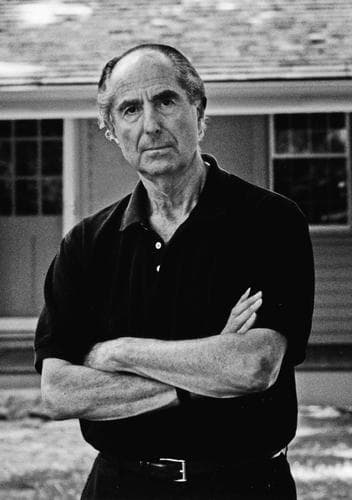
Philip Milton Roth was an American novelist and short story writer. Roth's fiction—often set in his birthplace of Newark, New Jersey—is known for its intensely autobiographical character, for philosophically and formally blurring the distinction between reality and fiction, for its "sensual, ingenious style" and for its provocative explorations of American identity. He first gained attention with the 1959 short story collection Goodbye, Columbus, which won the U.S. National Book Award for Fiction. Ten years later, he published the bestseller Portnoy's Complaint. Nathan Zuckerman, Roth's literary alter ego, narrates several of his books. A fictionalized Philip Roth narrates some of his others, such as the alternate history The Plot Against America.
Similar books
- Portnoy's Complaint
Philip Roth
3.7 (59k) average on GoodreadsLiterary FictionShares Roth's signature blend of explicit sexuality, Jewish-American identity, and a protagonist's obsessive inner monologue.
- The Human Stain
Philip Roth
3.9 (34k) average on GoodreadsLiterary FictionAnother Roth novel featuring an aging, defiant male protagonist whose life unravels due to scandal and societal judgment, exploring themes of identity and desire.
- American Pastoral
Philip Roth
3.9 (65k) average on GoodreadsLiterary FictionWhile both Sabbath's Theater and American Pastoral (1997) explore the unraveling of an American male's life, they do so from vastly different angles. American Pastoral focuses on the disillusionment of the 'Swede' Levov, a seemingly perfect man whose life is shattered by external political forces (the Vietnam War era and his daughter's radicalization). The tragedy in American Pastoral is largely external, a loss of the American dream, and carries a more elegiac, reflective tone. In contrast, Sabbath's Theater is a deeply internal, self-inflicted tragedy, driven by Sabbath's own insatiable desires and moral decay. The former is a lament for a lost ideal, the latter a grotesque celebration of unbridled id. Sabbath's Theater is far more confrontational and less sympathetic to its protagonist than American Pastoral.
- The Old Man and the Sea
Ernest Hemingway
3.8 (831k) average on GoodreadsLiterary FictionA Cuban fisherman's long struggle with a giant marlin becomes a story of endurance and dignity, now retold for young adults with illustrations, phonetic guides, and writing prompts in Traditional Chinese.
- One Hundred Years of Solitude
Gabriel García Márquez
4.1 (753k) average on GoodreadsLiterary FictionThrough the multi-generational story of the Buendía family, a mythical town deals with the repeating patterns of time, love, and solitude, as the extraordinary mixes with the ordinary.
- The Goldfinch
Donna Tartt
3.9 (720k) average on GoodreadsLiterary FictionHaunted by a tragic explosion and clutching a stolen Dutch masterpiece, a young orphan navigates the opulent drawing rooms of New York and the gritty underbelly of the art world, desperately seeking connection and redemption amidst a life spiraling into crime and obsession.




Enjoyed the summary?
A summary gives you the shape of the book. The book itself has the detail, the examples and the voice.
Find Sabbath's Theater on AmazonAs an Amazon Associate, BookBrief earns from qualifying purchases. How we're funded