

Synopsis
Covers the whole plot, including the ending.
- Difficulty
- Medium
- Pacing
- Slow
- Mood
- Reflective, Melancholy, Poignant, Moralistic
- Read it if
- You appreciate classic Victorian literature, character-driven stories, and nuanced explorations of faith, morality, and social dynamics in small communities.
- Skip it if
- You prefer fast-paced plots, contemporary language, or stories with clear-cut heroes and villains.
Scenes of Clerical Life Plot Summary
Covers the whole plot, including the ending.
The Sad Fortunes of the Reverend Amos Barton: A New Curate's Arrival
The story introduces Reverend Amos Barton, the new curate of Shepperton. He has limited intellect and social graces but is truly pious. He is married to Milly, a gentle and beautiful woman, and they have six children, with another expected. Despite his good intentions, Amos is not well-liked by his parishioners, who find his sermons dull and his manners awkward. His financial struggles are constant, made worse by his large family and small salary. The story quickly shows the difference between Amos's internal problems and the often harsh, superficial judgments of the Shepperton community, setting up the misfortunes that will happen to him and his family.
The Countess Czerlaski and Social Misunderstandings
Amos, trying to improve his social standing and perhaps get a better living, invites the Countess Czerlaski, a fashionable but questionable Polish woman, to stay at the parsonage. The Countess, with her exotic stories and dramatic style, at first impresses Milly and the children. However, her presence soon causes scandal and gossip among the Shepperton parishioners, who view her with suspicion. Amos, unaware of the social damage, remains sure of the Countess's good intentions and his own wisdom in befriending her, further separating him from his community and increasing his family's isolation.
Milly's Decline and Tragic Death
The Countess Czerlaski eventually leaves, leaving unpaid debts and social embarrassment for Amos. Milly's health quickly declines after the birth of their seventh child. She suffers from a fever and weakness, her gentle spirit fading under the weight of her many burdens. Despite Amos's genuine, if clumsy, devotion, and the occasional kindness of a few parishioners, Milly dies, leaving Amos a widower with seven young children. Her death is a deep tragedy for the family and a moment of rare, true sympathy from the previously critical Shepperton community, who now see Amos's grief instead of his faults.
Amos's Grief and Departure from Shepperton
Amos is completely devastated by Milly's death, struggling with his grief and the overwhelming responsibility of raising his large family alone. The children, especially the younger ones, deeply miss their mother. The community, moved by the tragedy, offers some practical help, including clothing and food. However, Amos's financial situation remains bad, and his emotional state makes it hard for him to do his duties well. He is eventually offered a curacy in a distant manufacturing town, a less desirable position but one that offers a fresh start. He leaves Shepperton, a sadder but perhaps wiser man, taking his children to an uncertain future.
Mr. Gilfil's Love Story: The Older Mr. Gilfil
The second story begins by introducing the elderly Reverend Maynard Gilfil, the vicar of Knebley. He is shown as a rather unusual, solitary, and somewhat gruff bachelor, known for his love of dogs and his peculiar habits. His parishioners, while respecting his kindness and honesty, find him a bit odd. The story then goes back in time, promising to reveal the hidden romantic tragedy that shaped his character and led to his present solitude. This setup immediately creates a sad and reflective mood, inviting the reader to discover Gilfil's past.
Tina's Arrival at Cheverel Manor
The story goes back to Mr. Gilfil's youth, when he was a tutor for Sir Christopher Cheverel at Cheverel Manor. Living there is Caterina Sarti, called Tina, a beautiful and musically talented Italian orphan adopted by Sir Christopher and Lady Cheverel. Tina is delicate and sensitive, deeply devoted to her benefactors. Young Maynard Gilfil, though at first somewhat overlooked, quickly develops a deep and lasting love for Tina, watching her with quiet adoration that contrasts with her more showy suitor, Captain Anthony Wybrow.
The Love Triangle and Wybrow's Betrayal
Tina becomes deeply in love with Captain Anthony Wybrow, Sir Christopher's handsome and charming nephew and heir. Wybrow, a superficial and selfish man, flirts with Tina and even makes vague promises of marriage, despite being secretly engaged to the wealthy Miss Assher. Tina, innocent and passionate, believes his declarations, while Gilfil watches heartbroken, aware of Wybrow's dishonesty. Wybrow's manipulation and Tina's growing despair create strong dramatic tension, with Gilfil caught in the middle, unable to warn Tina without breaking a trust or causing her more pain.
Tragedy Strikes and Tina's Despair
The tension ends when Wybrow is found dead, seemingly from a heart attack, shortly after a tense argument with Tina. Tina, already fragile, is overwhelmed by shock and grief. Her emotional distress leads to a severe illness, during which she raves about Wybrow and their secret engagement. This revelation deeply upsets Sir Christopher and Lady Cheverel, who had planned for Tina to marry Gilfil. Gilfil, despite his own pain, remains devoted to Tina, nursing her through her illness and offering constant support, even as she at first rejects his love.
Tina and Gilfil's Brief Happiness and Her Early Death
After recovering and thinking, Tina, seeing Gilfil's lasting love and kindness, eventually agrees to marry him. They share a short time of quiet happiness as Mr. and Mrs. Gilfil, finding comfort and mutual affection. However, Tina's delicate health, weakened by her past emotional trouble, cannot last. She falls ill again and dies young, leaving Gilfil a heartbroken widower. Her death confirms his solitary and somewhat sad character, explaining the older Mr. Gilfil's unusual ways introduced at the start of the story, forever marked by the memory of his lost love.
Janet's Repentance: Janet Dempster's Unhappy Marriage
The last story is set in the manufacturing town of Milby and focuses on Janet Dempster, a gentle, intelligent, and very sensitive woman trapped in a marriage to Robert Dempster, a prominent but tyrannical, alcoholic lawyer. Robert subjects Janet to verbal abuse, public shame, and emotional cruelty, often fueled by drink. Janet, in turn, has sought comfort in alcohol, creating a cycle of despair and self-blame. The town knows of Dempster's behavior, but few intervene, leaving Janet alone in her suffering, though she keeps up appearances.
The Arrival of Mr. Tryan and Janet's Spiritual Awakening
A major change comes to Milby with the arrival of the new evangelical curate, Edgar Tryan. Tryan is a devout, earnest, and kind man, dedicated to improving his parishioners' spiritual lives. His passionate preaching and genuine care attract many, including Janet, who finds his sermons deeply moving and relevant to her own problems. Despite initial doubt and opposition from some of the more traditional parishioners, Tryan's influence begins to grow. Janet, inspired by his message of repentance and redemption, starts to confide in him and seek spiritual guidance, beginning her journey toward sobriety and self-worth.
Dempster's Decline and Death
Robert Dempster's alcoholism and abusive behavior get worse, reaching a peak when he physically assaults Janet, locking her out of their home in a drunken rage. This public humiliation is a turning point for Janet, strengthening her decision to seek help and escape her self-destructive patterns. Soon after, Dempster falls while drunk, getting a head injury that eventually leads to his death. His death, though sad, frees Janet from her oppressive marriage, allowing her to fully embrace the path of spiritual and personal recovery she had started with Mr. Tryan's guidance.
Janet's Redemption and Tryan's Illness
Free from her husband, Janet changes greatly. She commits herself to sobriety, charity, and spiritual growth, becoming a source of hope and support for others in Milby. She forms a deep, non-romantic friendship with Mr. Tryan, who continues to guide her. However, Mr. Tryan, whose health has always been delicate, begins to show signs of consumption. Despite his own suffering, he continues his ministry with constant devotion, inspiring Janet and the community. Their bond grows stronger, based on mutual respect and shared faith.
Tryan's Death and Janet's Enduring Faith
Mr. Tryan's illness gets worse quickly, and he eventually dies, leaving a deep emptiness in Milby and in Janet's life. His death is a moment of deep sadness for Janet, but it also strengthens her commitment to the principles he taught her. She continues to live a life of active faith and compassion, carrying on his legacy of service to the community. Janet's journey from a despairing, abused woman to a strong, kind figure shows the story's themes of repentance, redemption, and the lasting power of faith and human connection, even after loss.
Scenes of Clerical Life Characters
Reverend Amos Barton
Protagonist
The earnest but socially awkward curate of Shepperton, plagued by financial and personal misfortunes.
Amos Barton is a well-meaning but unremarkable clergyman. He possesses sincere piety and a deep love for his family, but lacks intellect, social grace, and practical judgment. His sermons are dull, and his attempts at social climbing, such as befriending the Countess Czerlaski, often backfire, making him a figure of mild ridicule or pity among his parishioners. His financial struggles are constant, and he is often overwhelmed by the demands of his large family. Despite his flaws, his grief over Milly's death is depicted with genuine pathos, revealing a deeper capacity for feeling.
Relationships: Milly Barton (Devoted husband); Countess Czerlaski (Misguided friend/benefactor); His children (Loving but often overwhelmed father)
Milly Barton
Supporting
Amos's gentle, beautiful, and long-suffering wife, who bears their many children with quiet strength.
Milly Barton is the epitome of a Victorian angel in the house – beautiful, gentle, patient, and endlessly devoted to her husband and children. She carries the burden of their poverty and the social slights against Amos with quiet dignity. Milly is the emotional anchor of the Barton family, managing the household and nurturing her children despite her own physical and emotional exhaustion. Her premature death, following the birth of her seventh child, is the central tragedy of Amos's story, highlighting the harsh realities faced by women in her position and evoking widespread sympathy from the community.
Relationships: Reverend Amos Barton (Devoted wife); Her children (Loving and nurturing mother)
Reverend Maynard Gilfil
Protagonist
The eccentric, aging vicar of Knebley, whose past is revealed to be a tale of unrequited love and heartbreak.
The older Mr. Gilfil is introduced as a peculiar, solitary, but kind man. His backstory reveals him as a young tutor at Cheverel Manor, deeply in love with Caterina Sarti (Tina). He is patient, loyal, and quietly observant, a stark contrast to the charming but deceitful Captain Wybrow. Gilfil's love for Tina is pure and steadfast, enduring her infatuation with another and her subsequent mental breakdown. He eventually marries her, but his happiness is tragically short-lived. His enduring grief and devotion shape him into the eccentric but compassionate figure seen in his old age.
Relationships: Caterina Sarti (Tina) (Deeply in love, eventually husband); Sir Christopher Cheverel (Protégé and friend); Lady Cheverel (Benefactor and friend)
Caterina Sarti (Tina)
Protagonist
The beautiful, musically gifted Italian orphan whose passionate nature leads to tragic heartbreak.
Tina is a delicate and highly emotional young woman, adopted by Sir Christopher and Lady Cheverel. Her exquisite singing voice and sensitive nature make her deeply appealing, but also vulnerable. She falls passionately in love with Captain Wybrow, a love that blinds her to his flaws and leads to immense suffering when he betrays her. Her emotional intensity, combined with her fragile health, makes her susceptible to heartbreak and illness. Despite her initial rejection of Gilfil, she eventually recognizes and appreciates his steadfast love, finding a brief period of peace before her premature death.
Relationships: Reverend Maynard Gilfil (Loved by, eventually wife); Captain Anthony Wybrow (Infatuated with, betrayed by); Sir Christopher Cheverel (Adopted daughter/beneficiary); Lady Cheverel (Adopted daughter/beneficiary)
Captain Anthony Wybrow
Antagonist
The charming but superficial and manipulative heir to Cheverel Manor, who toys with Tina's affections.
Captain Wybrow is Sir Christopher's nephew and heir, depicted as handsome, charming, and utterly self-serving. He enjoys flirting with Tina and leading her on, despite being engaged to a wealthy heiress, Miss Assher. He is a master of superficial charm, able to manipulate those around him for his own pleasure and convenience. His ultimate betrayal of Tina, combined with his sudden, convenient death, serves as the catalyst for the tragedy in 'Mr. Gilfil's Love Story', highlighting the destructive power of vanity and insincerity.
Relationships: Caterina Sarti (Tina) (Object of flirtation/betrayal); Miss Assher (Secretly engaged to); Sir Christopher Cheverel (Nephew/heir)
Janet Dempster
Protagonist
A sensitive woman trapped in an abusive marriage, who finds redemption through faith and self-discovery.
Janet Dempster is a deeply sympathetic character, intelligent and sensitive, but tragically caught in a cycle of abuse and alcoholism. Her marriage to Robert Dempster is a source of constant humiliation and despair, driving her to drink. Despite her outward respectability, she suffers profoundly in private. Her spiritual awakening, catalyzed by Mr. Tryan's sermons and personal guidance, allows her to confront her demons and break free. She transforms into a strong, compassionate, and benevolent woman, becoming a pillar of her community and a testament to the power of repentance and redemption.
Relationships: Robert Dempster (Abused wife); Reverend Edgar Tryan (Spiritual protégé and deep friend)
Robert Dempster
Antagonist
Janet's tyrannical and alcoholic husband, a prominent lawyer in Milby whose abuse drives Janet to despair.
Robert Dempster is the primary antagonist of 'Janet's Repentance'. He is a clever and influential lawyer in Milby, but also a cruel, domineering, and increasingly alcoholic man. He subjects Janet to constant verbal abuse, public humiliation, and emotional torment, often in drunken rages. His character embodies the destructive power of unchecked vice and male chauvinism, and his actions are the direct cause of Janet's suffering and her descent into alcoholism. His eventual death, a consequence of his drinking, frees Janet to pursue her path to redemption.
Relationships: Janet Dempster (Abusive husband)
Reverend Edgar Tryan
Supporting
The earnest and compassionate evangelical curate of Milby, who guides Janet towards spiritual recovery.
Edgar Tryan is a devout, self-sacrificing, and deeply compassionate clergyman. He arrives in Milby as an evangelical curate, facing opposition from the more traditional elements of the community. Despite his fragile health, he preaches with fervent conviction and dedicates himself to the spiritual welfare of his parishioners. He becomes Janet Dempster's spiritual guide and a profound source of support, helping her to overcome her alcoholism and find faith. His quiet strength, unwavering kindness, and ultimate self-sacrifice make him a Christ-like figure, inspiring redemption in others even as his own life draws to a close.
Relationships: Janet Dempster (Spiritual guide and deep friend)
Sir Christopher Cheverel
Supporting
The kind and benevolent baronet of Cheverel Manor, Tina's adoptive father.
Sir Christopher is a benevolent and well-meaning gentleman, a patron of the arts, and a loving adoptive father to Tina. He is a figure of old-fashioned gentility and generosity. He genuinely cares for Tina's well-being and is initially unaware of Captain Wybrow's true character and his manipulation of Tina. His disappointment and distress at the revelations surrounding Tina and Wybrow, and his subsequent efforts to ensure Tina's happiness with Gilfil, highlight his paternal affection and sense of responsibility.
Relationships: Caterina Sarti (Tina) (Adoptive father/benefactor); Lady Cheverel (Husband); Reverend Maynard Gilfil (Patron/friend); Captain Anthony Wybrow (Uncle/nephew)
Countess Czerlaski
Mentioned
A flamboyant and dubious Polish woman whose presence causes social scandal for Amos Barton.
The Countess Czerlaski is a minor but pivotal character in 'Amos Barton'. She is an exotic, fashionable, and rather theatrical woman of questionable background and means. Her invitation to stay with the Bartons is Amos's misguided attempt at social advancement. She brings a brief period of excitement and disruption to the parsonage, but ultimately leaves a trail of unpaid debts and social embarrassment, further isolating Amos from his parishioners. She serves primarily as a plot device to highlight Amos's naivety and the superficiality of social judgment.
Relationships: Reverend Amos Barton (Guest/brief friend)
Scenes of Clerical Life Themes
Hypocrisy and Social Judgment
This theme is clear throughout the 'Scenes', especially in 'Amos Barton' and 'Janet's Repentance'. Eliot shows the superficiality and harshness of small-town judgment, often contrasting outward appearances with inner struggles. Amos Barton is judged for his awkwardness and dull sermons, while his true piety and love for his family are ignored. Janet Dempster's suffering is made worse by the town's gossip and the quiet acceptance of her husband's abuse, with few offering real help. Eliot criticizes communities that value social rules over true compassion and understanding, showing the human cost of such narrow views.
“The Shepperton parishioners generally thought Mr. Barton a good man, but a poor preacher; and they were not inclined to make any further allowances for him.”
Repentance and Redemption
This theme is most strongly explored in 'Janet's Repentance'. Janet's journey from despair and alcoholism, caused by her abusive marriage, to spiritual and personal renewal is central to the story. Guided by the kind Mr. Tryan, she faces her past, embraces faith, and finds the strength to overcome her destructive habits. Her transformation shows Eliot's belief in the possibility of moral growth and redemption, even for those who have fallen furthest. The theme suggests that true repentance involves not just regret, but a fundamental change in character and a commitment to a life of compassion and service.
“It is a truth very little understood, and very lightly estimated, that the human heart is a world of its own, with a full apparatus of sensations, thoughts, and emotions, which are but partially expressed in the life of the individual.”
Love, Loss, and Grief
Each story explores the deep impact of love, its loss, and the resulting grief. In 'Amos Barton', the love between Amos and Milly, and Amos's devastating grief after her death, is central. In 'Mr. Gilfil's Love Story', Tina's passionate but betrayed love for Wybrow, and Gilfil's lasting, unreturned love for Tina, lead to deep heartbreak and ultimately shape Gilfil's entire life. The story ends with Gilfil's sorrow after Tina's early death. These stories highlight how fragile human happiness is and how personal tragedy leaves a lasting mark on individuals, shaping their characters and futures.
“The only happiness a man can have is to love and be loved.”
The Nature of Clerical Life
As the title suggests, the stories give a close look into the lives and challenges of Anglican clergymen in country England. Eliot explores the different effectiveness and personal struggles of her curates and vicars. Amos Barton shows the well-meaning but often ineffective clergyman, struggling with financial hardship and social awkwardness. Mr. Gilfil represents the quiet, devoted pastor whose personal tragedy shapes his ministry. Mr. Tryan embodies the enthusiastic, self-sacrificing evangelical, dedicated to spiritual reform despite personal illness and community opposition. Eliot shows the human side of the clergy, their good qualities, flaws, and the specific pressures of their calling.
“A man who had to preach to a congregation of farmers and tradesmen, and who was himself a farmer and tradesman, had no business to be a fine gentleman.”
The Power of Compassion and Kindness
Amidst the harsh realities and social judgments, Eliot consistently shows the saving power of true compassion and kindness. While Amos Barton faces much criticism, the rare acts of charity and sympathy shown to him after Milly's death are deeply moving. Mr. Gilfil's steady and selfless love for Tina, even when she cannot return it, ultimately offers her comfort and a short time of happiness. Most importantly, Mr. Tryan's constant empathy and spiritual guidance are what start Janet Dempster's deep redemption, showing how one person's true care can change another's life. These acts of kindness contrast with the prevailing social indifference.
“It is a good thing to be rich, and a good thing to be strong, but it is a better thing to be beloved of many friends.”
Plot Devices & Literary Techniques
Omniscient Narrator
A highly intrusive and morally observant narrator who guides the reader's understanding.
Eliot employs an omniscient, often didactic, narrator who not only recounts the events but also frequently interjects with direct addresses to the reader, moral reflections, and psychological insights. This narrator guides the reader's judgment, often challenging superficial social opinions and revealing the complex inner lives of characters. For example, the narrator explicitly defends Amos Barton's sincere heart despite his shortcomings, and elucidates Janet Dempster's internal struggles. This narrative voice creates a strong sense of authorial presence and moral authority, shaping the reader's sympathy and understanding of the characters' 'humble experience'.
Flashback (Framing Device)
Used in 'Mr. Gilfil's Love Story' to reveal the past tragedy that shaped a character.
In 'Mr. Gilfil's Love Story', Eliot uses a prominent flashback. The story begins by introducing the eccentric, elderly Reverend Gilfil in the present day, then immediately shifts to his youth to narrate the tragic love story that profoundly influenced his character. This framing device creates immediate intrigue, prompting the reader to understand the origins of Gilfil's current melancholic disposition. It allows Eliot to explore the long-term consequences of past events and to reveal the hidden depths of a seemingly ordinary individual, adding layers of pathos and psychological complexity to his character.
Social Realism
Detailed and unvarnished portrayal of everyday life in provincial Victorian England.
Eliot's 'Scenes of Clerical Life' is a prime example of social realism. The stories are meticulously detailed in their depiction of provincial life, from the mundane routines of a curate's family to the intricacies of village gossip and the social stratification of small towns like Shepperton and Milby. She portrays characters with a blend of their virtues and flaws, avoiding romanticization. The financial struggles of the Bartons, the social dynamics at Cheverel Manor, and the grim reality of domestic abuse in Milby are all presented with an unflinching honesty that emphasizes the 'humble experience of an ordinary fellow-mortal', making the world of the stories feel tangible and authentic.
Irony
Used to highlight the gap between appearance and reality, and expose social absurdities.
Eliot frequently employs irony, both dramatic and situational, to underscore her themes. In 'Amos Barton', there is irony in Amos's sincere belief that the Countess Czerlaski will elevate his social standing, when in reality her presence only exacerbates his social isolation and financial woes. The narrator often uses verbal irony to comment on the characters' foibles or the community's narrow-mindedness, subtly critiquing social conventions. This ironic detachment allows Eliot to expose the absurdities and hypocrisies of provincial life while still maintaining a compassionate stance towards her characters, particularly those who suffer from societal judgment.
Scenes of Clerical Life Quotes
“Our deeds determine us, as much as we determine our deeds.”
“The happiest women, like the happiest nations, have no history.”
“It is a very hard thing to say the exact truth, even about your own immediate feelings—much harder than to say something fine about them which is not the exact truth.”
“The golden moments in the stream of life rush past us, and we see nothing but sand; the angels come to visit us, and we only know them when they are gone.”
“There is no despair so absolute as that which comes with the first moments of our first great sorrow, when we have not yet known what it is to have suffered and be healed, to have despaired and have recovered hope.”
“The only failure a man ought to fear is failure in cleaving to the purpose he sees to be best.”
“We are all apt to believe what the world believes about us.”
“The beginning of compunction is the beginning of a new life.”
“It is seldom that the miserable can help regarding their misery as a wrong inflicted by those who are less miserable.”
“The responsibility of tolerance lies with those who have the wider vision.”
“A difference of taste in jokes is a great strain on the affections.”
“The years between fifty and seventy are the hardest. You are always being asked to do things, and yet you are not decrepit enough to turn them down.”
“There is no private life which has not been determined by a wider public life.”
“The first condition of human goodness is something to love; the second, something to reverence.”
Quiz
10 questions on the plot and the characters. Each answer comes with a short explanation.
Question 1
In which magazine was 'Scenes of Clerical Life' first published?
- The Saturday Review
- Blackwood's Edinburgh Magazine
- The London Magazine
- The Quarterly Review
Show answer
B. Blackwood's Edinburgh Magazine The book was first published anonymously in Blackwood's Edinburgh Magazine in 1857, as mentioned in the description. The Saturday Review is referenced as praising the work, but it was not the publication venue.
Question 2
Which of the following is NOT one of the three stories in 'Scenes of Clerical Life'?
- 'The Sad Fortunes of the Reverend Amos Barton'
- 'Mr Gilfil's Love Story'
- 'Janet's Repentance'
- 'The Mill on the Floss'
Show answer
D. 'The Mill on the Floss' The three stories are 'The Sad Fortunes of the Reverend Amos Barton', 'Mr Gilfil's Love Story', and 'Janet's Repentance'. 'The Mill on the Floss' is a later novel by George Eliot, not part of this collection.
Question 3
What aspect of 'Scenes of Clerical Life' did early readers like Dickens and Thackeray particularly praise?
- Its complex plot twists
- Its humorous irony and truthful presentation of ordinary lives
- Its use of supernatural elements
- Its political commentary
Show answer
B. Its humorous irony and truthful presentation of ordinary lives According to the description, early readers were struck by the book's humorous irony, truthfulness in presenting ordinary lives, and compassionate acceptance of human weakness.
Question 4
Why is 'Scenes of Clerical Life' significant in George Eliot's career?
- It was her last published work before retirement
- It foreshadowed her major work and gave her confidence to become a great novelist
- It was a commercial failure that nearly ended her writing career
- It was written under her real name, Mary Ann Evans
Show answer
B. It foreshadowed her major work and gave her confidence to become a great novelist The description states that the stories foreshadow George Eliot's major work, and their success gave her the confidence to become one of the greatest English novelists.
Question 5
How was 'Scenes of Clerical Life' initially published?
- Under George Eliot's real name
- Anonymously
- Under a different pseudonym
- Posthumously
Show answer
B. Anonymously The book was published anonymously in 1857, as mentioned in the description, which was common for George Eliot's early works to avoid gender bias.
Question 6
What does the author claim as their 'only merit' in representing the stories?
- The originality of the plots
- The faithfulness in representing humble, ordinary experience
- The use of poetic language
- The moral lessons imparted
Show answer
B. The faithfulness in representing humble, ordinary experience The quote in the description says: 'My only merit must lie in the faithfulness with which I represent to you the humble experience of an ordinary fellow-mortal,' emphasizing realism and empathy.
Question 7
Which literary figure is NOT mentioned as an early admirer of 'Scenes of Clerical Life' in the description?
- Charles Dickens
- William Thackeray
- The Saturday Review
- Jane Austen
Show answer
D. Jane Austen Dickens, Thackeray, and the Saturday Review are all mentioned as early readers or critics who praised the work. Jane Austen, who died in 1817, is not referenced here.
Question 8
What year was 'Scenes of Clerical Life' first published?
- 1857
- 1860
- 1848
- 1871
Show answer
A. 1857 The description specifies that it was published in Blackwood's Edinburgh Magazine in 1857, marking George Eliot's debut as a novelist.
Question 9
Based on the description, what key theme is emphasized in 'Scenes of Clerical Life'?
- Adventure and exploration
- Compassionate acceptance of human weakness
- Political satire
- Romantic idealism
Show answer
B. Compassionate acceptance of human weakness The description highlights themes such as truthfulness in presenting ordinary lives and compassionate acceptance of human weakness, which are central to George Eliot's realist approach.
Question 10
How did the publication of 'Scenes of Clerical Life' impact George Eliot's literary reputation?
- It was ignored by critics and had little impact
- It established her immediately as the greatest English novelist
- It was recognized as the work of a peculiar and remarkable writer, boosting her confidence
- It led to controversy due to its anonymous publication
Show answer
C. It was recognized as the work of a peculiar and remarkable writer, boosting her confidence The Saturday Review called it 'the production of a peculiar and remarkable writer,' and its success gave Eliot the confidence to pursue her career, though it didn't instantly crown her as the greatest novelist.
Scenes of Clerical Life FAQ
What is 'Scenes of Clerical Life' about?
'Scenes of Clerical Life' is George Eliot's first work of fiction, consisting of three interconnected stories about provincial clergymen and their communities in early 19th-century England. 'The Sad Fortunes of the Reverend Amos Barton' follows a well-meaning but socially awkward minister struggling with poverty and tragedy. 'Mr Gilfil's Love Story' reveals the tragic romance that shaped a gentle clergyman's life. 'Janet's Repentance' centers on an alcoholic woman's spiritual and personal redemption through her relationship with a compassionate minister.
Why should I read 'Scenes of Clerical Life'?
This collection showcases George Eliot's emerging genius for psychological realism and compassionate social observation. Readers should explore these stories to witness the development of Eliot's distinctive narrative voice, her groundbreaking focus on ordinary lives, and the thematic foundations she would expand in masterpieces like 'Middlemarch.' The stories offer profound insights into human weakness, redemption, and the quiet heroism of everyday existence.
What is the background/setting of 'Scenes of Clerical Life'?
The stories are set in the fictional Midlands town of Milby and surrounding rural parishes during the early 19th century, reflecting the social and religious tensions of the time. Eliot draws from her own Warwickshire upbringing to create a meticulously detailed provincial England where clergymen serve as moral centers in communities grappling with Evangelical movements, class divisions, and personal struggles.
What are the most memorable quotes from the book?
Key quotes include the narrator's declaration: 'My only merit must lie in the faithfulness with which I represent to you the humble experience of an ordinary fellow-mortal,' which establishes Eliot's realist philosophy. In 'Janet's Repentance,' the observation that 'the golden moments in the stream of life rush past us, and we see nothing but sand' captures the theme of missed opportunities. Mr. Gilfil's reflection that 'we can only have the highest happiness... by having wide thoughts, and much feeling for the rest of the world' illustrates Eliot's moral vision.
What writing style does George Eliot use in these stories?
Eliot employs a psychologically penetrating, third-person omniscient narration with ironic humor and profound compassion. Her style combines detailed social realism with philosophical reflection, moving seamlessly between specific character perspectives and broader moral commentary. The prose demonstrates her emerging ability to balance ironic detachment with deep empathy for her characters' flaws and struggles.
What minor details add significant meaning to the stories?
Small domestic details carry great weight, such as the worn furniture in Amos Barton's impoverished household that symbolizes his social failure, or the locked cabinet in Mr. Gilfil's home containing relics of his lost love. In 'Janet's Repentance,' the gradual improvement of Janet's home environment mirrors her internal redemption. These concrete details ground Eliot's psychological insights in tangible reality.
What are some subtle foreshadowing moments in the collection?
In 'Amos Barton,' early descriptions of Milly's fragile health foreshadow her tragic death. Mr. Gilfil's present-day gentleness and detachment hint at past trauma long before his love story is revealed. Janet's initial resistance to Reverend Tryan's help foreshadows the difficult journey toward her repentance. Eliot plants these clues through careful characterization rather than overt plot devices.
What unexpected character connections exist between the stories?
While each story focuses on different clergymen, they share the same provincial setting of Milby and its surrounding parishes, creating a cohesive social world. Characters from one story are occasionally referenced in others, and all three ministers face similar challenges of community leadership despite their different personalities. This interconnectedness establishes the collection's unified vision of clerical life.
What are the unspoken character motivations in these stories?
Amos Barton's desperate social climbing stems from unacknowledged insecurity about his intellectual limitations. Mr. Gilfil's lifelong bachelorhood and gentle ministry are driven by unresolved grief over Caterina's death. Janet's alcoholism masks deep self-loathing and spiritual emptiness. Eliot reveals these motivations through behavior and subtext rather than explicit statement.
What psychological complexities do the clergymen exhibit?
Amos Barton combines genuine piety with social awkwardness and professional insecurity. Mr. Gilfil shows how repressed trauma can manifest as excessive gentleness and emotional withdrawal. Reverend Tryan in 'Janet's Repentance' demonstrates how religious conviction can coexist with psychological insight and practical compassion. Each clergyman embodies different aspects of spiritual leadership complicated by human vulnerability.
What are the major emotional turning points in each story?
In 'Amos Barton,' Milly's death transforms Amos from a comic figure into a tragic one, awakening his emotional depth. Mr. Gilfil's story turns when Caterina chooses another man, leading to his emotional withdrawal. Janet's crisis comes when her husband's violence drives her to seek Reverend Tryan's help, beginning her repentance. Each turning point moves characters from superficial existence to profound self-awareness.
How do relationship dynamics evolve throughout the stories?
Marital relationships deteriorate in 'Amos Barton' but deepen after tragedy. Romantic relationships in 'Mr. Gilfil's Love Story' move from youthful passion to lifelong melancholy. The pastoral relationship in 'Janet's Repentance' evolves from resistance to dependence to mutual spiritual support. Eliot traces how relationships transform through crisis, revealing characters' capacity for change.
Which parts of 'Scenes of Clerical Life' remain ambiguous or open-ended?
The ultimate spiritual status of characters remains ambiguous—whether Amos finds genuine redemption or merely consolation, whether Mr. Gilfil's gentle life represents wisdom or resignation. Janet's future after Tryan's death is left uncertain. Eliot refuses neat resolutions, suggesting that moral and emotional growth continues beyond the narrative frame.
What are controversial scenes or decisions in the collection?
Contemporary readers debated Eliot's sympathetic portrayal of Janet's alcoholism and domestic abuse, which some found morally questionable. The tragic conclusion of 'Mr. Gilfil's Love Story' challenged romantic conventions. Eliot's critique of religious hypocrisy and social pretension in provincial communities provoked controversy about her representation of clerical life.
'Scenes of Clerical Life' ending explained: how it ends & what it means
The collection ends with Janet's hard-won redemption and Reverend Tryan's death, suggesting that spiritual growth often comes through suffering and loss. Unlike conventional happy endings, Eliot concludes with Janet continuing her reformed life alone, emphasizing that redemption is an ongoing process rather than a final achievement. The ending reinforces Eliot's theme that ordinary lives contain profound moral drama.
How does Eliot's narrative voice shape our understanding of the characters?
Eliot's omniscient narrator combines ironic distance with deep compassion, allowing readers to see both characters' flaws and their essential humanity. The narrator's philosophical reflections—like the famous statement about representing 'ordinary fellow-mortals'—frame individual stories within broader moral concerns. This voice guides readers toward sympathy without sentimentality.
What makes these stories pioneering in literary history?
'Scenes of Clerical Life' helped establish psychological realism in English fiction by focusing on ordinary provincial lives with unprecedented depth. Eliot's compassionate treatment of flawed characters, her integration of moral philosophy with narrative, and her rejection of romantic conventions influenced later realist novelists. The collection announced a new kind of fiction concerned with ethical complexity in everyday experience.
About the author
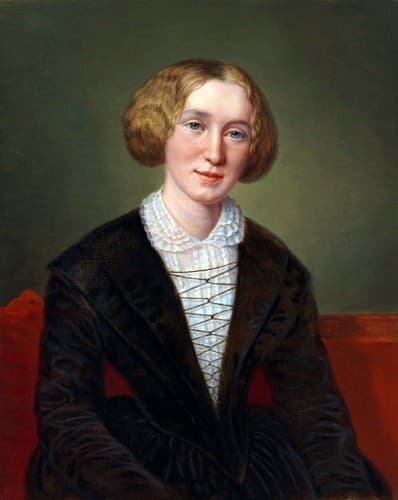
Mary Ann Evans, known by her pen name George Eliot, was an English novelist, poet, journalist, translator, and one of the leading writers of the Victorian era. She wrote seven novels: Adam Bede (1859), The Mill on the Floss (1860), Silas Marner (1861), Romola (1862–63), Felix Holt, the Radical (1866), Middlemarch (1871–72) and Daniel Deronda (1876). Like Charles Dickens and Thomas Hardy, she emerged from provincial England; most of her works are set there. Her works are known for their realism, psychological insight, sense of place and detailed depiction of the countryside.
Similar books
- Middlemarch
George Eliot
4.0 (136k) average on GoodreadsHistorical FictionExplores provincial life, moral dilemmas, and complex characters with similar depth and insight.
- The Vicar of Wakefield
Oliver Goldsmith
3.5 (9k) average on GoodreadsHistorical FictionFocuses on the trials and tribulations of a clergyman and his family, with a blend of humor and pathos.
- The Warden
Anthony Trollope
3.7 (13k) average on GoodreadsHistorical FictionWhile both explore clerical life, Eliot offers deeper psychological insight into individual characters' internal struggles and moral landscapes, whereas Trollope focuses more on the external, institutional, and satirical aspects of the Church of England.
- The Old Man and the Sea
Ernest Hemingway
3.8 (831k) average on GoodreadsLiterary FictionA Cuban fisherman's long struggle with a giant marlin becomes a story of endurance and dignity, now retold for young adults with illustrations, phonetic guides, and writing prompts in Traditional Chinese.
- One Hundred Years of Solitude
Gabriel García Márquez
4.1 (753k) average on GoodreadsLiterary FictionThrough the multi-generational story of the Buendía family, a mythical town deals with the repeating patterns of time, love, and solitude, as the extraordinary mixes with the ordinary.
- The Goldfinch
Donna Tartt
3.9 (720k) average on GoodreadsLiterary FictionHaunted by a tragic explosion and clutching a stolen Dutch masterpiece, a young orphan navigates the opulent drawing rooms of New York and the gritty underbelly of the art world, desperately seeking connection and redemption amidst a life spiraling into crime and obsession.





Enjoyed the summary?
A summary gives you the shape of the book. The book itself has the detail, the examples and the voice.
Find Scenes of Clerical Life on AmazonAs an Amazon Associate, BookBrief earns from qualifying purchases. How we're funded