
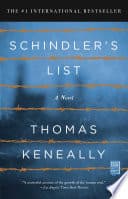
Core Idea
- Difficulty
- Medium
- Read it if
- You are interested in true stories of heroism during the Holocaust, complex moral figures, and the power of individual action against systemic evil.
- Skip it if
- You prefer fictional narratives over historical accounts or find detailed descriptions of wartime atrocities too distressing.
Key Takeaways from Schindler's List
The Unlikely Humanitarian
Oskar Schindler's transformation from opportunist to savior.
Oskar Schindler's journey is a study in moral change. He started as a practical, pleasure-seeking businessman, a Nazi Party member, who saw the war as a chance for personal gain. He built his enamelware factory in Kraków, using Jewish labor because it was cheap and available. But as the Holocaust's atrocities grew, especially the brutal clearing of the Kraków Ghetto, Schindler's view changed greatly. He moved from an uninvolved observer to an active rescuer, using his charm, connections, and money to protect 'his Jews.' This change was not sudden but a slow awakening to the evil he saw, ending in a strong commitment to human life over profit.
“Schindler, a man who had previously profited from the war and the suffering of others, found himself compelled to act against the very system he initially leveraged.”
In the book: Keneally meticulously details Schindler's initial motivations for acquiring the factory and his growing discomfort with the Nazi regime's brutality, particularly after witnessing the Płaszów concentration camp's horrors under Amon Goeth.
Try this: This takeaway challenges the notion of static morality, demonstrating that individuals can undergo profound ethical shifts even amidst extreme circumstances. It encourages introspection on how our own values might evolve when confronted with injustice.
Related ideas: moral-transformation, opportunism, humanitarianism
The Power of Calculated Deception
Schindler's masterful manipulation of the Nazi system for good.
Schindler's skill was in navigating and using the corrupt Nazi system. He was not a resistor in the usual way, but a master manipulator. He used his Nazi Party membership, his lavish life, and his connections with high-ranking SS and Wehrmacht officials to create an image of essential war production. By bribing officials, charming them with gifts and parties, and faking production quotas and the 'essential' skills of his Jewish workers, he kept his factory running and his workers safe. This deception needed courage, quick thinking, and a willingness to work in a morally gray area, all to save lives.
“He didn't fight the system head-on; he subverted it from within, using its own rules and corruption against itself.”
In the book: Keneally illustrates numerous instances of Schindler bribing SS officers with black market goods, alcohol, and even diamonds to secure 'special treatment' for his workers or to release them from transports to death camps. His constant negotiation with Amon Goeth, the commandant of Płaszów, is a prime example.
Try this: This highlights that resistance can take many forms beyond overt defiance. It prompts reflection on how individuals can use their positions, influence, and understanding of a system to achieve ethical outcomes, even when operating within an inherently unethical framework.
Related ideas: resistance-tactics, bureaucratic-manipulation, moral-compromise
The 'Schindlerjuden' and Their Agency
The resilience and strategic survival of those saved.
While Schindler is the main character, the book strongly shows the agency and resilience of the 'Schindlerjuden' themselves. They were not just victims waiting to be saved, but people who helped their own survival and Schindler's operation. Their skills, resourcefulness, and collective will were important. They understood their dangerous situation and often worked with Schindler, sharing information, keeping morale up, and even doing 'non-essential' tasks that justified their continued employment. Their will to live, with Schindler's protection, created a unique relationship that defied the Nazi extermination machine.
“The Schindler Jews were not merely passive recipients of salvation; they were active participants in their own survival.”
In the book: The narrative includes numerous accounts of Jewish workers using their skills (e.g., engineers fabricating 'defective' ammunition, doctors providing covert medical care), their networks to gather information, and their collective efforts to maintain a semblance of community and hope within the factory grounds.
Try this: This takeaway reminds us to look beyond the 'savior' narrative and recognize the strength and resourcefulness of those facing oppression. It encourages an understanding of collective resilience and the importance of individual agency even in dire circumstances.
Related ideas: holocaust-survival, collective-resilience, human-agency
The Banality of Evil's Counterpart
Schindler's actions as a direct contrast to systemic dehumanization.
Keneally's portrayal of Schindler differs from Hannah Arendt's 'banality of evil' idea, often linked to the Holocaust. While many perpetrators were ordinary people following orders without malice, Schindler was an ordinary man who chose extraordinary goodness. His actions were personal, often driven by empathy and a strong dislike for the cruelty he saw. He did not just save lives; he recognized the humanity of each person, often calling them 'his children.' This personal defiance against a system meant for depersonalization and mass murder makes his story compelling and hopeful, showing that individual moral choice can disrupt even deep-seated evil.
“Against the backdrop of systematic, industrialized extermination, Schindler's individual acts of compassion shone with an almost impossible brilliance.”
In the book: Schindler's direct confrontations with Amon Goeth over the treatment of Jewish workers, his insistence on providing better food and medical care than typical concentration camps, and his emotional breakdown at the war's end, expressing regret for not saving more, all underscore this personal commitment.
Try this: This takeaway challenges us to consider our own capacity for moral courage in the face of systemic injustice. It emphasizes that individual acts of kindness and resistance, however small, can be profoundly significant against a backdrop of widespread dehumanization.
Related ideas: banality-of-evil, moral-courage, dehumanization
The Burden of Witnessing
How proximity to horror can compel moral action.
Schindler's change was rooted in his direct experience of the Holocaust's horrors. Unlike many who could remain ignorant, Schindler was present for the clearing of the Kraków Ghetto, the brutal conditions of Płaszów, and the constant threat of deportation to Auschwitz. This closeness to evil, the screams, the violence, the daily indignities, removed his initial detachment and forced a moral reckoning. It suggests that while abstract knowledge of atrocities may not always lead to action, direct exposure can be a strong reason for empathy and intervention. His story shows the impact of witnessing and the moral need it can create.
“It was not abstract ideology that moved him, but the direct, undeniable sight of human suffering and systematic murder.”
In the book: The book vividly describes Schindler's vantage point during the Kraków Ghetto liquidation, observing the killings from a hilltop, and his frequent visits to Płaszów, where he directly interacted with prisoners and Goeth, seeing the brutality firsthand.
Try this: This takeaway underscores the importance of not turning away from difficult truths and the potential for direct observation to galvanize moral action. It encourages us to engage with difficult realities rather than abstracting them.
Related ideas: bearing-witness, empathy, moral-catalyst
The Ambiguity of Goodness
Schindler's flaws and their role in his heroism.
Keneally does not show Schindler as a saint; he is a complex and flawed person. His womanizing, heavy drinking, and initial opportunistic business dealings are not hidden. However, these 'vices' arguably made him effective within the Nazi regime. His ability to charm, bribe, and navigate black markets and corruption was part of his personality. This portrayal challenges simple ideas of heroism, suggesting that great good can come from imperfect people working in morally compromised environments. It shows that heroism is not only for the morally pure, but often comes from people who, despite their flaws, make courageous choices.
“He was a flawed man, a womanizer, a drinker, a profiteer, yet these very traits, paradoxically, enabled his extraordinary heroism.”
In the book: The book details Schindler's numerous affairs, his lavish parties for SS officers, and his pre-war background as a failed businessman and intelligence operative, painting a picture of a man driven by various appetites and ambitions.
Try this: This takeaway encourages us to look beyond conventional definitions of heroism and recognize the potential for good in unexpected places and people. It suggests that personal flaws do not negate the capacity for profound moral action.
Related ideas: flawed-hero, moral-complexity, unconventional-heroism
The Fragility of Life, The Strength of a List
The tangible power of a name on a page against oblivion.
The 'Schindler's List' is more than a document; it is a symbol of resistance and the preservation of individual identity against a system meant to remove humanity and reduce people to numbers. Each name on that list represented a life saved from the gas chambers, a person whose existence was recognized and fought for. In a bureaucratic death machine, the list became a counter-bureaucracy of life. It shows the power of recognition and the real impact of individual action in the face of mass extermination, turning an administrative tool into a means of salvation.
“Each name on 'Schindler's List' was a defiance against the Nazi's project of anonymity and erasure.”
In the book: The meticulous process of compiling the list, the constant revisions, the bribing of officials to add or keep names, and the sheer administrative effort involved in ensuring these 'essential workers' were protected, are central to the narrative.
Try this: This takeaway emphasizes the importance of individual recognition and the power of documentation in preserving identity and challenging systems of oppression. It encourages us to value and protect individual lives against any form of dehumanization.
Related ideas: identity-preservation, defiance, documentation-as-resistance
The Enduring Legacy of Gratitude
The profound bond between rescuer and rescued, enduring generations.
The bond between Oskar Schindler and the 'Schindlerjuden' is one of the most moving parts of the book, lasting long after the war. Their lasting gratitude and commitment to his memory show the impact of his actions. They supported him financially in his later poor years, ensured his story was told, and continue to honor his legacy. This lasting relationship speaks to the depth of human connection made in extreme hardship. It shows that acts of great goodness create effects that go beyond immediate circumstances, creating a lasting sense of debt and community that can last for generations.
“The gratitude of the Schindlerjuden was not a fleeting emotion, but a covenant that spanned decades and generations.”
In the book: Keneally details how the Schindlerjuden provided financial aid to Schindler after the war, ensuring he was recognized as a Righteous Among the Nations, and their continued pilgrimages to his grave. The collective testimony gathered for the book itself is a testament to this legacy.
Try this: This takeaway inspires us to consider the long-term impact of our actions and the power of gratitude. It encourages us to recognize and honor those who act selflessly, understanding that such acts create enduring human bonds.
Related ideas: post-holocaust-legacy, gratitude, human-connection
The Cost of Conscience
Schindler's personal ruin as a consequence of his moral choices.
Schindler's moral change came at a high personal cost. What started as a profitable business eventually bankrupted him. He spent all his ill-gotten gains, and more, on bribes, black market goods, and keeping his factory-turned-refuge, ensuring his workers were fed and cared for. After the war, he struggled financially, his business skills less effective in peacetime. His story is a reminder that moral heroism often demands great personal sacrifice, sometimes leading to financial ruin or social exclusion. It makes us face the reality that doing the right thing can be costly, yet, for Schindler, the value of the lives saved far outweighed any material loss.
“His fortune, amassed through wartime opportunism, was entirely consumed by the moral imperative to save lives, leaving him impoverished but spiritually rich.”
In the book: The book explicitly states that Schindler spent his entire fortune on protecting his Jews, and details his subsequent failed business ventures in Argentina and Germany, often relying on the support of the Schindlerjuden.
Try this: This takeaway challenges us to consider the sacrifices required for ethical action and to value moral integrity over material gain. It highlights that true heroism often involves personal suffering for the greater good.
Related ideas: personal-sacrifice, moral-integrity, post-war-struggles
History's Imperfect Narrators
The importance of individual testimonies in shaping historical understanding.
Keneally's choice to base 'Schindler's List' on the testimonies of the 'Schindlerjuden' themselves is an important part of the book's power and authenticity. Instead of relying only on official records, the story is made from the experiences, memories, and views of the survivors. This approach shows the important role of individual testimony in rebuilding historical events, especially those as traumatic and hidden as the Holocaust. It recognizes that history is often best understood through the imperfect, subjective, but human accounts of those who lived through it, providing a richness and emotional depth that official histories often lack.
“The true story of the Holocaust is not found solely in official documents, but in the fragmented, deeply personal memories of those who lived through it.”
In the book: Keneally's extensive interviews with numerous Schindlerjuden, particularly Leopold Pfefferberg (Poldek), who was instrumental in bringing Schindler's story to his attention, form the backbone of the narrative. The book feels like a compilation of these voices.
Try this: This takeaway emphasizes the critical importance of oral histories and survivor testimonies in understanding complex historical events. It encourages us to seek out and value diverse perspectives when engaging with history, especially from marginalized or victimized groups.
Related ideas: oral-history, survivor-testimony, historical-narrative
Schindler's List Quotes
“The list is life. All that stands between them and the gas chamber is this piece of paper.”
“Whoever saves one life saves the world entire.”
“I was born a Catholic, and I remain a Catholic. But I am also a Jew.”
“There will be generations because of what you did.”
“Power is when we have every justification to kill, and we don't.”
“He knew that the only way to save them was to corrupt the Nazi system from within.”
“The true meaning of freedom is to be able to choose between good and evil.”
“The gold was for bribing, the black market for feeding, the charm for convincing.”
“It was a factory, yes, but it was also a sanctuary.”
“He had come to the Holocaust as a profiteer and left it as a redeemer.”
“The greatest good you can do for another is not just to share your riches but to reveal to him his own.”
“The world was full of good men who did nothing.”
“He gave them back their names, their identities, their lives.”
“He saved them from the absolute nothingness.”
Quiz
10 questions on the main ideas. Each answer comes with a short explanation.
Question 1
What was Oskar Schindler's primary motivation for initially establishing his enamelware factory in Kraków?
- To provide employment for Jewish refugees and protect them from persecution.
- To profit from the war economy by utilizing cheap Jewish labor and producing essential goods for the German war effort.
- To establish a cover for his underground resistance activities against the Nazi regime.
- To fulfill a personal ambition of becoming a prominent industrialist in pre-war Poland.
Show answer
B. To profit from the war economy by utilizing cheap Jewish labor and producing essential goods for the German war effort. Schindler initially came to Kraków as a war profiteer, looking to take advantage of the German occupation and the availability of cheap Jewish labor to make money from his enamelware factory, not out of altruism.
Question 2
Which concentration camp was Amon Goeth in charge of, and where did much of the novel's grim action take place under his direct supervision?
- Auschwitz-Birkenau
- Płaszów
- Treblinka
- Dachau
Show answer
B. Płaszów Amon Goeth was the commandant of the Płaszów concentration camp, which was located outside Kraków. His brutal reign at Płaszów is a central part of the book's depiction of Nazi atrocities.
Question 3
What was the significance of the 'Schindlerjuden' in the context of the book?
- They were the German SS officers who assisted Schindler in his rescue efforts.
- They were the Jewish prisoners Schindler employed and ultimately saved from extermination.
- They were the code name for Schindler's secret resistance network.
- They were the specific type of enamelware products Schindler's factory produced.
Show answer
B. They were the Jewish prisoners Schindler employed and ultimately saved from extermination. The 'Schindlerjuden' literally translates to 'Schindler's Jews' and refers to the more than 1,100 Jewish individuals whose lives Oskar Schindler saved by employing them in his factories and placing them on his famous 'list'.
Question 4
How did Schindler manage to keep his Jewish workers safe from the SS and other Nazi officials for an extended period?
- He bribed officials with money, black market goods, and alcohol, arguing his workers were essential for the war effort.
- He openly defied Nazi orders, relying on his diplomatic immunity as a foreign national.
- He had a direct line to Heinrich Himmler, who personally approved his exemptions.
- He converted his factory into a hospital, making it off-limits to military intervention.
Show answer
A. He bribed officials with money, black market goods, and alcohol, arguing his workers were essential for the war effort. Schindler's primary method for protecting his workers was through an elaborate system of bribery and persuasion. He used his charm, connections, and black-market dealings to convince SS and other Nazi officials that his Jewish workers were 'essential' to the war effort, even inventing reasons for their necessity.
Question 5
What significant event marked Schindler's shift from a pure war profiteer to a dedicated rescuer?
- His arrest by the Gestapo for black market activities.
- Witnessing the brutal liquidation of the Kraków Ghetto.
- A personal plea from one of his Jewish employees, Itzhak Stern.
- Receiving a secret message from the Allied forces to aid the Jews.
Show answer
B. Witnessing the brutal liquidation of the Kraków Ghetto. The book highlights Schindler's profound change of heart after witnessing the horrific liquidation of the Kraków Ghetto from the hills above the city. This event, particularly seeing the brutal treatment and murder of innocent people, solidified his commitment to saving as many Jews as possible.
Question 6
Who was Itzhak Stern, and what was his crucial role in Schindler's operations?
- He was a high-ranking Nazi official whom Schindler regularly bribed.
- He was Schindler's Jewish accountant and de facto manager, who helped him navigate bureaucracy and protect workers.
- He was the leader of the Jewish resistance movement in Kraków.
- He was the chief engineer responsible for the factory's production output.
Show answer
B. He was Schindler's Jewish accountant and de facto manager, who helped him navigate bureaucracy and protect workers. Itzhak Stern was Schindler's Jewish accountant, who initially helped him set up the factory and later became instrumental in managing the workforce, forging documents, and navigating the complex Nazi bureaucracy to protect the 'Schindlerjuden'. He was Schindler's moral compass and practical aide.
Question 7
What was the ultimate fate of the 'Schindlerjuden' who were mistakenly sent to Auschwitz?
- They were immediately gassed upon arrival.
- Schindler personally traveled to Auschwitz and successfully negotiated their release, bringing them to Brinnlitz.
- They were rescued by an Allied commando raid shortly after their arrival.
- They were forced into slave labor at Auschwitz until the camp's liberation.
Show answer
B. Schindler personally traveled to Auschwitz and successfully negotiated their release, bringing them to Brinnlitz. In a testament to his dedication, Schindler risked his life and spent a significant amount of his remaining wealth to travel to Auschwitz-Birkenau and successfully negotiate the release of the women mistakenly sent there, bringing them to his new factory in Brinnlitz.
Question 8
The book emphasizes the paradoxical nature of Oskar Schindler's character. Which of the following best describes this paradox?
- He was a devout Catholic who secretly harbored anti-Semitic views.
- He was a hedonistic, opportunistic Nazi Party member who risked everything to save Jews.
- He was a quiet, unassuming intellectual who became a ruthless businessman.
- He was a poor, uneducated man who rose to become a wealthy industrialist.
Show answer
B. He was a hedonistic, opportunistic Nazi Party member who risked everything to save Jews. The core paradox of Schindler's character is that he was a member of the Nazi Party, a womanizer, a heavy drinker, and initially motivated by profit, yet he ultimately used his cunning and resources to save more Jews than any other single individual during the Holocaust.
Question 9
After the war, what was the general financial and personal fate of Oskar Schindler?
- He became a celebrated hero in Germany and lived a prosperous life.
- He struggled financially, experienced multiple business failures, and was supported by the 'Schindlerjuden'.
- He was arrested and tried for war crimes due to his initial Nazi Party membership.
- He emigrated to the United States and became a successful industrialist once more.
Show answer
B. He struggled financially, experienced multiple business failures, and was supported by the 'Schindlerjuden'. Despite his heroic actions, Schindler faced significant financial hardship after the war, with several failed business ventures. He was largely supported by the 'Schindlerjuden' he had saved, who never forgot his deeds and ensured he was cared for.
Question 10
Thomas Keneally's approach to writing 'Schindler's List' is notable for its reliance on what specific type of historical material?
- Newly discovered secret Nazi documents and diaries.
- The actual testimony and recollections of the 'Schindlerjuden'.
- Schindler's personal autobiography and memoirs.
- Interviews with former Nazi officials who worked with Schindler.
Show answer
B. The actual testimony and recollections of the 'Schindlerjuden'. As stated in the book's description, Keneally based his novel on the actual testimony of the 'Schindlerjuden'—Schindler’s Jews—giving the narrative a powerful grounding in real-life accounts and survivor experiences.
Schindler's List FAQ
What is 'Schindler's List' about?
'Schindler's List' tells the true story of Oskar Schindler, a German war profiteer and factory director who, during World War II, saved over a thousand Jews from extermination in Nazi concentration camps. The book, based on testimonies from the 'Schindlerjuden' (Schindler's Jews), details his cunning and courage in the face of the Holocaust.
Is 'Schindler's List' a true story?
Yes, 'Schindler's List' is based on a true story. While presented as a novel, Thomas Keneally extensively researched and used actual testimonies from the survivors to recount Oskar Schindler's efforts to save Jewish lives during the Holocaust.
Does Oskar Schindler's plan to save Jews work?
Yes, Oskar Schindler's various strategies to protect Jewish workers from the Nazi regime were largely successful. He managed to save more than a thousand Jews by employing them in his factories, arguing their essentiality to the war effort, and bribing Nazi officials.
What is a 'Schindlerjuden'?
A 'Schindlerjuden' refers to 'Schindler's Jews' – the more than 1,000 Jewish individuals who were saved from the Holocaust by Oskar Schindler. Their testimonies formed the basis for Thomas Keneally's book.
How is the book 'Schindler's List' different from the movie?
While the film 'Schindler's List' is a faithful adaptation, the book provides a more in-depth exploration of the historical context, Schindler's complex motivations, and the individual stories of the survivors. Keneally's novel, being based on extensive research and testimonies, often delves into details and nuances that were condensed or omitted in the cinematic version.
Who was Oskar Schindler?
Oskar Schindler was a German businessman and member of the Nazi Party who initially profited from World War II. However, he became a humanitarian hero by using his factories and influence to protect and save over 1,200 Jews from almost certain death in concentration camps.
What is the historical significance of 'Schindler's List'?
'Schindler's List' is a significant work of Holocaust literature that illuminates the individual acts of heroism amidst unimaginable atrocities. It serves as a powerful testament to the resilience of the human spirit and the possibility of moral action even in the darkest of times, ensuring that the stories of the 'Schindlerjuden' are remembered.
Why did Thomas Keneally write 'Schindler's List'?
Thomas Keneally was inspired to write 'Schindler's List' after a chance encounter with Poldek Pfefferberg, a Schindler survivor, who urged him to tell Schindler's story. Keneally undertook extensive research, including interviews with many survivors, to document and preserve this remarkable account of rescue during the Holocaust.
About the author
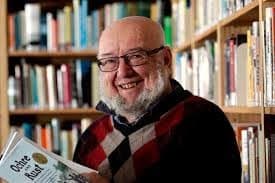
Thomas Michael Keneally, AO is an Australian novelist, playwright, essayist, and actor. He is best known for his non-fiction novel Schindler's Ark, the story of Oskar Schindler's rescue of Jews during the Holocaust, which won the Booker Prize in 1982. The book would later be adapted into Steven Spielberg's 1993 film Schindler's List, which won seven Academy Awards, including Best Picture.
Similar books
- The Diary of a Young Girl
Anne Frank
4.2 (2.7M) average on GoodreadsBiographyOffers a personal perspective on Jewish life and persecution during the Holocaust, emphasizing resilience.
- Man's Search for Meaning
Viktor E. Frankl
4.4 (401k) average on GoodreadsBiographyExplores human resilience and the search for meaning amidst the atrocities of concentration camps.
- Night
Elie Wiesel
4.3 (970k) average on GoodreadsBiographyA raw, autobiographical account of a Holocaust survivor's experiences in concentration camps, detailing the brutality.
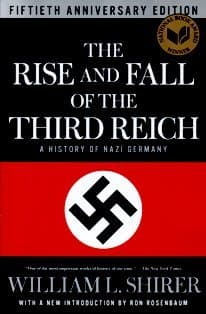
- The Rise and Fall of the Third Reich: A History of Nazi Germany
William L. Shirer
4.2 (101k) average on GoodreadsPoliticsShirer's monumental The Rise and Fall of the Third Reich provides a sweeping, comprehensive historical account of Nazi Germany. It offers a macro-historical perspective, detailing political events, military campaigns, and the systemic nature of the Holocaust. In contrast, Keneally's Schindler's List provides a micro-historical, intensely personal narrative, focusing on the experiences of a small group of individuals within the larger historical catastrophe. Shirer's work is invaluable for understanding the broader context and mechanisms of the Nazi regime, while Keneally's excels at illustrating the human cost and individual acts of defiance within that context. Both are essential, but they operate on vastly different scales and narrative approaches.
- Eat, Pray, Love
Elizabeth Gilbert
3.6 (1.5M) average on GoodreadsLifestyleA heartbroken writer leaves her conventional life for a year-long global search for pleasure in Italy, spiritual devotion in India, and unexpected love and balance in Bali.
- Steve Jobs
Walter Isaacson
4.1 (957k) average on GoodreadsBusinessSteve Jobs was a visionary who fused creativity and technology to revolutionize six industries and shape our digital world.





Enjoyed the summary?
A summary gives you the shape of the book. The book itself has the detail, the examples and the voice.
Find Schindler's List on AmazonAs an Amazon Associate, BookBrief earns from qualifying purchases. How we're funded