
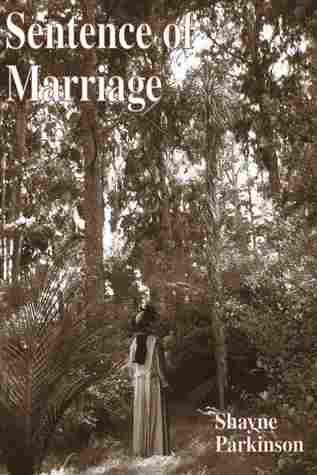
Synopsis
Covers the whole plot, including the ending.
- Difficulty
- Medium
- Pacing
- Moderate
- Mood
- Reflective, Resilient, Hopeful, Dramatic
- Read it if
- You enjoy character-driven historical fiction with a strong sense of place, focusing on a young woman's journey of self-discovery and resilience in the face of adversity.
- Skip it if
- You prefer fast-paced thrillers or stories without significant emotional hardship and a more traditional, straightforward romance.
Sentence of Marriage Plot Summary
Covers the whole plot, including the ending.
A Childhood on the Farm
Amy, a spirited young girl, grows up on an isolated farm in the New Zealand countryside during the late 19th century. Her childhood involves the demanding routines of farm life, helping her parents and siblings with chores from a young age. She feels the weight of her limited future as a farm girl, with marriage and a similar life of toil seemingly her only path. Amy often reads, dreaming of a more exciting life beyond the valley. Her closest companion is her younger sister, Mary, with whom she shares her hopes and fears, though Mary is more content with their rural life. The arrival of new people in their secluded valley is a rare and significant event, hinting at changes to come.
The Arrival of Mr. Davison
A surveyor, Mr. Davison, arrives in the valley to map the land. He is a sophisticated and educated man, a stark contrast to the rough farmers Amy knows. Mr. Davison stays at Amy's family farm, bringing refinement and intellectual conversation into their home. Amy is immediately captivated by his stories of the outside world, his knowledge, and his gentle manner. She is drawn to him, seeing him as a potential way to the life she desires. He encourages her love of reading and engages her in discussions, further fueling her dissatisfaction with her current circumstances and her romantic ideas of a different future.
A Forbidden Courtship
As Mr. Davison's stay at the farm continues, his relationship with Amy deepens. He recognizes her intelligence and spirit, and she is charmed by his appeal and the promise of a life beyond the farm. Their courtship is discreet and somewhat forbidden due to the significant age and class difference, and her parents' unspoken disapproval, as they imagine a more practical union for Amy with a local farmer. Amy, blinded by her dreams and Mr. Davison's allure, ignores these concerns. She believes he offers her a chance to escape the drudgery and intellectual stagnation she fears, and she becomes committed to marrying him, despite warnings from her family.
The Proposal and Departure
Mr. Davison proposes marriage to Amy, fulfilling her romantic fantasies. Overjoyed, Amy accepts, despite her family's lingering doubts. They prepare to leave for Dunedin, where Mr. Davison claims to have a comfortable home and a respectable life waiting for them. The farewells are bittersweet; Amy is thrilled to leave the farm and begin her new life, but she also feels a pang of separation from her family, especially her sister Mary. This move is a dramatic shift for Amy, a complete break from everything she has ever known, and she eagerly anticipates the sophisticated urban life she believes awaits her as Mrs. Davison.
A Shocking Revelation
Amy's dreams quickly shatter upon their arrival in Dunedin. Mr. Davison's 'respectable home' is a cramped, dilapidated cottage in a poor part of the city, and his financial situation is bad. He is not the prosperous gentleman he pretended to be, but a man struggling to make ends meet, with a history of failed ventures and a love for gambling. Amy is horrified by the deception and the squalid conditions, a stark contrast to the comfortable farm life she left behind. The reality of her marriage is far from the exciting, cultured existence she envisioned, leaving her feeling trapped, betrayed, and deeply disillusioned.
The Hardship of City Life
Life with Mr. Davison in Dunedin is a constant struggle. Amy, used to the physical labor of the farm but not the indignities of poverty, must take on low-paying, demanding jobs, such as laundry work and sewing, to support them. Mr. Davison is lazy, often absent, and irresponsible with money, making their financial problems worse. Amy's spirit is tested by the harsh realities of city poverty, constant hunger, and the loss of her romantic ideals. She feels isolated and regretful, realizing the full extent of her bad choice and the naive trust she placed in Mr. Davison.
The Return of Thomas
Amidst her despair, a familiar face reappears in Dunedin: Thomas, a young farmer from her home valley who had once shown interest in her. Thomas, a man of integrity and quiet strength, is in the city on business. He is shocked to find Amy in such dire circumstances and offers her assistance and comfort. His presence reminds her of the simpler, more honest life she abandoned. Amy, though ashamed of her situation, is deeply moved by his kindness and genuine concern. Thomas's reappearance plants a seed of hope, showing her that not all men are deceitful and that a different kind of life might still be possible, even in her bleak reality.
A Dangerous Proposition
Amy's life takes another dark turn when she uncovers evidence of Mr. Davison's involvement in illegal activities, likely counterfeiting or some form of fraud. This confirms his true character as not just irresponsible, but potentially criminal. This places Amy in an even more dangerous position, as she is now unwittingly entangled in his world. The revelation intensifies her fear and desperation, making her realize that remaining with Mr. Davison poses a serious threat to her safety and future. She feels utterly trapped, unable to escape a marriage that has become a nightmare, and now potentially a legal liability.
The Escape and the Trial
Driven by fear and the realization that her life is in danger, Amy makes a desperate plan to escape Mr. Davison. With the quiet, unwavering support of Thomas and perhaps others, she manages to leave her husband and find a safe haven. Later, Mr. Davison's criminal activities are exposed, leading to his arrest and trial. Amy testifies, a daunting and emotionally draining experience. Despite the public scrutiny and the painful dredging up of her past, she bravely recounts Mr. Davison's deceptions and his involvement in illegal schemes, contributing to his conviction. This act of courage marks a significant turning point in Amy's journey towards reclaiming her life.
Rebuilding a Life
With Mr. Davison imprisoned, Amy is finally free from his destructive influence, though the scars of her experience remain. She begins the arduous task of piecing her life back together, finding honest work and striving for independence. The trauma of her marriage has matured her, replacing her youthful naiveté with resilience and a clear understanding of the world. She slowly re-establishes connections, finding solace in her renewed friendship with Thomas and eventually, a tentative reconciliation with her family. Her journey is one of quiet determination, learning to trust herself again and to appreciate the value of true integrity and genuine affection over superficial charm and grand promises.
A New Beginning with Thomas
After a period of healing and self-discovery, Amy realizes the depth of Thomas's steadfast affection and his quiet strength. He is everything Mr. Davison was not: honest, reliable, and genuinely caring. Their relationship blossoms, built on mutual respect and shared values, a stark contrast to the deceptive passion of her first marriage. Amy, now wiser and more discerning, chooses a future not based on youthful fantasy, but on the solid reality of a loving partnership. She marries Thomas, finding contentment and a sense of belonging back in the rural life she once yearned to escape, but now views with new appreciation for its honesty and stability.
Principal Figures
Amy
Protagonist
A spirited farm girl who seeks an exciting life beyond her rural upbringing.
Amy is intelligent, ambitious, and initially naive, yearning for a life of intellectual stimulation and sophistication beyond her isolated farm. She is a dreamer who finds solace in books and struggles against the limited expectations placed upon women in 19th-century New Zealand. Her strong will and capacity for love are initially misdirected by her desire for escape, leading her to make a devastating choice. Despite profound hardship, she possesses remarkable resilience and a deep capacity for growth and self-reflection.
Relationships: Mr. Davison (Husband, source of betrayal and hardship); Thomas (Childhood acquaintance, later husband and steadfast supporter); Mary (Younger sister, confidante); Her parents (Family, source of initial guidance and later concern)
Mr. Davison
Antagonist
A charming and educated, yet deceitful and irresponsible surveyor.
Mr. Davison is initially presented as a charismatic and educated man, an outsider who captivates Amy with his knowledge of the world beyond the valley. He is a master manipulator, skilled at presenting a facade of respectability and prosperity. Beneath this veneer, he is lazy, financially irresponsible, a gambler, and later revealed to be a criminal. He preys on Amy's youthful idealism and desire for a better life, ultimately bringing her immense suffering through his deceit and neglect.
Relationships: Amy (Wife, victim of his deceit); Amy's family (Skeptical hosts)
Thomas
Supporting
A kind, steady, and honorable farmer who offers Amy unwavering support.
Thomas is a young farmer from Amy's home valley, characterized by his quiet strength, integrity, and unwavering loyalty. He is a man of few words but deep sincerity, representing the honest, hardworking values of rural life. He harbors a long-standing affection for Amy, which persists even after her ill-fated marriage. His steadfast kindness and practical support become Amy's lifeline during her darkest hours, and he ultimately offers her a chance at a stable and loving future, proving to be the antithesis of Mr. Davison.
Relationships: Amy (Childhood acquaintance, later husband and devoted supporter)
Mary
Supporting
Amy's younger sister and closest confidante on the farm.
Mary is Amy's younger sister, sharing her childhood on the farm. She is more pragmatic and content with their rural life than Amy, often serving as a grounding influence. She is a loyal and loving sister, sharing Amy's dreams and fears, though she does not possess Amy's intense yearning for escape. Her concern for Amy's well-being is evident, and she acts as a reminder of the family and home Amy leaves behind.
Relationships: Amy (Sister, confidante)
Amy's Mother (Mrs. McGregor)
Supporting
A practical and hardworking farm wife who worries about Amy's choices.
Amy's mother is a hardworking and pragmatic woman, deeply rooted in the realities of farm life. She loves her children but is wary of Mr. Davison's charm and the potential for a mismatched marriage for Amy. Her concerns stem from a place of experience and a desire for Amy's practical well-being, though her warnings are initially dismissed by her headstrong daughter. She represents the traditional values and common sense that Amy initially rejects.
Relationships: Amy (Mother, source of concern and practical advice)
Amy's Father (Mr. McGregor)
Supporting
A stoic farmer who struggles with his daughter's unconventional choices.
Amy's father is a stoic and hardworking farmer, representative of the patriarchal society and the demanding rural life of the era. He is less vocal than his wife but shares her reservations about Mr. Davison. He struggles to understand Amy's intellectual aspirations and her desire for a life beyond the farm, but ultimately cares for her well-being. His character embodies the traditional expectations Amy seeks to escape.
Relationships: Amy (Father, source of traditional expectations and subtle disapproval)
Themes & Insights
The Illusion vs. Reality of Love and Marriage
The novel contrasts Amy's romantic ideas of love and marriage with the harsh realities of her experience. Her initial attraction to Mr. Davison is based on his perceived sophistication and the promise of escape, an illusion that quickly shatters when she discovers his true character and poverty in Dunedin. This theme is clear when Amy, disillusioned, later finds genuine love and stability with Thomas, a man whose affection is built on honesty, respect, and shared values, rather than superficial charm. The story shows that true partnership needs substance over fantasy, as seen in Amy's painful journey from naive idealism to a clear understanding of a healthy relationship.
“She had dreamed of a shining life, but instead, she found herself in a dusty corner of a city, married to a ghost of a man.”
The High Cost of Naiveté and Blind Ambition
Amy's youthful naiveté and ambition to escape her rural origins lead her to make a catastrophic choice in marrying Mr. Davison. Her desire for intellectual stimulation and an 'exciting' life blinds her to his deceitful nature and her family's unspoken warnings. The novel details the high personal cost of this blind ambition: poverty, emotional abuse, and the loss of her innocence. Her journey serves as a cautionary tale, illustrating how unchecked dreams, when not balanced by wisdom, can lead to profound suffering and regret, forcing her to confront the painful consequences of her misjudgment and learn humility.
“She had wanted more, and in her grasping, she had lost everything she truly had.”
Social Mobility and Gender Roles in 19th-Century New Zealand
The novel shows the limited choices and rigid gender roles women faced in 19th-century New Zealand, especially for those from rural backgrounds. Amy's initial unhappiness comes from the societal expectation that her life as a farm girl is set, with marriage to a local farmer as her main, if not only, viable path. Her attempt to gain social mobility through marriage to a seemingly 'respectable' man from the city fails spectacularly, showing the dangers and vulnerabilities in such aspirations for women of the era. The story highlights the challenges women faced in gaining independence or agency outside of marriage, and how a bad match could easily condemn them to a life of hardship and legal entrapment.
“A woman's fortune, they said, was made by the man she married. Amy learned it was also unmade.”
Resilience and Redemption
Despite the suffering Amy endures, the novel is about human resilience and the possibility of redemption. Amy's spirit is tested by poverty, betrayal, and the loss of her dreams, yet she refuses to be completely broken. Her courage in escaping Mr. Davison and testifying against him is a turning point. Her journey back from despair, rebuilding her life with honesty and hard work, and eventually finding a stable, loving relationship with Thomas, shows a powerful theme of redemption. It's a redemption not just from her past mistakes, but also a reclaiming of her self-worth and the creation of a new, more grounded identity.
“The past could not be changed, but the future, she realized, was still hers to build.”
Plot Devices & Literary Techniques
Foil Characters
The contrasting personalities and actions of Mr. Davison and Thomas.
Mr. Davison and Thomas serve as classic foil characters, highlighting Amy's journey of discernment. Mr. Davison, with his superficial charm and deceit, embodies the alluring but ultimately destructive path Amy initially chooses. Thomas, on the other hand, represents honesty, steadfastness, and genuine love, the qualities Amy learns to value through her suffering. Their contrasting characteristics underscore the theme of illusion versus reality, and provide Amy with clear alternatives, guiding her eventual understanding of true worth in a partner.
Setting as a Character/Symbolism
The contrast between the remote farm and the bustling, yet squalid, city of Dunedin.
The settings of the remote farm and the city of Dunedin act as powerful symbols and almost characters in themselves. The farm initially represents Amy's confinement and the 'narrow boundaries' she longs to escape, yet it later symbolizes honesty, stability, and family. Dunedin, conversely, initially represents the exciting, sophisticated world Amy craves, but quickly becomes a symbol of urban squalor, deceit, and personal degradation. This contrast highlights Amy's journey from naive longing to a mature understanding of where true happiness and security lie, demonstrating that location does not inherently equate to happiness or morality.
Dramatic Irony
The reader's awareness of Mr. Davison's true nature before Amy fully comprehends it.
Dramatic irony is employed through subtle clues and the narrative's perspective, allowing the reader to perceive Mr. Davison's dubious character and Amy's impending misfortune before she fully grasps it. This creates a sense of foreboding and tension as Amy, blinded by her dreams and his charm, falls deeper into his trap. The reader's awareness of the impending disaster amplifies the tragedy of Amy's choices and the depth of her subsequent suffering, making her eventual disillusionment more impactful.
The Letter/Communication
Letters and lack of communication as drivers of plot and emotional distance.
Communication, or the lack thereof, plays a significant role in the plot. Amy's initial dreams are fueled by the stories Mr. Davison tells about the outside world, yet her later isolation is exacerbated by her inability to communicate her distress to her family. Letters, both received and unwritten, symbolize the growing distance between Amy and her past, as well as the deliberate deception employed by Mr. Davison. Later, the ability to communicate honestly, particularly with Thomas and her family, becomes crucial for her rescue and healing, highlighting the power of truthful connection.
Sentence of Marriage Quotes
“Perhaps I should have been grateful for the small kindnesses, but I wanted more than kindness. I wanted a life.”
“It was one thing to dream of freedom, another entirely to grasp it when it presented itself.”
“A secret shared was a bond forged, for better or worse.”
“The past was a relentless shadow, always there, even when you tried to outrun it.”
“Love, she was learning, was not always a grand declaration, but often a series of quiet, steady acts.”
“Sometimes, the greatest strength lay in enduring, not in fighting.”
“The truth, like a persistent weed, would always find its way to the light.”
“Hope was a dangerous thing, easily crushed, but impossible to live without.”
“He saw not just the woman he had married, but the woman she could become.”
“The weight of unspoken words could be heavier than any physical burden.”
“It was a strange comfort, knowing that even in despair, life continued its relentless march.”
“To truly forgive, she realized, was to let go of the anger, not just the act.”
“The small decisions, often overlooked, were the ones that truly shaped a destiny.”
“There was a quiet strength in understanding that some things simply were, and could not be changed.”
“She had built a life from fragments, and found it was stronger than she ever imagined.”
Quiz
10 questions on the plot and the characters. Each answer comes with a short explanation.
Question 1
What is the primary setting of 'Sentence of Marriage'?
- Rural Australia in the 1880s
- Nineteenth-century New Zealand
- Colonial America in the 1700s
- Victorian England
Show answer
B. Nineteenth-century New Zealand The book is set in nineteenth-century New Zealand, focusing on the limited choices for a farm girl like Amy in that specific historical and geographical context.
Question 2
What is Amy's main aspiration or dream early in the story?
- To marry a wealthy landowner from a neighboring farm
- To become a teacher in her local village
- To have an exciting life beyond her narrow farm boundaries
- To inherit her family's farm and manage it herself
Show answer
C. To have an exciting life beyond her narrow farm boundaries The synopsis states that Amy 'dreams of an exciting life in the world beyond her narrow boundaries,' indicating her desire to escape the confines of her farm life.
Question 3
Who are the two people mentioned in the synopsis that change Amy's life forever?
- Her parents
- Two people who come to the farm from outside the valley
- A traveling merchant and a missionary
- Her childhood friends who return from the city
Show answer
B. Two people who come to the farm from outside the valley The synopsis explicitly states, 'But it is the two people who come to the farm from outside the valley who change her life forever.'
Question 4
By what age does Amy's life seem 'mapped out for her'?
- Ten
- Twelve
- Fourteen
- Sixteen
Show answer
B. Twelve The synopsis mentions, 'Her life seems mapped out for her by the time she is twelve,' highlighting the early establishment of her predetermined path.
Question 5
What is the central theme Amy learns about as a result of her choices?
- The importance of loyalty to family
- The high cost of making the wrong choice
- The value of hard work on a farm
- The joy of unexpected opportunities
Show answer
B. The high cost of making the wrong choice The synopsis concludes by stating, 'Amy learns the high cost of making the wrong choice,' indicating this as a crucial lesson and theme of the story.
Question 6
What kind of setting does Amy live in at the beginning of the story?
- An urban center with many opportunities
- A bustling port town
- A farm within a narrow valley
- A remote mountain cabin
Show answer
C. A farm within a narrow valley Amy is described as a 'farm girl' whose dream is to escape her 'narrow boundaries' and the 'valley,' implying her life is centered on a farm in a confined geographical area.
Question 7
Given the genre 'Historical Fiction,' what societal constraint is most likely a significant factor in Amy's life?
- Lack of advanced technology
- Strict social expectations and limited roles for women
- Frequent natural disasters
- Political instability and warfare
Show answer
B. Strict social expectations and limited roles for women The phrase 'there are few choices for a farm girl like Amy' in nineteenth-century New Zealand strongly points to the societal constraints and limited opportunities for women during that historical period.
Question 8
The title 'Sentence of Marriage' most likely implies what about marriage for Amy?
- Marriage is a joyful and liberating experience.
- Marriage is a predetermined fate or a form of confinement.
- Marriage is a contractual agreement with fair terms.
- Marriage is an opportunity for social advancement.
Show answer
B. Marriage is a predetermined fate or a form of confinement. The word 'sentence' often implies a judgment or a fixed, unavoidable outcome, suggesting that marriage for Amy might be a preordained destiny or even a form of imprisonment rather than a freely chosen path, especially given the context of 'few choices' and 'life mapped out.'
Question 9
Considering the genres of 'Mystery' and 'Romance' alongside 'Literary Fiction,' what kind of 'wrong choice' is Amy most likely to make?
- A poor financial investment that ruins her family's farm.
- Choosing a partner or a path in love that leads to unforeseen difficulties or secrets.
- A decision to leave the farm for a dangerous city life.
- Failing to uncover a hidden family secret about land ownership.
Show answer
B. Choosing a partner or a path in love that leads to unforeseen difficulties or secrets. With 'Romance' and 'Mystery' genres, a 'wrong choice' often pertains to relationships, trust, or decisions that unravel into complex personal dilemmas, aligning with choosing a partner or a romantic path that proves problematic. The 'mystery' could stem from the consequences of this choice.
Question 10
The phrase 'few choices for a farm girl like Amy' suggests what about the social structure of 19th-century New Zealand as depicted in the book?
- It was a highly meritocratic society where anyone could rise.
- Social mobility was severely limited, especially for women in rural areas.
- Education was widely available to all, regardless of gender or class.
- The government provided extensive support for rural families.
Show answer
B. Social mobility was severely limited, especially for women in rural areas. The explicit statement 'few choices' directly implies a lack of options and limited social mobility, particularly for individuals in Amy's demographic (farm girl, 19th-century, rural New Zealand).
Sentence of Marriage FAQ
What is the central conflict Amy faces regarding her future?
Amy, a farm girl in 19th-century New Zealand, is expected to marry a local farmer and live a predictable life. Her central conflict stems from her yearning for a more exciting existence beyond the confines of her valley, clashing with the societal expectations and limited choices available to her.
Who are the two key outsiders who significantly impact Amy's life?
The two pivotal outsiders are Mr. Davies, an educated and sophisticated man who arrives to work on the farm, and Sarah, a mysterious woman with a past who also seeks refuge there. Their presence introduces new perspectives and opportunities, ultimately leading Amy down an unforeseen path.
What kind of 'wrong choice' does the synopsis hint at Amy making?
The synopsis suggests Amy makes a choice, likely romantic or life-altering, that deviates from societal norms or her own best interests. This 'wrong choice' could involve a relationship with one of the outsiders, leading to unforeseen consequences and a significant 'high cost' to her dreams and well-being.
What role does the setting of 19th-century New Zealand play in Amy's limited options?
19th-century New Zealand, particularly a rural farming community, imposed strict social conventions and limited economic opportunities for women like Amy. Her options were largely confined to marriage and domestic life, with little scope for personal ambition or independent living, making her dreams of an 'exciting life' particularly challenging to achieve.
How does Amy's initial impression of Mr. Davies evolve throughout the story?
Initially, Amy is likely captivated by Mr. Davies's sophisticated demeanor and education, seeing him as a gateway to the broader world she desires. However, as the story progresses, she may come to understand his true character, revealing hidden flaws or intentions that challenge her romanticized view and force her to re-evaluate her choices.
What specific 'mystery' element is introduced by Sarah's arrival?
Sarah's arrival on the farm is shrouded in mystery, hinting at a troubled past or secrets she wishes to escape. Her guarded nature and reluctance to discuss her previous life likely pique Amy's curiosity and could potentially involve her in Sarah's unresolved issues, adding a layer of intrigue to the narrative.
Are there any subtle clues about Mr. Davies's true intentions or background before they are explicitly revealed?
The narrative might include subtle foreshadowing, such as Mr. Davies's occasional evasiveness about his past, unusual financial habits, or interactions with local figures that seem out of place for his stated position. These details could hint at a hidden agenda or a less reputable background than he initially presents to Amy and the farming community.
How does Amy's desire for an 'exciting life' influence her perception of danger or risk?
Amy's longing for excitement likely blinds her to potential dangers or makes her more willing to take risks she might otherwise avoid. Her romanticized view of the world beyond her valley could lead her to misinterpret warning signs or trust individuals like Mr. Davies too readily, believing they hold the key to her desired future.
What psychological impact does the isolated farming community have on Amy's development?
The isolated farming community fosters a sense of longing and perhaps a naive idealism in Amy, as her exposure to the outside world is limited. This isolation might also contribute to her intense desire for change and make her particularly susceptible to the allure of outsiders who represent escape and new experiences, even if they are ultimately detrimental.
How does Amy's perception of love and romance shift throughout her experiences?
Initially, Amy might view love through a romantic, idealized lens, perhaps influenced by stories or her own desires for escape. However, her experiences with Mr. Davies and the consequences of her choices likely force her to confront the complexities and potential betrayals within relationships, leading to a more realistic and perhaps cynical understanding of love.
In what ways does Amy exhibit resilience despite her 'wrong choice' and its consequences?
Despite making a choice with high costs, Amy demonstrates resilience through her ability to adapt, learn from her mistakes, and find inner strength to navigate difficult circumstances. This might manifest in her taking responsibility for her actions, seeking new paths, or forming unexpected alliances to rebuild her life.
Is the 'high cost' Amy pays purely personal, or does it have wider implications for her family or community?
While the 'high cost' is deeply personal for Amy, it could also ripple outwards, affecting her family's reputation, financial stability, or social standing within the tightly-knit farming community. Her choices might inadvertently bring shame or hardship upon those closest to her, highlighting the interconnectedness of lives in such a setting.
To what extent is Amy a victim of circumstance versus a perpetrator of her own misfortune?
Amy's situation is a complex interplay of circumstance and personal agency. She is a victim of the limited choices afforded to women in her era and location, but she also actively pursues a path against convention. Her 'wrong choice' could be seen as an exercise of her limited agency, making her both a victim of societal constraints and a participant in her own fate.
Could Sarah be interpreted as a foil to Amy, representing a different path or consequence of similar desires?
Sarah could indeed serve as a foil, having perhaps made similar 'wrong choices' or pursued unconventional paths in her past, leading to her mysterious circumstances. Her presence might offer Amy a cautionary tale or an alternative perspective on the consequences of seeking an exciting life outside societal norms, highlighting different outcomes for similar aspirations.
Does the ending offer Amy redemption or a sense of peace, or does it leave her with lasting regret?
The ending could lean either way, reflecting the nuanced nature of literary fiction. It might offer a hard-won sense of peace and maturity, indicating Amy has learned valuable lessons and found a new direction. Alternatively, it could conclude with a lingering sense of regret or a bittersweet acceptance of her altered destiny, emphasizing the permanent impact of her earlier choices.
What is the significance of the title 'Sentence of Marriage'?
The title 'Sentence of Marriage' strongly suggests that marriage, for Amy, is not a choice of love or desire, but rather a predetermined fate or even a form of imprisonment imposed by societal expectations. It implies a lack of freedom and agency, positioning marriage as a 'sentence' that limits her life's possibilities.
How does the author use the natural landscape of New Zealand to reflect Amy's internal state or plot developments?
The author might use the vast, untamed New Zealand landscape to mirror Amy's yearning for freedom and the unknown, or its rugged isolation to reflect her feelings of being trapped. Storms or harsh weather could symbolize internal turmoil or external challenges, while serene moments in nature might represent fleeting peace or moments of clarity for Amy.
Are there any secondary characters who, despite their small roles, offer crucial insights or support to Amy?
Even minor characters, such as a wise elder, a loyal friend, or a sympathetic neighbor, could provide Amy with crucial advice, a moment of comfort, or an alternative perspective. Their seemingly small interactions might subtly influence her decisions or provide a moral compass when she feels lost.
What societal pressures, beyond marriage, specifically impact Amy's choices in the narrative?
Beyond the pressure to marry, Amy is likely influenced by the societal expectations of women to be submissive, domestic, and uphold family honor. The limited educational opportunities, lack of property rights for women, and the rigid class structure of 19th-century New Zealand would also significantly constrain her autonomy and shape her perceived options.
Similar books
- The Piano
Jane Campion
3.9 (5k) average on GoodreadsHistorical FictionExplores a woman's struggles and choices in 19th-century New Zealand with a focus on societal constraints and personal agency.
- Tess of the D'Urbervilles
Thomas Hardy
3.8 (238k) average on GoodreadsHistorical FictionFeatures a young, innocent woman facing betrayal and hardship in a rigid societal structure, leading to a tragic yet resilient journey.
- Alias Grace
Margaret Atwood
4.0 (111k) average on GoodreadsLiterary FictionA historical novel about a young woman in service facing societal judgment and a complex personal history, blending mystery and character study.
- The Luminaries
Eleanor Catton
3.7 (66k) average on GoodreadsLiterary FictionWhile both books are set in historical New Zealand and feature intricate plots, "Sentence of Marriage" offers a more intimate, character-driven narrative focusing on individual experience and societal constraints, whereas "The Luminaries" employs a complex astrological structure and a broader ensemble cast to explore a larger societal tapestry and a more intricate mystery.
- The Thorn Birds
Colleen McCullough
4.2 (314k) average on GoodreadsHistorical FictionBoth novels explore forbidden love and hardship within a rural, historical setting, often spanning significant periods. However, "Sentence of Marriage" grounds its romance in a specific legal and social predicament in New Zealand, while "The Thorn Birds" delves into a multi-generational saga of family, faith, and passion on an Australian sheep station, with a broader scope and more overtly dramatic, almost epic, romantic conflicts.
- The Old Man and the Sea
Ernest Hemingway
3.8 (831k) average on GoodreadsLiterary FictionA Cuban fisherman's long struggle with a giant marlin becomes a story of endurance and dignity, now retold for young adults with illustrations, phonetic guides, and writing prompts in Traditional Chinese.


Enjoyed the summary?
A summary gives you the shape of the book. The book itself has the detail, the examples and the voice.
Find Sentence of Marriage on AmazonAs an Amazon Associate, BookBrief earns from qualifying purchases. How we're funded