
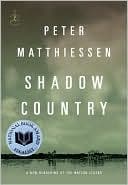
Synopsis
Covers the whole plot, including the ending.
- Difficulty
- Hard
- Pacing
- Variable
- Mood
- Atmospheric, Dark, Reflective, Epic, Unsettling
- Read it if
- You love sprawling, ambitious historical fiction that delves into the darker corners of American history, enjoy multiple perspectives, and don't mind a challenging, non-linear narrative.
- Skip it if
- You prefer fast-paced thrillers, straightforward plots, or narratives with clear-cut heroes and villains.
Shadow Country Plot Summary
Covers the whole plot, including the ending.
The Killing of E.J. Watson and its Immediate Aftermath
The novel starts with Edgar J. Watson's violent death on October 24, 1910, in Chokoloskee, Florida. Watson, a successful but feared sugar planter in the Everglades, tries to dock his boat but is met by many armed neighbors. Despite his attempts to talk, they shoot him many times and leave him to die; his body is later dragged away. This violent act follows years of suspicion, fear, and accusations of murder against Watson. His son, Lucius, sees the aftermath and is deeply affected by his father's body. The community, relieved but uneasy, quickly leaves, leaving the mystery of Watson's life and death.
Lucius Watson's Obsession and the Gathering of Testimonies
After his father's death, Lucius Watson feels he must understand the truth about the accusations and the killing. He interviews many people who knew his father, including family, former workers, neighbors, and enemies. These interviews form the core of the novel, showing many, often conflicting, views of E.J. Watson. Lucius travels across Florida and beyond, collecting fragmented stories and memories. He hopes to build a clear picture of the man who was both admired and hated. His search is driven by grief, loyalty, and a desperate need for answers.
The Early Life of E.J. Watson and the Kentucky Feud
Through the stories, especially from his wife, Jane, and other relatives, Watson's early life in Kentucky is told. Watson, from a respectable but troubled family, is ambitious from a young age. He gets involved in a violent family feud, ending in the killing of Zachariah Jones. Though Watson says it was self-defense, the event marks him as a killer and forces him to leave Kentucky, abandoning his first wife and child. This incident shows a pattern of violence and escape that will shape much of his life, leading him to the wild Florida frontier.
Watson's Arrival in Florida and Rise as a Planter
Watson arrives in Florida, a place with opportunity and little law. He settles in the remote Everglades, buying large amounts of land and starting a successful sugar cane plantation on Chatham Bend. He is known for his hard work, his ability to manage many workers (including Black and Seminole laborers), and his new farming methods. He builds a large home and brings his family, including his second wife, Jane, and their children. Despite his success, his demanding nature and quick temper, combined with his reputation from Kentucky, start to create fear and anger among his neighbors.
Accusations and Disappearances on the Frontier
As Watson's plantation grows, several mysterious disappearances and deaths happen among his workers and associates. These include the outlaw Bill Bowles, whom Watson is suspected of killing, and other workers who challenge him or ask for pay. No clear proof is ever found, but the community increasingly blames these events on Watson's harsh methods and his willingness to get rid of anyone who opposes him. The isolation of the Everglades and the lack of strong law enforcement allow these suspicions to grow, turning fear into strong tension around Watson.
The Role of the Bloody Shirt and the Cyclone
A powerful cyclone hits the Chatham Bend area, causing much destruction and loss of life. After the storm, a 'bloody shirt' belonging to one of Watson's missing workers, Dutchy, is found. This discovery, along with Watson's alleged lack of concern during the disaster and his unwillingness to help neighbors, increases the anger. The community, already wary, sees these events as more proof of Watson's guilt in the disappearances. The hurricane is a turning point, strengthening the community's decision to remove what they see as a danger.
Watson's Efforts to Clear His Name and the Gathering Storm
Aware of the growing suspicion, Watson tries to clear his name sometimes. He sometimes tries to explain the disappearances, giving believable (though often unconvincing) reasons for the deaths of his workers. He travels to Key West for legal advice and even tries to work with authorities. However, his past and intimidating manner work against him. The community, tired of his perceived control and constant fear, begins to openly talk about taking action themselves. Everything is set for the inevitable confrontation.
The Watson Family's Internal Strife and Jane's Perspective
Through Jane Watson's detailed memories, the close and often difficult dynamics of the Watson family are shown. Jane, a strong woman, loves her husband but is also deeply bothered by his darker side and the constant threat of violence around him. She sees his ambition, his rages, and his occasional kindness. Her view offers a key contrast to the outside rumors, showing a more complex picture of Watson as a husband and father, though his actions ultimately bring tragedy and fear to his family.
The Final Journey and the Ambush
In the days before his death, Watson knows the danger against him is growing. He travels to Key West, supposedly for supplies, but also to gauge the community's mood. Despite warnings from friends and family, he decides to return to Chokoloskee, believing he can talk to his neighbors or assert his authority. His return trip is full of tension. As his boat nears the dock, the armed group, led by figures like Leslie Cox and others who have long feared him, waits. Watson, though armed, hesitates, perhaps hoping for one last chance to talk, but he gets none. The shots ring out, ending his life and the control he represented.
Lucius's Unresolved Quest and the Enduring Shadow
Decades after the killing, Lucius Watson, now an old man, still reviews the stories and his own memories. He never fully reconciles the conflicting images of his father: the hardworking pioneer, the loving family man, and the ruthless killer. The novel ends with Lucius still struggling to find a clear truth, recognizing that the full story of E.J. Watson remains hidden in the 'shadow country' of conflicting stories and the inherent unknowability of another person's mind. The legacy of violence, racism, and the wild frontier continues to affect the land and its people.
Shadow Country Characters
Edgar J. Watson (E.J. Watson)
Protagonist/Antagonist
Ambitious and ruthless Everglades sugar planter, accused of multiple murders.
E.J. Watson is the central, enigmatic figure of the novel. A man of immense drive and ambition, he transforms himself from a fugitive from Kentucky into a prosperous sugar cane planter in the Florida Everglades. He is known for his prodigious work ethic, his physical strength, and his ability to command respect (and fear) from his laborers. However, he is also plagued by a violent temper, a quickness to resort to deadly force, and a complete disregard for legal authority when it suits him. His complex character embodies the contradictions of the frontier: a builder and a destroyer, a family man and a killer, admired for his achievements yet reviled for his brutality. His actions and reputation ultimately lead to his violent demise.
Relationships: Jane Watson (Second wife, loyal but deeply troubled by his actions); Lucius Watson (Son, obsessed with understanding and vindicating his father); Glen Watson (Son, more pragmatic and less forgiving than Lucius); Leslie Cox (Neighbor and leader of the posse that kills Watson, driven by fear and a sense of justice)
Lucius Watson
Supporting/Narrator (Frame)
E.J. Watson's son, dedicating his life to uncovering the truth about his father.
Lucius Watson is the primary lens through which the reader experiences the story of E.J. Watson. Witnessing his father's brutal death as a young man, Lucius is forever marked by the event. He dedicates his adult life to interviewing everyone who knew his father, meticulously collecting testimonies, rumors, and memories. His quest is driven by a deep-seated need for understanding, a desire to honor his father's memory, and to reconcile the conflicting narratives of a man who was both a loving father and a feared killer. He represents the enduring legacy and the unresolved questions left by E.J. Watson.
Relationships: E.J. Watson (Father, whose life and death become Lucius's lifelong obsession); Jane Watson (Mother, whose perspective is crucial to Lucius's understanding); Glen Watson (Brother, who offers a contrasting view of their father)
Jane Watson (née Sisson)
Supporting
E.J. Watson's second wife, a resilient woman who offers a crucial intimate perspective.
Jane Watson is E.J. Watson's second wife and the mother of most of his children. She is a strong, pragmatic, and deeply observant woman who endures the hardships of frontier life and the constant shadow of her husband's violent reputation. Her testimony provides some of the most intimate and nuanced insights into Watson's character, revealing his moments of tenderness and his struggles alongside his ruthlessness. She loves her husband but is also deeply aware of his flaws and the danger he brings upon their family. Her recollections are vital in humanizing Watson while also confirming the underlying truth of his violent nature.
Relationships: E.J. Watson (Husband, whom she loves despite his violent tendencies); Lucius Watson (Son, to whom she imparts her memories and understanding of his father)
Glen Watson
Supporting
E.J. Watson's son, who offers a more critical and less forgiving view of his father.
Glen Watson is another of E.J. Watson's sons, and his perspective often contrasts sharply with Lucius's more sympathetic view. Glen is more pragmatic, less sentimental, and more willing to acknowledge his father's darker side and the justice of his killing. He provides a grounded, often harsh, assessment of Watson's character and actions, serving as a foil to Lucius's quest for vindication. His testimony highlights the fractured legacy Watson left behind, even within his own family.
Relationships: E.J. Watson (Father, whose violence he acknowledges and accepts as a contributing factor to his death); Lucius Watson (Brother, with whom he often disagrees about their father's true nature)
Leslie Cox
Supporting
Prominent Chokoloskee resident and a leader of the posse that kills E.J. Watson.
Leslie Cox is a key figure in the community of Chokoloskee, representing the collective fear and eventual resolve against E.J. Watson. He is depicted as a respectable, hardworking man who, along with others, becomes increasingly convinced that Watson is a dangerous murderer who must be stopped. Cox is instrumental in organizing and leading the posse that ambushes and kills Watson. His testimony and actions provide insight into the community's perspective, illustrating the desperation that led them to take the law into their own hands.
Relationships: E.J. Watson (Adversary, whom he ultimately helps to kill out of fear and perceived necessity)
Judge William H. 'Billy' Brown
Supporting/Mentioned
Lawman and local authority figure, often frustrated by Watson's evasion of justice.
Judge Brown represents the often-ineffective legal system on the wild Florida frontier. He is aware of the accusations against Watson and makes attempts to investigate, but is frequently thwarted by Watson's cunning, the lack of concrete evidence, and the vast, untamed landscape that allows crimes to go unpunished. His efforts highlight the limitations of formal justice in a land where vigilante action often seemed the only recourse. His perspective adds to the understanding of why the community felt compelled to act outside the law.
Relationships: E.J. Watson (Suspect whom he attempts to bring to justice, largely unsuccessfully)
Bill Bowles
Mentioned
Notorious outlaw associated with Watson, whose disappearance is attributed to Watson.
Bill Bowles is a legendary outlaw and smuggler who worked for E.J. Watson for a time. His mysterious disappearance and presumed murder are among the most significant events contributing to Watson's fearsome reputation. The stories surrounding Bowles's death, often attributed to Watson, solidify the community's belief in Watson's ruthless willingness to eliminate anyone who crossed him. Bowles represents the lawless element of the frontier and the kind of individuals Watson was accustomed to dealing with, often violently.
Relationships: E.J. Watson (Employer and alleged killer)
Dutchy (Dutchman)
Mentioned
One of Watson's laborers, whose 'bloody shirt' becomes a key piece of evidence against him.
Dutchy is another of Watson's laborers whose disappearance and presumed death contribute to the growing animosity towards Watson. The discovery of his 'bloody shirt' after a devastating hurricane serves as a powerful symbol of Watson's alleged crimes and fuels the community's outrage. While a minor character in terms of direct appearance, Dutchy's story is pivotal in galvanizing the community against Watson, providing a tangible piece of 'evidence' that pushes them towards vigilante action.
Relationships: E.J. Watson (Employer, and widely believed to be his murderer)
Mattie Watson
Mentioned
E.J. Watson's first wife, abandoned in Kentucky.
Mattie Watson is E.J. Watson's first wife, whom he leaves behind in Kentucky along with their child after fleeing the murder charge of Zachariah Jones. Her story highlights Watson's capacity for abandonment and the early pattern of his life, where personal relationships were sacrificed for survival or ambition. Her existence underscores the fragmented and often brutal nature of Watson's past.
Relationships: E.J. Watson (First wife, abandoned by him)
Shadow Country Themes
The Elusive Nature of Truth and Memory
The novel shows how truth is subjective and broken, especially with oral histories and conflicting accounts. Lucius Watson's long search to understand his father is often stopped by the many, often contradictory, stories from those who knew E.J. Watson. Each person's memory is filtered through their own experiences, biases, and fears. This makes finding a clear, objective truth about Watson's life and guilt impossible. The book suggests that history, especially frontier history, is less a collection of facts and more a mix of competing stories, always leaving parts of the past hidden.
“What is the truth of a life? Only what's remembered, and that is never the whole.”
The American Frontier and the Absence of Law
Matthiessen clearly shows the wild Florida Everglades around 1900 as a true frontier where official law and order are weak or absent. This environment allows people like E.J. Watson to succeed, building empires through ambition and violence. Justice is often carried out through vigilante actions. The landscape itself is a character, isolating communities and allowing secrets to be kept and crimes to go unpunished. The novel looks at the moral compromises and harsh needs that arise when people must create their own rules without established authority, showing the fine line between pioneer and outlaw.
“This was shadow country, where law was a distant rumor and a man made his own.”
The Cycle of Violence and its Legacy
Violence is everywhere in the novel, from the Kentucky feuds of Watson's youth to his own brutal death and the lasting trauma it causes his family. The book explores how violence creates more violence, and how a reputation for ruthlessness, once gained, is impossible to lose. Watson's violent actions, whether justified or not, create a fearful atmosphere that ultimately leads to his death. The cycle extends beyond his death, as his son Lucius is consumed by this legacy of violence, always trying to understand its origins and impact. This suggests that past brutality continues to affect future generations.
“A man's shadow, once cast, can never truly be outrun.”
Racism and Exploitation in the American South
The novel directly shows the deep racism common in the early 20th-century American South. E.J. Watson's workforce includes Black and Seminole workers, who are often exploited, underpaid, and treated brutally. Their disappearances and deaths are often dismissed or ignored by authorities. This shows the systemic dehumanization and lack of protection for non-white populations. The 'shadow' of old racism, as Watson's wife notes, 'still affects the nation,' showing how racial inequality was a key part of the frontier's economy and society, allowing people like Watson to act with little punishment.
“That old archaic racism still casts its shadow over the nation.”
The Nature of a 'Great Man' and the American Myth
Matthiessen questions the traditional American idea of the pioneering 'great man' by showing E.J. Watson as a very capable and ambitious person, but also one with deep moral uncertainty. Watson is a builder who turns wilderness into productive land, showing self-reliance and enterprise. However, this 'greatness' is linked to ruthlessness, violence, and a disregard for human life. The novel asks if such 'great men' are truly heroes or simply powerful people whose achievements are built on exploitation and fear. It reveals the darker side of the American dream and the cost of settling a wild land.
“He was a great man, they said, but what kind of great was that?”
Plot Devices & Literary Techniques
Multiple Perspectives/Unreliable Narrators
The story is told through a mosaic of conflicting accounts from various characters.
Matthiessen employs a complex narrative structure where the story of E.J. Watson is pieced together through the fragmented, often contradictory, testimonies of numerous characters who knew him. Each narrator, from his wife and sons to neighbors, laborers, and enemies, offers their own biased recollections, memories, and interpretations of Watson's life and actions. This device creates a profound sense of ambiguity, making it impossible for the reader (and for Lucius Watson) to arrive at a single, definitive truth about Watson's guilt or innocence, mirroring the elusive nature of frontier history and human memory itself.
Frame Narrative
Lucius Watson's ongoing investigation frames the entire story.
The novel is framed by Lucius Watson's lifelong quest to understand his father's life and death. His interviews and reflections serve as the overarching narrative device, providing the impetus for the various testimonies to unfold. This frame allows the story to move fluidly through time, jumping between the present (Lucius's interviews) and various points in Watson's past. It emphasizes the enduring impact of Watson's legacy and the son's persistent, yet ultimately unresolved, struggle to reconcile the conflicting images of his father.
Non-Linear Chronology
The plot jumps back and forth in time, mirroring the fragmented nature of memory.
Instead of a straightforward chronological progression, the narrative frequently shifts back and forth in time. While beginning with Watson's death, the story delves into his early life in Kentucky, his time in Florida, and the various events leading up to his demise, often returning to specific incidents from different perspectives. This non-linear approach mimics the way memories are recalled and pieced together, reinforcing the theme of truth's elusiveness and keeping the reader constantly engaged in the process of discovery, much like Lucius himself.
Symbolism of the 'Shadow Country'
The term 'Shadow Country' represents moral ambiguity, hidden truths, and the darker aspects of the frontier.
The title itself, 'Shadow Country,' serves as a powerful symbol throughout the novel. It refers not only to the physical landscape of the remote, untamed Florida Everglades, where secrets can be buried and crimes go unpunished, but also to the moral ambiguities of its inhabitants. It symbolizes the hidden truths, the unrecorded histories, the dark motives, and the unresolved mysteries surrounding E.J. Watson. The 'shadow' also extends to the lingering legacy of racism, violence, and the ethical compromises made in the pursuit of the American dream on the frontier.
Shadow Country Quotes
“There are no innocent men, only different degrees of guilt.”
“The past is never dead. It's not even past.”
“What is a man but the sum of his stories?”
“The truth is a thing that changes, depending on who is telling it.”
“In this country, a man could be anything he wanted, if he was willing to fight for it.”
“Fear is a powerful thing, stronger than love, stronger than hate.”
“The wilderness does not forgive.”
“Every man carries his own shadow, and it is in that shadow that his true self resides.”
“Justice is a luxury few can afford, and fewer still receive.”
“A man's reputation is like a house built on sand; it can be washed away by the tide of rumor.”
“The land remembers, even when men forget.”
“There is a kind of freedom in having nothing left to lose.”
“The only way to truly know a man is to see him in his last moments.”
Quiz
10 questions on the plot and the characters. Each answer comes with a short explanation.
Question 1
What was the original reason Peter Matthiessen's epic about E. J. Watson was initially published as three separate books?
- He intended them as a trilogy from the start.
- The publisher requested a serialized release.
- The length of the manuscript was too great for a single volume.
- Each book focused on a different character's perspective.
Show answer
C. The length of the manuscript was too great for a single volume. The book description explicitly states that the original epic was 'broken up into three books' because of its immense length, which Matthiessen later condensed into 'Shadow Country'.
Question 2
E. J. Watson is primarily known for what two contrasting roles in the wild Florida frontier?
- A respected sheriff and a notorious smuggler.
- An inspired Everglades sugar planter and a notorious outlaw.
- A pioneering conservationist and a ruthless land developer.
- A charismatic politician and a reclusive hermit.
Show answer
B. An inspired Everglades sugar planter and a notorious outlaw. The synopsis describes Watson as an 'inspired Everglades sugar planter and notorious outlaw,' highlighting the duality of his character.
Question 3
What is the central 'near-mythic event' that inspires the narrative of 'Shadow Country'?
- The founding of a major Florida city.
- A devastating hurricane that reshaped the Everglades.
- The violent killing of E. J. Watson by his neighbors.
- A legendary treasure hunt in the Florida Keys.
Show answer
C. The violent killing of E. J. Watson by his neighbors. The text states the book is 'Inspired by a near-mythic event... in a killing that obsessed his favorite son,' referring to Watson's violent end.
Question 4
How did Matthiessen transform the original three books into the single volume 'Shadow Country'?
- He added entirely new sections to connect the narratives.
- He rewrote it from the perspective of a single narrator.
- He cut nearly a third of the text and collapsed the time frame.
- He updated the language to a more contemporary style.
Show answer
C. He cut nearly a third of the text and collapsed the time frame. The description details Matthiessen's process: 'he has cut nearly a third of the overall text and collapsed the time frame while deepening the insights and motivations of his characters.'
Question 5
What specific aspect of American society does Watson's wife observe 'still casts its shadow over the nation'?
- The lingering effects of the Civil War.
- The archaic racism inherited by black and Indian peoples.
- The struggle between industrialization and agrarian life.
- The corrupting influence of frontier justice.
Show answer
B. The archaic racism inherited by black and Indian peoples. The text directly quotes Watson's wife observing the 'archaic racism that... 'still casts its shadow over the nation,' specifically mentioning black and Indian inheritors.
Question 6
What is stated as the primary motivation for E. J. Watson driving himself 'relentlessly toward his own violent end'?
- His insatiable greed for more land and power.
- A desire for revenge against his enemies.
- His inherent outlaw nature and ambition.
- The text implies it's a self-destructive drive inherent to his character, leading to his demise at the hands of those who mostly admired him.
Show answer
D. The text implies it's a self-destructive drive inherent to his character, leading to his demise at the hands of those who mostly admired him. The synopsis mentions Watson 'drives himself relentlessly toward his own violent end at the hands of neighbors who mostly admired him,' suggesting an internal, almost fated, self-destructive path rather than an external antagonist's direct action.
Question 7
How does 'Shadow Country' deepen the understanding of its characters compared to the original three books?
- By introducing new characters with different perspectives.
- By extending their backstories to earlier periods.
- Through brilliant rewriting that enhances insights and motivations.
- By adding psychological analyses from a third-person omniscient narrator.
Show answer
C. Through brilliant rewriting that enhances insights and motivations. The description notes Matthiessen 'deepening the insights and motivations of his characters with brilliant rewriting throughout' in the new rendering.
Question 8
What is the implied effect of the killing of E. J. Watson on his 'favorite son'?
- It inspired him to follow in his father's outlaw footsteps.
- It caused him to leave the Florida frontier forever.
- It became an obsession for him.
- It led him to seek justice through legal means.
Show answer
C. It became an obsession for him. The synopsis explicitly states Watson's killing was 'a killing that obsessed his favorite son,' indicating a profound and lasting impact.
Question 9
The setting of 'Shadow Country' is described as 'strange landscapes and frontier hinterlands.' What time period is this primarily set in?
- Mid-19th century during the Civil War.
- The turn of the twentieth century.
- The Prohibition era of the 1920s.
- The post-World War II boom.
Show answer
B. The turn of the twentieth century. The description places the 'near-mythic event' at 'the turn of the twentieth century,' establishing the primary time frame for the narrative.
Question 10
Considering the description, what literary genre, beyond historical fiction, does 'Shadow Country' most strongly lean into due to its reimagining of a 'near-mythic event' and the complex, often contradictory nature of its protagonist?
- A purely biographical account.
- Gothic horror.
- Epic or mythological fiction, given its grand scope and legendary subject matter.
- A straightforward crime procedural.
Show answer
C. Epic or mythological fiction, given its grand scope and legendary subject matter. The description uses terms like 'great American epic,' 'near-mythic event,' and 'reimagines the legend,' all pointing towards a work that transcends simple historical fiction to engage with epic or mythological themes.
Shadow Country FAQ
What is Shadow Country about?
Shadow Country reimagines the legend of E. J. Watson, an ambitious sugar planter and notorious outlaw in the wild Florida frontier at the turn of the twentieth century. The narrative explores the mystery surrounding his violent death at the hands of his neighbors, a killing that deeply obsessed his favorite son, Lucius. It delves into the complex motivations and dark history of Watson through multiple perspectives.
Why should I read Shadow Country?
You should read Shadow Country for its masterful blend of historical fiction, mystery, and literary depth, distilled from Matthiessen's original three-book epic. It offers a profound exploration of American frontier life, the complexities of human nature, and the enduring shadows of racism and ambition, all centered around the enigmatic figure of E. J. Watson.
What is the background/setting of Shadow Country?
The book is set in the wild Florida frontier at the turn of the twentieth century, specifically focusing on the Everglades and the burgeoning sugar cane industry. This untamed landscape, inhabited by a diverse array of Americans, including Black and Indian communities, serves as a backdrop for the violence, ambition, and racial tensions that define E. J. Watson's story.
What writing style does the author use?
Peter Matthiessen employs a multi-perspectival narrative style, presenting the story of E. J. Watson through the eyes and recollections of numerous characters, including his family, associates, and enemies. This approach creates a complex, fragmented portrait of Watson, reflecting the ambiguity and myth surrounding his life and death, while maintaining a rich, evocative literary prose.
What minor details add significant meaning?
The recurring motif of the 'shadow' in the title and narrative, often linked to the enduring legacy of archaic racism observed by Watson's wife, adds significant meaning, suggesting that the past's injustices and personal demons continue to haunt the present and shape characters' destinies. Details about the harshness of the Everglades environment also symbolize the untamed nature of humanity.
What are some subtle foreshadowing moments?
Subtle foreshadowing is woven throughout the early accounts of E. J. Watson's volatile temper and his history of violence, hinting at the inevitable tragic end. The increasing fear and resentment among his neighbors, even those who initially admired him, subtly build towards the climactic confrontation that results in his death.
What unexpected character connections exist?
Beyond his immediate family, Watson's life is intricately connected to various figures across the frontier, including Black and Native American individuals whose lives are impacted by his ambition and often his ruthlessness. These connections reveal the complex social fabric of the era and the far-reaching consequences of Watson's actions, often blurring lines between victim and accomplice.
What are unspoken character motivations?
E. J. Watson's unspoken motivations often revolve around a deep-seated desire for control, respect, and perhaps a desperate attempt to outrun a shadowed past, which manifests as relentless ambition and a violent streak. His favorite son, Lucius, is driven by an unspoken need to understand and perhaps redeem his father's legacy, fueled by a mix of love and horror.
What psychological complexities do characters exhibit?
E. J. Watson exhibits a profound psychological complexity, oscillating between charismatic leader and ruthless killer, driven by a frontier mentality that blurs moral lines. His family members, particularly Lucius, struggle with the cognitive dissonance of loving a man capable of such brutality, grappling with their own complicity and inherited trauma.
What are the major emotional turning points?
A major emotional turning point is the moment Watson's neighbors, who once admired him, collectively decide to confront and kill him, signaling the community's breaking point. For Lucius, the realization of the full extent of his father's violent past and the ambiguous nature of his death serves as a profound emotional upheaval, shattering his idealized image.
How do relationship dynamics evolve?
Relationship dynamics in the book constantly evolve, particularly between E. J. Watson and his community. Initially, he commands respect and fear, but as his violent acts accumulate, this respect erodes into outright hostility, culminating in his murder. Within his family, relationships are strained by his actions, with his children struggling to reconcile their love for him with his dark deeds.
Which parts remain ambiguous or open-ended?
The precise truth of E. J. Watson's guilt in all the accusations against him, and the exact sequence of events leading to his death, remain deliberately ambiguous. Matthiessen presents multiple, often contradictory, accounts from various characters, leaving readers to piece together their own understanding of the 'truth' behind the legend.
What are controversial scenes or decisions?
The various accounts of E. J. Watson's alleged murders and his violent exploits are controversial, as are the decisions by his neighbors to take justice into their own hands. The book doesn't shy away from depicting the brutal realities of frontier justice and racial prejudice, which can be unsettling.
Shadow Country ending explained: how it ends & what it means
The book culminates in E. J. Watson's violent death at the hands of his neighbors on Chokoloskee Island. The ending doesn't offer a definitive, singular truth but rather a mosaic of perspectives on his demise, emphasizing the enduring mystery and myth surrounding him. It signifies the cyclical nature of violence and the lasting impact of a man's life on a community, as well as his son Lucius's lifelong quest for understanding and reconciliation with his father's complex legacy.
About the author
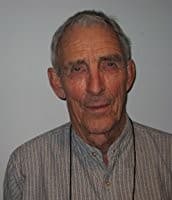
Peter Matthiessen was an American author and naturalist known for his contributions to both fiction and non-fiction. His notable works include "The Snow Leopard," which reflects on a journey through the Himalayas, and "Shadow Country," a reimagining of the life of the infamous Florida outlaw Edgar Watson. Matthiessen's writing often explores themes of nature, spirituality, and the human experience.
Similar books
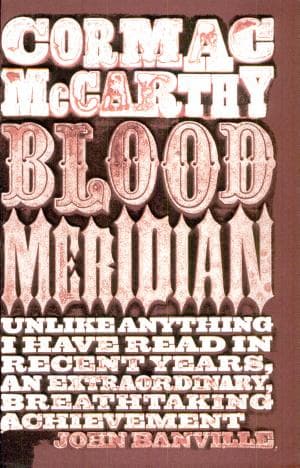
- Blood Meridian
Cormac McCarthy
4.2 (227k) average on GoodreadsFictionExplores the brutal violence and moral ambiguity of the American frontier with lyrical prose.
- Lonesome Dove
Larry McMurtry
4.5 (149k) average on GoodreadsHistorical FictionA sprawling epic of the American West, though Matthiessen's tone is considerably darker.
- The Old Man and the Sea
Ernest Hemingway
3.8 (831k) average on GoodreadsLiterary FictionA Cuban fisherman's long struggle with a giant marlin becomes a story of endurance and dignity, now retold for young adults with illustrations, phonetic guides, and writing prompts in Traditional Chinese.
- One Hundred Years of Solitude
Gabriel García Márquez
4.1 (753k) average on GoodreadsLiterary FictionThrough the multi-generational story of the Buendía family, a mythical town deals with the repeating patterns of time, love, and solitude, as the extraordinary mixes with the ordinary.
- The Goldfinch
Donna Tartt
3.9 (720k) average on GoodreadsLiterary FictionHaunted by a tragic explosion and clutching a stolen Dutch masterpiece, a young orphan navigates the opulent drawing rooms of New York and the gritty underbelly of the art world, desperately seeking connection and redemption amidst a life spiraling into crime and obsession.
- Little Fires Everywhere
Celeste Ng
4.1 (713k) average on GoodreadsLiterary FictionIn Shaker Heights, an artist and her daughter move in, and their free-spirited lives clash with a rule-bound matriarch, revealing hidden conflicts beneath a perfect surface.





Enjoyed the summary?
A summary gives you the shape of the book. The book itself has the detail, the examples and the voice.
Find Shadow Country on AmazonAs an Amazon Associate, BookBrief earns from qualifying purchases. How we're funded