

Synopsis
Covers the whole plot, including the ending.
- Difficulty
- Hard
- Pacing
- Variable
- Mood
- Satirical, Dark, Allegorical, Intense, Disorienting
- Read it if
- You enjoy complex, allegorical narratives that blend magical realism with biting political satire and explore themes of shame, identity, and power.
- Skip it if
- You prefer straightforward narratives, literal interpretations, or are sensitive to graphic violence and dark, often disturbing themes.
Shame Plot Summary
Covers the whole plot, including the ending.
The Immaculate Conception of Omar Khayyam Shakil
The novel opens in Q., a fantastical version of Pakistan, with the miraculous birth of Omar Khayyam Shakil. His three mothers – Chhunni, Munnee, and Bunny – are sisters who experience pregnancy symptoms and give birth to him on the same night. This shared motherhood and ambiguous paternity set the stage for Omar's unique upbringing. They raise him in a secluded, opulent mansion, a 'harem' that is also a fortress, largely isolated from the outside world. Here, he is taught a philosophy of absolute shamelessness, a stark contrast to the honor-bound society beyond their walls. This unusual beginning prepares Omar for a life where conventional morality holds little sway.
The Departure from the Harem
As Omar Khayyam Shakil grows, his curiosity and the limitations of his sheltered existence become unbearable. Despite his mothers' warnings and their attempts to shield him from the 'shame' of the outside world, he eventually ventures beyond the mansion walls. This departure marks his initiation into Q.'s complex and often violent political landscape, a thinly veiled Pakistan. His first encounters with society reveal a world obsessed with honor, reputation, and the constant threat of humiliation, a stark contrast to his upbringing. He begins to observe the dynamics of power and the intricate web of personal and political rivalries that define this nation.
The Feud of the Families: Raza Hyder and Iskander Harappa
The narrative introduces the central conflict between the families of Raza Hyder and Iskander Harappa. Raza Hyder is a military general, a man of rigid honor and martial prowess, who becomes a dictator. Iskander Harappa, a charismatic, Western-educated politician, is known for his charm and liberal leanings. Their lives are deeply intertwined through family connections, political alliances, and a simmering rivalry that will define the nation's fate. The novel explores their origins, their rise to power, and the personal slights and public shames that fuel their escalating animosity, reflecting Pakistan's turbulent history.
Omar's Entry into Society and His Medical Career
Omar Khayyam Shakil, after leaving his mothers, becomes a doctor. His profession gives him access to the homes and lives of Q.'s powerful and wealthy elite, including both the Hyder and Harappa families. This position allows him to be a detached observer, privy to intimate secrets and public displays of status. He treats their ailments, both physical and psychological, and witnesses the hypocrisy and moral decay beneath the veneer of respectability. His shamelessness, instilled by his mothers, allows him to navigate these circles without being fully corrupted by their values, though he remains an outsider looking in.
Sufiya Zinobia and the Manifestation of Shame
Sufiya Zinobia, General Raza Hyder's daughter, is introduced as a timid and innocent girl. However, she becomes a vessel for Q.'s collective shame. Her extreme sensitivity to others' humiliation and the injustices around her becomes physical: she begins to burn with an internal fire, her body a conduit for the nation's unspoken disgraces. This condition makes her increasingly volatile and dangerous, capable of immense, destructive violence when provoked by acts of shame. Her character is a potent metaphor for the repressed emotions and violence simmering beneath the surface of the country.
Omar's Marriage to Sufiya Zinobia
In a twist of fate, Omar Khayyam Shakil marries Sufiya Zinobia. This marriage is less about love and more about a strategic alliance or a macabre convenience, bringing Omar directly into the heart of the Hyder family's power and their ongoing feud with the Harappas. Despite his initial detachment, Omar is now linked to the forces of shame and violence that Sufiya embodies. His shameless nature initially seems to protect him, but as Sufiya's condition worsens, his life becomes more complicated and perilous. Their union is a symbolic merging of shamelessness and the physical manifestation of shame.
The Rise and Fall of Iskander Harappa
Iskander Harappa, the charismatic and populist leader, rises to power, becoming Prime Minister of Q. His rule has progressive policies and personal indulgence. However, his arrogance and perceived Westernization alienate powerful segments of society, particularly the military and religious conservatives. General Raza Hyder, his former ally and now bitter rival, orchestrates a military coup, overthrowing Harappa's government. Iskander is imprisoned, subjected to a show trial, and executed, becoming a martyr for his supporters and a symbol of democracy's fragility in Q.
Raza Hyder's Dictatorship
Following the coup, General Raza Hyder establishes a military dictatorship, imposing strict martial law and a conservative, religiously influenced agenda on Q. His rule is characterized by an obsession with order, honor, and the suppression of dissent. He tries to purge the nation of what he perceives as 'shameless' influences, including Western culture and political opposition. His regime is brutal, relying on fear and public humiliation to maintain control. During this period, Sufiya Zinobia's condition continues to deteriorate, mirroring the escalating violence and repression within the nation itself, tying her fate directly to her father's tyrannical reign.
Sufiya's Rampage and Omar's Retreat
Sufiya Zinobia's internal fire, fueled by Q.'s collective shame and violence, becomes uncontrollable. She embarks on a series of violent acts, lashing out at those who embody or perpetuate shame, including a brutal attack on a group of young men. Her actions are horrifying and inexplicable to most, but to Omar, they are the physical manifestation of the nation's suppressed emotions. Fearing for his own life and unable to contain her destructive power, Omar Khayyam Shakil flees back to the sanctuary of his mothers' mansion, seeking refuge from the chaos he has inadvertently become a part of. The mansion, once a place of shamelessness, now represents a desperate escape.
The Final Confrontation and the Mansion's Destruction
The novel culminates in a dramatic and violent confrontation. Sufiya Zinobia, now a terrifying embodiment of destructive shame, tracks her father, General Raza Hyder, to the Shakil family's mansion. In a climactic scene, she unleashes her full, fiery power upon him and the structure itself. The mansion, which had been a symbol of shamelessness and refuge, is utterly destroyed in a catastrophic blaze. This final act of violence consumes both the dictator and the physical manifestation of his nation's shame, leaving behind a profound sense of devastation and the cyclical nature of violence and retribution. Omar, witnessing this, is left to grapple with the aftermath.
Shame Characters
Omar Khayyam Shakil
Protagonist
A doctor raised by three mothers, embodying absolute shamelessness.
Omar is the central figure, born to three mothers in an ambiguous, miraculous birth. Raised in a secluded mansion with no concept of shame, he develops into a detached observer of society. He becomes a doctor, which grants him access to the inner lives of Q.'s elite. His inherent shamelessness allows him to navigate the hypocrisies of the world without being personally affected, yet he remains an outsider. He is driven by curiosity and a passive acceptance of his fate, rather than ambition.
Relationships: Chhunni, Munnee, Bunny (His three mothers, who raise him in shamelessness.); Sufiya Zinobia (His wife, a victim of national shame and violence.)
Sufiya Zinobia Hyder
Supporting/Symbolic
Raza Hyder's daughter, who physically embodies the nation's shame.
Sufiya is initially depicted as innocent and highly sensitive. However, she becomes the living embodiment of Q.'s collective shame, literally burning with an internal fire whenever she witnesses or experiences humiliation. Her condition escalates into bouts of uncontrollable, destructive violence. She is a tragic figure, a victim of the oppressive society and her father's actions, yet also a force of nature, driven by the very emotions her country represses. Her transformation is a central metaphor for the novel's themes.
Relationships: Raza Hyder (Her father, the dictator.); Omar Khayyam Shakil (Her husband, who is both fascinated and terrified by her.)
General Raza Hyder
Antagonist
A rigid military general who becomes the dictator of Q.
Raza Hyder is a stern, disciplined military man, obsessed with honor, order, and control. He represents the authoritarian, conservative forces in Q. His ambition leads him to overthrow Iskander Harappa and establish a brutal dictatorship. He is a figure of immense power but also deep personal shame, which he projects onto the nation. His actions are driven by a desire to impose his version of morality and eliminate perceived 'shamelessness,' making him a hypocritical and ultimately destructive leader.
Relationships: Sufiya Zinobia (His daughter, whose condition reflects his own repressed shame.); Iskander Harappa (His political rival and eventual victim.); Bilquis Hyder (His wife.)
Iskander Harappa
Antagonist/Foil
A charismatic, Western-educated politician, overthrown by Raza Hyder.
Iskander Harappa is presented as a charming, populist leader, often associated with pleasure and a more liberal outlook. He represents the democratic, modernizing aspirations of Q., but also embodies a certain recklessness and Western decadence in the eyes of his opponents. His rise to power and subsequent overthrow by Raza Hyder is a key plot point, mirroring real-world political events. He is a complex character, capable of both inspiring loyalty and provoking intense animosity.
Relationships: Raza Hyder (His political rival and eventual executioner.); Pinkie Aurangzeb (His mistress, who also has connections to Raza's family.); Haroun Harappa (His son.)
Chhunni, Munnee, Bunny Shakil
Supporting
Omar's three mothers, who raise him in a world devoid of shame.
These three sisters are Omar's impossibly shared mothers. They live in a secluded, opulent mansion, a 'harem' that is also a fortress, and instill in Omar a complete lack of shame. They are eccentric, powerful in their own domain, and represent an alternative, almost mythical, way of life. Their collective identity and their refusal to conform to societal norms regarding family and propriety set the foundation for Omar's unique perspective. They are figures of myth and matriarchal power.
Relationships: Omar Khayyam Shakil (Their shared son.)
Bilquis Hyder
Supporting
Raza Hyder's wife, a woman burdened by her husband's ambition and the nation's shame.
Bilquis is Raza Hyder's long-suffering wife, a woman who often feels overshadowed and defined by her husband's public image and political machinations. She struggles with her own sense of identity and the societal expectations placed upon her. She observes the unraveling of her family and nation with a mixture of resignation and quiet despair. Her character highlights the personal toll of political ambition and the societal pressure on women in Q.
Relationships: Raza Hyder (Her husband.); Sufiya Zinobia (Her daughter.)
Pinkie Aurangzeb
Supporting
Iskander Harappa's mistress, a figure of desire and scandal.
Pinkie Aurangzeb is a beautiful and scandalous figure, known for being Iskander Harappa's mistress. She represents forbidden desire and the less conventional aspects of Q. society. Her presence often causes ripples of gossip and judgment, highlighting the strict moral codes that the society pretends to uphold. Her fate is intertwined with the political struggles, and she becomes a pawn or victim in the larger power games.
Relationships: Iskander Harappa (His mistress.)
Farah Zoroaster
Supporting
A woman connected to both the Hyder and Harappa families, a figure of intrigue.
Farah Zoroaster is a character whose life is intimately connected to both the Hyder and Harappa families, often through romantic entanglements or hidden pasts. She embodies the complex web of relationships and secrets that bind the elite of Q. Her story often reveals the hypocrisy and moral compromises made by those in power, and she serves as a witness to the unfolding political drama. She is a figure of both desire and manipulation.
Relationships: Iskander Harappa (Former lover.); Raza Hyder (Has a past connection or secret involving him.)
Shame Themes
Shame and Shamelessness
The central theme explores the opposition of shame and shamelessness. The nation of Q. (Pakistan) is depicted as consumed by a rigid honor-shame culture, where public reputation dictates everything, and even the smallest slight can lead to catastrophic consequences. This contrasts with Omar Khayyam Shakil's upbringing, where he is taught to live without shame. Sufiya Zinobia's character literally embodies this theme, becoming a vessel for the nation's suppressed shame, which manifests as destructive violence. The novel suggests that an excessive obsession with honor and the repression of shame lead to greater, more destructive shame.
“Shame, the novel insists, is the only thing that cannot be escaped by hiding, for it lives in the mind. It is a 'living, breathing entity' that 'can be transmitted, like a disease, from one person to another.'”
The Nature of Power and Dictatorship
The novel examines the nature of political power, especially in dictatorship. General Raza Hyder's rise to power through a military coup and his tyrannical rule are central to this theme. Rushdie explores how power corrupts, how it is maintained through fear and the manipulation of national honor, and how it ultimately leads to the destruction of both the ruler and the ruled. The arbitrary nature of justice, the suppression of dissent, and the cult of personality surrounding leaders are all depicted as facets of this oppressive power.
“A people's sense of shame, when it is wounded too deeply, can become a weapon in the hands of the unscrupulous.”
Identity and Belonging
The theme of identity is explored through Omar Khayyam Shakil's ambiguous parentage and his status as an outsider. His unique upbringing leaves him without a strong sense of conventional identity or belonging within Q.'s rigid society. The novel also touches on the struggle for national identity in a post-colonial state, grappling with its past, its Western influences, and its traditional values. Characters often define themselves through their family names, public roles, or perceived honor, highlighting societal pressures to conform to prescribed identities.
“The trouble with the people of Pakistan, I thought, is that they have no shame.”
The Cycle of Violence and Retribution
Violence permeates the narrative, from political assassinations and coups to Sufiya Zinobia's destructive outbursts. The novel illustrates how acts of shame and humiliation often lead to cycles of retribution and escalating violence. The feud between the Hyder and Harappa families is a microcosm of this, where personal slights become national conflicts. Rushdie suggests that this cycle is deeply embedded in the cultural fabric, where 'honor' can be violently defended and 'shame' violently avenged, leading to an unending spiral of destruction.
“In a country where the only emotion permitted was shame, it was inevitable that shame would become the trigger for violence.”
The Role of Women in Society
Women in "Shame" are depicted in various roles, highlighting their limited agency and the societal pressures they face. From Omar's unconventional, powerful mothers to the submissive Bilquis Hyder and the tragically destructive Sufiya Zinobia, female characters often bear the brunt of male ambition and societal expectations. They are frequently confined to domestic spheres, used as pawns in political games, or become vessels for repressed emotions. Sufiya's transformation is particularly poignant, as she becomes the physical manifestation of the shame and violence that the men inflict upon their nation.
“Women, children, the old – they are all the same to shame. It enters their bodies and makes them do what it wants.”
Plot Devices & Literary Techniques
Magical Realism
Supernatural elements woven into a realistic setting.
Rushdie employs magical realism throughout the novel, blending fantastical elements seamlessly into the otherwise realistic, albeit satirical, portrayal of Pakistan. Omar's impossible birth to three mothers, Sufiya Zinobia's literal burning with shame, and the spontaneous combustion of objects are prime examples. This device allows Rushdie to explore complex emotional and political truths through metaphor, making the abstract concept of 'shame' tangible and powerful. It heightens the allegorical nature of the story, allowing for a deeper, more visceral understanding of the characters' psychological states and the nation's condition.
Allegory
The entire novel functions as an allegory for Pakistan's political history.
The novel is a thinly veiled allegory for the political history of Pakistan, particularly the rivalry between Zulfiqar Ali Bhutto and General Zia-ul-Haq. Q. represents Pakistan, and the characters of Iskander Harappa and Raza Hyder clearly mirror these historical figures. The feud between their families, the military coup, and the subsequent dictatorship all parallel real events. This allegorical structure allows Rushdie to critique political events and cultural attitudes without directly naming them, providing a layer of fictionalized distance while simultaneously making a potent statement about the nation's struggles with honor, shame, and power.
Metafiction/Narrator's Commentary
The narrator frequently interjects with personal reflections and commentary.
The narrator, often identified as a 'migrant' writer, frequently breaks the fourth wall to offer personal anecdotes, philosophical reflections, and direct commentary on the story's events and themes. This metafictional approach draws attention to the act of storytelling itself and the challenges of representing truth. The narrator's voice adds a layer of self-awareness and irony, often discussing the limitations of language, the nature of memory, and his own relationship to the 'imaginary country' he is describing. This device allows Rushdie to explore themes of exile, identity, and the power of narrative.
Symbolism (Sufiya's Fire)
Sufiya's internal fire symbolizes the nation's repressed shame and violence.
Sufiya Zinobia's unique condition – her literal burning with an internal fire whenever shame is present or injustice occurs – serves as a powerful symbol. The fire represents the repressed, unacknowledged shame and violence within the nation of Q. It is a physical manifestation of collective psychological trauma, showing how suppressed emotions can become destructive forces. Her eventual rampage and the fiery destruction of the mansion symbolize the inevitable, catastrophic eruption when societal shame and hypocrisy are pushed to their breaking point, consuming both the innocent and the guilty.
Shame Quotes
“To be born again, you must first die.”
“The country itself became a sort of dream, a nightmare from which they could not wake.”
“Shame, like a wound, can fester.”
“When you have a choice between a truth and a lie, and the lie is more beautiful, what do you choose?”
“History is the conversion of the past into a story.”
“The past is a foreign country; they do things differently there.”
“Every dictator is a child who has never grown up.”
“The greatest weapon against terror is not violence, but memory.”
“He understood that some secrets are too dangerous to be kept, and others too dangerous to be revealed.”
“The world, like a human being, is a place where every wound leaves a scar.”
“What is told in the ear of a man will often be heard in the market-place.”
“Perhaps the only way to make sense of the past is to invent it.”
“Revenge, like a snake, coils around the heart.”
“The human mind can hold two contradictory ideas at once, without going mad.”
Quiz
10 questions on the plot and the characters. Each answer comes with a short explanation.
Question 1
Who are Omar Khayyam Shakil's three mothers, and what unique characteristic do they share regarding his birth?
- They are sisters who each had a child with Omar's father at different times.
- They are unrelated women who adopted Omar after his parents died.
- They are three women who all claim to have borne Omar on the same night and shared pregnancy symptoms.
- They are one woman with a dissociative identity disorder, each personality claiming to be his mother.
Show answer
C. They are three women who all claim to have borne Omar on the same night and shared pregnancy symptoms. The novel explicitly states that Omar had three mothers who shared the symptoms of pregnancy and all claimed to have borne him on the same night.
Question 2
What is the primary theme Omar's mothers instill in him during his upbringing in their fortress?
- The importance of military honor and duty.
- How to live a life without shame.
- The pursuit of pleasure above all else.
- The art of political maneuvering and deception.
Show answer
B. How to live a life without shame. The synopsis clearly states that Omar's mothers teach him to 'live a life without shame,' which proves useful later.
Question 3
Omar Khayyam Shakil finds himself an 'unwitting player' in a duel between the families of two men. What are these two men primarily known for?
- One a renowned poet, the other a wealthy merchant.
- One a celebrated wager of war, the other a debauched lover of pleasure.
- One a spiritual leader, the other a revolutionary.
- One a master architect, the other a skilled musician.
Show answer
B. One a celebrated wager of war, the other a debauched lover of pleasure. The synopsis describes the two men as 'one a celebrated wager of war, the other a debauched lover of pleasure,' whose families are in an ongoing duel.
Question 4
The novel 'Shame' is described as setting the stage for which other famous Salman Rushdie novel?
- Midnight's Children
- The Moor's Last Sigh
- The Satanic Verses
- Haroun and the Sea of Stories
Show answer
C. The Satanic Verses The introductory text explicitly states that 'Shame' is 'the novel that set the stage for his modern classic, The Satanic Verses.'
Question 5
What is the primary danger Omar faces when he leaves his mothers' fortress and falls in love?
- He risks losing his inherited wealth.
- He might be forced into a political marriage.
- He becomes involved in a fatal feud between powerful families, where shame can be deadly.
- He could be exiled from the country for his choices.
Show answer
C. He becomes involved in a fatal feud between powerful families, where shame can be deadly. The synopsis indicates that falling in love makes him 'an unwitting player in an ongoing duel between the families of two men... where a moment of shame could prove fatal.'
Question 6
The world depicted in 'Shame' is characterized by a constant tension between what two abstract concepts?
- Wealth and poverty.
- Justice and injustice.
- Honour and humiliation.
- Freedom and oppression.
Show answer
C. Honour and humiliation. The text describes the world as 'caught between honour and humiliation, where a moment of shame could prove fatal,' highlighting this central tension.
Question 7
How does the narrative structure of 'Shame' relate to 'Midnight's Children,' according to The Times review?
- It is a direct sequel to 'Midnight's Children'.
- It is stylistically and thematically similar, being 'every bit as good'.
- It is a prequel, explaining events leading up to 'Midnight's Children'.
- It is a lighter, more comedic take compared to the serious tone of 'Midnight's Children'.
Show answer
B. It is stylistically and thematically similar, being 'every bit as good'. The Times review states, 'Shame is every bit as good as Midnight's Children. It is a pitch-black comedy of public life and historical imperatives,' suggesting a comparable quality and stylistic approach.
Question 8
Given the description of Omar's upbringing and the core conflict, what literary device is central to the novel's exploration of shame and honor?
- Stream of consciousness.
- Magical realism.
- Epistolary format.
- Strictly linear narration.
Show answer
B. Magical realism. The fantastical element of three mothers sharing pregnancy symptoms and bearing a child simultaneously, coupled with Rushdie's known style, strongly points to magical realism as a central device, using heightened reality to explore abstract concepts like shame.
Question 9
How does Omar's upbringing, specifically being raised at 'six breasts,' contribute to his character development and later interactions?
- It makes him exceptionally strong and physically robust.
- It instills in him a unique perspective on identity and belonging, potentially contributing to his 'shame-free' nature.
- It leads to him having an aversion to female companionship.
- It provides him with an unusually extensive education in classical literature.
Show answer
B. It instills in him a unique perspective on identity and belonging, potentially contributing to his 'shame-free' nature. Being raised by three mothers, claiming shared parentage, and being suckled at 'six breasts' creates a unique, perhaps diffuse, sense of origin and identity. This unusual start likely underpins his 'life without shame' and his eventual role as an 'unwitting player' in a world obsessed with it.
Question 10
The novel is described as a 'pitch-black comedy of public life and historical imperatives.' What does 'pitch-black comedy' imply about its treatment of serious subjects?
- It avoids humor entirely to focus on the grim reality.
- It uses dark, often morbid or cynical humor to highlight the absurdities and horrors of public life and history.
- It is a lighthearted satire that makes fun of historical events without deeper meaning.
- It is primarily a slapstick comedy with no serious undertones.
Show answer
B. It uses dark, often morbid or cynical humor to highlight the absurdities and horrors of public life and history. Pitch-black comedy (or black humor) uses elements of comedy in situations that are typically considered taboo, morbid, or serious, often to highlight the absurdity or tragedy of the human condition. This fits with Rushdie's style and the novel's themes of shame and fatal consequences.
Shame FAQ
What is the central premise of 'Shame' by Salman Rushdie?
'Shame' explores the intertwined fates of two prominent Pakistani families, those of Iskander Harappa and Raza Hyder, through the lens of their personal and political struggles. The narrative delves into the concept of shame as a powerful, often destructive, force shaping individual lives and national identity, set against a backdrop of thinly veiled allegories for Pakistani history.
Who is Omar Khayyam Shakil and what is his unique origin story?
Omar Khayyam Shakil is the protagonist, a seemingly 'shame-proof' doctor with an extraordinary birth. He is said to have been born to three mothers – Chhunni, Munnee, and Bunny – simultaneously, and was raised in a secluded mansion by these women, who instilled in him a profound detachment from shame, preparing him for a life unburdened by conventional morality.
How do Iskander Harappa and Raza Hyder represent opposing forces in the novel?
Iskander Harappa embodies decadence, intellectualism, and a tragic downfall, often associated with a more liberal and perhaps corrupt political past. Raza Hyder, conversely, represents military power, authoritarianism, and a ruthless pursuit of control, reflecting the rise of military dictatorships in Pakistan. Their rivalry drives much of the novel's political and personal conflict.
What role does Sufiya Zinobia play in the narrative, and how is she connected to the theme of shame?
Sufiya Zinobia, Raza Hyder's daughter, is a central figure who embodies the raw, uncontrollable manifestation of shame. Unable to process the world's humiliations, her shame erupts into destructive, violent rages, transforming her into a beast-like figure. Her condition directly reflects the collective shame and violence simmering beneath the surface of the nation.
How does the setting of 'Q' (Qaraq) contribute to the novel's allegorical nature?
Qaraq, or 'Q', is a fictionalized version of Pakistan, serving as an allegorical landscape where historical events and political figures are reimagined. Its name itself, derived from the Urdu word for 'black', hints at the dark, often violent, undercurrents of the nation's history, allowing Rushdie to explore themes without direct journalistic reporting.
What is the significance of the three mothers of Omar Khayyam Shakil and their shared pregnancy?
The shared pregnancy and motherhood of Chhunni, Munnee, and Bunny symbolize a collective, almost mythical, origin for Omar, detaching him from conventional familial shame or singular identity. This unusual beginning primes him for a life outside societal norms, reflecting a nation's complex and perhaps fabricated foundational myths.
How does the motif of 'blushing' relate to Sufiya Zinobia's condition and the broader theme of shame?
Sufiya Zinobia's inability to blush, or rather, her internalizing shame to the point of physical eruption rather than outward display, is critical. Her 'blushing' manifests as destructive rages. This contrasts with conventional shame and highlights how societal repression of emotion can lead to monstrous consequences, both individually and nationally.
What is the implied connection between the author's narrative intrusion and the metafictional aspects of the novel?
Rushdie frequently interjects as the author, discussing the process of writing, the nature of his characters, and his own relationship to the story's setting. This metafiction highlights the constructed nature of reality and history, blurring the lines between fiction and fact, and implicitly suggesting that even national narratives are subject to subjective interpretation and shaping.
How does the 'Game of Snakes and Ladders' serve as a subtle metaphor for the characters' fates and national politics?
The game of Snakes and Ladders, a recurring motif, subtly mirrors the unpredictable rise and fall of characters like Iskander Harappa and Raza Hyder, as well as the nation itself. Success can be undone by sudden 'snakes' (shame, betrayal, coups), while unexpected 'ladders' (fortuitous events, military power) can elevate one to power, emphasizing the arbitrary nature of fate and politics.
Analyze the psychological impact of Omar Khayyam Shakil's 'shame-proof' upbringing on his adult relationships.
Omar's upbringing, devoid of shame, renders him emotionally detached and unable to fully connect with others. His relationships, particularly with women, are often superficial or exploitative because he lacks the internal moral compass that shame provides. This detachment allows him to navigate a corrupt world but prevents genuine intimacy and empathy.
How does the suppression of shame in General Raza Hyder manifest psychologically and politically?
Raza Hyder suppresses shame through an iron will and military discipline, projecting an image of unshakeable authority. Psychologically, this leads to ruthlessness and an inability to tolerate dissent or perceived weakness. Politically, his suppression of personal shame translates into tyrannical rule, where any challenge to his power is met with brutal force, reflecting a nation's denial of its own flaws.
Discuss the psychological burden carried by Sufiya Zinobia due to her inherited and experienced shame.
Sufiya Zinobia carries a crushing psychological burden, a confluence of her family's historical shame, her father's political actions, and her own perceived humiliations. Unable to process these feelings, her psyche breaks, leading to her monstrous transformations. This illustrates how internalized shame, when unaddressed, can lead to profound mental and physical disintegration, reflecting a nation's repressed trauma.
What is the psychological significance of the repeated imagery of violence and blood throughout the novel?
The pervasive imagery of violence and blood psychologically underscores the novel's core themes of shame, retribution, and the cycles of brutality in a nation grappling with its identity. It suggests that suppressed shame often erupts in physical aggression, and that the historical violence of 'Q' has seeped into the collective unconscious, manifesting in both individual acts and systemic oppression.
Is 'Shame' primarily a political allegory, a family saga, or something else entirely?
'Shame' expertly weaves together political allegory and family saga, using the latter to illuminate the former. While the Harappa and Hyder families clearly parallel real political figures and events in Pakistan, their intensely personal dramas and intergenerational conflicts serve to humanize and deepen the political commentary, suggesting that national narratives are built on individual lives and relationships. It is a 'chameleonic' novel that defies simple categorization.
How does Rushdie's magical realism contribute to the novel's satirical and critical commentary?
Rushdie's use of magical realism, such as Sufiya Zinobia's literal transformations or Omar's miraculous birth, allows him to exaggerate and externalize internal states and societal absurdities. This fantastical element enhances the satirical edge, making the critique of political corruption, religious hypocrisy, and the destructive nature of shame more vivid and impactful than a purely realistic approach could achieve.
In what ways does 'Shame' challenge traditional notions of history and truth?
'Shame' challenges traditional notions of history by presenting it as a fluid, often contradictory narrative shaped by personal biases, political agendas, and the very act of storytelling. The author's intrusions and the blend of fact and fiction suggest that 'truth' is subjective and constructed, particularly in a nation where official histories are often manipulated, forcing the reader to question received narratives.
What is the ultimate message or warning Rushdie conveys about the concept of 'shame' in both personal and national contexts?
Rushdie conveys that shame, whether suppressed or overtly expressed, is a profoundly destructive force. Personally, it can lead to emotional detachment (Omar), tyrannical control (Raza), or monstrous breakdown (Sufiya). Nationally, the denial or misdirection of collective shame can perpetuate cycles of violence, authoritarianism, and a distorted sense of identity, ultimately suggesting that true progress requires confronting and acknowledging one's shames.
How does the ending of 'Shame' reflect the cyclical nature of violence and retribution?
The violent and chaotic climax, particularly Sufiya Zinobia's rampage and the subsequent destruction, vividly illustrates the cyclical nature of violence and retribution. It suggests that the unresolved shame and conflict within the families and the nation inevitably lead to further bloodshed, implying that without a true reckoning, the cycle of vengeance and destruction will continue indefinitely, consuming all involved.
About the author

Sir Ahmed Salman Rushdie is an Indian-born British-American novelist. His work often combines magic realism with historical fiction and primarily deals with connections, disruptions, and migrations between Eastern and Western civilizations, typically set on the Indian subcontinent. Rushdie's second novel, Midnight's Children (1981), won the Booker Prize in 1981 and was deemed to be "the best novel of all winners" on two occasions, marking the 25th and the 40th anniversary of the prize.
Similar books
- One Hundred Years of Solitude
Gabriel García Márquez
4.1 (753k) average on GoodreadsLiterary FictionFeatures a sprawling family saga, magical realism, and a cyclical exploration of history and human nature.
- The Master And Margarita
Mikhail Bulgakov
4.3 (243k) average on GoodreadsFantasyCombines political satire with fantastical elements and explores themes of good, evil, and societal hypocrisy.
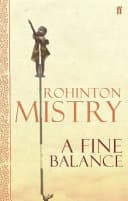
- A Fine Balance
Rohinton Mistry
4.3 (129k) average on GoodreadsLiterary FictionRohinton Mistry's A Fine Balance (1995) also explores the political upheavals and social injustices of a South Asian nation (India during the Emergency), but does so through a much more realist and character-driven lens. While Mistry's novel is deeply critical of political corruption and human cruelty, it eschews magical realism for a grittier, more grounded portrayal of everyday life and the resilience of ordinary people. Shame uses allegory and the grotesque to make its political points, often at the expense of deep character interiority, whereas A Fine Balance builds its critique through meticulously detailed character development and their harrowing experiences, making for a more emotionally immediate, if less fantastical, engagement with the political landscape.
- The Old Man and the Sea
Ernest Hemingway
3.8 (831k) average on GoodreadsLiterary FictionA Cuban fisherman's long struggle with a giant marlin becomes a story of endurance and dignity, now retold for young adults with illustrations, phonetic guides, and writing prompts in Traditional Chinese.
- The Goldfinch
Donna Tartt
3.9 (720k) average on GoodreadsLiterary FictionHaunted by a tragic explosion and clutching a stolen Dutch masterpiece, a young orphan navigates the opulent drawing rooms of New York and the gritty underbelly of the art world, desperately seeking connection and redemption amidst a life spiraling into crime and obsession.
- Little Fires Everywhere
Celeste Ng
4.1 (713k) average on GoodreadsLiterary FictionIn Shaker Heights, an artist and her daughter move in, and their free-spirited lives clash with a rule-bound matriarch, revealing hidden conflicts beneath a perfect surface.





Enjoyed the summary?
A summary gives you the shape of the book. The book itself has the detail, the examples and the voice.
Find Shame on AmazonAs an Amazon Associate, BookBrief earns from qualifying purchases. How we're funded