
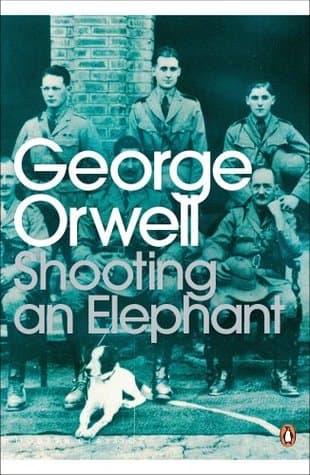
Core Idea
- Difficulty
- Medium
- Read it if
- You want to understand the psychological and moral complexities of imperialism and political power through personal, incisive narratives, and appreciate the art of the essay.
- Skip it if
- You prefer fictional narratives over essays, or are looking for a light, purely entertainment-focused read without deep political or social commentary.
Key Takeaways from Shooting an Elephant
The Tyranny of Imperialism
Colonial power corrupts not only the oppressed but also the oppressor, forcing them into a performative role.
Orwell's main point in 'Shooting an Elephant' is a deep look at the psychological cost of imperialism on the colonizer. He argues that the 'white man' in power, while seemingly dominant, is enslaved by the system he supports. The need to maintain an image of strong authority forces him to act against his conscience. This is about more than political control; it's about an inner corruption where the colonizer's identity becomes a performance, a 'hollow, posing dummy,' dictated by the expectations of both the colonized people and the imperial system. This performance removes individual freedom and moral integrity, trapping the oppressor in a cage, where actions come from fear of looking weak rather than from true belief.
“I perceived in this moment that when the white man turns tyrant it is his own freedom that he destroys. He becomes a sort of hollow, posing dummy, the conventionalized figure of a sahib.”
In the book: The entire narrative of 'Shooting an Elephant' hinges on this. Orwell, despite having no desire to kill the elephant and recognizing its 'must' had passed, felt compelled to shoot it solely because 'the crowd expected it of me.' He describes feeling like a 'puppet' pushed and pulled by the will of the native crowd.
Try this: Reflect on situations where societal or professional expectations dictate your actions against your personal values. Identify the 'crowd' you're performing for and evaluate the true cost of maintaining that image versus acting authentically.
Related ideas: colonialism-psychology, imperialism-burden, performative-power
The Hypocrisy of Power
Those in authority often act out of self-preservation and the avoidance of ridicule, rather than justice or reason.
Orwell clearly shows the hypocrisy at the core of power structures, especially in colonialism. His choice to shoot the elephant was not based on a logical assessment of the situation—the elephant was no longer a threat—but on a desperate attempt to save his image and avoid embarrassment in front of the Burmese crowd. This reveals a troubling truth about authority: often, the big statements and actions of those in power are not driven by principle, justice, or practical need, but by a basic human fear of looking weak or foolish. This insight goes beyond imperialism, suggesting that many top-level decisions are about maintaining appearances and controlling perception, rather than serving the greater good or rational goals.
“I often wondered whether any of the others grasped that I had done it solely to avoid looking a fool.”
In the book: Orwell explicitly states his motivation: 'I was only an absurd puppet pushed to and fro by the will of those yellow faces behind.' He also notes that he was 'hated by large numbers of people,' and this constant antagonism made him acutely sensitive to public perception, which culminated in his irrational act.
Try this: When evaluating leaders or policies, look beyond stated justifications to consider underlying motivations like fear of criticism, desire for control, or image management. Question decisions that seem performative rather than practical.
Related ideas: power-dynamics, image-management, political-hypocrisy
The Indignity of Poverty
Poverty strips individuals of their dignity, reducing them to mere objects of observation and pity, or worse, contempt.
In 'How the Poor Die,' Orwell offers a stark, unsettling look at the dehumanizing conditions faced by the poor, especially in places like hospitals. He argues that poverty doesn't just take away material comforts; it takes away their dignity, turning them into anonymous, disposable people. The essay shows the indifference, lack of privacy, and often humiliating treatment given to the poor, suggesting that society sees their suffering as less important, their lives less valuable. This is about more than economic hardship; it's about the psychological and social decline that comes with being at the bottom, where one's humanity is lessened and one's death, like one's life, is seen as unimportant.
“It is a great deal easier to die if you have a certain amount of money.”
In the book: Orwell's firsthand account of his time in a Parisian hospital, where he describes patients being treated with 'callous indifference,' denied basic information, and dying in public wards without privacy or comfort. He notes the stark contrast with how a paying patient would be treated.
Try this: Challenge yourself to see the full humanity in every individual, regardless of their socioeconomic status. Advocate for systems that preserve dignity and privacy for all, especially in vulnerable situations like healthcare or incarceration.
Related ideas: poverty-dehumanization, social-inequality, dignity-of-life
The Scars of Childhood
Early experiences, especially those involving cruelty and injustice, leave indelible marks on one's psyche.
Orwell's memoir 'Such, Such Were the Joys' strongly criticizes the English public school system. He shows it not as a place for character building, but as a source of fear, injustice, and class-based cruelty. He argues that the psychological harm inflicted during these years—the constant bullying, unfair punishments, and a widespread feeling of guilt and inadequacy—shapes a person's worldview in deep and often damaging ways. This essay highlights how early experiences of power dynamics, especially institutionalized cruelty and the suppression of individuality, can create a lifelong sense of insecurity, resentment, and a deep distrust of authority. It shows how childhood 'joys' can be a long period of psychological struggle for some.
“The great thing about public school is that it teaches you to be a snob. It teaches you to despise the world outside.”
In the book: Orwell recounts numerous personal anecdotes from his time at St. Cyprian's preparatory school: the 'beastly' headmaster and his wife, the arbitrary canings, the constant fear of academic failure, and the class distinctions that led to preferential treatment for wealthier students, all contributing to a profound sense of injustice and terror.
Try this: Recognize how your own childhood experiences, both positive and negative, continue to influence your perceptions and reactions today. If a parent or educator, prioritize creating environments of safety, fairness, and emotional support over rigid discipline or performance pressure.
Related ideas: childhood-trauma, institutional-cruelty, class-system-education
The Common Man's Perspective
True understanding of society often comes from observing life from the bottom up, not the top down.
Orwell's essays consistently show his commitment to experiencing and reporting on life from the perspective of ordinary people, often those on the edges of society. Whether describing the poor's struggles, he believed that true insight into social structures and political realities could only come from shedding one's own class biases and living among others. This approach allowed him to expose the 'myths' spread by the powerful and reveal the plain truths of everyday life, which are often missed or hidden by those in comfortable positions. His strength comes from his journalistic empathy, filtering complex issues through human experience.
“The greatest enemy of truth is very often not the lie – deliberate, contrived, and dishonest – but the myth – persistent, persuasive, and unrealistic.”
In the book: His essay 'How the Poor Die' is a direct result of his personal experience in a public ward. His observations in Burma as a police officer, a position of authority, are constantly tempered by his internal struggle and sympathy for the colonized people, providing a unique 'inside-out' perspective on imperialism.
Try this: Seek out diverse perspectives, particularly from those whose experiences differ greatly from your own. Actively challenge your own assumptions and biases by engaging with primary accounts and real-world observations, rather than relying solely on official narratives.
Related ideas: social-observation, empathy-journalism, truth-seeking
The Power of Language
Language shapes thought and can be manipulated to obscure truth or control perception.
While 'Politics and the English Language' is not in this collection, its spirit runs through Orwell's work, especially his look at rhetoric. He implicitly criticizes how language is used to clean up harsh realities, justify oppressive systems, and distort public understanding. Whether describing the polite terms for colonial violence or the confusing language of political speeches, Orwell knows that words are not neutral but powerful tools for ideological control. His own writing, known for its clarity and directness, stands as a deliberate contrast to this manipulative tendency, aiming to remove confusion and present truth clearly. This idea, though not explicitly from one essay here, is a theme throughout his social criticisms.
“In our age there is no such thing as 'keeping out of politics.' All issues are political issues.”
In the book: Orwell's vivid, unsparing descriptions of the dying elephant, the suffering patients, and the cruelties of public school are all examples of his deliberate choice of precise, impactful language to convey harsh realities without sugarcoating. His contempt for vague, abstract political language is always evident, even if not explicitly debated in these specific essays.
Try this: Pay close attention to the language used by politicians, media, and advertisers. Identify euphemisms, jargon, and vague phrasing that might be designed to obscure rather than clarify. Practice clear, concise communication to foster genuine understanding.
Related ideas: linguistic-manipulation, rhetoric-critique, clarity-in-writing
The Absurdity of Nationalism
Blind patriotism often leads to irrational prejudice and a distorted view of one's own country and others.
In 'My Country Right or Left,' Orwell addresses the difference between patriotism and nationalism, ultimately criticizing nationalism as a dangerous, irrational force. He distinguishes between a genuine love for one's homeland, culture, and people, and the aggressive loyalty that demands unquestioning support for the state, often at the cost of truth and justice. Nationalism, for Orwell, involves an inability to criticize one's own nation or recognize the good in others. It creates a 'my country, right or wrong' attitude that blinds people to their government's failures and fuels international hatred. He sees it as a form of intellectual dishonesty that distorts judgment and stops critical thought, ultimately undermining the values it claims to protect.
“My country right or left. I can't help feeling that if you can say that you are not a nationalist at all.”
In the book: Orwell discusses how, even during wartime, it is crucial to maintain a critical perspective on one's own nation's actions. He implicitly criticizes the jingoism that prevents people from acknowledging internal flaws or external virtues, even citing the example of English cooking – a subject often ridiculed, but which he defends with nuance.
Try this: Cultivate a balanced patriotism that allows for critical self-reflection and appreciation of other cultures. Challenge narratives that demonize other nations or uncritically glorify your own, seeking nuanced understanding over simplistic loyalty.
Related ideas: nationalism-critique, patriotism-versus-nationalism, political-bias
The Value of Ordinary Pleasures
Amidst political turmoil and social injustice, appreciating simple, everyday joys is a vital act of human resilience.
Despite his sharp criticisms of society, Orwell also had a strong appreciation for life's simple, unpretentious pleasures. His essays often discuss seemingly minor subjects like boys' weeklies or English cooking with the same intellectual rigor he applies to political oppression. This is not a distraction; it is a key part of his humanity and worldview. He suggests that these 'ordinary pleasures'—the escape of a comic, the comfort of a familiar meal—are not just small diversions but essential parts of a rich life, offering comfort, connection, and a balance to the world's harsh realities. In a world full of injustice, finding joy in the everyday becomes an act of quiet resistance and a sign of human resilience, reminding us what we are fighting for.
“The great thing about boys' weeklies is that they are so wholesome.”
In the book: Orwell's spirited defense of English cooking in an essay, acknowledging its reputation but arguing for its overlooked virtues. His detailed analysis of boys' weeklies, showing a deep understanding and affection for their simple narratives and moral codes, even while acknowledging their limitations.
Try this: Consciously seek out and savor everyday joys – a good meal, a beloved hobby, a walk in nature. Recognize that these small moments of pleasure contribute to overall well-being and provide strength to engage with larger societal challenges.
Related ideas: everyday-joy, human-resilience, simple-pleasures
The Moral Imperative of Honesty
Confronting uncomfortable truths, even about oneself, is essential for moral integrity and genuine progress.
Orwell's lasting impact comes from his honesty, not just in criticizing outside systems, but in examining his own involvement and inner conflicts. In 'Shooting an Elephant,' he admits his mixed feelings: his hatred for the British Empire along with his frustration with the Burmese who taunted him. This moral honesty is difficult but important. It is the refusal to simplify complex realities or to present oneself as perfectly good. He shows that true moral courage means acknowledging one's own biases, involvement, and the uncomfortable truths of human nature. This self-awareness is the foundation for any meaningful attempt to understand or improve the world.
“All I knew was that I was stuck between my hatred of the empire I served and my rage against the evil-spirited little beasts who tried to make my job impossible.”
In the book: His brutal self-assessment in 'Shooting an Elephant' where he admits to feeling like a 'puppet' and doing something he knew was wrong 'solely to avoid looking a fool.' Also, his candid recollections of fear and injustice in 'Such, Such Were the Joys' rather than romanticizing his childhood.
Try this: Practice radical honesty with yourself, acknowledging your own biases, privileges, and moments of moral failing. Use this self-awareness as a foundation for growth and for more effective, empathetic engagement with others.
Related ideas: moral-integrity, self-awareness, unflinching-truth
The Interconnectedness of Injustice
Seemingly disparate forms of oppression often share common roots and mechanisms of control.
Orwell's collection, despite its varied topics, subtly shows a common theme: the connection between different forms of injustice. Whether it's the imperialist's psychological burden, the dehumanization of the poor, or the cruelty of the public school system, he demonstrates how power dynamics, class structures, and the suppression of individuality appear in different situations. The methods of control—fear, shame, economic force, and the manipulation of truth—are not isolated events but repeating patterns in a 'bad society.' This insight encourages readers to look beyond surface differences and recognize the deeper systemic issues that perpetuate various forms of oppression, suggesting that a true fight for justice requires addressing these fundamental structural flaws rather than just isolated problems.
“The real problem is that of the man who is trying to be decent in an indecent society.”
In the book: The parallels between the arbitrary power exercised by the headmaster in 'Such, Such Were the Joys' and the institutionalized indifference in 'How the Poor Die,' or the performative nature of colonial power in 'Shooting an Elephant.' All point to a broader critique of systems that diminish human autonomy and dignity.
Try this: When encountering a social problem, look beyond the immediate symptoms to identify the systemic roots and how it might connect to other forms of injustice. Advocate for holistic solutions that address root causes rather than just treating symptoms.
Related ideas: systemic-injustice, power-structures, social-critique
Shooting an Elephant Quotes
“I perceived in this moment that when the white man turns tyrant it is his own freedom that he destroys.”
“He wears a mask, and his face grows to fit it.”
“I was only an absurd puppet pushed to and fro by the will of those yellow faces behind.”
“When you see a thing that is vile and not to be tolerated, you must not tolerate it.”
“All I knew was that I was stuck between my hatred of the empire I served and my rage against the evil-spirited little beasts who tried to make my job impossible.”
“It is a great thing to be a sahib, but a sahib must act like a sahib.”
“I had no intention of shooting the elephant.”
“The crowd grew very still, and a deep, low murmur went up from them, a murmur of relief and pleasure.”
“I was hated by large numbers of people – the only time in my life that I have been important enough for this to happen to me.”
“In a job like that you see the dirty work of Empire at close quarters.”
“Every white man's life in the East was one long struggle not to be laughed at.”
“It was a tiny incident in itself, but it gave me a better glimpse than I had had before of the real nature of imperialism—the real motives for which despotic governments act.”
“I often wondered whether any of the others grasped that I had done it solely to avoid looking a fool.”
“Theoretically—and secretly, of course—I was all for the Burmese and all against their oppressors, the British.”
Quiz
10 questions on the main ideas. Each answer comes with a short explanation.
Question 1
In 'Shooting an Elephant,' what is the primary reason Orwell ultimately decides to shoot the elephant?
- To protect the villagers from further damage and potential harm.
- Because he genuinely believed the elephant was still a dangerous threat.
- To avoid looking like a fool in front of the Burmese crowd who expected him to act.
- As a direct order from his superior officer.
Show answer
C. To avoid looking like a fool in front of the Burmese crowd who expected him to act. Orwell explicitly states he felt pressured by the 'two thousand wills' of the watching crowd, and shot the elephant 'solely to avoid looking a fool.' He recognized the elephant was no longer a danger but felt compelled by the expectations of the imperial role.
Question 2
What emotion does Orwell frequently express towards the Burmese people in 'Shooting an Elephant'?
- Admiration for their resilience.
- Fondness and camaraderie.
- Resentment and a sense of being hated.
- Indifference.
Show answer
C. Resentment and a sense of being hated. Orwell describes himself as being 'hated by large numbers of people,' and feeling 'stuck between my hatred of the empire I served and my rage against the evil-spirited little beasts who tried to make my job impossible.'
Question 3
Which essay in the collection is a memoir of Orwell's public school experiences?
- My Country Right or Left
- How the Poor Die
- Such, Such were the Joys
- A Defence of English Cooking
Show answer
C. Such, Such were the Joys The book description explicitly states that 'Such, Such were the Joys' is Orwell's 'memoir of the horrors of public school.'
Question 4
What paradox of imperialism does Orwell illuminate through his experience with the elephant?
- That imperial rulers often become more benevolent over time.
- That the oppressor ultimately becomes a puppet of the oppressed.
- That economic benefits always outweigh moral costs for the colonizer.
- That imperial power is maintained primarily through intellectual superiority.
Show answer
B. That the oppressor ultimately becomes a puppet of the oppressed. Orwell realizes that by having to maintain an image of authority and unflappability, he, the oppressor, is 'forced to put on a mask' and becomes a 'puppet' of the expectations of the native population. He acts against his own will to uphold the facade of empire.
Question 5
Before he shoots the elephant, what is Orwell's initial assessment of the elephant's condition?
- It is aggressively charging towards him.
- It is calm and peacefully grazing, no longer a threat.
- It is wounded and suffering, requiring mercy.
- It is attempting to escape into the jungle.
Show answer
B. It is calm and peacefully grazing, no longer a threat. Orwell observes the elephant standing 'peacefully in the paddy field, about eighty yards away,' looking 'suddenly stricken, shrunken, immensely old.' He notes it was no longer in must and was now 'no more dangerous than a cow.'
Question 6
What is the broader theme Orwell explores through the specific act of shooting the elephant?
- The importance of following orders without question.
- The psychological toll and moral compromises inherent in imperialism.
- The inherent savagery of wild animals.
- The superiority of British colonial administration.
Show answer
B. The psychological toll and moral compromises inherent in imperialism. The essay is a powerful critique of imperialism, showing how it corrupts both the colonizer and the colonized, forcing the colonizer into inhumane acts to maintain a facade of power, thus taking a significant psychological and moral toll.
Question 7
In 'Shooting an Elephant,' what specific detail highlights the economic hardship of the Burmese people and the consequences of the elephant's rampage?
- The destruction of a government building.
- The trampling of a poor man's hut and the subsequent death of coolie.
- The theft of valuable jewels from a local merchant.
- The disruption of a religious ceremony.
Show answer
B. The trampling of a poor man's hut and the subsequent death of coolie. Orwell specifically mentions the death of a coolie who was crushed by the elephant, stating, 'The elephant had killed somebody. A poor Dravidian coolie had been trampled to death.' This detail underscores the severe impact on the local populace.
Question 8
How does Orwell's internal conflict in 'Shooting an Elephant' reflect a broader criticism of the role of a colonial officer?
- It shows that colonial officers are always inherently cruel.
- It demonstrates that colonial officers are often forced to act against their conscience to uphold an oppressive system.
- It argues that colonial officers should have more autonomy.
- It suggests that colonial officers are primarily concerned with maintaining peace.
Show answer
B. It demonstrates that colonial officers are often forced to act against their conscience to uphold an oppressive system. Orwell's deep reluctance to shoot the elephant, despite the crowd's expectations, illustrates how the system of imperialism compels its agents to perform acts that violate their personal morality, forcing them to become actors in a predefined, oppressive role.
Question 9
What literary device is most prominent in Orwell's description of the moment he shoots the elephant?
- Hyperbole, exaggerating the elephant's size.
- Irony, as he performs an act he believes is morally wrong to save face.
- Alliteration, for poetic effect.
- Foreshadowing, hinting at future events.
Show answer
B. Irony, as he performs an act he believes is morally wrong to save face. The core of the essay is the situational irony: Orwell, an agent of the powerful British Empire, is compelled by the will of the 'natives' to perform an act he knows is unnecessary and cruel, simply to maintain the illusion of his own authority and avoid humiliation.
Question 10
Beyond the act of shooting the elephant, what broader philosophical point does Orwell make about truth and perception in the essay, especially regarding the reactions of Europeans to his actions?
- Truth is always objective and easily discernible.
- Perception is often shaped by self-interest and political alignment, rather than objective facts.
- It's always best to follow the majority opinion.
- Only those directly involved can truly understand an event.
Show answer
B. Perception is often shaped by self-interest and political alignment, rather than objective facts. Orwell notes that the 'older men' among the Europeans believed he was right to shoot the elephant because it had killed a coolie, while the 'younger men' thought it was a shame to shoot a valuable elephant. He points out that 'they did not understand the condition of the elephant,' illustrating how people rationalize events based on their own perspectives and values, often ignoring the underlying moral complexities.
Shooting an Elephant FAQ
What is the central theme of 'Shooting an Elephant'?
'Shooting an Elephant' explores the moral compromises and psychological toll of imperialism, particularly how the oppressor becomes enslaved by the expectations and perceptions of the oppressed. Orwell vividly illustrates the loss of individual agency under a colonial system.
Does 'Shooting an Elephant' offer a solution to the problems of imperialism?
While it doesn't offer a direct solution, the essay serves as a powerful critique, exposing the inherent hypocrisy and dehumanizing effects of colonial rule on both the colonizer and the colonized. Its primary contribution is raising awareness and fostering critical reflection.
What is the significance of Orwell's decision to shoot the elephant?
Orwell's decision to shoot the elephant is symbolic of the pressures faced by colonial officers. He acts not out of personal desire or necessity, but to uphold a facade of authority and avoid humiliation in the eyes of the native population, highlighting the performative nature of power.
How does 'Shooting an Elephant' differ from typical travel memoirs of its time?
Unlike many travel memoirs that might glorify colonial adventures, 'Shooting an Elephant' offers a brutally honest and self-critical perspective, exposing the moral dilemmas and internal conflicts of the colonizer rather than romanticizing the experience. It delves into the dark psychological underbelly of empire.
What other notable essays are included in the collection with 'Shooting an Elephant'?
The collection features other classic Orwell essays such as 'My Country Right or Left,' 'How the Poor Die,' and 'Such, Such were the Joys,' offering a broad spectrum of his political, social, and autobiographical writings. It showcases his versatile essayistic style and wide-ranging interests.
How does Orwell's experience in Burma influence his later political writings?
His time in Burma, particularly the events described in 'Shooting an Elephant,' profoundly shaped his anti-imperialist views and deep skepticism of totalitarianism and power structures. These experiences are foundational to his critiques of oppressive systems found in works like 'Animal Farm' and 'Nineteen Eighty-Four'.
Is 'Shooting an Elephant' a true story?
Yes, 'Shooting an Elephant' is widely considered to be an autobiographical essay based on George Orwell's actual experiences as a police officer in the Indian Imperial Police in Burma during the 1920s. It reflects his genuine internal conflict and observations.
What is 'Such, Such were the Joys' about?
'Such, Such were the Joys' is Orwell's powerful and critical memoir of his traumatic experiences at an English preparatory boarding school. It exposes the cruelty, snobbery, and psychological abuse he endured, foreshadowing his later critiques of oppressive institutions.
About the author
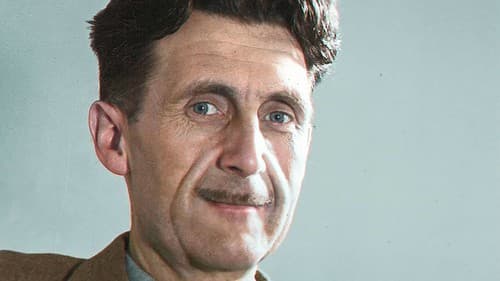
Eric Arthur Blair, better known by his pen name George Orwell, was an English novelist, essayist, journalist, and critic. His work is characterised by lucid prose, social criticism, opposition to totalitarianism, and support of democratic socialism.
Similar books
- Homage to Catalonia
George Orwell
4.1 (43k) average on GoodreadsPoliticsAnother powerful memoir by Orwell detailing personal experiences within a political conflict, exposing its harsh realities.
- Notes from Underground
Fyodor Dostoevsky
4.2 (84k) average on GoodreadsPsychologyExplores the psychological torment and moral dilemmas of an individual alienated by societal norms, echoing themes of individual conscience versus external pressure.
- Heart of Darkness
Joseph Conrad
3.4 (415k) average on GoodreadsHistorical Fiction"Shooting an Elephant" shares Conrad's exploration of the moral decay inherent in imperialism, particularly the psychological toll on the European colonizer. Both works delve into the hypocrisy and brutality of colonial ventures. However, Orwell's essay is a more direct, autobiographical account, offering a starker, less allegorical indictment than Conrad's more symbolic and ambiguous narrative. Orwell's focus is on the absurdity and performative aspect of maintaining power, while Conrad delves deeper into the primal darkness and the disintegration of European 'civilization' in the colonial context.
- Burmese Days
George Orwell
3.9 (21k) average on GoodreadsLifestyleWhile both are set in colonial Burma and written by Orwell, "Burmese Days" is a full-length novel offering a broader, more character-driven critique of the British Raj, depicting the lives of various Europeans and Burmese characters. "Shooting an Elephant" is a concise, intensely focused essay that zeroes in on a single, pivotal personal experience to illustrate a specific moral point about the nature of imperial power. The essay acts almost as a distilled, concentrated version of the themes explored more expansively and with greater character development in the novel.
- 1984
George Orwell
4.2 (3.1M) average on GoodreadsPoliticsIn a future where surveillance and thought control are absolute, a man's search for truth clashes with the Party, showing that hope can be a form of rebellion.
- Animal Farm
George Orwell
4.0 (2.7M) average on GoodreadsPoliticsA farm animals' rebellion against humans turns into a pig-led dictatorship, showing how power corrupts and revolutionary ideals are betrayed.



Enjoyed the summary?
A summary gives you the shape of the book. The book itself has the detail, the examples and the voice.
Find Shooting an Elephant on AmazonAs an Amazon Associate, BookBrief earns from qualifying purchases. How we're funded